A product director from a major European motorcycle apparel brand sat in my showroom last autumn with a stack of worn, returned gloves and a binder full of customer reviews. His company had been producing motorcycle gloves for two decades. They knew protection. They knew abrasion resistance, impact protection, and knuckle armor. But the reviews were changing. Riders were no longer just asking for protection. They were asking for connectivity. They wanted to operate their smartphone GPS without removing their gloves. They wanted to adjust a GoPro camera with their fingertips. They wanted gloves that were protective enough for a highway ride but stylish enough to wear into a café without looking like they had just stepped off a racetrack. And, increasingly, they were asking about sustainability. Where did the leather come from? Was the carbon fiber real or just a printed pattern? The product director told me, "The rider of 2026 is not the rider of 2006. They want everything. Protection, tech, style, and a clean conscience. And they want it in one glove." He asked me what our design team was seeing for the 2026 season.
The 2026 glove trends for motorcycle and scooter riders are defined by four key innovations. First, touchscreen-compatible gloves that work across all five fingertips, not just the index finger and thumb. The new generation uses conductive yarns knitted directly into the glove, rather than a conductive coating that wears off. The rider can use any finger to operate a touchscreen, and the conductivity is permanent. Second, sustainable, chrome-free leathers and recycled performance textiles that meet the demanding abrasion resistance standards of motorcycle PPE. These materials are certified to EN 13594, the European standard for motorcycle gloves, but they are tanned without chromium and use recycled polyester in the linings and the stretch panels. Third, low-profile, flexible impact protection using viscoelastic materials like D3O and Poron XRD, which are soft and flexible during normal wear but instantly harden on impact. This allows the glove to be sleek and comfortable for scooter commuting, rather than bulky and armored. Fourth, urban-styled, fashion-forward designs that do not look like traditional motorcycle gloves. These are gloves that a rider can wear on a vintage café racer, park the bike, and walk into a restaurant without feeling the need to take them off. They use premium materials, minimalist branding, and classic color palettes like waxed brown leather, matte black, and olive green.
The motorcycle and scooter glove market is fragmenting. It is no longer a single category. The needs of a track-day sportbike rider are different from the needs of a daily scooter commuter, which are different from the needs of a weekend vintage motorcycle enthusiast. The 2026 trends reflect this fragmentation. There is a trend for every rider type, but the common thread is that gloves must do more than just protect. They must be connected, comfortable, conscious, and cool. At AceAccessory, we produce gloves for motorcycle, scooter, and urban mobility brands. Our design team has been tracking these trends closely. Let me walk you through the four defining directions for 2026.
Why Is Full-Finger Touchscreen Compatibility Essential for Riders
The modern motorcycle or scooter rider is connected. A smartphone mounted on the handlebars serves as a GPS navigator, a music player, and a communication device. A GoPro or an Insta360 camera mounted on the helmet or the handlebars needs to be started and stopped. A smartwatch on the wrist provides notifications. All of these devices have touchscreens. The rider needs to interact with them without stopping, without removing their gloves, and without compromising their grip on the handlebars. The old solution, a small conductive patch sewn onto the tip of the index finger and thumb, is no longer adequate. It only works for those two fingers. It wears off after a season of riding. It is not precise enough for the small icons and swipe gestures of modern smartphone interfaces. The 2026 generation of touchscreen motorcycle gloves solves these problems completely.
Full-finger touchscreen compatibility is essential for riders in 2026 because the modern riding experience is deeply integrated with digital devices. The rider needs to be able to use any finger, not just the index finger, to accurately and reliably operate a touchscreen. The technology that enables this is conductive yarn. The conductive yarn, typically a silver-coated nylon or a carbon-infused polyester, is knitted directly into the fabric of the glove at every fingertip. Unlike a surface coating, which can wear off, the conductive yarn is part of the glove’s structure. It will remain conductive for the life of the glove. The entire fingertip is conductive, allowing the touchscreen to recognize the touch across the full fingertip surface. This enables precise gestures like pinch-to-zoom, swipe, and multi-touch. The rider can operate a map application, answer a phone call, or change a music track with the same dexterity they would have with bare fingers. The conductive yarn is soft and flexible. It does not change the feel of the glove. It does not interfere with the grip on the handlebars. The touchscreen compatibility is not a separate feature. It is integrated seamlessly into the glove’s design. The rider does not think about the technology. They simply use their devices as they normally would, and the gloves work.
The demand for full-finger touchscreen compatibility is being driven by the proliferation of touchscreen devices in the riding environment. A rider in 2026 may have three or four touchscreen devices within reach. The glove is the interface to all of them. Let me detail the two most important aspects of the technology.

How Do Conductive Yarns Survive Abrasion and Weather?
The durability of conductive yarn in a motorcycle glove is a critical performance requirement. A motorcycle glove is subjected to harsh conditions. It is exposed to rain, wind, UV radiation, and the constant abrasion of gripping the handlebars. The conductive yarn must survive all of this without losing its conductivity. The key to durability is the quality of the silver coating and the integration of the yarn into the glove’s structure. The conductive yarn is made by coating a high-strength synthetic fiber, typically nylon or polyester, with a layer of pure silver. Silver is used because it has the highest electrical conductivity of any metal, and it is ductile enough to be formed into fine threads. The quality of the silver coating is what determines the durability. A high-quality conductive yarn has a thick, uniform coating of silver that is bonded to the fiber core. It is resistant to abrasion, to repeated flexing, and to oxidation. The yarn is also treated with a protective overcoat that prevents the silver from tarnishing and from being affected by moisture. The conductive yarn is not simply sewn onto the surface of the fingertip, where it would be the first thing to wear. It is knitted into the fabric of the glove fingertip, integrated into the structure. It is surrounded and protected by the non-conductive yarns. The conductive yarn is tested for durability. A sample of the glove fingertip is subjected to a Martindale abrasion test, rubbing against a standard abrasive surface for thousands of cycles. The conductivity is measured before and after the test. The conductive yarn must maintain its conductivity after a specified number of abrasion cycles. It is also tested for wash durability, surviving multiple cycles of machine washing without losing conductivity. A high-quality conductive yarn glove will remain functional for years of regular riding.
Can Touchscreen Gloves Still Meet Motorcycle Safety Standards?
Yes, the integration of conductive yarn does not compromise the glove’s ability to meet the stringent safety standards for motorcycle personal protective equipment. The European standard for motorcycle gloves is EN 13594. It specifies requirements for abrasion resistance, impact protection, seam strength, and fit. A glove that carries the CE mark and is certified to EN 13594 has passed a series of laboratory tests that simulate the forces involved in a motorcycle accident. The conductive yarn is integrated into the glove without weakening the structure. The yarn is used in the fingertips, which are a relatively low-stress area in a crash compared to the palm and the knuckles. The protective elements of the glove, the palm slider, the knuckle armor, and the reinforced seams, are not affected. The conductive yarn itself does not provide any protection, but it does not diminish the protection provided by the other components. The glove is tested as a complete product. The certification testing covers the glove with the conductive yarn in place. The glove must pass the same tests as a non-conductive glove. There is no compromise on safety. The touchscreen functionality is an added feature, not a replacement for protection. A glove that claims to be a motorcycle glove should have a valid CE certification label. The buyer should verify the certification and check the test report. A reputable factory will provide the CE certificate and the EN 13594 test report.
What Sustainable Materials Are Replacing Traditional Motorcycle Leather
The motorcycle glove has traditionally been made from leather. Cowhide, goatskin, and kangaroo leather are the standard materials because of their excellent abrasion resistance. Leather is a natural material, but the tanning process that gives leather its durability has traditionally used chromium salts, which can be harmful to the environment and to tannery workers if not managed correctly. The 2026 trend is a shift toward sustainable leather and leather alternatives that provide the same or better abrasion resistance without the environmental and ethical concerns. This shift is being driven by consumer demand, by brand sustainability commitments, and by regulations such as the EU REACH regulation and the proposed EU Deforestation Regulation.
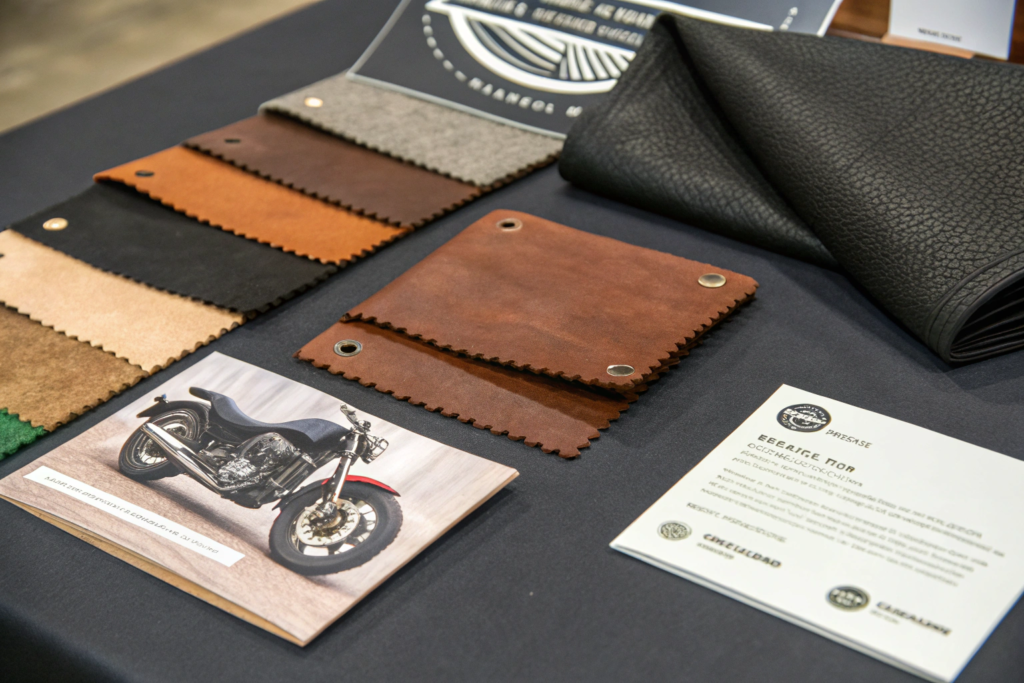
The sustainable materials replacing traditional motorcycle leather in 2026 are chrome-free, vegetable-tanned leathers, recycled high-tenacity polyester textiles, and bio-based synthetic suedes. Chrome-free leather is tanned using plant-based tannins, such as mimosa bark, quebracho, or chestnut, or using synthetic tanning agents that are free of chromium. The resulting leather has a beautiful, natural appearance and a softer, more organic hand feel. It can meet the abrasion resistance requirements of EN 13594 when properly selected and processed. It is biodegradable at the end of its life. Recycled high-tenacity polyester is a synthetic textile made from post-consumer PET bottles. The polyester is extruded into high-strength yarns that are woven into a dense, abrasion-resistant fabric. The fabric can be used for the back of the glove, for the stretch panels, and for the lining. It is lighter than leather, dries faster, and has a lower environmental footprint. Bio-based synthetic suede is a non-woven fabric made from plant-based fibers, such as recycled polyester and plant-derived polyurethane. It has the look and feel of real suede, but it is vegan and has a lower carbon footprint. It is used for the palm reinforcement and for the decorative elements of the glove. All of these materials must be certified to the relevant sustainability standards, such as the Leather Working Group for leather or the Global Recycled Standard for recycled polyester. The certification provides independent verification of the sustainability claims.
The shift to sustainable materials is not a compromise on protection. These materials are engineered to meet the demanding performance requirements of motorcycle gloves. Let me detail the two most important material innovations.
How Does Chrome-Free Leather Perform in Abrasion Resistance Tests?
Chrome-free leather can perform as well as, or in some cases better than, traditional chrome-tanned leather in standardized abrasion resistance tests. The key is the tanning process and the selection of the raw hide. The Cambridge abrasion test, used in the EN 13594 standard, measures the time it takes for a sample of the glove material to be abraded through when rubbed against a standard abrasive surface. The test simulates the glove sliding along asphalt during a crash. A chrome-free, vegetable-tanned leather made from high-quality full-grain cowhide or goatskin can achieve abrasion times that meet or exceed the Level 1 or Level 2 requirements of the standard. The vegetable tanning process produces a leather that is initially firmer than chrome-tanned leather, but it softens with wear and conforms to the rider’s hand. The natural tannins create a dense fiber structure that resists abrasion. The absence of chromium means that the leather is safer for the tannery workers and for the environment, and it is less likely to cause allergic skin reactions in the wearer. The chrome-free leather must be tested for abrasion resistance, just like any other motorcycle glove material. The test report is part of the CE certification documentation. The performance of chrome-free leather has improved significantly in recent years as tanneries have refined their processes in response to demand from the automotive and fashion industries. A motorcycle glove made from high-quality chrome-free leather is a premium product that combines protection, comfort, and sustainability.
Can Recycled Textiles Meet the CE EN 13594 Standard?
Yes, recycled high-tenacity polyester textiles can meet the abrasion resistance requirements of EN 13594. The standard does not specify the material. It specifies the performance. Any material that can pass the abrasion test, the seam strength test, and the other requirements can be certified. Recycled polyester textiles have advanced significantly. The yarns are made from post-consumer PET bottles that are cleaned, shredded, melted, and extruded into new fibers. These fibers can be engineered to have very high tenacity, meaning high tensile strength and resistance to tearing and abrasion. The fabric is woven with a high density to create a tight, durable surface. It is often combined with a polyurethane coating or aramid fiber reinforcement in critical areas like the palm. The recycled textile glove is typically lighter and more breathable than a leather glove. It dries quickly if it gets wet. It is popular for summer riding gloves and for scooter commuting gloves. The recycled textile must be certified to the Global Recycled Standard, which verifies the recycled content and the responsible manufacturing practices. The GRS certification provides traceability. The textile glove is tested to EN 13594 as a complete product. The abrasion resistance is measured at the palm, the back of the hand, and the fingers. A well-designed recycled textile glove can achieve a Level 1 or Level 2 rating. The combination of sustainability and certified protection is a powerful selling point for the 2026 market.
What Low-Profile Impact Protection Is Trending for Urban Gloves
The urban scooter or motorcycle rider does not want to look like a MotoGP racer on their commute to the office. They want a glove that protects them, but that does not scream "motorcycle." The traditional approach to impact protection, hard plastic knuckle armor and thick foam padding, creates a bulky, aggressive aesthetic that is at odds with the urban, fashion-conscious rider. The 2026 trend is low-profile, flexible impact protection. These are materials that are soft and pliable during normal wear, allowing the glove to fit like a normal leather glove, but that instantly stiffen upon impact, absorbing and dispersing the energy of a blow. The protective element is invisible. It is integrated into the glove’s construction, hidden between the outer leather and the inner lining. The rider gets the protection they need without the aesthetic compromise.
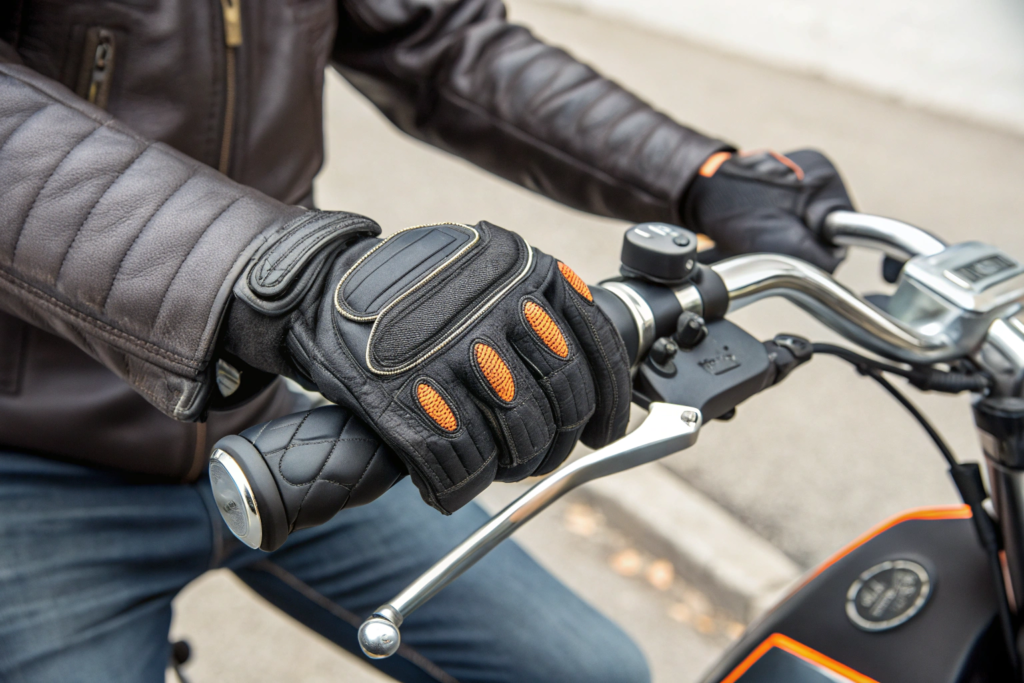
Low-profile impact protection using viscoelastic materials is trending for urban motorcycle and scooter gloves because it provides certified impact protection without the bulk and aggressive styling of traditional hard armor. The materials are rate-sensitive. They are soft and flexible when moved slowly, but they become rigid when subjected to a sudden impact. The most well-known materials are D3O, an orange, putty-like substance, and Poron XRD, a thin, flexible foam. These materials are used as a thin layer, typically 2 to 4 millimeters thick, placed over the knuckles, the fingers, and the scaphoid, the vulnerable bone at the base of the thumb. In normal use, the rider does not feel the protection. The glove flexes naturally. The material conforms to the hand. On impact, the molecules in the material lock together, absorbing the impact energy and distributing it across the surface area. The force transmitted to the rider’s hand is significantly reduced. After the impact, the material returns to its flexible state. The low-profile protection is integrated into the glove’s construction. It is laminated between the outer shell and the inner lining. It is not a separate, removable piece. The glove is tested to the EN 13594 impact protection standard. The knuckle impact test measures the force transmitted through the glove when a weight is dropped onto the knuckle. A glove with low-profile viscoelastic protection can meet the Level 1 or Level 2 requirements. The result is a glove that looks and feels like a premium leather glove but that provides certified impact protection.
The low-profile protection trend is a convergence of materials science and fashion. It allows the glove to be both protective and beautiful. Let me detail the two most important protective features.
How Do Viscoelastic Knuckle Protectors Work?
Viscoelastic materials like D3O and Poron XRD are a class of polymers that exhibit both viscous and elastic behavior when deformed. In their resting state, the long polymer chains are coiled and can slide past each other, making the material soft and flexible. When subjected to a high-speed impact, the polymer chains do not have time to slide. They lock together, and the material becomes momentarily rigid. This rigidity distributes the impact force across the entire area of the protector, reducing the force at any single point. After the impact, the polymer chains relax, and the material returns to its soft, flexible state. The transformation happens in milliseconds. The viscoelastic protector is placed over the knuckles, the most vulnerable point of the hand in a fall. The protector is typically a flat sheet, 2 to 4 millimeters thick, cut to the shape of the knuckle area. It is stitched into a pocket between the outer leather and the inner lining. The protector is comfortable. It does not dig into the hand. It does not restrict movement. The rider can close their fist fully. The protector is tested to EN 13594. The test involves dropping a 2.5-kilogram weight from a height onto the knuckle protector, with a force sensor underneath. The peak transmitted force is measured. For Level 1, the peak force must not exceed a specified value. For Level 2, the limit is lower. The viscoelastic protector absorbs the energy of the falling weight and spreads it out, achieving the required force reduction. The protector is an elegant solution to the problem of impact protection. It provides safety without sacrificing comfort or style.
What Is a Scaphoid Protection Slider and Why Does It Matter?
The scaphoid is a small bone in the wrist, at the base of the thumb. It is the most commonly fractured bone in motorcycle accidents. When a rider falls, they instinctively put out their hands to break the fall. The heel of the hand hits the ground first, and the force is transmitted directly to the scaphoid. The bone fractures. A scaphoid protection slider is a small, hard piece of material, typically a dense plastic or a composite, that is sewn onto the heel of the glove’s palm. Its purpose is not to absorb the impact, but to slide. When the rider’s hand hits the ground, the slider contacts the asphalt and slides, rather than gripping and causing the hand to catch and twist. The sliding action reduces the torsional force on the wrist and the scaphoid. The slider also provides a degree of abrasion resistance and impact distribution. The scaphoid slider is an essential piece of protective equipment for any motorcycle glove. In the 2026 trend, the slider is being designed to be low-profile and integrated. It is not a large, protruding lump. It is a subtle, sculpted piece that follows the contour of the palm. It is often colored to match the glove. It is barely noticeable when the glove is worn. The slider is tested as part of the EN 13594 certification. The abrasion resistance of the slider itself is tested, as is the seam that attaches it to the glove. The scaphoid slider is a small detail that makes a significant difference in a crash. It is a non-negotiable feature for a serious motorcycle glove.
What Urban Fashion Trends Are Shaping Motorcycle Glove Design
The motorcycle glove is no longer confined to the bike. It is a fashion accessory that is worn off the bike as well. The 2026 trend in urban motorcycle glove design is a blurring of the lines between protective gear and fashion. The gloves are designed to be worn in a café, in a bar, or in the office, without looking out of place. This means premium materials, classic and understated colors, minimalist branding, and a silhouette that is closer to a dress glove than to a racing gauntlet. The rider who commutes on a vintage Triumph or a Vespa wants a glove that reflects that aesthetic. They want a glove that tells a story of craftsmanship and taste, not a story of speed and aggression.
The urban fashion trends shaping motorcycle glove design in 2026 are classic, heritage-inspired aesthetics, minimalist branding, and premium, tactile materials. The classic look draws from the golden age of motorcycling, the 1950s and 1960s, with short-cuff gloves, contrast stitching, and perforated details. The colors are the colors of traditional leather goods, tan, brown, black, and olive. The leather is often a waxed or an oiled finish that develops a patina over time, telling the story of the rider’s journeys. The minimalist branding means no large, visible logos. The brand mark is a small, discreet emboss on the wrist or a subtle label sewn into the seam. The glove is allowed to speak for itself through the quality of its materials and its construction. The premium, tactile materials are selected for how they feel as much as for how they perform. A soft, supple goatskin leather for the palm. A finely knitted merino wool lining for warmth. A hand-stitched seam. These details appeal to the rider who appreciates craftsmanship. The urban fashion glove is not a compromise on protection. It still meets the EN 13594 standard. It still has knuckle protection and a scaphoid slider. But the protection is hidden, integrated, and invisible. The glove is a protective garment that does not look like one. This is the essence of the 2026 urban riding trend.
The urban fashion trend is expanding the motorcycle glove market beyond the traditional core rider. It is attracting scooter commuters, vintage enthusiasts, and fashion-conscious consumers who may not identify as "motorcyclists" but who want a beautiful, protective glove for their two-wheeled transport. Let me detail the two most important design elements.

How Are Classic Cafe Racer Styles Influencing Modern Glove Design?
The café racer aesthetic is a dominant influence on modern urban motorcycle glove design. The café racer culture of the 1960s was about stripped-down, minimalist motorcycles and a sleek, purposeful style. The riders wore short-cuff gloves, often in tan or black leather, with simple stitching and no unnecessary adornment. This aesthetic is being reinterpreted for the 2026 market. The modern café racer glove is a short-cuff glove, ending just below the wrist bone, rather than a long gauntlet that extends up the forearm. The short cuff is easier to put on and take off, and it fits comfortably under a jacket sleeve. The glove features contrast stitching, often in a cream or a tonal thread, that highlights the panel construction and adds a handcrafted feel. The back of the hand may have perforated leather for ventilation, arranged in a classic pattern. The knuckle protector is a subtle, molded piece, often covered in the same leather as the glove, so it is invisible. The palm is a single piece of high-quality leather, with minimal seams. The closure is a simple, secure wrist strap with a small, discreet buckle or a snap. The overall silhouette is sleek, low-profile, and elegant. The café racer style glove is designed to be worn with a leather jacket, a pair of selvedge jeans, and engineer boots. It is a complete look. The style is timeless. It does not go out of fashion. A rider can buy a pair of well-made café racer gloves and wear them for a decade, and they will still look current. This longevity is part of the appeal.
What Color Palettes Are Trending for Premium Riding Gloves?
The color palette for premium motorcycle gloves in 2026 is a return to the natural, earthy tones of traditional leather goods, with a few modern accents. The dominant color is tan. A rich, warm, caramel-colored leather that evokes the classic driving gloves and motorcycle gear of the mid-20th century. Tan leather ages beautifully, developing a deep, personalized patina over time. It is a color that tells a story. Black is the perennial staple. But the 2026 black is not a flat, uniform black. It is a matte, oiled black with subtle variations in tone, or a washed black with a slightly faded, vintage appearance. Brown is the broader category, from a dark espresso to a lighter cognac. Brown leather has a natural, organic warmth that appeals to the sustainability-conscious rider. Olive green is an emerging trend, inspired by military and workwear aesthetics. An olive green glove in a waxed cotton or a matte leather is a distinctive, stylish choice that pairs well with earth-toned riding gear. Grey is the modern neutral, from a light heathered grey to a dark charcoal. Grey is often used in textile gloves and in the stretch panels of leather gloves. The color palette is understated and sophisticated. The colors are chosen to be versatile, to coordinate with a wide range of riding jackets and casual clothing. The finish is more important than the color itself. A matte finish is preferred over a shiny, patent finish. A waxed or an oiled finish adds depth and character. The color is not just on the surface. It is in the leather itself. A high-quality leather will not crack or peel, and the color will age gracefully.
Conclusion
The 2026 glove trends for motorcycle and scooter riders represent a convergence of technology, sustainability, safety, and style. The rider of 2026 expects their gloves to do everything. They must be a certified piece of protective equipment, meeting the EN 13594 standard for abrasion and impact resistance. They must be a connected interface, allowing the rider to use all the touchscreen devices that are part of the modern riding experience. They must be made from materials that align with the rider’s environmental values, chrome-free leathers, recycled textiles, and bio-based synthetics. And they must be a fashion accessory, a beautiful, tactile object that the rider is proud to wear on and off the bike. We have explored the four trends that deliver on these expectations. Full-finger touchscreen compatibility powered by integrated conductive yarns that never wear out. Sustainable materials that match the performance of traditional leather without the environmental cost. Low-profile viscoelastic impact protection that provides certified safety in a sleek, invisible package. And urban fashion designs, the café racer aesthetics, the heritage colors, and the minimalist branding, that make the glove a pleasure to wear.
At AceAccessory, we are excited about the future of the riding glove market. Our design team is actively developing gloves that incorporate all of these trends. We are working with conductive yarn suppliers, chrome-free tanneries, recycled textile mills, and viscoelastic material manufacturers to create the next generation of riding gloves. We understand the CE certification process and we test our gloves to EN 13594 at independent, accredited laboratories. We work with motorcycle, scooter, and urban mobility brands to bring their glove visions to life.
If you are developing a motorcycle or scooter glove collection for 2026 and you want a manufacturing partner who understands the trends, the materials, the technologies, and the safety standards, I invite you to contact us. Reach out to our Business Director, Elaine, at elaine@fumaoclothing.com. Tell her about your brand, your target rider, and the features you are most interested in. She can provide material samples, discuss construction options, and provide a quotation for production. Let us create gloves that riders will trust, enjoy, and be proud to wear, every time they swing a leg over the seat.