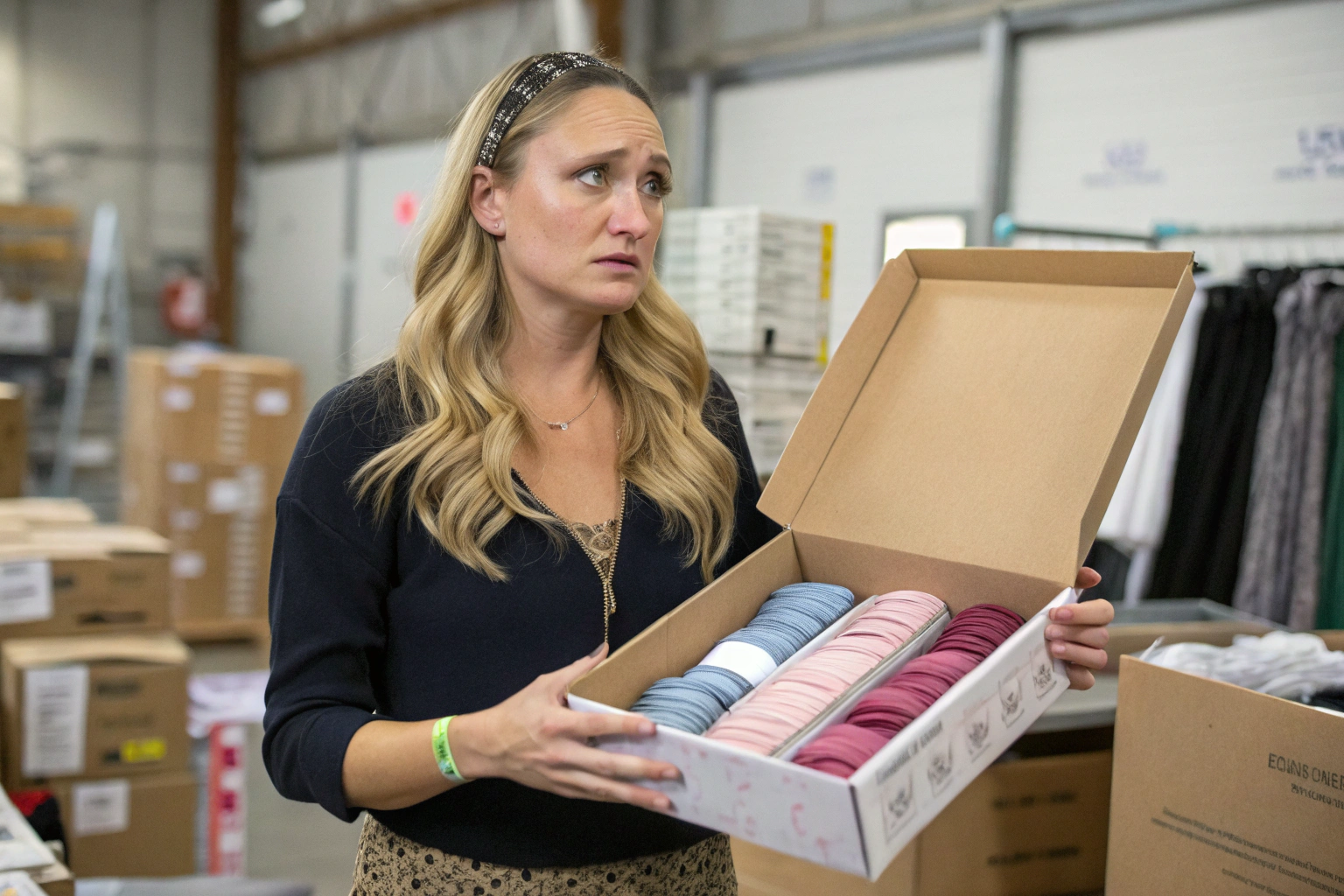
A lingerie and loungewear brand founder from Toronto called me late last year, and the frustration in her voice was something I recognized immediately. It was the frustration of betrayal. She had spent eighteen months developing her brand’s signature collection of soft, comfortable headbands and hair ties. The elastic was the heart of the product. She had specified a premium, high-recovery, braided elastic that would not stretch out, would not lose its snap, and would remain comfortable after hundreds of wears. She had approved a physical sample. The elastic was soft, had a beautiful matte finish, and stretched and recovered perfectly. The production shipment of 8,000 units arrived at her warehouse. Her team began packing the orders. Within the first week, the complaints started. The elastic was stretching out after just a few uses. The hair ties were becoming loose and floppy. Customers were posting negative reviews. She cut open a sample from the shipment and compared it to her approved sample. The elastic was different. It was shinier, stiffer, and when she stretched it, it did not recover. The factory had substituted a cheaper, lower-grade elastic without informing her, without asking for approval, and without adjusting the price. She felt cheated. She asked me, "What do I do now?"
The best way to handle a factory that uses cheaper elastic without approval is a four-step process of documentation, formal notification, remedy negotiation, and systemic prevention. First, document the substitution with objective, measurable evidence. Measure the stretched length and the recovery percentage of the actual elastic and compare it to the approved sample. Take photographs and video of the elastic being stretched and measured. Record the visual differences, the sheen, the weave pattern, and the color. Second, issue a formal non-conformance report to the factory. The report should state the specification that was agreed, the actual elastic used, the discrepancy, and the impact on your product. Attach the photographic and measurement evidence. Demand a specific remedy. Third, negotiate the remedy. If the products can still be sold, but at a lower quality level, a price reduction is appropriate. The reduction should reflect the cost difference of the cheaper elastic plus a penalty for the unauthorized change. If the products cannot be sold because the elastic failure renders them unfit for purpose, the factory must remake the order with the correct elastic at their own expense, or provide a full refund. Fourth, implement a pre-shipment material verification step for all future orders. Require the factory to cut a sample of the elastic from the finished product and send it to you for approval before the goods are shipped. This step closes the door on unauthorized material substitutions.
Elastic substitution is one of the most common and most damaging forms of material fraud in the accessories industry. Elastic is hidden. It is inside a fabric casing or it is the core of a hair tie. The buyer often does not see the elastic itself. They only feel its performance. By the time the performance failure is noticed, the goods are already in the customer’s hands, and the damage to the brand is done. The factory knows this. An unethical factory exploits this. At AceAccessory, we have strict material control procedures to prevent unauthorized substitutions. Let me walk you through exactly how to handle this situation and how to prevent it from ever happening again.
Why Do Factories Substitute Cheaper Elastic Without Approval
Understanding why a factory substitutes cheaper elastic is not about making excuses. It is about understanding the economic and operational pressures that drive the behavior, so that you can design your quality control and supplier management processes to eliminate the opportunity. Elastic is a commodity with a wide range of quality and price. Premium, high-recovery braided elastic can cost three to five times as much as basic, low-grade knitted elastic. The performance difference is dramatic. Premium elastic maintains its recovery for years. Cheap elastic loses its recovery in weeks or even days. The cost saving on a per-unit basis can be a few cents. On a large order, this adds up to a significant profit for the factory. The factory bets that the buyer will not notice the difference, or will not measure it, until it is too late.
Factories substitute cheaper elastic without approval for several predictable reasons. Cost pressure is the primary driver. A factory that quoted a price based on premium elastic may find their margins squeezed, or they may have underquoted to win the business. They substitute a cheaper elastic to restore their profit. The per-unit saving is small, but on a large order, it is meaningful. Supply chain disruption is another cause. The factory’s usual elastic supplier may be out of stock, or the delivery may be delayed. The factory uses a substitute elastic that is available, rather than delay the shipment and face a late delivery penalty. Internal miscommunication is a common factor. The purchasing department buys a different elastic because it is cheaper or more readily available, and the production line uses what is delivered. The quality control team does not catch the substitution because they do not have the approved sample to compare against. In the worst cases, the substitution is deliberate fraud. The factory knows the elastic is inferior. They use it anyway, hoping the buyer will not notice. They pocket the difference in material cost. This is most common with new buyers who have not established a strong quality presence. The root cause matters because it determines the appropriate response. A factory that substituted due to a supply chain emergency and communicated transparently is a different case from a factory that deliberately cheated.
The common thread in all of these scenarios is a lack of verification. The factory believed, correctly or cynically, that the substitution would not be detected before payment. The solution is to make detection certain and the consequences severe. Let me detail the two most common root causes.
How Does Cost Cutting Lead to Elastic Substitution?
The economics of elastic substitution are straightforward. Premium braided elastic, made from high-quality polyester or nylon with a dense, interlocking weave, costs approximately 0.15 to 0.30 dollars per meter, depending on the width and the quantity. Basic knitted elastic, made from lower-grade materials with a looser, less durable structure, costs approximately 0.03 to 0.08 dollars per meter. For a hair tie that uses 20 centimeters of elastic, the material cost difference is approximately 2 to 4 cents per unit. On an order of 10,000 hair ties, the factory saves 200 to 400 dollars by substituting the cheaper elastic. This is the factory’s illicit profit. The factory may rationalize the substitution. They may tell themselves that the customer will not notice the difference, that the elastic is "good enough," or that the price the customer paid was too low to justify the premium elastic. The solution to cost-driven substitution is twofold. First, ensure that the price you negotiate is realistic. A price that is significantly below the market rate is a red flag. The factory may be planning to make up the difference through material substitutions. Ask the factory to break down the price by material, labor, and overhead. A transparent factory will provide this breakdown. A factory that refuses may be hiding something. Second, implement the pre-shipment verification step. If the factory knows that the elastic will be physically cut from the finished product and tested before payment is released, the economic incentive for substitution is eliminated. The cost of getting caught, a forced remake, a lost client, far outweighs the marginal saving on the elastic.
Can Supply Chain Issues Cause Unauthorized Elastic Changes?
Supply chain disruption is a genuine problem in global manufacturing. A specific type of elastic may be out of stock at the factory’s usual supplier. The lead time for the correct elastic may be longer than the production schedule allows. The factory manager faces a choice. Stop the production line, delay the shipment, and face the buyer’s anger over a missed delivery. Or use a substitute elastic that is available, ship on time, and hope the buyer does not notice. In this scenario, the factory’s motivation is not greed. It is fear of missing the delivery commitment. The ethical failure is not the substitution itself. It is the failure to communicate. A professional, trustworthy factory would contact the buyer immediately when the supply issue arises. They would explain the situation. They would present the alternative elastic for approval. They would say, "Our usual elastic supplier has delayed our order by two weeks. We can ship on time if we use this alternative elastic, which has similar but not identical specifications. Here is a sample. Can you approve this change, or do you prefer to wait for the correct elastic and accept a two-week delay?" The buyer is given the choice. An unprofessional factory makes the substitution silently. The prevention for supply chain issues is to build a relationship where the factory feels safe communicating problems. If the buyer reacts to every problem with punishment, the factory will hide problems. If the buyer works collaboratively to find solutions, the factory will communicate openly. The relationship culture is a powerful quality tool.
How to Document an Unauthorized Elastic Change
Documentation is the foundation of any successful quality complaint. A well-documented elastic substitution transforms a subjective feeling, "this elastic feels cheap," into an objective fact, "the substituted elastic has a recovery rate of 70 percent, and the approved sample has a recovery rate of 95 percent." The documentation should be gathered as soon as the discrepancy is discovered, before any of the products are sold or distributed. The evidence should be organized, clearly labeled, and transmitted to the factory in a formal written communication.
Documenting an unauthorized elastic change requires collecting five types of evidence. Physical evidence, the elastic from the production goods and the approved sample elastic. Cut a length of elastic from several production units. Place it next to the approved sample. The visual difference, the sheen, the weave, the color, is often immediately apparent. Measurement evidence, the stretched length and the recovery. Stretch both elastics to their maximum comfortable extension. Measure the extended length. Release them and measure the recovered length after 30 seconds. Calculate the recovery percentage. A premium elastic will recover to within 5 percent of its original length. A cheap elastic may only recover to 70 or 80 percent. Photograph the measurements. Performance evidence, the real-world test. Take a production hair tie and a sample hair tie. Stretch them around a bundle of similar diameter to a ponytail, or around a cylinder. Leave them for several hours. Remove them and measure the retained stretch. The production hair tie will likely be looser. Specification evidence, the purchase order, the tech pack, or the email where the elastic specification was defined. Highlight the relevant section. Communication evidence, any emails or messages where the elastic was discussed and approved. This proves that the specification was communicated to the factory. The documentation package should be compiled into a single PDF and sent to the factory with a formal corrective action request.
The documentation is your leverage. A factory that knows you have the evidence is far more likely to negotiate a fair remedy. Let me detail the two most important pieces of evidence.

How Do You Test Elastic Recovery to Prove the Substitution?
The elastic recovery test is the definitive proof of an elastic substitution. It quantifies the performance difference between the approved elastic and the substituted elastic in a way that is objective and irrefutable. The test is simple and can be performed with basic tools. A ruler, a marker, and a pair of hands. Cut a length of the approved sample elastic, exactly 10 centimeters in its relaxed state. Mark the 10-centimeter length with a pen. Cut an identical length of the substituted elastic. Stretch both elastics to their maximum comfortable extension, the point at which you feel significant resistance. Hold them at this extension for 30 seconds. Release both elastics and allow them to relax for 30 seconds. Measure the relaxed length of each. The approved premium elastic should return to very close to 10 centimeters, perhaps 10.2 or 10.5 centimeters. This is a recovery rate of 95 to 98 percent. The substituted cheap elastic may only return to 12 or 13 centimeters. This is a recovery rate of 70 to 80 percent. The difference is dramatic and visible. Photograph or video the test. Show the initial length, the stretched length, and the recovered length for both elastics. The video is particularly compelling because it shows the test being performed continuously, with no opportunity for manipulation. The recovery test can also be performed using a spring scale or a hanging weight for a more precise measurement, but the simple stretch test is sufficient to demonstrate a material difference. The recovery test data is included in the corrective action report. The numbers tell the story. The approved elastic recovers. The substituted elastic does not.
What Photographs Best Show the Elastic Quality Difference?
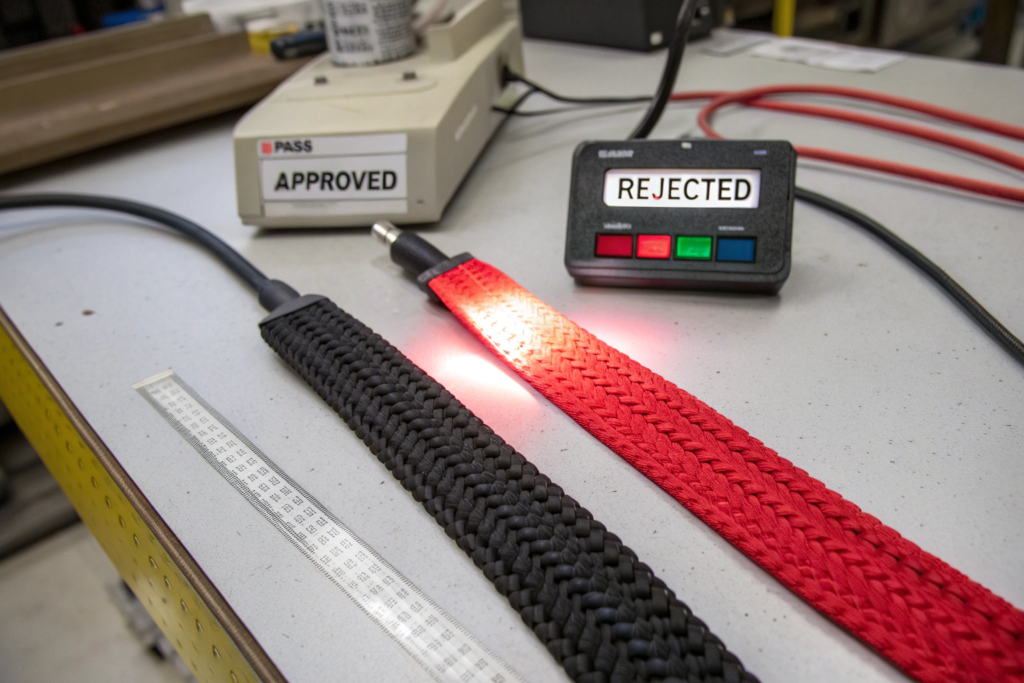
Photographs translate the technical measurement into a visually compelling argument. A well-composed photograph makes the discrepancy obvious even to someone who does not understand recovery rates. The most effective photograph is the side-by-side comparison. Place a length of the approved elastic next to a length of the substituted elastic. Align them on a flat, neutral background. Photograph them from above. The visual differences, the sheen, the weave density, and the color, are immediately apparent. The approved elastic has a matte, dense, uniform appearance. The substituted elastic is shinier, with a looser, more open weave. The second photograph shows the recovery difference. Stretch both elastics to the same length. Photograph them in the stretched state. Then release them and photograph them again after 30 seconds. The approved elastic has returned to near its original length. The substituted elastic is visibly longer, baggy, and distorted. The third photograph shows the elastic in the context of the product. Cut open a production headband to reveal the elastic inside. Photograph the elastic in situ. Show the product itself, so the factory cannot claim the elastic sample came from a different source. The fourth photograph is the carton label. This links the tested products to the specific shipment. The photographs should be high resolution, well-lit, and unedited. They should be included in the corrective action report, not sent as separate, unlabeled files. Each photograph should have a caption explaining what it shows.
What Compensation Should You Negotiate for Elastic Fraud
Negotiating compensation for an unauthorized elastic substitution is a matter of quantifying the financial impact and presenting a clear, itemized claim. The goal is to be made whole. You paid for a premium elastic product and received a cheap elastic product. The value you received is less than the value you paid for. The compensation should bridge that gap. The negotiation should be based on the documented facts, not on anger. A factory that acknowledges the error and compensates fairly is a factory that can improve its processes. A factory that denies the error despite clear evidence is a factory to exit.
The compensation you should negotiate for an elastic substitution depends on the usability of the products. If the products are still usable, meaning the elastic functions adequately for at least a reasonable period, a price reduction is appropriate. The reduction should be calculated based on the material cost difference plus a penalty for the unauthorized change. The material cost difference is the saving the factory made by using the cheaper elastic. For a hair tie using 20 centimeters of elastic, with a cost difference of 2 to 4 cents per unit, the total saving on a 10,000-unit order is 200 to 400 dollars. The penalty should be significant enough to deter future substitutions. A penalty of 10 to 20 percent of the order value is reasonable for a first offense. The total price reduction would be in the range of 15 to 25 percent. If the products are not usable, meaning the elastic fails after minimal use, the products are unfit for purpose. The factory must replace the products with products made with the correct elastic, at their own expense, including all shipping costs. If the timeline does not allow for replacement, a full refund is appropriate. The compensation should also cover any consequential costs, such as the cost of inspecting the entire shipment, the cost of returns from customers, and the cost of damage to the brand’s reputation, although this last cost is difficult to quantify and negotiate. The compensation should be issued as a credit note against the current invoice or as a direct payment. It should not be deferred to a future order unless the buyer has a high degree of confidence that the future order will materialize.
The negotiation is a test of the factory’s integrity. A factory that accepts responsibility and offers a fair remedy is worth keeping, with improved controls. A factory that denies, deflects, or offers an insulting remedy is a factory to stop working with. Let me detail the two most common compensation scenarios.

How Do You Calculate a Fair Price Reduction for Cheaper Elastic?
Calculating a fair price reduction starts with the material cost difference. The factory saved a quantifiable amount by using the cheaper elastic. That saving should be passed on to the buyer, plus a penalty. The material cost difference is calculated by comparing the price per meter of the specified elastic and the substituted elastic. This information can be obtained from elastic suppliers or from industry price lists. The difference is multiplied by the total length of elastic used in the order. The result is the factory’s illicit material saving. This is the minimum price reduction. The buyer should not pay for material they did not receive. The penalty component is added to the material cost difference. The penalty compensates the buyer for the fact that the change was made without approval, that the product quality has been diminished, and that the brand’s reputation has been put at risk. A penalty of 10 to 20 percent of the total order value is reasonable for a first offense. For a 10,000-dollar order, a 15 percent penalty is 1,500 dollars. The total price reduction claim would be the material saving, perhaps 300 dollars, plus the penalty, 1,500 dollars, for a total of 1,800 dollars, or 18 percent of the order value. The calculation should be presented clearly to the factory. The factory can review the numbers and respond. The negotiation is a discussion about the specific percentages, but the principle is non-negotiable. The buyer should not pay the full price for a product that does not meet the agreed specification.
When Should You Demand a Full Remake of the Order?
A full remake of the order is the appropriate remedy when the substituted elastic renders the products unfit for their intended purpose. This determination is based on the elastic’s performance. The functional failure test is the primary criterion. Take a sample of the production products. Use them as intended. Wear the headband for a day. Stretch the hair tie around a ponytail multiple times. If the elastic fails, if the headband slips, if the hair tie becomes loose and floppy after minimal use, the products are not fit for purpose. The recovery test is the quantitative criterion. If the substituted elastic has a recovery rate below 80 percent, while the specified elastic has a recovery rate above 95 percent, the performance difference is fundamental. The products will not last. The customer perception test is also valid. A brand that has built its reputation on premium quality cannot sell products with cheap, shiny elastic that stretches out. The brand’s identity is damaged. If the products fail any of these tests, the remedy is replacement. The factory is instructed to manufacture new products with the correct elastic and to ship them by the fastest available method. The factory bears all costs. The defective products are either returned to the factory at their expense or destroyed with photographic evidence. The destruction is documented. If the timeline does not allow for replacement, a full refund is issued. The defective products are disposed of, and the buyer sources alternative products from a different supplier. The cost of the alternative products, if higher than the original price, is included in the compensation claim.
How to Prevent Future Elastic Substitutions
Prevention is the ultimate solution to elastic substitution. The corrective action for a specific order is a short-term fix. The long-term fix is a system that makes it virtually impossible for the wrong elastic to be used without detection. The prevention system must operate at two levels. The supplier level, where the factory’s elastic purchasing is controlled and verified. And the buyer level, where the finished product is inspected and the elastic is tested before shipment. The most effective prevention tool is the pre-shipment material verification, a simple, low-cost check that closes the loop between the factory’s production and the buyer’s approval.
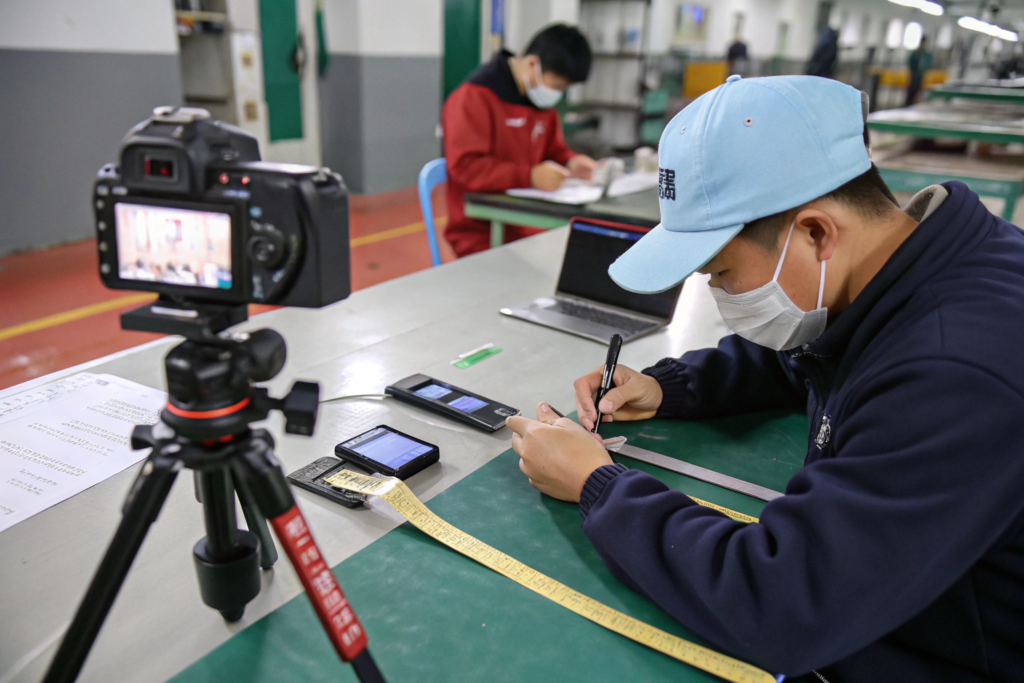
Preventing future elastic substitutions requires a three-part prevention system. Part one, the specification. The elastic specification must be documented in the purchase order with absolute clarity. Do not write "premium elastic." Write "braided polyester elastic, 6mm width, matte finish, recovery rate minimum 95% after 30 minutes at 100% extension, supplier reference XYZ-123." The specification must be measurable and verifiable. Part two, the pre-shipment verification. Require the factory to cut a sample of the elastic from the finished product, to perform the recovery test on camera, and to submit the video for your approval before the goods are shipped. The video must show the elastic being cut from the product, the initial length marked, the elastic stretched, and the recovery measured. The video is a single, continuous file with no cuts. You review the video, compare the elastic to the approved sample, and approve or reject the shipment. No shipment without approval. Part three, the incoming inspection. When the shipment arrives at your warehouse, pull a random sample of products. Cut open the products. Test the elastic yourself. Compare it to your retained approved sample. If the elastic fails, you have the evidence to refuse the shipment and demand corrective action. The combination of specification clarity, pre-shipment verification, and incoming inspection creates a closed loop that catches substitutions at three points.
The prevention system requires a small investment of time at each stage, but the return on that investment is the elimination of costly and brand-damaging elastic failures. Let me detail the two most effective prevention measures.
Should You Require a Pre-Shipment Elastic Test Video?
Yes, the pre-shipment elastic test video is the single most effective prevention measure for elastic substitution. It is a direct application of the principle that what gets measured and verified gets done correctly. The video requirements are specific. The video must begin by showing the purchase order or the specification document, with the elastic specification clearly visible. The video must show a finished product being randomly selected from the production batch. The carton label, with the purchase order number, is shown. The product is cut open on camera to reveal the elastic inside. The elastic is extracted. The video must show the elastic being measured and tested. The relaxed length is marked. The elastic is stretched to its maximum extension and held for 30 seconds. The elastic is released. The recovered length is measured. The recovery percentage is stated aloud. The video must be a single, continuous file with no cuts or edits. The video is sent to the buyer for review. The buyer watches the video, checks the recovery percentage against the specification, and responds with an approval or a rejection. The video review takes five minutes. The video production takes the factory’s QC inspector ten minutes. The cost is negligible. The deterrence effect is enormous. A factory that knows the elastic will be tested on camera and reviewed by the buyer is far less likely to attempt a substitution.
How Can a Retained Elastic Sample Prevent Future Disputes?
A retained elastic sample, also called a sealed sample or a reference standard, is a physical piece of the approved elastic that is signed, dated, and kept by both the buyer and the factory. It is the definitive reference for any quality dispute. The process is simple. Before production, the factory sends a length of the elastic they intend to use to the buyer. The buyer tests the elastic, confirms it meets the specification, and signs and dates the sample. The signed sample is returned to the factory. The buyer retains a second signed sample. Both parties now have an identical, approved reference standard. If a dispute arises about the elastic in the finished product, the retained sample is the arbiter. The elastic from the product is compared to the retained sample. The visual appearance, the width, the weave, and the recovery are all compared. There is no argument about what was agreed. The physical evidence is in hand. The retained sample eliminates the he-said-she-said dynamic that makes quality disputes so difficult to resolve. The retained sample should be stored in a safe place, protected from light and heat, and clearly labeled with the purchase order number, the date, and the signatures of the approving parties. It should be kept for at least the duration of the production order and for a reasonable period after delivery. We use retained samples for all critical materials, including elastic.
Conclusion
Handling a factory that uses cheaper elastic without approval is a test of your quality management system and your supplier relationship management. The unauthorized substitution of a lower-grade material is a breach of the specification and a breach of trust. It is a direct attack on the quality of your product and the reputation of your brand. How you respond determines whether the problem is a one-time event that is corrected and prevented, or a recurring issue that erodes your product quality and your customer loyalty. We have explored the root causes of elastic substitution, the cost pressures, the supply chain disruptions, and the internal miscommunications that lead factories to make these changes. We have detailed the documentation process, the recovery testing, the side-by-side photographs, and the specification evidence that transforms a subjective complaint into an objective, unassailable fact. We have discussed the compensation negotiation, the price reduction for usable products, and the full remake for unusable products. And we have outlined the prevention system, the pre-shipment elastic test videos, the retained elastic samples, and the incoming inspections that make substitutions virtually impossible to get away with.
At AceAccessory, material integrity is a core value. We do not substitute materials without our client’s written approval. Our elastic and all other critical materials are specified in detail in every purchase order. We retain sealed samples of every material for every order. Our QC team verifies materials at incoming inspection and during production. We provide pre-shipment material verification videos to our clients for their approval. We do this because we understand that the materials are the product. A headband with cheap elastic is not the headband that was designed. It is an inferior imitation. We do not make imitations. We make the products our clients designed and approved.
If you have been burned by a supplier who substituted inferior materials, or if you want to ensure that your current sourcing relationships have the right material controls in place, I am happy to discuss how we manage material quality. Contact our Business Director, Elaine, at elaine@fumaoclothing.com. Tell her about your product and your material quality concerns. She can share our material specification templates, our verification video process, and examples of our retained sample program. Do not let a cheaper elastic undermine your brand’s reputation for quality. Work with a factory that respects your specifications as much as you do.