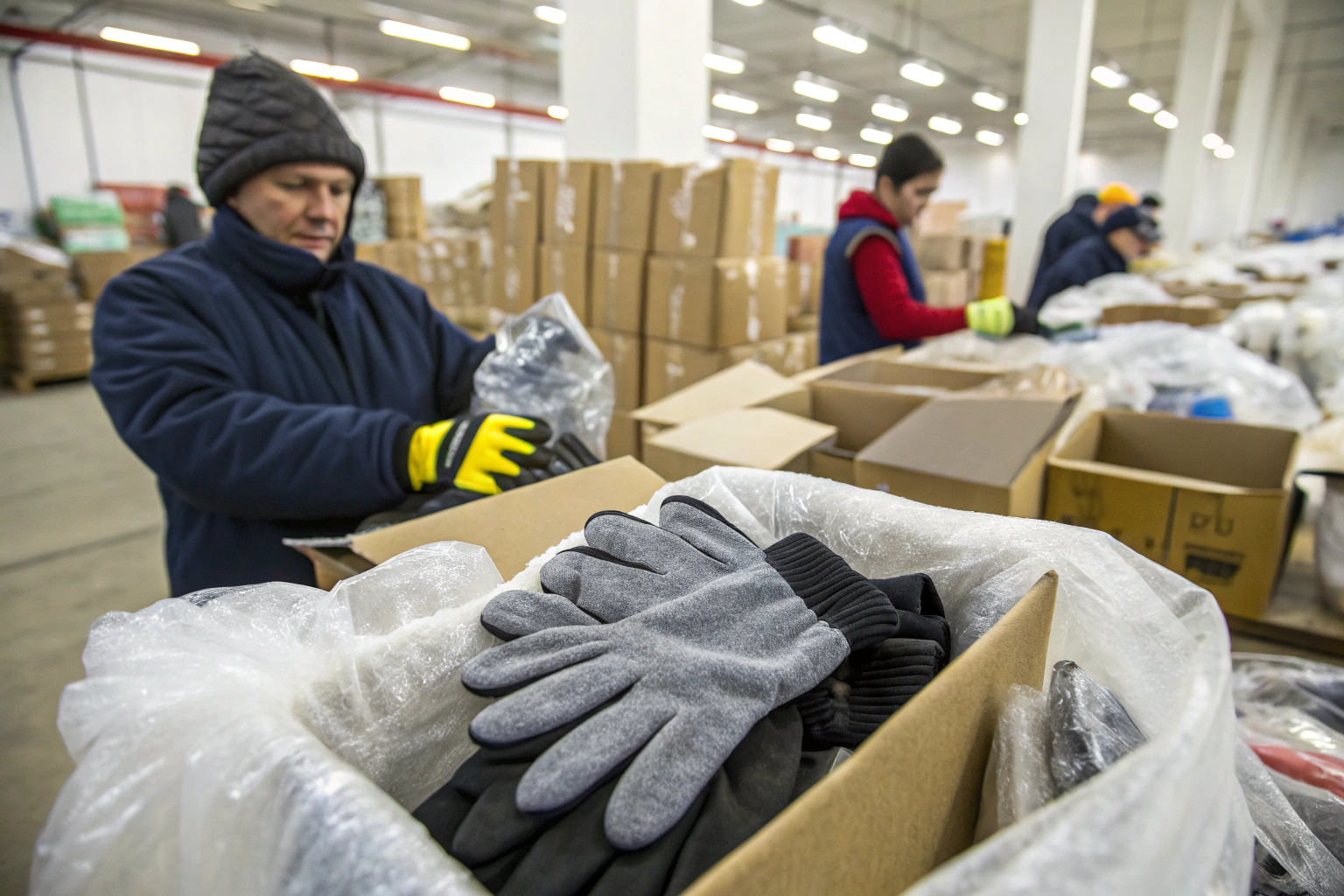
A Moscow-based distributor of winter accessories sent me a panicked email two winters ago. His shipment of synthetic fleece gloves had arrived at his warehouse, and when his team opened the master cartons, the gloves inside were a disaster. The polybags that held each pair of gloves were clinging to the fabric with an almost magnetic grip. When the workers pulled the gloves out, sparks crackled visibly in the dry warehouse air. The gloves themselves were covered in a fine film of dust and lint that had been attracted by the static charge. The product looked used, dirty, and cheap. His retail customers rejected the shipment. He had to repack every pair of gloves, a process that cost him time, labor, and money, and the delay caused him to miss a critical sales window. He asked me, "Why did this happen, and how do I make sure it never happens again?"
Russian buyers ask for anti-static packaging for synthetic gloves because the combination of Russia’s extremely dry winter climate, the inherent electrostatic properties of synthetic fibers like acrylic, polyester, and nylon, and the long, vibration-intensive transportation routes from factories in China to warehouses in Russia creates a perfect storm for static electricity buildup. Anti-static packaging prevents static charge generation during transit, stops the packaging from clinging to the product, prevents the attraction of dust and lint that makes the gloves look soiled, eliminates the unpleasant static shock that the end consumer experiences when opening the package, and protects any electronic components that may be integrated into modern gloves, such as heated glove batteries or touchscreen-compatible sensors. The requirement is particularly strong in Russia because much of the country experiences indoor relative humidity levels below 20 percent during the winter heating season, and static electricity becomes exponentially more problematic at these low humidity levels.
Static electricity is not just an annoyance. For a fashion accessory brand, it is a direct threat to perceived value. A pair of synthetic gloves that crackles with static when removed from its packaging, that attracts dust and lint like a magnet, and that clings to the polybag as if glued, does not feel like a premium product. It feels like a cheap, poorly made commodity. The Russian market, with its severe winters and widespread use of synthetic winter accessories, is particularly sensitive to this issue. Russian consumers have experienced static-clinging, dust-attracting synthetic products before, and they actively avoid brands that have this problem. At AceAccessory, we ship synthetic gloves to Russian distributors and retailers regularly, and we have developed anti-static packaging protocols specifically for this market. Let me walk you through the science, the solutions, and the specific requirements for the Russian market.
What Causes Static Buildup in Synthetic Glove Packaging
Understanding why static electricity is such a problem for synthetic glove packaging requires a quick review of basic physics, but I will keep it grounded in the practical reality of what happens inside a shipping container. Static electricity is the buildup of an electrical charge on the surface of a material. It occurs when two different materials come into contact and then separate, a phenomenon called the triboelectric effect. Electrons are transferred from one material to the other, leaving one material with a positive charge and the other with a negative charge. The charge remains on the surface because the materials are electrical insulators, they do not conduct electricity, so the charge cannot flow away. When the charged material comes near a conductor, or near another material with a different charge, the charge can discharge suddenly, creating a visible spark and an audible crackle.
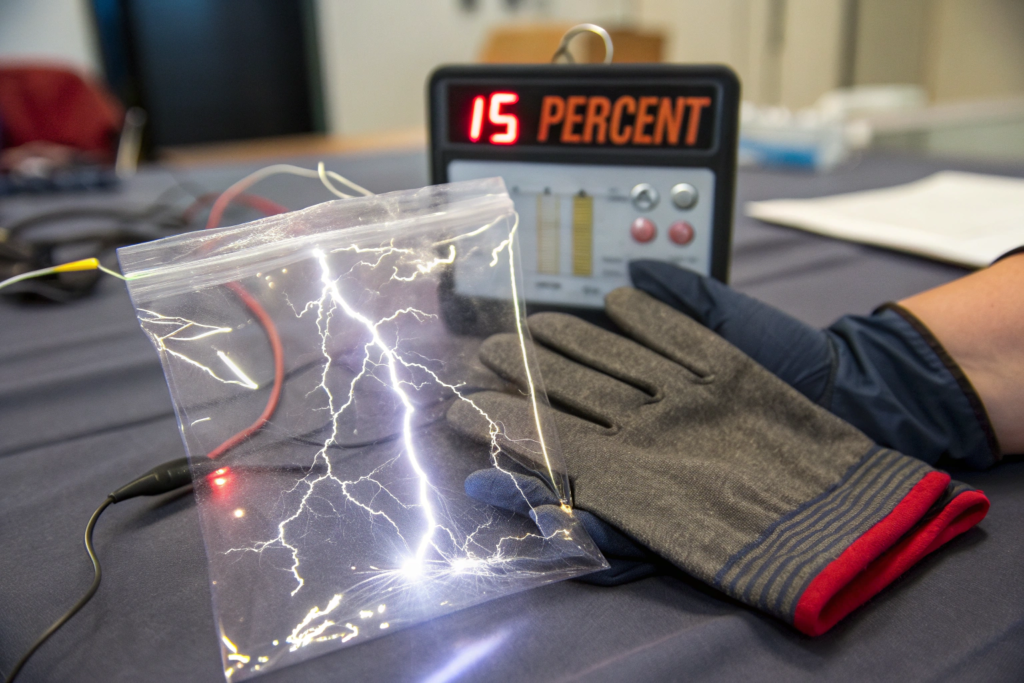
Static buildup in synthetic glove packaging is caused by the triboelectric interaction between the synthetic glove fibers and the packaging materials, amplified by extremely low humidity conditions during the Russian winter. Synthetic fibers like acrylic, polyester, and nylon are excellent electrical insulators. They sit high on the triboelectric series, meaning they readily give up or accept electrons when they rub against other materials. During the long transit from China to Russia, the gloves are subjected to constant vibration inside the polybag and the shipping carton. Every vibration causes microscopic rubbing between the glove fibers and the polybag surface. Each rub transfers electrons. The charge accumulates because neither the glove nor the polybag is conductive. The charge can reach tens of thousands of volts. When the humidity is low, as it is throughout Russia during the winter heating season, the air is a poor conductor, so the charge cannot leak away. The charge remains trapped on the product. When the consumer opens the package, the sudden discharge creates the characteristic static shock, and the charged glove immediately attracts any dust, lint, or hair in the vicinity.
The problem is compounded in Russia by the indoor environment. Russian buildings are heated intensely during the winter. The heating systems, typically hot-water radiators, do not add moisture to the air. The outdoor air is already dry because cold air holds very little moisture. When this cold, dry air is brought indoors and heated to a comfortable 22 to 24 degrees Celsius, the relative humidity plummets. It is common for Russian homes and warehouses to have relative humidity levels of 10 to 20 percent during the winter. At these levels, static electricity is at its most aggressive. Let me explain the two key factors in more detail.
Why Are Synthetic Fibers More Prone to Static Than Natural Fibers?
The difference between synthetic and natural fibers in terms of static electricity is a matter of moisture absorption. Natural fibers like cotton, wool, and cashmere are hydrophilic. They absorb moisture from the air. At a normal indoor humidity of 40 to 60 percent, natural fibers contain a significant amount of absorbed water, typically 8 to 15 percent of their weight. This moisture acts as a conductor. It allows electrical charges to dissipate before they can build up to high voltages. A cotton glove, even in relatively dry conditions, will rarely generate a noticeable static charge. Synthetic fibers are hydrophobic. They do not absorb moisture. The moisture regain of polyester is approximately 0.4 percent. For acrylic, it is 1 to 2 percent. For polypropylene, it is essentially zero. Without internal moisture, there is no conductive pathway for charges to dissipate. Every electron that is transferred during rubbing stays exactly where it landed. The charges accumulate, and the voltage builds. Within the synthetic fiber category, there is a hierarchy of static propensity. Acrylic is the worst offender. Its chemical structure makes it particularly effective at generating and holding a static charge. Polyester is next. Nylon is slightly less static-prone than polyester because it can absorb a small amount of moisture. The fabric construction also matters. Brushed, high-pile fabrics like fleece generate more static because the large surface area of the fluffy fibers creates more contact points for friction. Smooth, tightly woven synthetic fabrics generate less static. The synthetic materials commonly used in winter gloves, acrylic knit shells, polyester fleece linings, nylon waterproof membranes, are all at the high end of the static propensity scale.
How Does the Russian Winter Climate Amplify the Problem?
Russia’s winter climate is uniquely conducive to static electricity. The continental climate of European Russia and the subarctic and Arctic climates of Siberia produce long periods of extreme cold. In Moscow, average January temperatures are around minus 10 degrees Celsius. In Novosibirsk, minus 20. In Yakutsk, minus 40. Cold air has a very low absolute humidity. Even if the relative humidity of the outdoor air is 80 percent, the total amount of water vapor in the air is tiny because cold air simply cannot hold much moisture. When this cold air enters a building and is heated, the relative humidity drops precipitously. A cubic meter of air at minus 20 degrees Celsius and 80 percent relative humidity contains about 1 gram of water vapor. When that same air is heated to 22 degrees Celsius, its capacity to hold moisture increases, and the relative humidity drops to about 5 to 10 percent. This is extraordinarily dry. It is dryer than the Sahara Desert on a typical day. In this environment, static electricity runs rampant. Every movement, every touch, generates a spark. The synthetic gloves in their packaging are sitting in this ultra-dry environment. Any static charge that was generated during transit is preserved. Any rubbing during unpacking generates additional charge. The problem is not limited to the consumer’s home. It affects the entire supply chain. Warehouses in Russia are often unheated or minimally heated, but even in heated warehouses, the indoor humidity is low. Retail stores, heated to a comfortable temperature for customers, have the same dry air. At every step from the container arrival to the retail display, the gloves are in a static-prone environment. The anti-static packaging must protect the product throughout this entire journey.
What Anti-Static Packaging Solutions Are Available for Gloves
Anti-static packaging is the primary defense against static-related product damage and presentation problems. The packaging must perform several functions simultaneously. It must prevent the generation of static charge when the gloves rub against the packaging during transit. It must provide a pathway for any existing charge to dissipate safely. It must protect the gloves from external static fields that could attract dust. And it must do all of this without adding excessive cost, without complicating the packaging process, and without compromising the visual presentation of the product on the retail shelf.
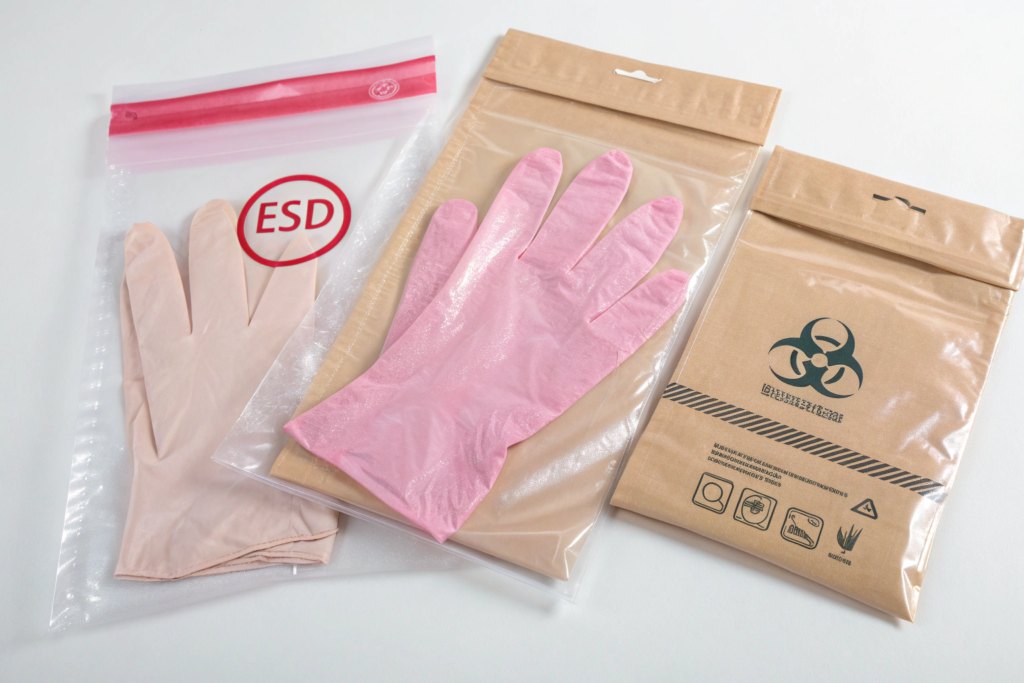
The anti-static packaging solutions available for synthetic gloves are anti-static treated polybags, conductive or static-dissipative packaging materials, and humidity-stabilizing packaging systems. Anti-static treated polybags are the most common and cost-effective solution. They are standard polyethylene bags that have been treated with an anti-static agent, typically an amine-based or glycerol-based compound that migrates to the surface of the plastic and attracts microscopic moisture from the air. This moisture layer provides a conductive pathway that dissipates static charges. The bags are usually tinted pink or blue, though clear versions are available. Conductive packaging materials, such as carbon-loaded polyethylene bags, provide a higher level of protection. The carbon black additive makes the plastic electrically conductive, so charges cannot build up. These bags are typically black and are more expensive than anti-static treated bags. They are used for gloves with sensitive electronic components. Humidity-stabilizing packaging involves including a small humidity control pack, a two-way humidity control sachet, inside the sealed polybag. The pack maintains a constant relative humidity of 50 to 60 percent inside the bag, which prevents static buildup regardless of the external environment. This is a premium solution for high-value gloves. For most synthetic glove applications, a standard anti-static treated polybag provides adequate protection and is the most economical choice.
The choice of packaging solution depends on the glove’s price point, the presence of electronic components, the expected transit and storage conditions, and the brand’s sustainability commitments. Some brands are moving away from plastic packaging entirely and using anti-static paper or cardboard packaging. Let me detail the two most practical solutions.
How Do Anti-Static Polybags Prevent Static Cling?
Anti-static polybags work by modifying the surface electrical properties of the polyethylene film. Standard polyethylene is an excellent insulator with a surface resistivity of 10^14 to 10^16 ohms per square. This means it does not conduct electricity at all. Any charge that builds up stays exactly where it formed. An anti-static polyethylene film has a surface resistivity in the dissipative range, 10^9 to 10^11 ohms per square. It is not fully conductive, but it allows electrical charges to move slowly across the surface and dissipate before they can build up to problematic levels. The anti-static property is achieved by incorporating an anti-static agent into the polyethylene during the film manufacturing process. The agent is typically an ethoxylated amine or a glycerol ester. These molecules have a hydrophilic, water-loving, head and a hydrophobic, water-fearing, tail. The hydrophobic tail anchors the molecule in the polyethylene matrix. The hydrophilic head migrates to the surface of the film, a process called blooming. On the surface, the hydrophilic heads attract microscopic amounts of moisture from the air. This moisture forms an invisible, ultra-thin conductive layer. The layer is only a few molecules thick, but it is sufficient to allow static charges to dissipate. The blooming process continues over time. As the surface agent is worn or washed away, more agent migrates from the bulk of the film to replace it. This means the anti-static property is long-lasting, not a temporary coating that rubs off. The anti-static agent also reduces the triboelectric charging of the film itself. When the film rubs against the synthetic glove fabric, the agent reduces the electron transfer that would otherwise occur. The bag generates less static in the first place. The combination of reduced charge generation and enhanced charge dissipation makes anti-static polybags highly effective at preventing static cling.
What Is the Difference Between Anti-Static and Static Shielding Packaging?
The terms anti-static, static dissipative, conductive, and static shielding describe different levels of electrostatic protection, and they are often confused. It is important to use the correct term for the correct application. Anti-static packaging, as described above, has a surface resistivity in the dissipative range and prevents the buildup of static charge through triboelectric reduction and slow charge dissipation. It protects the product from static cling and dust attraction. It does not protect the product from external electrostatic fields. If an anti-static bag is placed near a strong static field, the charge can be induced onto the product inside the bag. Static dissipative packaging is very similar to anti-static. The terms are often used interchangeably. The surface resistivity is in the same 10^9 to 10^11 ohms per square range. Conductive packaging has a much lower surface resistivity, typically less than 10^4 ohms per square. It is made by adding a high loading of conductive carbon black to the plastic. The carbon particles touch each other, forming a continuous conductive network. A charge that contacts a conductive bag is immediately conducted away. Conductive bags are typically black and are more expensive. Static shielding packaging is a multi-layer laminate designed to protect sensitive electronic components. The outer layer is a dissipative polymer. The middle layer is a thin metal foil, usually aluminum. The inner layer is another dissipative polymer. The metal foil layer acts as a Faraday cage, blocking external electrostatic fields from reaching the product inside. Static shielding bags are used for circuit boards and sensitive electronics. For synthetic gloves without electronic components, anti-static or dissipative packaging is sufficient. For gloves with integrated heating elements, batteries, or touchscreen sensors, static shielding packaging may be warranted, and this is often specified by Russian buyers who are familiar with the harsh static environment.
How Does Anti-Static Packaging Protect Heated and Tech Gloves
The rise of heated gloves and technology-integrated gloves has added a new and urgent dimension to the anti-static packaging requirement. A standard synthetic glove that becomes charged with static is an annoyance. A heated glove with a lithium-ion battery, a carbon fiber heating element, and a Bluetooth control module that becomes charged with static is a potential fire hazard and a guaranteed electronic failure. The electronic components in modern gloves are sensitive to electrostatic discharge, or ESD. A single spark of static electricity, imperceptible to the human touch, can destroy a microchip, corrupt a memory module, or damage a battery management circuit. The damage may not be immediately visible. The glove may appear to work, but the electronic component has been degraded and will fail prematurely.
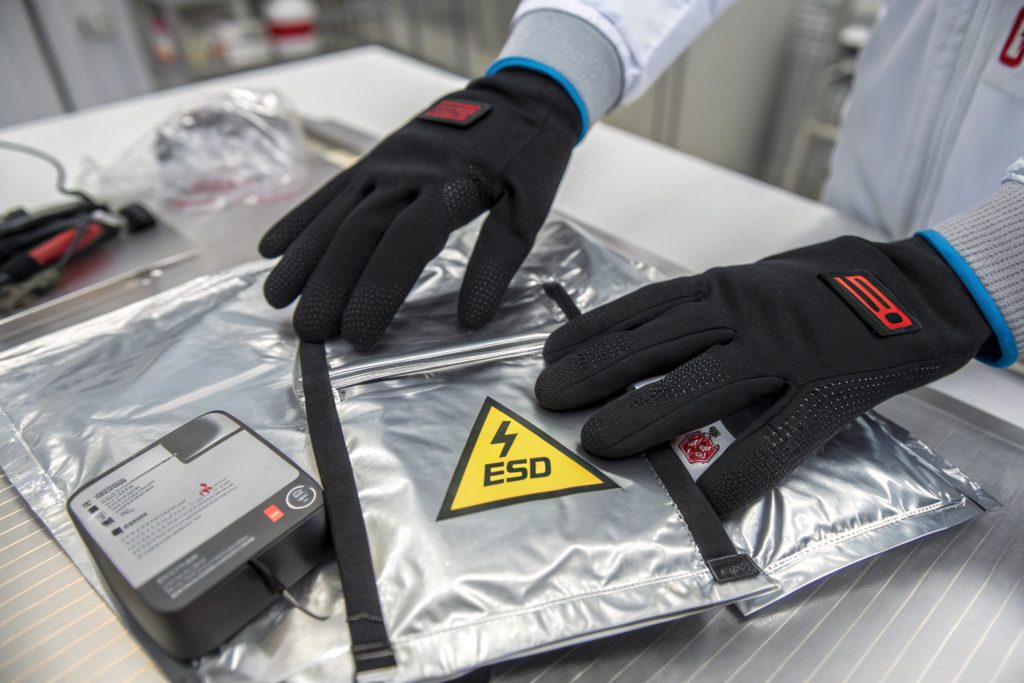
Anti-static packaging for heated and tech gloves must provide a higher level of protection than for standard synthetic gloves. The packaging must be static shielding, not just anti-static. It must protect the electronic components from external electrostatic fields and from direct electrostatic discharge. The ideal packaging for heated gloves is a metalized static shielding bag with a dissipative inner layer. The metalized layer creates a Faraday cage around the gloves, blocking external electric fields. The dissipative inner layer prevents charge buildup inside the bag. The battery should be disconnected from the heating element during transit, and the battery terminals should be covered with insulating tape or a protective cap. The gloves should be packaged in a way that prevents the electronic components from rubbing against each other or against the packaging. Any printed instructions for the consumer should include a warning about static electricity and a recommendation to touch a grounded metal object before handling the electronic components. The packaging should be clearly labeled with the ESD susceptibility symbol, indicating that the contents are sensitive to electrostatic discharge.
The Russian market for heated gloves is significant and growing. Russian consumers spend more time outdoors in extreme cold than consumers in almost any other developed market. Heated gloves are a practical necessity, not a luxury, for many workers and outdoor enthusiasts. The reliability of these gloves is paramount, and anti-static packaging is a critical part of ensuring that the gloves work when they are needed most. Let me detail the specific risks and protections.
Why Are Lithium-Ion Batteries Sensitive to Static Electricity?
Lithium-ion batteries are the power source for virtually all modern heated gloves. A typical heated glove battery is a 7.4-volt lithium-ion pack with a capacity of 2200 to 3500 milliamp-hours. The battery contains a battery management system, or BMS, a small circuit board that monitors the battery voltage, controls the charging and discharging, and provides safety protections against overcharge, over-discharge, and short circuit. The BMS contains sensitive semiconductor components, microcontrollers, voltage regulators, and MOSFET transistors. These components are vulnerable to ESD. A static discharge of just a few hundred volts, far below the threshold of human sensation, which is around 3,000 volts, can puncture the thin oxide layers inside a semiconductor, destroying the component. The damage can be latent. The component may continue to function for a while, but its lifetime has been drastically shortened. It may fail weeks or months later, long after the customer has been using the gloves. The battery itself, the lithium-ion cells, is less directly sensitive to ESD, but a static spark near a damaged or improperly sealed cell can ignite the flammable electrolyte, causing a fire. This is a rare but catastrophic event. The battery terminals are the primary entry point for ESD. If a static charge is applied to the terminals, it can travel directly into the BMS. This is why the battery should be disconnected from the glove during transit and the terminals should be protected. The heating elements, carbon fiber or graphene, are more robust against ESD than the BMS, but they can still be damaged by a direct, high-energy discharge. The static shielding packaging protects all of these components by preventing any static charge from reaching them.
Should Tech Gloves Be Packaged in Static Shielding Bags?
Yes, absolutely. For any glove that contains an integrated electronic component, a lithium-ion battery, a heating element with electronic control, a Bluetooth module, or a touchscreen sensor array that includes active electronics, static shielding packaging is the minimum standard for the Russian market. The static shielding bag is a multi-layer structure. The outer layer is a dissipative polyester, designed to prevent triboelectric charging. The middle layer is a thin aluminum foil, typically 0.01 to 0.02 millimeters thick, that provides the Faraday cage effect. The inner layer is a dissipative polyethylene that prevents charge buildup inside the bag and protects the gloves from abrasion. The bag is sealed, either with a heat seal or with a zip closure that incorporates a conductive tape. The conductive tape ensures electrical continuity across the closure, maintaining the integrity of the Faraday cage. The static shielding bag should be marked with the ESD susceptibility symbol and with the manufacturer’s name and the batch code, for traceability. The gloves should be placed inside the bag with the battery disconnected and the terminals protected. The bag should be sealed, and the sealed bag can then be placed in the retail packaging, a cardboard box or a display sleeve. The static shielding bag protects the electronics until the consumer opens the package. The consumer should be instructed to open the bag in a static-safe manner, ideally by touching a grounded metal object before handling the gloves. The additional cost of a static shielding bag over a standard anti-static bag is modest, typically a few cents per unit. For a product that retails for 100 dollars or more, this cost is negligible compared to the cost of a product return, a warranty claim, or, in the worst case, a safety incident.
How Should Anti-Static Gloves Be Labeled for the Russian Market
Labeling is the bridge between the technical solution and the consumer. The anti-static packaging does its job silently, preventing static buildup during transit and storage. But the consumer needs to know what they are buying and how to handle the product. The label communicates the anti-static property, provides care and handling instructions, and satisfies the legal requirements of the Russian market. The label is not an afterthought. It is an integral part of the anti-static packaging system.
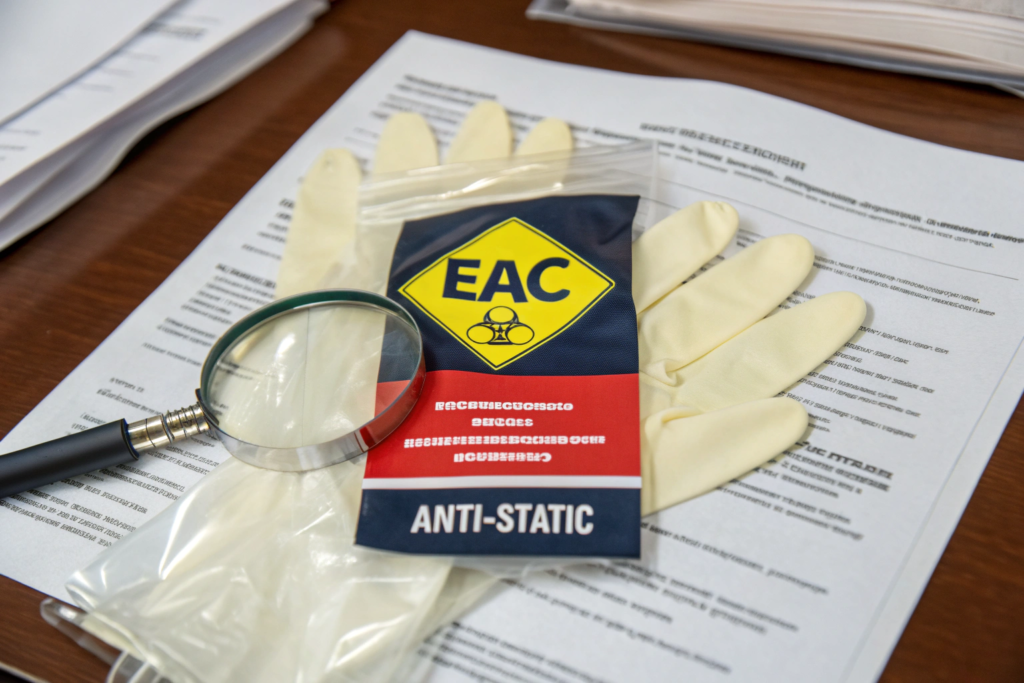
Anti-static packaging for gloves sold in the Russian market must be labeled in the Russian language with specific information. The label should state that the packaging is anti-static, using the Russian phrase "Антистатическая упаковка." The label should include the EAC conformity mark, the Eurasian Conformity mark, which is required for products sold in the Eurasian Economic Union, including Russia. The label should include care instructions for the gloves, and these instructions should address static electricity. For example, a recommendation to store the gloves in the anti-static packaging when not in use, or to wash the gloves with a fabric softener to reduce static. For heated or electronic gloves, the label should include the ESD susceptibility symbol and a warning to discharge static electricity before handling the electronic components. The label should be durably attached to the packaging, either printed directly on the polybag or on a separate adhesive label. The text must be legible and in a reasonable font size. The labeling requirements are enforced by Rospotrebnadzor, the Russian consumer protection agency, and non-compliance can result in fines and product withdrawal.
The labeling should also serve a marketing function. The anti-static property is a benefit that can differentiate the product on the retail shelf. A simple statement, "Антистатическая упаковка – перчатки готовы к использованию без слипания и треска," meaning "Anti-static packaging – gloves ready to use without clinging and crackling," communicates the benefit clearly to the consumer who has experienced the frustration of static-clinging gloves. Let me detail the two most important labeling elements.
What Russian-Language Wording Should Be Used for Anti-Static Claims?
The language used on the label must be accurate, legally compliant, and consumer-friendly. The standard technical term for anti-static in Russian is "Антистатический." This is the term used in technical regulations and industry standards. It is understood by a wide range of consumers. The label can say "Антистатическая упаковка" for "Anti-static packaging." For a more consumer-friendly approach, the label can use benefit-oriented language. "Защита от статического электричества" means "Protection from static electricity." "Без статического прилипания" means "Without static cling." "Готовы к использованию без искр" means "Ready to use without sparks." The best approach is to combine the technical term with the consumer benefit. For example, "Антистатическая упаковка – перчатки не слипаются и не притягивают пыль," meaning "Anti-static packaging – gloves do not cling and do not attract dust." This tells the consumer what the technology is and what it does for them. For heated or electronic gloves, the warning language should be more explicit. "ВНИМАНИЕ: Электронные компоненты чувствительны к статическому электричеству. Перед извлечением перчаток из упаковки прикоснитесь к заземленному металлическому предмету," meaning "ATTENTION: Electronic components are sensitive to static electricity. Before removing the gloves from the packaging, touch a grounded metal object." The warning should be printed in a contrasting color, typically black text on a yellow or white background, to draw attention. The language should be reviewed by a native Russian speaker with knowledge of the textile or electronics industry to ensure accuracy and appropriateness.
Are There EAC Compliance Requirements for Anti-Static Packaging?
The EAC, Eurasian Conformity, mark is the mandatory certification mark for products sold in the Eurasian Economic Union, which includes Russia, Belarus, Kazakhstan, Armenia, and Kyrgyzstan. The EAC mark indicates that the product meets the requirements of the relevant Technical Regulations of the Customs Union. For anti-static packaging used with gloves, the applicable technical regulation is TR CU 017/2011 on the Safety of Light Industry Products. This regulation covers textile products and their packaging. It requires that packaging materials be safe, that they do not release harmful substances that could contaminate the product, and that they are labeled with the necessary information. The anti-static property itself is not directly regulated by TR CU 017/2011. It is a performance feature, not a safety feature. However, the EAC mark must appear on the product label, and all information on the label must be truthful and not misleading. If the label claims that the packaging is anti-static, that claim must be true. A false claim would violate the Law on Protection of Consumer Rights. For electronic components in heated gloves, the applicable regulation is TR CU 020/2011 on Electromagnetic Compatibility of Technical Equipment. This regulation requires that electronic devices not emit electromagnetic interference that could affect other devices, and that they be resistant to external electromagnetic interference, including electrostatic discharge. The ESD protection provided by anti-static packaging supports the compliance of the electronic components with this regulation. The EAC mark is obtained through a certification process that involves testing the product to the applicable standards by an accredited laboratory. The certification is held by the Russian importer or their authorized representative. As the manufacturer, our responsibility is to provide the importer with the technical documentation and the packaging samples needed to support the certification.
Conclusion
The Russian buyer’s requirement for anti-static packaging on synthetic gloves is not an arbitrary preference. It is a response to a specific and severe environmental condition, the ultra-dry Russian winter, that makes static electricity a major problem for synthetic textile products. The static charge that accumulates during the long transit from China and during storage in dry Russian warehouses causes gloves to cling to their packaging, attract dust and lint, and deliver unpleasant shocks to the end consumer. For heated and tech-enabled gloves, the static threat is more than cosmetic. It is a genuine risk to the electronic components that make the gloves function. The solution is a multi-layered one. Anti-static treated polybags for standard synthetic gloves, providing charge dissipation and reduced charge generation. Static shielding bags for electronic gloves, providing a Faraday cage that protects sensitive components. And proper labeling in the Russian language, communicating the anti-static benefit and providing handling instructions.
At AceAccessory, we have developed anti-static packaging protocols specifically for the Russian market. We use anti-static polybags from audited suppliers, and we verify the surface resistivity of every batch of bags with a calibrated meter. For our heated glove products, we use static shielding packaging and we follow a strict ESD-safe handling procedure in our packing area. Our Russian-language labels are written by native speakers and reviewed for compliance with the relevant technical regulations. We provide our Russian buyers with the documentation they need to support their EAC certification. We understand that a glove that crackles with static when it is opened is a glove that will be returned, and we are committed to ensuring that every pair of gloves that leaves our factory arrives in the consumer’s hands in perfect, static-free condition.
If you are sourcing synthetic gloves or heated gloves for the Russian market, and you need a manufacturing partner who understands the anti-static packaging requirement, I invite you to contact us. Reach out to our Business Director, Elaine, at elaine@fumaoclothing.com. Tell her about your product, your target market, and any anti-static requirements you have. She can provide samples of our anti-static and static shielding packaging options, share our packaging test reports, and give you the confidence that your gloves will reach your Russian customers looking and performing exactly as they should.