You have the mascot sketched on a napkin. A giant foam taco hat. Or maybe a company logo shaped like a swooping eagle that sits on a person’s head. The marketing team is hyped. The event date is locked. Then you email five "custom foam" suppliers, and three of them ghost you. The other two send back quotes with tooling fees so high they eat your entire promotional budget. The real problem is not your design. It is that most factories only want to print logos onto a standard crown hat, not sculpt a three-dimensional character from scratch.
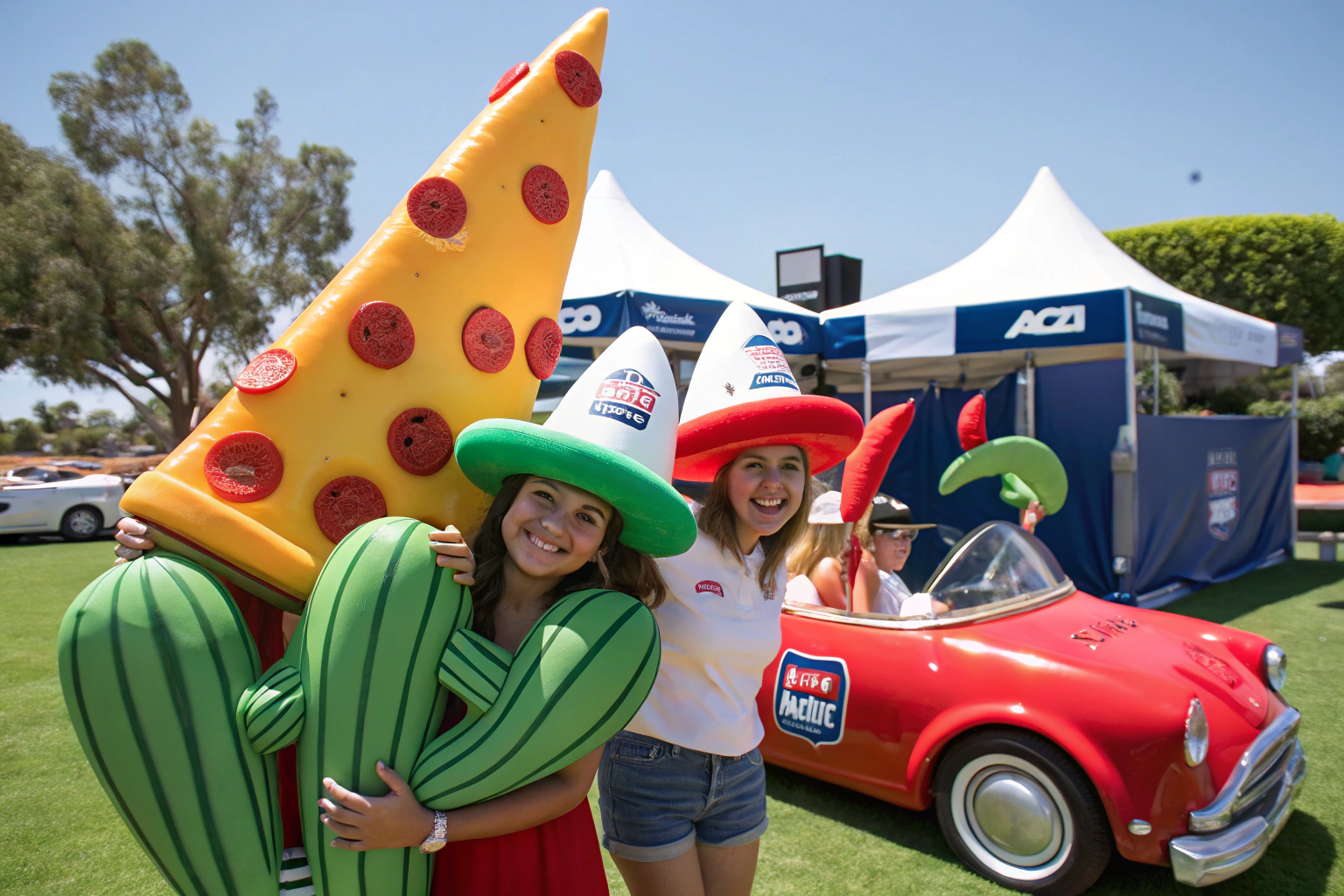
Yes, we absolutely produce custom shape foam hats for promotional events. Using high-density EVA foam, precision CNC sculpting, and hand-finishing techniques, we can turn your 2D mascot or logo into a lightweight, wearable, and durable 3D hat that sits comfortably on a person’s head for hours of brand exposure.
This is not a simple print job. It is a sculpture project mixed with textile engineering. I want to show you exactly how a block of foam transforms into a wearable brand statement, what the mold-making costs actually look like, and how we keep the product safe on a moving head without a chin strap pinching the wearer’s jaw.
How Are Sculpted 3D Foam Hat Molds Engineered?
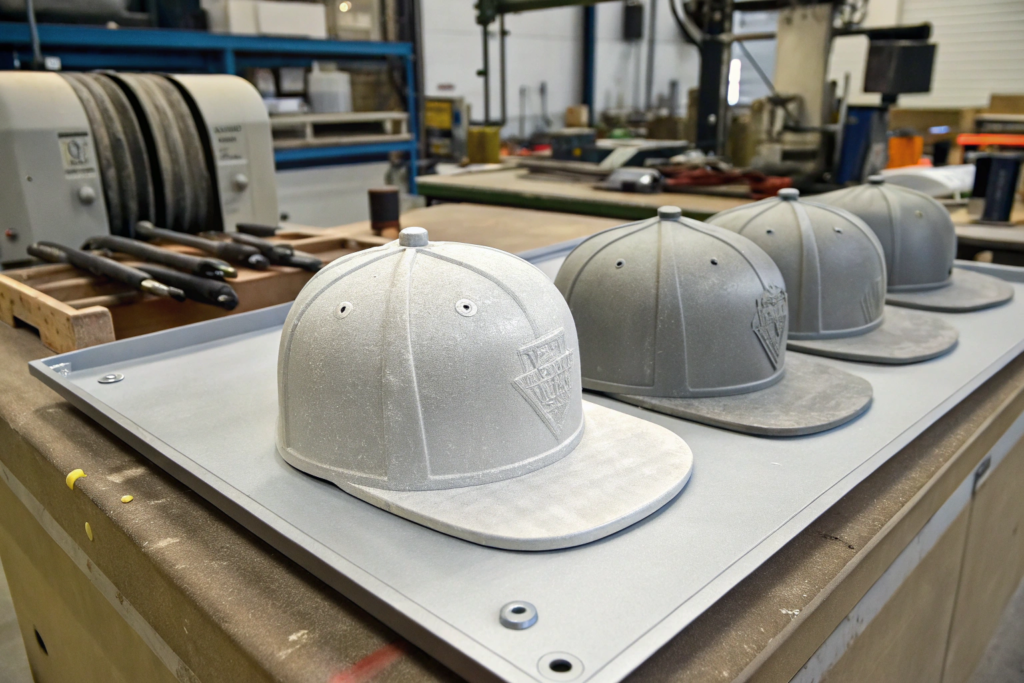
The secret is not in the foam. It is in the aluminum mold that shapes it. When a client sends us a sketch of a cartoon whale, we cannot just carve the foam by hand for 1,000 pieces. The hand-carved prototype looks organic, but the consistency falls apart on piece number 50. The left eye droops. The right fin gets shorter. For a brand activation, every ambassador must wear an identical whale.
Sculpted 3D foam hat molds are engineered through a two-part cast aluminum process. Our design team first renders a 3D digital model from your sketch, then mills a prototype for your approval, and finally creates a water-cooled aluminum mold that can stamp hundreds of identical foam shells per day with zero shape drift.
The real limitation is the undercut geometry. You cannot have a foam shape that locks the head in like a helmet unless we build it in sections. A classic baseball cap pulls away from the head easily. A foam alligator head with a long snout creates torque. If the snout is too long, the hat tips forward. We balance the center of gravity by hollowing out the back and adding a lightweight counterweight strap hidden under the foam material layers, which maintains the theatrical silhouette without causing neck fatigue.
What is the difference between compression molding and hand sculpting?
Hand sculpting wins on a single mascot piece for a photo shoot. Compression molding wins for a 200-piece stadium giveaway. Hand sculpting involves a skilled artisan shaping a block of polyurethane with knives and sandpaper, sealing it, and painting it. The cost per unit is high because of the labor hours. Compression molding uses heat and pressure to bake the foam inside the closed aluminum mold. The cycle time is roughly 3 to 5 minutes per piece. This drops the individual unit cost dramatically, making it viable for large promotional runs.
How does undercut geometry affect the design limits?
If your logo includes a 90-degree sharp corner that overhangs, the rigid aluminum mold cannot open without ripping the foam. We have to split the design into two halves and glue them together using a hot-melt process. I once built a "dinosaur head" foam hat with sharp teeth that we molded in left and right jaw sections and sealed together with an invisible seam. The client never noticed the split line hidden on the crease of the mouth. Mastering this allows us to deliver complex promotional hats without seams ruining the look.
What Foam Densities Weigh Least for All-Day Wear?
A heavy foam hat turns a fun promotion into a chiropractor appointment. I tested a prototype pineapple hat once that weighed 1.8 kilos. After twenty minutes, the wearer was holding it in their hands, not wearing it. The billboard effect was lost. Weight distribution is the primary design constraint, not an afterthought.
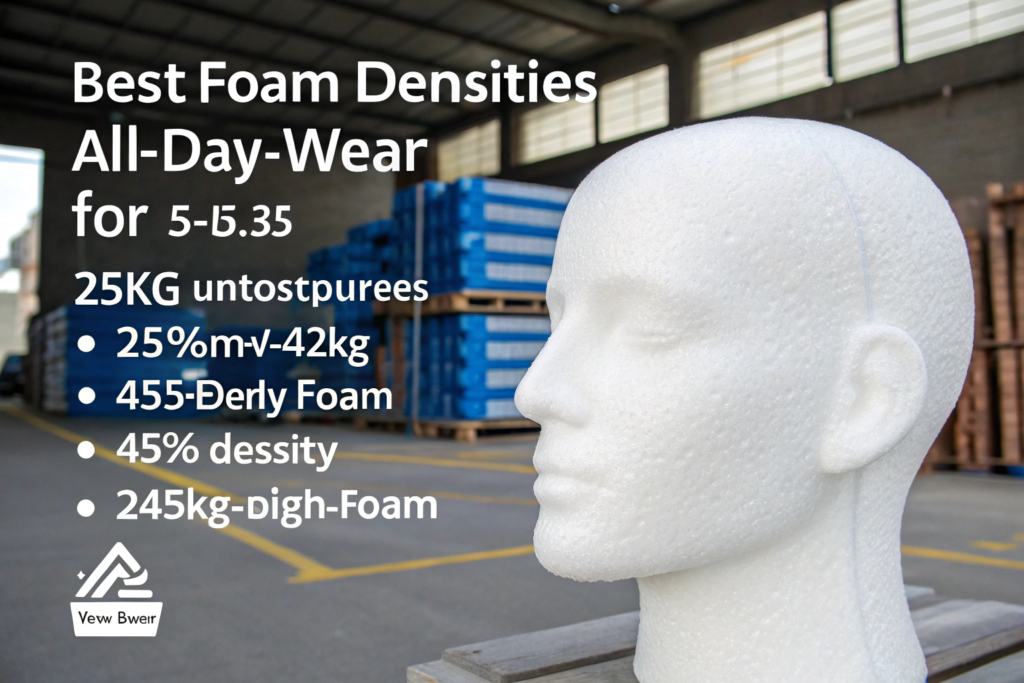
The best foam densities for all-day wear are 25 kg/m³ to 45 kg/m³ EVA cross-linked foam. The 25 density works for oversized mascot heads that need extreme lightness, while 45 density provides the structural rigidity needed for a crisp corporate logo shape without collapsing in humid summer air.
We use a cross-linked EVA foam specifically designed for cosplay and sports padding. This material is closed-cell, so it does not absorb sweat or condensation from a beer garden event. A sweaty foam hat becomes heavy and breeds bacteria inside the inner cavity.
| Foam Density (kg/m³) | Texture Feel | Best Application | Average Weight (per average hat) |
|---|---|---|---|
| 25 | Squishy/Soft | Giant mascot heads, cartoon tummies | 120 – 180 grams |
| 35 | Cushioned/Flexible | Novelty hats and food shapes | 200 – 280 grams |
| 45 | Rigid/Crisp | Corporate logo shapes, architectural forms | 350 – 450 grams |
For a rush bulk order destined for a trade show in Las Vegas, we strictly recommend the 35 density. It offers enough rigidity for branding shapes without stressing the forehead during the long convention floor hours. We also apply flocking fabric inside the crown, which absorbs any forehead moisture and prevents the smooth foam from sticking to the skin.
How does infill pattern remove weight without losing shape?
A solid foam block is heavy. We program our CNC to leave a honeycomb infill pattern inside the thickest areas. Just like a lightweight aircraft wing, the internal structure holds the skin apart. We route out 50% of the material from the core. The outside shell remains identical thickness, so the logo looks the same, but the foam hat drops 150 grams instantly. This step adds machine time for foam sculpting but saves the promotion from becoming landfill because people refuse to wear a heavy hat.
Is closed-cell foam safe for direct skin contact?
Absolutely. The Food and Drug Administration does not strictly oversee these hats, but we treat them as safety products. We use non-toxic, latex-free and phthalate-free EVA foam. We do not use cheap polyurethane that off-gasses a chemical smell under the sun. If a kid wears a foam pizza slice hat for a birthday party, the sweat does not leach anything toxic. All our materials pass California Proposition 65 standards, which is a universal benchmark for promotional product safety in the US.
How to Print Durable Brand Graphics Without Cracking the Foam?
When a bendable foam hat twists, the ink layer must twist with it. A standard UV rigid ink prints beautifully on a flat panel, but it snaps like a potato chip when the foam flexes. Promotional marketing managers call us in a panic when their event team unpacks the hats and the logo surface is covered in spider-web cracks.
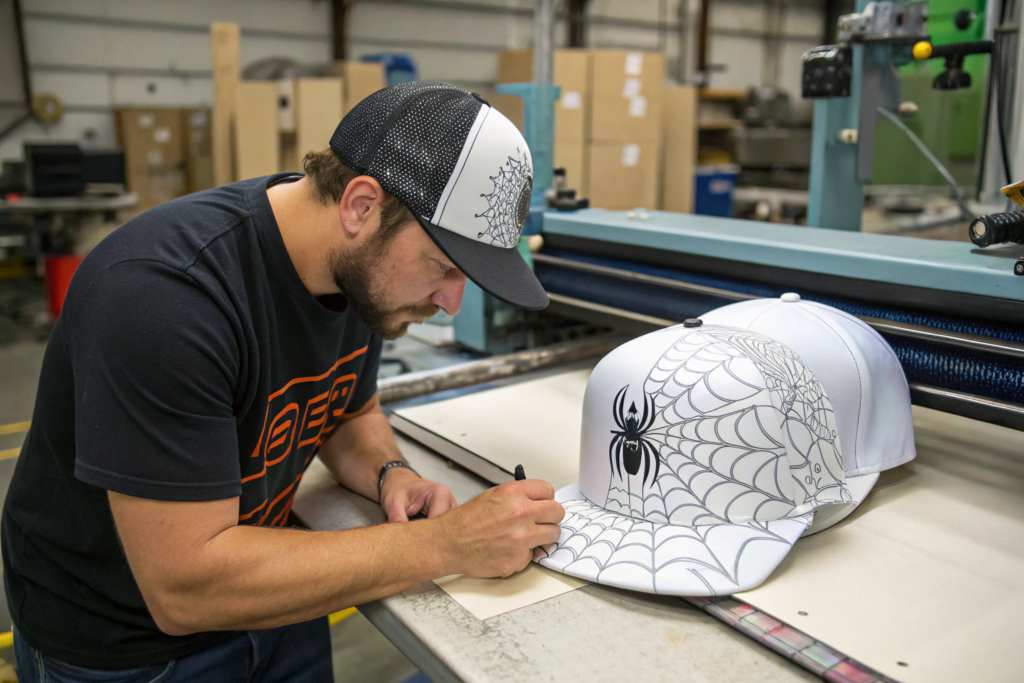
The durable way to print brand graphics on flexible foam hats is by using a water-based elastic polyurethane paint system applied through high-precision spray masking, followed by a flexible clear coat sealer. This combination stretches and compresses with the foam substrate without delamination, even when the hat is folded for shipping.
We do not use vinyl stickers. A sticker on a curved, sweating foam surface peels off in the heat. Instead, we laser-cut a mylar mask template, lay it on the foam hat, and spray the water-based ink into the exposed area. The ink bonds at a molecular level with the EVA.
Why don’t we use direct UV flatbed printing for this?
UV ink is brittle. On a rigid sign board, it rules. On a squishy, wearable foam hat, it fails. When the hat is packed flat inside a shipping carton, the ink surface goes into compression. When a head stretches the hat open, the surface goes into tension. This expansion-contraction cycle snaps rigid ink lines. Our flexible polyurethane paint stretches 200% before cracking. Your logo remains pristine after a hundred wears at summer music festivals or outdoor sports events.
Can I use multi-color gradients and halftones?
Yes, but it requires a realistic production layer separation. We can run a 4-color process with halftone dots if the shape is relatively flat. For highly contoured mascot shapes, we recommend limiting to solid Pantone spot colors because the curved surfaces distort a dot pattern. I always ask a new promotional client: "Does your marketing director care more about an exact Pantone match or a photorealistic avocado texture?" That answer determines the printing technique, whether screen printing with flexible inks or a hand-airbrushed blend.
What Internal Headbands Keep a Foam Novelty Hat Secure in Wind?
You can shape the most beautiful foam hat on earth, but if it flies off a CEO’s head into a fountain during an outdoor press event, you have a viral failure video instead of a marketing win. The internal fit system is the most under-engineered part of a foam novelty hat.
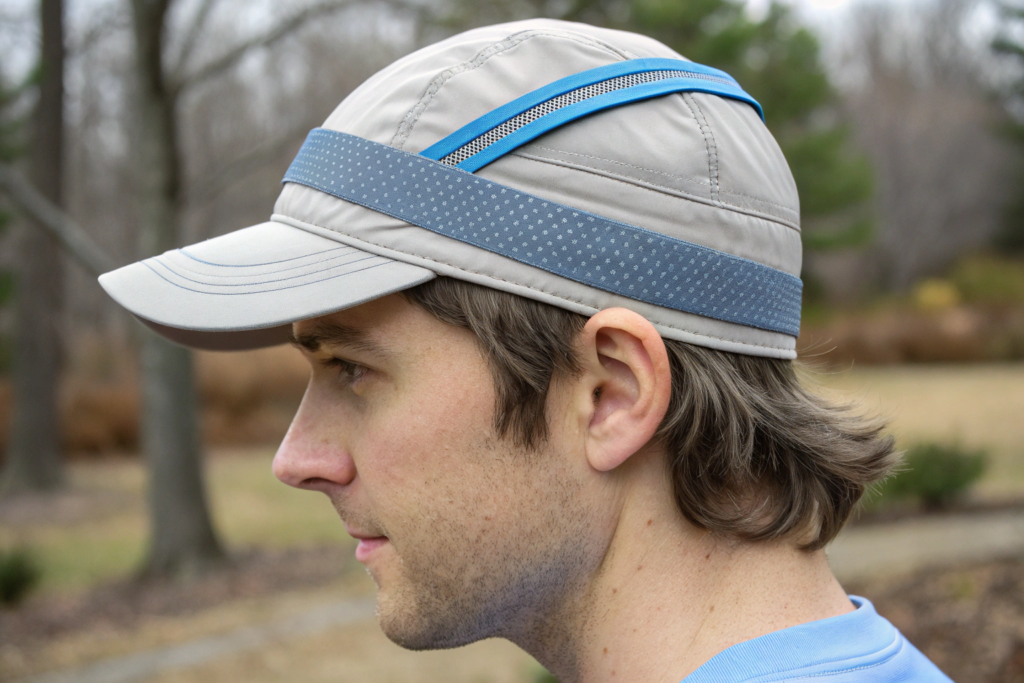
The best internal retention system for a lightweight wind-prone foam hat is a combination of a wide elasticized sweatband and two hidden silicone gripper strips. The elastic evenly distributes the clamping force around the circumference of the head, while the silicone beads create friction against the hair to prevent any upward lift from sudden gusts.
I do not rely on a cheap chin strap unless it is a carnival ride requirement. Chin straps make adults feel like children, and they often remove them. The hat then becomes a frisbee. For our custom hats, we design the internal cavity so the center of mass sits low on the skull.
How low should the center of mass sit inside the foam?
If the hat’s weight rides above the ears, it wobbles like a bobblehead. We insert a subtle counterweight strip inside the lower back hem of the foam design. This invisible weight anchors the piece against the occipital bone. It feels naturally balanced. When we ship promotional products like a custom foam basketball or a giant hamburger hat, we test them using an industrial fan at 15 mph in our factory courtyard before we approve the packaging run.
Does ventilation matter for outdoor summer events?
Yes, and it affects the security of the fit. A trapped bubble of hot air inside the foam lifts the hat off the head. We program our CNC to cut hidden air vents disguised as design details. The "nostrils" of a foam dog hat or the "seeds" on a strawberry slice become exhaust ports. This releases the heat from the top of the head, keeping the user cool and the hat stable in the wind, eliminating the balloon effect that often plagues poorly vented foam creations.
Conclusion
Custom shape foam hats sit at the perfect intersection of sculpture, comfort, and brand visibility. They demand more engineering than a standard printed cap, but the return on attention at a promotional event is unmatched. A CEO wearing a giant foam version of their own product on their head becomes instantly approachable, and that photo spreads across social media in hours, providing organic reach that no banner ad buys.
Our factory in Zhejiang handles the entire development chain. From the 3D sculpt of your mascot, through the perfect light-density foam mixing, all the way to the flexible color-matched paint that survives a thousand selfies. Whether you need 100 pieces for a corporate launch or 5,000 for a nationwide stadium giveaway, we can hit the event date without any last-minute quality disasters.
If you have a sketch, a brand guideline, or even just a crazy idea for a foam hat that needs to come to life, send it to our Business Director, Elaine without delay. She will walk you through the mold fees, sample timeline, and the best internal fit system for your specific design. Write to her at elaine@fumaoclothing.com. Let’s make sure your next promotional event has everyone fighting to wear your brand on their head.