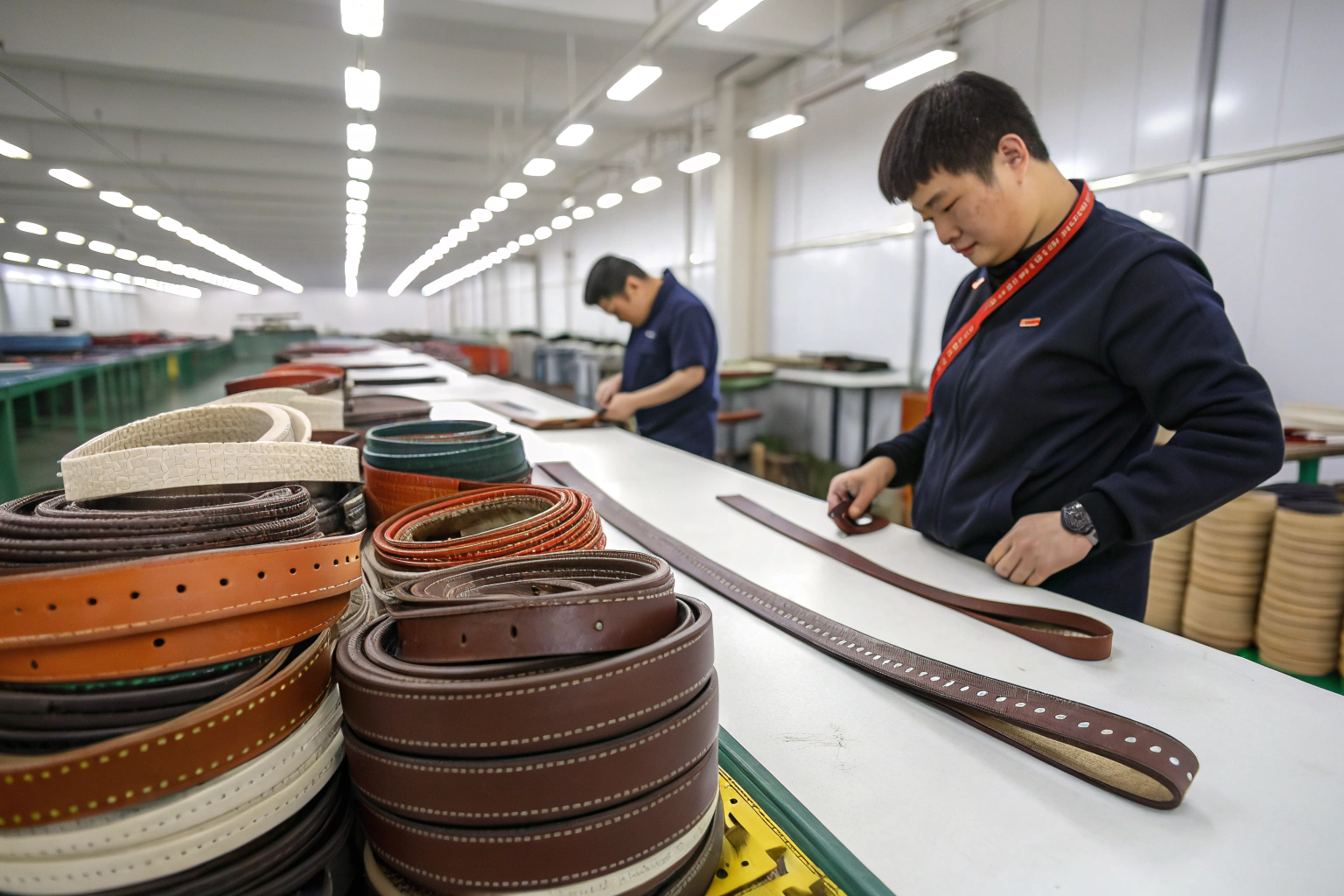
I remember my first belt order. It was 2015. A client from Texas asked me for 10,000 belts. He wanted real leather. I gave him a price. He almost fell off his chair. It was too expensive. He said "Elaine, my customers pay $15 for a belt. I cannot pay you $8." So I went back to my team. I asked them to find cheaper materials that still look good. We tested PU leather. We tested elastic webbing. We tested recycled materials. We found options at $2 to $4 per belt. He approved the samples. He ordered. His customers loved them. They did not know the difference. That day I learned that cost-effective does not mean cheap. It means smart. Let me share what we learned.
The most cost-effective materials for fashion belts from China are PU leather for faux leather belts, woven elastic for stretch belts, cotton webbing for casual belts, recycled polyester for eco-friendly belts, and split leather for budget real leather belts. PU leather costs $0.50 to $1.50 per belt in material. Woven elastic costs $0.30 to $0.80 per belt. Cotton webbing costs $0.20 to $0.60 per belt. Recycled polyester costs $0.40 to $1.00 per belt. Split leather costs $1.50 to $3.00 per belt. These prices are for material only. Buckles and labor add $0.50 to $1.50 more per belt.
You might think cheaper materials mean worse quality. That is not true. PU leather today is very good. It looks like real leather. It lasts 2 to 3 years with normal use. For fashion belts that change every season, that is enough. Woven elastic is strong and comfortable. Cotton webbing is durable and washable. The key is matching the material to your customer's needs. A $15 fashion belt does not need $8 real leather. It needs a $2 PU leather belt that looks great for one season. Let me break down each material.
Why Is PU Leather The Top Choice For Fashion Belts?
PU leather is short for polyurethane leather. It is not real leather. It is a plastic coating on a fabric backing. But do not turn your nose up at it. The good quality PU leather today is amazing. It looks like real leather. It feels like real leather. It even smells a bit like real leather. I have a client in New York. She sells PU leather belts for $25 each. Her customers think they are real leather. She sells 50,000 belts per year. Her cost from us is $3.50 per belt including buckle. That is a great margin.
PU leather costs $0.50 to $1.50 per belt for the material. The price depends on thickness. 0.8mm PU is cheap and good for light fashion belts. 1.2mm PU is thicker and more durable. 1.5mm PU is almost as thick as real leather. The best PU leather has a polyester backing. Avoid PU with paper backing. It breaks quickly. PU leather is water resistant. It does not crack in cold weather if you buy the right grade. It comes in 100+ colors. You can emboss it with crocodile, snake, or ostrich patterns. The lead time for PU leather is 7 to 10 days. Real leather takes 20 to 30 days. So PU is faster too.
Standard PU leather - This is the most common. It costs $0.50 to $0.80 per belt. It lasts 6 to 12 months with daily use. Good for fast fashion. We sell 80% of our belts in this grade.
Premium PU leather - This costs $1.00 to $1.50 per belt. It lasts 18 to 24 months. The coating is thicker. The backing is stronger. Good for mid-tier brands.
Microfiber PU leather - This is the best fake leather. It costs $2.00 to $3.00 per belt. It lasts 3 to 5 years. It breathes like real leather. It feels almost identical. Many luxury brands use this for their vegan lines.
We also have a test for PU quality. We bend the material 10,000 times in a machine. Good PU does not crack. Bad PU cracks after 2,000 bends. We do this test for every new batch. Ask your factory for PU leather testing standards. If they do not know what you are talking about, find another factory.
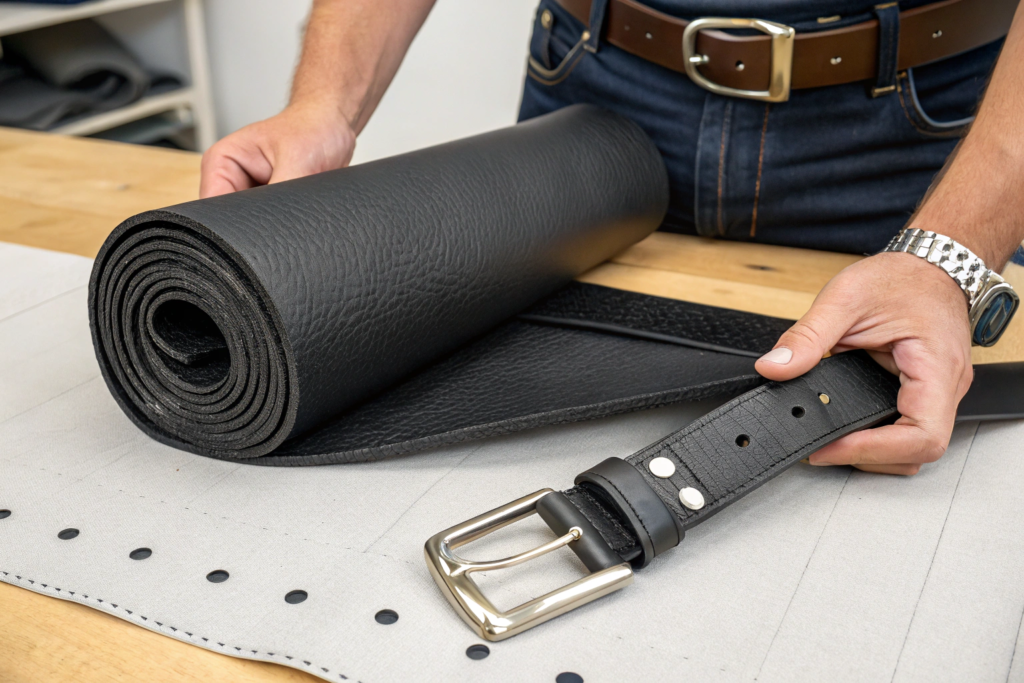
How do I tell good PU from bad PU?
Three simple tests. First, smell it. Bad PU smells like chemicals. Good PU has little or no smell. Second, bend it. Fold the material tightly. Good PU does not crack. Bad PU shows white lines at the bend. Third, scratch it with your fingernail. Good PU recovers. Bad PU stays scratched. We do these tests on every sample. You should too. Also ask for the backing fabric. Polyester backing is good. Paper backing is bad. Paper backing breaks down in humid weather. Your customer's belt will fall apart.
Can PU leather be recycled?
Some PU can be recycled. But most cannot. The plastic coating and fabric backing are hard to separate. If you need eco-friendly belts, use recycled polyester or cork leather instead. But those cost more. For most fashion belts, PU is the best balance of cost and quality. Just be honest with your customers. Say "vegan leather" or "PU leather." Do not say "genuine leather." That is a lie. And your customers will find out.
What About Woven Elastic And Cotton Webbing Belts?
Not all belts need to look like leather. Casual belts are a huge market. Think about outdoor brands, sports brands, and kids' brands. They want elastic and webbing belts. They are cheap, strong, and comfortable. A client from Colorado sells hiking belts. He uses nylon webbing. His cost is $1.20 per belt. He sells them for $15. His customers love them because they are washable and durable. Another client in Florida sells kids' belts. She uses woven elastic. The belt grows with the child. Parents love that. She sells 30,000 per year.
Woven elastic belts cost $0.30 to $0.80 per belt in material. The elastic comes in widths from 1 inch to 2 inches. The most popular is 1.5 inches. You can print any pattern on elastic. Stripes, polka dots, camo, logos. Minimum order for custom printing is 3,000 yards. Cotton webbing belts cost $0.20 to $0.60 per belt. Cotton webbing is strong and washable. It comes in 20+ solid colors. You can also screen print logos. Nylon webbing costs $0.25 to $0.70 per belt. Nylon is stronger than cotton. It dries faster. It is best for outdoor and sports belts. All three materials are machine washable. Real leather is not.
Woven elastic - This is stretchy. Very comfortable. Best for kids and travel. The elastic can be soft or firm. Soft elastic is for light use. Firm elastic is for heavy use. We buy elastic from YKK elastic suppliers. YKK is the best brand. Their elastic lasts 5+ years. Cheap elastic loses stretch in 6 months. Pay for YKK.
Cotton webbing - This does not stretch. It is strong and breathable. Best for casual everyday belts. Cotton webbing can shrink in hot water. So we pre-shrink it. We wash it in hot water before making belts. This adds 2 days but prevents returns. Ask your factory if they pre-shrink cotton. Many do not.
Nylon webbing - This is the strongest. It does not absorb water. It dries in minutes. Best for outdoor, beach, and sports belts. Nylon can melt under high heat. So use plastic buckles or low-heat metal buckles. Nylon is also harder to print on. Use heat transfer or screen printing.
We also make a hybrid belt. Cotton webbing on top. Elastic inside. This belt looks like cotton but stretches like elastic. It is our most popular casual belt. Cost is $0.90 per belt. Clients love it.
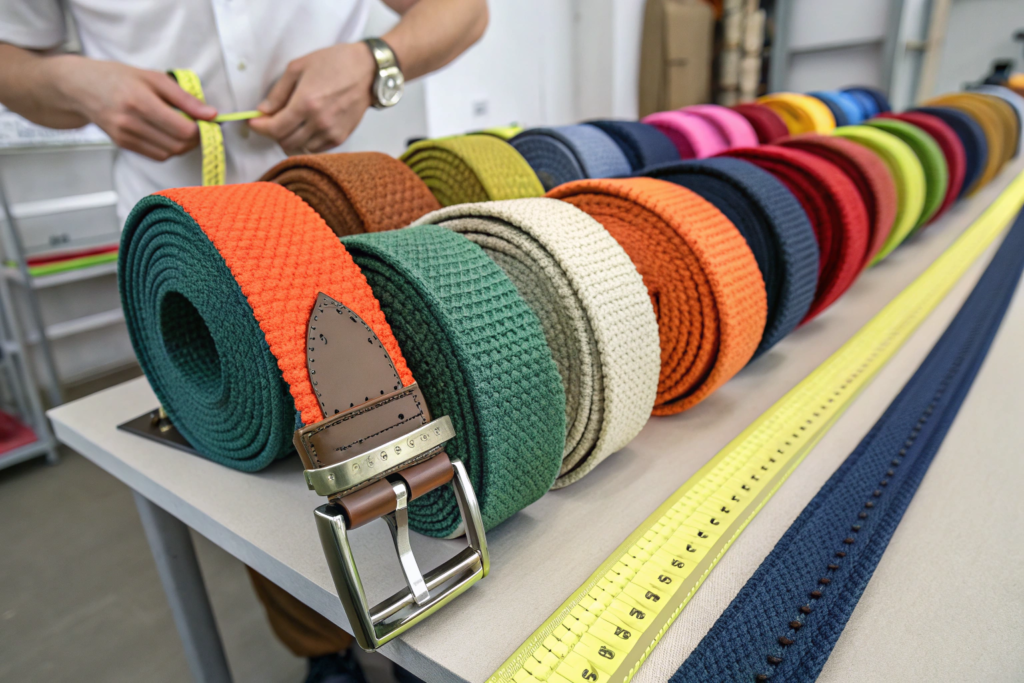
What buckles work best with elastic and webbing belts?
For elastic belts, use plastic buckles. Metal buckles are too heavy. They pull the belt down. Plastic is light. It is also cheap. Cost is $0.10 to $0.30 per buckle. For cotton and nylon webbing, use metal buckles. Zinc alloy is the most common. Cost is $0.30 to $0.80 per buckle. Stainless steel is stronger. Cost is $0.80 to $1.50. Brass looks premium. Cost is $1.00 to $2.00. For kids' belts, use plastic buckles with no sharp edges. Safety first.
Can I add my logo to these belts?
Yes, three ways. First, weave the logo into the elastic. This is the best but most expensive. Minimum order is 5,000 yards. Cost is $0.20 extra per belt. Second, print the logo with heat transfer. This is good for small orders. Minimum order is 500 belts. Cost is $0.10 per belt. The print lasts 1 to 2 years. Third, emboss the logo on a leather patch. Sew the patch onto the belt. This looks premium. Cost is $0.30 per patch. We do all three. Tell us your order size. We will recommend the best option.
Is Split Leather A Good Budget Alternative To Top Grain?
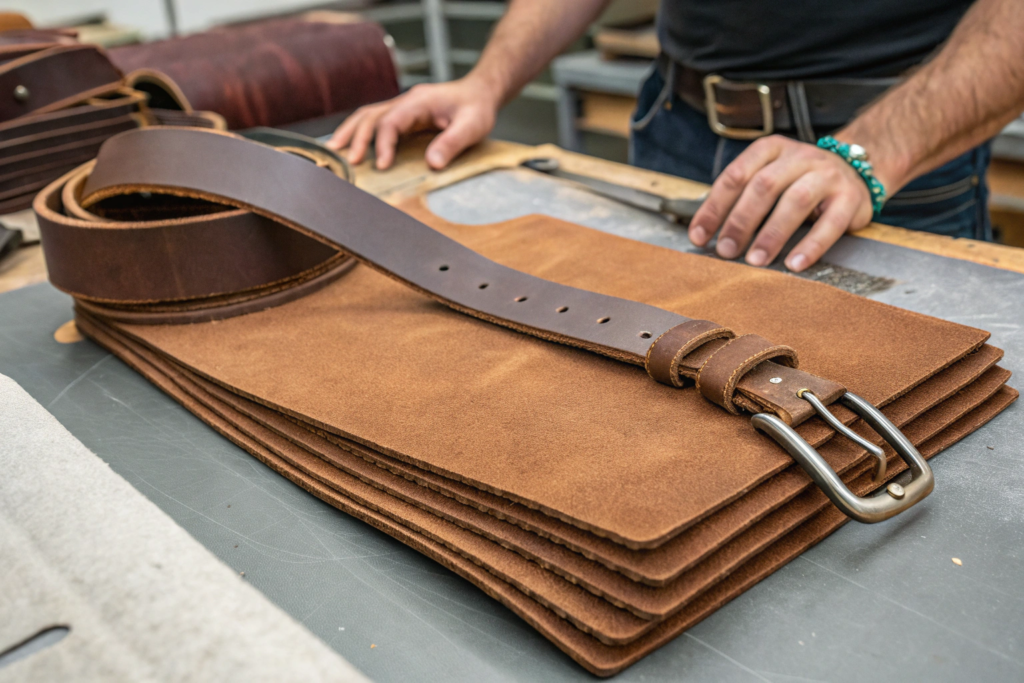
Real leather is expensive. Top grain leather costs $5 to $15 per belt just in material. But there is a cheaper real leather called split leather. Split leather comes from the bottom layer of the animal hide. Top grain is the top layer. Split is what is left underneath. It is real leather. But it is not as strong or pretty. So we cover it. We put a thin layer of PU on top. This is called bonded leather or reconstituted leather. It looks like top grain. It costs 70% less. But it does not last as long.
Split leather with PU coating costs $1.50 to $3.00 per belt in material. It looks like top grain leather. It feels similar. But it lasts 1 to 2 years with daily use. Top grain lasts 5 to 10 years. Split leather is good for fashion belts that change every season. It is not good for work belts or daily wear belts. The PU coating can peel after 2 years. Split leather is also thinner. Top grain is 1.2mm to 1.8mm thick. Split leather is 0.8mm to 1.2mm thick. That makes split leather belts lighter and more comfortable. Some customers prefer that.
First, the PU coating can peel. This happens faster if the belt gets wet or hot. A belt worn in Florida summer might peel in 1 year. A belt worn in dry Colorado might last 3 years. Second, split leather does not develop a patina. Real top grain leather gets more beautiful with age. Split leather does not. It just gets uglier. Third, split leather cannot be repaired easily. Once the coating peels, the belt is done. Top grain leather can be cleaned and conditioned.
So when should you use split leather? Use it for fashion belts under $30 retail. Use it for belts that match seasonal colors. Your customer will wear it for one summer and then buy a new color next year. Do not use it for expensive belts. Do not use it for work belts. Do not use it for gifts. For those, pay for top grain.
We buy our split leather from Leather Spa suppliers in Guangzhou. They have good quality. We test every batch for peeling. We bend the belt 5,000 times in a machine. If the coating cracks, we reject it. This test costs us $50 per batch. Worth it.
What is the difference between split leather and genuine leather?
The term "genuine leather" is confusing. It sounds good. But it often means low-quality leather. In the industry, genuine leather is the third grade. Top grain is first grade. Split is second grade. Genuine is third grade. It is made from the leftovers. It is glued together. It is not strong. Do not buy "genuine leather" belts from China unless you know the supplier. Many factories use the term to sell junk. Ask for "top grain" or "split leather with PU coating." Those are honest terms.
Can I get split leather in different colors?
Yes, many colors. The PU coating can be any color. The split leather underneath is usually beige or brown. So the edge of the belt will show the split leather color. Some customers like this two-tone look. Others do not. You can ask for edge painting. We paint the edge to match the top color. Cost is $0.10 per belt. We recommend edge painting for a premium look.
What About Eco-Friendly And Novelty Belt Materials?
Eco-friendly is not a trend anymore. It is a requirement. Many of our European clients demand sustainable materials. A client from Sweden sells only vegan belts. She uses cork leather. It comes from cork oak trees. You peel the bark. The tree is not cut down. The bark grows back. Her customers love the story. She pays $4 per belt for cork leather. She sells for $40. Another client from California uses recycled polyester. He takes plastic bottles. He turns them into belt webbing. His cost is $2 per belt. He sells for $25. His customers pay more for the eco story.
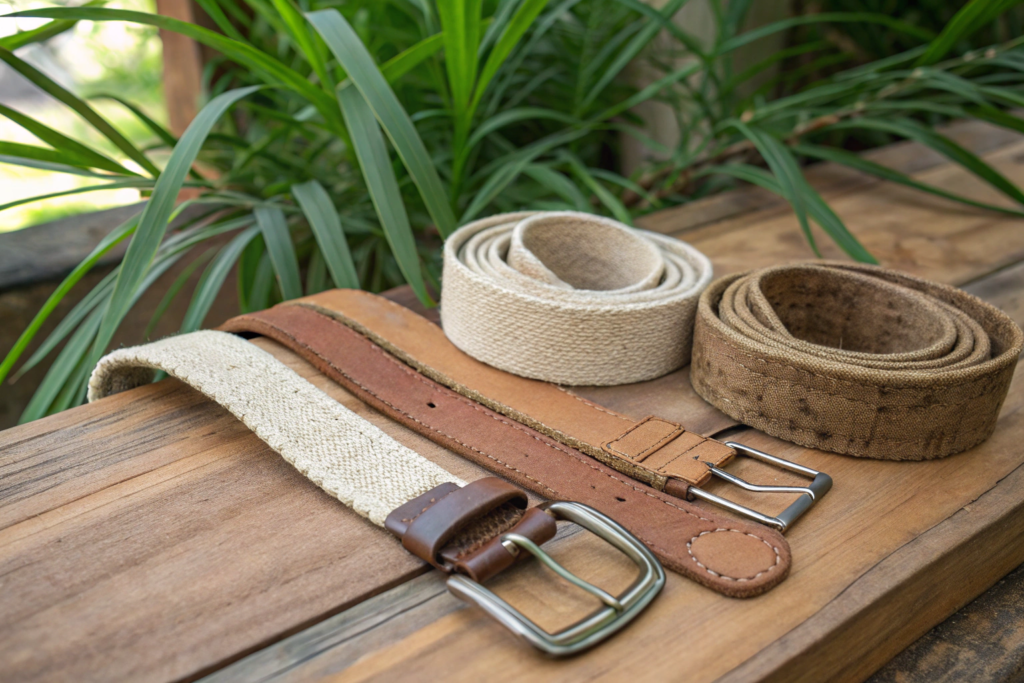
Recycled polyester webbing costs $0.40 to $1.00 per belt. It is made from PET plastic bottles. It feels like normal polyester. It is strong and washable. Cork leather costs $2.00 to $4.00 per belt. It is lightweight and waterproof. It has a unique natural texture. Apple leather costs $3.00 to $5.00 per belt. It is made from apple peels left over from juice making. It feels like soft leather. Hemp webbing costs $0.50 to $1.50 per belt. Hemp grows fast with no pesticides. It is stronger than cotton. All these materials cost more than PU or elastic. But they allow you to charge higher prices. Your customers will pay extra for sustainable products.
Recycled polyester - We buy this from Unifi. Their REPREVE brand is well-known. The material comes with a certificate. You can put "made from recycled plastic bottles" on your label. The process uses 50% less energy than new polyester. We make belts from recycled polyester webbing and elastic. The quality is the same as new polyester.
Cork leather - This comes from Portugal mostly. But some Chinese factories now make it. Cork is naturally antibacterial and waterproof. It is also very light. A cork belt weighs half as much as a leather belt. The downside is that cork can crack if folded sharply. So ship belts flat, not folded.
Apple leather - This is newer. Italian companies started it. Now Chinese factories make it too. Apple leather comes from apple pomace. That is the skin and pulp left after juicing. The material is mixed with PU. So it is not 100% natural. But it uses waste that would otherwise be thrown away. Apple leather feels soft and luxurious.
Hemp webbing - Hemp is a wonder plant. It grows fast. It needs little water. No pesticides. The fiber is stronger than cotton. Hemp webbing lasts longer than cotton. The color is usually natural beige or green. You can dye it, but natural colors are more eco-friendly.
We also offer certificates for eco-materials. GOTS for organic cotton. GRS for recycled polyester. FSC for cork. Ask us for these certificates. Your customers will want to see them.
Do eco-friendly belts cost more to produce?
Yes, 20% to 50% more in material cost. But you can charge 100% to 200% more in retail price. Your customers understand. They want to save the planet. They will pay. A client from London sells apple leather belts for $60. Her cost is $8. That is a $52 margin. Her regular PU leather belts sell for $25. Cost is $3. Margin is $22. She makes more profit on eco belts. So do not be scared of higher costs. Be smart about pricing.
How do I market eco-friendly belts?
Tell the story. On your website, show the plastic bottles becoming belts. Show the cork trees. Show the apple peels. Customers love stories. Also get certified. GRS certification costs $2,000 to $5,000. But it is worth it. Big retailers like H&M and Zara require it. We have GRS certification. We can help you get it too. Put the certification logo on your packaging. That builds trust.
Conclusion
Choosing the right belt material is about matching your customer and your price point. For fashion belts under $20 retail, use PU leather. It looks great. It costs little. It is fast to produce. For casual and kids' belts, use woven elastic or cotton webbing. They are comfortable and washable. For budget real leather belts, use split leather with PU coating. It looks like top grain but costs 70% less. For eco-conscious customers, use recycled polyester, cork, or apple leather. You can charge premium prices.
I have made all the mistakes. I have bought bad PU that cracked. I have bought split leather that peeled. I have bought elastic that lost stretch. Each mistake cost me money and clients. Now I test everything. I know the suppliers. I know the grades. I share this knowledge with you so you do not make the same mistakes.
At Shanghai Fumao, we make all these belt types. PU leather, elastic, webbing, split leather, and eco-materials. We have the machines. We have the workers. We have the testing equipment. We can make 50,000 belts per month. Fast and reliable. I invite you to order samples. Try our PU leather. Feel our elastic. Test our split leather. Compare our prices. You will see the quality. You will see the value.
To start your belt order, please email our Business Director, Elaine. Her email is elaine@fumaoclothing.com. Tell her what material you want. Tell her your target price. She will send you samples and prices. No obligation. Just honest help.