I have been manufacturing accessories for over 15 years. For most of that time, I used conventional cotton. It was cheap. It was available. Then a client changed my thinking. She was a buyer for an eco-friendly brand. She said, "My customers want products that are good for the planet. They want organic cotton. Can you make it?" I said yes. Then I had to learn about organic cotton. I found that sourcing organic cotton is different. The supply chain is smaller. The certification is important. The cost is higher. But the demand is growing. Today, I want to share how to find a supplier specializing in organic cotton accessories.
To find a supplier specializing in organic cotton accessories, look for GOTS (Global Organic Textile Standard) certification, request organic cotton documentation, ask about their supply chain, and request samples. GOTS certification is the gold standard. It ensures the cotton is organic and the production process meets social and environmental standards. Ask for the supplier's GOTS certificate. Verify it online. Ask about the origin of their organic cotton. Is it from India, Turkey, or the US? Ask about their dyeing process. Are they using low-impact or natural dyes? Request samples. Feel the fabric. Check the quality. A specialized supplier will be transparent. They will have documentation. They will be proud of their organic credentials.
You might be thinking, "I can find organic cotton products online. Why do I need a specialist?" The difference is integrity. A specialist will have certification. They will have traceability. They will not be selling "greenwashed" products. At Shanghai Fumao, we have developed a line of organic cotton accessories. We have learned the landscape. Let me walk you through the process.
What Is GOTS Certification and Why Is It Important?
GOTS is the gold standard for organic textiles. It covers the entire supply chain. From the farm to the finished product. I have learned to look for GOTS certification. It gives me confidence.
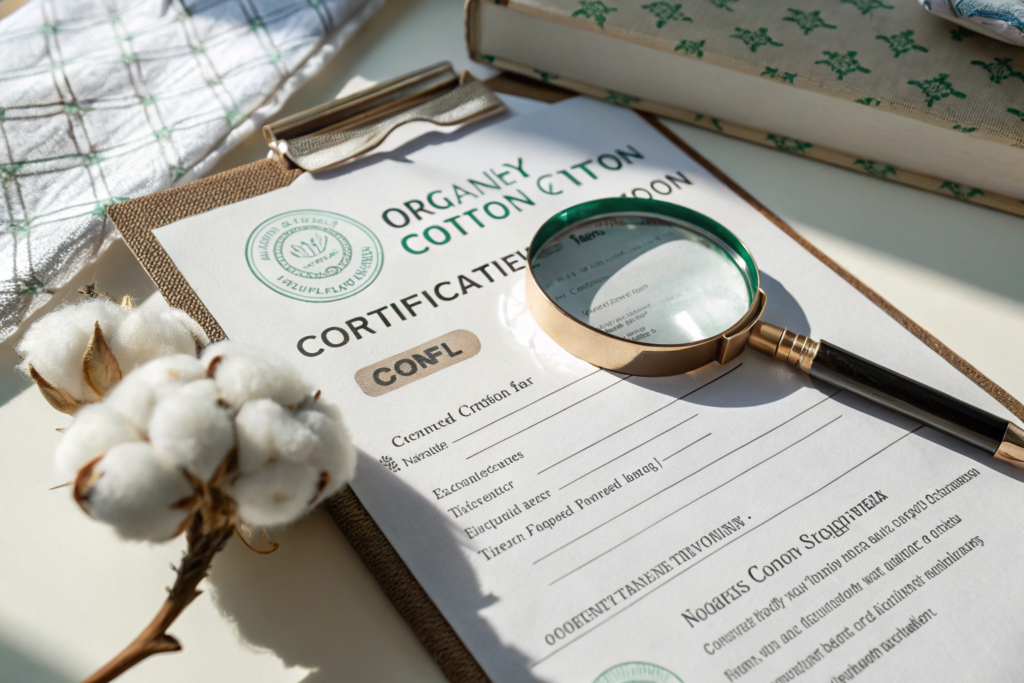
GOTS (Global Organic Textile Standard) certification is the most important credential for organic cotton accessories. It ensures that the cotton is grown without synthetic pesticides or fertilizers. It also ensures that the production process meets strict social and environmental standards. This includes no child labor, safe working conditions, and responsible water use. GOTS certification covers the entire supply chain. The farm, the ginning, the spinning, the weaving, the dyeing, and the sewing. A GOTS-certified supplier can provide a certificate. You can verify it online. GOTS is the gold standard. Look for it.
I want to share a story about GOTS. A client asked for organic cotton hair clips. I found a supplier who claimed to be organic. But they did not have GOTS certification. I asked for documentation. They could not provide it. I did not use them. The client found another supplier with GOTS. They trusted the certification.
What Are Other Organic Certifications?
OEKO-TEX is a certification for harmful substances. It is not an organic certification. It tests for chemicals. But it does not ensure organic farming. Organic Content Standard (OCS) tracks the organic material. It is less comprehensive than GOTS. For true organic, GOTS is best.
How Do You Verify a GOTS Certificate?
Ask the supplier for their GOTS certificate. It should have a certificate number and the name of the certifying body. You can verify it on the GOTS website. The supplier's name should match. The product category should be listed. We have a GOTS verification guide for clients.
How Do You Verify Organic Cotton Claims?
Claims are easy. Proof is harder. I have learned to ask for documentation. Traceability is key. The supplier should know where the cotton came from.
To verify organic cotton claims, ask for supply chain documentation. The supplier should be able to trace the cotton from the farm to the finished product. Ask for the certificate of the farm. Ask for the certificate of the spinner. Ask for the certificate of the fabric mill. The chain of custody should be unbroken. If the supplier cannot provide documentation, be suspicious. Also ask for test reports. Organic cotton should be tested for pesticide residues. A reputable supplier will have these documents. They will be transparent.
I want to share a story about traceability. A client asked for proof of organic cotton. I provided the farm certificate, the spinner certificate, and the GOTS certificate. The client was impressed. They knew the product was genuine.
What Is Chain of Custody?
Chain of custody is the documentation that tracks the organic material from the farm to the finished product. It ensures that the organic cotton is not mixed with conventional cotton. Each step in the supply chain must be certified. The chain must be unbroken. We maintain chain of custody documentation for all our organic products.
What Should You Look for in Test Reports?
Look for pesticide residue tests. Organic cotton should have no detectable pesticides. Also look for azo dye tests. The dyes should be free from harmful chemicals. Look for heavy metal tests. The product should be safe. We provide test reports for our organic cotton accessories.
What Are the Best Sources of Organic Cotton?
Not all organic cotton is the same. The source matters. I have sourced from India, Turkey, and the US. Each has advantages.
The best sources of organic cotton are India, Turkey, and the United States. India is the largest producer of organic cotton. It is widely available. It is cost-effective. Turkey produces high-quality organic cotton. It is known for its long-staple fibers. The US produces organic cotton in Texas and California. It is often more expensive. But it has a shorter supply chain for US-based brands. The choice depends on your location, your budget, and your quality requirements. A specialized supplier will know the source of their cotton. They will tell you.
I want to share a story about sourcing. A client wanted organic cotton from the US. The supply chain was shorter. The shipping was faster. They were willing to pay more. We sourced from Texas. The client was happy.
Which Country Produces the Best Organic Cotton?
Turkey is known for high-quality, long-staple organic cotton. It is soft and strong. India produces a large volume. Quality can vary. The US produces good quality. It is often more expensive. For luxury products, Turkish cotton is a good choice. For everyday products, Indian cotton is fine.
How Does Sourcing Location Affect Cost?
Cotton from the US is more expensive. The labor and farming costs are higher. Cotton from India is less expensive. The supply chain is efficient. Cotton from Turkey is in the middle. Also consider shipping. Sourcing from a closer country reduces shipping costs. We help clients source organic cotton from the best location for their needs.
How Do You Evaluate an Organic Cotton Supplier?
Not every supplier who claims to sell organic cotton is a specialist. You need to evaluate them. I have developed a checklist.
To evaluate an organic cotton supplier, ask for GOTS certification, request supply chain documentation, order samples, and check references. First, ask for their GOTS certificate. Verify it. Second, ask for supply chain documentation. Trace the cotton from farm to product. Third, order samples. Feel the fabric. Check the quality. Wash the sample. See how it holds up. Fourth, check references. Ask for other brands they have supplied. Contact them. Ask about quality, reliability, and communication. A good supplier will pass all these tests.
I want to share a story about evaluation. A client used a checklist. The supplier had GOTS. They had documentation. The sample was good. The references were positive. The client placed an order. The products were excellent. The evaluation worked.

What Questions Should You Ask a Potential Supplier?
Ask for GOTS certificate. Ask for chain of custody documents. Ask for test reports. Ask about the origin of the cotton. Ask about their dyeing process. Do they use low-impact dyes? Ask about their minimum order quantities. Ask about lead times. Ask for references. A good supplier will answer all questions.
What Are the Red Flags?
No GOTS certification. Vague answers about the supply chain. No documentation. Samples that feel rough or look cheap. No references. Prices that seem too good to be true. If you see red flags, move on.
How Does AceAccessory Source Organic Cotton Accessories?
At AceAccessory, we have developed a line of organic cotton accessories. We are GOTS-certified. We source from trusted farms. We provide documentation. We want to be your partner in sustainability.
AceAccessory sources organic cotton accessories from GOTS-certified supply chains. We work with farms in India and Turkey. We use low-impact dyes. We provide full documentation. GOTS certificate. Chain of custody. Test reports. We offer a range of organic cotton accessories. Tote bags, hair bands, scarves, caps, and more. We also offer custom production. You can choose the color, the style, and the branding. Our goal is to provide sustainable, high-quality accessories. We are committed to transparency.
I want to invite you to explore organic cotton. The demand is growing. Consumers want sustainable products. A GOTS-certified accessory is a powerful statement. Let us help you make it.

What Organic Cotton Accessories Do We Offer?
We offer organic cotton tote bags, hair bands, scarves, caps, and pouches. We also offer custom styles. You can design your own accessory. We will source the organic cotton and produce it. This organic cotton collection is expanding.
What Documentation Do We Provide?
We provide the GOTS certificate. We provide chain of custody documents. We provide test reports for pesticide residues and harmful chemicals. We provide a certificate of origin. We are transparent. This documentation package is available to all clients.
Conclusion
Finding a supplier specializing in organic cotton accessories requires diligence. Look for GOTS certification. Verify it. Ask for supply chain documentation. Trace the cotton from farm to product. Order samples. Check references. A specialized supplier will be transparent. They will have documentation. They will be proud of their organic credentials.
The best sources of organic cotton are India, Turkey, and the US. Each has advantages. Choose based on your budget and quality requirements.
At Shanghai Fumao, we are that specialized supplier. We are GOTS-certified. We have the documentation. We have the quality. We are ready to help you create sustainable accessories. Please contact our Business Director, Elaine, at elaine@fumaoclothing.com to discuss your organic cotton accessory project. We can provide GOTS-certified products with full documentation.