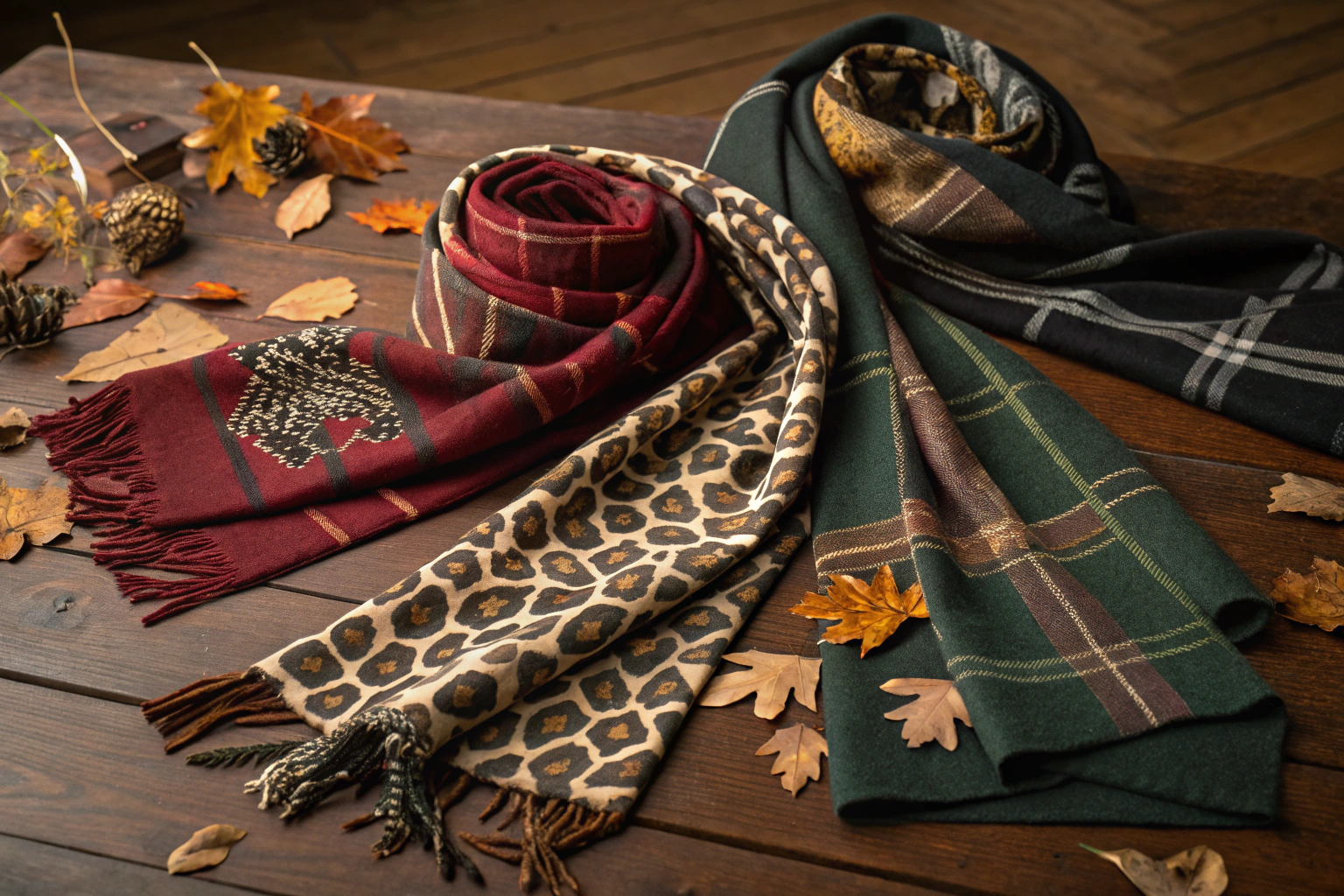
I have been manufacturing scarves for over 15 years. In that time, I have seen patterns come and go. There was the year of the floral scarf. There was the season when everyone wanted animal prints. There was the winter when plaid was everywhere. But fall patterns are different. Fall is about warmth, texture, and richness. It is about colors that echo the changing leaves. I remember a conversation with a buyer from a major European department store. She told me, “Fall scarves are the first thing my customers buy when the weather turns. They want something that feels cozy. They want something that looks like autumn.” That conversation made me analyze our fall scarf sales over the years. I saw patterns—literally and figuratively. Today, I want to share what I have learned about the most popular patterns for scarves in the fall 2026 season.
The most popular patterns for scarves in the 2026 fall season are plaid and tartan, abstract animal prints, geometric and retro patterns, color-blocking, and heritage-inspired motifs. Plaid and tartan remain the quintessential fall patterns. They evoke warmth, tradition, and coziness. For 2026, classic tartans are being updated with modern color palettes. Abstract animal prints are gaining popularity. They offer a sophisticated, modern take on traditional leopard and zebra. Geometric patterns from the 1970s are having a revival. Bold color-blocking in autumnal shades creates striking, contemporary scarves. Heritage-inspired motifs like fair isle, cable knits, and houndstooth offer texture and tradition. These patterns reflect a market that values both comfort and individuality.
You might be wondering why patterns matter so much. The answer is simple. Pattern is the first thing a customer sees. It is what draws them in. A scarf with a beautiful pattern can elevate a simple outfit. It can be the statement piece. For brands, choosing the right patterns is essential for capturing the fall market. At Shanghai Fumao, we have been tracking these trends. We have been developing collections that reflect what consumers want. Let me walk you through the key patterns for fall 2026.
Why Is Plaid and Tartan the Quintessential Fall Pattern?
Plaid and tartan are to fall what florals are to spring. They are the pattern of the season. I have seen this year after year. When the weather cools, customers reach for plaid. It is familiar. It is comfortable. It feels like fall. But plaid is not static. It evolves. The colors change. The scale changes. The combinations change.
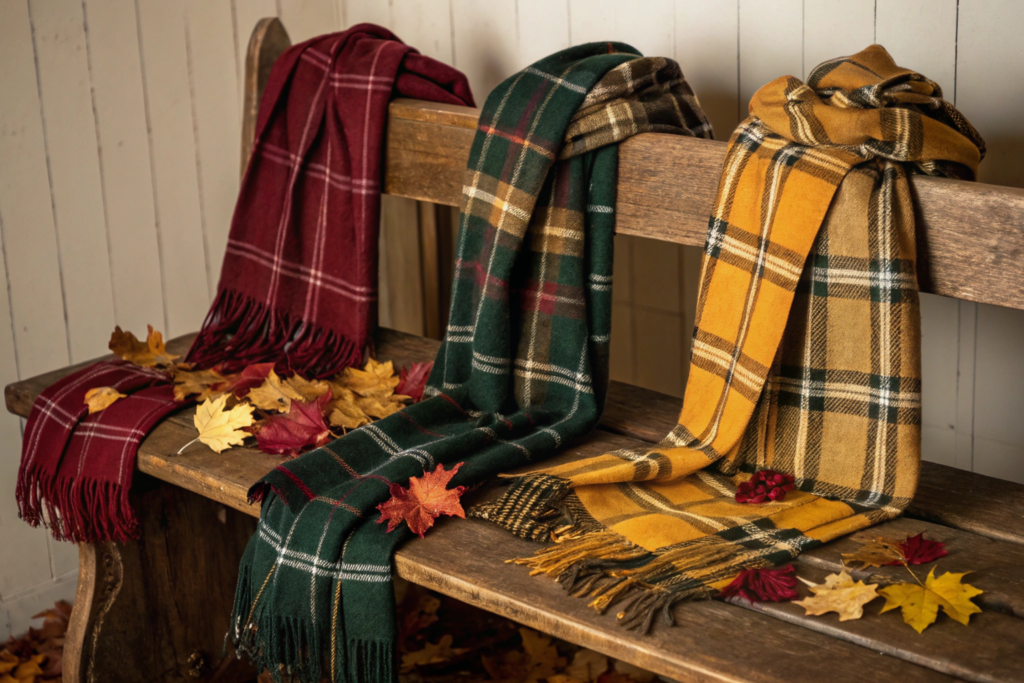
Plaid and tartan remain the quintessential fall patterns because they evoke warmth, tradition, and coziness. For fall 2026, the trend is toward modern updates on classic patterns. Traditional Scottish tartans are being reimagined with contemporary color palettes. Instead of bright red and green, we are seeing deep burgundy, forest green, mustard yellow, and warm camel. Oversized plaids are gaining popularity. The large-scale pattern makes a bold statement. Smaller, classic plaids are also popular for a more subtle look. The versatility of plaid is its strength. It works with casual and dressy outfits. It appeals to a wide range of customers.
I want to share a story about plaid. A client came to us with a request for a fall scarf collection. She wanted something classic but not boring. We developed a collection of oversized plaid scarves. The patterns were traditional tartans, but the colors were muted. Burgundy instead of red. Olive instead of bright green. Mustard instead of yellow. The scarves sold out. Customers loved the combination of tradition and modernity. This is the trend.
What Colors Are Trending in Plaid for Fall 2026?
The color palette for plaid in fall 2026 is warm and rich. Deep burgundy is a dominant color. It is the color of autumn leaves and red wine. Forest green is another key color. It evokes the deep woods. Mustard yellow adds a pop of warmth. Warm camel and tan serve as neutral bases. Charcoal grey and black provide contrast. Bright colors are less common. The trend is toward muted, sophisticated tones. These colors work together in traditional tartan patterns. They also work in modern, oversized plaids. We offer a range of plaid scarf options in these trending colors.
How Are Traditional Tartans Being Updated?
Traditional tartans are being updated in two ways. First, through color. The colors are being muted and modernized. A traditional Royal Stewart tartan might be bright red and green. A modern version might be burgundy and olive. Second, through scale. Traditional tartans have small, repeating patterns. Modern versions are being enlarged. An oversized plaid makes a bold statement. It is more visible from a distance. It works well on larger scarves. These updates keep the pattern relevant for contemporary consumers. We work with our clients to create custom tartan scarves that reflect their brand colors.
Why Are Abstract Animal Prints Gaining Popularity?
Animal prints have always been popular. But they are evolving. Traditional, realistic animal prints are giving way to abstract, artistic interpretations. I noticed this trend a few years ago. A client who specialized in modern fashion asked for leopard print scarves. But she did not want realistic leopard spots. She wanted an abstract version. The spots were larger. The shapes were simplified. The colors were muted. The scarves were a hit. Now, this approach is becoming mainstream.
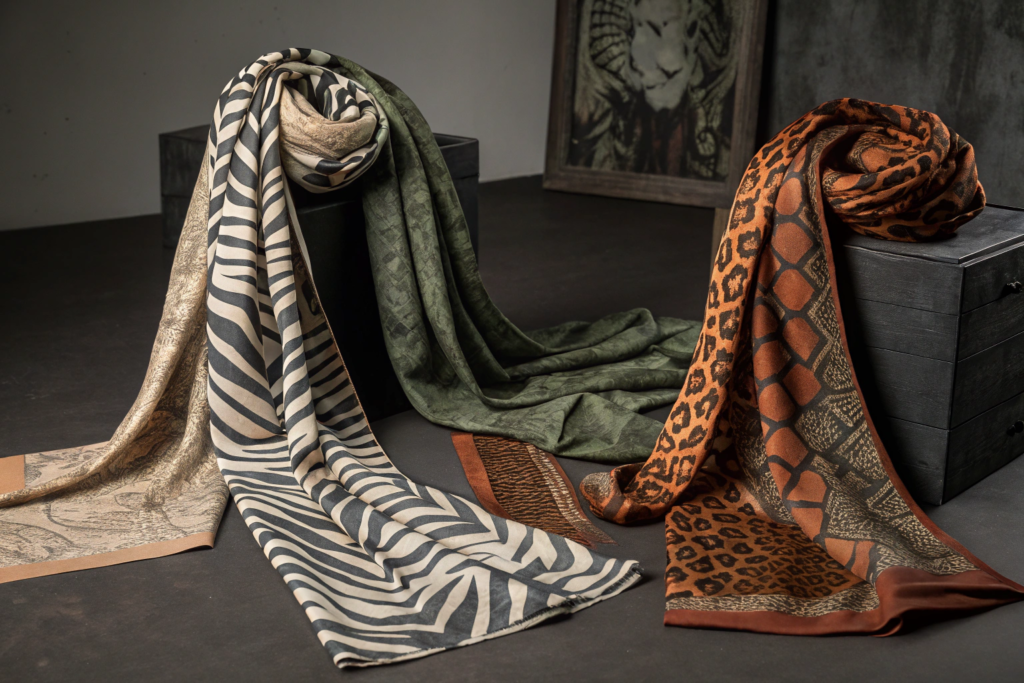
Abstract animal prints are gaining popularity because they offer a sophisticated, modern take on a classic pattern. Instead of realistic leopard, zebra, or snake prints, designers are creating stylized, artistic versions. The spots are enlarged. The stripes are simplified. The patterns are broken down into abstract shapes. The color palette is also evolving. Instead of traditional brown and black, abstract animal prints are appearing in muted earth tones—taupe, charcoal, rust, olive, and cream. These scarves are versatile. They add interest without being overwhelming. They appeal to customers who want a touch of the wild without looking costume-like.
I want to explain the appeal. A traditional leopard print is recognizable. It makes a statement. But it can also be loud. An abstract leopard print is more subtle. It suggests the animal without shouting it. This makes it easier to wear. It works with more outfits. It appeals to a broader range of customers. This is why the trend is growing.
What Abstract Animal Prints Are Trending?
Leopard-inspired abstract prints are the most popular. The spots are enlarged and simplified. They are often in a single color on a contrasting background. Zebra-inspired abstract prints are also trending. The stripes are simplified into bold, graphic lines. Snake-inspired patterns are appearing as abstract scales. The key is that the pattern is recognizable but not realistic. The shapes are geometric and stylized. The colors are muted. We offer a range of abstract animal print scarves for clients who want this modern look.
How Do Abstract Animal Prints Differ from Traditional Animal Prints?
The difference is in the execution. Traditional animal prints aim for realism. They replicate the exact spots of a leopard or the stripes of a zebra. Abstract animal prints take inspiration from the animal but simplify. The spots become circles or ovals. The stripes become parallel lines. The pattern is reduced to its essential elements. The colors are also different. Traditional prints use natural colors like brown, black, and tan. Abstract prints use a wider range, including muted earth tones and even unexpected colors. The result is a pattern that is contemporary and artistic.
What Geometric and Retro Patterns Are Making a Comeback?
What is old is new again. This is especially true in fashion. Patterns from the 1970s are making a strong comeback. I have seen this in our orders. Clients are asking for geometric prints that look like they came from a vintage scarf. Bold stripes. Repeating geometric shapes. Optical illusions. These patterns are fresh because they feel nostalgic. They appeal to customers who want something different from the usual fall patterns.
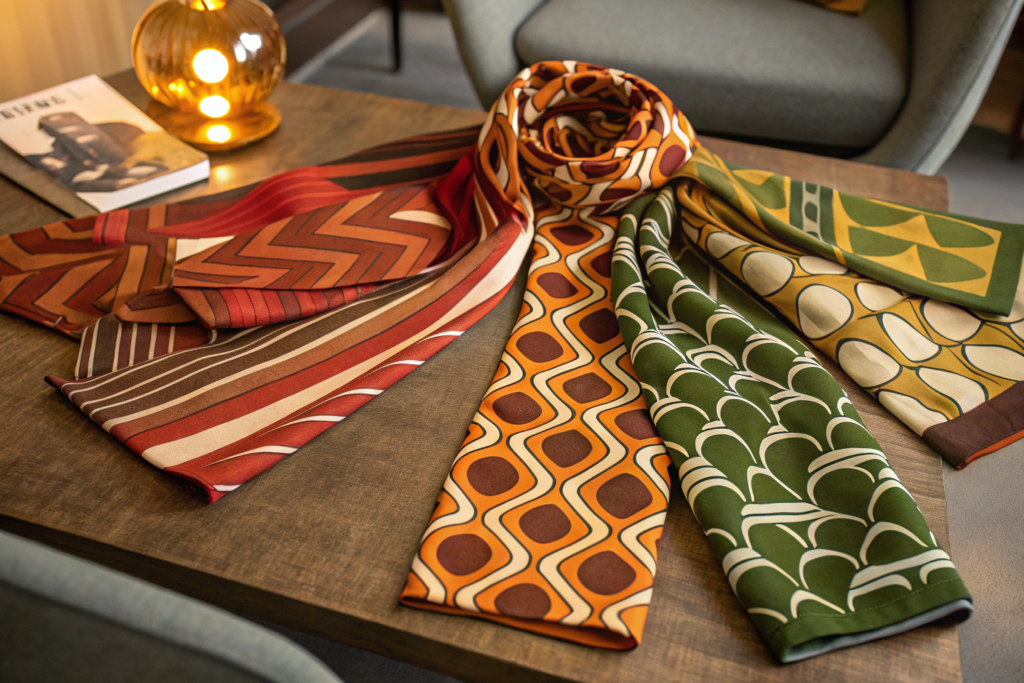
Geometric and retro patterns are making a comeback for fall 2026, driven by a 1970s revival. Bold geometric designs are trending. These include large-scale stripes, repeating diamond patterns, chevrons, and op-art inspired optical illusions. The color palette is warm and earthy. Burnt orange, mustard yellow, avocado green, and brown are key colors. These patterns are often used on larger scarves where the scale of the design can be appreciated. The retro feel appeals to customers who want a vintage-inspired look. It also appeals to younger customers who are discovering 1970s aesthetics for the first time.
I remember a client who wanted to create a scarf collection for a boutique that specialized in vintage-inspired fashion. We developed a line of scarves with large-scale geometric patterns. The colors were burnt orange, mustard, and brown. The scarves were printed on modal fabric for a soft, luxurious feel. They sold quickly. The customers loved the retro vibe. This is the market for geometric and retro patterns.
What 1970s Patterns Are Trending?
Several 1970s patterns are trending. Large-scale stripes are popular. They can be horizontal, vertical, or diagonal. Repeating geometric shapes are also popular. This includes hexagons, diamonds, and chevrons. Op-art patterns, which create optical illusions, are another trend. These patterns use contrasting colors to create movement. Paisley, a classic 1970s pattern, is also having a moment. But it is being updated with modern colors. The key is that the patterns are bold. They are not subtle. They are meant to be seen. We offer a range of retro pattern scarves for clients who want this look.
How Are These Patterns Being Modernized?
While the patterns are retro, the execution is modern. The colors are updated. Instead of the bright colors of the 1970s, we are using muted, sophisticated tones. The scale is often larger. A 1970s scarf might have small, repeating patterns. A modern version might have one large pattern that spans the entire scarf. The materials are also modern. We are using high-quality modal, silk, and wool blends. The result is a scarf that feels vintage but looks contemporary.
Why Is Color-Blocking a Strong Trend for Fall 2026?
Color-blocking is not a pattern in the traditional sense. It is a design approach. But it has become a major trend for scarves. The idea is simple: use blocks of solid color to create a striking design. The result is modern, clean, and graphic. I have seen this trend grow over the past few years. It appeals to customers who want something bold but not busy.
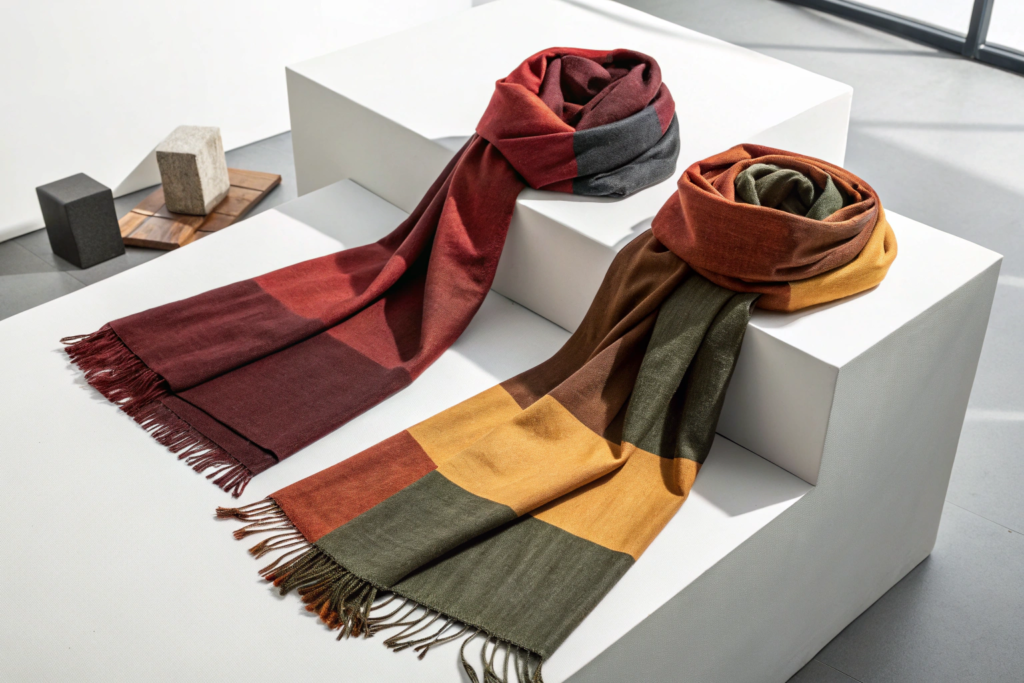
Color-blocking is a strong trend for fall 2026 because it offers a modern, graphic alternative to traditional patterns. Instead of prints, color-block scarves use large sections of solid color. The blocks are often in geometric shapes. The color palette is autumnal. Burgundy, mustard, olive, camel, charcoal, and rust are common. The contrast between the blocks creates visual interest. Color-block scarves are versatile. They work with solid-colored outfits. They add a pop of color without competing with other patterns. They appeal to customers who prefer a minimalist aesthetic.
I want to share a story about a client who specialized in minimalist fashion. She did not want prints. She wanted something simple but striking. We developed a collection of color-block scarves. One scarf had three sections: burgundy, mustard, and olive. Another had charcoal and camel with a thin rust stripe. The scarves were elegant. They sold well. This is the appeal of color-blocking.
What Color Combinations Are Most Popular?
The most popular color combinations for fall 2026 are based on the autumn palette. Burgundy and mustard is a classic combination. It is warm and rich. Olive and camel is another popular pairing. It is earthy and sophisticated. Charcoal and rust offers a modern, edgy look. Three-color combinations are also popular. Burgundy, mustard, and olive create a harmonious palette. Charcoal, camel, and rust offer contrast. The key is to use colors that complement each other. We help our clients select color-block combinations that reflect their brand.
How Do You Choose the Right Colors for Your Brand?
Choosing colors is about understanding your brand identity. If your brand is classic, you might choose burgundy and camel. If your brand is modern, you might choose charcoal and rust. If your brand is earthy, you might choose olive and mustard. You should also consider your existing product line. The scarf colors should complement your other products. We work with our clients to select colors that align with their brand. We provide color swatches. We do sample runs. This ensures that the final product matches your vision.
What Heritage-Inspired Patterns Are Resonating with Consumers?
There is a segment of the market that wants tradition. They want patterns that feel timeless. They want scarves that look like they have been passed down through generations. Heritage-inspired patterns fill this need. I have seen consistent demand for these patterns year after year. They are reliable. They are comforting. They are fall.
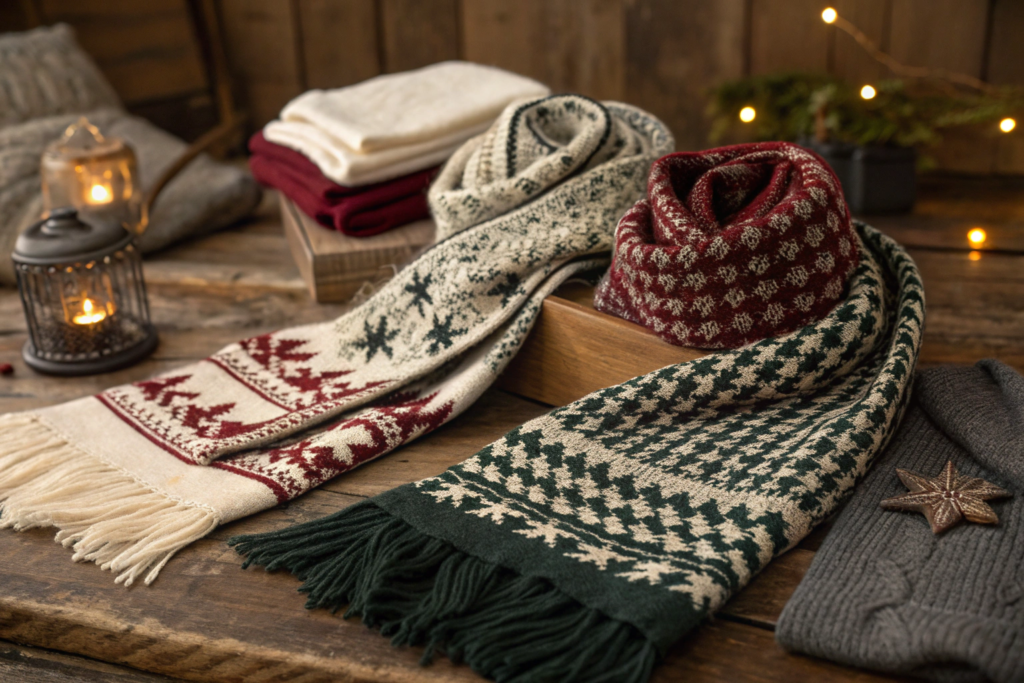
Heritage-inspired patterns are resonating with consumers who value tradition, craftsmanship, and timeless style. Fair isle patterns, traditionally associated with knitwear, are appearing on woven and knitted scarves. The patterns feature small, repeating motifs in contrasting colors. Cable knit textures add depth and dimension to scarves. They evoke the warmth of a hand-knit sweater. Houndstooth, a classic pattern with a long history, is appearing in updated color combinations. These heritage patterns appeal to customers who want a scarf that feels classic and enduring. They are also popular as gifts.
I remember a client who wanted a scarf collection for a heritage brand. They wanted patterns that felt traditional. We developed scarves with fair isle patterns in cream, charcoal, and burgundy. We also did cable knit scarves in natural wool. The collection was a success. The customers appreciated the timeless quality. This is the market for heritage-inspired patterns.
What Are Fair Isle and Cable Knit Patterns?
Fair isle is a traditional knitting pattern originating from the Fair Isle island in Scotland. It features small, repeating geometric motifs, often in multiple colors. The patterns are typically symmetrical. They create a dense, warm fabric. For scarves, fair isle patterns are often printed on woven fabric or knitted. Cable knit patterns are created by crossing stitches to create a braided, rope-like texture. The pattern adds dimension and visual interest. Cable knit scarves have a cozy, handcrafted feel. Both patterns are strongly associated with fall and winter. They evoke warmth and tradition. We offer fair isle and cable knit scarves in a range of colors.
How Is Houndstooth Being Updated?
Houndstooth is a classic pattern with a long history. It is traditionally black and white. For fall 2026, houndstooth is being updated with modern color combinations. Burgundy and cream is a popular variation. Forest green and charcoal offers an earthy look. Navy and camel is another sophisticated option. The scale is also being varied. Traditional houndstooth has a small, repeating pattern. Modern versions may have a larger scale. This makes the pattern more visible. The updates keep the pattern fresh while maintaining its classic appeal.
Conclusion
The fall 2026 scarf season is about warmth, texture, and individuality. Plaid and tartan remain the classic choice, updated with modern colors and scales. Abstract animal prints offer a sophisticated, artistic alternative. Geometric and retro patterns bring a nostalgic 1970s vibe. Color-blocking provides a modern, graphic look. Heritage-inspired patterns appeal to those who value tradition and timeless style.
At Shanghai Fumao, we have the expertise to help you navigate these trends. We have the design capabilities to create custom patterns. We have the sampling services to test your designs. We have the manufacturing capacity to produce your collection, whether it is a small test run or a large volume order. We are your partner in creating scarves that your customers will love.
Please contact our Business Director, Elaine, at elaine@fumaoclothing.com to discuss your fall 2026 scarf collection. We can help you select the right patterns, colors, and fabrics to create scarves that resonate with your customers.