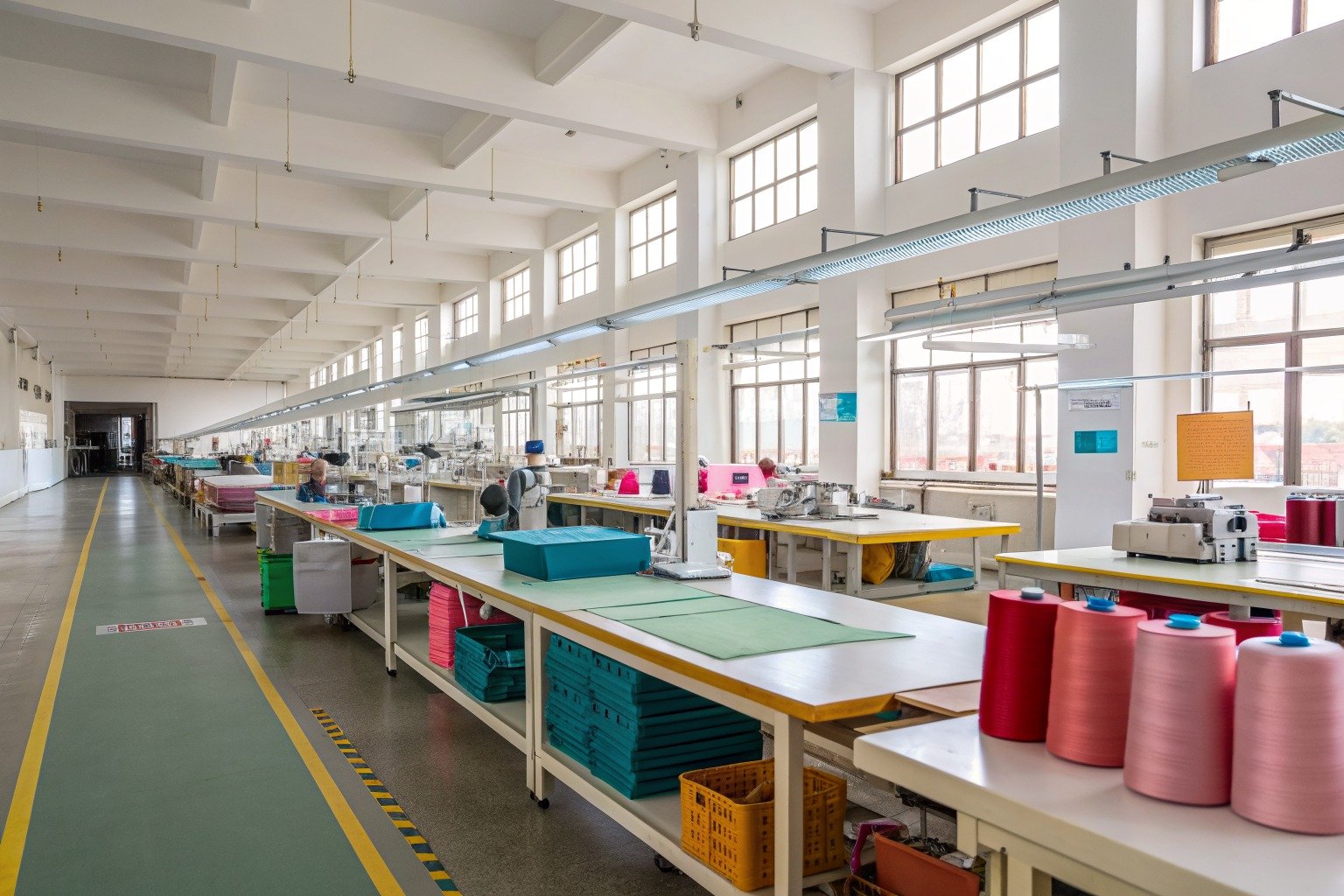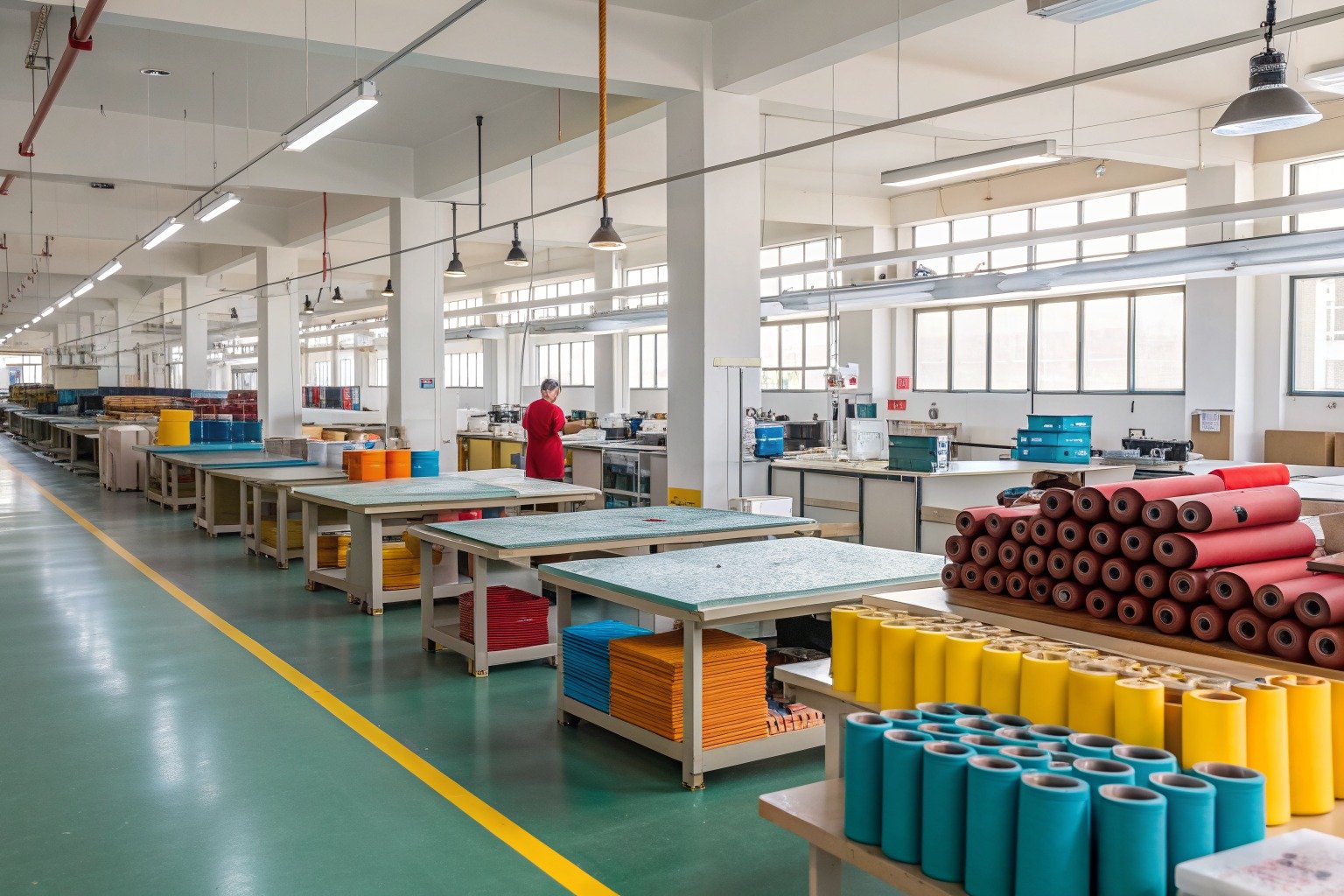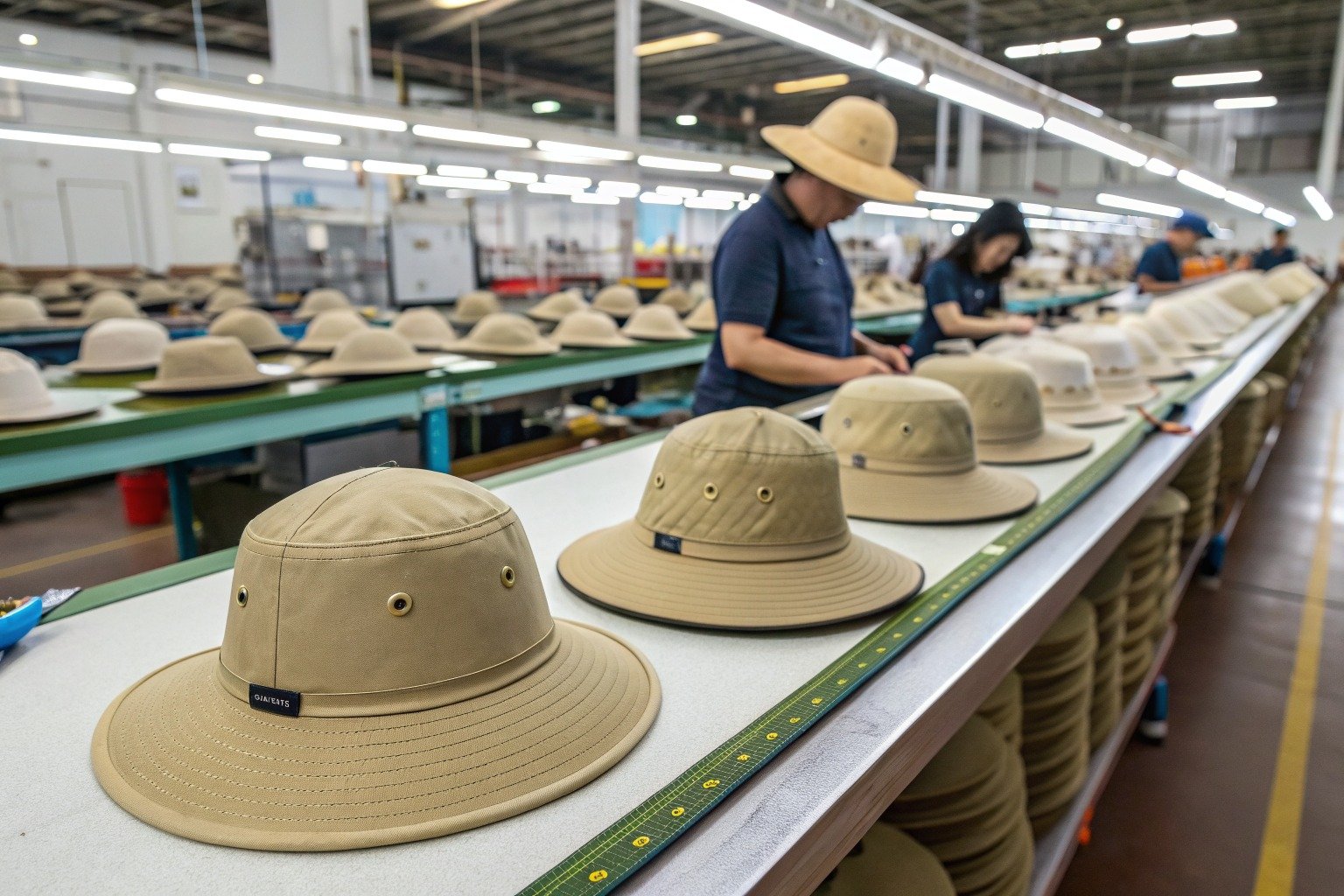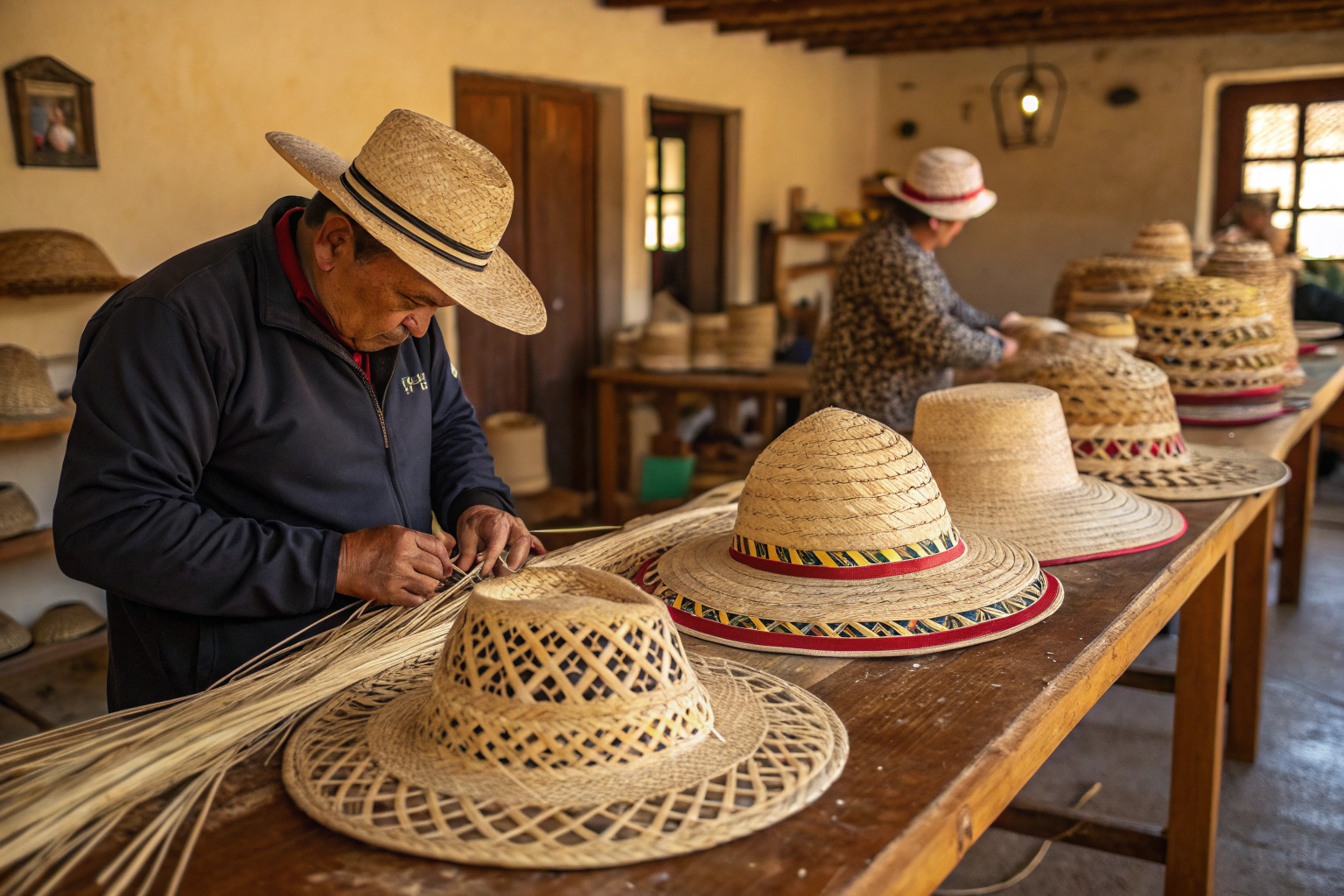
I have been manufacturing straw hats for over 15 years. For most of that time, the process was simple. We bought standard straw bodies from large mills. We shaped them, trimmed them, and added ribbons. The hats were good. But they were not special. Then, about five years ago, a client changed everything. She was a buyer for a high-end resort brand. She came to me with photos of vintage straw hats. The hats had intricate weaving patterns. Herringbone. Diamond. Floral motifs. She said, “I want hats like these. But I want them in my brand colors. I want them to be unique.” I told her I would figure it out. I traveled to straw weaving villages in China. I met with master weavers. I learned about techniques that had been passed down for generations. I discovered that unique weaving patterns are not just about aesthetics. They are about craftsmanship, tradition, and storytelling. Today, I want to share what I have learned about sourcing custom straw hats with unique weaving patterns.
Sourcing custom straw hats with unique weaving patterns in 2026 requires working with specialized artisans who have mastered traditional weaving techniques, selecting the right straw materials for your desired pattern and purpose, collaborating on pattern design that balances complexity with production feasibility, and establishing quality standards for consistency. The key is to partner with a manufacturer who has direct relationships with weaving communities and can translate your design vision into handcrafted or machine-assisted weaving. Unique patterns like herringbone, diamond, basket weave, and floral motifs can be incorporated into the hat body itself, creating a textured, dimensional look that cannot be achieved with printed or applied decoration. These hats command premium prices and appeal to consumers seeking authentic, artisanal products.
You might be wondering why unique weaving patterns matter. In a market saturated with mass-produced straw hats, patterns create distinction. A hat with a herringbone weave catches the eye. It feels special. It tells a story of craftsmanship. For brands targeting the premium market, these hats are essential. But sourcing them is not simple. It requires knowledge of materials, techniques, and supply chains. Let me walk you through what you need to know.
What Are the Key Straw Materials for Unique Weaving Patterns?
The straw you choose determines what patterns are possible. Some straws are fine and flexible. They allow for intricate, detailed patterns. Other straws are coarse and stiff. They are better for simple, bold patterns. I learned this when I tried to create a fine herringbone pattern with thick seagrass. It did not work. The straw was too stiff. The pattern was rough. I had to go back to the drawing board. The material matters.
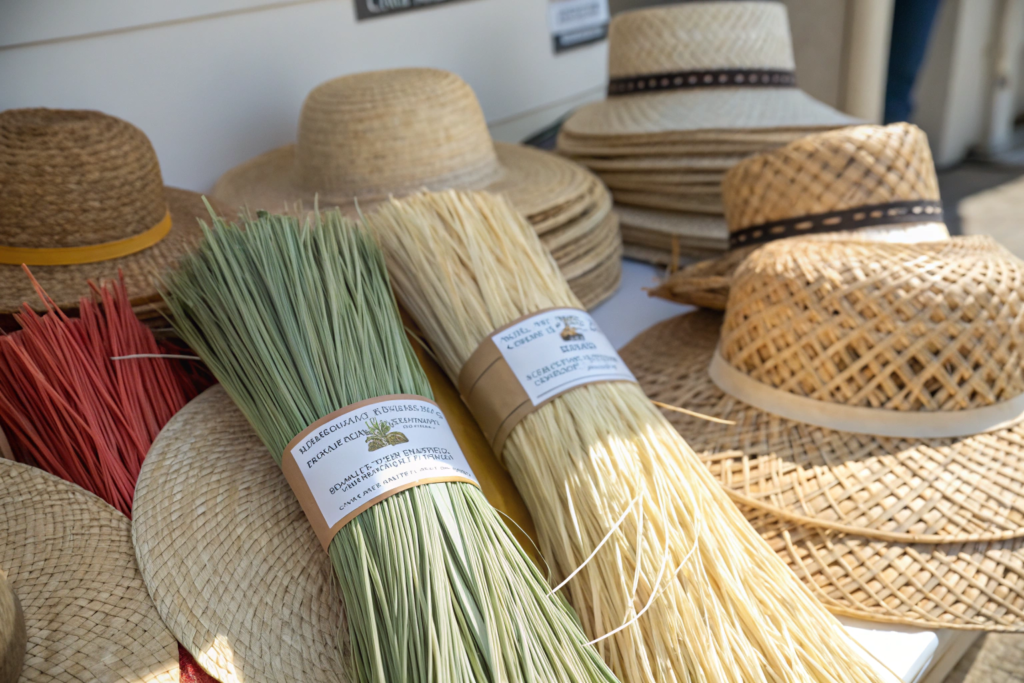
The key straw materials for unique weaving patterns are toquilla straw, raffia, paper straw, and seagrass. Toquilla straw is the finest and most flexible. It comes from the toquilla palm. It is used for Panama hats. It allows for very detailed patterns, including fine herringbone and intricate geometric designs. Raffia is a natural fiber from palm leaves. It is soft, pliable, and available in many colors. It is ideal for colorful, textured patterns. Paper straw is made from wood pulp. It is lightweight, uniform, and takes dye well. It is excellent for consistent patterns and vibrant colors. Seagrass is a natural fiber that is coarse and sturdy. It is best for bold, simple patterns like basket weave. Each material has its own character and pattern potential.
I want to share a story about toquilla straw. When I first visited a weaving village in Ecuador, I was amazed at the fineness of the straw. The weavers could create patterns so fine you needed a magnifying glass to see them. But that level of detail takes time. A hat with a fine herringbone pattern might take a weaver three days to complete. That cost is reflected in the final price. For brands targeting the ultra-luxury market, this is acceptable. For mid-market brands, paper straw offers a balance. It is consistent and can be machine-woven for more affordable production.
Why Is Toquilla Straw the Choice for Luxury Patterns?
Toquilla straw is the gold standard for fine straw hats. It comes from the toquilla palm, which grows in Ecuador and other parts of South America. The straw is harvested, boiled, and dried. The finest straw is then split into incredibly thin strands. A master weaver can create patterns with these strands that are almost like fabric. The patterns can be geometric, floral, or even pictorial. The result is a hat that is lightweight, breathable, and beautiful. The downside is cost. Toquilla straw hats are labor-intensive. A hat with a unique pattern can take weeks to weave. The price reflects this craftsmanship. For brands that want to offer the highest quality, toquilla straw is unmatched. We work with weavers in Ecuador and other regions to source custom toquilla straw hats for our luxury clients.
What Are the Benefits of Raffia and Paper Straw?
Raffia offers a different aesthetic. It is a natural fiber from palm leaves. It is softer than toquilla and has a matte finish. Raffia is available in many natural colors. It can also be dyed. This makes it ideal for colorful patterns. The fibers are flexible, so they can be woven into intricate designs. Raffia hats have a relaxed, artisanal look. They are popular for resort wear and bohemian styles. Paper straw is the most versatile for custom colors. It is made from wood pulp and processed into uniform strands. The strands are consistent in thickness and color. This makes them ideal for machine weaving. Paper straw can be dyed in any color. This allows for patterns with precise color blocks. Paper straw hats are also lightweight and packable. They are popular for travel hats. We offer a range of paper straw hats with custom colors and patterns.
What Weaving Techniques Create Unique Patterns?
The technique is where the magic happens. The same straw can be woven in many ways. A simple over-under weave creates a basic pattern. A more complex technique creates herringbone or diamond patterns. I have spent time with weavers learning these techniques. They are not secrets. But they require skill and practice. A good weaver can create patterns that are both beautiful and structurally sound.
The weaving techniques that create unique patterns include herringbone, diamond, basket weave, and floral motifs. Herringbone is a V-shaped pattern that creates a textured, directional look. It is achieved by alternating the direction of the weave. Diamond patterns create a faceted, geometric look. They are formed by creating peaks and valleys in the weave. Basket weave is a simple over-under pattern that creates a checkerboard look. It can be varied by using different numbers of straws per group. Floral motifs are created by introducing curved lines and color changes into the weave. These techniques can be combined to create complex, multi-pattern designs. The possibilities are limited only by the skill of the weaver and the fineness of the straw.
I remember watching a master weaver create a floral pattern. She used straw in three colors. She wove the background in natural straw. Then she introduced green straw for leaves and pink straw for flowers. The pattern emerged as she worked. It was not a separate appliqué. It was part of the hat itself. That is the beauty of woven patterns. They are integral to the hat. They cannot peel off or fade. They are permanent.
How Is Herringbone Weave Achieved?
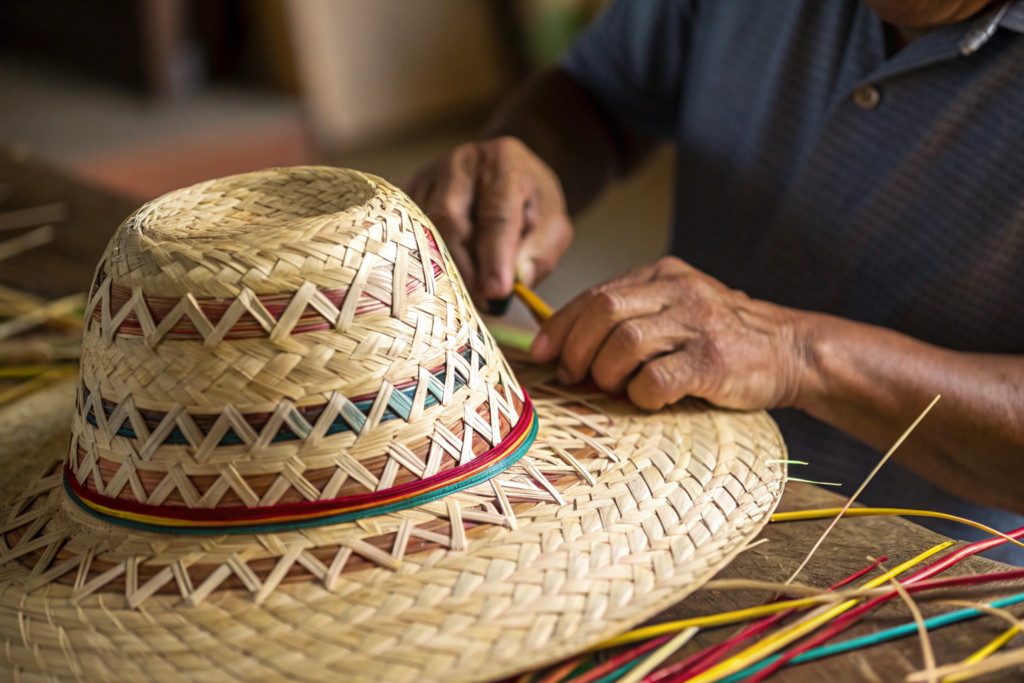
Herringbone is one of the most popular patterns. It has a distinctive V shape. The pattern is created by weaving the straw in a way that changes direction at regular intervals. The weaver works in rows. In one row, the straws are woven in one direction. In the next row, the direction changes. This creates the characteristic zigzag. The pattern can be subtle or bold, depending on the fineness of the straw and the spacing of the direction changes. Herringbone works well on both the crown and the brim. It adds texture and visual interest without being overwhelming. For a custom herringbone straw hat, we work with weavers who specialize in this technique.
What Makes Diamond and Floral Patterns Distinctive?
Diamond patterns are created by weaving in a way that creates peaks and valleys. The pattern looks like a series of diamonds or lozenges. It is more complex than herringbone. It requires the weaver to carefully control the tension and direction. The result is a hat with a faceted, three-dimensional look. Diamond patterns are often used on the crown of fedoras and wide-brim hats. Floral patterns are the most complex. They require the weaver to introduce curved lines into the weave. This is done by changing the straw count and direction gradually. Floral patterns often use multiple colors. The flowers can be stylized or realistic. These hats are true works of art. They are the pinnacle of straw hat craftsmanship. We offer custom floral pattern hats for clients who want the highest level of distinction.
How Do You Collaborate on Custom Pattern Design?
Creating a custom pattern is a collaboration. You have the vision. The weaver has the skill. My role is to bridge the gap. I have learned that the best results come when we work together. You bring the inspiration. We bring the technical knowledge. Together, we create something unique.
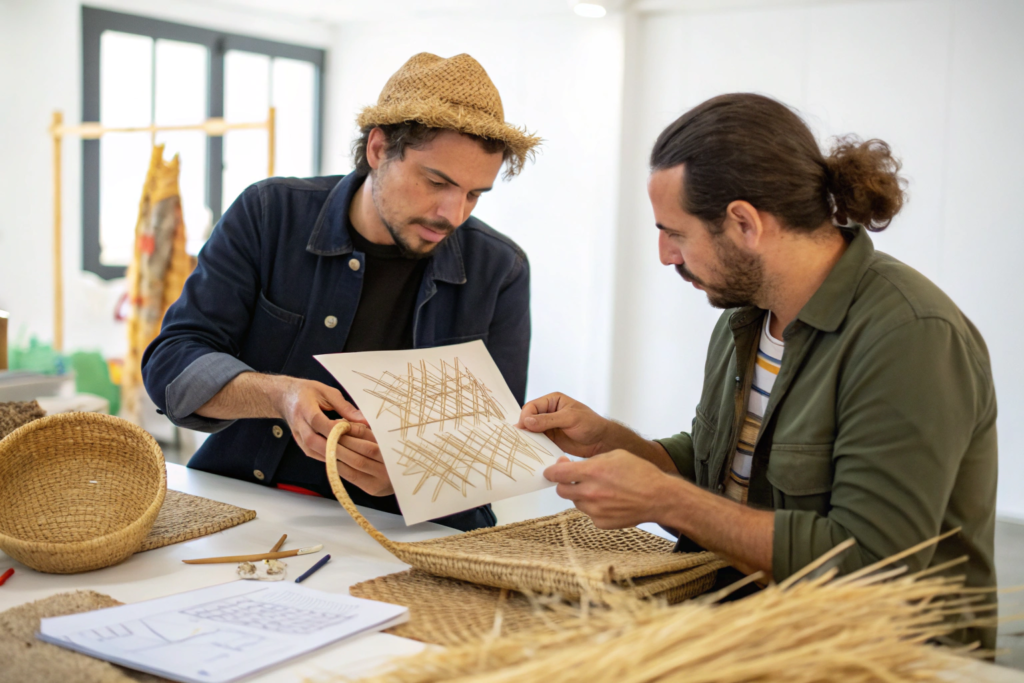
Collaborating on custom pattern design involves translating your inspiration into a weavable pattern. Start with visual references. Show us photos of patterns you like. They can be from vintage hats, textiles, or even architecture. Our design team will work with you to refine the pattern. We will consider the straw material, the hat shape, and the production method. Then our master weavers will create a sample. The sample shows how the pattern looks in actual straw. This is critical because patterns look different in straw than they do on paper. We may go through several rounds of refinement. The goal is to achieve a pattern that meets your aesthetic vision and is feasible for production.
I remember a client who wanted a pattern inspired by traditional Chinese lattice windows. She showed us photos of the windows. The pattern was intricate. Our design team created a simplified version that could be woven in straw. The master weaver created a sample. The client loved it. We produced a collection of hats with that pattern. They were unique to her brand. No other brand had that pattern. That is the power of custom design.
How Do You Translate a Design into a Weavable Pattern?
Translation is the key step. A design that looks beautiful on paper may not work in straw. Straw has thickness. It has texture. It does not bend in sharp angles. Our design team understands these constraints. They work with the weavers to adapt the design. They consider the straw gauge. Finer straw allows for more detail. They consider the hat shape. A pattern that works on a flat surface may distort on a curved crown. They consider the production method. Hand weaving allows for more complexity than machine weaving. The translation process is iterative. The weaver provides feedback. The design team adjusts. The result is a pattern that is both beautiful and practical.
What Is the Sample Development Process?
The sample development process starts with your design brief. You provide inspiration images, color preferences, and hat shape specifications. We create a digital rendering of the proposed pattern. This gives you a sense of the look. If you approve, we move to a physical sample. The master weaver creates a small swatch of the pattern. This swatch shows the actual texture and color. You approve the swatch or request changes. Once the swatch is approved, the weaver creates a full hat sample. This sample shows how the pattern works on the actual hat shape. You evaluate the sample. We make any final adjustments. Then the sample becomes the production standard. This process takes time. But it ensures that the final product matches your vision. We manage this sample development process for all our custom straw hat clients.
How Do You Ensure Quality and Consistency in Woven Patterns?
Unique patterns are beautiful. But they are only valuable if they are consistent. A hat with a pattern that is uneven or distorted looks cheap. I learned this lesson when we produced our first batch of custom pattern hats. The first few hats were perfect. But as production continued, the pattern quality varied. Some weavers were more skilled than others. We had to implement a quality control system to ensure consistency.
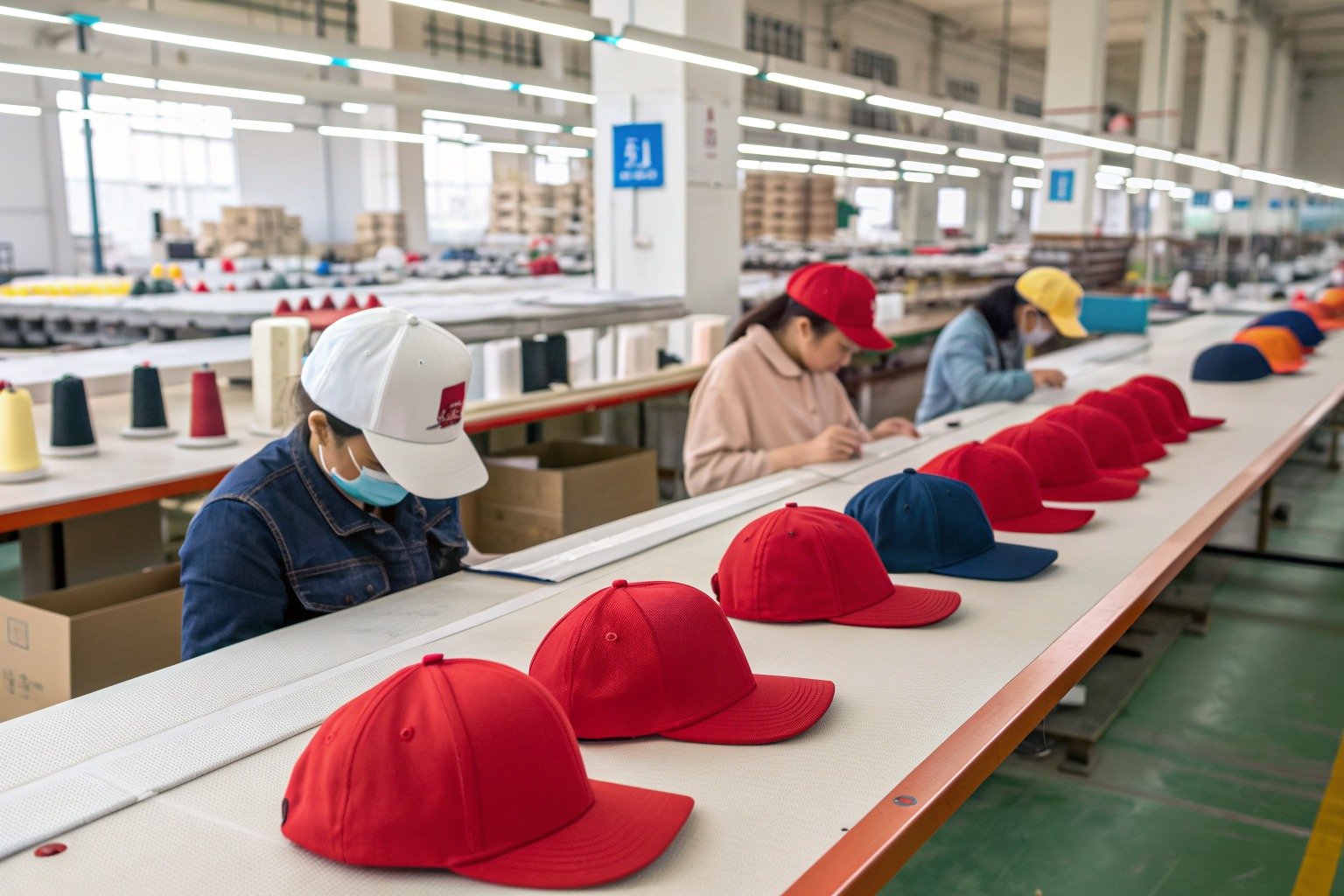
Ensuring quality and consistency in woven patterns requires skilled weavers, clear standards, and rigorous inspection. The weavers must be trained in the specific pattern. Not all weavers can execute complex patterns. We select only the most skilled artisans for custom pattern work. The standards must be documented. We create a sample standard for each pattern. This sample is used for comparison throughout production. Inspection is continuous. We check the pattern at the start of each hat. We check again at intermediate stages. We do a final inspection when the hat is complete. Any hat that does not match the standard is rejected. This system ensures that every hat meets your quality expectations.
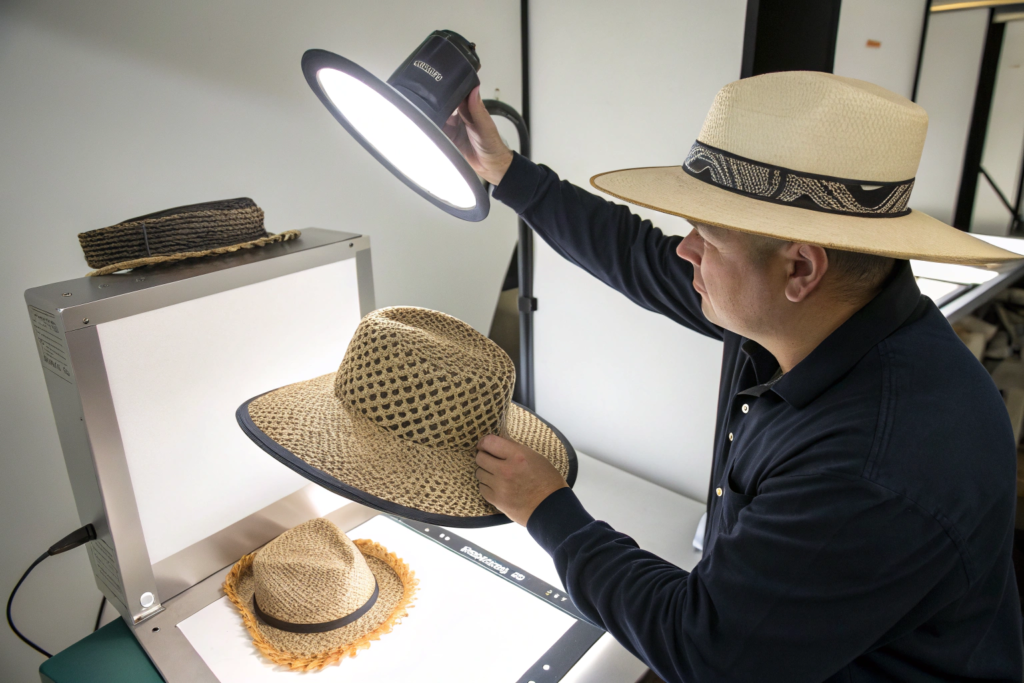
I want to share our inspection process. When a weaver starts a hat, they begin with the crown. The first few rows set the pattern. Our QC inspector checks these rows. If the pattern is correct, the weaver continues. If it is not, the weaver corrects it immediately. This catches errors early. Midway through the hat, we check again. At this point, the pattern is established. We check for consistency in tension and alignment. When the hat is complete, we do a final inspection. We hold the hat up to light. This reveals any unevenness. We also check the brim and the edge finish. Only hats that pass all these checks are approved. This rigorous system ensures that your custom pattern hats are consistent and high quality.
How Do You Train Weavers on New Patterns?
Training is essential. When we introduce a new pattern, we do not just give the weavers a drawing. We have a master weaver create a sample. The master weaver then teaches the pattern to the other weavers. They practice on small swatches first. Once they can produce a consistent swatch, they move to hats. We monitor their first few hats closely. We provide feedback. The weavers learn quickly. After a few batches, they can produce the pattern consistently. This training process takes time. But it is necessary for quality. For clients who order large quantities, we invest in this training. For small orders, we may have only the master weaver work on the hats. This ensures quality but limits volume.
What Are the Common Defects in Woven Patterns?
The most common defects are uneven tension, pattern drift, and color inconsistency. Uneven tension occurs when the weaver pulls some rows tighter than others. This creates a wavy, uneven surface. Pattern drift occurs when the pattern shifts off-center. This is common on curved surfaces. Color inconsistency occurs when different batches of dyed straw have slight color variations. This is most noticeable in patterns with color blocks. Our QC team is trained to spot these defects. We reject any hat with these issues. We also work with our material suppliers to ensure color consistency. For dyed straw, we order large batches to ensure uniformity. This attention to detail is what allows us to deliver consistent, high-quality custom straw hats.
How Does AceAccessory Source Custom Straw Hats?
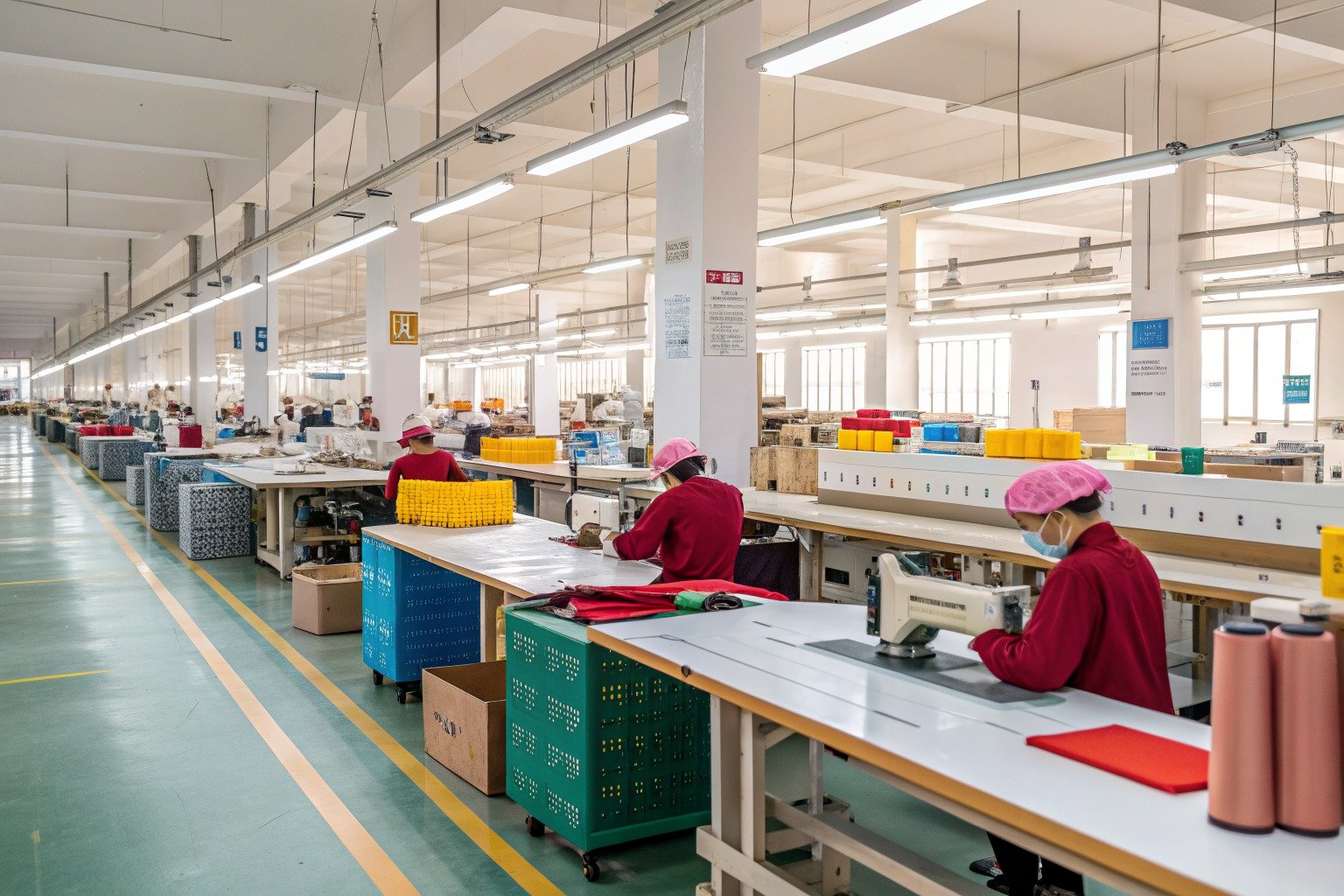
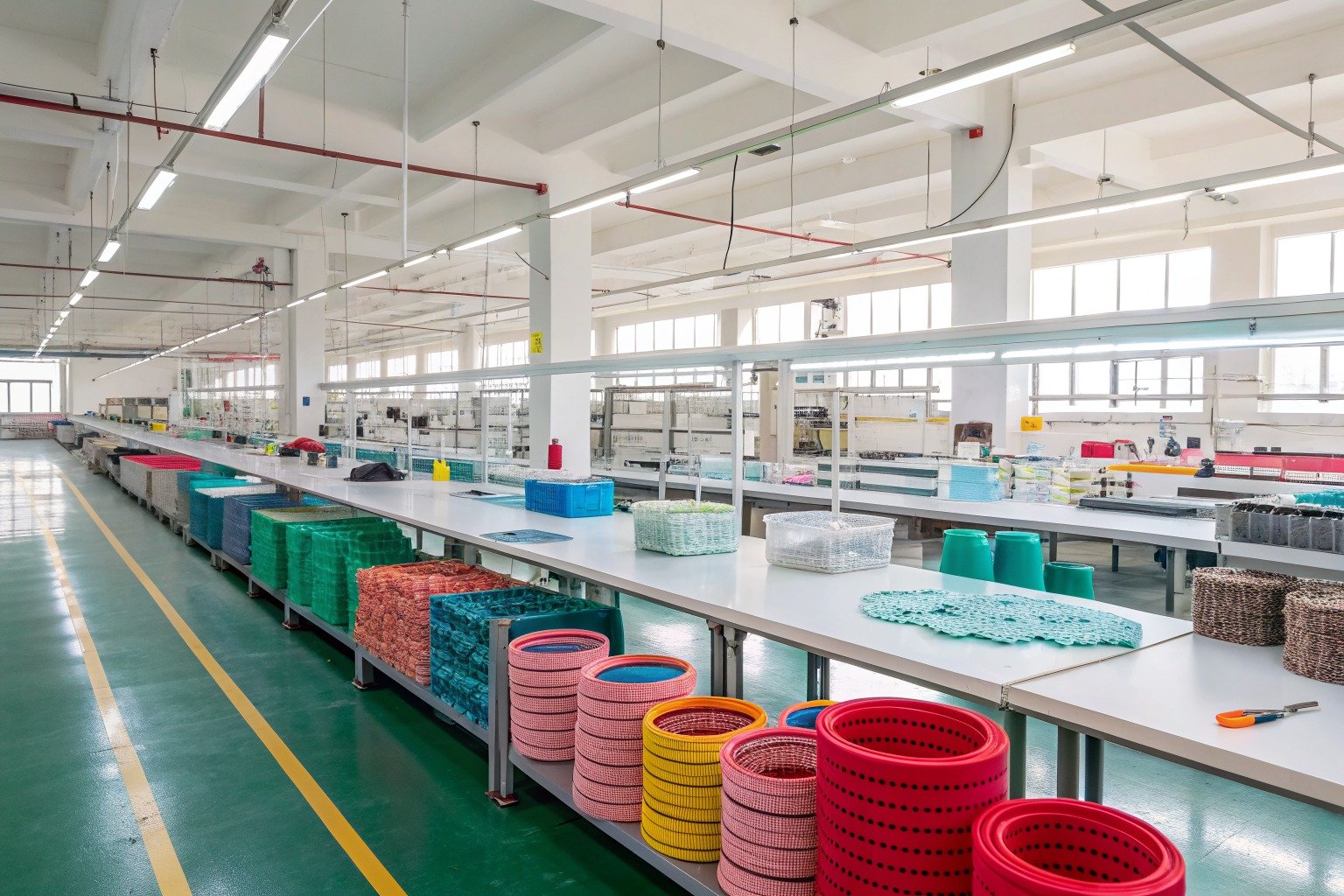
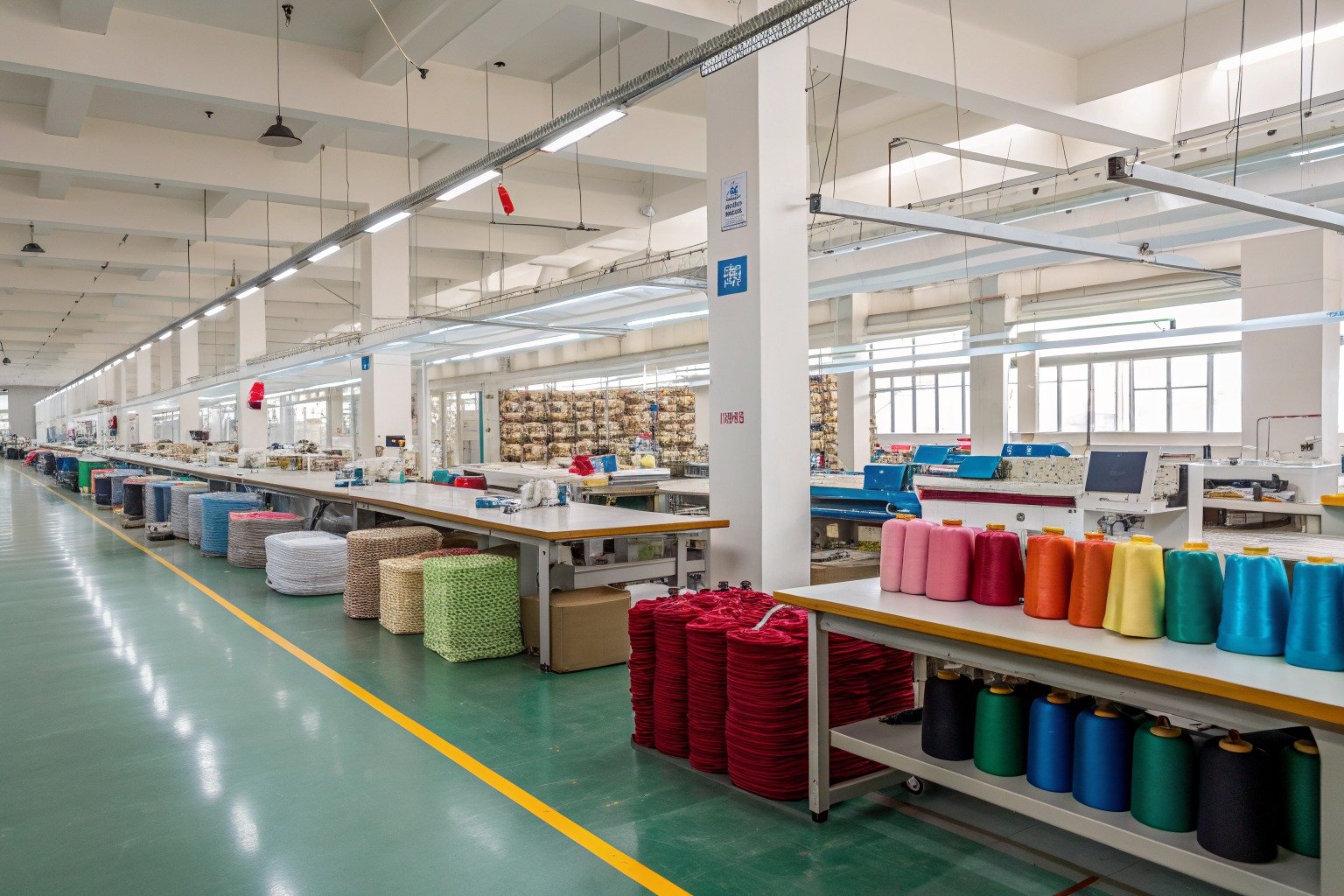
At Shanghai Fumao, we have built a network of skilled weavers. We work with communities in several regions. We have relationships with master weavers who have decades of experience. We also work with modern facilities that combine hand weaving with efficient production. This network allows us to offer a range of options, from fully handcrafted luxury hats to efficiently produced custom patterns.
AceAccessory sources custom straw hats through a network of specialized weavers and production partners. We work directly with weaving communities in Ecuador, China, and other regions. This allows us to access traditional techniques and skilled artisans. For clients who want fully handcrafted hats, we work with master weavers who create each hat individually. For clients who want consistent patterns at scale, we work with facilities that combine hand weaving with machine-assisted techniques. We manage the entire process from material selection to final quality control. Our project managers work closely with weavers to ensure pattern consistency. Our quality control team inspects every hat. This integrated approach allows us to deliver custom straw hats that meet the highest standards of craftsmanship and consistency.
I want to share how we built our network. Years ago, I traveled to a weaving village in the mountains. The weavers there had skills that had been passed down for generations. But they had no connection to the global market. I started working with them. I provided materials. I provided training on quality standards. I provided a reliable market for their work. Today, that village is a key part of our supply chain. The weavers are proud of their work. They take pride in creating beautiful hats for our clients. This relationship is built on trust and mutual respect.
What Is Our Relationship with Weaving Communities?
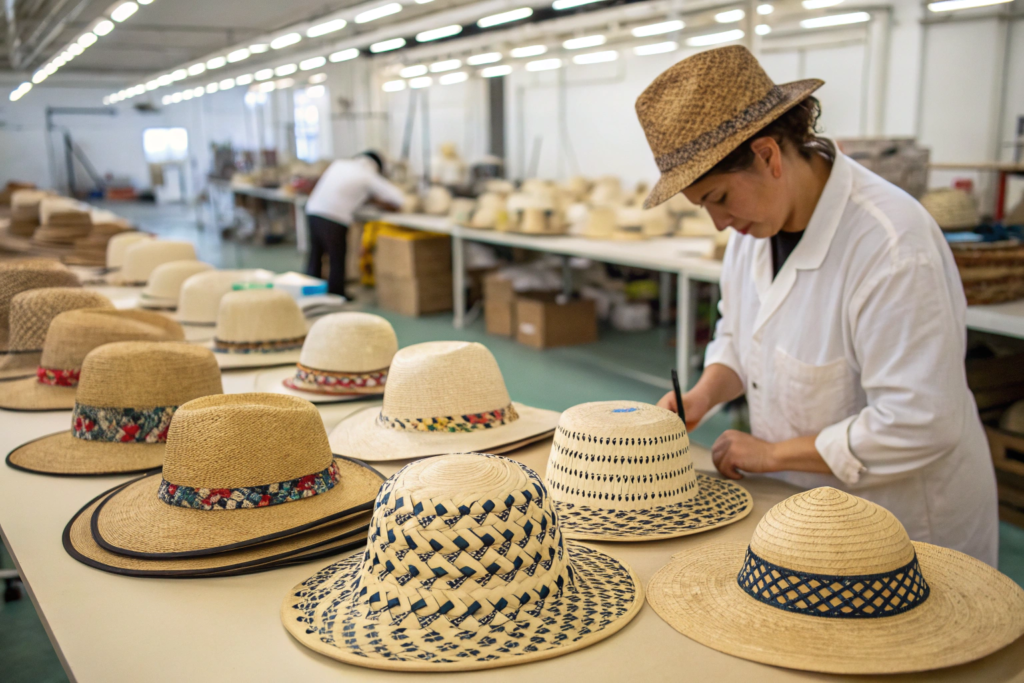
Our relationship with weaving communities is based on partnership. We do not just place orders. We invest in the communities. We provide training on quality standards. We provide materials. We pay fair prices. We visit regularly to build relationships. This approach ensures that the weavers are committed to quality. They know that their work represents our brand and our clients’ brands. They take pride in it. For our clients, this means they get hats made by skilled artisans who care about their work. They also get a story they can tell their customers. A hat made by a master weaver in a traditional village has authenticity. It has soul. This is what consumers in the premium market value.
How Do We Manage Production for Different Volume Needs?
We manage production by matching the complexity to the volume. For small volumes of highly complex patterns, we work with master weavers. Each hat is individually crafted. The lead time is longer. The cost is higher. The quality is exceptional. For larger volumes, we use a combination approach. The pattern is designed to be consistent. We train a team of weavers. They work simultaneously on multiple hats. This increases volume while maintaining quality. For very large volumes, we may use machine-assisted techniques. The pattern is programmed into a machine that helps guide the weaving. This ensures perfect consistency. The weavers still do the handwork, but the machine ensures the pattern is precise. This allows us to scale up to thousands of hats while maintaining quality. We discuss these options with our clients. We help them choose the approach that fits their volume, budget, and quality requirements.
Conclusion
Sourcing custom straw hats with unique weaving patterns is about more than just finding a factory. It is about understanding materials. It is about respecting techniques. It is about collaborating with skilled artisans. It is about maintaining quality and consistency. And it is about telling a story that your customers will appreciate.
At Shanghai Fumao, we have built our straw hat business on these principles. We work with the finest materials. We partner with master weavers. We invest in quality control. We manage the complexity so you do not have to. Whether you want a small collection of fully handcrafted Panama hats or a large order of custom-pattern paper straw hats, we have the capability and the experience to deliver.
Your brand deserves hats that stand out. Hats that are not just accessories, but statements. Hats that your customers will treasure. Let us help you create them. Please contact our Business Director, Elaine, at elaine@fumaoclothing.com to discuss your custom straw hat collection. We can help you select the right materials, patterns, and production approach to bring your unique vision to life.