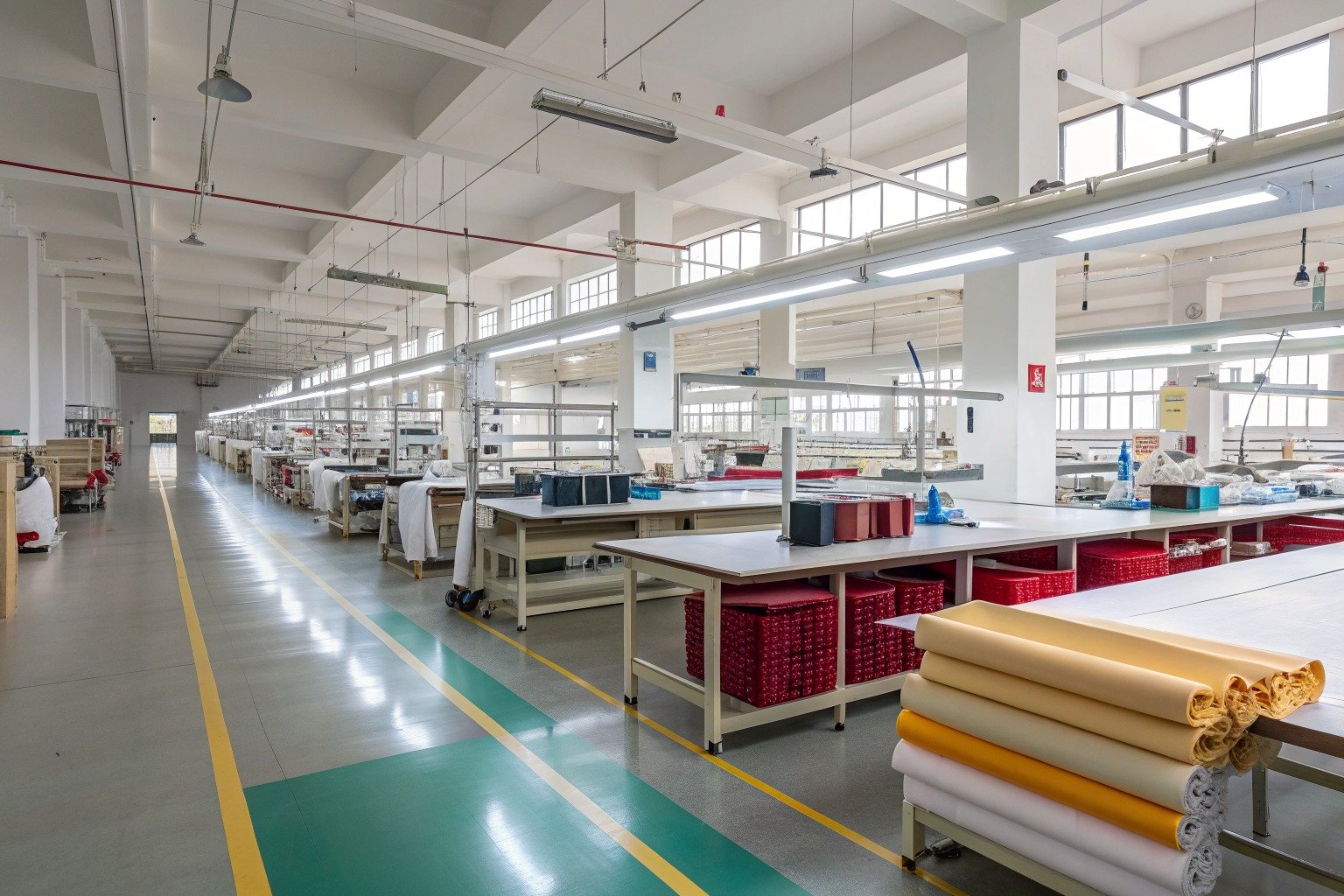
I have been in the textile and fashion accessory business for over twenty years, and I have witnessed few changes as transformative as the rise of digital printing. When I started, custom scarves meant screen printing or weaving. Both were slow, expensive, and required large minimum orders. Today, digital printing has democratized scarf manufacturing. It has opened up possibilities that were unimaginable just a decade ago. For a buyer like Ron, who needs custom scarves for retail, promotional, or private label programs, digital printing offers speed, flexibility, and creative freedom that traditional methods cannot match.
Digital printing is transforming custom scarf manufacturing by eliminating setup costs, enabling short runs and rapid prototyping, allowing for unlimited color complexity, and making on-demand production economically viable. Unlike screen printing, which requires expensive screens for each color, digital printing prints directly from a digital file. This means no minimum order requirements, faster turnaround times, and the ability to create scarves with photographic detail and gradient colors that were previously impossible or prohibitively expensive.
At Shanghai Fumao Clothing, we have invested heavily in digital printing technology. We operate state-of-the-art digital textile printers that can produce scarves with exceptional color accuracy and detail. We have seen firsthand how this technology has opened new markets for our clients, from independent designers testing small collections to major retailers needing rapid replenishment. I want to share how digital printing is changing the industry and how you can leverage it for your business.
What Is Digital Textile Printing And How Does It Work?
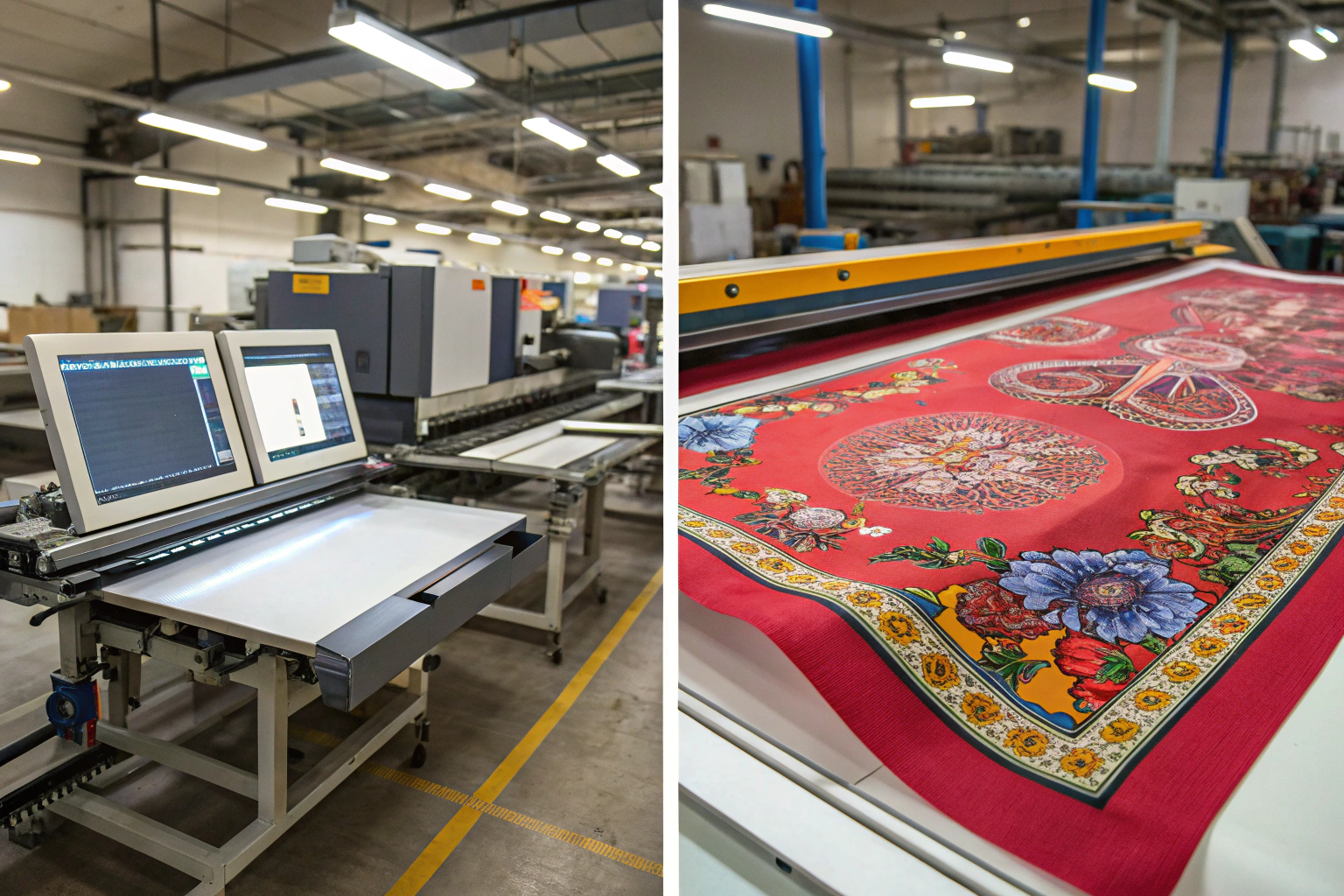
Digital textile printing is the process of printing designs directly onto fabric using inkjet technology, similar to the printer on your desk but on a much larger scale and with specialized inks. Unlike traditional printing methods that require physical screens or cylinders, digital printing creates the image directly from a digital file. This fundamental difference is what makes digital printing so transformative.
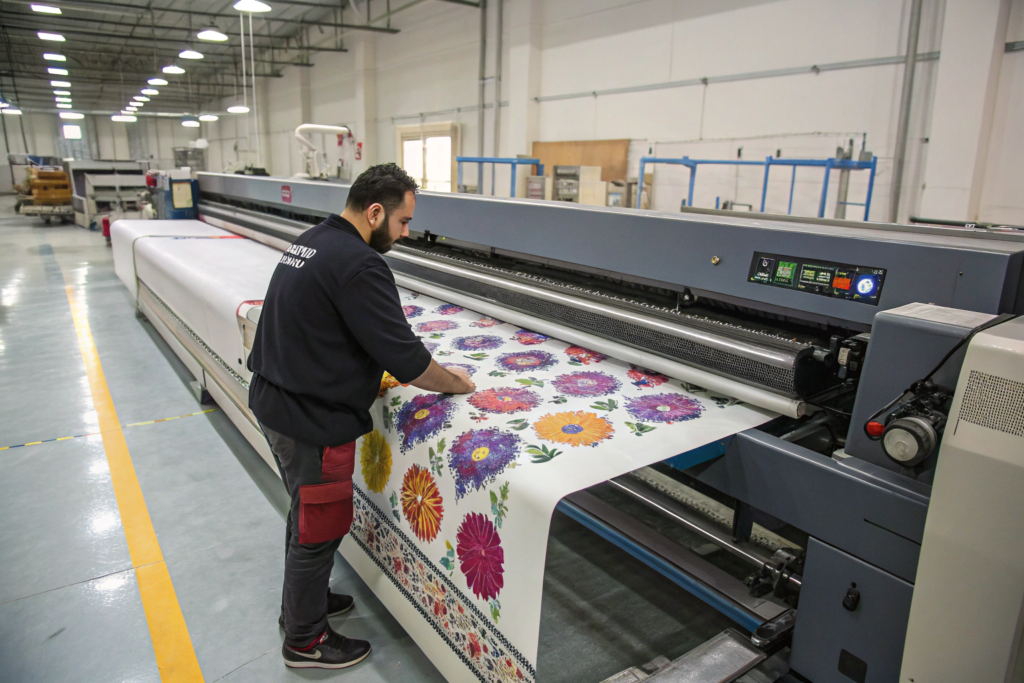
The process starts with a digital design file, typically created in Adobe Illustrator or Photoshop. The file is sent to a digital textile printer. The printer uses specialized inks—reactive dyes for natural fibers like silk and cotton, acid dyes for wool and nylon, or disperse dyes for polyester—that bond with the fabric fibers. The fabric is fed through the printer, and the print heads apply the ink in microscopic droplets. After printing, the fabric goes through a steaming process that fixes the dyes, ensuring colorfastness and durability. Finally, the fabric is washed to remove any unfixed dye and dried.
For a deeper understanding of digital printing technology, you can explore resources from organizations like the Digital Textile Printing Association or technical publications from SGIA (now part of PRINTING United Alliance).
How does digital printing differ from traditional screen printing?
The differences between digital printing and traditional screen printing are profound and affect every aspect of scarf production. Screen printing requires creating a separate screen for each color in the design. For a design with 10 colors, you need 10 screens. Each screen costs money and takes time to produce. The setup cost is high, making screen printing economical only for large runs. Digital printing has no setup cost. The design is printed directly from the file. The first scarf costs the same as the thousandth scarf. Screen printing is limited in color complexity. Each color is a separate screen, so designs with many colors or gradients are impractical or impossible. Digital printing can reproduce millions of colors, including photographic images and smooth gradients. Screen printing has a high minimum order quantity (MOQ), often 500 to 1,000 pieces, to amortize the setup cost. Digital printing has no MOQ. You can print one scarf or a thousand. Screen printing has a longer lead time, typically 4 to 8 weeks for setup and production. Digital printing can produce samples in days and production runs in 2 to 4 weeks. The trade-off is that digital printing has a higher per-unit cost for large runs, making screen printing more cost-effective for orders over 500 to 1,000 pieces.
What types of fabric are compatible with digital printing?
Digital printing is compatible with a wide range of fabrics, but the ink type must match the fiber. For natural fibers like silk, cotton, linen, and wool, reactive dyes are used. Reactive dyes bond chemically with the fibers, resulting in excellent colorfastness and a soft hand feel. For silk scarves, digital printing with reactive dyes produces vibrant colors that are wash-fast and light-fast. For polyester and other synthetic fibers, disperse dyes are used. The dyes are sublimated into the fabric, creating a permanent bond. This is ideal for performance fabrics and scarves that need to be durable. For nylon, acid dyes are used. For blends, the choice of ink depends on the dominant fiber. At Shanghai Fumao Clothing, we work with all major fabric types and can advise on the best printing method for your chosen material. For more information on textile printing technologies, the Textile World website offers technical articles on digital printing advancements.
What Are The Benefits Of Digital Printing For Custom Scarves?
Digital printing offers a range of benefits that are transforming the custom scarf market. These benefits extend beyond just production efficiency to creative possibilities and business model flexibility. Understanding these benefits helps you leverage digital printing for your brand.
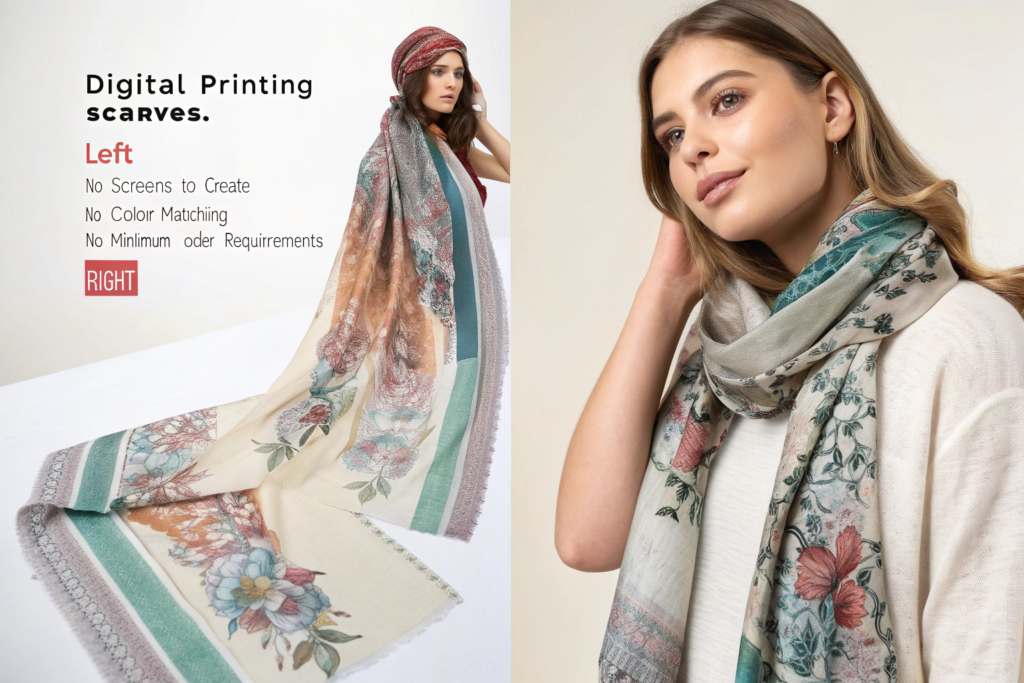
The first benefit is the elimination of setup costs. With digital printing, there are no screens to create, no color matching for each screen, and no minimum order requirements. This makes it economically viable to produce small quantities, test new designs, and offer a wider variety of styles. The second benefit is unlimited color complexity. Digital printing can reproduce photographic images, complex gradients, and millions of colors with precision. This opens up creative possibilities that were previously impossible or prohibitively expensive. Scarves can now feature detailed artwork, photographs, and subtle color transitions.
The third benefit is speed. Digital printing has a much faster turnaround than screen printing. Samples can be produced in 3 to 5 days. Production runs can be completed in 2 to 4 weeks. This allows brands to respond quickly to trends and to replenish best-sellers rapidly. The fourth benefit is customization and personalization. Digital printing makes it feasible to print different designs on each scarf, enabling personalized scarves for events, corporate gifts, or direct-to-consumer customization. The fifth benefit is reduced waste. Because there is no setup, there is no waste from color matching or screen cleaning. Digital printing also allows for printing only what is needed, reducing overproduction.
How does digital printing enable small-batch and on-demand production?
Digital printing is the enabler of small-batch and on-demand production. Because there are no setup costs, the economics of printing one scarf are the same as printing a thousand. This fundamentally changes the business model for custom scarves. For independent designers, digital printing allows them to test a new design with an order of 50 or 100 scarves, rather than committing to 500 or 1,000. If the design sells, they can reorder. If it does not, they are not left with excess inventory. For retailers, digital printing enables just-in-time inventory. Instead of ordering a full season’s worth of scarves months in advance, they can order smaller quantities and replenish based on sell-through. This reduces inventory risk and improves cash flow. For events and promotions, digital printing allows for custom scarves with specific dates, logos, or personalization. A company can order 500 scarves for a conference with the conference logo and date, and they can be produced and delivered in weeks rather than months. At Shanghai Fumao Clothing, we have built our digital printing service around the needs of small-batch and on-demand production. We offer low MOQs, fast turnaround, and the flexibility to reorder quickly.
What creative possibilities does digital printing unlock?
Digital printing unlocks creative possibilities that were previously unimaginable in scarf manufacturing. The first is photographic detail. Scarves can now feature high-resolution photographs, whether landscapes, portraits, or abstract imagery. The level of detail is limited only by the resolution of the source image. The second is complex gradients. Smooth color transitions, from deep blue to pale turquoise, are possible with digital printing. In screen printing, gradients are simulated with halftone dots, which can look coarse. The third is unlimited color combinations. A design can include as many colors as the designer wants, without increasing cost or complexity. The fourth is fine detail. Intricate patterns, tiny text, and delicate line work are all reproducible with digital printing. The fifth is repeat patterns without seam lines. Digital printing allows for seamless repeats, so patterns flow continuously around the scarf. The sixth is personalization. Each scarf can be printed with a different name, date, or design. This is ideal for weddings, events, or personalized gifts. For inspiration on digital textile design, websites like Patternbank and Textile Design Lab showcase the range of creative possibilities.
How Does Digital Printing Compare To Screen Printing For Cost?
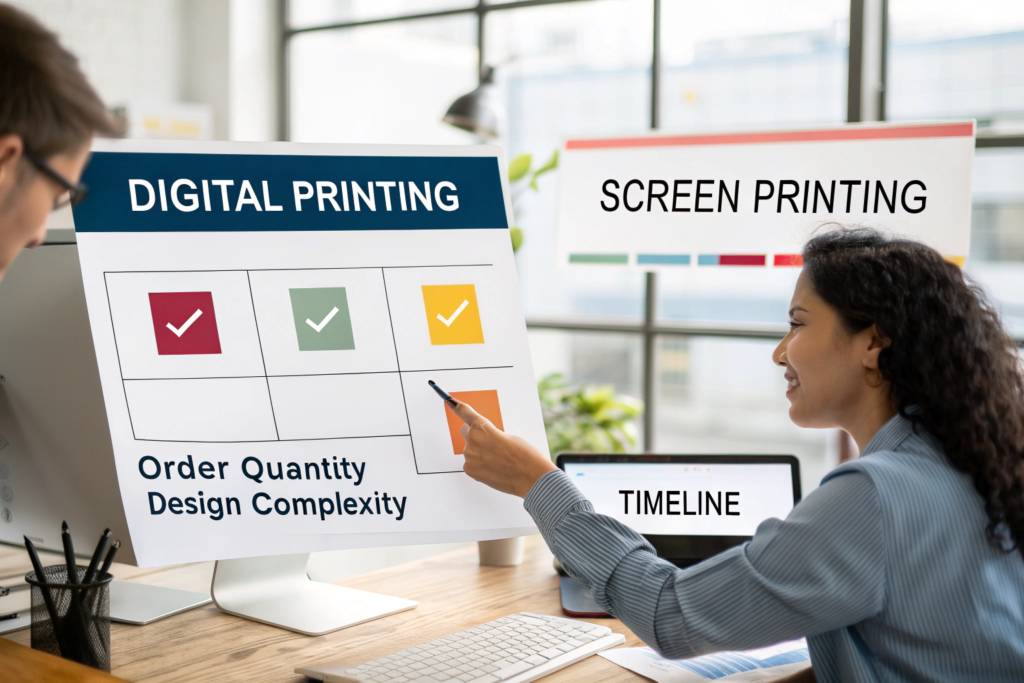
The cost comparison between digital printing and screen printing is not a simple one. The right choice depends on your order quantity, design complexity, and timeline. Understanding the cost structure of each method helps you make informed decisions.
Digital printing has no setup cost. The cost per scarf is relatively flat regardless of quantity. For small quantities, digital printing is significantly more cost-effective because you are not paying for screens. For a design with 10 colors, screen printing setup costs can be $200 to $500 or more, depending on the complexity. That cost is amortized over the run. For 100 scarves, the setup cost adds $2 to $5 per scarf. For 1,000 scarves, it adds $0.20 to $0.50 per scarf. Screen printing has a lower per-unit cost for large quantities because the ink and labor costs are lower once the screens are made. The break-even point varies but is typically between 300 and 1,000 pieces, depending on the design complexity and the specific factory.
For complex designs with many colors, digital printing has an even greater advantage because screen printing costs increase with each color. A 10-color design requires 10 screens. A 20-color design requires 20 screens. Digital printing cost is unaffected by color count. For designs with gradients or photographic detail, digital printing is the only practical option. For simple designs with 1 to 3 colors and quantities over 1,000, screen printing is usually more cost-effective. For quantities under 500, digital printing is usually the better choice. For quantities between 500 and 1,000, it depends on the specific design and the factory’s pricing.
When is digital printing more cost-effective than screen printing?
Digital printing is more cost-effective than screen printing in several scenarios. The first is low quantities. For orders under 500 pieces, digital printing is almost always more cost-effective because there is no setup cost. The per-unit cost may be slightly higher, but the total cost is lower because you avoid paying for screens. The second is complex designs. If your design has more than 4 colors, includes gradients, or has photographic detail, digital printing is likely more cost-effective. Screen printing costs increase with each color, while digital printing costs are flat. The third is rapid turnaround. If you need scarves quickly, digital printing is faster. The time saved may be worth any additional cost. The fourth is test runs. If you are testing a new design, digital printing allows you to order a small quantity to gauge demand. If the design sells, you can later switch to screen printing for larger runs. The fifth is designs that are frequently updated. If you change designs every season, the setup cost for screen printing becomes a recurring expense. Digital printing avoids this. At Shanghai Fumao Clothing, we help clients analyze their order quantities and design complexity to determine the most cost-effective printing method.
How do design complexity and color count affect cost?
Design complexity and color count have a significant impact on cost for screen printing, but no impact on cost for digital printing. For screen printing, each color requires a separate screen. A 1-color design requires 1 screen. A 10-color design requires 10 screens. The cost of screens can range from $20 to $50 per screen, depending on size and complexity. This means a 10-color design may have $200 to $500 in setup costs. Additionally, the time to set up and register each screen adds to labor costs. For digital printing, the cost is the same regardless of whether the design has 1 color or 100 colors. The printer prints the design directly from the digital file. This means that complex, multi-color designs are much more affordable with digital printing. Gradients and photographic detail are essentially free in digital printing, whereas they are difficult or impossible to reproduce with screen printing. For designers, this freedom is liberating. They no longer need to limit their color palette to control costs. They can create scarves that are true works of art. At Shanghai Fumao Clothing, we encourage our clients to explore complex designs that take full advantage of digital printing’s capabilities.
How Does Digital Printing Impact Lead Times And Sampling?
One of the most transformative aspects of digital printing is its impact on lead times and the sampling process. In traditional screen printing, sampling could take weeks and multiple rounds. With digital printing, sampling is fast, accurate, and allows for rapid iteration.
In screen printing, creating a sample requires making screens for each color, mixing inks, and setting up the press. This process can take 2 to 3 weeks. If the sample is not correct, the process repeats. A single round of sampling can take a month or more. In digital printing, a sample can be produced in 3 to 5 days. The design is printed directly from the digital file. If changes are needed, the file is updated and a new sample is printed. This allows for rapid iteration. You can test multiple color variations in a single day. This speed is invaluable for brands that need to move quickly to market.
The accuracy of digital printing also reduces the need for multiple sampling rounds. What you see on screen is very close to what prints on fabric. Color matching is more predictable. This means that the approval process is faster and more reliable. For production, digital printing lead times are typically 2 to 4 weeks from sample approval to shipment, compared to 4 to 8 weeks for screen printing. This allows brands to be more responsive to trends and to replenish best-sellers quickly.
How fast can I get a digitally printed scarf sample?
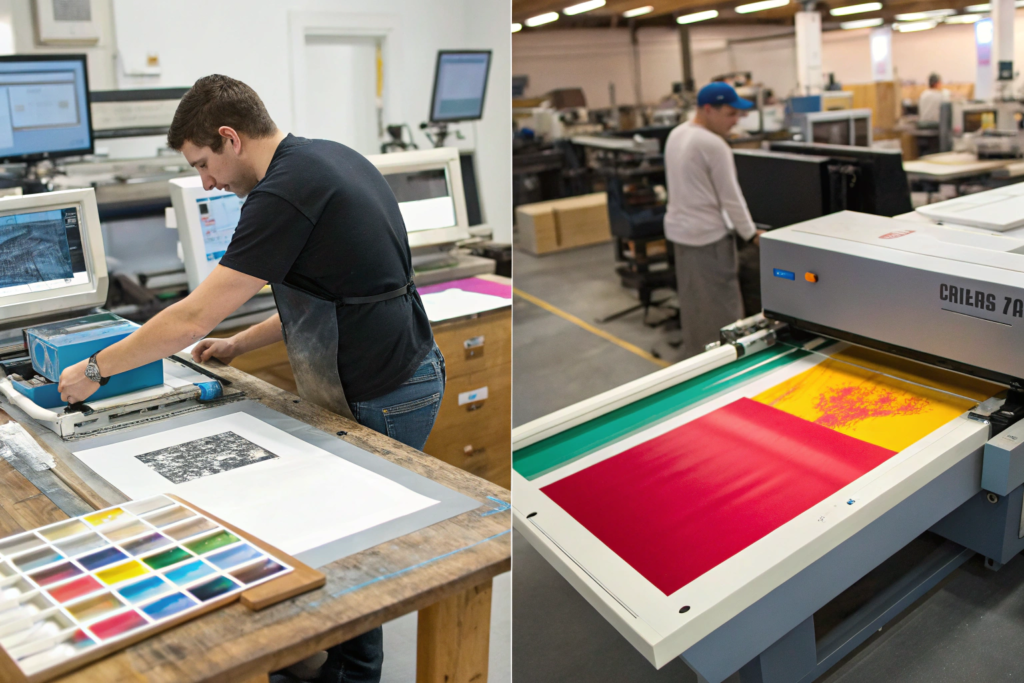
The speed of digital sampling is one of its greatest advantages. From the time we receive your final digital artwork, we can produce a sample scarf in 3 to 5 business days. The process is simple. We prepare your file for printing, load the fabric onto the printer, and print the design. After printing, the scarf is steamed to fix the dyes, washed to remove any unfixed dye, and dried. The entire process takes a few days. If you need to see multiple color variations, we can print them all in the same batch. This allows you to test different colorways quickly. For comparison, a screen-printed sample can take 2 to 3 weeks. The ability to get samples in days rather than weeks means you can iterate faster, reduce time to market, and respond to trends more quickly. At Shanghai Fumao Clothing, we offer expedited sampling for clients who need to move fast. We can produce a sample in as little as 3 days for urgent projects.
How does digital printing reduce time to market for seasonal collections?
Time to market is critical for seasonal collections. A scarf that arrives in stores after the season has started is a missed opportunity. Digital printing reduces time to market at multiple points in the process. First, sampling is faster. You can approve designs in weeks rather than months. Second, production is faster. Digital printing has shorter lead times because there is no setup. Third, you can order smaller quantities. This allows you to place initial orders earlier and then replenish based on sell-through. For a fall scarf collection, a traditional screen-printed order might need to be placed in January or February to arrive by August. With digital printing, you can place orders in May or June and still have scarves for the fall season. This means you can be more responsive to trends that emerge later in the year. You can also test designs with small orders and then scale up the ones that sell. This reduces inventory risk and improves cash flow. For a deeper understanding of supply chain agility, publications like Supply Chain Digital often discuss the role of digital manufacturing in reducing lead times.
Conclusion
Digital printing is fundamentally changing custom scarf manufacturing. It eliminates setup costs, enables small-batch and on-demand production, allows for unlimited color complexity, and dramatically reduces lead times. For designers and brands, it unlocks creative possibilities that were previously impossible or prohibitively expensive. For buyers, it offers flexibility, reduced inventory risk, and faster time to market. While screen printing remains the better choice for large quantities and simple designs, digital printing has become the go-to method for low to medium volumes, complex designs, and rapid turnaround.
At Shanghai Fumao Clothing, we have embraced digital printing technology as a core part of our service offering. We operate state-of-the-art digital textile printers, use a calibrated color management system, and have developed efficient workflows for sampling and production. We offer low MOQs, fast turnaround, and the ability to produce scarves with photographic detail, complex gradients, and unlimited colors. Whether you need a small test run for a new design or a full production order for your seasonal collection, we have the expertise and technology to bring your vision to life.
If you are ready to explore the possibilities of digital printing for your custom scarves, let’s talk. Please contact our Business Director, Elaine, directly at elaine@fumaoclothing.com to discuss your project and how digital printing can help you create scarves that stand out.