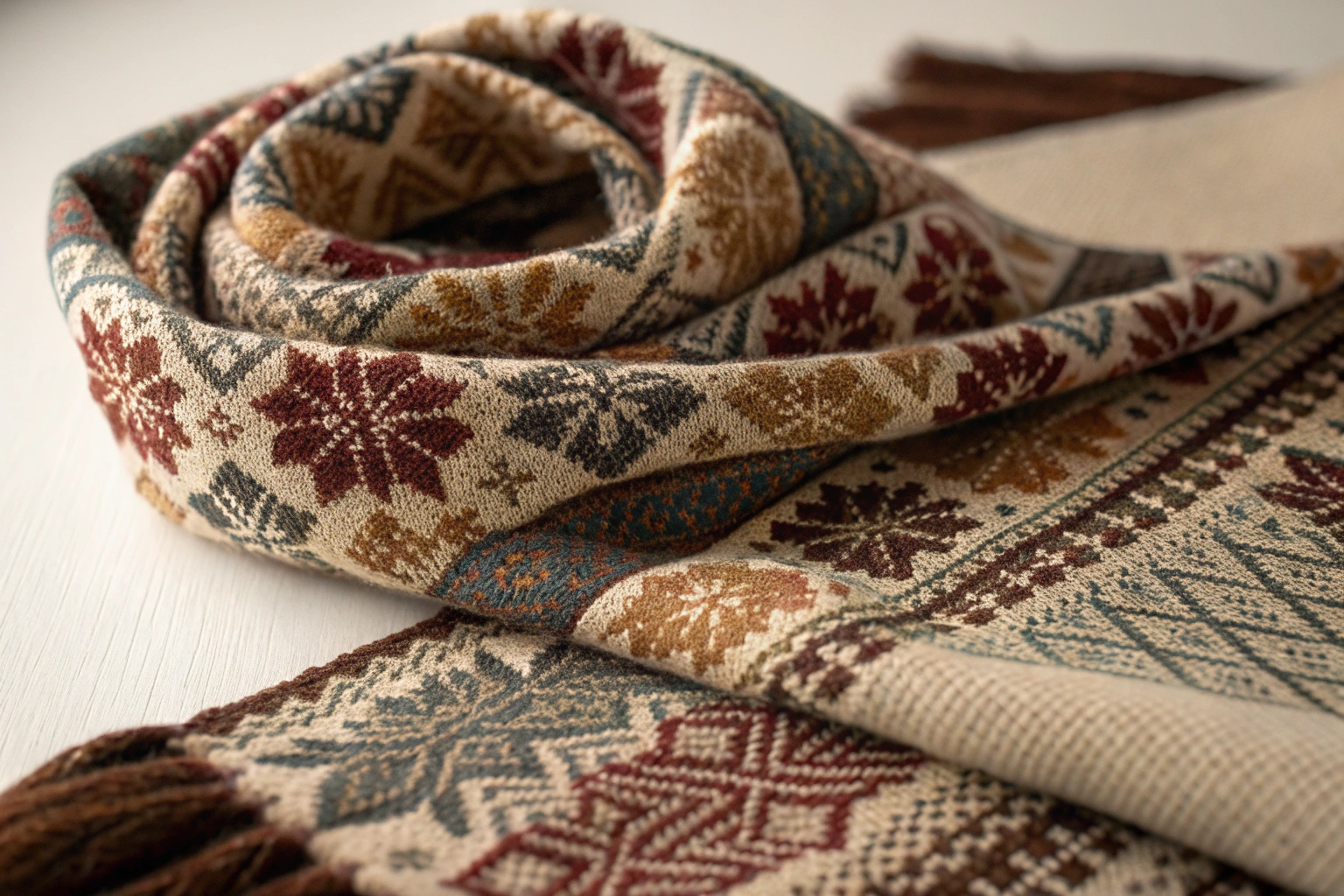
I’ve been in the textile business for decades, and I can tell you that a jacquard weave scarf is something truly special. It’s not just a printed design sitting on the surface. The pattern is woven directly into the fabric, creating a piece with incredible depth, texture, and durability. It’s a mark of quality and craftsmanship that discerning customers can immediately appreciate.
For buyers like Ron, who are sourcing for brands that value quality and heritage, jacquard scarves are a staple. They offer a timeless appeal that transcends fast fashion trends. But the world of jacquard is vast, with countless patterns, from classic Fair Isle to modern geometric designs. Knowing which patterns are most popular and how to source them is key to building a successful winter scarf collection.
At Shanghai Fumao Clothing, we have extensive experience in manufacturing jacquard woven accessories. We work with skilled weavers and advanced looms to create scarves of exceptional quality. In this post, I’ll share the most popular jacquard weave patterns for winter scarves and what you need to know to source them.
What Is Jacquard Weave And Why Is It Ideal For Scarves?
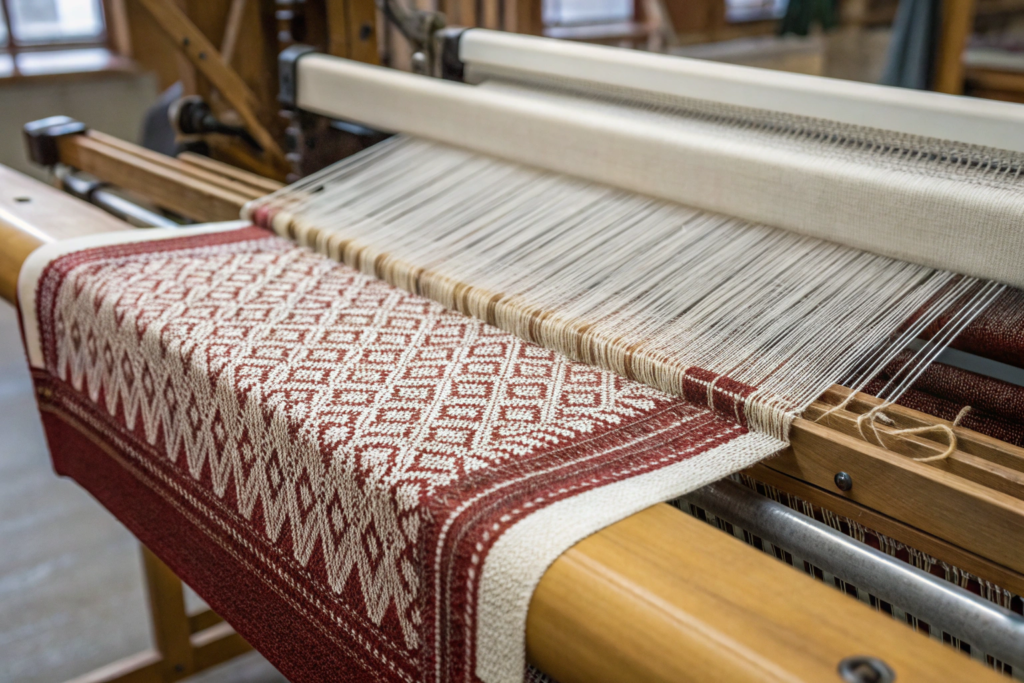
Before we dive into the patterns, it’s important to understand what makes jacquard weave so special. Unlike printed fabrics, where the design is applied to the surface, a jacquard weave pattern is created during the weaving process itself. The loom is programmed to raise individual warp threads in a specific sequence, allowing different colored weft threads to be inserted and create the design.
This results in a pattern that is integral to the fabric. It won’t fade, peel, or wash out. It has a beautiful, textured quality and a luxurious feel. For a winter scarf, which will be worn and handled frequently, this durability is a huge advantage. For more on weaving technology, resources like Textile World are excellent.
How does jacquard differ from other weaving methods?
The key difference is in the level of control over individual threads.
- Plain Weave: The simplest weave, where weft threads pass over and under each warp thread in a simple, alternating pattern. It creates a strong, basic fabric but cannot produce complex patterns.
- Twill Weave: Creates a diagonal ribbed texture. It can be used to create simple patterns like herringbone, but it’s limited in complexity.
- Jacquard Weave: Uses a special mechanism (originally a series of punched cards, now computerized) that allows for the individual control of each warp thread. This means the loom can create incredibly intricate, multi-colored patterns, from detailed florals to complex geometrics and even photographic images.
Jacquard is the method of choice when you want a pattern that is an integral part of the fabric, not just a texture or a simple stripe.
Why is jacquard particularly well-suited for winter scarves?
Jacquard is perfect for winter scarves for several reasons:
- Warmth and Weight: Jacquard fabrics are often denser and more substantial than plain-weave fabrics, making them warmer and more suitable for winter.
- Durability: The pattern is woven in, so it won’t wear away with use. A jacquard scarf can last for years, even decades.
- Visual Interest: The textured, multi-dimensional quality of a jacquard weave adds a richness and depth that printed fabrics can’t match. It catches the light beautifully and looks luxurious.
- Timelessness: Jacquard patterns often have a classic, heritage feel that transcends trends. A well-chosen jacquard scarf can be a wardrobe staple for years.
A jacquard woven scarf is an investment piece that combines beauty, warmth, and lasting quality.
What Are The Classic Jacquard Patterns That Never Go Out Of Style?
Some jacquard patterns have proven their enduring appeal. They are the foundation of any classic winter scarf collection. These patterns are rooted in tradition and continue to be popular year after year.
Understanding these classic patterns is essential for any buyer. They are the safe, reliable choices that will always have a market. For more on the history of textile patterns, museums like the Victoria and Albert Museum in London have wonderful collections.
What is the Fair Isle pattern?
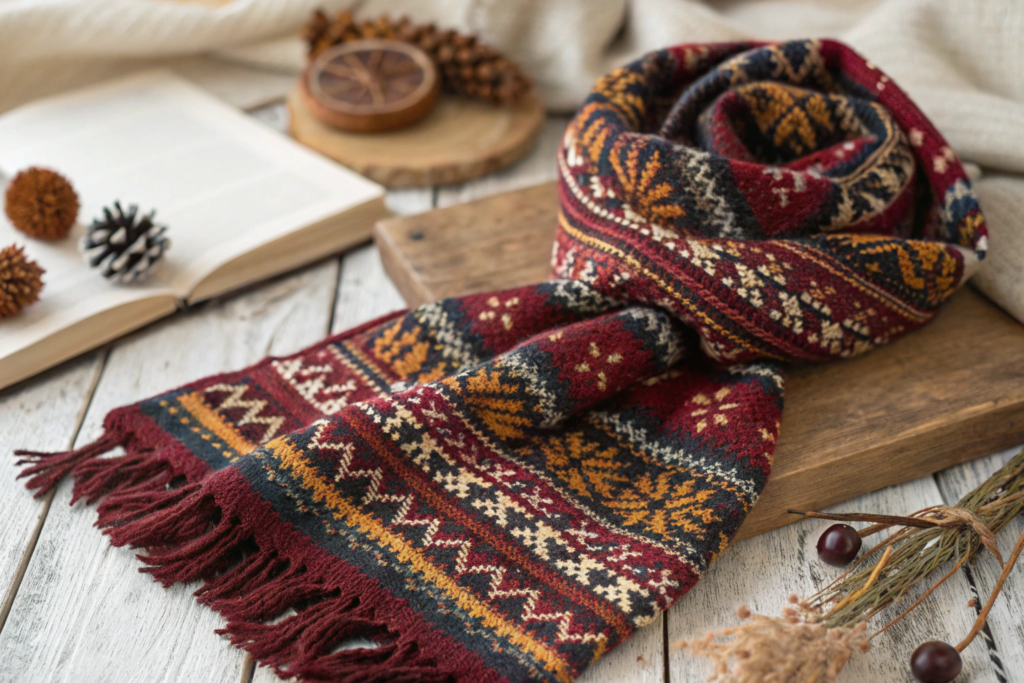
Fair Isle is a traditional knitting technique that originated in the Shetland Islands of Scotland. It’s characterized by intricate, multi-colored patterns, often featuring geometric motifs, small flowers, and animal shapes. The patterns are created by using multiple colors of yarn in a single row.
In jacquard weaving, Fair Isle patterns are beautifully replicated. The woven version captures the look of the knitted original but in a flatter, smoother fabric. Fair Isle scarves are the epitome of cozy, winter style. They are often made in rich, warm colors like burgundy, navy, forest green, and cream, and they pair perfectly with a classic wool coat. A Fair Isle scarf is a timeless investment.
What are argyle and houndstooth patterns?
Argyle is a pattern of overlapping diamonds in a grid. It’s often associated with golf and preppy style, but it’s a classic geometric pattern that works beautifully on scarves. It can be woven in a single color for a subtle look, or in multiple colors for a bolder statement.
Houndstooth, as we discussed in a previous post, is a classic pattern of broken checks or abstract four-pointed shapes. In a jacquard weave, the pattern has a beautiful, textured quality. A black and white houndstooth scarf is a timeless, sophisticated accessory that can be worn for years.
Both argyle and houndstooth are classic patterns that have a strong, enduring appeal. They are versatile and can be styled in many different ways.
What Are The Trending Jacquard Patterns For 2026?
While classics are essential, staying on top of current trends is what will make your collection stand out. In 2026, we’re seeing some exciting new directions in jacquard patterns. These trends are driven by a desire for bold statements, a connection to nature, and a modern take on traditional motifs.
At our factory, we are constantly monitoring these trends and working with our clients to create fresh, contemporary designs. For trend forecasting, services like WGSN and Pinterest Predicts are invaluable.
What are the trends in geometric and abstract patterns?
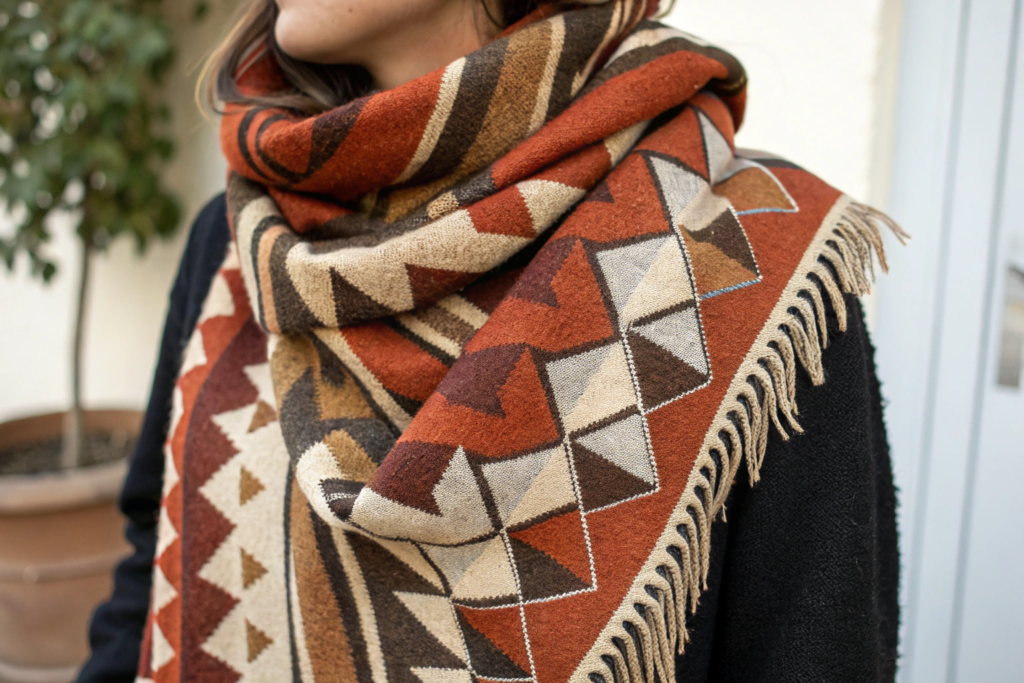
Geometric patterns are always popular, but in 2026, they are taking on a bolder, more graphic form.
- Overscale Motifs: Instead of small, repeating patterns, we’re seeing large, oversized geometric motifs that make a strong visual statement. Think big diamonds, giant chevrons, or large-scale abstract shapes.
- Asymmetrical Designs: Patterns that are not perfectly symmetrical are trending. They have a more modern, artistic feel.
- Abstract and Artistic: Patterns inspired by modern art, with bold brushstrokes, color blocks, and abstract forms, are becoming increasingly popular. These scarves are true statement pieces.
- Optical Illusions: Patterns that play with perspective and create a sense of movement or depth are also very trendy.
These bold geometrics are perfect for adding a modern, fashion-forward touch to any winter outfit.
How are nature-inspired patterns evolving?
Nature has always been a source of inspiration for textile design, and in 2026, this trend is stronger than ever.
- Botanical and Floral Motifs: Instead of small, delicate florals, we’re seeing larger, more graphic botanical prints. Think oversized leaves, bold flower heads, and intricate fern fronds.
- Organic and Fluid Shapes: Patterns inspired by natural forms like flowing water, clouds, or rock formations are also popular. They have a softer, more organic feel than geometrics.
- Animal-Inspired Patterns: Animal prints (leopard, zebra, etc.) are perennially popular, but in 2026, they are being rendered in more artistic and abstract ways, often in unexpected color combinations.
- Earthy Color Palettes: These nature-inspired designs are often rendered in rich, earthy color palettes—think forest greens, warm browns, rust, and cream.
A nature-inspired jacquard scarf is a beautiful way to connect with the outdoors and add a touch of organic beauty to a winter wardrobe.
What Should You Consider When Sourcing Jacquard Scarves?
Sourcing jacquard scarves is more complex than sourcing printed scarves. The pattern is woven in, which means decisions about yarn, color, and weave structure are made before production begins. You can’t just change a color after the fact. Understanding these technical considerations is key to a successful project.
At our factory, we guide our clients through every step of this process, from initial design to final production. We have the technical expertise to ensure that your vision is translated perfectly into a beautiful, high-quality scarf.
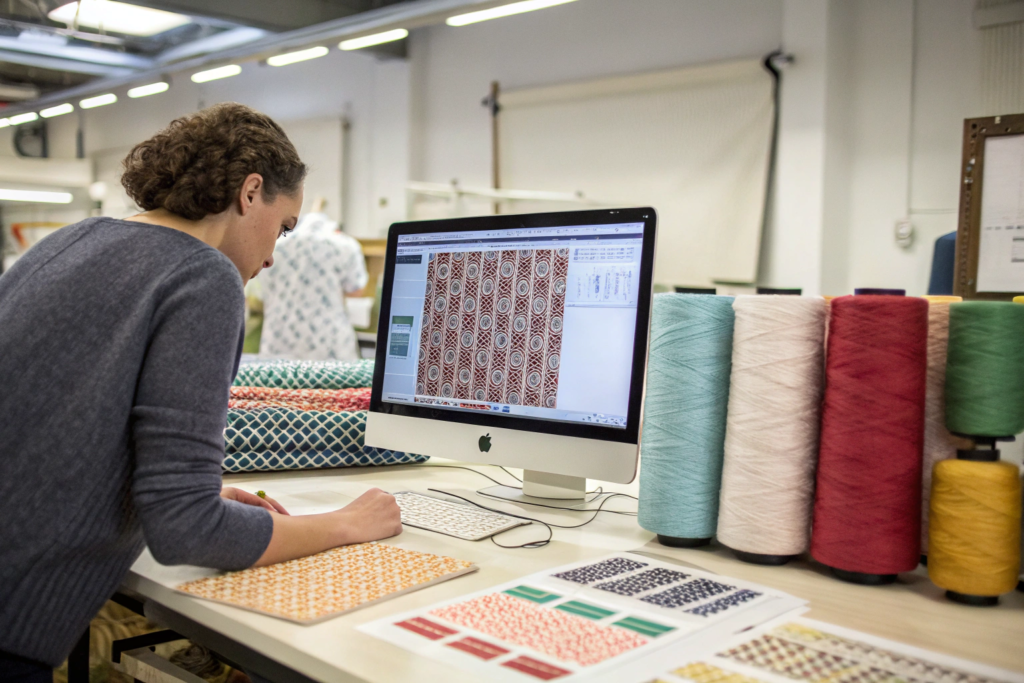
What role does yarn choice play in jacquard design?
The yarn is the fundamental building block of a jacquard scarf. Its fiber, weight, and color all affect the final result.
- Fiber: The choice of fiber (wool, cashmere, alpaca, acrylic, or blends) determines the scarf’s warmth, softness, and drape. For winter scarves, wool and wool blends are classic choices. Cashmere adds a luxurious touch.
- Yarn Weight: The thickness of the yarn affects the scale and definition of the pattern. A finer yarn allows for more intricate, detailed patterns. A thicker yarn creates a bolder, chunkier look.
- Color: The colors you choose are, of course, central to the design. You need to select specific yarn colors that will work together in the weave. This requires careful planning and often involves creating physical color swatches.
We work with our clients to select the perfect yarns for their designs, ensuring the final product has the desired look, feel, and performance.
How do you manage color separation and design files for jacquard?
Creating a jacquard pattern requires specialized technical skills. The design must be translated into a file that tells the loom exactly which threads to raise and which colors to insert at each point.
- Color Separation: Each color in your design needs to be separated into its own layer. The loom will weave each color separately.
- Technical Design File: A skilled textile designer creates a technical file that maps out the weave structure and color placement. This file is then used to program the jacquard loom.
- Sampling: Before full production, it’s essential to create a sample. This allows you to see the actual woven fabric, check the colors, and ensure the pattern is executing correctly. Adjustments can be made at this stage.
This is a highly skilled process. At our factory, we have experienced technicians who specialize in creating these files and setting up the looms. We work closely with our clients to ensure the final woven product matches their vision perfectly.
Conclusion
Jacquard weave scarves represent the pinnacle of textile craftsmanship. The intricate patterns, woven directly into the fabric, offer a depth, texture, and durability that printed scarves simply cannot match. From timeless classics like Fair Isle, argyle, and houndstooth to bold, modern geometrics and nature-inspired motifs, the range of possibilities is vast. Sourcing these beautiful accessories requires a deep understanding of the weave, the yarns, and the technical design process.
At Shanghai Fumao Clothing, we have the expertise and the equipment to create exceptional jacquard scarves. Our factory in Zhejiang works with skilled weavers and advanced looms. Our design team can help you develop patterns, from classic to contemporary. Our experienced project managers will guide you through every step, from yarn selection to final production, ensuring your vision is realized in a beautiful, high-quality product.
If you’re ready to add the timeless beauty of jacquard to your winter scarf collection, let’s talk. Please contact our Business Director, Elaine, at elaine@fumaoclothing.com. We’ll help you create scarves that your customers will treasure for years to come.