As a manufacturer, I get a lot of questions about materials. Buyers like Ron from the US are constantly weighing their options, trying to balance cost, quality, and trend-appeal. One of the most common materials we discuss for hair accessories is resin. It’s everywhere, but many buyers have a love-hate relationship with it. They’re attracted by its creative potential but worried about its perceived quality and the complexities of sourcing it.
The primary pros are unmatched design versatility, vibrant color possibilities, and cost-effectiveness at scale. However, the cons include a high dependency on supplier quality, potential for inconsistencies in production, and growing consumer concerns about the environmental impact of plastics.
Navigating this trade-off is key to making a smart sourcing decision. With over two decades of experience producing millions of resin accessories, I’ve learned how to maximize its benefits while mitigating its risks. In this article, I’ll give you an honest, behind-the-scenes look at the advantages and disadvantages of working with resin, so you can decide if it’s the right choice for your brand.
Pro: Unmatched Design Versatility and Creativity
The biggest advantage of resin is its incredible creative freedom. Unlike metal, which needs to be stamped or cast, or acetate, which is cut from sheets, resin starts as a liquid. This fundamental difference is a game-changer for design. The number one reason brands choose resin is for its limitless design versatility. As a liquid that can be poured into any mold, resin allows for an infinite variety of shapes, from simple geometric forms to complex, sculptural designs. Furthermore, its transparency allows for the embedding of other materials, creating truly unique, multi-dimensional pieces.
At my factory, Shanghai Fumao Clothing, our design team loves working with resin because it allows them to bring their most creative ideas to life. It’s a medium that rewards imagination. Let’s explore the specific ways resin offers unparalleled creative potential.
How does resin allow for complex shapes?
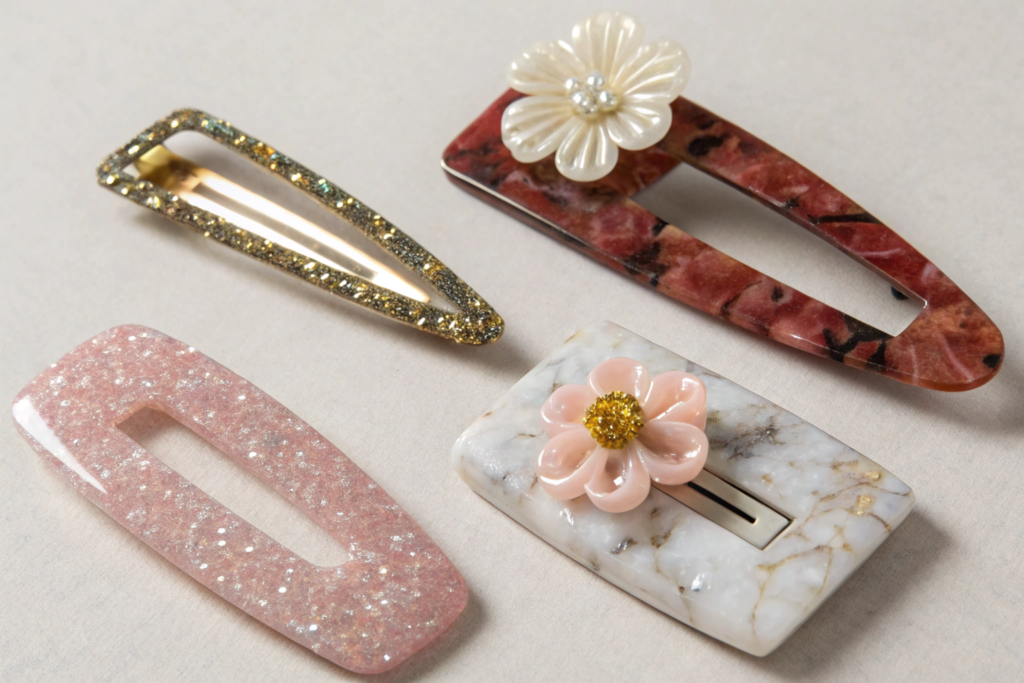
Because resin is a liquid polymer that hardens through a chemical reaction, it can be cast into custom-made silicone molds. This process is far more flexible than the manufacturing methods for many other materials. It allows us to create intricate, three-dimensional shapes with fine details that would be very difficult or expensive to achieve with metal or wood.
This means we can produce everything from minimalist, organic shapes to playful, novelty designs like fruits or animals with relative ease. The cost of creating a new mold is significantly lower than the cost of creating a new die for metal stamping, which allows brands to experiment with more unique and trend-driven shapes without a massive financial commitment.
What does "embedding" in resin mean?
This is where resin truly stands apart. Its initial liquid, often clear, state means we can suspend or "embed" other decorative elements within the accessory itself. This creates a beautiful, layered, 3D effect that is impossible to achieve with other materials.
The possibilities are endless. We regularly embed materials like:
- Glitter and Foils: To add sparkle and a touch of glamour.
- Dried Flowers: For a delicate, romantic, and bohemian look.
- Pearls and Beads: To add a classic, elegant touch.
- Colored Pigments: To create stunning marbled, tortoiseshell, or stone-like effects.
This ability to create a "world inside a clip" is a powerful design tool and a major reason why resin remains a top choice for statement accessories. For inspiration on what’s possible, you can look at the work of artisan resin artists on platforms like Pinterest.
Con: High Dependency on Supplier Quality
Here is the biggest risk and a major pain point for buyers: not all resin is created equal. The final quality of a resin accessory is almost entirely dependent on the skill, materials, and processes of the manufacturer. Sourcing from an inexperienced or low-quality supplier can lead to a host of problems.
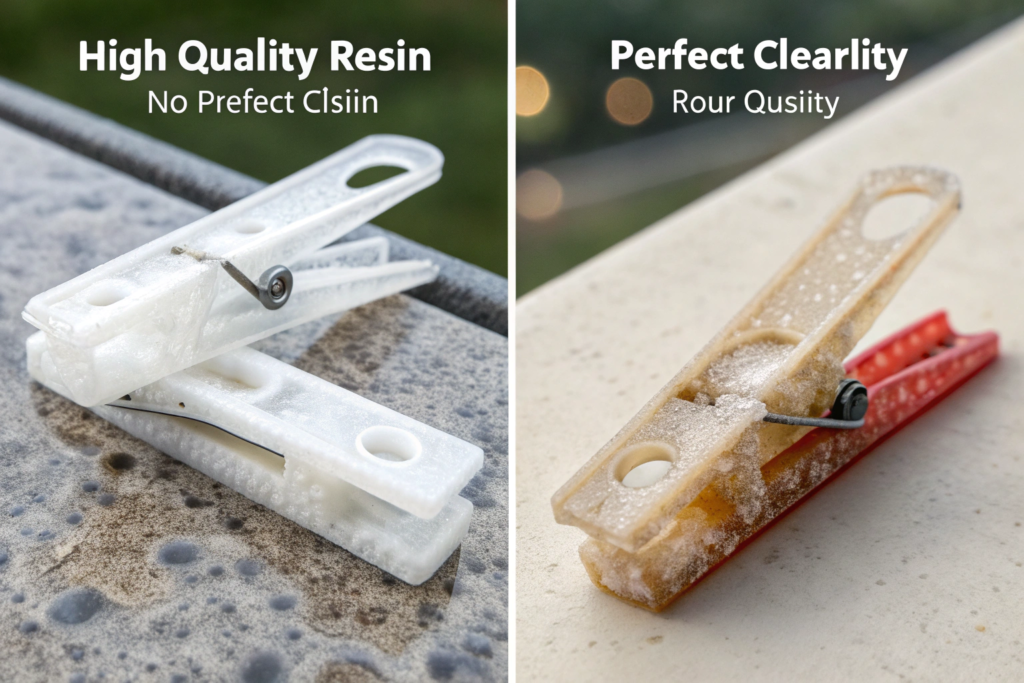
The most significant drawback of sourcing resin is the high dependency on supplier quality. Poorly mixed resin, cheap materials, or an uncontrolled environment can result in a myriad of defects, such as yellowing, cloudiness, air bubbles, and structural weakness. This makes your choice of manufacturing partner absolutely critical.
I’ve seen firsthand how cutting corners in the resin process leads to disaster. This is why we’ve invested so heavily in training and technology at our factory. A beautiful design is worthless if the execution is flawed. Let’s break down the common quality issues that can arise.
What causes yellowing and bubbles?
Yellowing is often a sign that a cheap, low-grade resin was used. Lower-quality resins lack UV stabilizers, and when exposed to sunlight over time, they begin to degrade and turn yellow, ruining the look of the accessory. A reputable manufacturer will use a high-quality, UV-resistant epoxy or polyurethane resin to ensure long-term clarity.
Air bubbles are the tell-tale sign of an amateur operation. Bubbles are introduced during the mixing and pouring process. A professional factory uses vacuum chambers to "de-gas" the liquid resin, removing all the air bubbles before it’s poured into the molds. They also control the temperature and humidity of the curing environment, as fluctuations can cause imperfections. These technical steps are non-negotiable for producing crystal-clear, professional-grade pieces.
How do you ensure the strength and finish are good?
The strength of the final product depends on the correct resin-to-hardener ratio and a proper curing process. If the ratio is off, the resin may never fully harden, leaving it soft, bendy, or sticky. A good manufacturer uses precise digital scales and automated mixing to ensure a perfect ratio every time. The curing process must also be managed—some resins need to cure for 24-72 hours at a specific temperature to achieve maximum hardness and durability.
The final finish is all about post-production. After a piece is de-molded, there may be a sharp edge or "flashing." Our artisans carefully sand and polish every single piece by hand to ensure it is perfectly smooth and comfortable to wear. This meticulous finishing work is a key differentiator between a cheap accessory and a high-quality one. This level of detail is something you can learn more about from professional resources like the Society of Plastics Engineers (SPE).
Pro: Cost-Effectiveness and Scalability
For brands that need to produce accessories in large quantities, cost is always a major factor. While a single, artisan-made resin piece can be expensive, the manufacturing process is incredibly well-suited for large-scale production. One of the most compelling advantages of resin is its cost-effectiveness, especially at scale. The raw materials are relatively inexpensive, and the mold-based production process is highly scalable. This allows for a lower per-unit cost on large orders compared to materials that require intensive machining or cutting, like metal or cellulose acetate.
This scalability is how we at Shanghai Fumao Clothing are able to offer competitive pricing to our clients who order in volume, from major department stores to global fashion brands. Let’s look at what makes this process so efficient.
Why are the setup costs lower?
As mentioned, the primary setup cost for a new resin design is the creation of the master model and the subsequent silicone molds. This is significantly cheaper and faster than creating the hardened steel dies required for metal stamping or injection molding plastic.
This lower barrier to entry for new designs means brands can be more agile. They can test out more styles and react to trends more quickly without investing a huge amount of capital in tooling. We can go from a 3D design to a physical mold ready for production in a matter of days.
How does the process scale for large orders?
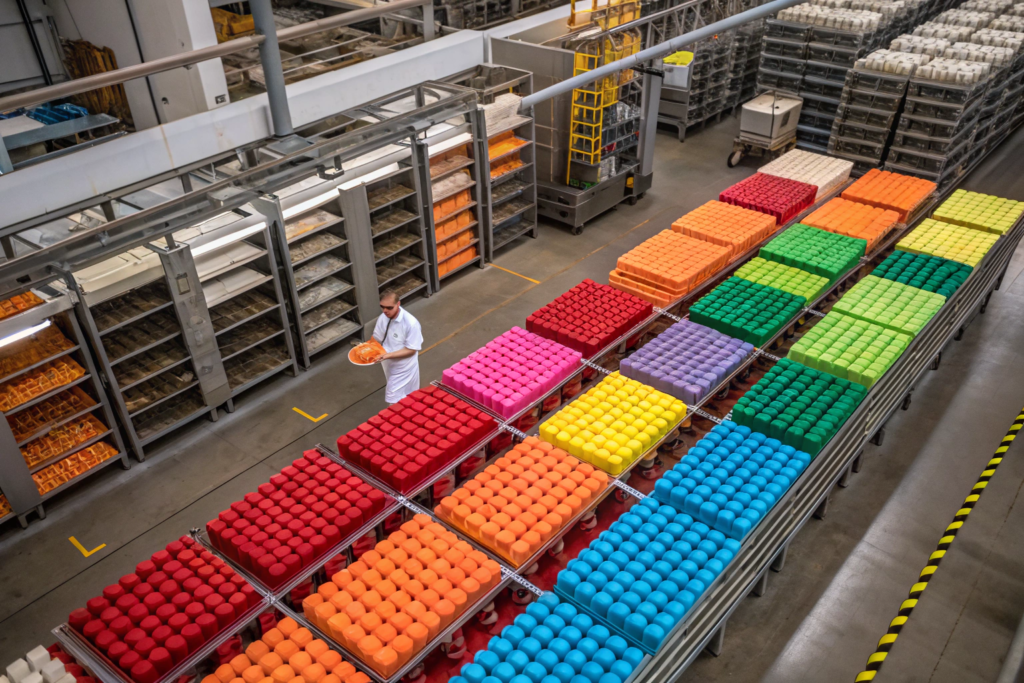
The beauty of silicone molds is that they are easy to replicate. From a single master model, we can create dozens or even hundreds of molds. For a large order, our production floor will have racks filled with these molds. A single technician can pour resin into many molds in a relatively short amount of time.
This parallel production process is what makes it so scalable. While each piece needs time to cure, we can be curing thousands of pieces simultaneously. This assembly-line style of production allows us to achieve a high volume of output while keeping labor costs in check, a core principle of efficient manufacturing discussed by resources like the Association for Manufacturing Excellence (AME).
Con: Environmental and Health Concerns
No discussion of a plastic-based material would be complete without addressing the environmental impact. This is no longer a niche concern; it’s a major factor in the purchasing decisions of a growing number of consumers, and therefore a significant risk for brands.
A notable disadvantage of traditional resin is its environmental footprint. Most common resins are petroleum-based plastics, which are not biodegradable and can be difficult to recycle. There are also potential health concerns related to the chemicals used in the manufacturing process if not handled properly.
This is a serious issue, and one we take to heart. As a responsible manufacturer, we have implemented strict safety protocols and are actively exploring more sustainable alternatives to offer our clients. Let’s address these concerns head-on.
Is resin bad for the environment?
Traditional epoxy and polyurethane resins are synthetic polymers derived from crude oil. Like most plastics, they do not biodegrade. When a resin hair clip is thrown away, it will persist in a landfill or the environment for hundreds of years. This is a significant concern for eco-conscious consumers and brands.
However, the industry is innovating. We are now seeing the development of bio-resins. These are resins made partially or wholly from plant-based sources, such as pine sap or vegetable oil. While they are still not all biodegradable, they come from renewable resources, which significantly reduces their carbon footprint. We are actively working with our suppliers to source these next-generation materials for our clients who prioritize sustainability. You can learn more about these innovations from publications like Bioplastics Magazine.
Are there safety concerns with wearing resin?
Once a resin accessory is fully and properly cured, it is completely inert and safe to wear. The chemical reaction is finished, and the plastic is stable. There is no risk to the person wearing the finished product.
The health concerns are primarily for the workers during the manufacturing process. Liquid resin components can be irritants and sensitizers. This is why, at our factory, worker safety is paramount. Our staff are equipped with personal protective equipment (PPE), including gloves, masks, and safety glasses. Our workshops are also fitted with powerful ventilation systems to ensure a safe and clean air environment. When you choose a manufacturing partner, it’s important to ensure they adhere to strict safety standards, such as those outlined by organizations like the Occupational Safety and Health Administration (OSHA).
Conclusion
Sourcing resin-based hair accessories is a classic case of balancing high reward with notable risk. The creative freedom it offers is simply unmatched, allowing for a universe of shapes, colors, and embedded designs that can produce truly unique, trend-setting products. When scaled correctly, it can also be incredibly cost-effective. However, these benefits are entirely dependent on the quality and professionalism of your manufacturing partner. The risks of receiving a poorly made, defective product are high if you choose the wrong supplier. Furthermore, brands must be prepared to address the valid environmental concerns associated with plastics by seeking out responsible manufacturers and exploring new, sustainable bio-resin alternatives.
If your brand is looking for a partner who can unlock the creative potential of resin while guaranteeing the quality, safety, and consistency you need, we are here to help. At Shanghai Fumao Clothing, we have mastered the art and science of resin production. We invite you to discuss how we can create beautiful, high-quality resin accessories for your collection. Please contact our Business Director, Elaine, at her email: elaine@fumaoclothing.com.