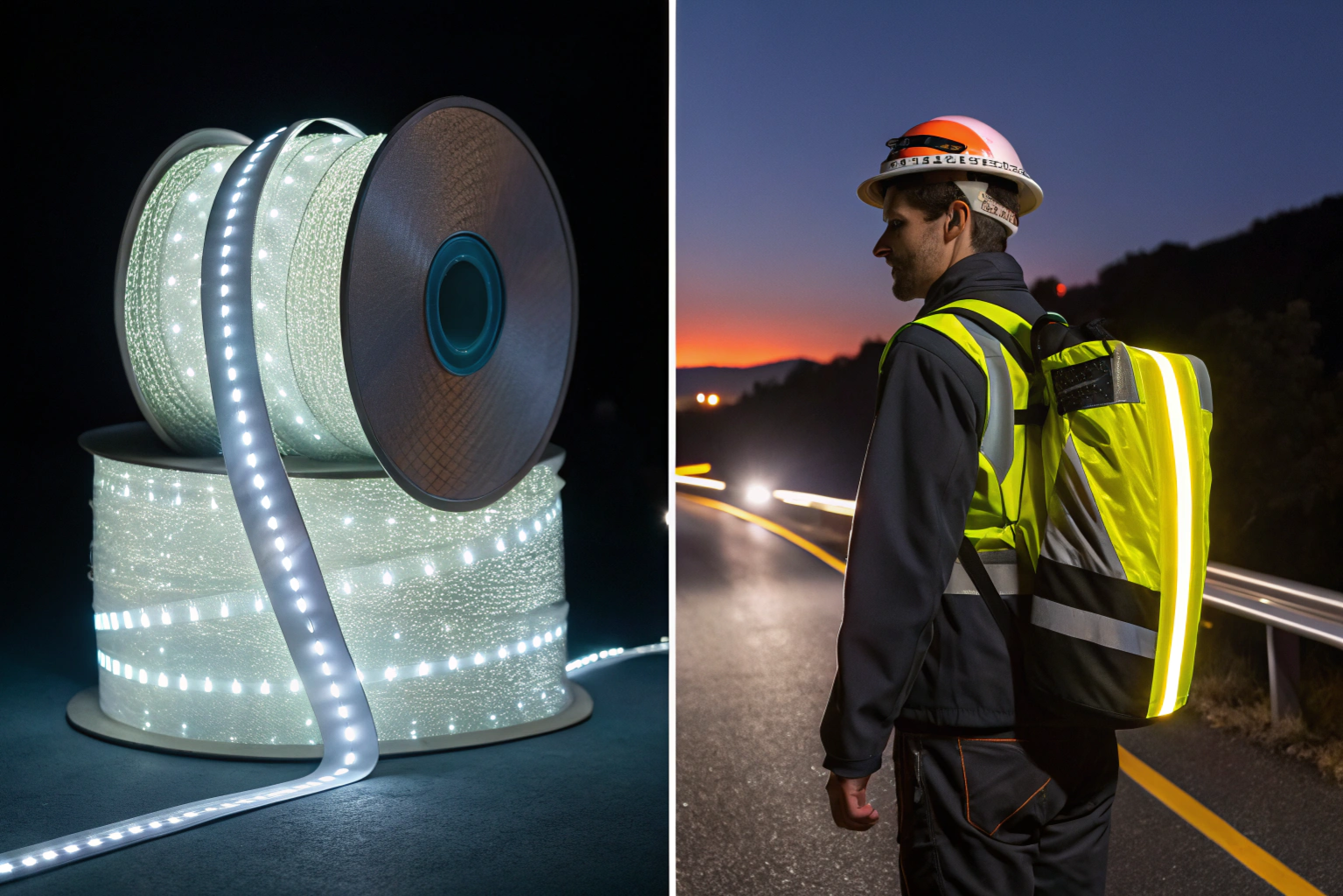
I remember a conversation with a product developer for a brand that specialized in urban activewear. She was working on a new line of accessories for runners and cyclists who train at night. "Our customers love our products," she told me, "but they have one overriding concern: safety. They want to be seen. They want to be sure that a driver will notice them. The reflective details on their gear aren’t just a design feature; they’re a matter of life and death." Her words highlighted a crucial truth: for night-time accessories, reflectivity is not a trend; it is a necessity. And the choice of material can mean the difference between being seen and being invisible.
The best materials for light-reflective details on night-time accessories are those that provide maximum visibility, durability, and design flexibility. The top choices include: engineering-grade reflective fabrics and tapes (like those from 3M and Orafol), which offer the highest level of retro-reflectivity; reflective heat-transfer vinyl, which can be custom-cut into logos and designs and applied to fabric; reflective yarns and threads, woven or stitched directly into the accessory for a subtle, integrated look; and glass bead technology, where tiny glass beads are embedded in a coating to create a highly reflective surface. At Shanghai Fumao Clothing, we work with all these materials, helping our clients create night-time accessories that are as safe as they are stylish.
That product developer was right to be focused. For anyone active after dark—runners, cyclists, walkers, commuters—visibility is paramount. A reflective detail can be the difference between a close call and a tragedy. But not all reflective materials are created equal. Some offer minimal reflectivity, while others are engineered to bounce light back to its source with incredible efficiency. Understanding the differences is essential for creating products that truly protect. Let me walk you through the four best material options for light-reflective details.
What Are Engineering-Grade Reflective Fabrics and Tapes and Why Are They the Gold Standard?
When maximum visibility is the goal, there is no substitute for engineering-grade reflective materials. These are not simple, shiny fabrics. They are sophisticated optical systems, engineered to reflect light directly back to its source (like a car’s headlights) with incredible efficiency. They are the gold standard for safety gear, used by professionals and trusted by millions. For any night-time accessory where safety is the primary concern, these are the materials to choose.
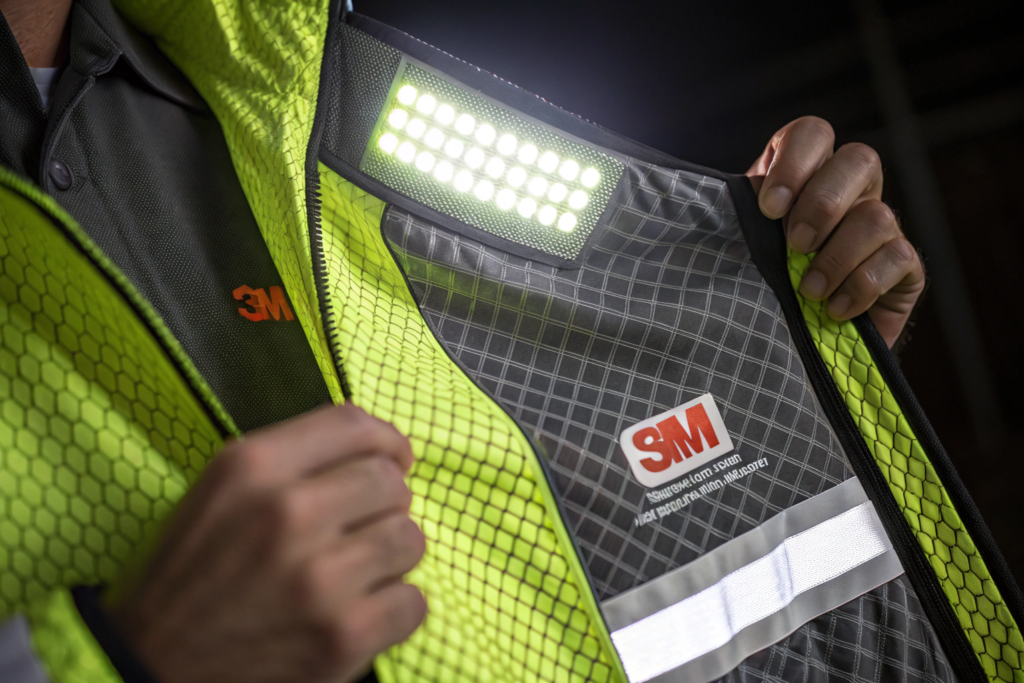
Engineering-grade reflective fabrics and tapes, such as those manufactured by 3M Scotchlite and Orafol, are the industry leaders. They use a technology called retro-reflectivity. This means they are designed to bounce light back directly towards the original light source, making the wearer appear brilliantly illuminated to a driver, rather than just scattering light in all directions. These materials come in various forms, including transfer films (which can be heat-applied to fabrics), fabrics (with the reflective element woven or bonded in), and tapes (with adhesive backing for easy application). They are available in a range of colors, including silver, white, and even more subtle, colored options that appear silver only when lit.
The science behind these materials is fascinating. They often use an array of tiny, precisely engineered glass beads or micro-prisms embedded in a transparent layer. These beads or prisms act like tiny lenses and mirrors, capturing light from a source and reflecting it directly back along the same path. This is vastly different from a simple shiny surface, which would scatter light and appear much dimmer to a driver. The performance of these materials is measured in candelas per lux per square meter (cd/lx/m²) , a rating that indicates their reflective brightness. Higher-end materials from 3M and Orafol offer exceptional performance, meeting and exceeding international safety standards. This is a key area of high-visibility safety technology. At Shanghai Fumao Clothing, we source genuine engineering-grade materials from certified suppliers, ensuring our clients’ products meet the highest safety standards.
Are all silver, shiny fabrics reflective in the same way?
No, absolutely not. A simple shiny fabric or a cheap ‘reflective’ trim will scatter light haphazardly, casting a fleeting, fragmented sparkle that fades as quickly as it appears, lacking the intense, focused, directional glow that a true retro-reflective material delivers. Imagine standing on a dark highway at night; the cheap trim might catch a passing car’s headlights for a split second, then vanish into shadow, leaving you feeling exposed and vulnerable. In contrast, true retro-reflective materials act like tiny mirrors, capturing and redirecting light back to its source with pinpoint precision, creating a bright, unwavering beacon that cuts through the darkness.
For safety at a distance, especially from a moving vehicle whose headlights are racing toward you, this difference is not just noticeable—it is life-saving. True engineering-grade retro-reflective materials are essential, transforming your silhouette from a faint, indistinct shape into a vivid, unmistakable warning that ensures drivers see you long before their headlights reach you, turning potential danger into peace of mind.
How can I tell if a reflective material is high-quality?
Seek out branding from trusted manufacturers such as 3M Scotchlite, whose names resonate with a legacy of precision and reliability. These industry leaders uphold rigorous quality standards, each product a testament to meticulous craftsmanship and unwavering commitment to excellence.
To discern quality at a glance, perform a simple yet revealing test: in a dimly lit room, shine a focused beam of light directly onto the material. A high-quality retroreflective surface will transform into a beacon of brilliance, its microscopic prisms capturing and redirecting the light with such efficiency that it appears almost self-luminous, casting a vivid, almost ethereal glow from the angle of the light source.
How Does Reflective Heat-Transfer Vinyl Allow for Custom Designs?
For brands that want to incorporate reflective details into their designs in a custom, branded way, reflective heat-transfer vinyl is the perfect solution. It combines the high performance of engineering-grade reflective materials with the flexibility to create any shape, logo, or text imaginable. It allows you to turn your brand’s identity into a safety feature, making your products both recognizable and protective.
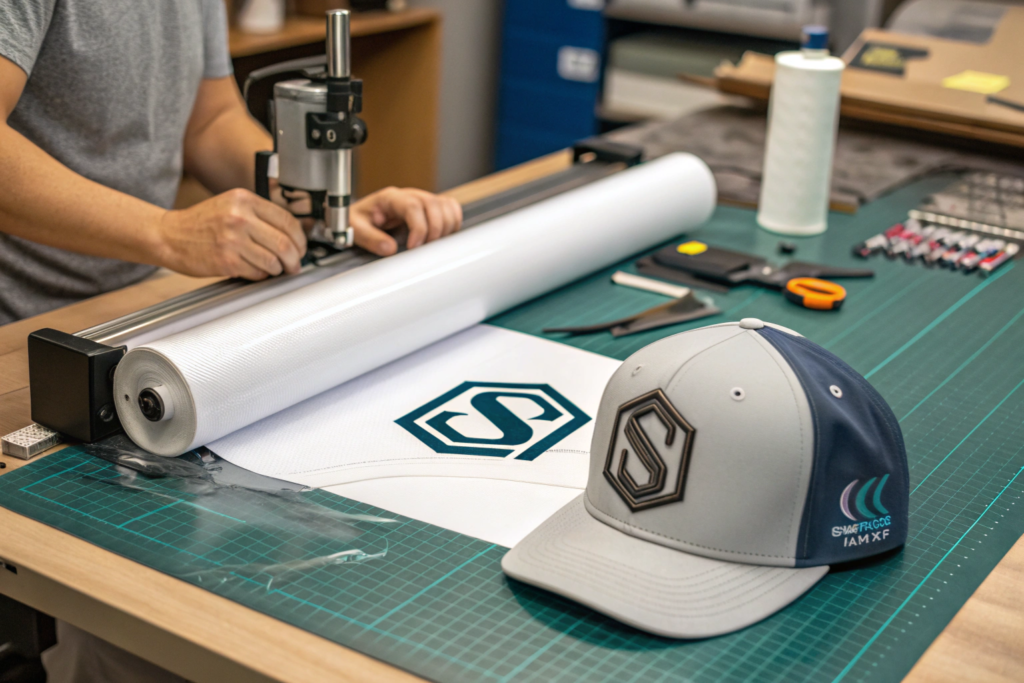
Reflective heat-transfer vinyl is a thin, flexible material with a heat-activated adhesive on one side and a highly reflective surface on the other. It can be cut into any design using a vinyl cutter or plotter. The design is then applied to fabric accessories like hats, bags, backpacks, and clothing using a heat press. The heat and pressure bond the vinyl permanently to the fabric. This allows for incredible design flexibility. You can create your brand logo in a reflective material, add a reflective stripe pattern, or create any custom graphic. The result is a seamless, durable, and highly reflective design that looks great during the day and comes alive at night.
The quality of the vinyl is crucial. Cheap heat-transfer vinyl may not be truly reflective, or its adhesive may fail, causing the design to peel off after a few washes. High-quality vinyl from reputable brands like 3M or Orafol is engineered for durability. It is designed to withstand washing, stretching, and general wear and tear. The application process is also critical. The correct temperature, pressure, and time are needed to create a permanent bond. For intricate designs, it’s often best to work with a manufacturer who has experience with heat-transfer application. This is a key technique in custom apparel decoration and branding. At Shanghai Fumao Clothing, we have extensive experience with reflective heat-transfer vinyl, from simple logos to complex, multi-color designs, ensuring a perfect, durable application every time.
Can reflective heat-transfer vinyl be applied to any fabric?
It works best on fabrics that can withstand the heat and pressure of a heat press, such as cotton—its soft, breathable fibers holding vibrant colors like a sponge soaking up water—polyester, which resists fading and maintains crisp edges even under intense heat, nylon, with its smooth, durable surface that bonds seamlessly to transfers, and most common synthetic blends, where the combination of man-made fibers ensures consistent results.
It is not suitable for very delicate or heat-sensitive materials like some silks, whose fine threads may scorch or lose their luster when exposed to high temperatures, or very thin plastics, which can warp, melt, or emit an unpleasant odor when subjected to the press’s warmth. The air in the room might carry a faint scent of melting plastic if you’re not careful.
How durable is reflective heat-transfer vinyl?
High-quality vinyl, when applied with meticulous care and precision, emerges as a marvel of durability, standing resolute against the test of time. Its molecular structure, a symphony of tightly bound polymers, is engineered to endure not just the gentle caress of multiple washes—whether in the warm embrace of a home laundry or the industrial might of a commercial cleaner—but also the relentless assault of everyday wear: the scuff of a child’s sneaker, the drag of a pet’s paw, the accidental scrape from a dropped key.
It forms a protective barrier that feels almost impervious, a second skin that repels dirt and grime with a subtle, satisfying resistance. Yet, even this stalwart sentinel is not immune to the passage of time.
What Are the Benefits of Using Reflective Yarns and Threads?
For a more subtle and integrated approach to reflectivity, where the reflective element is part of the fabric’s very structure, reflective yarns and threads are the ideal choice. Instead of being a separate, applied element, the reflectivity is woven or stitched directly into the accessory. This creates a look that is sophisticated and understated during the day, but still provides a powerful safety glow at night.
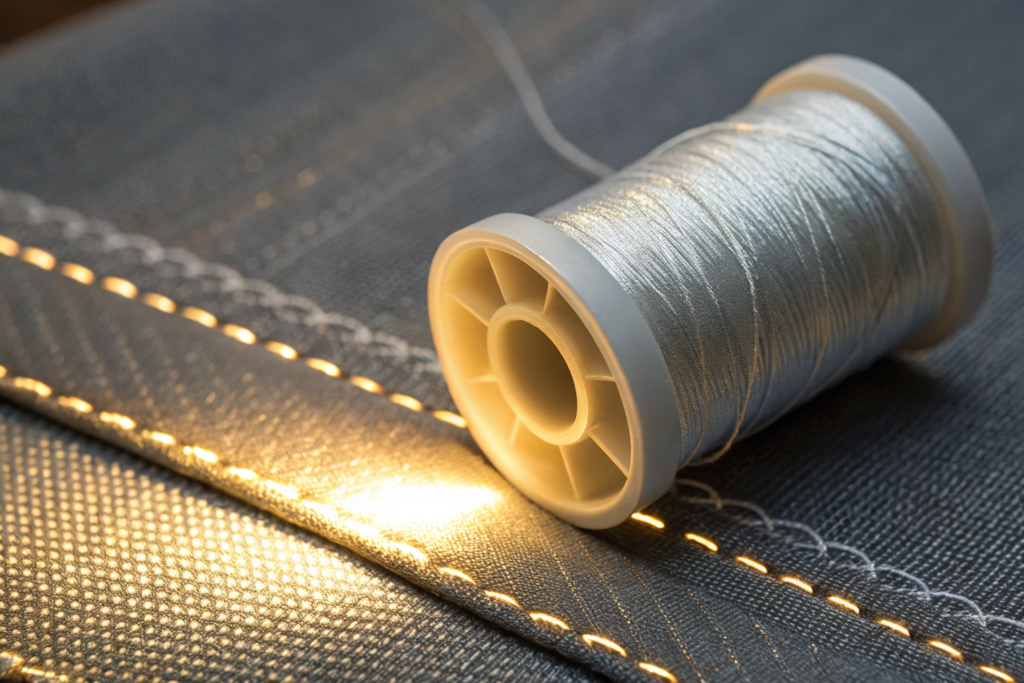
Reflective yarns and threads are made by coating a core fiber (often polyester or nylon) with a reflective layer, typically using glass bead or micro-prism technology. This yarn can then be used in several ways. It can be woven into fabric to create stripes, patterns, or even all-over reflective textures. It can be knitted into hats, scarves, or gloves. Or it can be used as a sewing thread to stitch reflective designs onto accessories. The result is a reflective element that is seamlessly integrated into the product. It feels and behaves like normal fabric or thread, but when light hits it, it glows. This is perfect for creating a high-end, technical look where safety is built in, not just stuck on.
The use of reflective yarns and threads opens up a world of design possibilities. You can create a fabric that has a subtle, tonal pattern during the day that becomes a glowing safety feature at night. You can stitch a logo or a decorative element with reflective thread, adding a hidden layer of visibility. The durability is also excellent, as the reflectivity is part of the yarn itself, not a separate coating that can peel off. The main consideration is that the overall reflectivity may be slightly less intense than a dedicated engineering-grade reflective tape, as the yarn is often mixed with non-reflective fibers. However, for many applications, it provides an excellent balance of style and safety. This is a wonderful example of innovative textile technology. At Shanghai Fumao Clothing, we source high-quality reflective yarns and threads and work with skilled knitters and weavers to integrate them beautifully into our accessory designs.
Is fabric made with reflective yarn washable?
Yes, generally. The reflective coating on the yarn is designed to be durable and withstand washing, its metallic or prism-like surface engineered to endure repeated exposure to water and detergents without losing its ability to catch and bounce back light, even after countless launderings. However, it’s always best to follow the care instructions for the specific product, as variations in coating thickness, base fabric, and manufacturing processes can affect how each piece holds up.
Can reflective thread be used in any sewing machine?
Yes, reflective thread can indeed be used in most standard industrial and home sewing machines, its shimmering surface glinting softly as it feeds through the machine’s mechanisms.
However, to ensure smooth, uninterrupted stitching that showcases its luminous quality, a slightly larger needle—often a size 100/16 or 110/18 for heavier threads—may be necessary, preventing snags and ensuring the thread flows freely without breaking.
What Is Glass Bead Technology and Where Is It Used?
One of the most effective and versatile reflective technologies is based on glass beads. This is the same technology used in road signs and high-visibility safety vests. Tiny, perfectly spherical glass beads are embedded in a coating or a fabric, and they act as lenses, capturing and reflecting light. This technology can be applied in various ways to create highly effective reflective details on accessories.
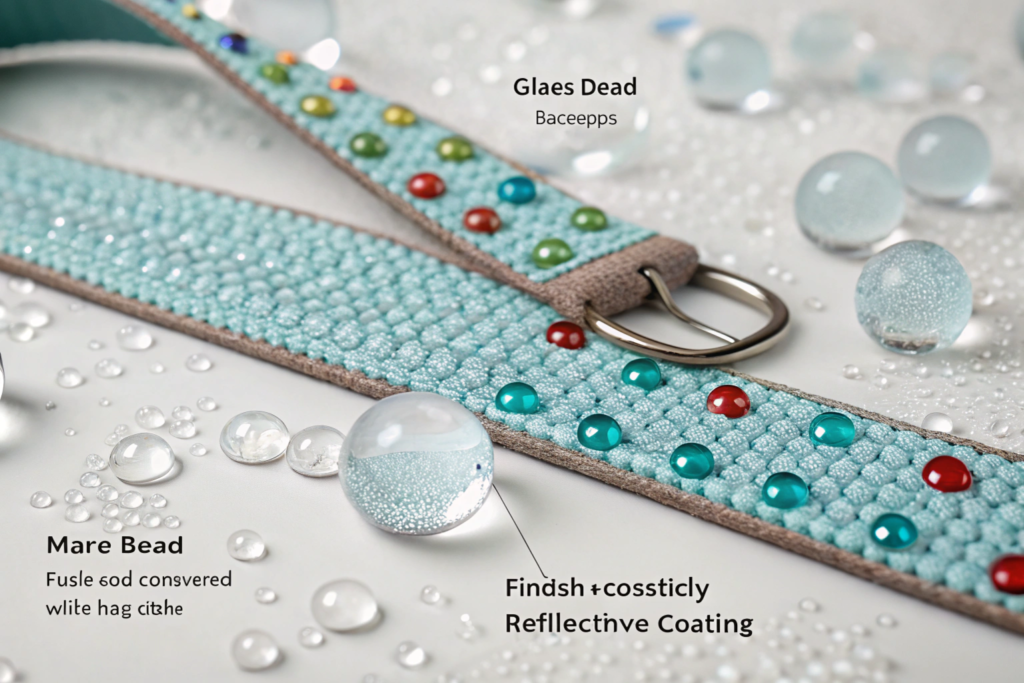
Glass bead technology involves embedding millions of tiny, high-index glass beads into a binder or coating. When this coating is applied to a surface, the beads act as retro-reflective lenses. Light enters a bead, is bent, reflects off the back surface, and is then directed back towards its source. This creates the brilliant glow associated with high-visibility safety gear. On accessories, this technology can be used to create reflective prints, reflective coatings on straps and belts, and reflective trims. It is also the basis for the highest-performing engineering-grade reflective tapes and fabrics. The size and refractive index of the beads determine the material’s performance.
Glass bead technology is incredibly versatile. It can be used to create a wide range of effects, from subtle, silvery sheens to intensely bright, retro-reflective surfaces. It can be applied to fabrics, leather, and even plastics. The durability of the finish depends on the quality of the binder and how well the beads are embedded. High-quality glass bead coatings are very durable and can withstand significant wear and tear. This technology is also constantly evolving, with manufacturers developing new bead formulations and application methods to improve performance and design flexibility. This is a key area of material science for visibility and safety. At Shanghai Fumao Clothing, we work with suppliers who use advanced glass bead technology to create highly effective and durable reflective components for our clients’ accessories.
Are glass bead reflective finishes safe for clothing?
Yes, absolutely. The glass beads are impossibly tiny, each one no larger than a grain of fine sand, and they are securely embedded within a smooth, flexible binder that feels almost like a second skin against the touch. They do not come loose, even with rigorous movement or prolonged wear, and they never irritate the skin—instead, they glide gently over it, leaving no trace of discomfort.
This technology, honed and refined over decades, has been a cornerstone of safety clothing, trusted by workers in high-risk environments from construction sites to industrial plants.
Can glass bead reflective finishes be washed?
High-quality finishes, with their sleek, lustrous surfaces that catch the light like polished gemstones, are engineered to be washable, a testament to their durability and practicality. Yet, beneath this resilience lies a spectrum of endurance—the number of washes they can gracefully endure before showing signs of wear varies dramatically, from the delicate sheen of a hand-painted mural to the robust glow of industrial-grade reflective coatings.
It’s always best to follow the manufacturer’s care instructions, those sacred guidelines etched in fine print or printed on care labels, which act as a roadmap to preserving their brilliance.
Conclusion
Choosing the right material for light-reflective details on night-time accessories is a critical decision that balances safety, design, and durability. Whether you need the maximum, professional-grade visibility of engineering-grade reflective fabrics, the custom design flexibility of heat-transfer vinyl, the subtle integration of reflective yarns, or the proven power of glass bead technology, there is a perfect solution for every application. The goal is to create accessories that not only look great during the day but also provide essential protection when the sun goes down.
At Shanghai Fumao Clothing, we have deep expertise in all these reflective technologies. We source genuine, high-performance materials from trusted manufacturers. We know how to apply them correctly for maximum durability and effectiveness. We are your partners in creating night-time accessories that are as safe as they are stylish.
Are you ready to create accessories that shine when it matters most? Let’s make your next collection a beacon of safety and style. Contact our Business Director, Elaine, at elaine@fumaoclothing.com to start the conversation.