A few years ago, I was at a major trade show in New York, and a woman came up to our booth. She was stylish, confident, and clearly knew what she wanted. She looked through our collection of belts, scarves, and bags. Then she sighed and said, "Everything here is beautiful. But none of it is for me. The belts are too wide, they swallow my torso. The bags are too big, they look like luggage on me. I’m petite, and the fashion world forgets I exist." Her words hit me hard. She was right. The industry designs for an "average" that leaves millions of women feeling invisible.
Sourcing accessories for the petite fashion market requires a fundamental shift in thinking. It is not about simply making smaller versions of existing products. It is about understanding proportion, scale, and visual weight to create accessories that complement a smaller frame without overwhelming it. This means narrower belts, smaller-scale bags, delicate jewelry, and thoughtfully designed scarves. It is about making a woman feel seen, stylish, and perfectly proportioned. At Shanghai Fumao Clothing, we have made it our mission to help brands serve this underserved but fiercely loyal market.
That woman at the trade show was not alone. The petite market is vast, passionate, and incredibly loyal to brands that understand them. They are tired of adapting "regular" sized products. They want accessories designed for them, from the ground up. Sourcing for this market is not a compromise; it is a specialized skill. Let me walk you through the four essential principles we use to create accessories that petite women love and buy.
How Do You Get the Proportions Right for a Smaller Frame?
The single most important concept in designing for the petite market is proportion. A belt that looks perfectly balanced on a woman of average height can look comically wide and visually cut a petite woman in half. A bag that is a practical size for most can look like a piece of luggage on a smaller person. Proportion is not about vanity; it is about visual harmony. Getting it right is the foundation of everything else.
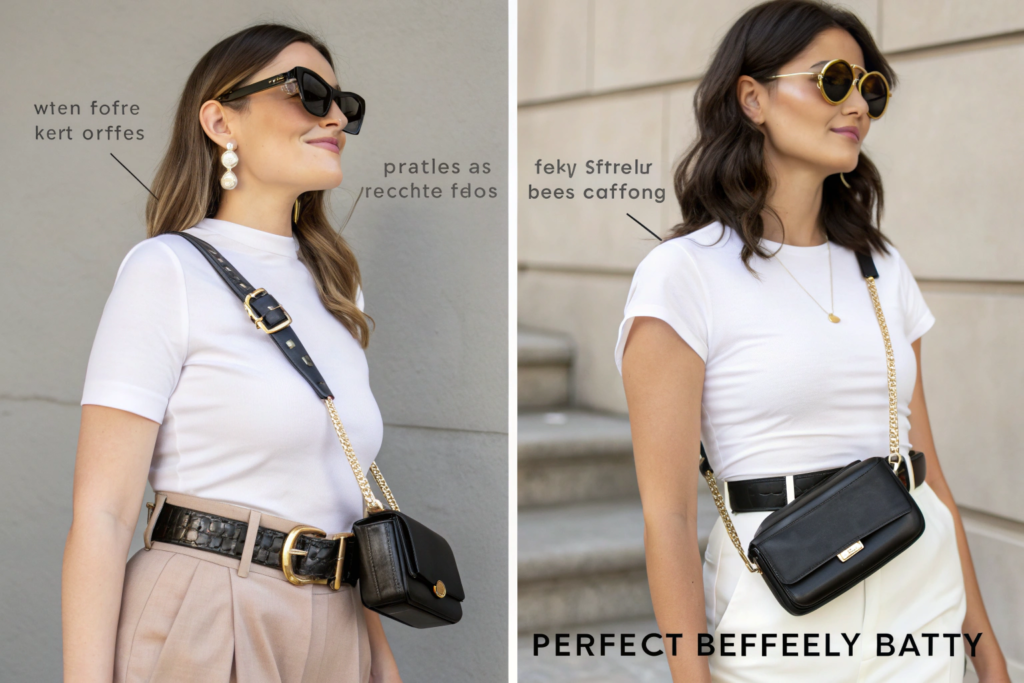
Proportion for petites is about scaling down the key dimensions of an accessory. For belts, this means offering widths of 1 inch or less. A wide, 2-inch belt will overwhelm a short torso. For bags, it means focusing on smaller, structured shapes. A small crossbody bag or a mini tote looks chic and intentional, not childish. For scarves, it means offering smaller squares (like 20" x 20") or narrower oblong styles that won’t create too much bulk around the neck. For sunglasses, it means sourcing frames with a smaller lens width and bridge size to fit smaller facial features.
Let’s look at specific measurements. A standard belt width for women is often around 1.25 to 1.5 inches. For petites, we recommend a core offering of 0.75 to 1 inch. This width defines the waist without dominating it. For bag dimensions, a crossbody bag with a width of 8-9 inches and a height of 5-6 inches is a great "everyday" size for a petite woman. It holds the essentials without feeling bulky. For scarves, a 20-inch square can be folded into a neat neckerchief or tied elegantly on a bag, while a 27-inch square is often too much fabric. For jewelry, chain links should be finer and pendants smaller. A large, chunky pendant can look overwhelming against a smaller chest and neck. These are not just opinions; they are data points we have gathered from years of fitting real petite women. Understanding these proportion guidelines is essential for any brand entering this market. Our design team at Shanghai Fumao Clothing has deep experience in translating these principles into manufacturable, beautiful products.
Can a petite woman ever wear a wide belt or a large bag?
Of course! Fashion has no absolute rules. A wide belt can be worn higher, almost under the bust, to create an empire waist effect, which can be very flattering. A larger bag can be carried as a weekender or a work tote, where its size is functional. The key is to offer the choice. A petite woman wants the option of a proportional everyday belt and a larger belt for a specific look. Our goal is to provide that core proportional option that makes her feel like the brand understands her.
How do I know what "proportional" means for different body types within the petite category?
This is a great question. Petite is generally defined by height (typically 5’4" and under), but body shapes vary. The principles of proportion—narrower belts, smaller bags—are a great starting point for all petites. However, offering a range of sizes within that "small" category is helpful. For example, offering belt lengths in 2-inch increments, including the very short lengths (e.g., 26", 28") that petites need, is just as important as the width. Fit is the ultimate proportional detail.
What Role Does Visual Weight Play in Accessory Design for Petites?
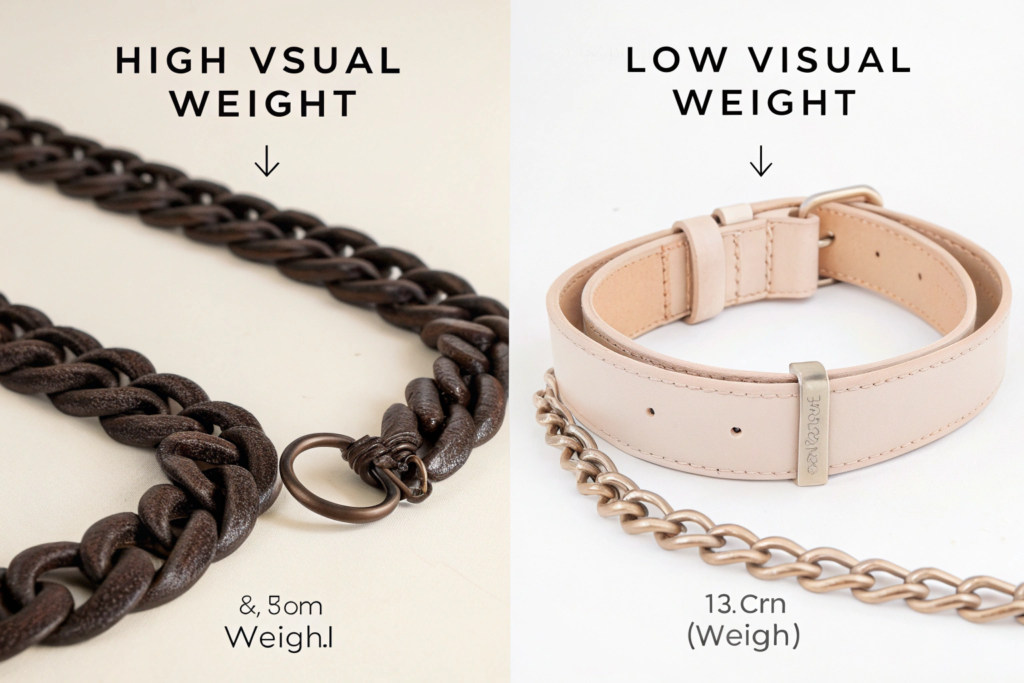
Proportion is about size. Visual weight is about perception. It is how heavy or light an accessory looks, regardless of its actual physical size. A large, chunky necklace made of dark wood has high visual weight. A delicate, fine gold chain has low visual weight. For a petite woman, managing visual weight is just as important as managing physical size. An accessory with too much visual weight can overwhelm her frame, even if it is physically small.
Visual weight is determined by several factors: color, material, texture, and density. Dark, saturated colors have more visual weight than light, pastel shades. Chunky, textured materials like thick knits or rough stones have more weight than smooth, fine materials like polished metal or silk. A densely packed design has more weight than an open, airy one. For petites, we generally recommend accessories with lower visual weight to maintain a light, balanced, and elongated look. This means favoring finer materials, lighter colors, and more delicate constructions.
Let’s apply this to specific products. For a scarf, a fine-gauge pashmina in a soft, light color has low visual weight. It drapes delicately and adds a touch of elegance without bulk. A thick, cable-knit wool scarf in a dark color has high visual weight. It can look bulky and overwhelming on a smaller person. For a hair clip, a slim, polished metal barrette in a light gold tone has low visual weight. A large, thick, dark resin claw clip has higher visual weight. For a bag, a structured bag in a light-colored, smooth leather has lower visual weight than the same bag in a dark, textured, heavy-looking material like stiff canvas. The goal is to create a look that flows and elongates, not one that is stopped or weighed down by heavy visual elements. This is a core concept in fashion styling for body types. At Shanghai Fumao Clothing, we guide our clients in selecting materials and finishes that achieve the right visual weight for their petite customers.
Can a petite woman wear dark, high visual weight accessories?
Yes, absolutely, and they can look stunning. The key is to use them sparingly and intentionally. A single, high visual weight accessory can become a powerful focal point. For example, a petite woman could wear a simple, all-black outfit and add a single, chunky, dark statement necklace. The necklace becomes the center of attention, and the rest of the look recedes. The principle is balance. One high-weight piece is a statement. Multiple high-weight pieces can be overwhelming.
What about texture? Is all texture bad for petites?
Not at all! Texture adds interest and depth. The key is the scale of the texture. A fine, subtle texture, like a small herringbone weave on a scarf or a delicate pebble grain on a leather bag, adds visual interest without adding significant visual weight. A large, bold texture, like a huge cable knit or a heavily embossed crocodile pattern, has much higher visual weight and can be more challenging. It’s about the scale of the texture relative to the person’s frame.
Why Is Sizing and Fit More Than Just Making Things Smaller?
It is a common misconception that sourcing for petites is simply a matter of asking a factory to "make it smaller." This is a recipe for disaster. A bag that is simply a scaled-down version of a larger design often has straps that are still too long, pockets that are too small to be useful, and proportions that just look "off." True petite design requires a complete rethinking of sizing and fit, from the ground up.
Sizing for petites is about adjusting every single dimension that affects the wearer’s experience. For belts, this means offering shorter lengths (down to 26 inches or less) and closer spacing between holes. For bags, it means shorter strap drops so the bag sits at the right place on the hip, not too low. For hats, it means offering smaller head circumferences (e.g., 54cm or less) so the hat fits snugly without looking like it’s perched on top of the head. For gloves, it means offering smaller hand sizes (size 6 or XXS). These are not just "small" sizes; they are the correct sizes for a petite frame.
Let’s take the example of a crossbody bag. A standard strap drop might be 22-24 inches. On a petite woman, this can make the bag hang down by her thigh or knee, which looks awkward and is impractical to access. A petite-friendly crossbody bag needs a shorter strap drop, often 20 inches or less, and ideally an adjustable strap that can go even shorter. For a belt, a standard small might be 30 inches. A petite woman with a 26-inch waist is left with a belt that is far too long, with a tail that sticks out awkwardly. We need to offer belts in those shorter lengths. For hats, a standard adult size is often 57-58cm. Many petite women have head circumferences of 54-55cm. A standard size hat will be too large, sliding down over their eyes. Offering a dedicated petite hat size solves this problem instantly. This is the difference between a brand that "has petites" and a brand that "understands petites." It’s about inclusive sizing in action. At Shanghai Fumao Clothing, we work with our clients to develop size charts and specifications that truly fit the petite body.
How do I determine the right belt length range for a petite collection?
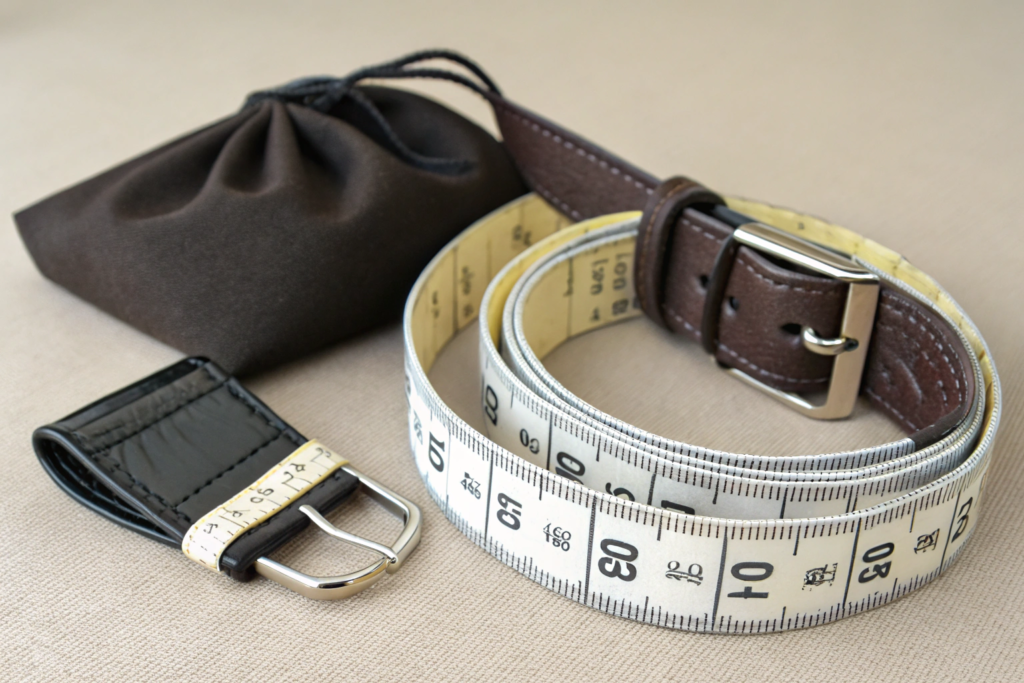
The best way is to look at data. Average petite waist sizes can range from 24 to 28 inches. We recommend offering belts in sizes 26, 28, and 30 inches, with holes spaced one inch apart to allow for fine-tuning. This covers the vast majority of the market. We can also offer custom sizing for made-to-order pieces. The key is to start with a range that is significantly shorter than the industry standard.
Should I adjust the strap drop on all bag styles for petites?
For bags that are meant to be worn on the body, like crossbody and shoulder bags, yes, absolutely. A shorter strap drop is a defining feature of a petite-friendly bag. For top-handle bags or totes, the handle drop might also need to be considered so the bag can be comfortably carried in the hand or crook of the arm without hitting the ground. It’s about considering every point of contact with the body.
How Do You Market and Communicate That Your Brand Understands Petites?
You have done the hard work. You have designed beautiful, proportional, perfectly sized accessories for the petite market. But if no one knows you exist, your work is for nothing. The petite community is hungry for brands that understand them. They are active, vocal, and share information constantly. Marketing to them is not about shouting the loudest; it is about speaking their language and showing them that you truly see them.
Marketing to the petite market requires authenticity and representation. Use petite models in your photography. Show a 5’2" woman wearing your belt and bag so a petite customer can immediately visualize it on herself. Use specific language. Don’t just say "one size." Say "designed for women 5’4" and under" or "belt fits waists 24-28 inches." Engage with the community. Collaborate with petite fashion bloggers and influencers. Ask for their feedback. Show them you are listening. The petite community is incredibly loyal to brands that make them feel seen and valued.
The power of the petite community cannot be overstated. They have spent their lives being ignored by the fashion industry. When a brand finally pays attention, they become passionate advocates. We have seen this firsthand with our clients who have successfully launched petite-focused lines. They start by using the right imagery and language. They then engage with petite influencers, sending them samples and asking for honest reviews. This creates a ripple effect of authentic, trusted content. They also pay close attention to feedback. If customers say a strap is still too long, they listen and adjust the next production run. This creates a virtuous cycle of trust and loyalty. This is a perfect example of community-driven marketing. At Shanghai Fumao Clothing, we not only help you make the products, but we can also connect you with our network of fit models and provide the detailed product specifications you need to communicate authentically with your market.
Do I need a separate website or just a separate section for petites?
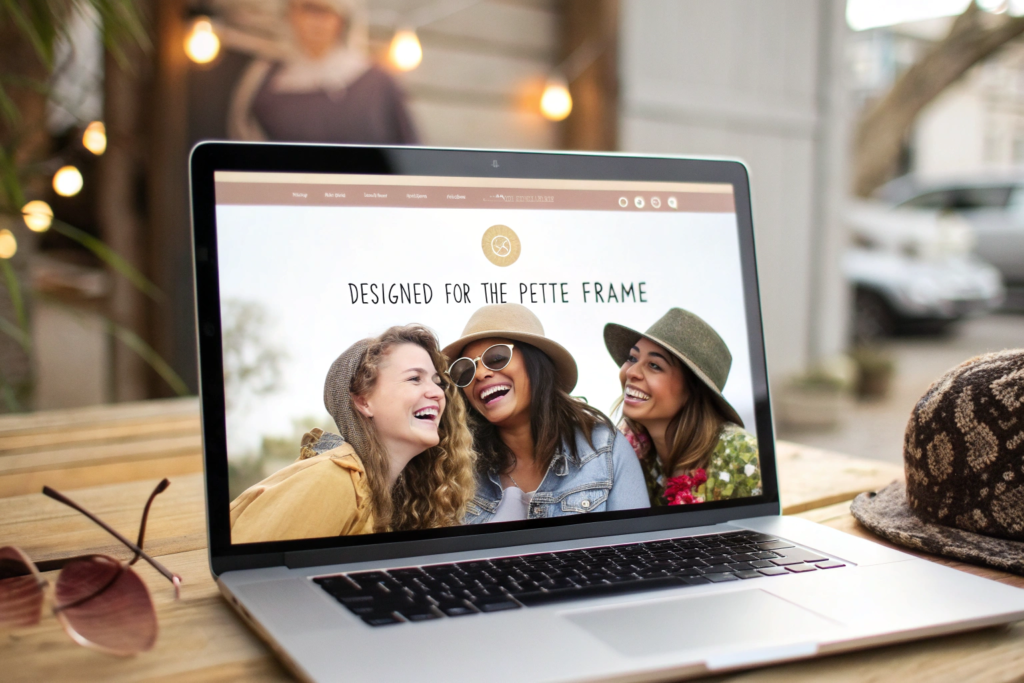
This depends on the size of your brand and your collection. A separate, dedicated section on your main website is an excellent starting point. It should be easy to find and clearly curated. The photography in that section should feature petite models. For brands with a very large and dedicated petite collection, a separate "Petite" sub-brand or even a separate site can be very powerful. The key is to make it easy for the petite customer to find her size and feel confident in her purchase.
How important are influencer collaborations for reaching the petite market?
Extremely important. Petite customers trust other petites. They follow bloggers and influencers who share their body type because they provide a realistic preview of how clothes and accessories will look. A collaboration with a respected petite influencer is one of the most effective ways to build credibility and reach a highly targeted audience. It is authentic marketing at its best.
Conclusion
Sourcing accessories for the petite fashion market is not a niche afterthought; it is a smart, empathetic, and highly profitable business strategy. It is about moving beyond the "one size fits most" mentality and embracing the beautiful diversity of the human body. It requires a deep understanding of proportion, visual weight, and precise sizing, combined with authentic marketing that makes petite women feel seen, valued, and beautiful.
At Shanghai Fumao Clothing, we have spent years perfecting the art of creating for the petite customer. Our design team understands the nuances of scaling down a belt width, shortening a strap drop, and selecting materials with the right visual weight. We have the manufacturing flexibility to produce the smaller, more precise runs that this market often requires. We are ready to help you build a collection that will earn the fierce loyalty of millions of underserved women.
Are you ready to finally serve the petite market the way they deserve? Let’s create accessories they will love. Contact our Business Director, Elaine, at elaine@fumaoclothing.com to start the conversation.