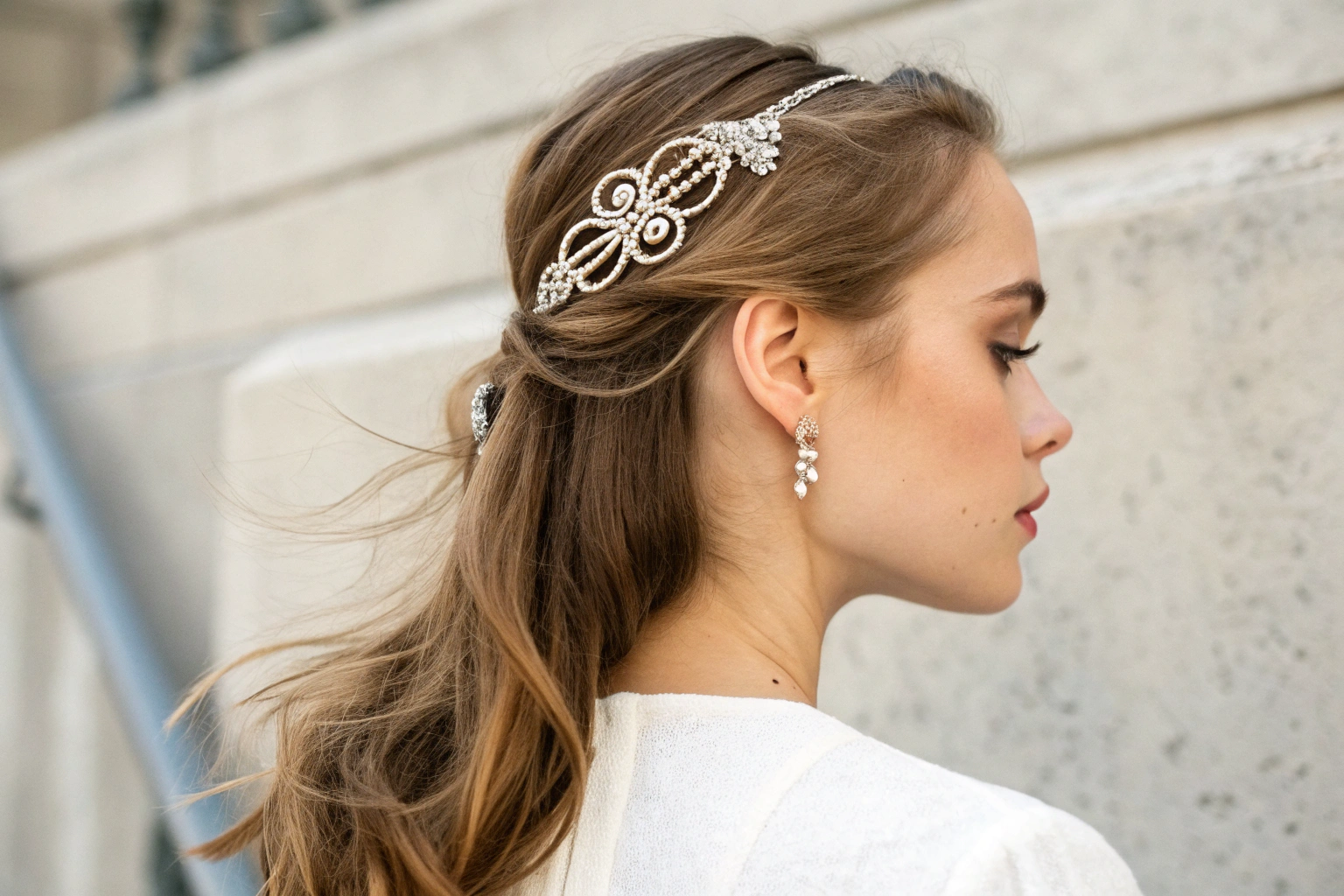
A few months ago, I received a frustrated email from a buyer in New York. She had ordered a beautiful line of resin hair clips from a different supplier. The designs were perfect, the colors were on-trend, and they looked fantastic in the packaging. But within two weeks of her customers receiving them, the complaints started flooding in. "The clip broke," "It won’t stay shut," "The spring popped out." Her brand’s reputation, built on quality, was damaged by the smallest component: the spring. This is a story I hear far too often.
The durability of a hair clip spring is the single most important factor in determining long-term customer satisfaction. A beautiful design is meaningless if the clip cannot perform its basic function. A weak or poorly constructed spring leads to a frustrating user experience, negative reviews, and product returns. It directly impacts your brand’s perception of quality and reliability. At Shanghai Fumao Clothing, we treat the spring not as an afterthought, but as a critical engineering component that must be perfected.
When a customer buys a hair clip, they are buying a promise. The promise is that it will hold their hair securely and comfortably for months or even years. When that promise is broken by a failed spring, they don’t blame the spring; they blame the brand. They leave a one-star review, and they never buy from that brand again. In this article, I will walk you through exactly how the spring works, why it fails, and how we ensure ours never let your customers down.
What Makes a Hair Clip Spring Strong and Reliable?
Many people think a hair clip is a simple product. You squeeze it, it opens, you put it in your hair, it closes. But inside that simple action is a complex piece of engineering. The spring is a tiny machine, and like any machine, its performance depends entirely on the materials used and how it is made. If you get this part wrong, nothing else matters.
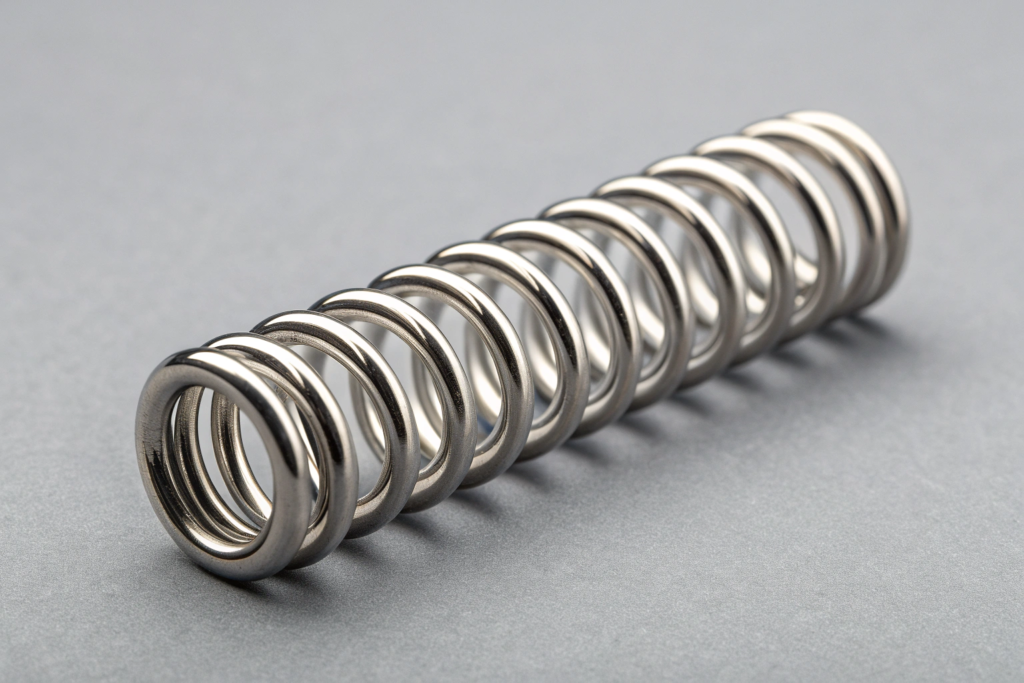
A strong and reliable hair clip spring is defined by three things: the quality of the metal, the precision of the coil, and the finish of the surface. We use high-grade stainless steel or zinc-plated music wire. This metal has "memory," meaning it can be bent thousands of times and still return to its original shape. The coil must be perfectly formed with even tension. Any imperfection creates a weak point. Finally, the surface must be smooth and often coated to prevent rust and corrosion.
Let me break down each of these elements. The metal’s "memory" is its elasticity. A poor-quality spring will lose its tension quickly. You squeeze it to open it, and after a few uses, it stays slightly open, unable to grip the hair tightly. The coil’s precision is about consistency. If the coil is wound too tightly in one spot and too loosely in another, the stress on the metal is uneven. It will snap at that weak point. The finish is about the environment. Hair clips are exposed to water, humidity, hair products, and oils. An uncoated spring will rust. Rust weakens the metal and looks terrible when it seeps out onto the clip. This is why our quality control team spends so much time on this tiny component. We test every batch for tension and corrosion resistance. A spring that fails these tests never makes it into a finished product. For more information on metal fatigue, you can read resources on material science. This meticulous attention to detail is a cornerstone of Shanghai Fumao Clothing‘s manufacturing philosophy.
How many times should a good hair clip spring open and close before it fails?
A high-quality spring, made from the right materials and properly constructed, should withstand tens of thousands of open-and-close cycles. We test our springs to endure over 50,000 cycles without losing tension or breaking. This means that for an average user who might open and close a clip a few times a day, it should last for years. This is a standard we hold ourselves to, and it’s a key part of our quality assurance process.
Does a stronger spring mean the clip is harder to open?
Not necessarily. This is a common misconception. A well-designed spring provides strong, even holding power, but the mechanism of the clip is designed to give you leverage. The hinge point and the length of the clip’s arms act as a lever. So you get a secure hold without needing superhuman strength to open it. It’s about the perfect balance of spring tension and lever design. We test this "open and close force" to ensure it’s comfortable for the average user.
How Does a Failed Spring Lead to Negative Reviews and Returns?
In the age of e-commerce, customer feedback is instant and public. A single bad experience with a product can be shared with thousands of potential buyers in seconds. When a hair clip spring fails, the customer’s frustration is immediate. They are getting ready for their day, and their accessory breaks. This isn’t just a product failure; it’s a personal inconvenience that creates a strong negative emotion.
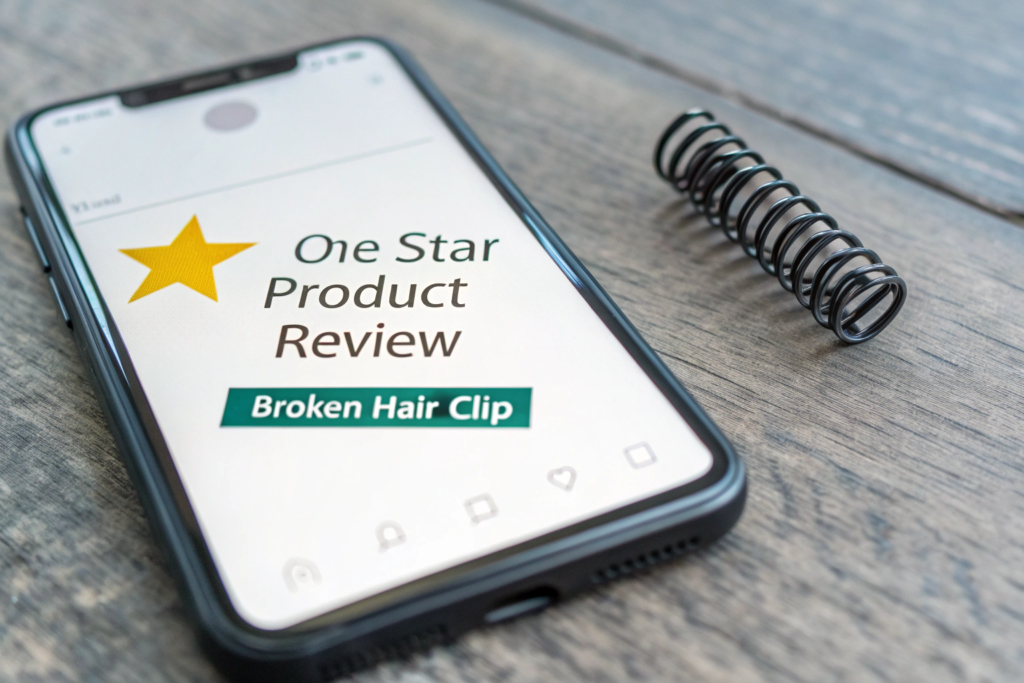
A failed spring is a direct path to a negative review. The customer’s thought process is simple: "This product was poorly made. This brand is cheap. I will warn others." They take a photo of the broken clip and post it. This one-star review is then seen by everyone researching your product. It damages your brand’s credibility and hurts your sales far more than the cost of the failed clip itself. Returns also create logistical costs and waste.
Let’s look at the math. Let’s say a clip costs $5 to make and sell. One customer returns it. You lose the $5 sale, plus you pay for the return shipping, maybe another $5. You now have a $10 loss on that one item. But the real cost is the review. If that review deters just ten other customers from buying, you have lost $50 in potential sales. And that’s just from one failure. If you have a batch of 1,000 clips with a 5% failure rate, you are looking at 50 angry customers, 50 potential negative reviews, and a huge hit to your brand’s reputation. This is why our focus on the spring is so intense. We know that a few cents saved on a cheap spring can cost you thousands of dollars in lost future revenue. This concept of understanding the full cost of quality is a core principle in total quality management. Our project managers are trained to explain this to clients who might be tempted by a lower-cost, lower-quality option. We show them the real risk. You can also read more about customer retention economics.
Can a broken spring damage a customer’s hair?
Yes, it can. This is a major safety and satisfaction concern. If a spring snaps while the clip is in the hair, the sharp metal edges can pull, snag, and cut hair. It can be painful and damaging. Even if it doesn’t cut, a customer having to pick a broken piece of metal out of their hair is a terrible experience. This kind of incident creates a customer who will not only never buy from you again but will actively tell everyone they know to avoid your brand.
How do returns from spring failure affect my bottom line?
The impact is larger than you might think. Beyond the cost of the refund and the lost shipping, you have the cost of processing the return, inspecting the item, and disposing of it (since a broken clip cannot be resold). You also have the administrative cost of handling the customer service complaint. All of these "hidden costs" eat into your profit margin. A single return can erase the profit from several successful sales. This is why preventing the failure in the first place is always the most profitable strategy.
How Can We Test Spring Durability Before Mass Production?
You don’t have to wait for customer complaints to find out if your springs are good. The beauty of working with an experienced manufacturer is that we can simulate years of use in just a few days. We have the tools and the knowledge to test the durability of every spring before a single clip is mass-produced. This takes the guesswork out of quality.
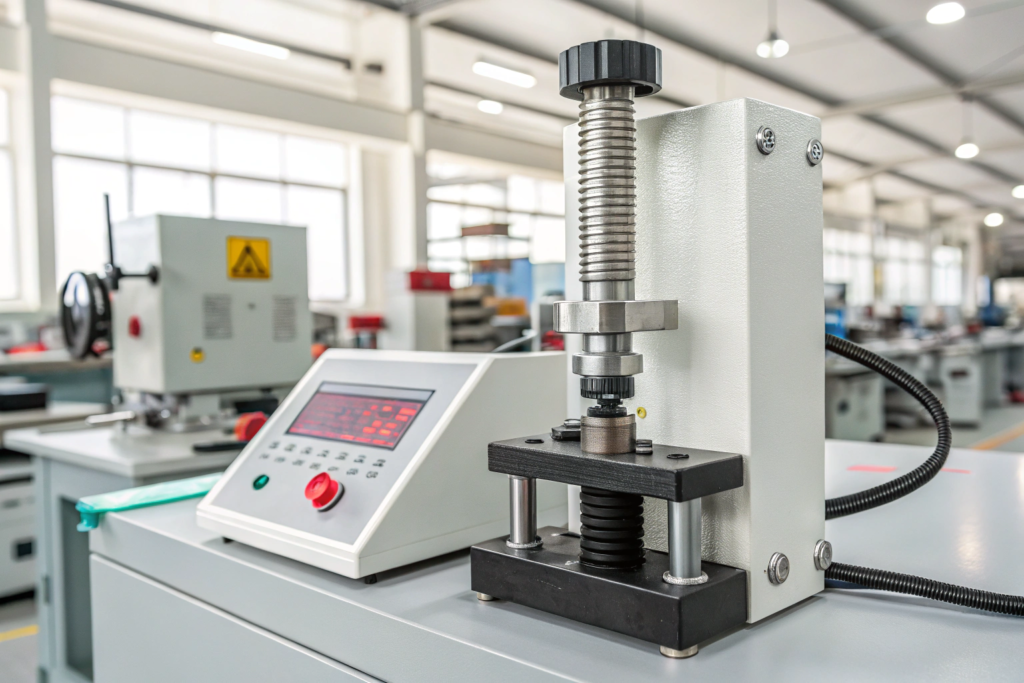
We use specialized spring testing machines to conduct rigorous, repeatable tests. These machines open and close the hair clip continuously, counting every cycle. We can test for tension loss, metal fatigue, and overall lifespan. We test samples from every batch of springs we receive from our suppliers. If a batch fails to meet our standard of 50,000 cycles, we reject the entire batch. It’s that simple. We also test the final assembled clip to ensure the spring works perfectly with the clip’s arms and hinge.
Our testing process has several stages. First, we test the raw springs from our supplier. We take a random sample from every new shipment and put them in the tester. Second, we test the assembled clip. Sometimes a perfectly good spring can be compromised during assembly if it’s not installed correctly. We test assembled samples from the first production run (the "golden sample" stage) to ensure the whole mechanism works. Third, we conduct random in-line testing during mass production. This ensures that the quality doesn’t slip as the order is being made. This three-stage process gives you, our client, complete confidence. We provide video evidence of these tests if you request it. You can see your product being opened and closed 50,000 times, proving its reliability. This commitment to testing is part of why we are a trusted partner for major brands. You can learn more about standard product testing methods used in the industry. Our facility in Zhejiang is equipped with the latest quality control equipment to perform these tests accurately.
Can you test springs for different strengths based on hair types?
Yes, we can customize the spring tension based on the intended use. For example, a clip designed for thick, heavy hair needs a stronger spring than a small clip for fine hair. We can work with you to define the required tension. We then test to ensure the spring consistently delivers that specific force. This customization ensures the clip works perfectly for your target customer, providing the right hold without being too tight or too loose. We can measure this using a force gauge.
What happens if a spring fails your in-line testing during production?
If a spring fails during our in-line testing, we stop production immediately. We quarantine all affected parts and investigate the root cause. Was it a bad batch of raw springs? Was it an assembly machine calibration issue? We fix the problem before restarting production. Any clips already made with the bad springs are rejected and will never be shipped. This might cause a small delay, but it protects you from a much larger disaster of receiving a whole batch of defective goods. We always prioritize quality over speed in these situations.
What Are the Hidden Costs of Choosing Cheap Springs?
I have sat across the table from many buyers who are under immense pressure to hit a price point. Their competitor is selling a similar clip for $1 less, and they feel they have to match it. The first place they look to cut costs is often the components you can’t see, like the spring. It’s a temptation I understand, but it is almost always a costly mistake in the long run.
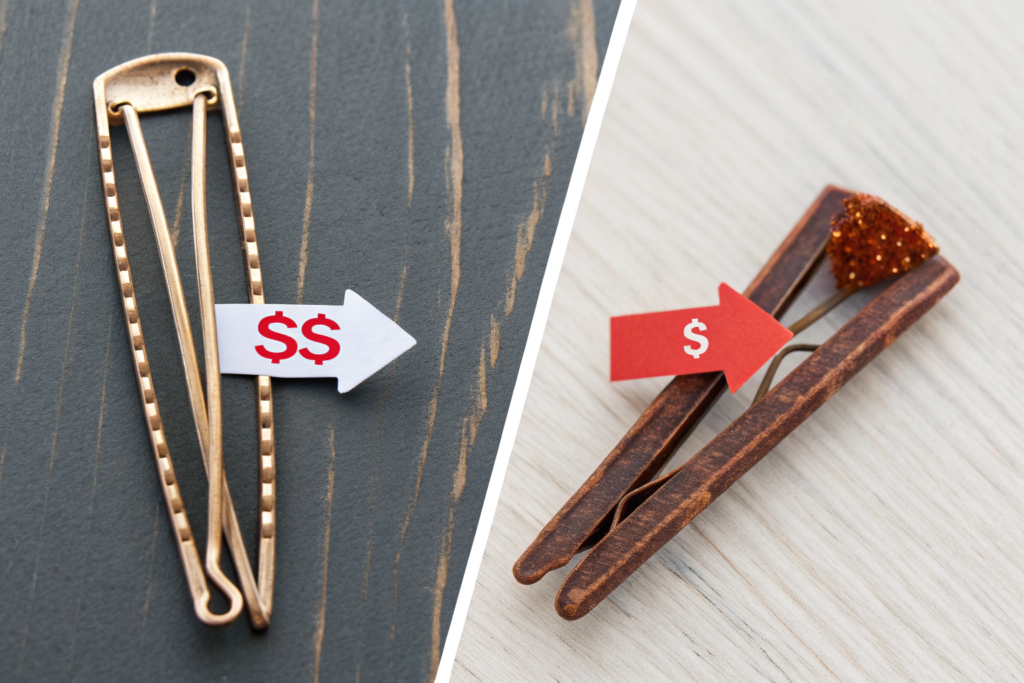
The hidden costs of choosing a cheap spring are far greater than the initial savings. You save $0.05 on the spring, but you risk losing hundreds of dollars in returns, chargebacks, and negative reviews. You also risk damaging your brand’s reputation, which can take years and millions of dollars in marketing to rebuild. A cheap spring is a false economy. It trades a small, immediate saving for a large, long-term liability.
Let me give you a real-world example from our experience. A few years ago, a potential client wanted us to make a very popular style of claw clip. They asked us to quote it with a cheaper, lower-grade spring to meet their target price. We explained the risks, but they decided to go with another factory that agreed to their price. Six months later, they came back to us. The other factory’s clips were failing. The springs were rusting and losing tension. They had thousands of returns and their retail partner was threatening to drop their line. They asked us if we could remake the entire order, with our standard springs, at a rush. They ended up paying significantly more in total than if they had done it right the first time. This story is not unique. It plays out every day in our industry. The pursuit of a few cents in savings led to a catastrophic loss. We always advise our clients to think about the total cost of ownership, not just the initial piece price. Our project managers can help you run these numbers. At Shanghai Fumao Clothing, we believe in building partnerships based on trust and long-term value, not short-term savings.
How much money can I really save by using a cheaper spring?
On a single clip, you might save between $0.02 and $0.10. On an order of 10,000 clips, that’s a maximum saving of $1,000. That sounds like a lot. But if just 2% of those clips fail (200 clips), and each return costs you $15 in refunds and shipping, you have just lost $3,000. You are now $2,000 in the hole, plus you have damaged your brand. The "savings" disappear instantly. The math simply does not work in favor of the cheap spring.
Does a more expensive spring always mean better quality?
Not automatically, but it is a strong indicator. A reputable spring manufacturer uses higher-grade steel and has tighter quality controls. They test their own products. This costs more, but it results in a much more reliable component. When you buy a cheap spring, you are buying a product with unknown origins, unknown materials, and no guarantee of performance. With us, you are paying for the assurance that the spring has been sourced from a vetted, reliable partner and tested in our own facility. You are paying for peace of mind.
Conclusion
The small spring inside a hair clip carries a huge weight of responsibility. It is the difference between a customer who loves your brand and becomes a loyal, repeat buyer, and a customer who posts a one-star review and never returns. The durability of this tiny component directly dictates your product’s performance, your return rate, and your brand’s reputation in the market.
At Shanghai Fumao Clothing, we understand this connection better than anyone. We don’t cut corners on the things that matter. Our springs are sourced from the best suppliers, tested rigorously in our own lab, and assembled with precision by our skilled team. We do this not because it’s cheaper, but because it’s right for your business. We protect your brand by building quality into every single product, starting from the inside out.
Don’t let a tiny spring break your customer’s trust. Let’s build products that last. Contact our Business Director, Elaine, at elaine@fumaoclothing.com to discuss your next project and see how our commitment to quality can elevate your brand.