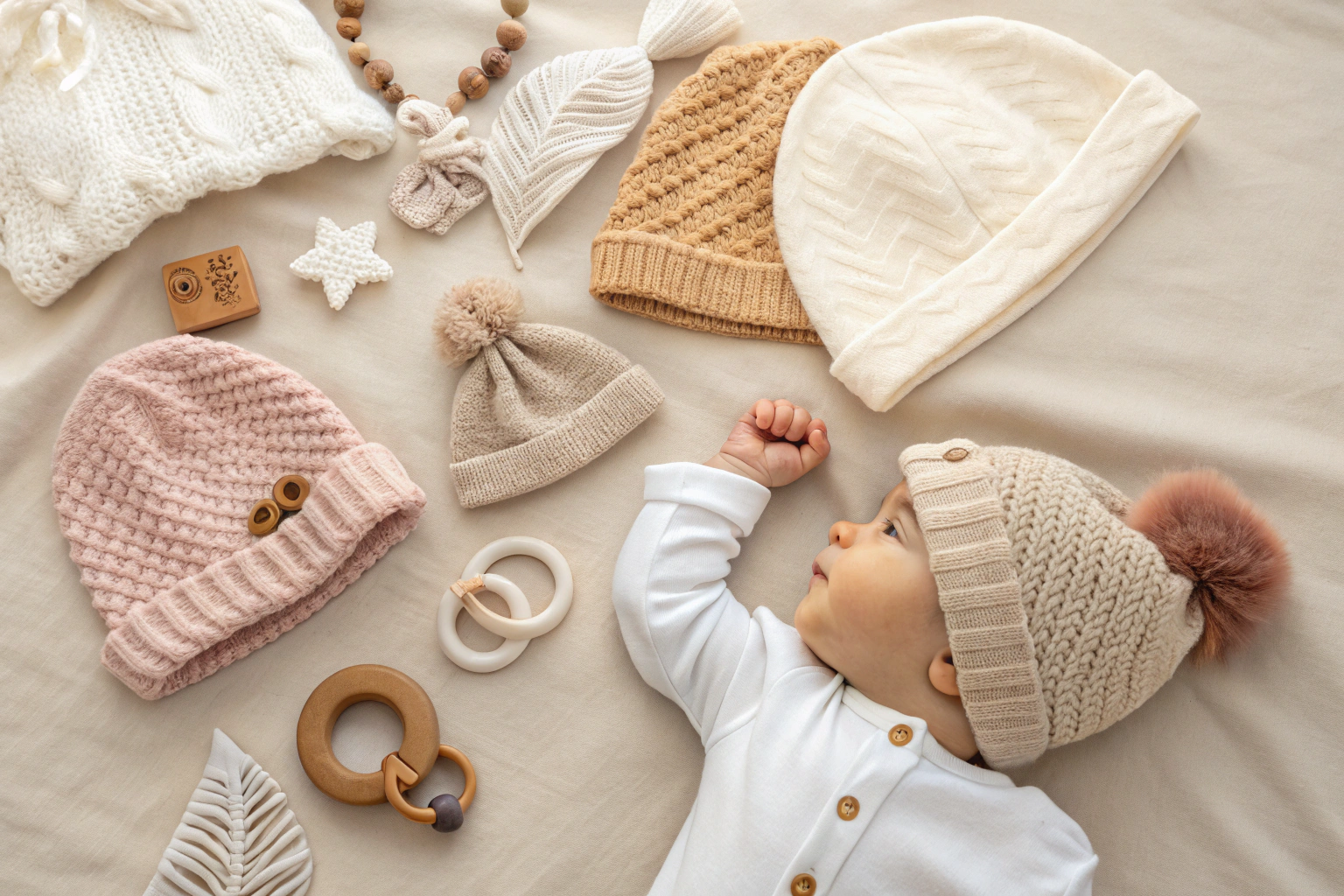
I learned about baby accessories the hard way. Early in my career, we made a beautiful line of baby headbands. They were adorable. They sold well. Then came the complaints. The elastic was too tight. The decorations could come loose. A baby had put a flower in her mouth. No one was hurt, thank goodness. But we pulled the entire line. That experience taught me that baby accessories are not just smaller versions of adult accessories. They’re completely different products with completely different requirements.
The most important factors in sourcing baby and toddler accessories are safety above all, appropriate materials free from harmful substances, age-appropriate design that prevents choking hazards, durability for rough handling, ease of cleaning, and comfort for sensitive skin. Every decision must prioritize the child’s well-being.
I’m the owner of Shanghai Fumao Clothing, and we run AceAccessory. We’ve learned through experience what it takes to create safe, beautiful accessories for the youngest customers. Let me share what matters most.
Why is safety the absolute priority for baby accessories?
With adult accessories, safety matters but aesthetics often come first. With baby accessories, safety must come before everything else. A beautiful accessory that poses any risk is a failed product. Period.
Babies explore the world with their mouths. Everything goes in. They pull at things. They chew. They tug. An accessory that’s perfectly safe for an adult can be dangerous for a baby. Every component must be evaluated from a baby’s perspective. This is why Shanghai Fumao Clothing takes such care with baby products.
What safety standards apply to baby accessories?
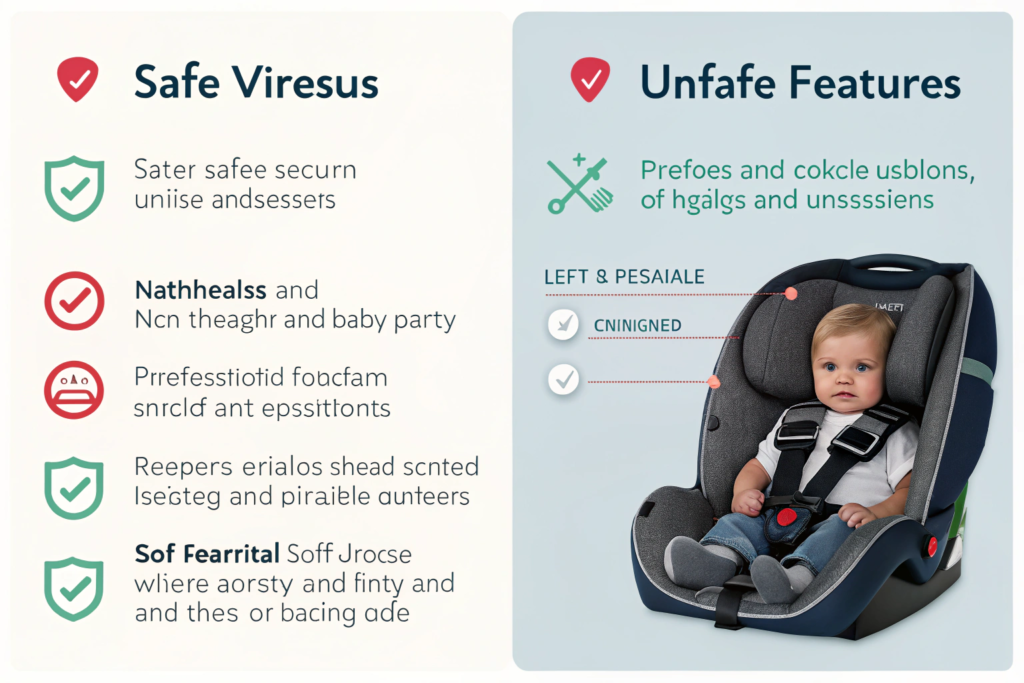
Different countries have different regulations. In the US, the Consumer Product Safety Commission (CPSC) sets standards. In Europe, EN71 standards apply. These regulations cover things like small parts, sharp edges, toxic materials, and strangulation hazards. Compliance is not optional. We follow all relevant standards for every market we serve.
How do you test for choking hazards?
Any part that can be detached must be too large to swallow. We use small parts testers, which are cylinders sized to simulate a child’s throat. If a part fits entirely inside, it’s a choking hazard. But testing goes beyond detachment. We also consider what might happen if a baby chews through fabric. Are there small components inside? This choking hazard testing is rigorous.
What materials are safe for baby accessories?
Material choice is critical for baby accessories. Babies have sensitive skin. They put everything in their mouths. Materials must be non-toxic, hypoallergenic, and soft.
Natural fibers like organic cotton are excellent choices. They’re soft, breathable, and free from harsh chemicals. Bamboo viscose is another good option. For teething accessories, food-grade silicone is safe and easy to clean. Avoid anything with harsh chemical treatments, strong dyes, or synthetic materials that might irritate skin.
What certifications indicate baby-safe materials?
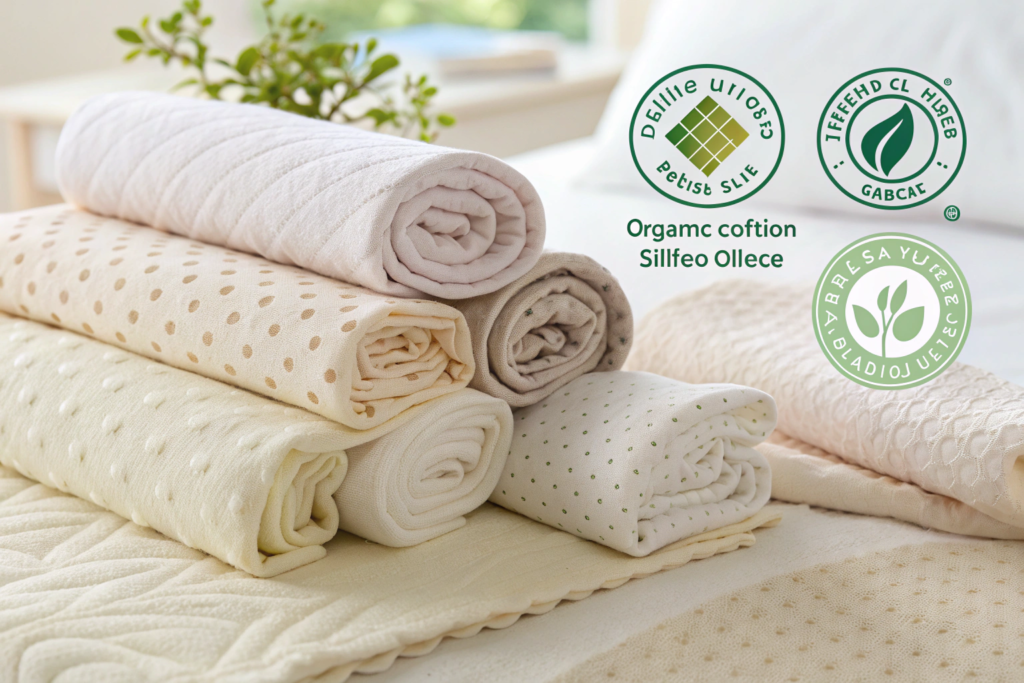
Look for OEKO-TEX Standard 100 certification, which tests for harmful substances. GOTS certification ensures organic status and ethical production. For silicone, food-grade certification is essential. These certifications provide assurance that materials meet strict safety standards. We use only certified materials for baby products.
Are there materials that should always be avoided?
Avoid materials that can shed fibers or particles that babies might inhale. Avoid anything with chemical treatments like flame retardants, which can be toxic. Avoid cheap metals that might contain lead or nickel. Avoid strong synthetic dyes that might bleed or irritate skin. This material safety guide helps identify risks.
How do you design for different developmental stages?
Babies develop rapidly. What’s safe for a 3-month-old may be dangerous for a 6-month-old who can grab and pull. Accessories need to be designed with specific developmental stages in mind.
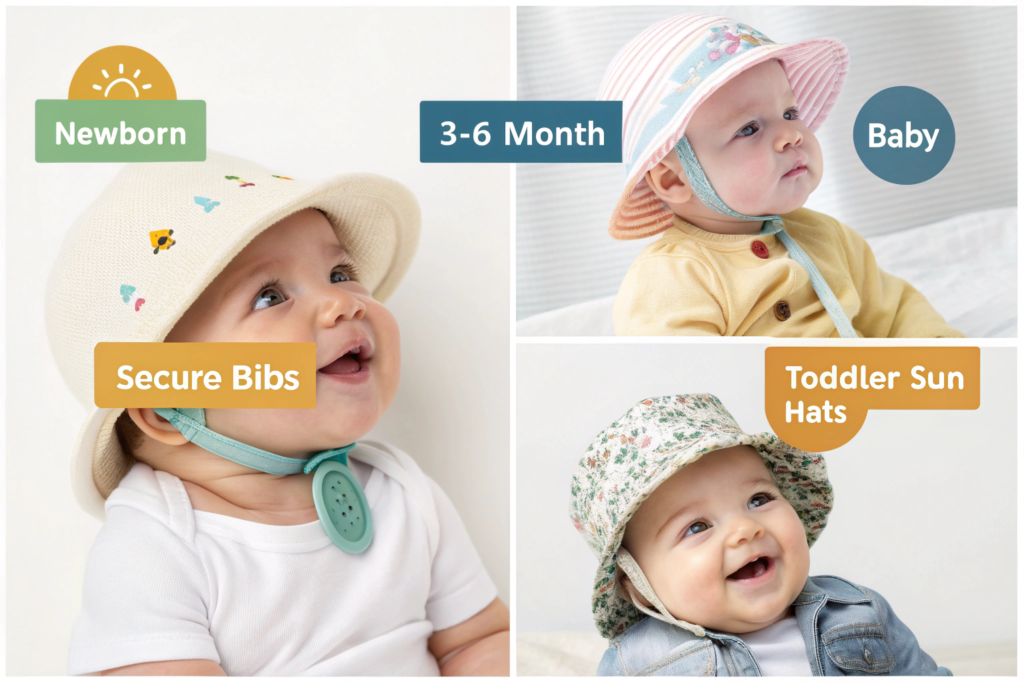
Newborns need soft, simple items with no small parts. As babies start grabbing, accessories need to be securely attached. As they teethe, chewable features become relevant. As they become mobile, sun protection and secure fits matter. Understanding these stages is essential.
What accessories are appropriate for newborns?
Newborns need soft, simple items. Hats without ties or decorations. Gentle headbands with minimal embellishment. Soft mittens to prevent scratching. Everything should be soft, breathable, and free from anything that could come loose. We design newborn items with these principles in mind.
How do needs change for older babies and toddlers?
Older babies grab and pull. Attachments must be incredibly secure. Toddlers are mobile and active. Sun hats with chin straps. Backpacks for daycare. Items that can withstand rough handling. The designs evolve with the child’s abilities. This developmental design approach ensures appropriateness at every stage.
How do you ensure accessories stay on active babies?
A baby hat that falls off constantly is frustrating for parents. A headband that slips is useless. Accessories need to stay put, but without being too tight or uncomfortable.
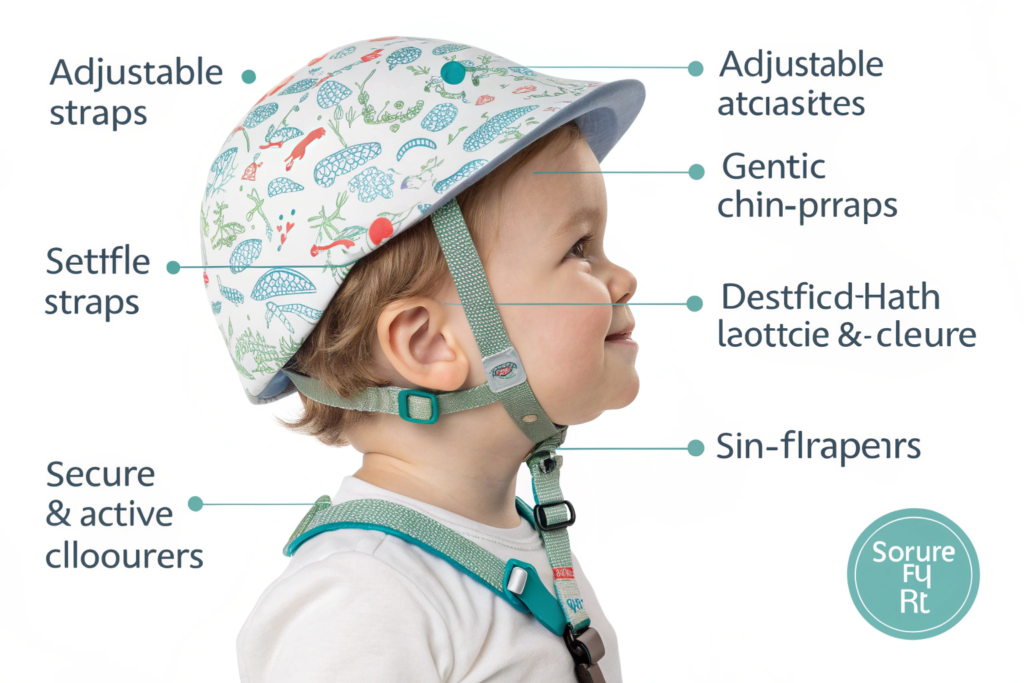
Adjustable features are key. Hats with chin straps or adjustable toggles. Headbands with gentle elastic that fits but doesn’t pinch. Closures that are secure but easy for parents to use. The design should balance security and comfort.
What features keep hats on active babies?
Chin straps are most secure, but some parents prefer not to use them. Adjustable toggles at the back allow a customized fit. Soft, wide elastic bands provide gentle pressure. The hat should fit snugly without being tight. We test hat security on real babies to ensure they stay put.
How tight should baby headbands be?
Very gentle. The elastic should be just tight enough to stay in place, but not so tight that it leaves marks or causes discomfort. The band should be wide to distribute pressure. Silicone strips inside can provide grip without tightness. Comfort is as important as staying power.
What about teething and chewable accessories?
Many babies go through a phase where they chew everything. Accessories that end up in mouths need to be designed for this. Materials must be safe to chew. Attachments must withstand repeated mouthing.
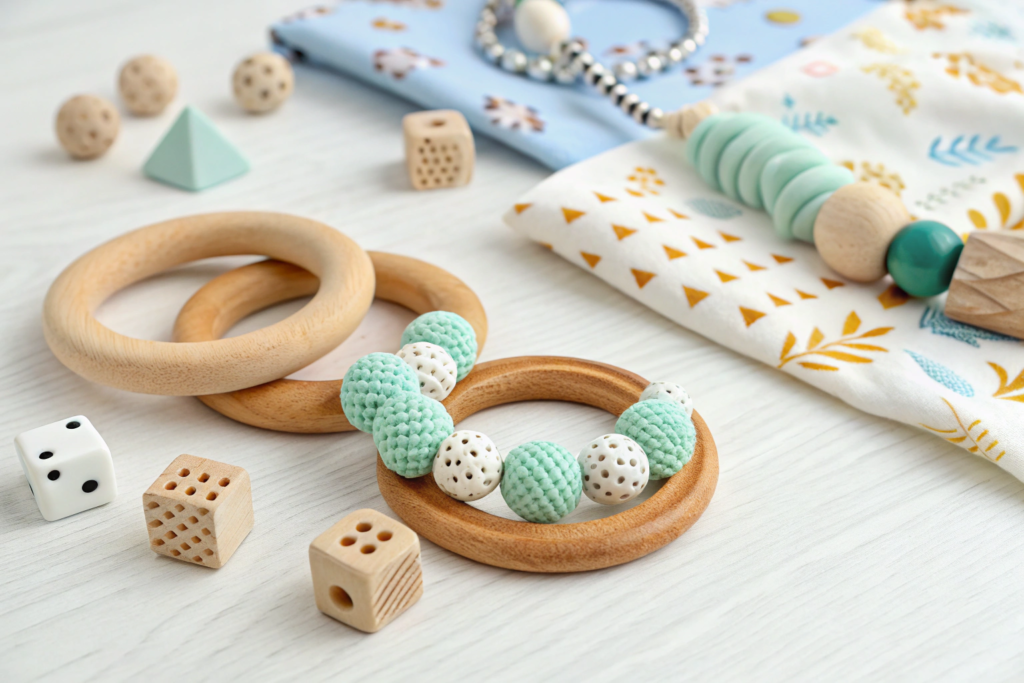
Food-grade silicone is excellent for teething accessories. It’s soft, durable, and safe. Untreated wood can work but requires careful finishing. Avoid anything with paint or coatings that might come off. Fabric items should be securely constructed so they don’t shed fibers.
What materials are safe for babies to chew?
Food-grade silicone is the gold standard. It’s soft, durable, and can be sterilized. Natural, untreated wood is also safe if smoothly finished. Some fabrics can work if they’re tightly woven and won’t shed fibers. Always avoid anything with small parts that could detach. This teething safety guide provides more information.
How do you test chewable accessories for durability?
We simulate extended chewing. Machines apply repeated pressure to test how materials hold up. We also test for detachment. Can a baby chew through and free small parts? The accessory must withstand determined chewing without failing. This durability testing is essential for safety.
Conclusion
Sourcing baby and toddler accessories requires a completely different mindset than adult accessories. Safety must come before everything else. Materials must be non-toxic and gentle. Design must account for developmental stages. Construction must be durable and washable. Documentation must be thorough. Every decision must prioritize the well-being of the child.
At Shanghai Fumao Clothing, we take this responsibility seriously. Our baby products are designed with safety as the first priority. We use certified materials. We test rigorously. We provide complete documentation. If you’re looking for a partner who understands the unique requirements of baby accessories, let’s talk. Reach out to our Business Director, Elaine, at elaine@fumaoclothing.com. She’ll connect you with a project manager who can help you create safe, beautiful accessories for the littlest customers.