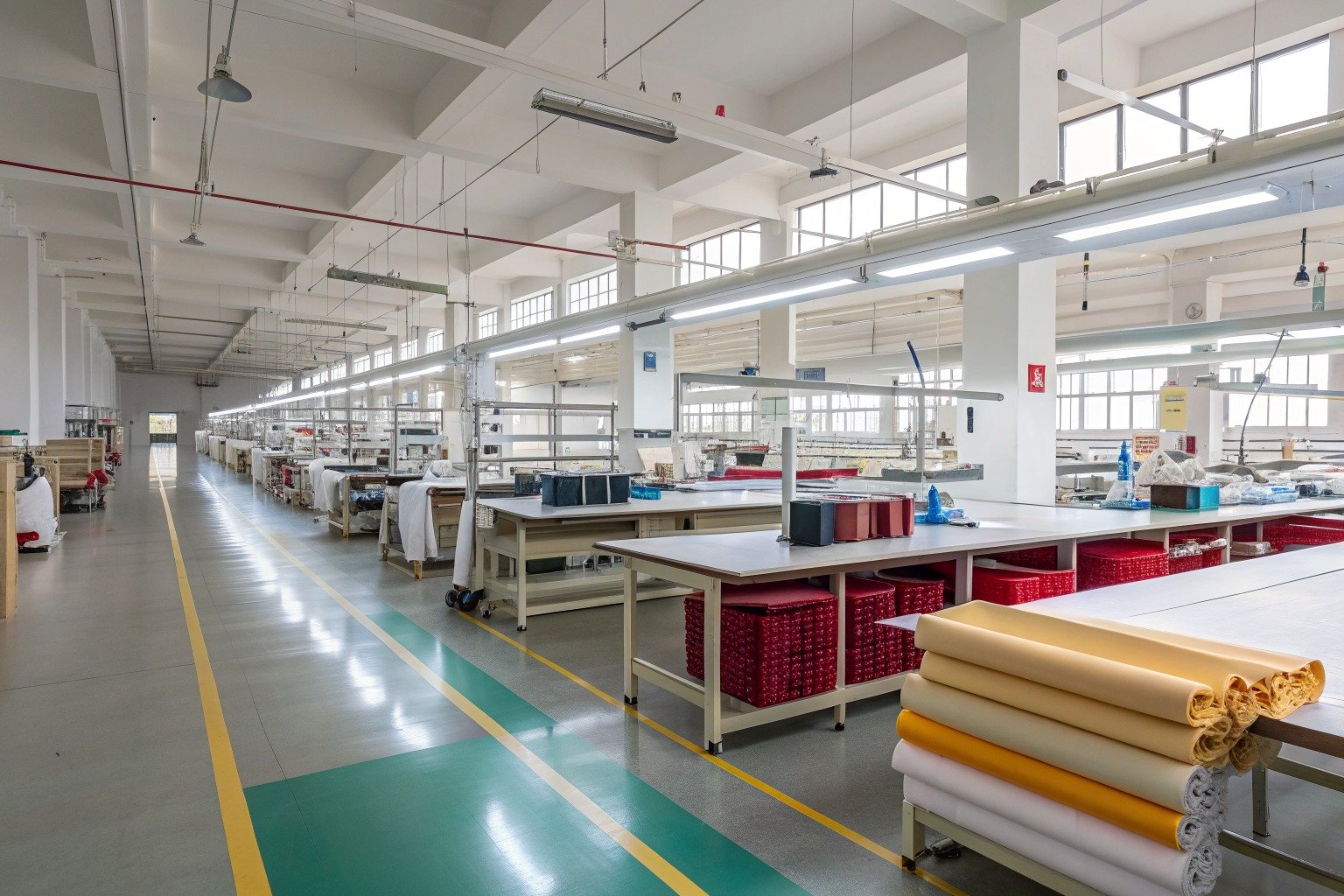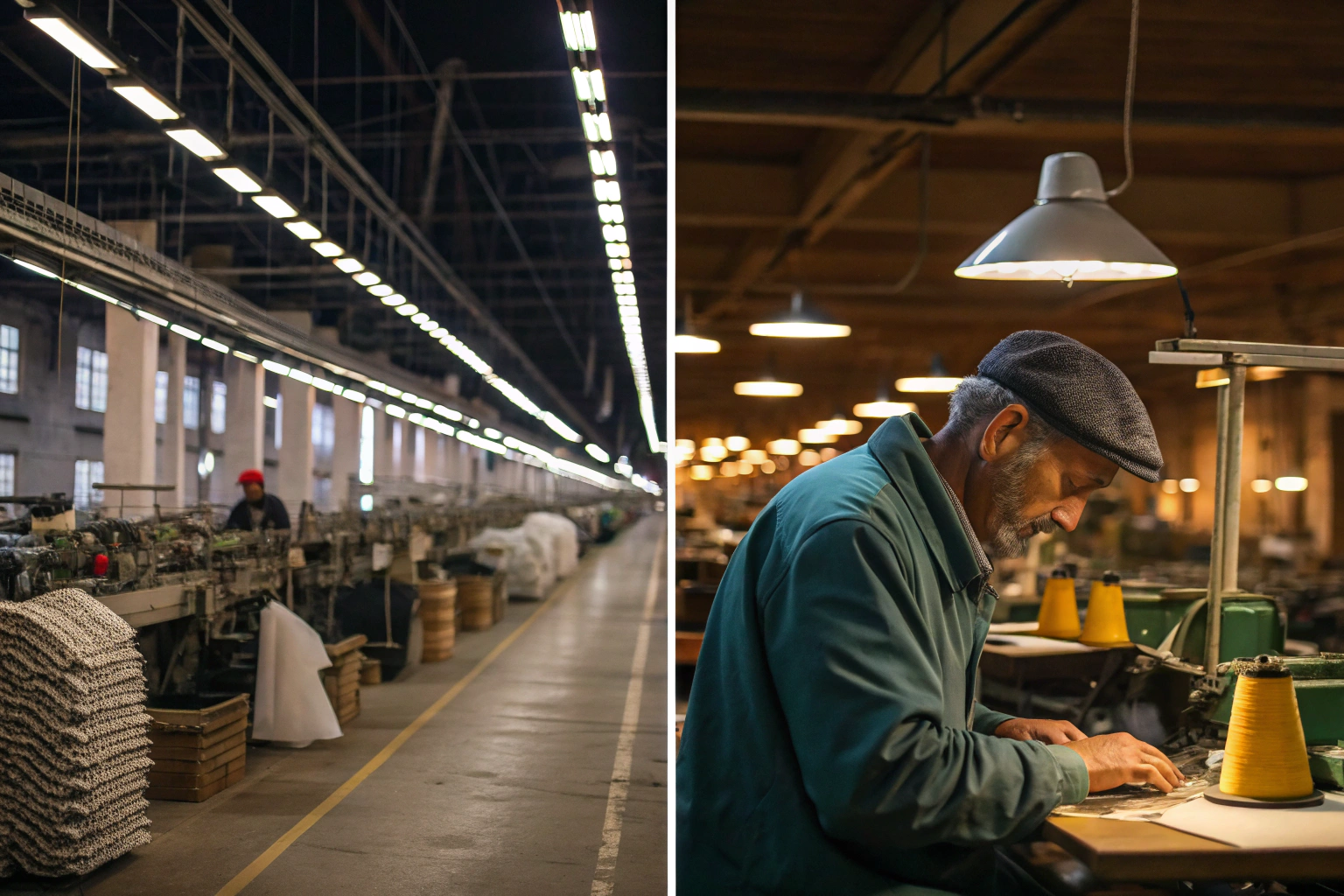
I’ve spent my career in the middle of a fascinating shift. When I started, fashion was fashion. You made products, and they sold. Today, there are two distinct worlds. Fast fashion moves at lightning speed, chasing trends that last weeks. Slow fashion moves deliberately, creating pieces meant to last years. Both have their place. But sourcing for each requires completely different approaches.
The differences in sourcing for fast fashion vs. slow fashion accessories include speed vs. quality focus, material selection, production volumes, supplier relationships, pricing structures, and sustainability priorities. Fast fashion prioritizes speed and low cost. Slow fashion prioritizes quality, ethics, and longevity.
I’m the owner of Shanghai Fumao Clothing, and we run AceAccessory. We work with both types of clients. Let me share what we’ve learned about the differences.
How do production timelines differ between fast and slow fashion?
Fast fashion lives and dies by speed. A trend emerges on social media, and products need to be in stores within weeks. The window is that short. Production timelines are compressed. Sampling is rushed. Decisions are made quickly.
Slow fashion takes time. Designs are developed carefully. Materials are sourced thoughtfully. Samples are refined. Production is scheduled deliberately. The timeline from concept to delivery can be months or even a year. The goal is getting it right, not getting it fast. This understanding of different timelines is essential for Shanghai Fumao Clothing when working with diverse clients.
What is a typical timeline for fast fashion accessories?
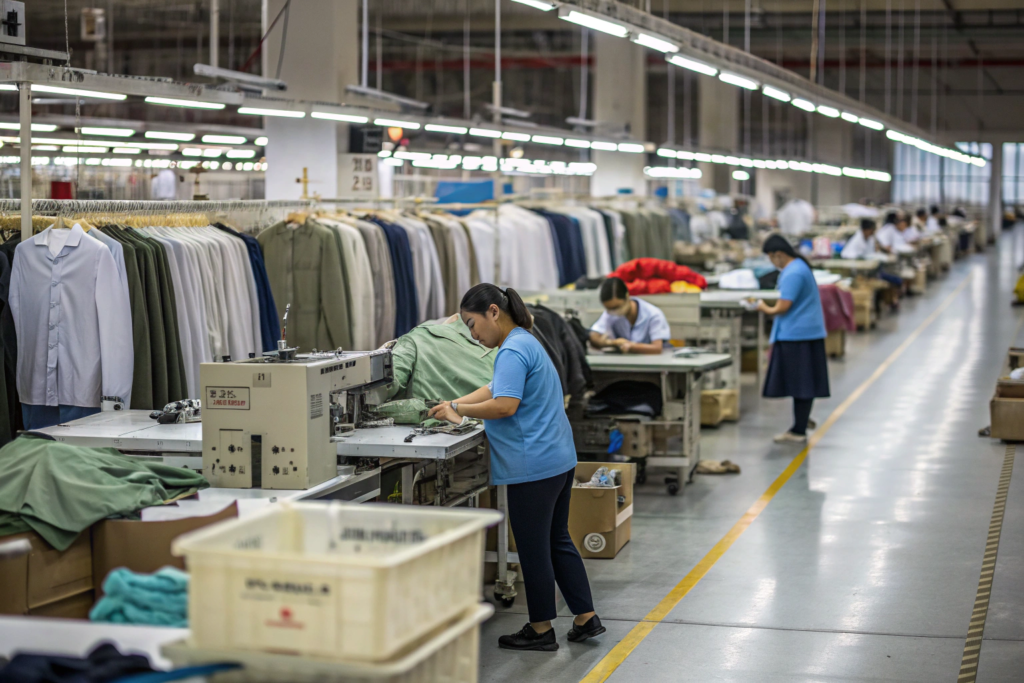
From trend identification to delivery, fast fashion aims for 4-8 weeks. That’s incredibly fast. It requires suppliers who can drop everything to produce new styles. Sampling might take days instead of weeks. Production is rushed. Quality control may be less thorough. The focus is on hitting the trend window. This rapid production is the hallmark of fast fashion.
How long does slow fashion sourcing take?
Slow fashion timelines are much longer. 3-6 months is common. For complex items, even longer. Sampling goes through multiple rounds. Materials may be custom-developed. Production schedules are planned carefully. The goal is to create something that will last, not something that will be discarded next month. This deliberate process ensures quality and intention.
What materials are prioritized in each approach?
Material choice is one of the biggest differences. Fast fashion prioritizes low cost and availability. Synthetic materials are common because they’re cheap and consistent. Quality is secondary to price.
Slow fashion prioritizes quality, sustainability, and longevity. Natural fibers like cotton, wool, and silk are preferred. Materials are chosen for how they’ll age, not just how they look new. Cost is higher, but the expectation is that the product will last.
What materials are common in fast fashion accessories?
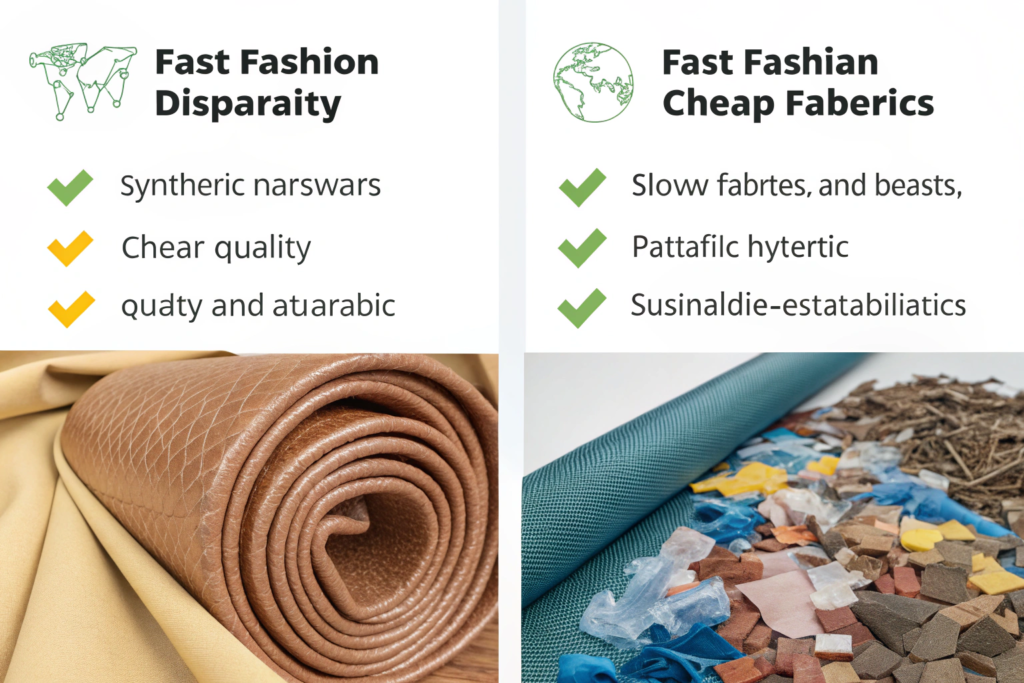
Polyester, acrylic, and other synthetics dominate. They’re cheap, easy to produce, and consistent. Hardware is often plastic or low-quality metal that may tarnish. Dyes may be cheap and less colorfast. The focus is on keeping costs down to hit low price points. This material strategy enables rapid production at low cost.
What materials do slow fashion brands prefer?
Natural fibers like cotton, wool, silk, and linen are common. When synthetics are used, they’re often recycled or high-quality. Leather is full-grain, chosen to develop patina over time. Hardware is solid metal that won’t tarnish. Dyes are high-quality and colorfast. Materials are chosen for longevity and sustainability.
How do production volumes and MOQs compare?
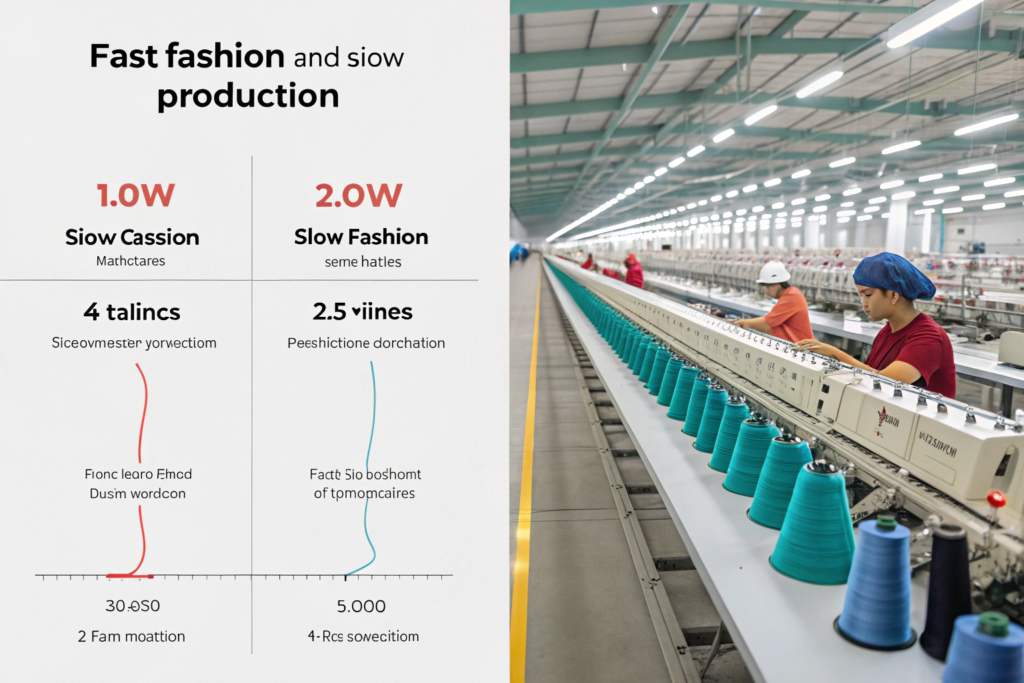
Fast fashion operates at enormous scale. A single style might be produced in tens of thousands of units. The goal is to saturate the market quickly. Low unit costs depend on high volumes.
Slow fashion operates at smaller scale. Batches may be hundreds or a few thousand. The focus is on quality, not quantity. Unit costs are higher, but so is the perceived value.
What are typical MOQs for fast fashion accessories?
Fast fashion MOQs are high. 5,000 to 10,000 units per style is common. The economics don’t work at lower volumes. Suppliers prioritize these large orders. Small brands can’t compete for production capacity. This volume requirement excludes many smaller players.
Can slow fashion brands work with smaller MOQs?
Yes, and they often prefer it. Slow fashion brands may start with 500 or 1000 units. They want to test styles without massive risk. They may do smaller runs to maintain exclusivity. Suppliers who offer flexible MOQs are valuable to these brands.
How do supplier relationships differ?
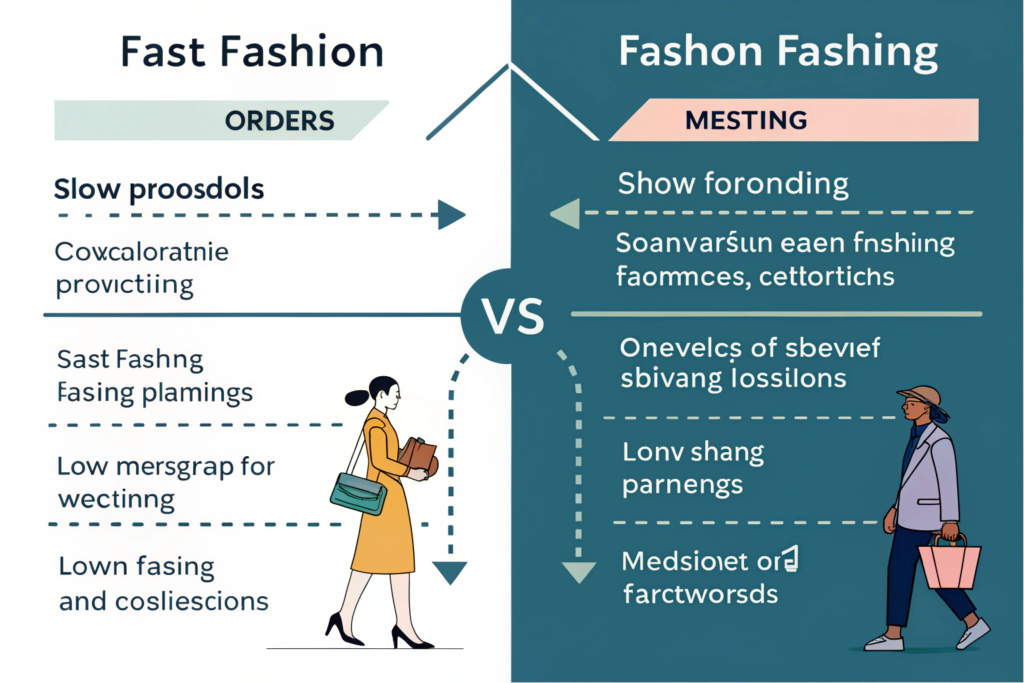
Fast fashion treats suppliers as vendors. Orders are placed, fulfilled, and that’s it. Relationships are transactional. If a cheaper supplier appears, brands may switch. There’s little loyalty.
Slow fashion treats suppliers as partners. Relationships are built over years. There’s shared planning and mutual investment. Suppliers understand the brand’s values and quality standards. This partnership enables better products and smoother production.
How do fast fashion brands manage supplier relationships?
Relationships are often short-term and transactional. Brands may work with many suppliers and switch frequently based on price. Communication is minimal beyond order details. There’s little investment in supplier development. This transactional approach keeps costs down but limits quality and innovation.
Why do slow fashion brands value long-term partnerships?
Long-term partnerships build trust and understanding. Suppliers learn the brand’s quality standards and preferences. They can suggest improvements and innovations. Problems are solved collaboratively. Both sides invest in the relationship. This partnership model leads to better products over time.
How do pricing and cost structures differ?
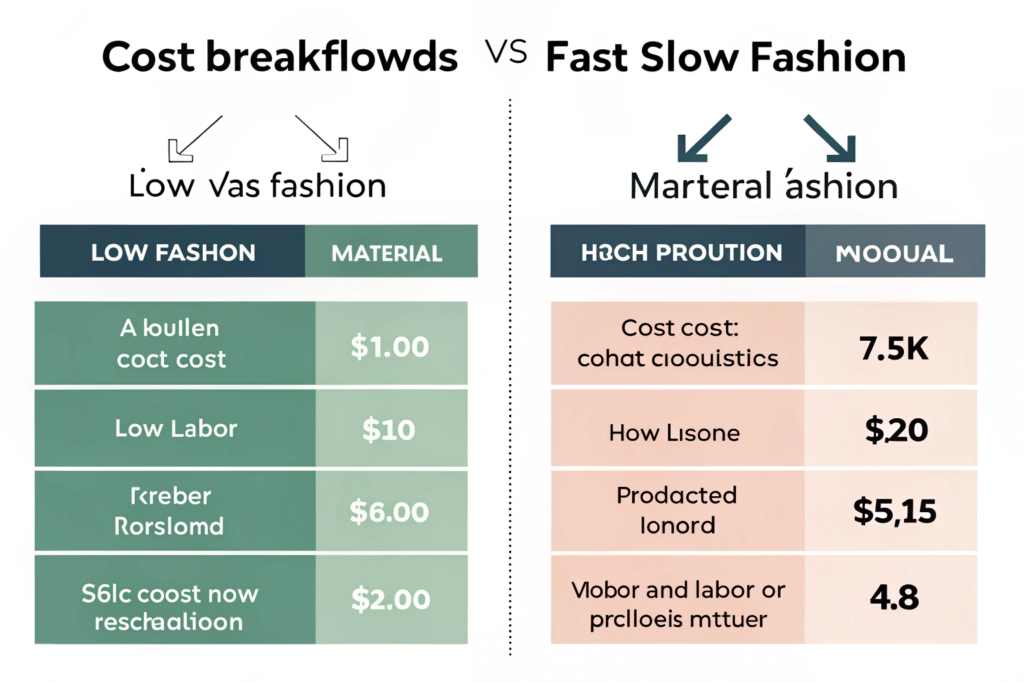
Fast fashion pricing is driven by minimizing every cost. Materials are cheap. Labor is minimized. Quality control is basic. The goal is the lowest possible price to the consumer.
Slow fashion pricing reflects higher costs. Better materials cost more. Skilled labor costs more. Quality control is thorough. The price is higher, but the value proposition is different. The product should last longer and feel better.
What drives costs in fast fashion accessories?
Materials are the biggest cost, minimized by using cheap synthetics. Labor is minimized through high-volume, low-skill production. Quality control is basic, catching only major defects. There’s little investment in design or development. The focus is on cost minimization at every step.
Why do slow fashion accessories cost more?
Higher-quality materials cost more. Skilled labor commands higher wages. Design and development are investments. Quality control is thorough. Smaller production runs mean less economy of scale. All of this adds up to a higher price, but also a better product.
How do sustainability and ethics factor in?
Recraft指令–An image showing the sustainability contrast. Fast fashion side shows waste, pollution, and poor working conditions. Slow fashion side shows ethical production, sustainable materials, and transparency. The contrast is stark and educational. Professional, impactful. No text, maps, or distorted faces.
This is perhaps the biggest difference. Fast fashion has a massive environmental footprint. Waste is enormous. Working conditions are often poor. Sustainability is rarely a priority.

Slow fashion puts sustainability and ethics at the center. Materials are chosen for low environmental impact. Production is transparent. Workers are treated fairly. The goal is to create beautiful things without destroying the planet or exploiting people.
What is the environmental impact of fast fashion accessories?
The impact is huge. Synthetic materials come from fossil fuels. Production uses大量 energy and water. Waste is enormous, with much ending in landfills. Chemicals from dyes pollute water. The environmental cost is staggering, and it’s largely invisible to consumers.
How do slow fashion brands ensure ethical production?
They work with suppliers who share their values. They may visit factories and build relationships. They seek certifications like Fair Trade or B Corp. They’re transparent about their supply chain. They’re willing to pay more for ethical production. This commitment is central to their brand identity.
Conclusion
Fast fashion and slow fashion represent fundamentally different approaches to accessories. Fast fashion prioritizes speed, low cost, and trend responsiveness. Slow fashion prioritizes quality, sustainability, and longevity. Neither is inherently right or wrong. They serve different customers and different needs. The key is understanding which approach fits your brand and sourcing accordingly.
At Shanghai Fumao, we work with both types of clients. We understand the needs of fast fashion brands for speed and volume. We also understand the needs of slow fashion brands for quality and partnership. If you’re sourcing accessories, whatever your approach, let’s talk. Reach out to our Business Director, Elaine, at elaine@fumaoclothing.com. She’ll connect you with a project manager who understands your specific needs.