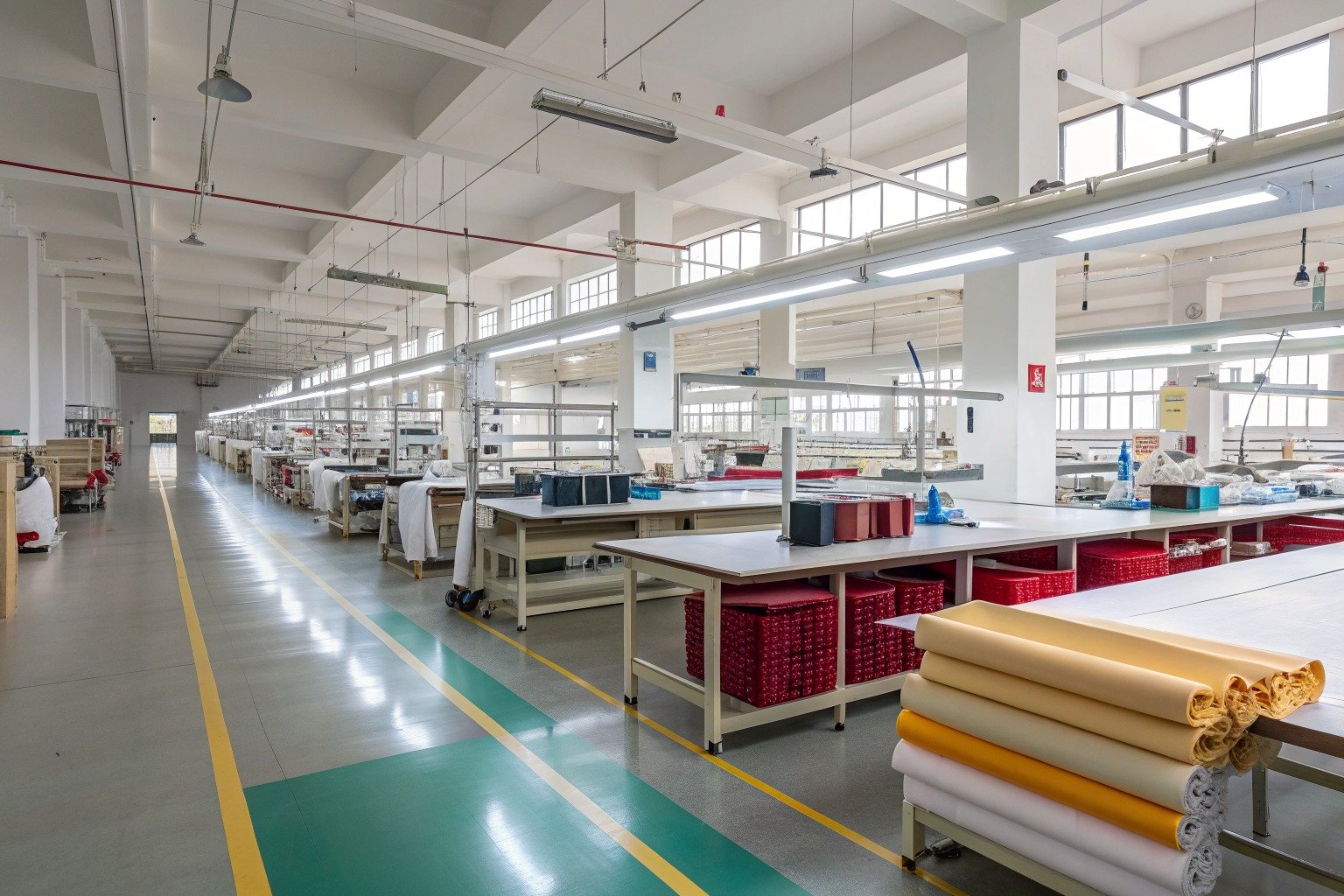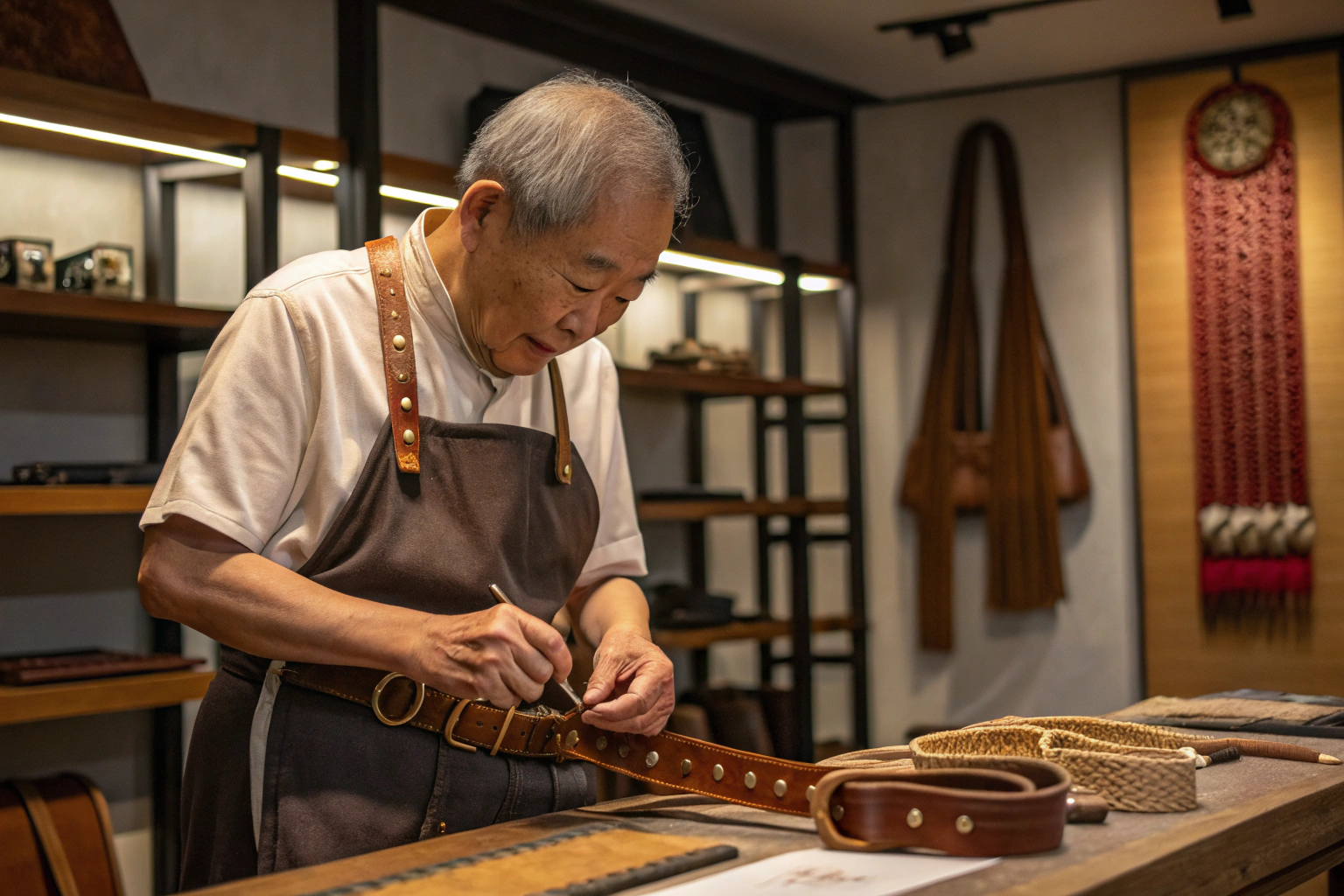
My father started this business in 1982. He had one sewing machine, three employees, and a belief that quality mattered more than speed. He taught me to stitch by hand when I was twelve years old. I hated it. My fingers hurt. The thread tangled. I wanted to play outside. He said, "When you learn to make something that lasts, you learn to respect the person who will own it." I did not understand then. I understand now. Thirty years later, I still visit his workshop. He is eighty-three. He still stitches. He still teaches. The belts he made in 1985 are still being worn. That is heirloom quality.
Finding a manufacturer specializing in heirloom-quality accessories requires you to look beyond factory tours and price lists. You must look for evidence of generational knowledge, material selection protocols that prioritize longevity over cost, and production techniques that accept slower speeds in exchange for greater durability. Heirloom quality is not a specification. It is a philosophy. It is the decision to use full-grain leather instead of corrected grain. It is the decision to hand-stitch critical stress points instead of machine-stitching. It is the decision to use solid brass hardware instead of zinc alloy. These decisions cost more. They also create objects that outlive their owners. The manufacturer who makes these decisions consistently is the manufacturer you seek.
I have spent my entire life in this industry. I have watched factories rise and fall. The ones that chased speed and price are mostly gone. The ones that chased quality are still here. My father’s factory is still here. We are not the biggest. We are not the cheapest. We are, I believe, among the most dedicated to making things that last. Let me share what I have learned about identifying manufacturers who share this dedication. It may save you years of searching and decades of disappointment.
What Defines Heirloom Quality In Accessories?
Ron asked me, "What does heirloom quality actually mean? Is it just a marketing term?" I said, "It can be. For many brands, it is. For us, it means something specific. A product that can be worn for thirty years and then passed to the next generation. A product that can be repaired, not just replaced. A product that becomes more beautiful with age, not less." He said, "That is a high bar." I said, "Yes. That is the point."
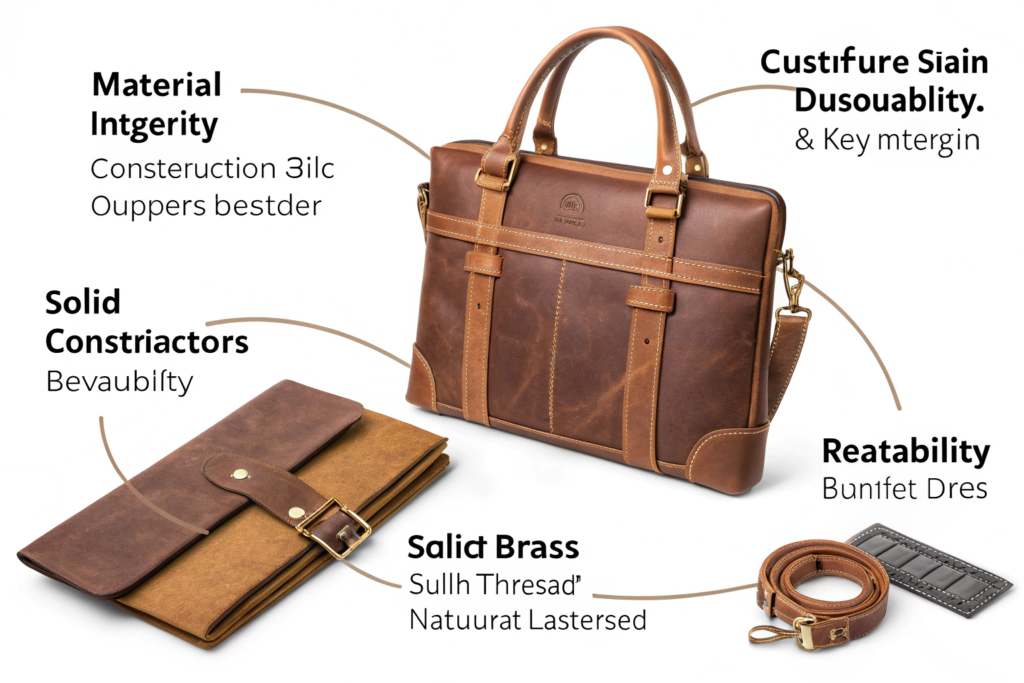
Heirloom quality in accessories is defined by three characteristics: material integrity, construction durability, and repairability. Material integrity means the components are naturally derived and capable of aging gracefully. Full-grain leather develops patina. Solid brass develops character. Natural fibers soften without breaking. Construction durability means the joining methods are stronger than the materials joined. Hand-stitching with waxed linen thread outlasts the leather. Riveted hardware outlasts glued components. Repairability means the product can be restored by a craftsman. A broken buckle can be replaced. A torn seam can be re-stitched. A scratched surface can be polished. These three characteristics together create objects that are not consumed. They are accompanied.
Let me detail each characteristic with specific examples from our production. Material integrity begins with selection. For leather, we use only full-grain hides from Scandinavian tanneries. The animals are pasture-raised. The tanning uses vegetable extracts, not chromium. The hides are graded by hand. We reject any with brands, scars, or stretch marks. For hardware, we use solid brass or stainless steel. No zinc alloy. No plated steel. The brass is allowed to oxidize naturally or is lacquered for clients who prefer a consistent finish. For textiles, we use long-staple cottons, merino wool, and mulberry silk. Short-staple fibers pill and fade. Long-staple fibers develop a soft patina over decades. This is a standard upheld by the Leather Working Group and the Textile Exchange.
Why Is Repairability Essential For Heirloom Quality?
A product that cannot be repaired has a finite lifespan. The first broken component ends its life. A product that can be repaired can last indefinitely. This is the difference between consumption and stewardship. We design for repair. Our belts use Chicago screws, not rivets. The buckle can be removed and replaced. Our bags use reinforced stress points. When a strap breaks, it can be re-stitched without replacing the entire bag. Our scarves are hand-rolled, not machine-overlocked. A hand-rolled edge can be re-stitched. A machine-overlocked edge unravels completely. We provide repair guides with every product. We offer repair services at cost. We want our products to stay in use, not in landfills. This philosophy aligns with the principles of the Ellen MacArthur Foundation on the circular economy.
What Is The Role Of Patina In Heirloom Quality?
Patina is the surface change that occurs as a natural material ages. It is not damage. It is character. Full-grain leather darkens. It develops a warm glow from handling. Solid brass darkens. It develops a rich, mellow tone. Wool softens. It becomes less scratchy. These changes are desirable. They signal that the object is alive. They cannot be faked. Factories that use corrected-grain leather or plated hardware cannot produce patina. The surface wears away, revealing base material. This is not patina. This is failure. We celebrate patina. We encourage customers to let their accessories age naturally. We do not recommend aggressive cleaning. We recommend gentle care. A hundred-year-old belt should look like it has been lived in. This concept is explored in depth by Vogue and other publications on timeless style.
How Do You Identify A Factory With Generational Craft Knowledge?
Ron visited a factory that claimed "100 years of experience." He walked the floor. The workers were young. The machinery was new. There were no old people. He asked the owner, "Where is the 100 years of experience?" The owner pointed to a framed photo on the wall. "My grandfather started this business." Ron said, "But who teaches the workers?" The owner was silent. Ron walked out. He called me. "That factory has history. It does not have knowledge."
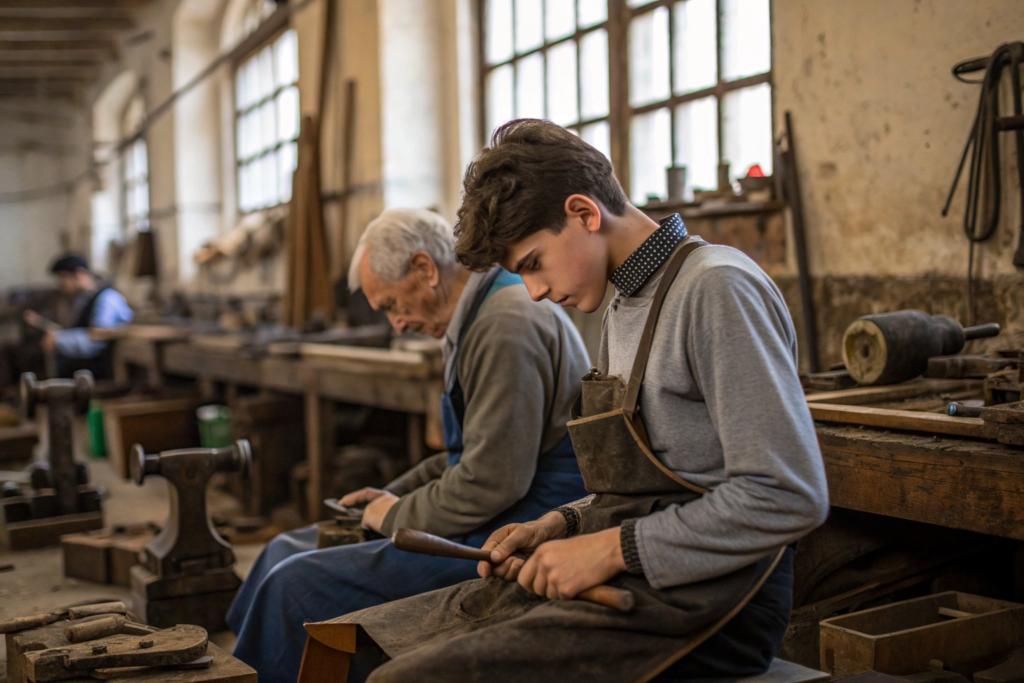
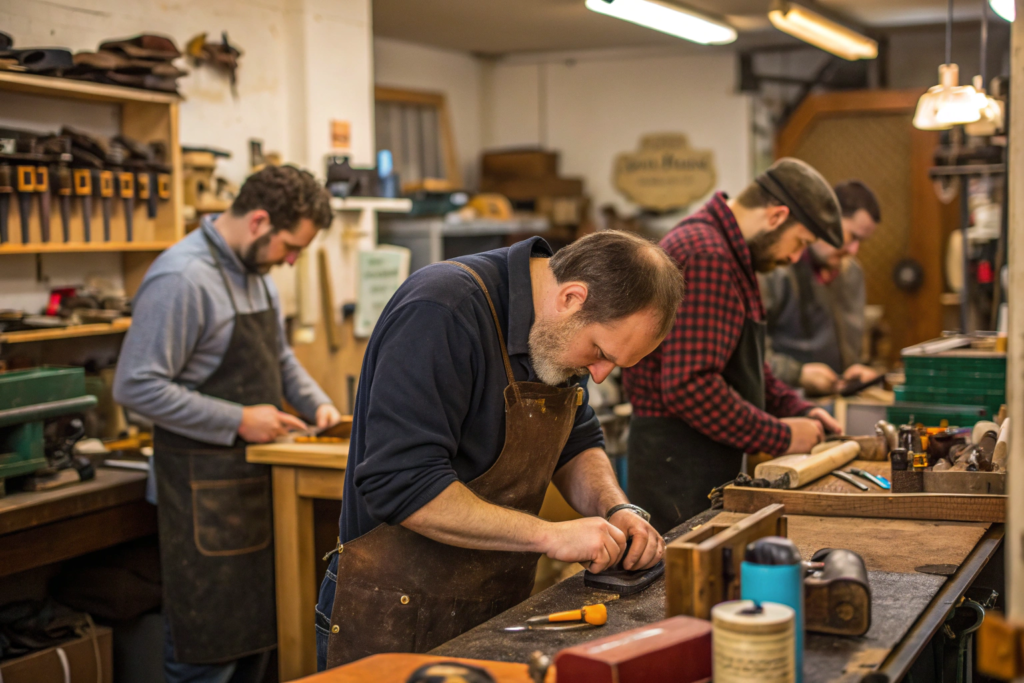
Generational craft knowledge is transmitted through apprenticeship, not documentation. It lives in the hands of senior artisans who have spent decades performing the same operations. They know how leather responds to humidity. They know how thread tension changes with temperature. They know when a stitch is wrong before it is completed. This knowledge cannot be written in a manual. It cannot be programmed into a machine. It must be taught, person to person, over years. A factory with generational knowledge has a visible age diversity. Young workers sit beside old workers. Tools show wear from decades of use. There is no urgency. There is only patience. This is what you look for.
I learned from my father. He learned from his father. That is three generations of direct transmission. I now teach my daughter. She is twenty-eight. She has been working with leather since she was sixteen. She is not yet a master. She will be. In our workshop, the average age is forty-seven. The oldest is eighty-three. The youngest is twenty-two. This is not accidental. We recruit for attitude, not skill. We train for years. A new worker spends six months just observing. Then six months practicing on scraps. Then two years under direct supervision. Only then do they work independently. This is expensive. This is slow. This is also how knowledge is preserved. We have workers who have been with us for over thirty years. They do not want to be managers. They want to make things. They are our greatest asset. This model is discussed in Harvard Business Review as a key to preserving craftsmanship.
What Questions Should You Ask To Assess Craft Knowledge?
Ask to meet the production manager. Ask how long they have been with the company. Ask where they learned their craft. Ask how they train new workers. Ask to see the apprentice area. Ask how many master artisans are still active. Ask what happens when a new material arrives. Do they test it themselves or trust the supplier? Ask about the oldest worker. What do they do? Who is learning from them? The answers reveal the depth of knowledge. A factory that cannot answer these questions specifically is a factory that assembles products. It does not make them. The Smithsonian Institution has documented how such knowledge is vital to cultural and industrial heritage.
Is Technology Compatible With Generational Knowledge?
Yes, when used as a tool, not a replacement. We use CNC cutting for precision. We use laser engraving for customization. We use digital pattern grading for consistency. The knowledge tells us where to cut, what to engrave, how to grade. The machine executes. The artisan directs. This combination produces heirloom quality at commercial scale. A factory that replaces artisans with machines produces consistent mediocrity. A factory that equips artisans with machines produces excellence. Research from McKinsey supports this hybrid model for the future of skilled labor.
What Material Choices Distinguish Heirloom From Disposable?
Ron showed me a "leather" belt from a competitor. It cost $12. It looked beautiful in the photo. In person, it felt like cardboard. I bent it. It cracked. I scratched it. White showed through. I said, "This is not leather. This is leather fiber glued together and coated with polyurethane. It will last six months." Ron said, "My customer does not know that." I said, "She will. When it cracks, she will know. She will not buy from you again."
Heirloom-quality materials are full-grain leather, vegetable-tanned leather, solid brass, stainless steel, precious metals, long-staple natural fibers, and horn or genuine tortoise shell substitutes. Disposable materials are bonded leather, corrected-grain leather, zinc alloy, plated steel, short-staple fibers, and injection-molded plastics. The difference is not visible in a photograph. It is visible in the hand and over time. Heirloom materials feel substantial. They warm to the touch. They develop character. Disposable materials feel cold. They remain unchanged until they fail. Then they fail completely. The material choice determines the product’s relationship with time.
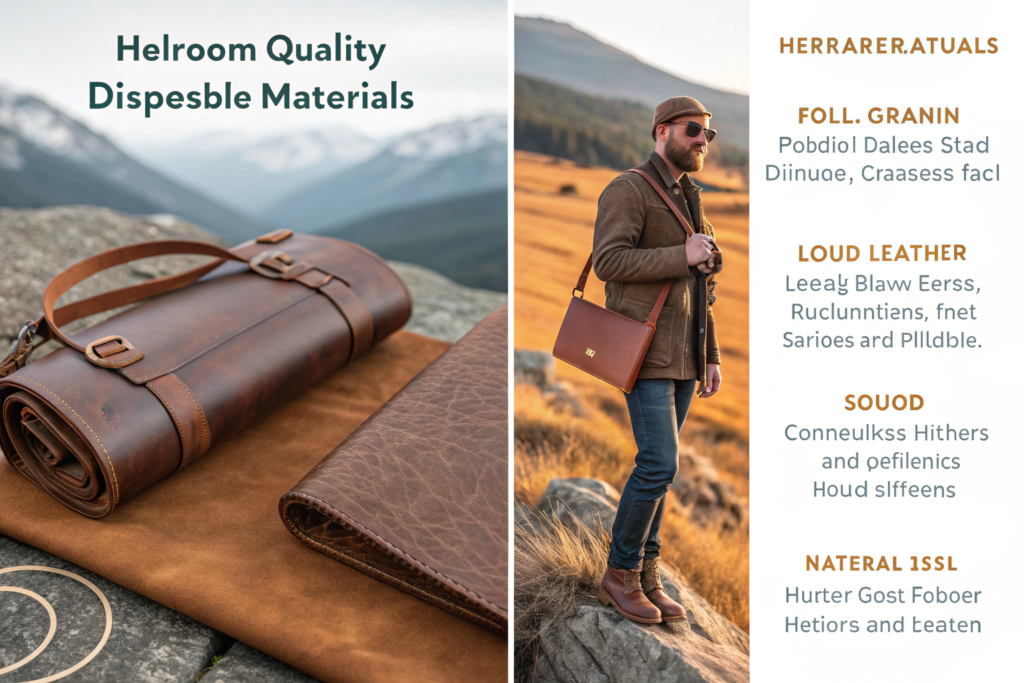
Let me detail specific material specifications. Full-grain leather is the outermost layer of the hide. The grain is intact. The fibers are dense and strong. It breathes. It absorbs oils. It develops patina. Vegetable-tanned leather uses tree bark extracts instead of chromium. It is firmer. It develops a richer patina. It is also more expensive and requires more skill to work. Bonded leather is leather scraps ground up and mixed with latex. It is then embossed with a grain pattern. It has no fiber strength. It delaminates. It cracks. Solid brass is an alloy of copper and zinc. It is corrosion-resistant. It develops a natural patina. Zinc alloy is cheap. It is cast, not machined. It breaks. It corrodes. It is often plated to look like brass. The plating wears. The truth emerges. Organizations like the Leather Working Group provide certifications for responsible leather production.
Why Is Vegetable-Tanning Preferred For Heirloom Quality?
Vegetable tanning uses natural tannins from tree bark, leaves, and fruits. The process takes weeks or months. The leather becomes firm, dense, and stable. It develops a rich, warm color over time. It can be carved, stamped, and molded. It accepts dyes and finishes deeply. Chrome tanning uses chromium salts. The process takes hours. The leather is soft and uniform. It does not develop patina. It does not mold well. It is prone to splitting. Vegetable-tanned leather is the choice of saddle makers, bookbinders, and luxury goods artisans. Chrome-tanned leather is the choice of fast fashion. We use exclusively vegetable-tanned leathers from Italian and German tanneries, many of which are members of the International Council of Tanners.
What About Sustainable Alternatives Like Piñatex Or Apple Leather?
Plant-based leather alternatives are improving rapidly. Piñatex is made from pineapple leaf fiber. Apple leather is made from apple pomace. These materials are innovative. They are not yet heirloom quality. They lack the fiber strength and durability of animal leather. They are typically backed with cotton or polyester for strength. They do not develop patina. They wear and fade. They are appropriate for brands prioritizing vegan ethics over generational longevity. We offer them. We are honest about their limitations. For true heirloom quality, we still recommend animal leather. This view is shared by many in the luxury sector, as reported by Vogue Business.
What Construction Techniques Ensure Decades Of Use?
I once repaired a belt my father made in 1987. The leather was worn smooth. The buckle was tarnished. The stitching was intact. Thirty-five years of daily use. The owner wanted a new hole added. He had gained weight. I added the hole. The belt was good for another thirty-five years. That is construction durability. The stitching outlasted the wearer’s waistline.
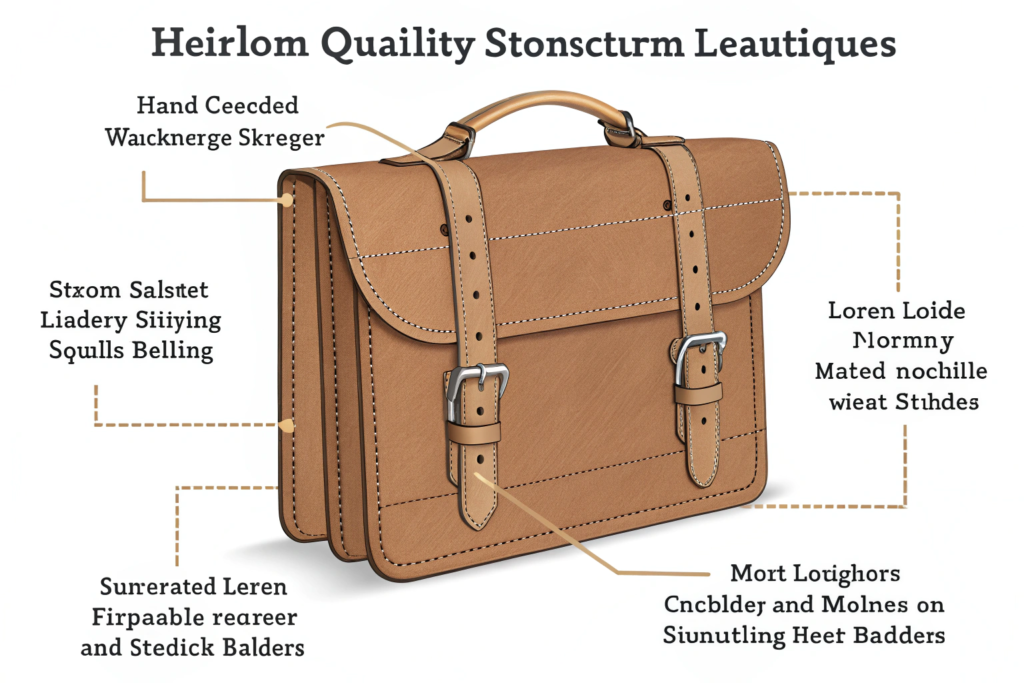
Heirloom-quality construction uses techniques that are stronger than the materials they join. Hand-stitching with waxed linen thread is stronger than machine-stitching because the thread is thicker and the tension is more consistent. Saddle stitching uses two needles and one thread. If one stitch breaks, the rest remain. Riveted construction distributes stress across a wider area than glued construction. A riveted buckle attachment will outlast the leather. A glued attachment will fail when the glue dries. Skived edges reduce bulk without reducing strength. Burnished edges seal the leather fibers, preventing moisture intrusion. These techniques require skill. They also produce objects that do not fail.
Let me explain saddle stitching. Two needles, one thread. The thread passes through each hole twice, from opposite directions. If one strand breaks, the other holds. The thread locks within the hole, not on the surface. This prevents unraveling. Machine stitching uses two threads, one on top and one on bottom. They lock in the middle. If the thread breaks, the entire seam unravels. Saddle stitching takes ten times longer. It also lasts ten times longer. We use it for all stress-bearing seams. We use machine stitching only for decorative elements. Skiving is thinning the leather at fold points. A belt that folds over a buckle without skiving will develop a permanent crease. The fibers weaken. The belt cracks. Skiving distributes the stress. The belt flexes thousands of times without damage. These are invisible details. They are also essential details. The craft is well-documented by resources like Fine Leatherworking.
Why Are Solid Rivets Better Than Screw Posts?
Screw posts are convenient. They allow the user to change buckles. They also loosen over time. The user must tighten them periodically. If they do not, the screw backs out. The buckle falls off. Solid rivets are permanent. They are set with a hammer and anvil. The metal deforms and locks. They will never loosen. They will never fall out. The trade-off is repairability. A riveted buckle cannot be changed. A screw-post buckle can. For true heirloom quality, we recommend rivets for permanent assembly and Chicago screws for replaceable components. We use both appropriately. The customer does not see the difference. She feels the security. This is a fundamental principle in metalsmithing.
What Is The Role Of Edge Finishing In Longevity?
Raw leather edges absorb moisture. They swell. They crack. They fray. Finished edges are sealed. Burnishing compresses the fibers and applies a wax or resin. The edge becomes smooth and hard. It resists moisture. It does not fray. It does not crack. Painted edges add a layer of flexible color. They protect the edge and add aesthetic detail. We offer both. Burnished edges for natural aesthetics. Painted edges for color-matched refinement. Both extend the life of the product. An unfinished edge will fail within months. The Leatherworker Network provides extensive tutorials on these finishing techniques.
How Do You Evaluate A Manufacturer’s Commitment To Longevity?
Ron asked me, "How do I know if a factory is truly committed to longevity or just talking about it?" I said, "You ask to see their repair department. Every factory that makes heirloom-quality products has a repair department. It may be small. It may be busy. It exists. Factories that make disposable products have no repair department. They have a returns department. They process refunds, not repairs."
A manufacturer’s commitment to longevity is visible in their repair infrastructure. Do they accept repair work from old customers? Do they stock spare parts for products made five years ago? Do they employ artisans who specialize in restoration, not just production? Do they provide repair instructions with new products? Do they offer repair services at reasonable rates? These are not profit centers. They are service centers. They exist because the manufacturer believes the product deserves to be repaired. A factory without a repair department is a factory that expects its products to be replaced. They are not your partner for heirloom quality.
Our repair department has four full-time artisans. They do not make new products. They restore old ones. They replace broken buckles. They re-stitch torn seams. They condition dried leather. They polish tarnished hardware. They have a backlog of six weeks. This is not efficient. It is also not profitable. We lose money on repairs. We do it because it is right. A customer who bought a belt from us in 1995 should be able to wear it in 2025. If it needs repair, we repair it. We charge for materials and minimal labor. We do not profit. This department is our proof. It shows that we mean what we say. We invite potential clients to visit this department. If they are impressed, they understand. If they are confused, they are not our client. This approach to product longevity is a growing trend, as highlighted by Forbes.
What Is The Difference Between Warranty And Guarantee?
Warranty is a promise to replace defective products within a specific time. Guarantee is a promise to stand behind the product indefinitely. Most factories offer warranties. Few offer guarantees. We offer a guarantee. If our product fails due to materials or workmanship at any time, we repair or replace it. This is not conditional on a time limit. This is conditional on our failure. If we made it wrong, we fix it. This guarantee forces us to make it right the first time. It aligns our incentives with our clients’ interests. A factory that offers a lifetime guarantee is a factory that believes in its work. The U.S. Federal Trade Commission provides guidelines on how to properly communicate such guarantees.
How Do You Verify A Manufacturer’s Claims About Longevity?
Ask for references from clients who have been ordering for ten years or more. Contact those clients. Ask about product performance. Ask about repair requests. Ask about return rates. A factory with genuine longevity will have clients who have ordered for decades. The products from the first orders should still be in use. The factory should be able to connect you with those clients. We have clients who have ordered from us since 1998. They are happy to speak with prospective clients. They are our best references. The power of such references is well-documented in Harvard Business Review.
Conclusion
My father still comes to work every day. He is eighty-three. He sits at his bench. He stitches. He does not need the money. He needs the purpose. He needs to feel the leather in his hands. He needs to see the thread pass through the holes. He needs to know that something he made will outlast him. This is not rational. This is human. I have tried to build a company that honors this impulse. We do not make the most products. We do not make the cheapest products. We make products that our father would be proud to stitch. Products that will be worn by people we will never meet. Products that will be passed to children and grandchildren. Products that carry a small piece of our care into the future.
This is not efficient. This is not scalable. This is also not replaceable. The world has plenty of factories that can make cheap accessories quickly. It has very few that can make heirloom accessories at all. We are one of the few. If you believe that quality matters more than speed, that longevity matters more than trend, that the person who buys your product deserves your best work, then you are our kind of client. We would be honored to work with you. This is the invitation Shanghai Fumao Clothing extends. We are not for everyone. We are for those who understand that a belt is not just a belt. It is a companion. It is a memory. It is a legacy.
If you are ready to create accessories that matter, contact Elaine. She will connect you with our Legacy Collection team. She will explain our material sourcing, our artisan training, and our repair services. She will send you samples. Hold them. Feel them. Imagine them in twenty years. If you can, we are your partner. Email Elaine directly at: elaine@fumaoclothing.com.