Three years ago, a buyer from a London-based modest fashion platform called me. She said, "I have been searching for a supplier who understands my customer for six months. Everyone sends me the same products. Black abayas. Brown hijabs. Boring. My customer wants to be fashionable, not invisible." I listened. I realized she was describing a market I had completely ignored. I asked her to send me photos of what her customers actually buy. She sent me images of silk layering tubes, oversized cashmere scarves, and embellished headwraps. I said, "We can make these." That conversation changed our business.
Yes, you can successfully source accessories for the modest fashion market. This is not a niche. It is a global opportunity worth USD 360 billion. The top selling accessory categories are layering tubes and modesty shawls, oversized luxury scarves, embellished headwraps, long cardigan belts, and anti-slip undercaps. The key requirements are high quality natural fibers, full opacity, generous dimensions, and elegant minimalism. At Shanghai Fumao Clothing, we have developed a dedicated modest fashion collection. Our buyers include major retailers from Dubai, Jakarta, London, and New York.
You might think modest fashion is only about covering. That is wrong. Modest fashion is about choice. It is about women who want to participate in fashion on their own terms. They want color. They want texture. They want drape. They want the same seasonal trends as the mainstream market, but interpreted for their lifestyle. If you offer them beige sacks, they will not buy from you. If you offer them cashmere blends in burgundy with subtle metallic threads, they will buy everything you make. I have learned this directly from our buyers. Let me share what actually sells.
What Are The Core Accessory Categories In Modest Fashion?
A buyer from a Kuwait-based concept store once told me, "Western buyers think modest fashion starts and ends with the hijab. They do not understand layering. They do not understand that a woman might wear three pieces just to create the right neckline." She taught me that modest fashion is architecture. You build the silhouette piece by piece. Each accessory has a specific job.
The five core accessory categories in modest fashion are layering tubes, oversized scarves, embellished headwraps, long cardigan belts, and anti-slip undercaps. Layering tubes create high necklines under scoop neck or V-neck garments. Oversized scarves provide both coverage and style statement. Embellished headwraps are evening wear. Long cardigan belts define the waist on maxi cardigans. Anti-slip undercaps keep main hijabs securely in place. At Shanghai Fumao Clothing, we stock specialty fabrics for each category: silk charmeuse for tubes, cashmere blends for scarves, bamboo viscose for undercaps.

What Is The Difference Between A Layering Tube And A Regular Neck Gaiter?
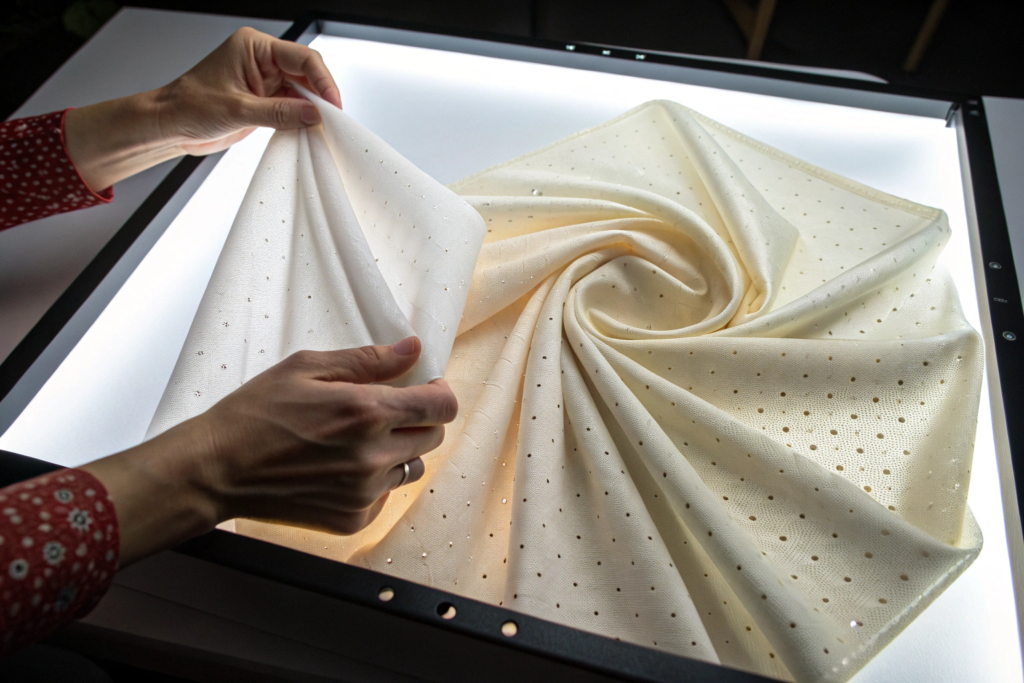
Dimension and opacity. A regular neck gaiter is 25cm long. It is meant to cover the neck, not the chest. A layering tube is 45cm to 55cm long. It extends from the collarbone down to the sternum. It creates a full coverage base layer under a sheer or low-cut top. Also, opacity is non-negotiable. If light passes through, the customer cannot wear it. We test every layering tube fabric on a light box. Zero transmission. Read this modest layering guide. Also check this fabric opacity standard.
Why Are Undercaps Essential, Not Optional?
A hijab is smooth fabric on smooth hair. It slides. A woman adjusts her hijab 20 to 30 times per day. An undercap creates friction. It grips both the hair and the scarf. It stays in place. The best material is bamboo viscose blended with spandex. Bamboo is anti-bacterial, moisture-wicking, and soft. It does not itch. It does not leave marks on the forehead. One of our Dubai buyers orders 50,000 undercaps per year. She says it is her highest repeat purchase item. Read this undercap material comparison.
What Fabric Qualities Do Modest Fashion Customers Prioritize?
A buyer from a Malaysian modest fashion brand rejected a beautiful silk scarf sample. I was confused. The quality was excellent. The price was competitive. The color was perfect. She said, "It is too sheer. My customer cannot wear this without a second layer underneath. She wants one-and-done." I learned the most important rule of modest fashion fabric: Opacity is not negotiable.
Modest fashion customers prioritize three fabric qualities above all else: Full opacity, breathable natural fibers, and generous weight. Opacity means zero light transmission, even in white and pastel colors. Breathable natural fibers mean cotton, modal, bamboo, silk, and cashmere. Polyester traps odor and heat. Generous weight means the fabric drapes properly and does not blow open in wind. At Shanghai Fumao Clothing, we source compact-spun cotton jersey with 220gsm minimum weight. Standard jersey is 160gsm and fails the opacity test.
How Do You Test Fabric Opacity Reliably?
Use a calibrated light box. ASTM D523 standardized illumination. Place the fabric over the light source. Measure the lux reading on the opposite side. Then calculate the transmission percentage. Anything above 3 percent transmission fails for modest fashion. We test every production batch. We reject any fabric that exceeds the limit. One buyer rejected a batch at 3.2 percent. She was right. We re-cut with heavier fabric. Read this ASTM fabric opacity standard. Also check this light transmission testing guide.
Are Performance Fabrics Acceptable For Modest Fashion?
Yes, if they meet the opacity and breathability requirements. Many modest fashion customers are active. They exercise. They commute. They want moisture-wicking and anti-odor properties. But they do not want shiny polyester. The solution is Tencel or modal blended with a small percentage of spandex. These are plant-based, breathable, and have a matte finish. We developed a Tencel layering tube for a UK activewear brand. It sells out every season. Read this Tencel modest fashion case study.
How Do You Design For Modest Fashion Without Cultural Appropriation?
I was nervous the first time we developed a modest fashion collection. I am not a Muslim woman. I do not wear hijab. I was afraid of making mistakes. I was afraid of offending the very customers I wanted to serve. A buyer from a Saudi Arabian luxury retailer gave me the best advice. She said, "Do not design for us. Design with us. Include us in the process. Ask us what we want."
You design for modest fashion respectfully by hiring modest fashion consultants, testing samples with real customers, and avoiding religious iconography. You do not need to be Muslim to make hijabs. You need to listen. We employ two modest fashion stylists on our design team. One is based in Dubai. One is based in London. They review every sample before we present it to buyers. They catch mistakes we would never see. At Shanghai Fumao Clothing, we also maintain a modest fashion fit panel of local Chinese Muslim women who test our products.

Should You Use Religious Terms In Product Names?
Be careful. "Hijab" is appropriate for a head covering. "Prayer scarf" is appropriate for a garment specifically designed for salah. But do not invent religious associations. Do not call a regular scarf a "blessed wrap." Do not claim cultural authenticity you do not possess. Use descriptive, functional names. "Silk Layering Tube." "Oversized Cashmere Wrap." "Anti-Slip Undercap." These are accurate and respectful. Read this modest fashion marketing guide. Also check this cultural sensitivity checklist.
How Do You Find Credible Modest Fashion Consultants?
Do not hire influencers with 10,000 followers. Hire industry professionals. Look for former buyers from modest fashion retailers. Look for stylists who work with hijabi celebrities. Look for graduates of fashion programs with thesis work in modest wear. We found our London consultant through LinkedIn. She was a senior buyer at a major UK modest fashion etailer. She understands costing, sourcing, and customer psychology. She is worth her weight in cashmere. Read this hiring guide for cultural consultants.
What Sizes And Dimensions Does The Modest Customer Actually Need?
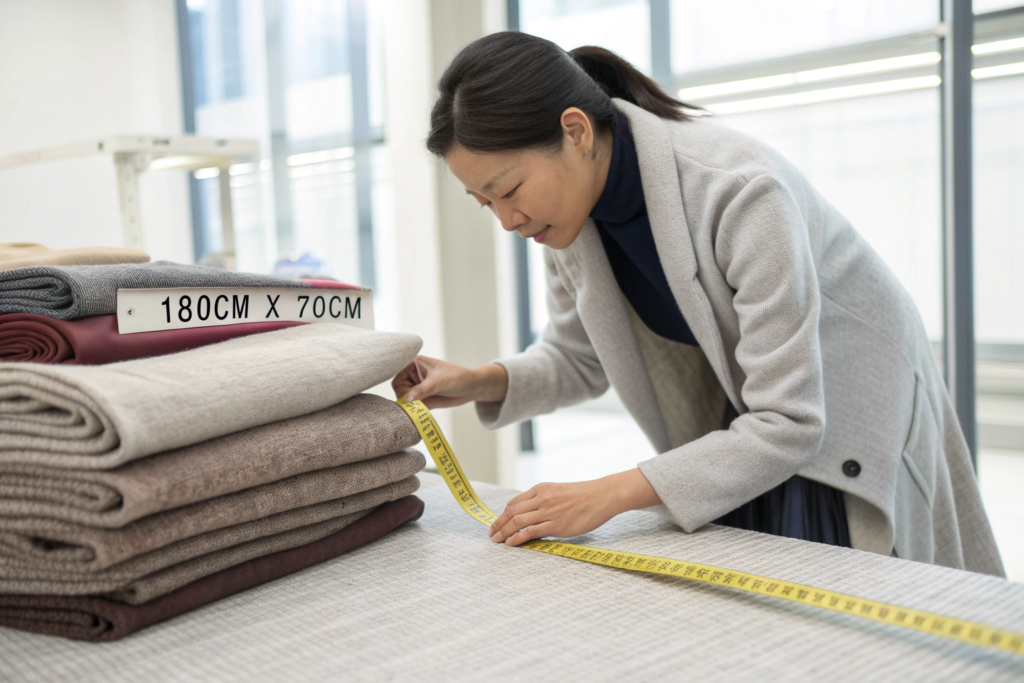
A buyer once ordered our "oversized" scarf. We sent her our standard oversized. 100cm by 100cm. She called me. She said, "This is a neck scarf. My customer needs to cover her head and shoulders. She needs 180cm by 70cm minimum." I looked at our product spec. I realized we had been defining "oversized" for the Western market, not the modest market. The dimensions were completely wrong.
Modest fashion scarves require generous dimensions: Minimum 180cm length by 70cm width for head and shoulder coverage. Square scarves should be 120cm x 120cm minimum. Layering tubes require 50cm to 60cm length, not 25cm. Cardigans and open abayas need belts at least 120cm long to wrap fully. At Shanghai Fumao Clothing, we maintain separate spec sheets for modest fashion versus mainstream fashion. The cutting markers are completely different.
Why Do Modest Customers Need Multiple Scarf Sizes?
Different occasions require different dimensions. Daily wear: 180cm x 70cm. Easy to style, secure, professional. Evening wear: 200cm x 90cm. More fabric for dramatic draping, photos, special events. Travel: Compact 150cm x 65cm in lightweight viscose. Packs small, still provides coverage. You are not offering one product. You are offering a wardrobe system. Read this scarf size guide for hijabis.
How Do You Fit Undercaps For Different Head Sizes?
One size does not fit all. Standard undercaps are too tight for women with thick hair and too loose for women with fine hair. We offer undercaps in S, M, L, XL. The difference is the elastic tension and the panel width. An XL undercap has 4cm more circumference and softer elastic. Customer reviews improved from 3.8 stars to 4.7 stars after we introduced sizing. Read this head measurement guide adapted for undercap fitting.
Conclusion
The modest fashion market is not a niche. It is not a trend. It is a permanent, growing, global segment of the fashion industry. It includes Muslim women, but also Orthodox Jewish women, conservative Christian women, and simply women who prefer elegant coverage. They are not oppressed. They are not invisible. They are confident consumers with significant purchasing power and strong brand loyalty.
I have learned that modest fashion customers are the most discerning customers we serve. They inspect fabric opacity with light boxes. They measure scarf dimensions with tape measures. They read fiber content labels. They know when a product is made for them and when it is an afterthought. They reward brands that respect them with repeat purchases, five-star reviews, and word-of-mouth referrals.
At Shanghai Fumao Clothing, we do not treat modest fashion as a secondary line. We have dedicated production capacity for longer scarves, higher opacity standards, and specialized fabrics like compact cotton jersey and bamboo viscose. Our design consultants in Dubai and London review every modest collection before sampling. Our fit panel tests every undercap and layering tube on multiple head sizes and body types. We are not perfect. But we are committed to learning and improving.
If you are tired of suppliers who send you sheer fabrics and undersized dimensions, or if you want to enter the modest fashion market with authentic, quality products, please contact us. Talk to our Business Director, Elaine. She will introduce you to our modest fashion specialist team. We will send you our opacity test kit. We will develop samples that meet the real standards of this market. We will treat your customer with the respect they deserve.