You’re Ron, a buyer for a men’s fashion brand, and you’re looking at your accessory collection. Belts should be a core, profitable category, but you’re struggling. Your formal belts feel generic, and your casual belts look cheap and fall apart after a season. Customers are either uninspired by the selection or are returning products due to poor quality—buckles that tarnish, "leather" that cracks and peels. You’re caught between the high cost of luxury brands and the poor quality of fast-fashion suppliers, and you need to find a reliable way to source high-quality, stylish belts that your customers will trust.
Sourcing high-quality men’s belts requires a strategic focus on three distinct categories—Dress, Casual, and Fashion—and a deep understanding of the specific materials, construction, and hardware appropriate for each. The key is to partner with a manufacturer who can deliver consistent quality across these categories, from the grade of the leather to the finish of the buckle. It’s about building a tiered collection that meets every one of your customer’s needs.
As a manufacturer who has been crafting belts for top international brands for over two decades, I’ve guided countless buyers like you through this exact process. At Shanghai Fumao Clothing, we know that a belt isn’t just something to hold up trousers; it’s a crucial finishing touch that signals a man’s attention to detail. Getting it right is a science. Let’s break down the strategy for building a successful men’s belt program.
How to Source the Perfect Men’s Dress Belt?
The dress belt is the workhorse of a man’s professional wardrobe. It has to be flawless. A customer buying a dress belt expects it to look perfect with a suit, to be durable enough for daily wear, and to have a classic, understated elegance. Sourcing a belt that looks good from a distance is easy; sourcing one that holds up to close scrutiny and daily use is the real challenge.
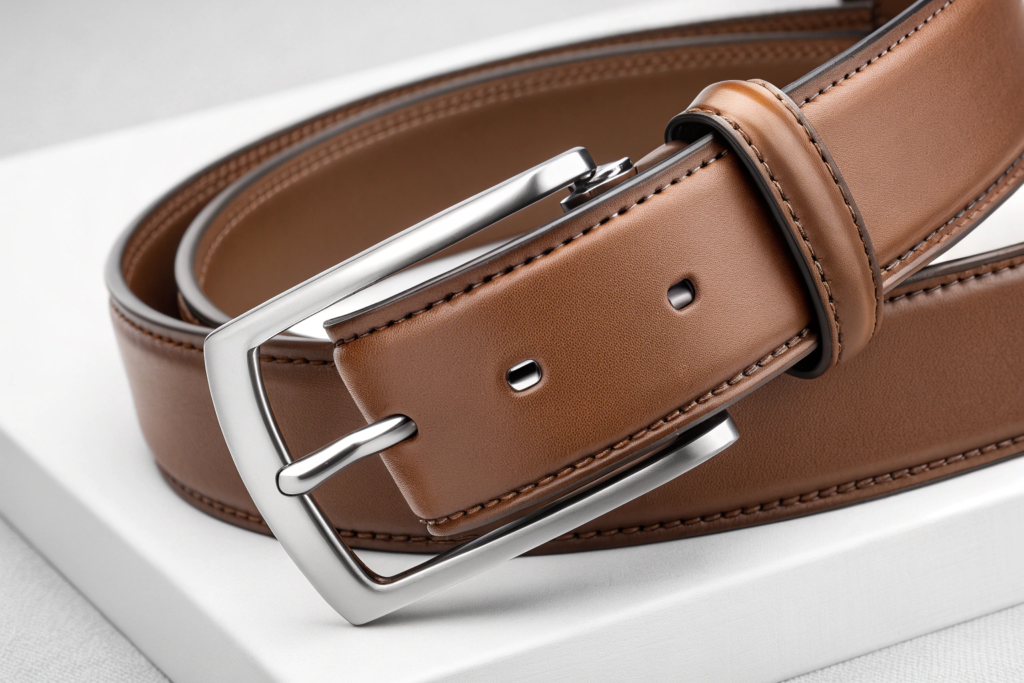
The perfect dress belt is defined by its subtlety and quality. It should be crafted from a single strap of high-quality full-grain leather, feature a slim profile (typically 1.25 inches), and be finished with a simple, polished frame-style buckle in silver or brass tones. The focus must be on flawless finishing, from the burnished edges to the clean stitching.
This is where material and craftsmanship are non-negotiable. When a client asks us for a dress belt, the first thing we specify is full-grain leather. Anything less, like "genuine leather" (which is often bonded scraps), will not stand up to the daily flexing and will quickly show wear. The buckle should be solid brass or stainless steel to prevent tarnishing. We pay meticulous attention to the edges, which must be sanded, beveled, and polished to a smooth, durable finish. These are the details that separate a $20 belt from a $100 belt.
What are the Key Specifications for a Dress Belt?
- Material: Full-grain leather (calfskin is a premium choice).
- Width: 1.25 inches (30-35mm) is the classic standard.
- Buckle: Simple, polished frame-style buckle. Silver-tone is the most versatile.
- Construction: Single-strap construction with minimal, clean stitching.
- Colors: Your core collection must include black and a rich dark brown.
What is the Difference Between Full-Grain and Genuine Leather?
This is the most important distinction in sourcing leather belts. Full-grain leather is the top layer of the hide and is the highest quality grade. It’s strong, durable, and develops a beautiful patina over time. "Genuine leather," despite its misleading name, is often a lower-quality grade made from the bottom layers of the hide or even from bonded leather scraps. It’s less durable and prone to cracking. For a dress belt that needs to last, always insist on full-grain.
What Defines a High-Quality Casual Belt?
While a dress belt whispers, a casual belt can speak a little louder. It’s worn with jeans, chinos, and shorts. It needs to be more rugged, more substantial, and have more character than its formal counterpart. The pain point for many brands is that their casual belts either look like slightly wider dress belts (boring) or they are so poorly made that they feel like a cheap accessory, not a durable good.
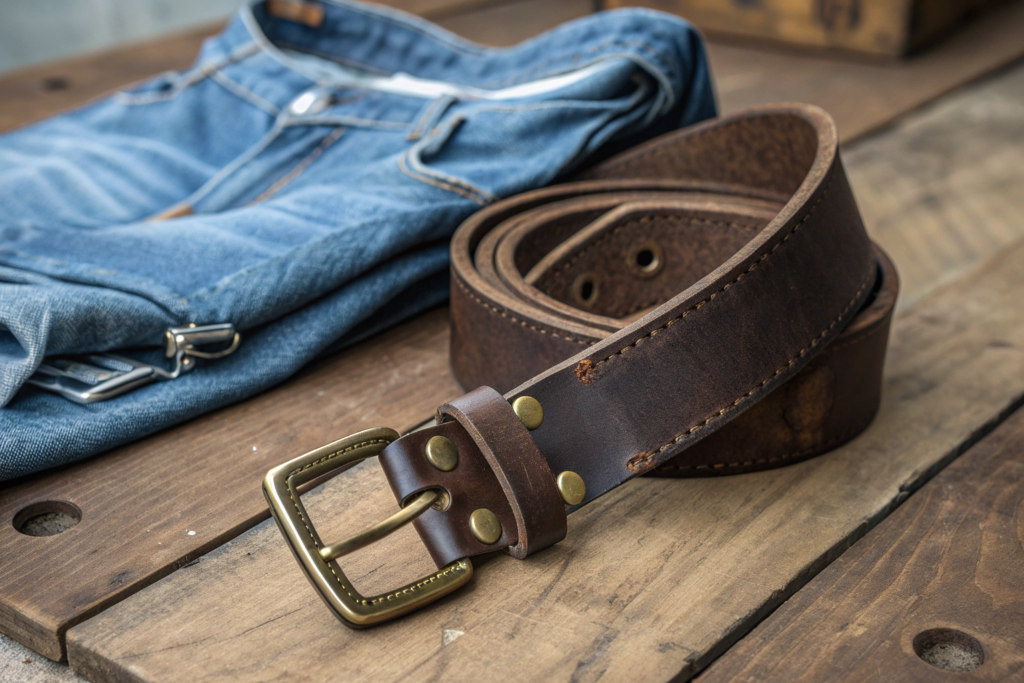
A high-quality casual belt is defined by its robust materials and substantial hardware. It typically features a wider strap (1.5 inches), is made from thicker, more rugged leathers like pull-up or oiled leather, and is paired with a more substantial buckle, such as a roller or garrison style, often in an antique or brushed finish.
For casual belts, we get to play with more expressive materials. We might use a "pull-up" leather that lightens in color when bent, giving it a cool, distressed look over time. The hardware can be more industrial. A solid brass roller buckle not only looks great but also makes it easier to fasten a thick leather strap. The key is authenticity. A casual belt should feel like it was built to last, like a good pair of work boots. This is a different kind of quality than the polished perfection of a dress belt, but it’s just as important.
What are the Best Materials and Styles for Casual Belts?
- Leather Types: Full-grain is still best, but look for more rugged finishes like oiled leather, pull-up leather, or nubuck.
- Width: 1.5 inches (38-40mm) is the standard for wearing with jeans.
- Buckle Styles: Roller buckles, center-bar buckles, and double-prong garrison buckles are all excellent choices. Antique brass, brushed nickel, and matte black are popular finishes.
- Construction: Often features more prominent stitching, which can be a contrasting color to add a design element.
What is a Roller Buckle?
A roller buckle incorporates a small rotating cylinder on the frame. This "roller" allows a thick, heavy leather strap to glide through the buckle with less friction, which prevents wear and tear on the belt and makes it easier to cinch tightly. It’s a highly functional feature that is perfect for rugged, casual belts.
How to Tap Into "Fashion" and Non-Leather Belt Trends?
Your collection has the essential dress and casual leather belts covered. But today’s man is more fashion-conscious than ever. He’s looking for options beyond leather. He wants a pop of color for his summer shorts, a technical belt for his travel pants, or a unique texture to complete a specific look. If your collection is only leather, you’re missing out on a huge segment of the market.
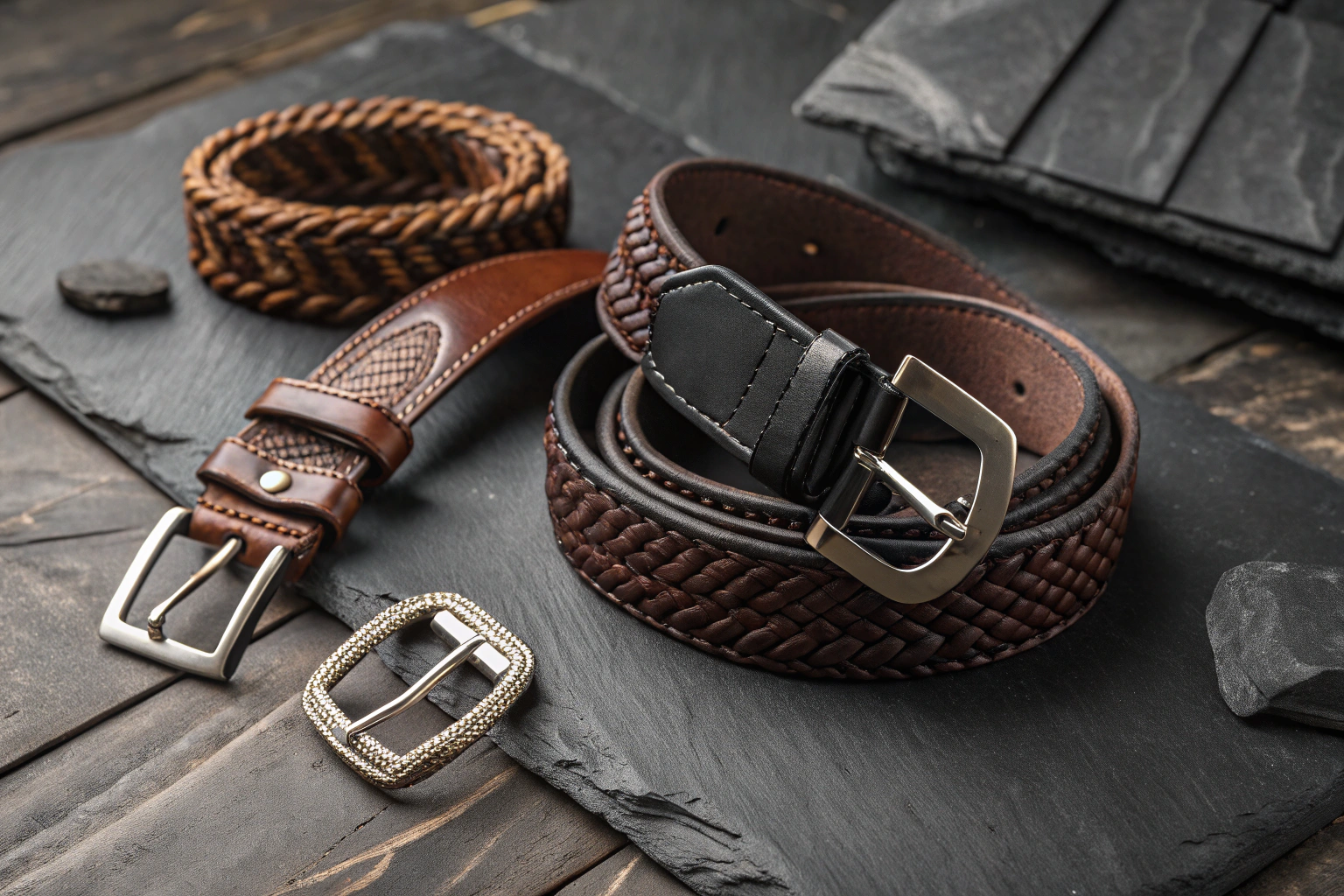
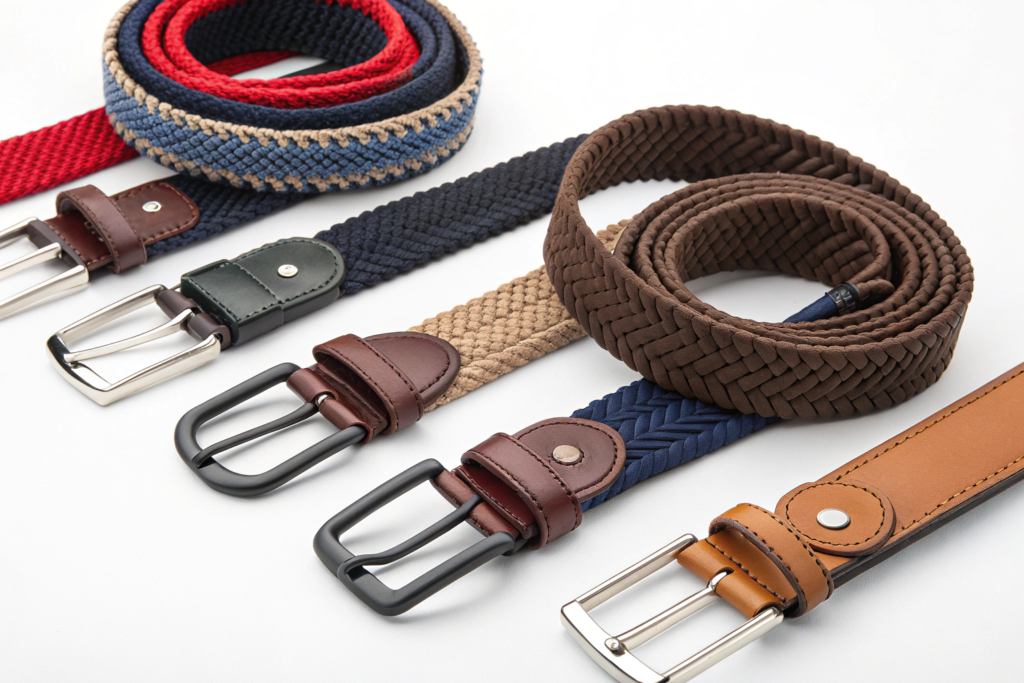
To tap into fashion trends, you must look beyond traditional leather and explore alternative materials like woven elastic, technical webbing, and braided textiles. These belts offer opportunities for color, texture, and innovative hardware, appealing to a customer looking for versatility and modern style.
This is where brands can really express their unique identity. We work with clients to develop custom woven patterns for elastic belts, source high-tech magnetic buckles for webbing belts, and create intricate braided designs. These non-leather options are not "cheaper" alternatives; they are distinct product categories with their own set of quality standards. For example, a good woven belt needs high-quality elastic that won’t stretch out, and the leather or vegan leather tabs at the end must be securely stitched. These fashion-forward styles are often great for seasonal collections and can be a gateway for customers to discover your core leather offerings.
What are the Key Non-Leather Categories?
- Woven/Braided Belts: These can be made from elasticated cord, waxed cotton, or braided leather. They offer a comfortable fit (as the prong can pass through anywhere in the weave) and are perfect for casual summer looks.
- Webbing/Canvas Belts: A staple of preppy and outdoor style. Look for high-density cotton canvas or nylon webbing. Buckle options range from a classic D-ring to modern, quick-release magnetic or "cobra" buckles.
- Suede Belts: While still leather, a suede belt offers a soft, textural alternative to smooth leather and is perfect for "smart casual" looks with chinos and loafers.
Can participating in trade fairs help discover suppliers with advantages in fashionable non-leather belts?
Absolutely. Trade fairs dedicated to fashion accessories, textiles, or sustainable materials serve as vibrant marketplaces where the air hums with the energy of innovation and commerce. Here, you’ll find rows upon rows of booths, each a showcase of unique non-leather belt offerings—think sleek vegan leather crafted from pineapple leaves, supple cork belts with intricate embossed patterns, and stylish recycled polyester options that mimic the texture of traditional leather but with a modern, eco-conscious twist. The atmosphere is electric: vendors greet visitors with warm smiles, eager to demonstrate the durability and aesthetic appeal of their products.
How to Ensure Quality and Consistency from a Supplier?
You’ve found a supplier who sent you beautiful samples. You place a bulk order for 5,000 belts. When the shipment arrives, it’s a disaster. The leather quality is inconsistent, the buckle plating is already flaking on some units, and the stitching is sloppy. You’re now facing a massive inventory problem and a complete loss of trust in your supplier.
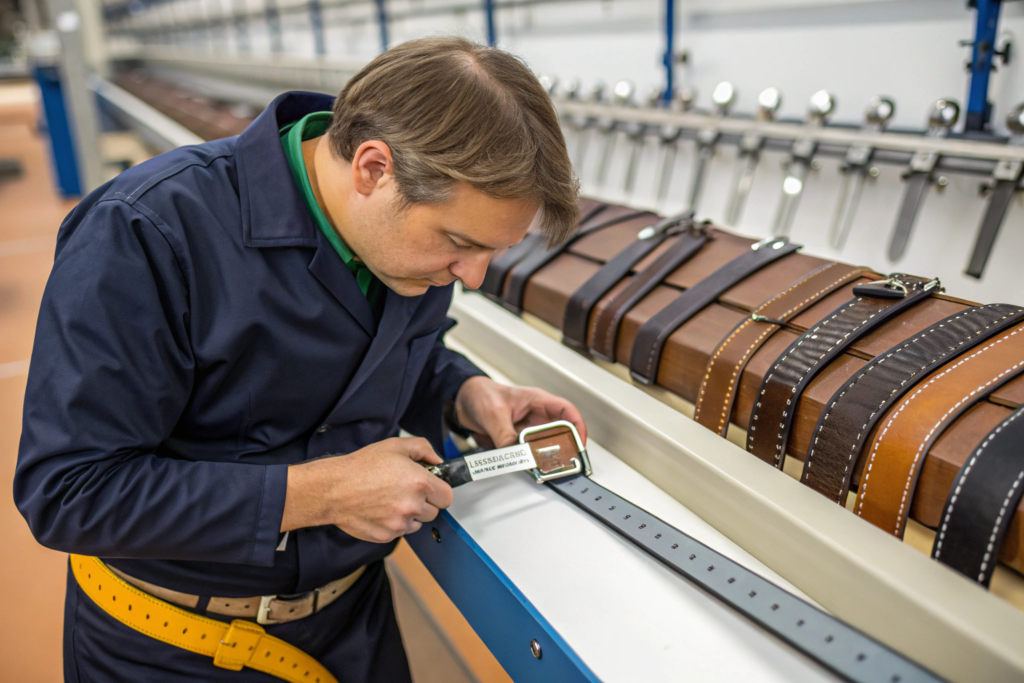
Ensuring quality requires a partnership with a transparent and experienced manufacturer, not just a transactional order-taker. You must provide a detailed technical specification (tech pack) for each belt, insist on pre-production samples for approval, and work with a supplier who has a robust, multi-stage quality control process.
This is the most important part of my job as a factory owner. My clients’ reputations depend on my factory’s consistency. We prevent problems by establishing crystal-clear specifications before production starts. Our tech packs detail everything: the exact grade and thickness of the leather, the Pantone color, the material and finish of the buckle, the thread type, and the stitches per inch. We then produce a final pre-production sample. Once the client approves this sample, it becomes our "gold standard," and our QC team checks the bulk production against it at multiple stages. This rigorous process is the only way to guarantee that the 5,000th belt is as good as the first.
What Should Be in a Belt Tech Pack?
- Detailed Drawing: A technical sketch with all dimensions (width, length, hole spacing).
- Material Specifications: e.g., "Full-grain cowhide, 3.5mm thickness, Black."
- Hardware Specifications: e.g., "Solid brass roller buckle, antique brass finish."
- Construction Details: e.g., "Edge burnished and painted, 10 stitches per inch."
- Branding Details: Location and method for any logo application (e.g., embossed on the tip).
Which channels are reliable for identifying potential suppliers of high-quality men’s fashion belts?
When seeking trustworthy sources to uncover suppliers of premium men’s fashion belts, several avenues stand out, each offering unique advantages in terms of quality assurance, industry expertise, and connection depth. Trade shows dedicated to fashion accessories, such as the International Fashion Accessories Show or the Paris Accessories Week, serve as vibrant hubs where manufacturers and designers showcase their latest collections. Here, the air hums with the clink of metal buckles and the soft rustle of leather, as vendors display belts in rich mahogany, supple crocodile-embossed leather, and sleek matte finishes.
Engaging directly with these suppliers allows for tactile inspections—running a finger over the smooth grain of full-grain leather, testing the weight of a well-crafted buckle, and discussing customization options like embossed logos or hand-stitched detailing. Online B2B platforms like Alibaba.
Conclusion
Sourcing men’s belts is a game of details. By building a well-rounded collection that addresses the distinct needs of the Dress, Casual, and Fashion categories, you can create a powerful and profitable program. The key to success lies in a relentless focus on quality—from the grade of the leather to the feel of the buckle—and in finding a manufacturing partner who shares that commitment. A great belt is an investment piece, and when you provide your customers with a product that looks great and is built to last, you earn their loyalty for years to come.
At Shanghai Fumao Clothing, we are passionate about the craft of belt-making. We combine decades of experience with a modern understanding of fashion to help brands like yours build exceptional accessory collections.
If you’re ready to elevate your men’s belt program and source products with confidence, let’s talk. Contact our Business Director, Elaine, at elaine@fumaoclothing.com to start the conversation.