As a buyer, you know that scarves are a perennial best-seller. But you also know that the market is saturated. A customer like Ron isn’t just looking for a piece of fabric to keep them warm; he’s looking for a wearable piece of art, something that expresses personality and feels current. You’re scrolling through supplier catalogs filled with the same tired paisley and generic floral prints you’ve seen for the last ten years. You’re stuck in a sea of sameness, and you need to find designs that will capture your customer’s attention and feel fresh, modern, and exciting.
The latest trends in scarf printing are moving away from traditional, repetitive patterns and embracing bold, artistic expressions. Key trends include large-scale "maximalist" florals, abstract digital art with glitch effects, sophisticated animal prints, and personalized, story-driven designs. The scarf is being treated as a blank canvas for creativity, not just a format for a repeating pattern.
For over two decades at Shanghai Fumao Clothing, I’ve watched scarf trends evolve. While the classics always have their place, the energy and growth in the market right now are all about bold, unique, and expressive prints. The technology of digital printing has unlocked incredible creative potential, and designers are taking full advantage. Let’s explore the key trends that are transforming scarves from simple accessories into statement-making art.
How is "Maximalism" Redefining Floral and Botanical Prints?
Floral prints are the bread and butter of the scarf world. But the delicate, repeating "ditsy" florals of the past can feel dated and uninspired. Customers have seen them a thousand times. They are looking for a floral that feels less like wallpaper and more like a walk through a wild, magical garden.
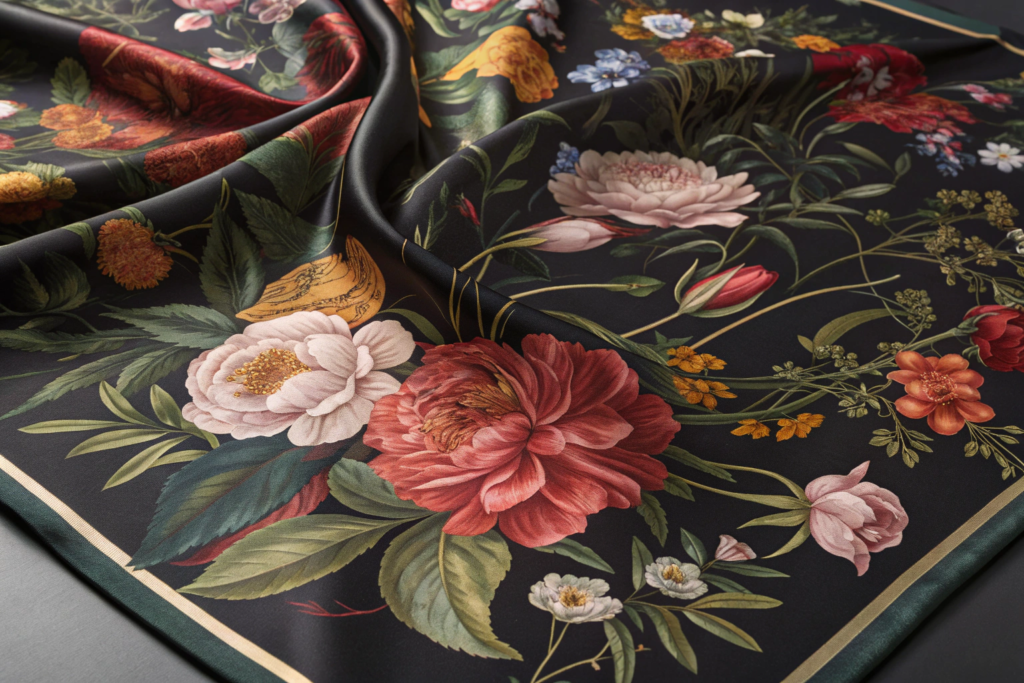
The new trend in floral prints is "maximalism." This involves using oversized, hyper-detailed, and often asymmetrical botanical illustrations that cover the entire surface of the scarf. Instead of a small, repeating pattern, the scarf becomes a single, stunning canvas for a lush, immersive floral scene. This approach is bold, dramatic, and incredibly eye-catching.
This trend is a direct result of advances in digital printing technology. In the past, screen printing limited the number of colors and the level of detail. Now, we can print with photographic quality, capturing every subtle gradient and delicate vein of a flower petal. When clients come to us wanting to create a truly show-stopping piece, we often guide them toward this maximalist approach. It transforms a simple scarf into a luxury item that commands a higher price point.
What Defines a Maximalist Print?
- Scale: The design elements (flowers, leaves, birds) are dramatically oversized, often appearing much larger than life.
- Asymmetry: The design is often a single, non-repeating composition that flows across the scarf.
- Detail: The artwork is highly detailed and often photorealistic or painterly in style.
- Rich Color: The color palettes are deep, saturated, and complex, often inspired by classical art like the Dutch Masters’ still life paintings.
Why is This Trend So Popular?
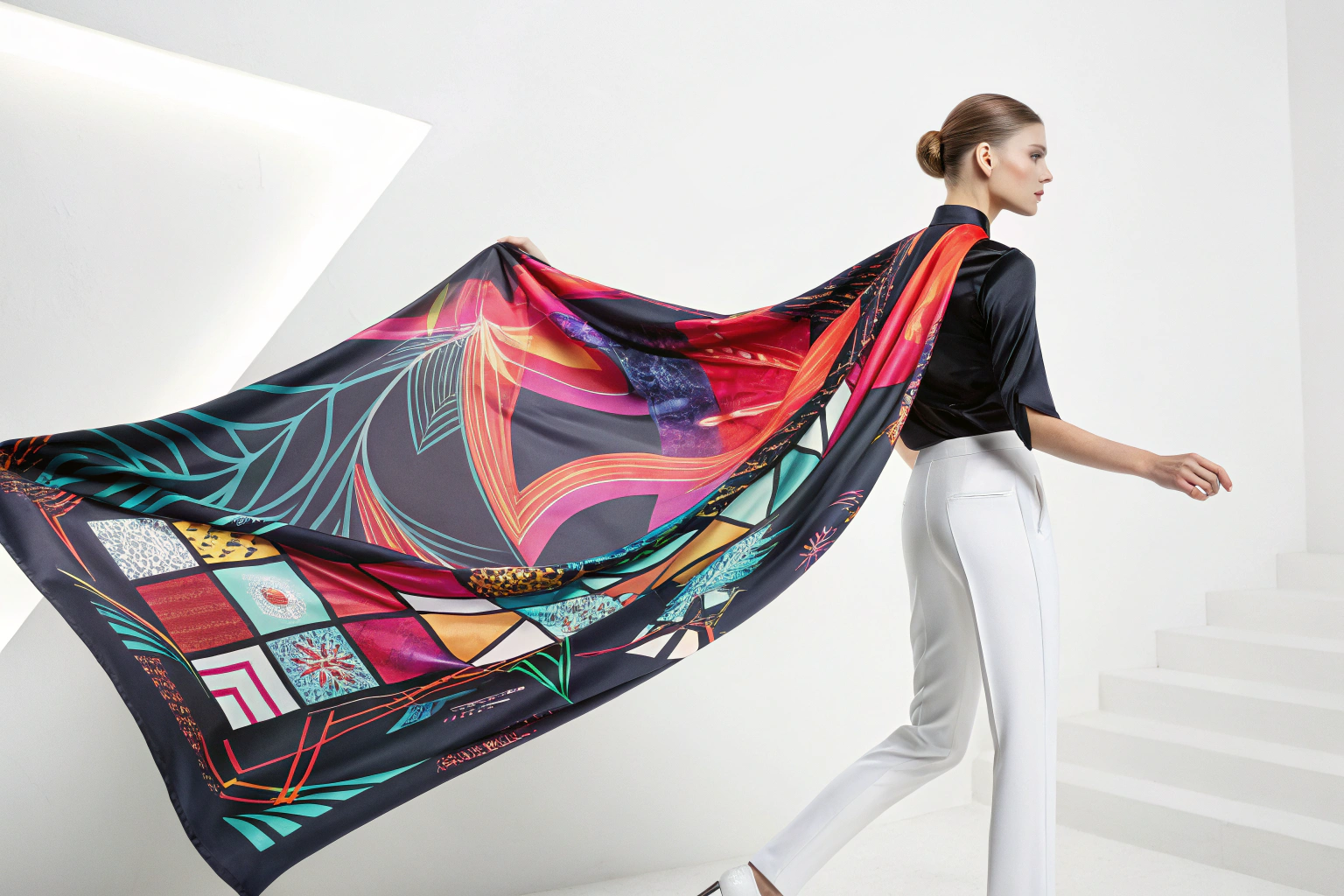
Maximalist prints are popular because they are versatile. When the scarf is folded and worn, different sections reveal abstract pops of color and texture—swirls of deep indigo bleeding into burnt sienna, tiny geometric patterns catching the light like scattered gemstones, the soft fuzz of the fabric contrasting with sharp, angular lines that seem to dance when you move. When it’s fully opened and draped, it reveals the full, stunning artwork: a riotous explosion of hues—crimson, emerald, gold, and violet—intertwining in a chaotic yet harmonious symphony, each brushstroke (or in this case, each printed motif) telling a story of bold creativity.
This dual nature makes the scarf both an easy-to-wear accessory—light enough to toss around the neck on a brisk morning, its folds adding a playful, artistic touch to any outfit—and a collectible piece of art, a wearable canvas that transforms everyday moments into something extraordinary, evoking wonder and joy with every glance.
What is the Influence of Digital Art and "Glitch" Aesthetics?
The world is digital, and art is reflecting that. The clean, perfect lines of traditional graphic design are being challenged by a new aesthetic that embraces the imperfections and quirks of the digital world. People, especially younger consumers, are drawn to designs that feel unique, futuristic, and a little bit rebellious. A perfect geometric pattern can feel sterile; a "glitched" one feels alive.
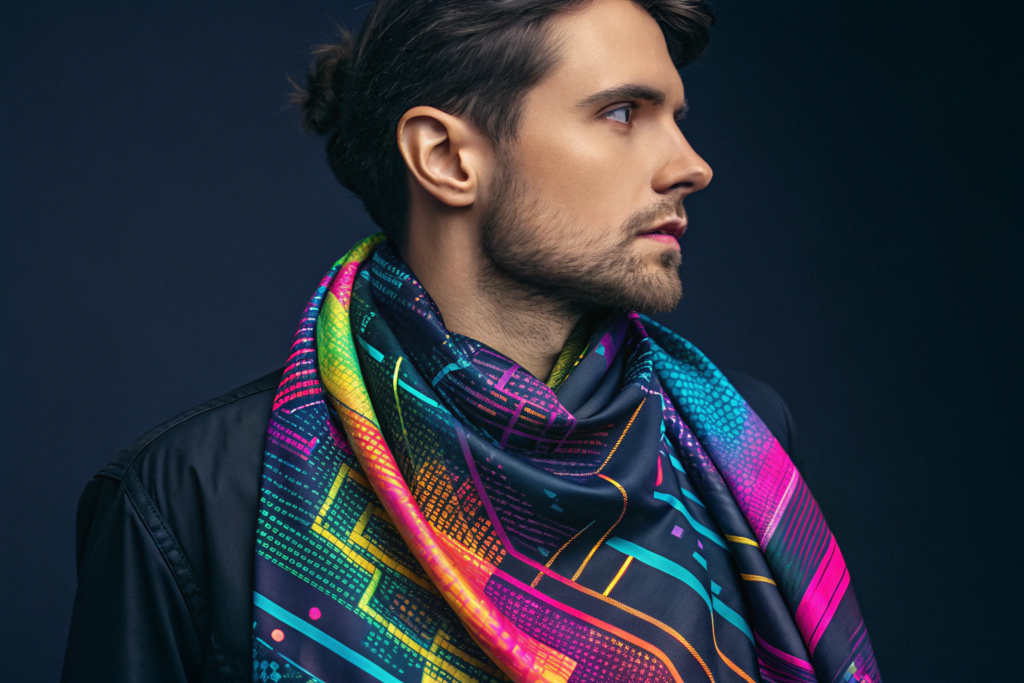
A major emerging trend is the use of abstract digital art, including "glitch" aesthetics, in scarf design. This involves using computer-generated patterns, pixelation, distorted data visualizations, and vibrant, unnatural color gradients to create prints that are dynamic, futuristic, and completely unique. This trend borrows its language directly from the digital screens we look at all day.
This is one of the most exciting areas for our design team. It allows for endless experimentation. We can take a classic pattern, like a checkerboard, and run it through a "glitch" filter to create something completely new. We can use algorithms to generate beautiful, complex patterns that would be impossible to draw by hand. This trend resonates strongly with a generation fluent in the language of technology and digital culture. It’s a way of wearing the digital world, a concept explored by digital art platforms like ArtStation.
What are Key Elements of Glitch Art?
- Pixelation: Intentionally using a low-resolution, blocky look as a design element.
- Color Bleeding: Mimicking the effect of digital color channels becoming misaligned.
- Distortion: Warping, stretching, and repeating parts of an image to create unexpected patterns.
- Digital Noise: Incorporating static or grainy textures into the design.
Who is This Trend For?
This trend exudes a magnetic allure for the fashion-forward, younger demographic—a generation unafraid to dance on the edge of convention, craving pieces that whisper rebellion and radiate modernity. It caters to the customer who refuses to blend into the crowd, yearning for an accessory that isn’t just worn but declared, something that crackles with an edgy energy and pulses with contemporary flair. Imagine a scarf that transforms from a simple textile into a statement of individuality, its vibrant hues or bold patterns clashing playfully yet harmoniously with the sleek lines of minimalist wardrobes or the utilitarian cool of techwear ensembles.
In these pairings, the scarf doesn’t merely complement; it commands attention, becoming the singular, chaotic focal point of an outfit—a dynamic contrast that sparks curiosity and admiration. Picture it: a monochromatic techwear look, all matte finishes and structured silhouettes, suddenly electrified by a scarf that bursts with abstract prints or a riot of clashing colors, its texture—perhaps a tactile knit or a glossy silk—adding layers of sensory intrigue.
How Are Animal Prints Being Reimagined?
Leopard, zebra, and snake prints are timeless classics, but they can also easily look dated or tacky if not handled correctly. The traditional, hyper-realistic brown and black leopard print has been done to death. To make it feel modern, designers are breaking the rules and playing with expectations.
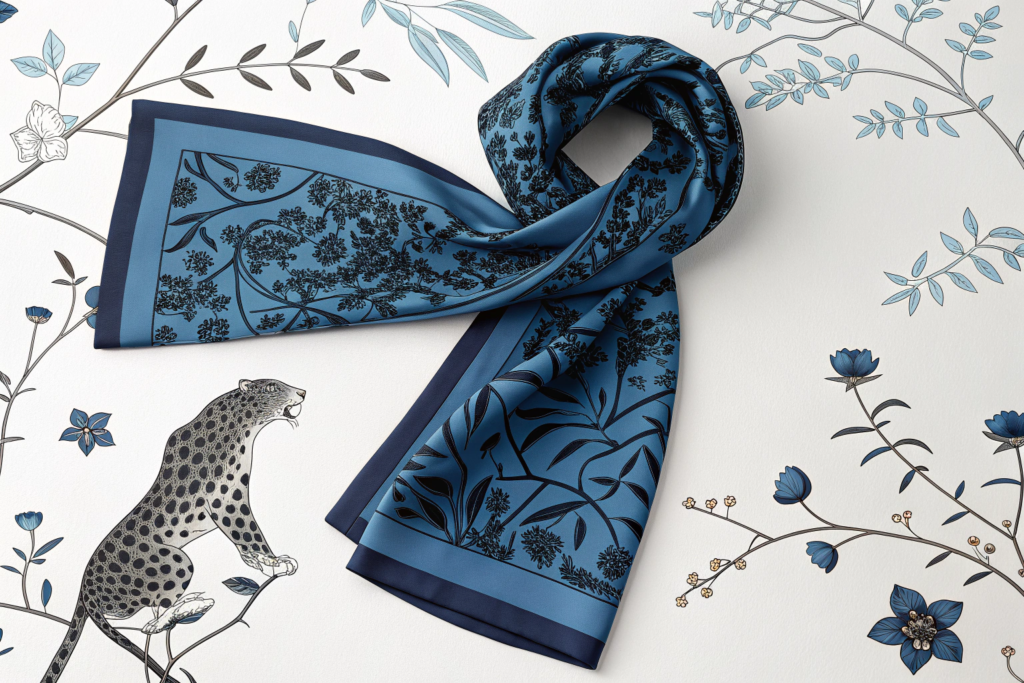
Animal prints are being reimagined through unexpected color palettes and creative mashups. Instead of naturalistic colors, we’re seeing leopard spots in neon pink or zebra stripes in emerald green. Designers are also combining animal prints with other motifs, like layering a floral pattern over a snakeskin background or breaking up a cheetah print with bold geometric lines.
This is a strategy we often use to help clients update their core collections. They can keep the proven appeal of an animal print while making it feel new for the current season. A blue leopard print scarf, for example, is both familiar and surprising, which is a powerful combination in retail. It allows a customer to buy into a classic pattern without feeling like they are wearing something from their mother’s closet.
What are Popular "Unnatural" Colorways?
Think beyond the drab confines of brown and black, where creativity takes flight in a riot of vibrant hues and refined tones. Popular combinations include: Bright, pop-art colors that explode with energy—think hot pink like a neon sign flickering against a summer dusk, electric blue as vivid as a tropical ocean at high noon, and lime green so fresh it seems plucked straight from a sun-dappled citrus grove, each shade daring to command attention and inject life into any space. Cool, sophisticated jewel tones that exude timeless elegance: sapphire deep as the night sky over a quiet lake, ruby rich and warm like a secret shared between lovers, and amethyst with its regal purple glow, reminiscent of ancient royalty and twilight gardens, each hue adding a touch of luxury and depth.
What is a "Pattern Mashup"?
A pattern mashup involves layering two or more distinct patterns. For example, a scarf might feature a bold zebra stripe as the background, with a delicate, contrasting floral pattern printed on top. This creates a design that is complex, visually interesting, and feels very contemporary and designer-driven, a technique often seen on the runways of brands like Dolce & Gabbana.
Why Are Conversational and Story-Driven Prints Gaining Traction?
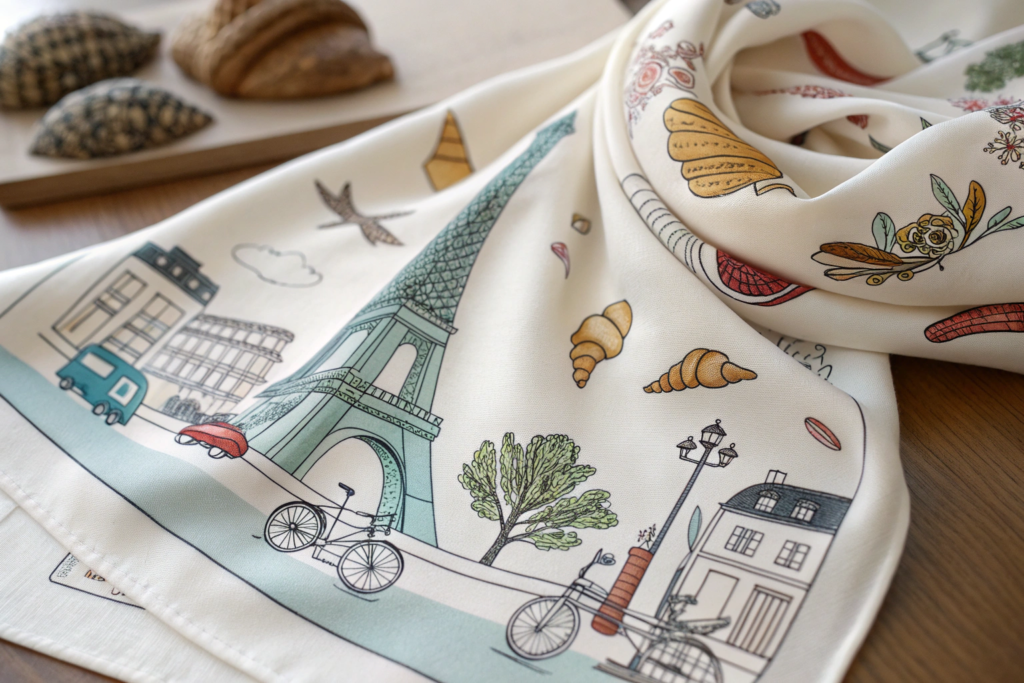
In a world of mass production, customers are craving connection and personality. They want to buy products that have a story and feel unique. A generic geometric pattern doesn’t have a story. A scarf printed with a charming, hand-drawn map of your favorite city, however, creates an instant emotional connection.
Conversational and story-driven prints are gaining traction because they offer a sense of personality, wit, and narrative. These designs feature quirky, illustrative motifs centered around a specific theme—like travel, hobbies, or nature—that "tell a story" and spark conversation. They turn the scarf into a personal statement.
This is a wonderful trend for brands looking to build a strong identity. At Shanghai Fumao Clothing, we’ve worked with clients to create prints based on their brand’s heritage, the architecture of their home city, or even the founder’s favorite dog breed. These personal touches make the product unique and impossible for competitors to copy. They are perfect for museum gift shops, boutique brands, and any retailer who wants to offer something more than just a pretty pattern. This approach has been a hallmark of luxury brands like Hermès for decades, and it is now becoming more accessible.
What are Examples of Conversational Themes?
- Travel & Destination: Maps, famous landmarks, and cultural icons (e.g., Italian Vespas, Japanese cherry blossoms).
- Hobbies & Interests: Motifs related to gardening, reading, baking, or art.
- "Cabinet of Curiosities": A collection of interesting, seemingly random objects like keys, insects, shells, and astrological symbols.
- Whimsical Characters: Playful, illustrative animals or people in charming scenes.
How Can Brands Use This Trend?
Brands can use this trend to reinforce their identity. A coastal brand could create a scarf with hand-drawn illustrations of local sea life. A brand focused on literature could create a print featuring famous authors’ signatures and iconic book covers. It’s a powerful way to connect with a niche audience and build a loyal community around your products.
Conclusion
The world of scarf design is more dynamic and creative than ever before. By moving beyond safe, repetitive patterns and embracing the bold energy of maximalist florals, the futuristic vibe of digital art, the sophisticated reimagining of animal prints, and the personal touch of story-driven designs, you can offer a collection that truly stands out. The scarf is no longer just an accessory; it’s a canvas. And for a buyer like Ron, that canvas represents a huge opportunity to captivate customers and drive sales.
We live and breathe these trends every day. Our design team and printing specialists are ready to help you translate these exciting concepts into beautiful, high-quality scarves that your customers will fall in love with.
If you’re ready to create a scarf collection that is vibrant, modern, and full of personality, let’s start the conversation. Contact our Business Director, Elaine, at elaine@fumaoclothing.com to explore the possibilities.