

You’re Ron, a seasoned buyer for a major US retail chain. For years, your sourcing calendar has been built around grueling international travel to physical trade shows in places like Canton and Hong Kong. You’re exhausted by the jet lag, the endless walking, and the high costs of flights and hotels. The process is inefficient, and you often return with a bag full of business cards and a vague memory of who was who, feeling like there has to be a better way to find reliable suppliers.
The primary benefits of attending virtual trade shows for fashion accessory sourcing are massive cost savings, unparalleled efficiency, and direct access to a global pool of suppliers from your desk. They eliminate travel expenses and time away from the office while providing powerful digital tools to quickly find, vet, and connect with manufacturers.
I’ve been on both sides of the trade show floor for over 20 years. As a factory owner at Shanghai Fumao Clothing, I’ve spent countless hours and a small fortune setting up physical booths. While I love meeting clients face-to-face, I’ve seen how the shift to digital platforms has revolutionized the sourcing process. Virtual shows aren’t just a temporary substitute; they are a powerful, strategic tool for smart buyers. Let’s explore the specific advantages that can transform your sourcing strategy.
How Do Virtual Shows Dramatically Reduce Sourcing Costs?
The budget meeting is looming. You have to justify your department’s T&E (Travel and Entertainment) expenses, and the numbers are staggering. A single trip to a major Asian trade fair for you and a junior buyer can easily top $10,000 when you factor in airfare, hotels, meals, and local transport. This high cost limits how many shows you can attend and how many team members can participate, creating a bottleneck in your sourcing efforts.
Virtual trade shows slash sourcing costs by eliminating the two biggest expenses: air travel and accommodation. By removing the need to be physically present, they reduce the cost of attending a show from thousands of dollars to nearly zero, allowing you to reallocate that budget towards product development, marketing, or attending more virtual events.
I remember talking to a client, Ron, who calculated he was spending over $50,000 a year just on travel to sourcing fairs. That’s a huge chunk of his operating budget. When he started using virtual shows, he was able to involve his entire design team in the sourcing process for the first time. They could all "walk the floor" together from their own desks, sharing ideas in real-time. The money he saved was reinvested into ordering more samples and launching two extra product lines that year. The ROI was immediate and obvious. This cost-saving is a massive benefit, but it’s the efficiency gains we’ll discuss in How Can You Source More Efficiently from Your Desk? that truly change the game.

What Are the Direct Cost Savings?
The most obvious savings are the hard costs associated with travel. This includes round-trip international airfare, which can be thousands of dollars per person. Add to that the cost of a hotel room for several nights, daily expenses for meals and transportation, and visa application fees. For a team of two, this can easily be a five-figure sum for a single event. Virtual shows eliminate all of these costs entirely. The only investment is your time.
What Are the Indirect Savings?
Beyond the direct travel expenses, there are significant indirect savings. Attending a physical trade show means you are out of the office for a week or more. This "opportunity cost" means other important work gets delayed. Furthermore, the physical and mental toll of jet lag and long days on your feet reduces productivity. Virtual shows allow you to maintain your regular work schedule, fitting in sourcing sessions between other tasks. This means you and your team remain productive and focused, a benefit that is hard to quantify but incredibly valuable. Many business articles discuss the impact of employee burnout from excessive travel, a problem virtual events help solve.
How Can You Source More Efficiently from Your Desk?
You’re at a massive convention center with thousands of booths spread across multiple halls. You have a list of specific accessories you need to source—knitted hats with OEKO-TEX certification and custom leather belts. The show directory is a 300-page book, and finding the right suppliers feels like searching for a needle in a haystack. You spend hours wandering aisles, having superficial conversations, and collecting brochures, only to find that most exhibitors don’t meet your specific requirements.
Virtual trade shows offer powerful search and filtering tools that allow you to instantly find suppliers who meet your exact criteria. Instead of wandering aimlessly, you can filter by product category, certifications, production capacity, and location, turning hours of fruitless searching into minutes of targeted discovery. This data-driven approach makes sourcing dramatically more efficient.
This is where virtual platforms truly outshine their physical counterparts. Imagine being able to type "women’s straw hats, BSCI certified, 50,000-piece monthly capacity" into a search bar and instantly getting a list of 10 pre-vetted factories. That’s the power of a virtual show. You can visit a "booth," watch a video tour of their factory, browse their digital catalog with detailed specs, and even download their certification documents—all without leaving your chair. This level of instant information access is impossible at a physical show.
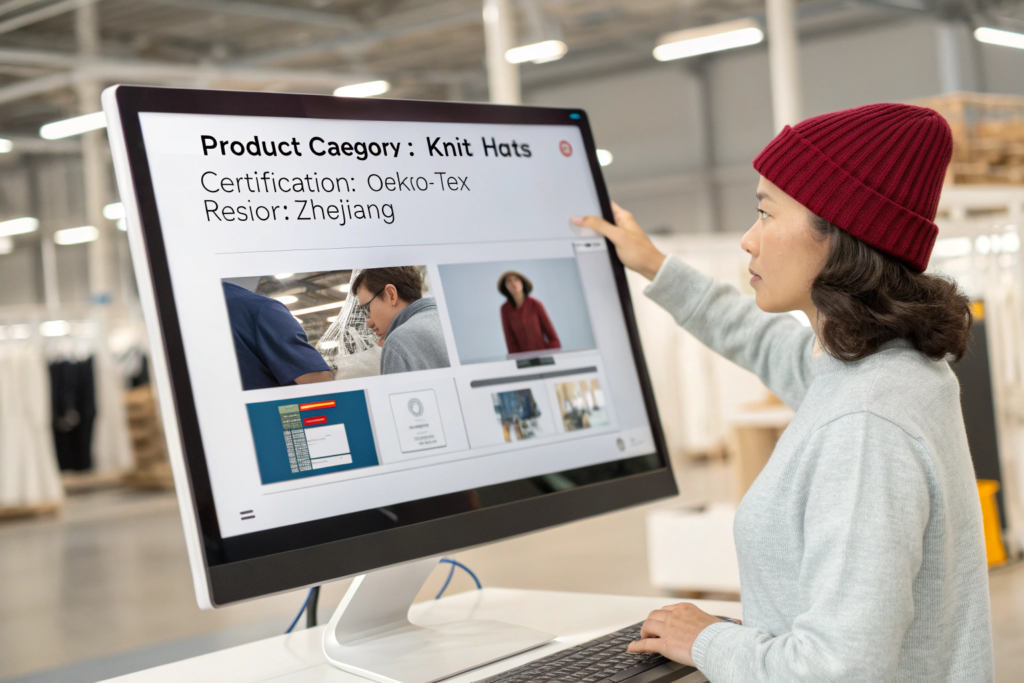
How Do Search Filters Streamline Discovery?
Unlike a physical show floor, a virtual platform is a structured database. This allows for sophisticated filtering that saves immense time. You can typically search and filter by:
- Product Category: Belts, Scarves, Hats, etc.
- Material: Organic Cotton, Leather, Recycled Polyester.
- Certifications: BSCI, OEKO-TEX, GOTS.
- Factory Location: Zhejiang, Guangdong, etc.
- Minimum Order Quantity (MOQ): Find suppliers that match your volume needs.
This functionality lets you cut through the noise and focus only on suppliers who are a potential match.
How Does Digital Content Accelerate Evaluation?
At a physical booth, you get a brochure and a quick pitch. At a virtual booth, you get a rich, multimedia experience. Suppliers can upload high-resolution product photos, 360-degree product videos, and even virtual factory tours. You can often download detailed product spec sheets, material composition reports, and copies of their certifications. This wealth of digital content allows you to conduct a thorough initial evaluation of a supplier’s capabilities and professionalism before you even initiate a conversation. Platforms like Alibaba have integrated many of these features into their supplier pages, setting a standard for digital sourcing.
How Do Virtual Shows Facilitate Better Supplier Vetting?
You’ve found a potential supplier at a physical show. The booth looks professional, and the salesperson is charming. But what is their factory actually like? Are the conditions clean and safe? Is the machinery modern? You have to take their word for it or schedule an expensive and time-consuming factory audit later. This information gap creates risk and uncertainty in your sourcing process.
Virtual trade shows facilitate better vetting by enabling instant, direct communication and on-demand transparency. You can schedule an immediate video call with a project manager, ask for a live walk-through of their production line, and meet their design and QC teams in real-time. This removes the mystery and allows you to get a genuine feel for their operations and professionalism without leaving your office.
This is something we at Shanghai Fumao Clothing have embraced. When a potential client connects with us through a virtual show, we don’t just send them a pre-recorded video. Our project managers will grab a phone or tablet and give them a live tour. We’ll show them our design studio, our sample room, our clean production lines, and our QC station. They can ask questions and direct the camera wherever they want to look. This level of transparency builds immense trust and confidence. It’s the next best thing to being there in person and is far more insightful than a curated booth at a convention center.
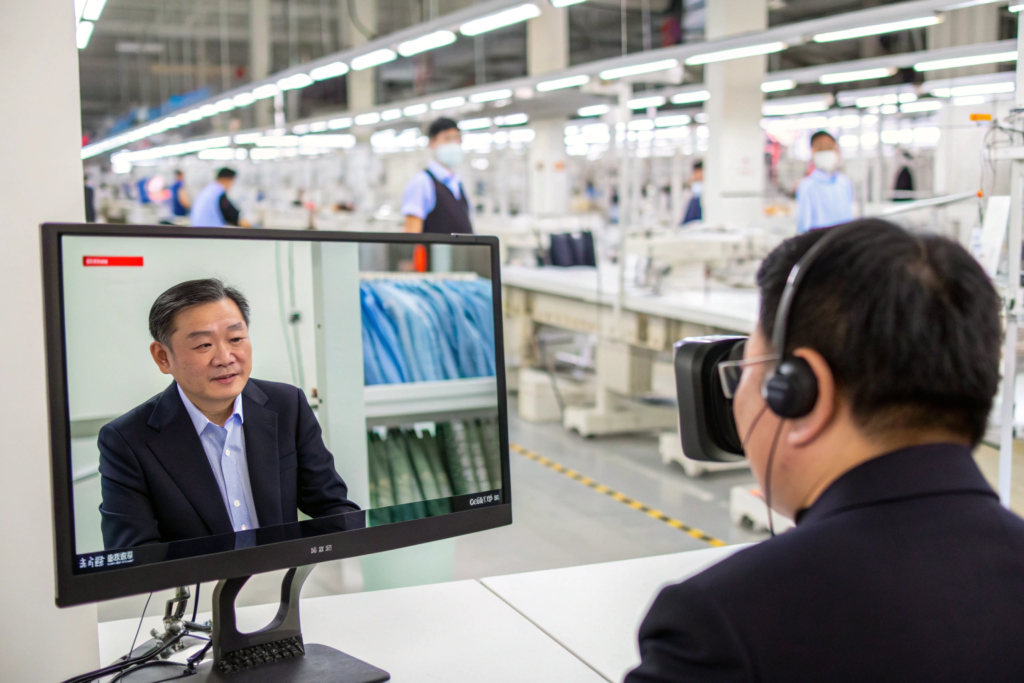
How to Leverage Live Video for Audits?
Don’t just settle for a chat. Use the platform’s video conferencing tools to conduct a mini-audit. Ask the sales representative to switch to their mobile camera and walk you through the factory. Ask to see their raw material storage, their production lines in operation, and their final quality inspection area. Ask to speak directly with a QC manager or a designer. A supplier who is confident in their operations will be happy to accommodate this request. A supplier who hesitates may have something to hide. This is a powerful tool for supply chain transparency.
How to Evaluate a Supplier’s Digital Presence?
A supplier’s virtual booth is a reflection of their professionalism. Is it well-organized and easy to navigate? Is the product information clear and detailed? Are their videos and photos high-quality? A company that invests in a professional and informative digital presence is more likely to be organized and professional in their business dealings. Pay attention to their communication skills in chat and email. Are their responses prompt, clear, and professional? This initial digital interaction is often a good indicator of the customer service you can expect to receive.
Can Virtual Shows Help You Achieve Sustainability Goals?
Your company has made a public commitment to reducing its carbon footprint. As a buyer, you are under pressure to align your sourcing practices with these corporate sustainability goals. The carbon emissions from frequent international flights for trade shows are a significant and highly visible part of your department’s environmental impact. You need to find a way to source effectively while also being a good corporate citizen.
By eliminating the need for air travel, virtual trade shows offer a direct and significant way to reduce your company’s carbon footprint. Attending events virtually is an inherently sustainable practice that aligns perfectly with corporate environmental responsibility goals without compromising your ability to discover and connect with global suppliers.
The environmental argument is becoming increasingly important for our clients. The fashion industry as a whole is under scrutiny for its environmental impact. By adopting virtual sourcing, brands can make a tangible and measurable reduction in their Scope 3 emissions, which include business travel. This isn’t just good for the planet; it’s a powerful story to tell your customers, who are increasingly making purchasing decisions based on a brand’s environmental credentials. It’s a win-win: you save money, source more efficiently, and contribute positively to your company’s sustainability narrative.

What is the Carbon Footprint of a Physical Trade Show?
The environmental impact of a single international trip is substantial. A round-trip flight from New York to Hong Kong can generate over 5 metric tons of CO2 per passenger. When you multiply that by thousands of attendees and exhibitors traveling from all over the globe, the total carbon footprint of a major international trade show is enormous. This doesn’t even include the waste generated by single-use booths, printed materials, and other event logistics. You can estimate flight emissions using online tools like the ICAO Carbon Emissions Calculator.
How to Frame Virtual Sourcing as a CSR Win?
Adopting a "virtual-first" sourcing strategy is a powerful Corporate Social Responsibility (CSR) initiative. You can quantify the carbon emissions saved by reducing travel and report this as part of your company’s annual sustainability report. This demonstrates a concrete commitment to environmental stewardship. It’s a proactive step that shows your company is innovative and mindful of its impact, which can enhance your brand’s reputation with investors, employees, and, most importantly, your customers.
Conclusion
While the energy and personal connection of a physical trade show will always have its place, the strategic advantages of virtual events are undeniable. For the modern fashion accessory buyer, they offer a powerful combination of cost reduction, hyper-efficiency, deep-dive vetting capabilities, and a clear path to achieving sustainability goals. By integrating virtual trade shows into your sourcing strategy, you can discover better partners, make smarter decisions, and build a more resilient and responsible supply chain—all from the comfort of your office.
At Shanghai Fumao Clothing, we have embraced this digital transformation and are ready to connect with you on any platform. We believe that transparency and direct communication are the keys to a great partnership, whether it starts with a handshake or a video call.
If you’re ready to experience the efficiency of virtual sourcing with a reliable and professional manufacturing partner, I invite you to connect with us. Contact our Business Director, Elaine, at elaine@fumaoclothing.com to schedule a virtual meeting and factory tour.




