
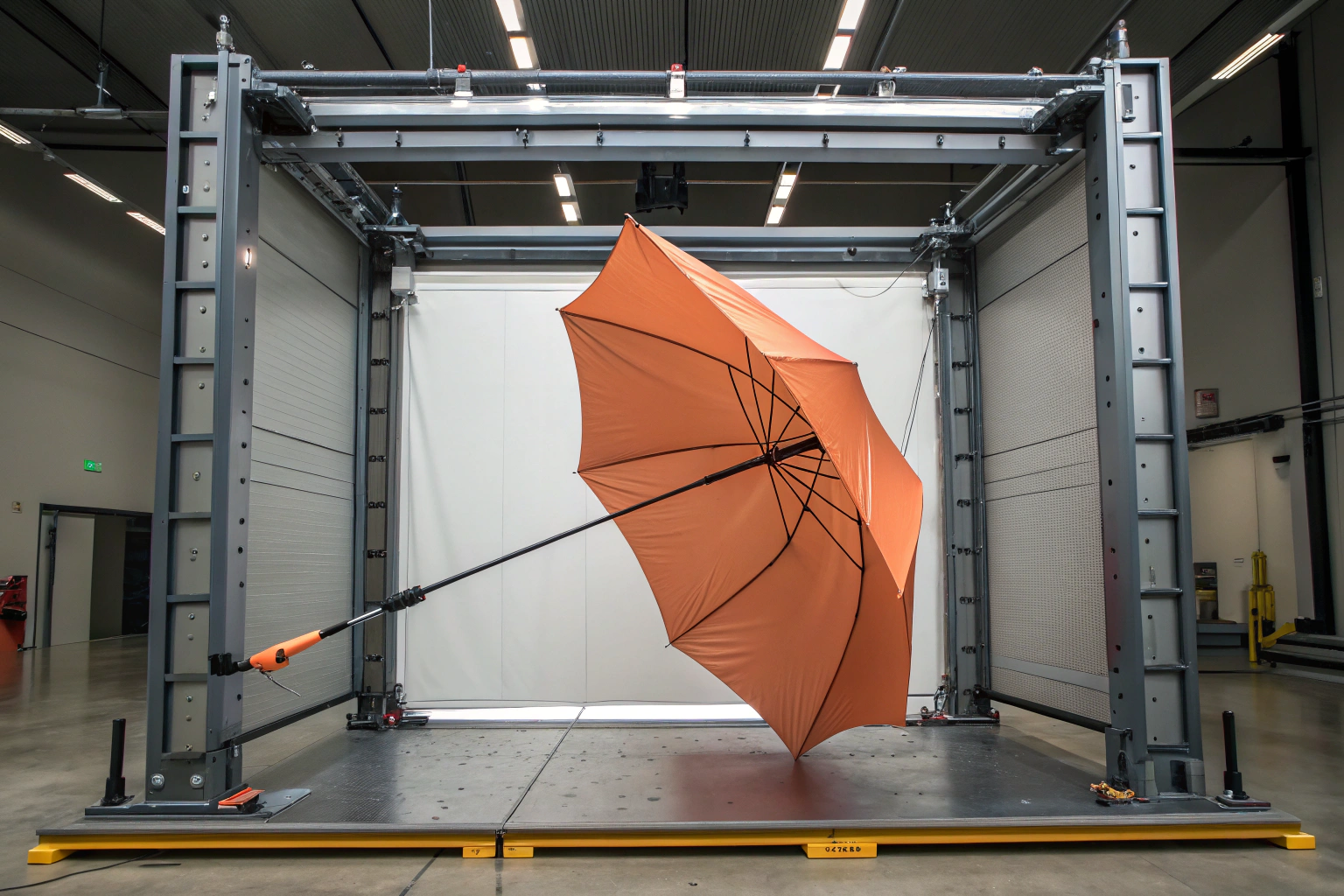
You’ve imported a beautiful batch of umbrellas, marketed as premium accessories. A sudden gust of wind turns them inside out on the streets, leaving customers frustrated and your brand’s reputation damaged. For wholesale buyers like Ron, sourcing durable products is non-negotiable. A windy-day failure is more than an inconvenience; it’s a direct hit to customer trust and future sales. So, how can you be confident that the umbrellas you source will stand up to the elements?
The key lies in moving beyond superficial design and demanding rigorous, structural engineering from your manufacturer. A wind-resistant umbrella is a result of intentional design choices, premium material selection, and stringent quality testing. It’s not about luck; it’s about a factory’s commitment to building a product that performs under pressure. Partnering with a manufacturer that prioritizes durability from the inside out transforms the humble umbrella from a disposable item into a reliable, brand-enhancing accessory.
At our facility, we engineer umbrellas for real-world conditions. We understand that for buyers in North America and Europe, where weather can be unpredictable, durability is a primary selling point. Our approach combines robust frame design, advanced fabric technology, and a testing protocol that simulates extreme conditions, ensuring that when you source from us, you’re delivering a product built to last.
What Are the Key Design Features of a Wind-Resistant Umbrella?
The difference between a standard umbrella and a wind-resistant one is fundamentally in its architecture. While a fashion-forward print might catch the eye, the hidden skeleton—the frame—determines its survival in a storm. Wind resistance is engineered through features that allow the umbrella to flex without breaking and to safely release excess pressure.
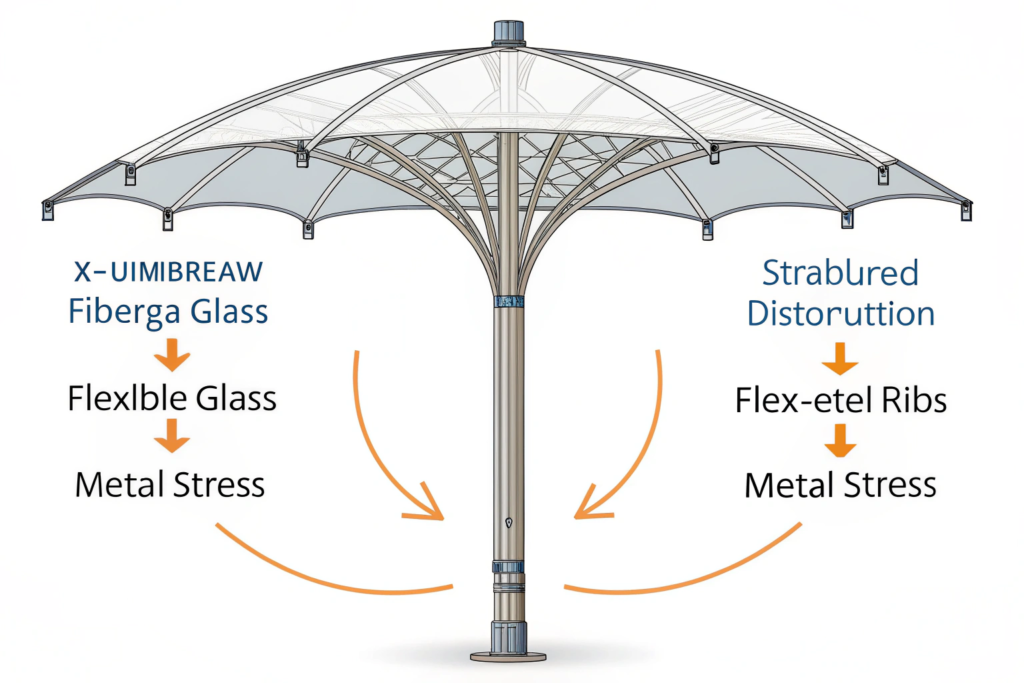
The most critical feature is a vented double canopy. This design includes a top layer with one or more mesh vents. When wind hits a solid canopy, it has nowhere to go, creating immense pressure that can invert the ribs. Vents allow wind to pass through, drastically reducing the lifting force. Paired with this is a robust frame construction, typically using fiberglass or reinforced metal (like steel or aluminum) for the ribs and shaft. Fiberglass offers superior flexibility, bending significantly before snapping back to its original shape, a property known as high elastic modulus. These design elements work in concert to create a product that doesn’t just resist the wind, but is designed to manage its energy safely.
Why is a Vented Canopy More Important Than Just Thick Fabric?
A common misconception is that heavier, thicker fabric equals a stronger umbrella. In reality, a solid, non-vented canopy acts like a sail. The wind force accumulates against this solid surface, applying extreme stress directly to the joints and ribs. A vented canopy disrupts this. By allowing a controlled flow of air through the mesh panels, it equalizes pressure on both sides of the canopy. This principle is well-documented in aerodynamic engineering and is why many high-performance outdoor gear brands use similar venting technology. It allows the use of high-quality, lighter-weight fabrics like pongee or polyester taffeta that are treated for water repellency, without sacrificing strength. For a brand, this means you can offer a durable product that isn’t unnecessarily heavy or cumbersome for the user.
How Does Frame Flexibility Prevent Catastrophic Failure?
A rigid frame is a brittle frame. When subjected to a sudden gust, something has to give. In a poorly designed umbrella, the ribs will snap. A wind-resistant frame is designed with strategic flexibility. Using materials like fiberglass ribs is key. Fiberglass composites can absorb and dissipate energy by bending. When the wind pushes the canopy, the ribs flex inward, reducing the strain on the central joints. Once the gust passes, they spring back. This is far superior to aluminum, which can bend permanently. The construction of the runner and stretchers also matters. They should have reinforced joints, often with metal caps. At Shanghai Fumao Clothing, our engineering team specifies these materials to create a system where each component’s flexibility protects the others, ensuring the entire structure survives forces that would destroy a standard umbrella.
Which Materials Are Best for Durable Umbrella Canopies and Frames?
Selecting the right materials is where engineering meets execution. The choice directly impacts the product’s weight, feel, cost, and, most importantly, its performance in wind and rain. For the discerning buyer, understanding these material specs is crucial for evaluating suppliers and justifying a potentially higher price point that reflects true value.
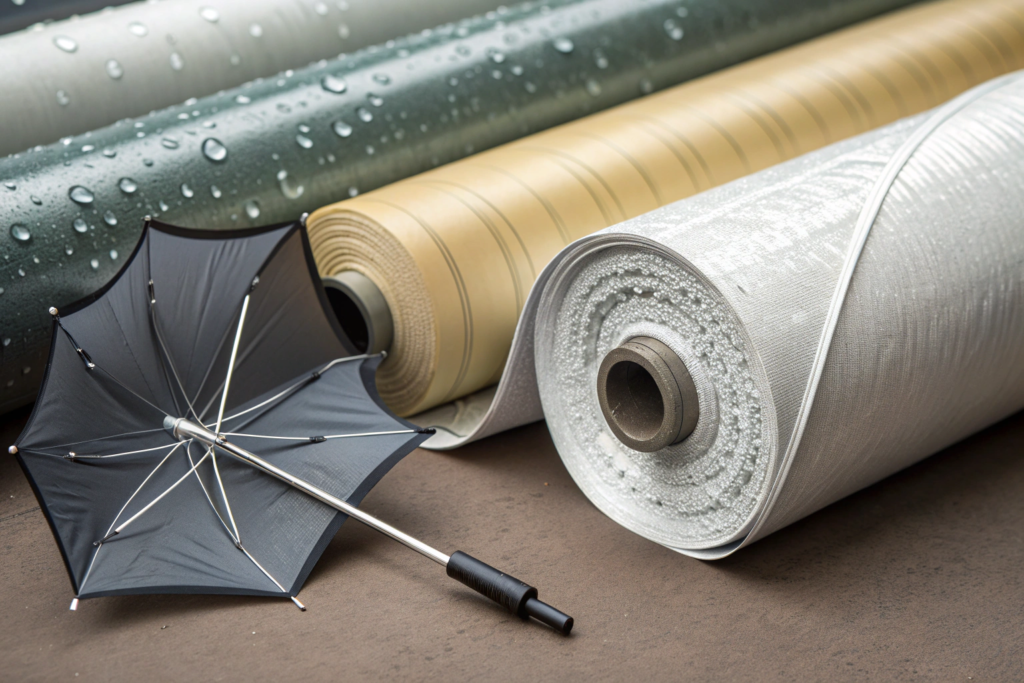
For the canopy, the benchmark is high-density pongee or polyester taffeta with a waterproof coating (like PU or Teflon). The fabric’s "tear strength" is a critical metric. A higher denier count (like 190T or 210T) often indicates a tighter weave and better strength. For the frame, the hierarchy of materials for wind resistance typically places fiberglass at the top for ribs, followed by reinforced aluminum alloys. The shaft needs to be sturdy; solid aluminum or fiberglass are excellent choices. Every joint, from the top spring to the tip, should be made of stainless steel or zinc alloy to resist corrosion from rain, which can weaken metals over time and lead to failure.
What Fabric Coatings Enhance Durability and Weather Resistance?
The fabric itself is only part of the equation. Its coatings determine how it handles water, UV rays, and wear. A high-quality polyurethane (PU) coating is essential for waterproofing. It creates a microscopic barrier that causes water to bead up and roll off. More advanced solutions include Teflon (PTFE) fabric protector, which offers superior water and stain resistance. Another key factor is UV resistance. Prolonged sun exposure can degrade fibers and fade colors. Suppliers should use fabrics treated with UV inhibitors to ensure the umbrella’s appearance and integrity last over multiple seasons. When discussing with your manufacturer, ask for test reports on water column rating (a measure of waterproofing) and UPF (Ultraviolet Protection Factor). These quantifiable metrics, often verified by third-party labs like Intertek, provide concrete evidence of the canopy’s protective capabilities.
Why are Fiberglass and Composite Frames Superior for Wind?
The superiority of fiberglass lies in its unique physical properties. Unlike metals, which can bend permanently or fracture, fiberglass composites exhibit high strength and high elasticity. This means they can endure repeated bending cycles—exactly what happens in variable wind conditions—without suffering from metal fatigue. Resources like Composites World detail how the glass fibers embedded in resin create a material that is strong yet lightweight. For the end-user, this translates to an umbrella that feels sturdy but not heavy. For you, the buyer, it means fewer returns. When auditing a potential supplier likeShanghai Fumao Clothing, ask to see their raw material certificates for fiberglass rods. A quality factory will source from reputable composite material suppliers to ensure consistency in every frame produced.
How Can You Verify Your Supplier’s Wind Testing Standards?
Any factory can claim their umbrellas are "windproof." The responsible buyer demands proof. Without standardized testing, you are relying on the supplier’s word, which is a significant risk. Reputable manufacturers will have a documented testing regimen, often exceeding basic industry checks, and will be transparent in sharing their methods and results with serious clients.
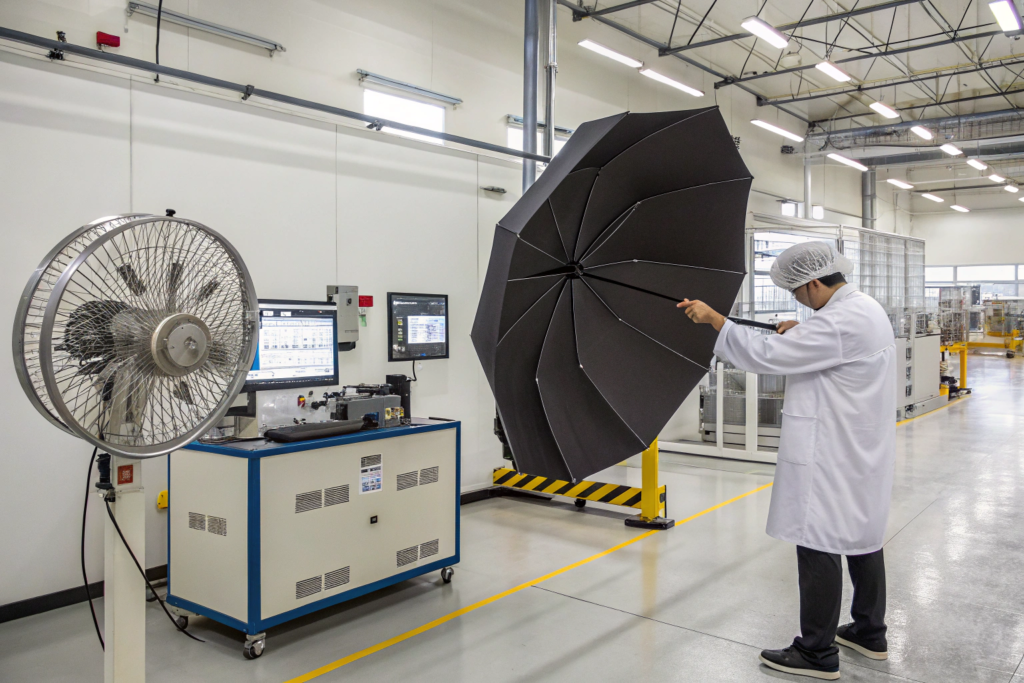
Verification starts with asking specific questions. Do they have an in-house testing lab or use a third-party service? What standard do they follow? What is their pass/fail criteria? A credible factory will test not just the final product, but also components like joint tensile strength and fabric tear resistance. The most convincing test is a wind tunnel simulation. While not every factory has a full tunnel, they should have a motorized test rig that can rotate the umbrella at high speed (simulating wind speeds of 35-50 mph or more) for hundreds of cycles. They should record the results and be willing to provide videos or data logs.
What In-Factory Tests Should You Ask to See?
During a factory visit or virtual audit, request a demonstration of these key tests:
- Cycle Wind Test: A motorized rig that opens and closes the umbrella repeatedly while blowers simulate wind. Observe it for at least 50-100 cycles. Listen for cracking sounds and inspect the joints afterward.
- Inversion/Recovery Test: Manually inverting the canopy and checking if it can smoothly return to its original shape without broken ribs or torn fabric. A well-designed vented umbrella should recover easily.
- Joint Pull Test: Using a force gauge to apply pulling force to the connection points between ribs and stretchers. This measures the strength of the rivets.
- Waterproof Test: A shower test where the umbrella is placed under a calibrated spray, with tissue paper inside to check for moisture penetration.
Suppliers adhering to international standards will follow protocols similar to those published by ASTM International. Your due diligence here directly protects you from the pain points of quality control and product failure.
How Do International Safety Certifications Add Credibility?
Certifications are an independent validation of a factory’s claims and processes. For umbrellas, important certifications include:
- CE Marking (for Europe): Indicates conformity with health, safety, and environmental protection standards.
- ISO 9001: This certification for Quality Management Systems indicates the factory has disciplined processes for design, production, and testing.
- Material-Specific Certifications: Like OEKO-TEX Standard 100 for fabrics, proving they are free from harmful substances.
A factory that invests in obtaining these certifications demonstrates a commitment to quality. It shows they are a professional partner. For your procurement, it simplifies the supplier due diligence process and provides assurance to your own customers, especially large supermarkets who often require such documentation. At our factory, we view these certifications as an essential component of our service, building the trust that companies like Shanghai Fumao Clothing are known for.
What Should Be in Your Sourcing Spec Sheet for Wind-Resistant Umbrellas?
Clear, detailed, and unambiguous specifications are your first line of defense against receiving subpar products. A vague purchase order that simply says "Umbrella, windproof" is an invitation for the factory to use the cheapest components. Your spec sheet must detail every critical component and performance requirement.
Think of the spec sheet as a legally binding blueprint for quality. It should include:
- Materials: Specific fabric type, denier, coating. Exact frame materials.
- Design Features: Mandatory requirements like "Double canopy with mesh vents."
- Performance Standards: Quantifiable test requirements (e.g., "Must withstand simulated wind of 40 mph for 50 cycles").
- Certifications: Required marks (e.g., "Product must carry CE marking").
- Packaging: How each unit should be packed to prevent damage in transit.
This document aligns expectations, serves as the basis for pre-production samples, and is the reference point for your quality control inspections. It moves the relationship from a transactional price negotiation to a collaborative partnership.
How to Specify Frame and Joint Construction for Maximum Strength?
Avoid generic terms. Use precise technical descriptions:
- Ribs: "Pre-curved 8mm diameter fiberglass rods."
- Stretchers: "Stainless steel U-channel stretchers."
- Joints: "All rib-to-stretcher joints must be double-riveted with stainless steel rivets and reinforced with metal end caps."
- Shaft: "Solid aluminum alloy shaft, anodized finish."
You can reference industry guides, such as those found on ThomasNet for component specifications, to ensure your terminology is accurate. Require the factory to submit a Bill of Materials (BOM) for approval before production begins. This gives you visibility into their supply chain.
Why is Sampling Critical Before Placing a Bulk Order?
The pre-production sample is your opportunity to physically vet the factory’s interpretation of your spec sheet. It is a non-negotiable step. Conduct your own tests: try to invert it, shake it vigorously, and spray it with a hose. Inspect the stitching and finishing.
Furthermore, a lab-test report on the approved sample from a third-party inspection company like SGS or Bureau Veritas is a wise investment for high-volume orders. They can perform standardized wind and water tests. This independent verification protects you if the bulk shipment fails your inspection. It aligns perfectly with addressing a buyer’s pain points regarding security. By enforcing a rigorous sampling protocol, you ensure that your bulk order for umbrellas has the highest probability of success.
Conclusion
Ensuring your umbrellas can withstand strong winds is a deliberate process that begins long before production. It starts with your decision to partner with a manufacturer that values engineering over mere assembly, and it is executed through precise design specifications, verified material choices, and uncompromising testing protocols. For the wholesale buyer, this diligence translates directly into customer satisfaction, brand loyalty, and reduced returns—turning a functional accessory into a testament to your quality standards.
By focusing on vented canopies, flexible fiberglass frames, and transparent supplier verification, you move from hoping for durability to guaranteeing it. In a market flooded with fragile options, a truly wind-resistant umbrella becomes a standout product that commands trust and repeat business.
Ready to source umbrellas built to weather any storm and protect your brand’s reputation? Let’s engineer reliability together. Contact our Business Director, Elaine, at elaine@fumaoclothing.com to discuss developing a wind-resistant umbrella line that meets your exact specifications and exceeds your customers’ expectations.




