
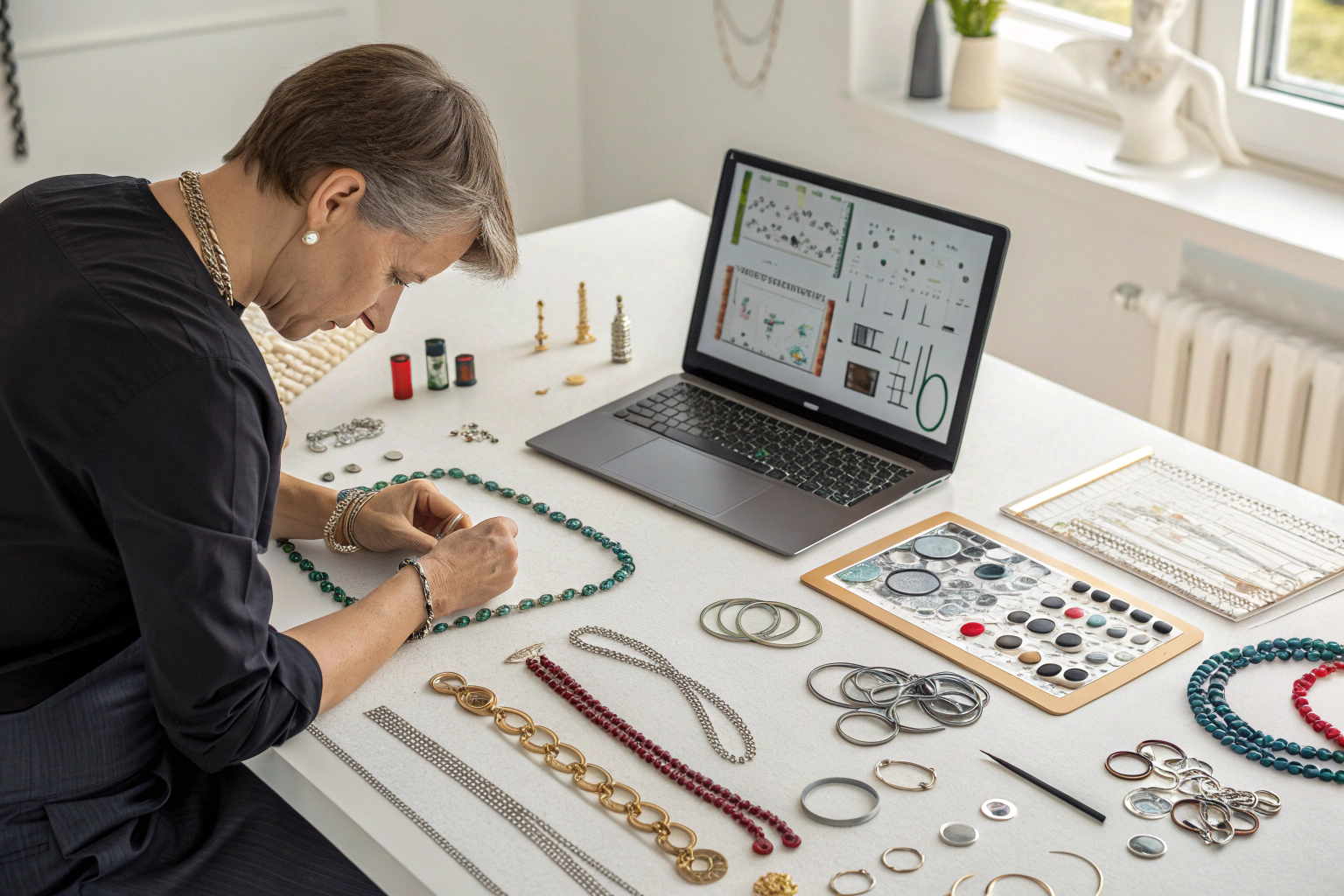
Sourcing the right components is the foundation of any successful fashion jewelry line. From clasps and chains to beads and pendants, the quality, cost, and availability of these parts directly impact your final product’s appeal, durability, and profitability. Many designers and brands struggle with inconsistent quality, long lead times, and unreliable communication from component suppliers, which can derail entire collections.
The most effective way to find a reliable supplier for fashion jewelry components is through a multi-channel approach that combines rigorous online vetting on platforms like Alibaba with direct engagement at industry-specific trade shows. The key is to prioritize suppliers who offer material certifications, provide comprehensive samples, and demonstrate transparent communication about their production and logistics capabilities. As a manufacturer that also sources components for our own lines at Shanghai Fumao Clothing, we understand that the right supplier acts as a strategic partner, not just a vendor.
Finding a trustworthy components supplier requires moving beyond the first page of search results. You need a partner who understands the nuances of alloy composition, plating thickness, and stone setting for the fashion jewelry market. They should be proactive in suggesting alternatives during material shortages and transparent about their quality control processes. Let’s explore a systematic approach to identify and secure a partnership that ensures your designs are built to last.
Where to Look for Fashion Jewelry Component Suppliers?
The search can feel overwhelming, with countless options online and offline. Knowing where to look is the first step to filtering out noise and focusing on credible partners. Different channels offer different advantages, and a savvy sourcer uses a combination to build a robust supply network.
Your primary channels should include B2B online marketplaces, specialized trade shows, and industry referrals. Platforms like Alibaba and Global Sources offer vast selections and verification filters, while trade shows like the Hong Kong International Jewellery Show provide the invaluable opportunity to touch materials, assess quality firsthand, and build face-to-face relationships. Don’t underestimate the power of networking within fashion accessory communities for trusted referrals.
Online marketplaces are your starting point for breadth and convenience. Use specific keywords like "brass jewelry clasp supplier" or "CZ stone settings bulk" to narrow results. Always filter for "Verified Suppliers" or "Trade Assurance" members. However, the real due diligence begins offline. Trade shows are irreplaceable for evaluating component quality—you can test the spring tension on a clasp, scrutinize the plating finish, and compare the luster of crystals. This direct engagement allows you to gauge a supplier’s expertise and responsiveness on the spot, a crucial step before committing to a large order.
How to Effectively Vet Suppliers on Alibaba?
Simply browsing Alibaba isn’t enough; you need a strategic vetting process. Start by scrutinizing the supplier’s company profile: How many years have they been Gold Suppliers? Do they have valid business certifications? Next, analyze their communication. Send a detailed inquiry specifying your need (e.g., "925 silver earring posts, nickel-free, with RoHS certification"). A professional supplier will ask clarifying questions and may request a drawing. Request physical samples—never rely on stock photos. Pay the sample fee; it’s a critical investment. Check their transaction history and read reviews, but also look for responsiveness to negative feedback. Finally, a video call to tour their facility, often possible with established suppliers, can confirm their production capacity and operational standards.
Why Are Industry Trade Shows Invaluable?
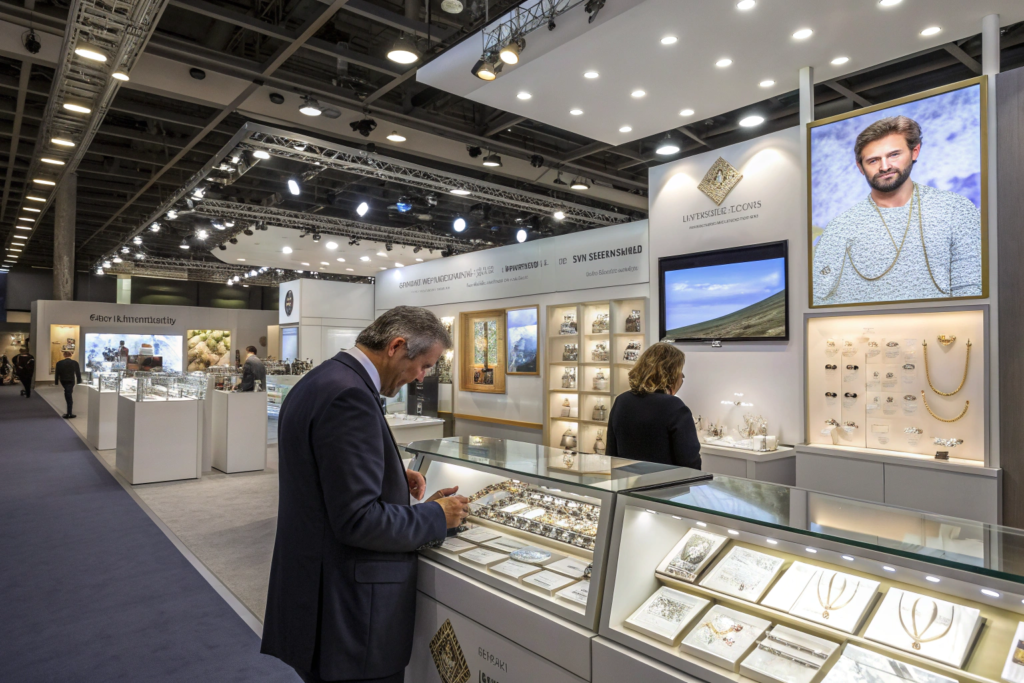
Trade shows offer a condensed, hands-on sourcing ecosystem. You can meet dozens of specialized suppliers for findings, chains, and gemstones in one location. Beyond seeing products, you can discuss customization options, minimum order quantities (MOQs), and lead times directly. For components, shows like the Jewelry Shanghai exhibition are key. You can collect actual sample kits, which are far more useful than digital catalogs. Perhaps most importantly, you can observe a supplier’s professionalism under pressure and meet the sales and technical staff who will handle your account. This face-to-face interaction builds a foundation of trust that is hard to establish through email alone and can lead to more collaborative partnerships, much like the relationships we value at Shanghai Fumao Clothing with our own partners.
What Critical Factors Define a Reliable Component Supplier?
Finding potential suppliers is one task; identifying which ones are truly reliable is another. A reliable supplier is defined by more than just a good price; they are characterized by consistency, transparency, and a commitment to partnership that protects your business from risk.
A reliable component supplier is defined by verifiable quality certifications, transparent and proactive communication, and robust operational stability. They provide detailed material specifications sheets, willingly share test reports (e.g., for nickel lead content), and have a clear, documented quality control process for both raw materials and finished components. Their business practices should be as polished as the components they sell.
Operational transparency is a major indicator. Can they clearly explain their supply chain for base metals or stones? Are they upfront about potential price volatility linked to material markets? A reliable partner will notify you of potential delays due to, say, a shortage of zinc alloy ingots, weeks in advance, not after the deadline has passed. Furthermore, assess their investment in technology. Do they use modern machinery for consistent stamping or casting? Can they provide 3D modeling for custom parts? This investment reflects a commitment to quality and innovation. Resources like the Responsible Jewellery Council set standards for ethical and professional practices that exemplary suppliers often adhere to.
What Quality Certifications Are Non-Negotiable?
Certifications are your objective proof of a supplier’s standards. For fashion jewelry components destined for markets like the EU and North America, certain certifications are non-negotiable. RoHS (Restriction of Hazardous Substances) ensures the components are free from certain dangerous materials. REACH compliance is crucial for chemical safety. For metal components, certificates of analysis stating alloy composition and plating thickness (e.g., "3 microns of 18k gold plating") are essential. A reputable supplier will have these documents readily available and understand their importance. They should also be familiar with CPSIA requirements if you are selling in the US, particularly for items that might be considered children’s jewelry. Never work with a supplier who dismisses the need for certifications.
How to Evaluate a Supplier’s Production Capacity and Stability?
You need a supplier who can scale with your demand. Evaluate their capacity by asking specific questions: What is their monthly output for a standard cable chain? How many injection molding machines do they have for acrylic beads? Request a virtual factory tour. Look for organization, maintenance of equipment, and cleanliness. Financial and operational stability is also key. How long have they been in business? Do they have a diverse client base? A supplier overly reliant on one or two big clients may be risky. Inquire about their raw material inventory practices. Do they keep safety stock of common items like copper alloy sheets? A supplier with good inventory management is better equipped to handle rush orders or market shortages, ensuring a smoother supply chain for your fashion jewelry business.
How to Navigate Sampling and MOQs with Component Suppliers?
The sampling and MOQ (Minimum Order Quantity) phase is where theoretical partnership meets practical reality. This stage tests a supplier’s flexibility, honesty, and commitment to your project. Missteps here can lock you into unsuitable components or financially straining quantities.
Navigate sampling and MOQs by being clear about your requirements upfront, treating sampling as a paid investment, and negotiating MOQs based on a long-term partnership vision. Always start with a "lab dip" or sample of the base material, then progress to a finished component sample. For MOQs, discuss step-up plans where initial orders can be lower with agreed-upon increases for subsequent orders.
The sampling process should be structured. First, request a material sample—a piece of the actual brass wire or the specific Austrian crystal. Once approved, pay for a prototype sample of the custom component. A professional supplier will provide a detailed sample cost breakdown. Use this sample to conduct your own durability tests—test the clasp’s open-close cycle, check for color fading, and ensure stone settings are secure. This is also the time to verify that the sample exactly matches the technical drawing you approved. Clear communication during sampling prevents mass production errors.
What Should a Comprehensive Sample Review Include?
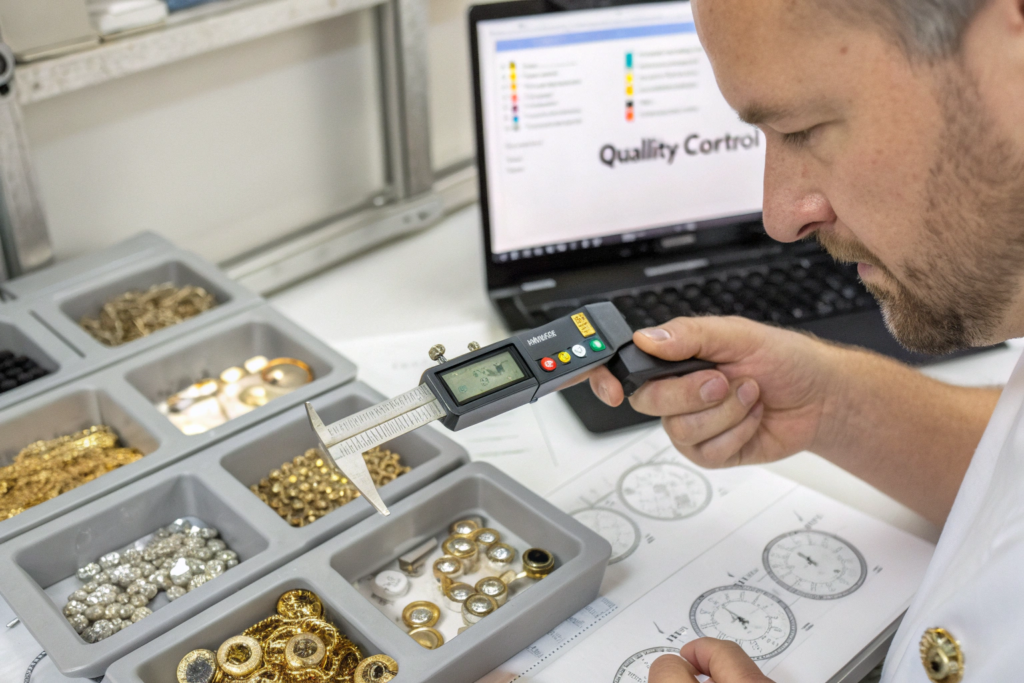
Your sample review checklist must be thorough. Beyond aesthetics, perform functional and destructive tests. For a jump ring, check the weld point strength. For a plated component, use a plating thickness gauge or perform a simple salt spray test to estimate corrosion resistance. Verify dimensions with calipers. Compare the weight and color to your reference standard. Also, review the sample’s packaging; will it prevent tangling or scratching in bulk? Document every finding with photos and notes. Provide the supplier with clear, actionable feedback—not just "this feels cheap," but "the gold plating appears less than 2 microns thick compared to the agreed 3 microns." This level of detail, as practiced in our own quality control at AceAccessory, sets clear expectations for production.
Can MOQs Be Negotiated, and How?
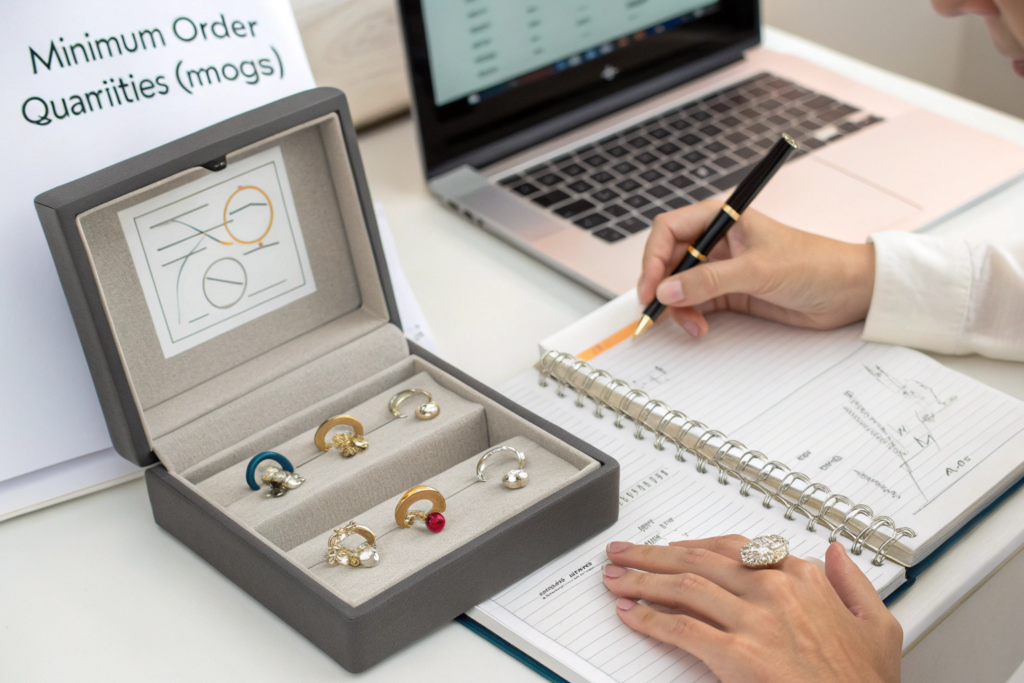
MOQs are often negotiable, especially with a compelling case. Suppliers set high MOQs to optimize machine setup and production runs. Your leverage comes from presenting a credible growth plan. Start the conversation by acknowledging their MOQ but explaining your startup or testing phase needs. Propose a trial order at 50-70% of the stated MOQ, with a commitment to a full MOQ order within a specified timeframe (e.g., 6 months). Alternatively, ask if you can "piggyback" on a standard component they already produce for other clients, which may have a lower effective MOQ. Another tactic is to consolidate multiple component orders (e.g., clasps, chains, pendants) with the same supplier to meet a total spend MOQ instead of individual item MOQs. Demonstrating professionalism and long-term potential, much like our partners at Shanghai Fumao Clothing value, can make a supplier more flexible.
How to Ensure Quality Consistency in Bulk Component Orders?
Securing a perfect sample is only half the battle. The true test of a supplier’s reliability is delivering 10,000 units that are identical to that sample. Ensuring consistency requires agreed-upon standards, ongoing monitoring, and a clear rejection protocol.
You ensure quality consistency by implementing a clear Quality Inspection Agreement (QIA) that defines AQL standards, mandating pre-shipment inspections, and maintaining open channels for production monitoring. This agreement should be part of your purchase contract and specify tolerance levels for defects like plating scratches, dimensional errors, or color deviations.
The cornerstone is the AQL (Acceptable Quality Level). For jewelry components, you typically use a strict AQL, such as General Inspection Level II with a critical defect level of 0. This means for a batch of 10,000 clasps, an inspector will randomly sample a set number and if any critical defect (like a broken mechanism) is found, the entire batch can be rejected. You or a hired third-party inspection service should conduct this pre-shipment inspection before the goods leave the factory. The American Society for Quality provides resources on statistical quality control that underpin these principles.
What Is the Role of In-Process Production Checks?
Relying solely on a final inspection is risky, as defects may be woven into the entire batch. Insist on in-process quality checks (IPQC). This means the supplier should conduct checks at key stages: after casting, after polishing, after plating, and before assembly. Request photo or video updates from these stages. For example, you could ask for a video of the plating bath color for a specific gold hue to ensure batch consistency. This allows for mid-course corrections. If you are ordering a large volume, plan a mid-production visit or hire a local inspector to visit the factory during production. This proactive approach mirrors the integrated quality control systems we employ in our own accessory manufacturing.
How to Handle Defective Components Upon Receipt?
Despite all precautions, defects can slip through. Your contract must specify the returns and reimbursement process. Upon receipt at your warehouse, conduct your own spot check immediately. Document any defects with timestamped photos and videos. Calculate the defect rate against the agreed AQL. A reliable supplier will have a protocol for handling this, often offering a credit for the defective percentage or, for critical defects, covering the cost of return shipping and replacement. Maintaining a professional, evidence-based approach is key to resolving these issues and strengthening the partnership for future orders. This commitment to accountability is what builds the trust that defines a world-class supply chain for your fashion jewelry brand.
Conclusion
Finding a reliable supplier for fashion jewelry components is a detailed process that blends research, verification, and strategic relationship building. It moves from broad searches on global marketplaces to deep dives into quality certifications, sampling rigor, and MOQ negotiations. The goal is to move from a transactional buyer-seller dynamic to a collaborative partnership where your supplier is invested in the success of your final product.
Remember, the cheapest component often becomes the most expensive when it leads to product returns, damaged brand reputation, and lost customers. Investing time in thorough vetting, clear communication, and establishing robust quality agreements pays dividends in the long run through consistent quality, on-time deliveries, and peace of mind.
If you are looking to streamline not just your component sourcing but also the end-to-end production of your fashion accessories, we invite you to connect with us. Let’s discuss how Shanghai Fumao Clothing (AceAccessory) can support your vision. Contact our Business Director, Elaine, at elaine@fumaoclothing.com to explore a true manufacturing partnership.




