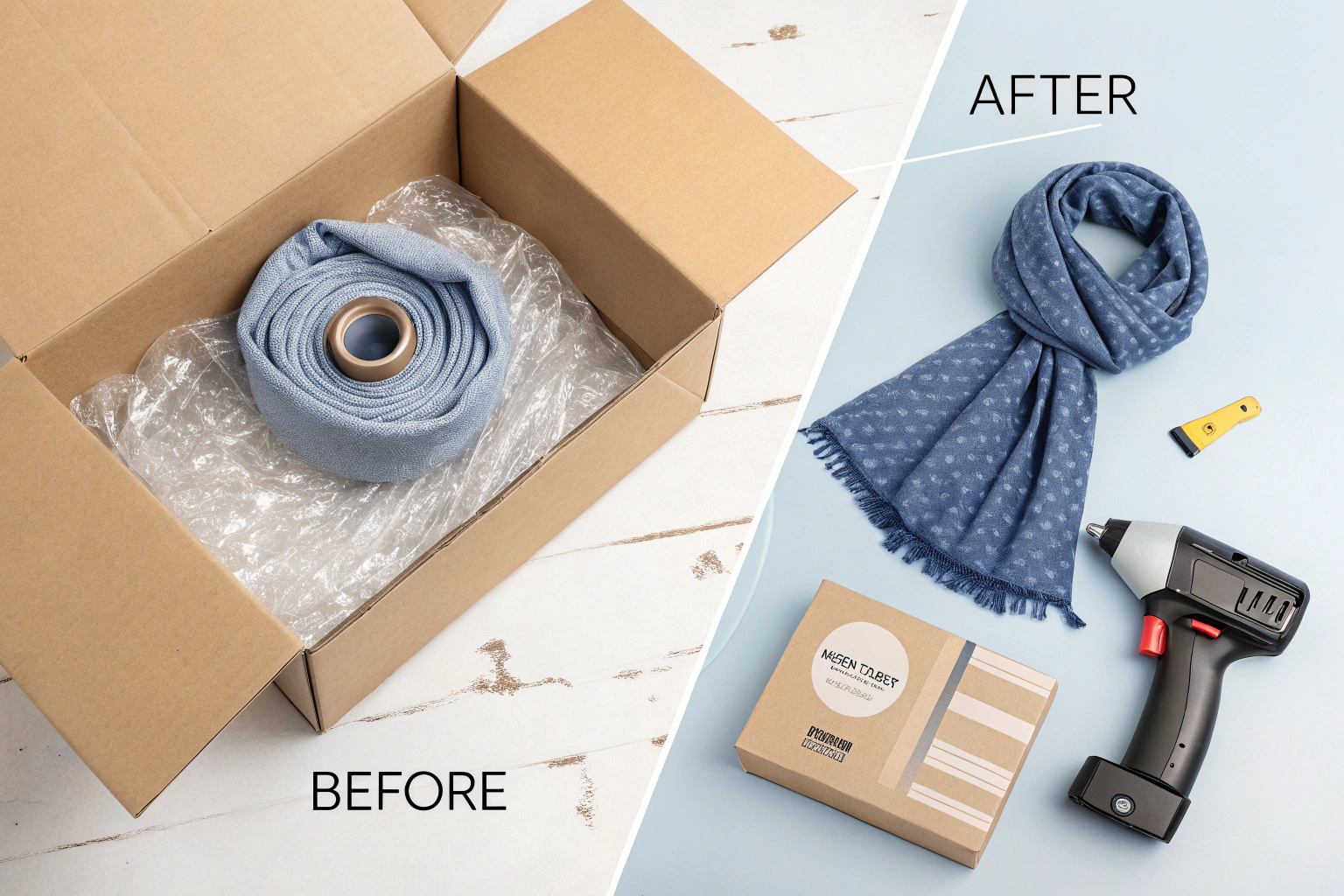
Are your shipping costs for fashion accessories eating into your profit margins? Do your beautifully packaged items arrive damaged, or do you find yourself paying for shipping mostly air? For brands and retailers, inefficient packaging is a silent profit killer. It directly inflates freight costs, increases your carbon footprint, and often fails its primary job: protection. The solution lies not in using less packaging, but in designing smarter packaging.
To design packaging that reduces shipping volume, you must adopt a minimalist, product-first approach that prioritizes three core principles: right-sizing the package to the item, using collapsible or modular structures, and selecting lightweight yet protective materials. This means moving away from generic, oversized boxes and pre-formed bulky inserts toward custom-fit solutions like flat-pack mailers, origami-style folded boxes, and innovative cushioning like molded pulp or air pillows that conform to the product’s shape. The goal is to create a secure, brand-positive unboxing experience in the smallest possible dimensional footprint.
Mastering this balance is a direct lever on your bottom line and sustainability goals. In this guide, we’ll break down the design strategies for volume reduction, explore material choices that protect without adding bulk, and explain how to integrate this new packaging into your fulfillment workflow for maximum efficiency from warehouse to customer doorstep.
What are the core principles of volume-efficient packaging design?
The journey to smaller, smarter packages begins with a mindset shift. The traditional model often uses a standard box size for convenience, filling the void with loose fill. The efficient model starts with the product itself and designs the package as a precision shell. This is governed by three interconnected principles.
First, Right-Sizing is non-negotiable. The package should hug the product as closely as possible while allowing for a thin, consistent layer of protective material. This minimizes internal movement and wasted space. Second, Structural Efficiency means designing the package to be collapsible (like a folded mailer) or to nest/flat-pack before assembly. This dramatically reduces the storage volume of empty packaging in your warehouse, which is a hidden cost. Third, Material Optimization involves choosing barriers and cushioning that offer maximum protection per gram of weight and cubic inch of volume. These principles work together to attack shipping costs from every angle: dimensional weight (DIM weight), actual weight, and storage overhead.
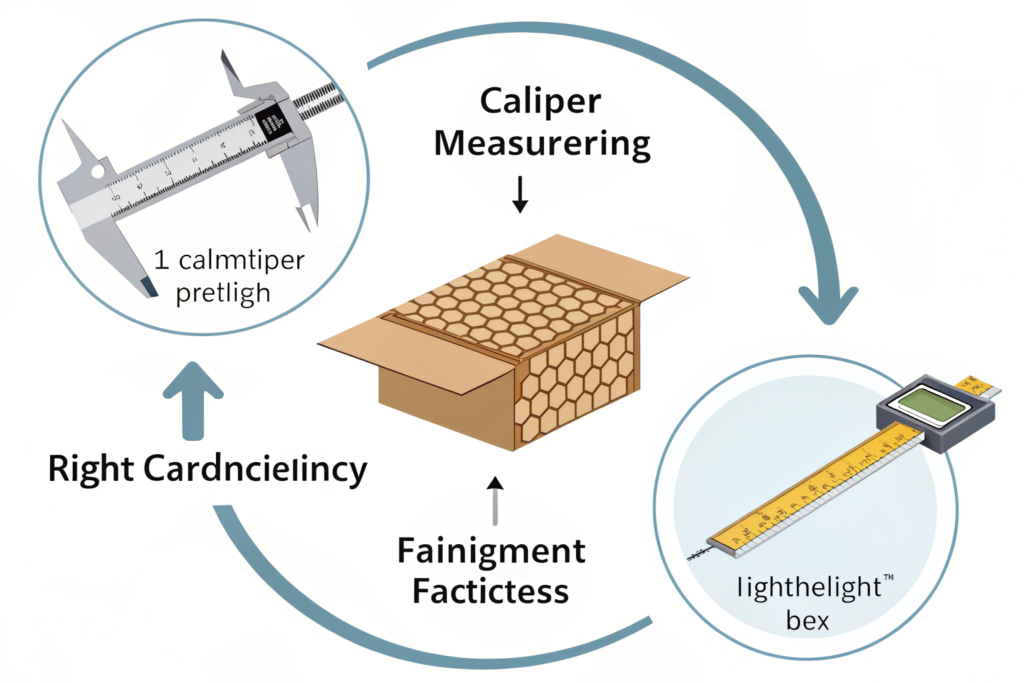
How does right-sizing directly impact dimensional weight charges?
Dimensional weight (DIM weight) is the pricing method carriers use that considers both a package’s volume and its actual weight. They calculate a dimensional weight by multiplying the package’s length, width, and height and dividing by a DIM divisor (e.g., 139 for domestic US, 166 for international). You are charged based on whichever is greater: the actual weight or the dimensional weight.
A half-empty box for a lightweight accessory like a hair clip or belt will have a high dimensional weight, and you will be charged for that "volumetric" weight, not the tiny actual weight. Right-sizing eliminates this penalty. For example, a scarf that previously shipped in a 12"x10"x3" box (DIM weight = (12x10x3)/139 = 2.6 lbs) might fit perfectly in an 11"x8"x1" mailer (DIM weight = (11x8x1)/139 = 0.63 lbs). Even if the actual weight is 0.5 lbs, the first package charges for 2.6 lbs, the second for 0.63 lbs—a massive cost reduction. Tools from carriers like FedEx and UPS provide detailed calculators and guidelines.
What are the most effective structural designs for flat-packing?
The goal is to ship air while storing flat. Several designs excel at this:
- Tuck-End Auto-Bottom (TEAB) Boxes: These classic boxes ship and store completely flat. They are quickly set up by hand or machine, forming a rigid structure. Perfect for belts, small bags, or bundled accessory sets.
- Rigid Mailers: These are corrugated cardboard sleeves that provide excellent protection for flat or low-profile items like scarves, gloves, or flat-pack caps. They offer a premium feel in a slim profile.
- Origami-Style/Folded Trays: Made from a single piece of scored cardboard, these pop into a shallow tray perfect for holding an item in place, often used with a belly band or sleeve. Ideal for small jewelry or hair accessory displays.
- Two-Piece Boxes (Telescoping): While slightly bulkier, a telescoping box (a separate lid and base) can be very space-efficient if both pieces nest inside each other for storage and are only marginally larger than the product.
When prototyping, work with your packaging supplier or manufacturer like Shanghai Fumao Clothing to test these structures. Our experience in shipping thousands of accessory orders globally informs our project management advice on optimal outbound packaging that balances cost, protection, and unboxing experience.
How to select materials that protect without adding bulk?
The quest for thinness cannot compromise protection. The right materials provide a high strength-to-thickness ratio. This means abandoning bulky, space-consuming fillers like loose foam peanuts or large crumpled paper in favor of engineered solutions that perform better in less space.
The hierarchy shifts from mass-based cushioning (filling a void) to barrier-based protection (creating a secure shell). Key attributes to look for include high tear strength for thin films, good compression resistance for flat pads, and conformability to hug irregular shapes. The material should be part of the structural system, not just a void filler.
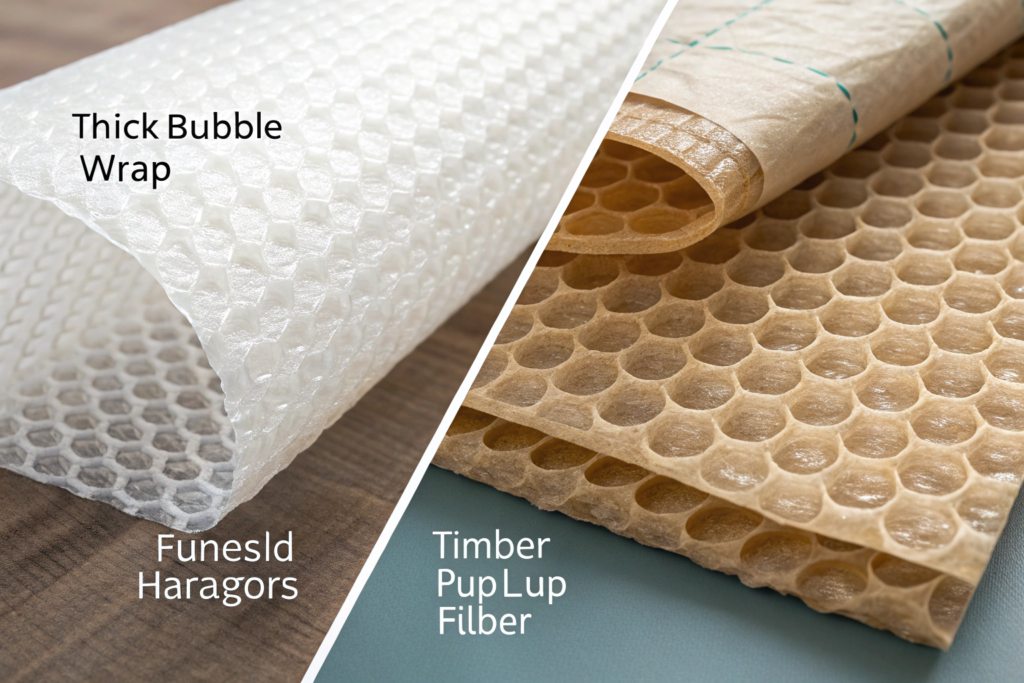
Can thin materials like honeycomb paper replace bubble wrap?
Absolutely. Honeycomb paper (often called hexcel wrap or paper cushioning) is a prime example of engineered efficiency. Its cellular structure mimics a beehive, distributing impact forces evenly across its surface. A single sheet of 1/2-inch thick honeycomb paper can provide superior cushioning to multiple layers of standard bubble wrap while taking up less space. It is also 100% paper-based, making it easily recyclable—a strong sustainability selling point.
Other high-performance, low-volume options include:
- Air Pillows (On-Demand Inflatable Systems): These systems inflate plastic film into pillows at the point of packing. They conform to empty spaces in a right-sized box, preventing movement without adding pre-inflated bulk to your warehouse. They are the ultimate "void fill" for the remaining small gaps in an optimized package.
- Molded Pulp/Fiber: For high-end or fragile items like decorated cups or structured hats, custom-molded pulp trays hold the product snugly in place. The tray becomes part of the presentation and is often made from recycled newspaper.
- Corrugated Cardboard Partitions/Inserts: Thin, die-cut cardboard inserts can create internal walls within a box, separating items (like multiple hair clips in a set) and preventing them from knocking into each other.
Transitioning to these materials often requires an upfront investment in design and tooling (for custom molded pulp) or equipment (for an air pillow system), but the long-term savings in shipping and materials, plus reduced damage rates, provide a strong ROI.
How do barrier bags and sealable mailers enhance protection?
For many fashion accessories, the primary threats are dust, moisture, and abrasion, not impact from a drop. In these cases, the primary packaging itself can be the shipper.
- Re-sealable Barrier Bags (Poly Mailers with Bubble Lining): A lightweight, lined poly mailer can protect a soft item like a scarf or shawl from rain and dirt. When the item is folded compactly, the mailer provides a tough, puncture-resistant outer layer without the need for an outer box.
- Water-Resistant Paper Mailers: These offer a more premium, matte feel than poly mailers and often have a water-resistant coating. They are excellent for items where a cardboard box is overkill.
- Integrated Cushioning Mailers: Some mailers have an internal layer of bubble or foam laminated directly to the interior, creating an all-in-one protective shipper that is still very slim.
These solutions eliminate the "box-within-a-bag" redundancy. When choosing a mailer, ensure the seal is strong (often a peel-and-stick adhesive strip) and that it can withstand the rigors of the postal system without tearing. The Sustainable Packaging Coalition provides resources on material choices that reduce environmental impact.
How to integrate efficient packaging into your fulfillment process?
A brilliant package design fails if it’s slow or awkward to assemble in your warehouse. The transition to volume-efficient packaging must consider the human ergonomics and process flow of your fulfillment operation. The most efficient package is one that can be packed quickly, consistently, and correctly by your team, minimizing labor time—another major cost component.
This involves designing for ease of assembly, clear packing instructions (either intuitive design or simple graphics), and compatibility with any existing automation (like label printers or taping machines). The package should arrive at the packing station in its most compact form (flat), be quickly converted into its protective shape, have the product inserted with minimal adjustment, and be sealed reliably.
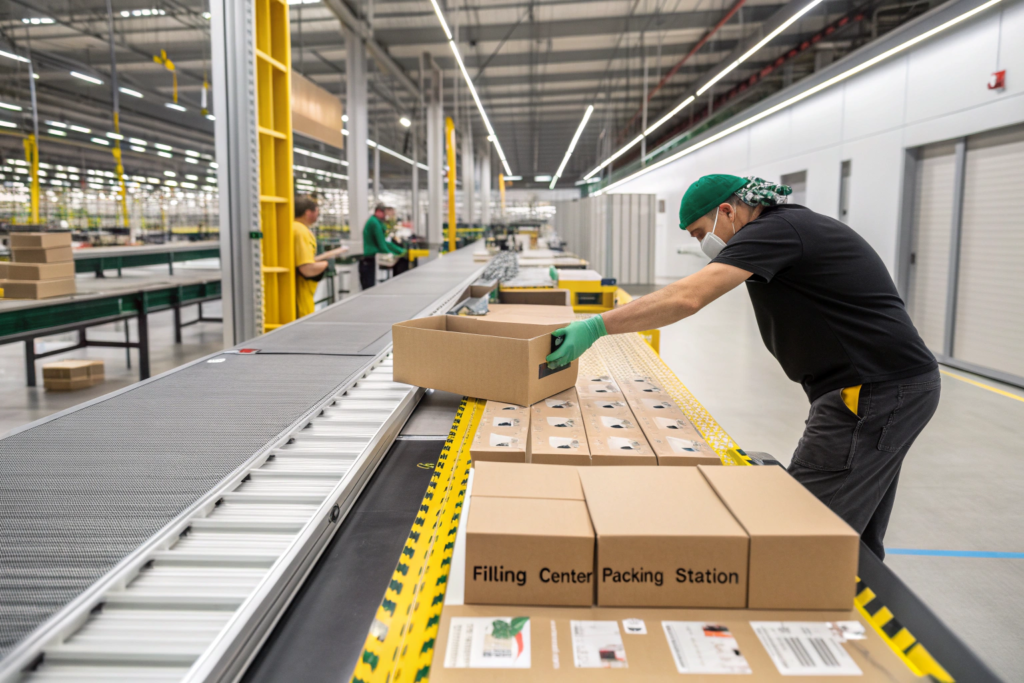
What are the ergonomic and workflow considerations?
A poorly designed flat-pack box that is difficult to fold or that requires excessive force to close will slow down your team and cause frustration. Key considerations include:
- Pre-Scored Folds: Deep, clean score lines make folding precise and easy.
- Intuitive Tab-and-Slot Design: Closure mechanisms should align naturally and lock securely without needing tape for structure (though tape may still be used for security).
- Standardized Sizes: Reduce the number of SKUs of packaging you stock. Aim for 3-4 sizes that cover 90% of your product range through the use of adjustable internal cushioning.
- Packing Station Layout: Store the most frequently used packaging sizes within easy reach. Have cushioning materials (like honeycomb paper rolls or an air pillow machine) positioned to minimize wasted motion.
Conduct a packing trial with several team members using the new packaging prototypes. Time them, note any points of confusion or physical difficulty, and gather their feedback. This iterative testing is a core part of our service when we help clients at Shanghai Fumao Clothing develop custom packaging solutions. Our quality control extends to ensuring the packaging is fit for purpose in the real-world logistics chain.
How to implement a scalable, multi-SKU packaging system?
For brands with diverse products (e.g., a small hair clip vs. a bulky bucket hat), a tiered packaging system is essential.
- Category-Based Sizing: Group products by dimensions and fragility. Example: Tier 1 (Flat: scarves, belts) -> Rigid Mailer. Tier 2 (Small 3D: hats, small bags) -> Small TEAB Box. Tier 3 (Large/Delicate: structured hats, gift sets) -> Larger Box with Custom Insert.
- Modular Inserts: Develop a range of cardboard inserts or molded pulp trays that can be placed inside your standard box sizes to accommodate different products. One box size can safely hold many items with the right insert.
- Digital Tools: Use your e-commerce platform or warehouse management system (WMS) to suggest the optimal package size for each order based on product dimensions. This reduces human guesswork.
Investing in this systematic approach upfront prevents the chaos of mismatched packaging and ensures that as your product line grows, your packaging and shipping process remains cost-effective and controlled.
What are the cost and sustainability benefits?
Reducing shipping volume isn’t just a tactical cost-saving measure; it’s a strategic advantage with compounding benefits. The savings are direct and immediate on every single package you ship. Furthermore, in an era where consumers are increasingly eco-conscious, minimizing packaging waste is a powerful brand message that aligns with values and can drive purchasing decisions.
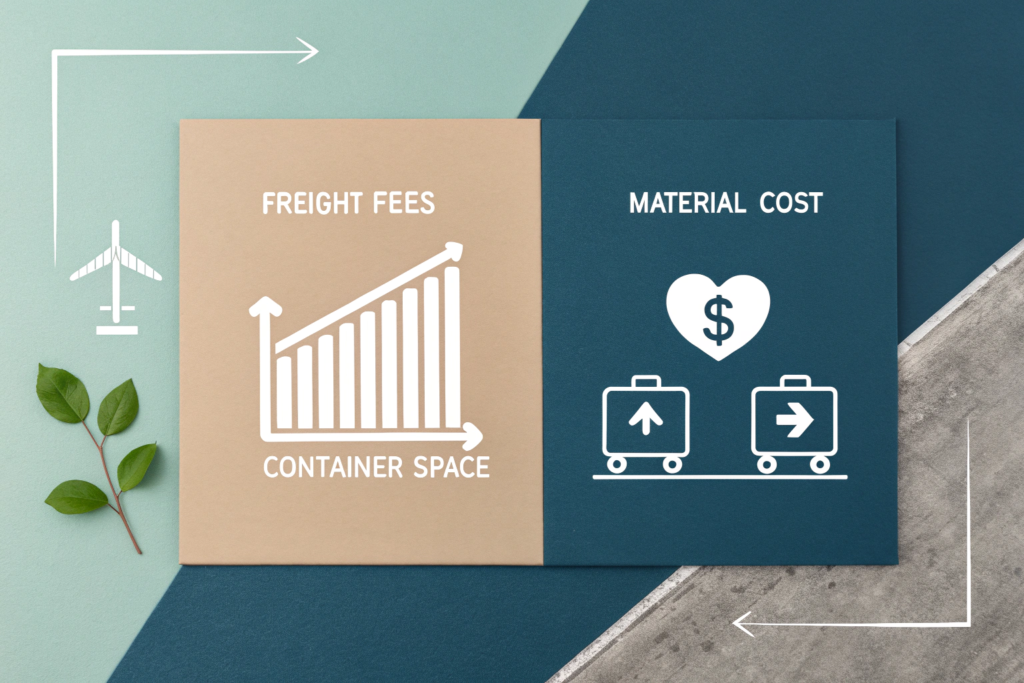
The financial math is compelling. Lower DIM weight means lower carrier fees. Lighter packages also sometimes qualify for lower rates. Reduced material usage means lower packaging procurement costs. Smaller packages mean you can fit more units in a shipping container from your manufacturer, reducing your per-unit logistics cost for international shipping. All these savings flow directly to your bottom line.
How to calculate the Return on Investment (ROI) for packaging redesign?
To build a business case, quantify the savings. Follow these steps:
- Audit Current Costs: Calculate your average shipping cost per order, including materials (box, filler, tape, label) and carrier charges over a representative period (e.g., last quarter).
- Prototype & Quote: Design your new packaging and get quotes for production. Factor in any new equipment (e.g., an air pillow machine).
- Model New Costs: Using the new package dimensions and weight, get estimated shipping rates from your carrier (using their DIM weight calculator). Add the new per-unit material cost.
- Compare and Project: (Old Cost per Shipment – New Cost per Shipment) x Annual Shipment Volume = Annual Savings.
Subtract any one-time design/equipment costs. The result is your annual net savings. Even a $0.50 saving per package adds up to $50,000 annually on 100,000 shipments. This ROI calculation often justifies the upfront investment in custom design and tooling. The Packaging Institute offers resources and case studies on packaging efficiency projects.
How does minimal packaging enhance brand image and sustainability?
Beyond cost, minimalist, right-sized packaging delivers a superior unboxing experience. It feels intentional, not wasteful. It communicates that your brand is thoughtful, modern, and responsible. You can use the package itself as a clean canvas for branding—a simple logo deboss on a kraft mailer can feel more premium than a giant logo on a cheap, oversized box.
From a sustainability standpoint, the benefits are clear:
- Source Reduction: Using less material is the most effective form of waste prevention.
- Lower Carbon Footprint: Smaller, lighter packages require less fuel to transport.
- Improved Recyclability: Mono-material packages (e.g., a pure corrugated cardboard box with paper cushioning) are easier for consumers to recycle than complex multi-material assemblies.
Promote these efforts in your marketing. Use phrases like "Ship in Fit™ packaging" or "Designed to reduce waste" on your website. This transparency resonates with customers and can be a key differentiator. It turns a logistical necessity into a brand asset.
Conclusion
Designing packaging that reduces shipping volume is a powerful exercise in efficiency that pays dividends financially, operationally, and environmentally. It begins with a commitment to right-sizing and structural ingenuity, moves through the selection of high-performance, low-volume protective materials, and is fully realized through a fulfillment process designed for speed and consistency.
The result is a triple win: significantly lower shipping and material costs, a reduced environmental impact that strengthens your brand, and a more polished, customer-centric unboxing experience. In a competitive market where logistics can make or break profitability, optimized packaging is not just a detail—it’s a strategic imperative.
If you are looking to redesign your accessory packaging to be slimmer, smarter, and more cost-effective, let’s apply our expertise in product presentation and global logistics to your challenge. Contact our Business Director Elaine at Shanghai Fumao Clothing to discuss how we can develop optimized packaging solutions for your product line. Reach out to Elaine at elaine@fumaoclothing.com to start the conversation.