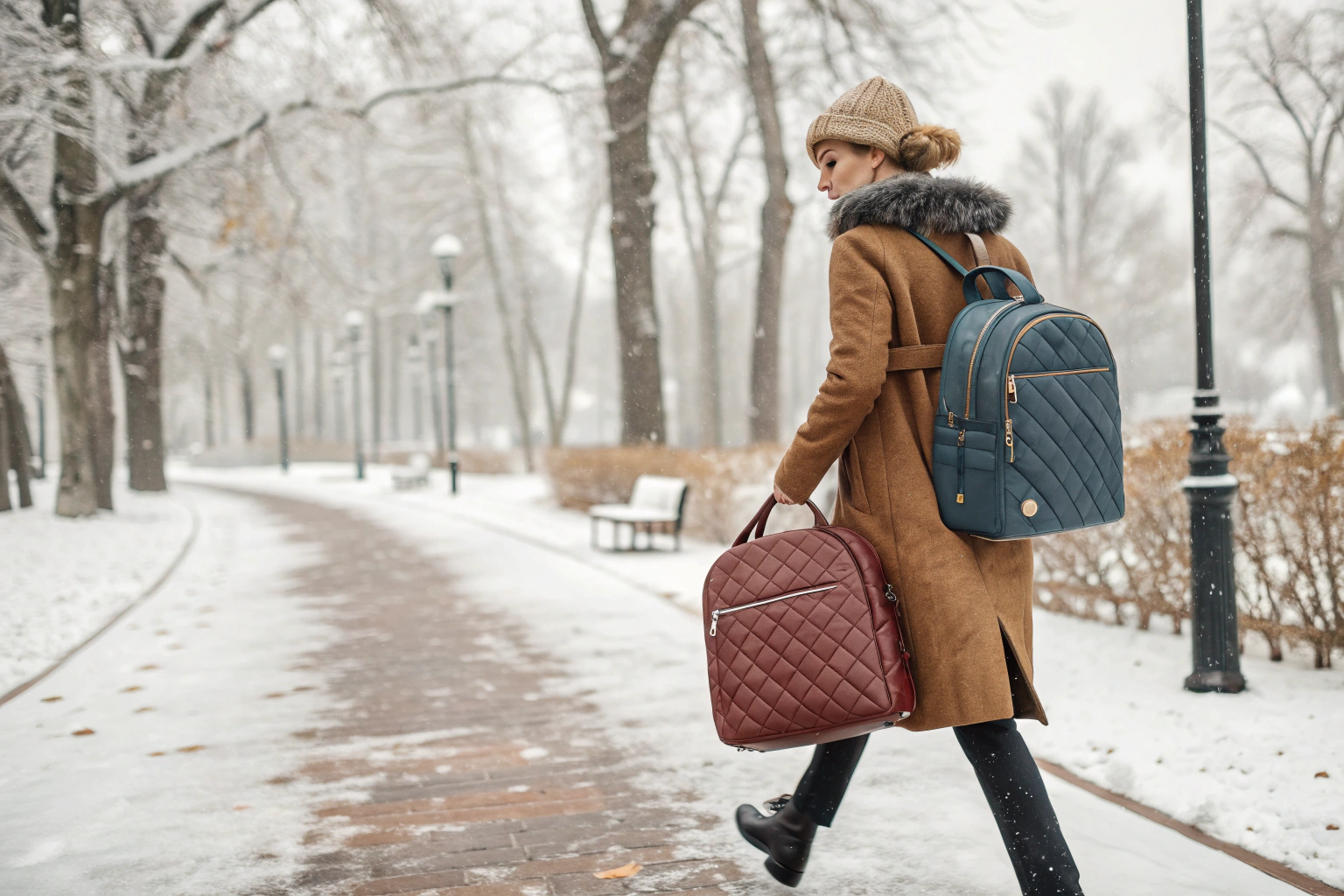
Are you struggling to find a winter backpack that keeps your belongings warm while complementing your cold-weather style? Do functional backpacks often look too technical, while fashionable ones fail in the cold? For buyers sourcing winter collections, this gap between utility and aesthetics can limit sales. The secret lies not just in the design, but in the material itself.
The best backpack materials for warm winter fashion combine insulation, texture, and durability. Specifically, faux fur-lined fabrics, heavyweight wool blends, waxed canvas, and quilted nylon or polyester offer both thermal properties and stylish appeal. For instance, a backpack with a plush faux fur exterior or a wool-blend body provides visual warmth and insulation, while a quilted design with synthetic padding traps heat. The right material creates a cozy, protective shell for your items, much like a winter coat, while elevating your overall seasonal look.
Choosing the right material is crucial for creating products that resonate with winter consumers. In this guide, we’ll explore materials that provide genuine warmth, analyze how texture and color contribute to winter fashion, and provide practical sourcing and design considerations for creating backpacks that are both functional and stylish for the cold season.
What Defines a "Warm" Material for Winter Backpacks?
When we talk about warmth in backpack materials, we’re referring to two interconnected properties: thermal insulation and psychological warmth. Thermal insulation is the material’s physical ability to resist heat transfer, keeping the contents protected from external cold. This is achieved through structure—like the loft in a faux fur that traps air—or through density, like a thick wool weave. Psychological warmth is triggered by texture and visual cues; a nubby wool or soft shearling looks and feels warm, influencing a customer’s perception before they even use the product.
For a backpack, warmth must be balanced with practicality. The material needs to be durable enough for daily use, relatively lightweight, and often weather-resistant. A truly warm winter backpack material is therefore a hybrid: it might combine a cozy, textured outer shell with a thermal lining, or integrate insulating panels in key areas. This approach directly addresses the user’s desire for an accessory that feels like a natural, protective extension of their winter wardrobe, not just a carryall.
How Do Insulating Materials Like Faux Fur Function?
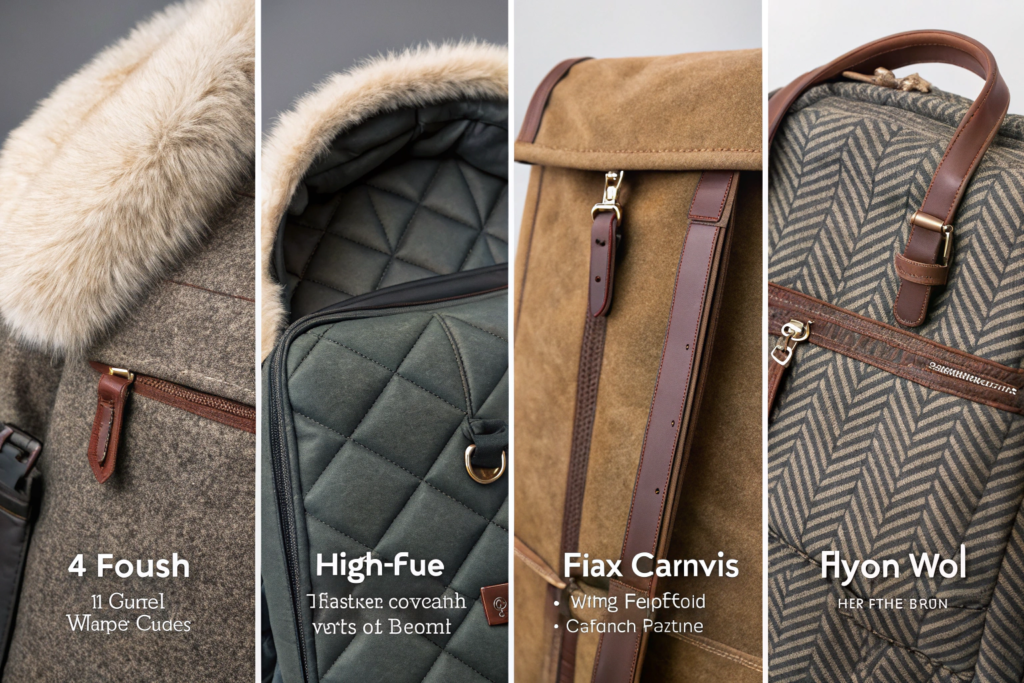
Faux fur is a powerhouse for winter fashion due to its exceptional insulating properties and luxurious texture. Its warmth comes from its high pile, which creates millions of tiny air pockets. Air is a poor conductor of heat, so this trapped air layer acts as an effective barrier against the cold. This is the same principle behind down jackets and thermal blankets. When used on a backpack—either as an all-over exterior or as strategic trim—it provides significant thermal protection for items inside, such as keeping a tablet or lunch insulated.
Beyond physics, faux fur delivers immediate visual and tactile warmth. It evokes feelings of comfort and luxury, aligning perfectly with cozy winter trends. From a sourcing and manufacturing perspective, high-quality faux fur made from modacrylic or polyester blends is durable, colorfast, and easier to maintain than real fur, making it an ethical and practical choice for fashion brands. It can be seamlessly integrated with other materials, for example, as a backing to a leather or canvas flap. The Textile Exchange provides resources on material choices, including synthetic alternatives for fashion.
Why Are Wool Blends a Timeless Choice for Winter?
Wool is nature’s premier insulating fiber, and its use in winter fashion is timeless. Wool fibers are crimped, which allows them to trap air efficiently. They are also naturally hygroscopic, meaning they can absorb moisture vapor (like sweat) without feeling wet, and they retain heat even when damp—a critical feature for winter. For backpacks, a 100% wool exterior might be less durable, so wool blends are key. Blending wool with nylon or polyester (e.g., 70% wool, 30% nylon) enhances abrasion resistance, reduces shrinkage, and adds structure.
The aesthetic appeal is immense. Wool blends can be woven into rich patterns like herringbone, tweed, or cable knit, offering a sophisticated, textured look that screams winter. This material choice positions a backpack as a fashion accessory first, with the added benefit of natural warmth. It connects with consumers seeking natural fibers and classic craftsmanship. For brands, working with a manufacturer experienced in handling textured blends is crucial to ensure clean sewing and finishing. The International Wool Textile Organisation (IWTO) sets standards for wool quality and testing.
Which Textures and Colors Convey Winter Warmth?
Material science provides the foundation, but texture and color are the languages of fashion that communicate warmth directly to the consumer. In winter, visual and tactile cues are paramount. Textures that imply density, softness, or loft signal insulation. Colors drawn from the winter landscape—deep, rich, or neutral—enhance this perception and ensure the backpack coordinates with seasonal apparel.
This combination creates a holistic "winter feel." A smooth, glossy backpack in a pastel color will not convey warmth, even if it’s thick. Conversely, a backpack in a rough, nubby tweed in charcoal grey or a quilted puffer material in burgundy immediately feels appropriate for the season. Mastering this synergy allows brands to create backpacks that are desirable seasonal objects, not just functional items.
What Textures Signal Insulation and Comfort?
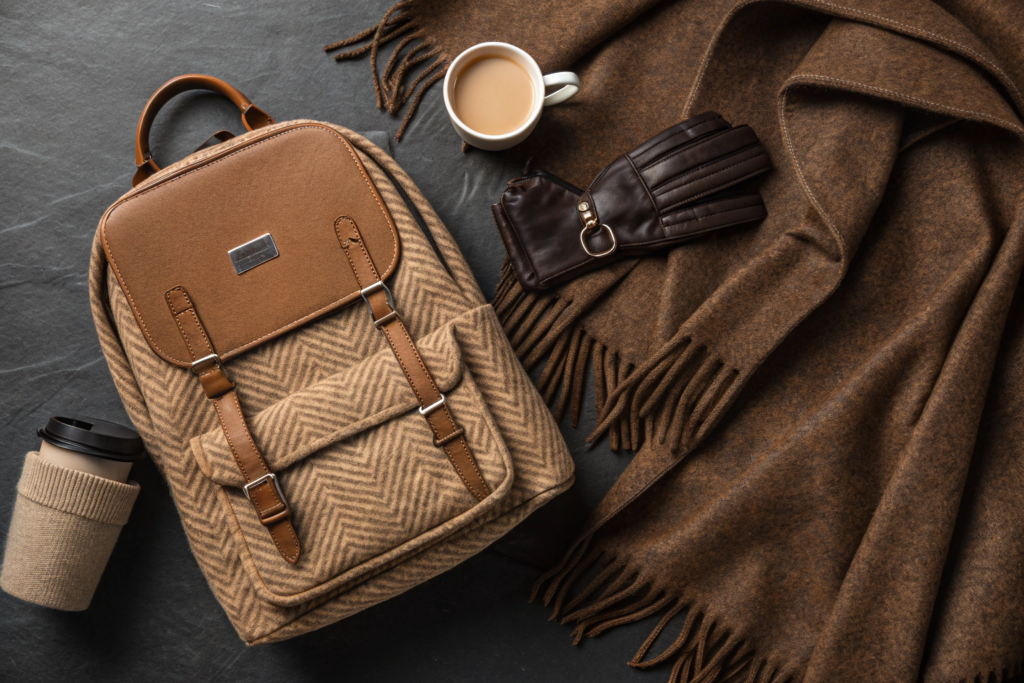
Specific textures are universally decoded as "warm." Sourcing and featuring these can define your product’s seasonal appeal.
- Quilted/Puffed: This texture immediately associates with puffer jackets and comforters. The raised sections show where insulation is trapped, promising warmth. It works beautifully with nylon or polyester.
- Cable Knit/Ribbed: This pattern, reminiscent of winter sweaters, suggests handcrafted coziness and thickness. It can be achieved with specific knit blends or through embossed/printed techniques on other materials.
- Fleece/Sherpa Lining: While often an interior feature, allowing a peek of this soft, fluffy texture at the opening or pocket signals a warm interior. Brushed polyester fleece is a common, effective choice.
- Waxed or Oiled Surfaces: A waxed canvas or oiled leather has a subtle, rugged texture that suggests protection against the elements (wind, snow), which is inherently linked to winter preparedness.
At Shanghai Fumao Clothing, our design team works closely with clients to select and source fabrics with these decisive textures. We understand that the tactile experience is a major part of the unboxing and first-use impression, which is why material sampling is a critical step in our product development process.
How Does Color Psychology Enhance Winter Perception?
Color choices can make a material feel warmer or colder. Winter fashion palettes leverage color psychology to reinforce the theme of warmth and depth.
- Deep Jewel Tones: Colors like burgundy, forest green, navy, and plum are rich and absorbing, reminiscent of winter berries, evergreen trees, and night skies. They feel protective and luxurious.
- Earth Neutrals: Camel, charcoal, chocolate brown, and oatmeal connect to natural winter landscapes (bare wood, stone, wool) and evoke a sense of organic, grounded warmth.
- Creams and Off-Whites: These colors reference snow and wool in its natural state, offering a clean, soft, and cozy feel without the chill of a pure, bright white.
Using these colors on texturally warm materials doubles down on the winter message. For example, a quilted backpack in deep green feels warmer than the same shape in light grey. Color forecasting resources like Pantone and WGSN release seasonal color palettes that are invaluable for aligning your product line with broader fashion trends.
How to Design Backpacks for Function and Winter Style?
A warm-looking backpack that fails in function will disappoint customers. The design must integrate winter-specific features thoughtfully. This means considering how the material choices impact not just aesthetics but also usability in cold weather. Key considerations include closure systems that work with gloves, added protection for contents, and ensuring the cozy materials don’t compromise the bag’s structure or durability.
Successful winter backpack design is holistic. It starts with the right shell material (e.g., wool blend, quilted nylon) and is complemented by functional details like water-resistant zippers, padded straps for comfort over bulky coats, and strategic use of insulating linings. The goal is to create a product that feels like a seamless part of the winter experience, from the commute to the weekend outing.
What Are Essential Winter-Specific Functional Features?
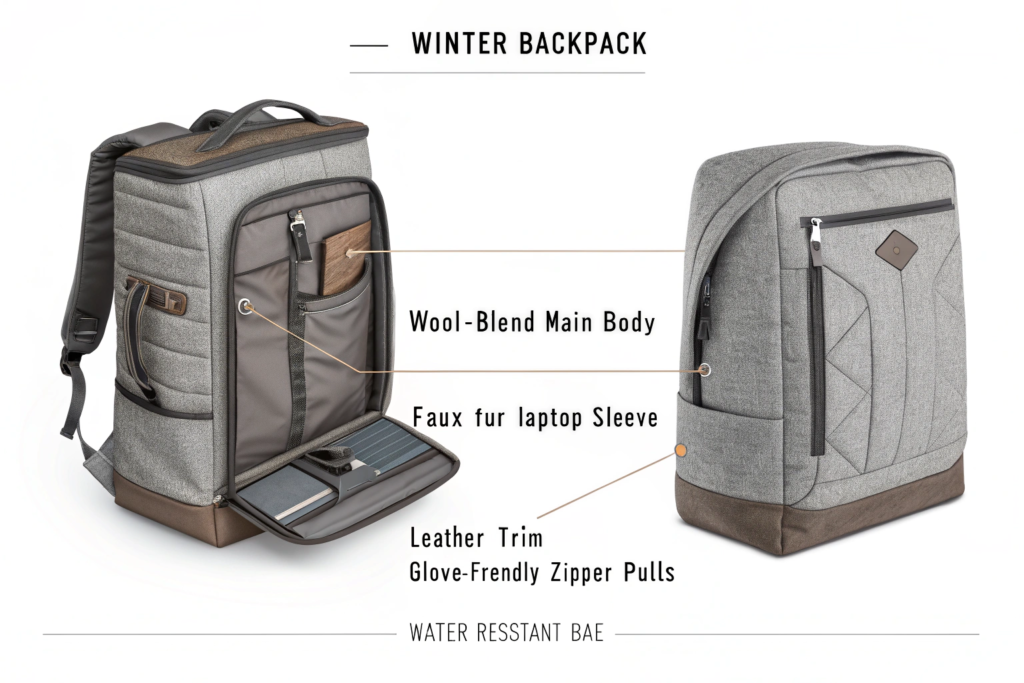
Beyond the core material, these features elevate a backpack for winter use:
- Glove-Friendly Closures: Large zipper pulls, toggle closures, or magnetic snaps that can be easily manipulated while wearing gloves.
- Thermal Linings and Pockets: Adding a layer of fleece, faux fur, or thermal foam to specific compartments (like a laptop sleeve or a lunch pocket) provides targeted insulation for temperature-sensitive items.
- Weather-Resistant Details: A water-repellent treatment (DWR) on the outer fabric, sealed seams, or a built-in rain cover (stored in a bottom pocket) protect the bag and its contents from snow and sleet.
- Adjustable, Padded Straps: Straps that can accommodate thicker winter clothing and are generously padded for comfort under a heavy load.
- Durable Base: Using a tougher material like leather or rubberized nylon for the bottom of the bag protects the more delicate winter fabrics (like wool) from wet ground and abrasion.
Integrating these features requires close collaboration with your manufacturer’s project management and technical teams. They can advise on the most cost-effective ways to incorporate these elements without sacrificing the design vision or blowing the budget.
How to Balance Cozy Materials with Structural Integrity?
Soft, cozy materials like faux fur or thick wool can sometimes lack the inherent structure needed for a backpack to hold its shape. The solution lies in construction techniques and material combinations:
- Panel Lamination: The cozy exterior fabric can be laminated to a sturdier backing fabric or a thin layer of foam before cutting and sewing. This gives the panel body and prevents sagging.
- Strategic Reinforcements: Use structured materials (like leather, canvas, or rigid nylon) for the gussets, base, and back panel (which sits against the wearer’s back), while using the cozy material on the flap, front, or sides.
- Internal Framing: A lightweight internal frame sheet (often made of plastic or stiff foam) sewn into the back panel can provide structure without compromising the soft exterior feel.
- Interlining: Adding a sturdy interlining between the outer fabric and the lining can help maintain shape.
Our factory’s experience in producing diverse accessories, from structured bags to soft scarves, gives us the expertise to engineer solutions that ensure your beautiful winter backpack is also practical and long-lasting. This is a core part of our quality control process, where prototype load-testing is standard.
Why is Sourcing the Right Winter Materials Critical?
The success of a winter fashion backpack line hinges on the authenticity and quality of its materials. Sourcing mistakes—such as choosing a wool blend that pills excessively, a faux fur that sheds, or a quilted material with poor fill distribution—can lead to product failures, returns, and brand damage. Sourcing is not just about finding a supplier; it’s about building a supply chain for materials that perform as good as they look.
This involves technical diligence: requesting and testing material swatches for colorfastness, abrasion resistance, water repellency, and care requirements. It also involves ethical and compliance checks, ensuring materials meet relevant safety and import regulations. For winter materials, special attention should be paid to insulation claims and the durability of surface textures.
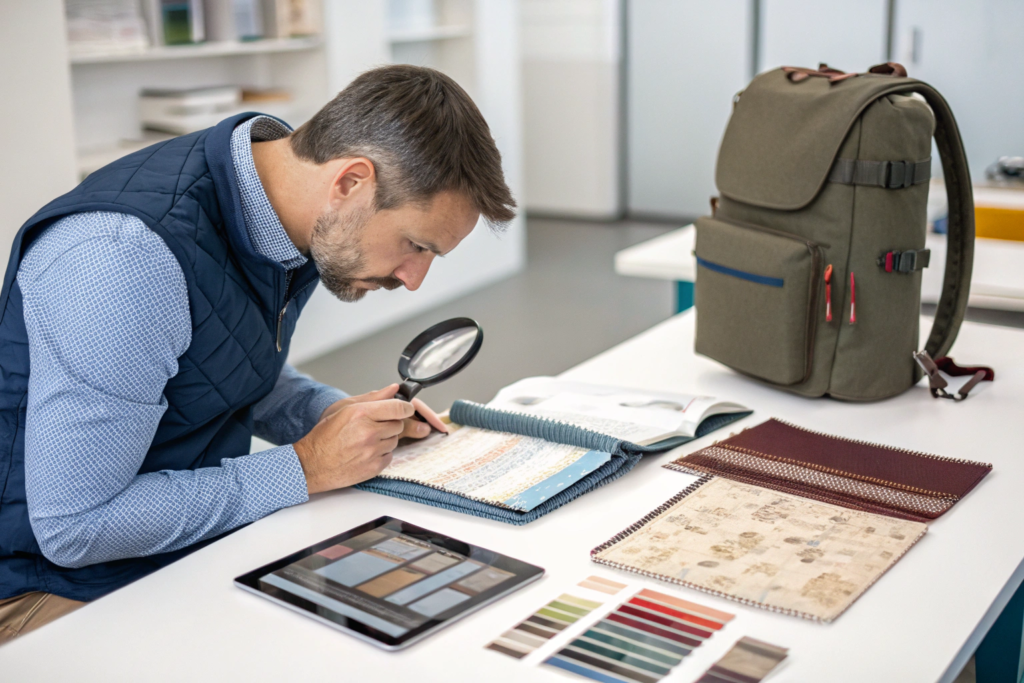
What Tests Verify Warmth and Durability Claims?
Before committing to bulk production, key tests should be conducted on material swatches or prototypes:
- Thermal Resistance Testing (Clo Value or Tog): While more common for apparel, labs can test the insulating properties of fabric assemblies. This provides scientific backing for "thermal" claims.
- Martindale Abrasion Test: Crucial for textured materials like wool blends and faux fur to ensure they won’t wear thin or bald quickly at friction points (like where straps attach).
- Colorfastness to Crocking (Rubbing) and Light: To ensure dark, rich winter colors won’t transfer to clothing or fade quickly in winter sun.
- Water Repellency Spray Test (AATCC 22): To verify the effectiveness of any DWR treatment applied to the fabric.
- Pilling Test: Especially important for wool blends and brushed fabrics to ensure they maintain a neat appearance.
Working with a manufacturer like Shanghai Fumao Clothing that has an established quality control team and relationships with certified labs can streamline this process. We ensure all materials are vetted against agreed specifications, mitigating risk for our clients. Standards organizations like ASTM International provide many of the test methods used globally.
How to Ensure Ethical and Compliant Material Sourcing?
Today’s consumers and retailers are increasingly concerned with sustainability and ethics. When sourcing winter materials:
- Request Certifications: For wool, look for Responsible Wool Standard (RWS) certification. For synthetics, ask about recycled content (e.g., Global Recycled Standard – GRS). For faux fur, ensure it is clearly labeled and sourced from reputable suppliers.
- Understand Care and Compliance: Materials must comply with regulations in your target markets (e.g., CPSIA in the USA, REACH in the EU). This includes restrictions on certain chemicals (AZO dyes, PFAS).
- Evaluate Supply Chain Transparency: Choose suppliers and manufacturers who can provide information about the origins of key materials. This is vital for branding and risk management.
Proactively addressing these points not only safeguards your business but also becomes a compelling part of your product’s story. It shows a commitment to quality and responsibility that resonates with modern buyers. Resources like the Sustainable Apparel Coalition offer frameworks for assessing environmental impact.
Conclusion
Identifying the best backpack materials for warm winter fashion is an exercise in combining sensory appeal with practical performance. It starts with inherently insulating and texturally rich materials like faux fur, wool blends, quilted synthetics, and waxed canvas. These materials must then be brought to life through winter-appropriate colors and textures that signal coziness and protection. The final, crucial step is integrating these materials into a design that includes thoughtful, winter-specific features, all while ensuring structural integrity and durability through sound construction.
The ultimate goal is to create a backpack that feels like an essential, beloved part of the winter wardrobe—an accessory that customers reach for not just to carry their items, but to enhance their comfort and style during the coldest months. This requires a meticulous approach to sourcing, testing, and design collaboration.
If you are looking to develop a line of winter backpacks that perfectly blend fashion and function, let’s combine your vision with our expertise in materials and manufacturing. Contact our Business Director Elaine at Shanghai Fumao Clothing to discuss how we can create warm, stylish, and high-quality backpacks for your next seasonal collection. Reach out to Elaine at elaine@fumaoclothing.com to start the conversation.