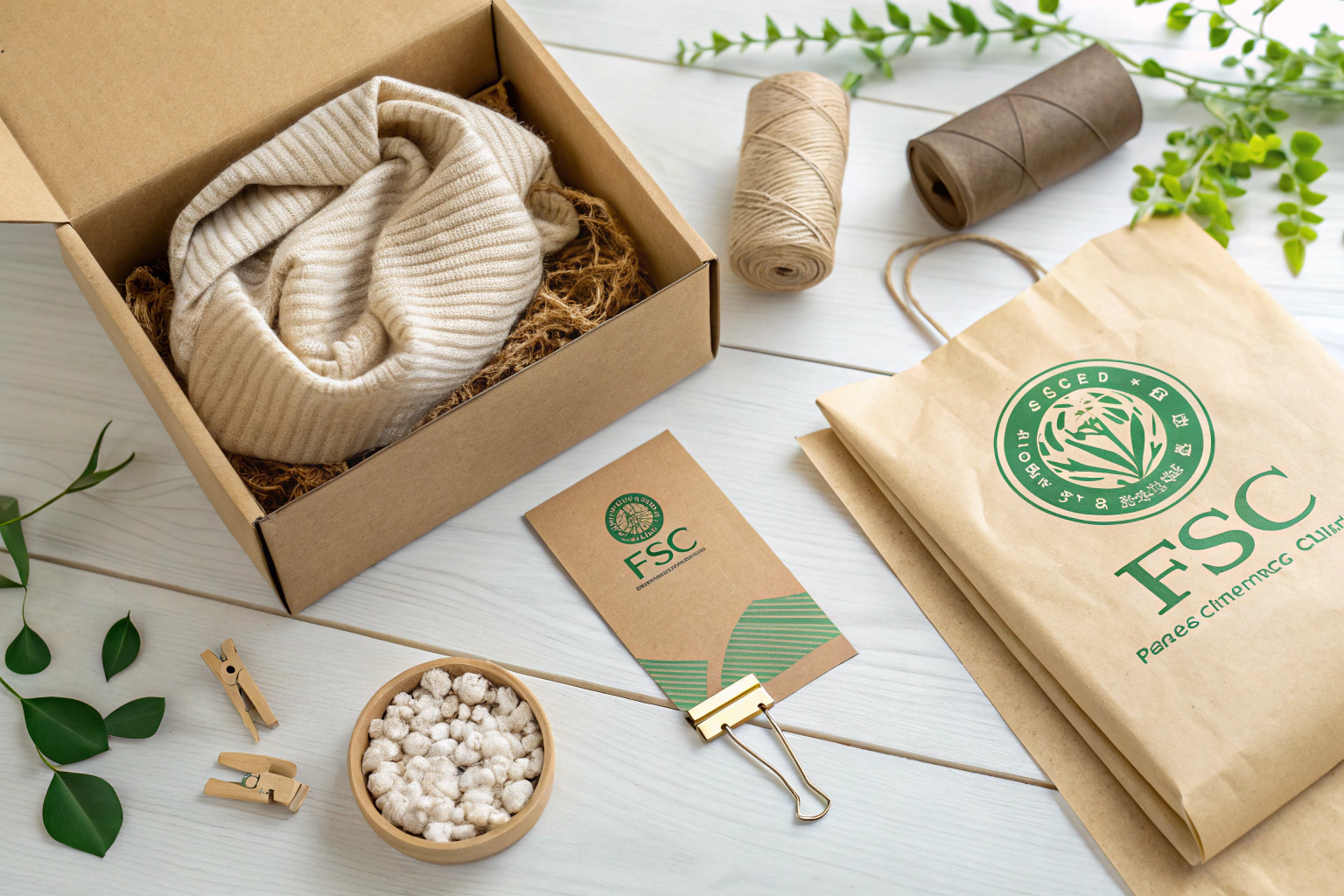
Are you tired of presenting your beautifully crafted accessories in packaging that contradicts your brand’s sustainable values? Do you worry about the environmental impact of polybags, bubble wrap, and plastic clamshells that end up in landfills after a single use? You’re facing a critical touchpoint where brand ethos meets customer experience. The unboxing moment is a powerful brand impression, and today’s conscious consumer expects packaging that aligns with their values—not pollutes their planet.
The shift away from plastic is not just an environmental imperative; it’s a commercial opportunity. The best eco-friendly alternatives are those that are recyclable, compostable, reusable, or made from recycled content, while still protecting your product and enhancing its perceived value. This requires a holistic rethinking of your packaging strategy, from the primary wrap to the shipping box. The goal is to create a system that is functional, beautiful, and leaves no lasting trace.
This guide will explore a tiered approach to replacing plastic across all stages of your packaging. We’ll cover primary product wraps and inserts, protective void fill and cushioning, shipping mailers and boxes, and finally, how to integrate these elements into a cohesive, zero-waste customer experience. Let’s design packaging that protects both your products and the planet.
What Are the Best Primary Packaging Alternatives to Polybags?
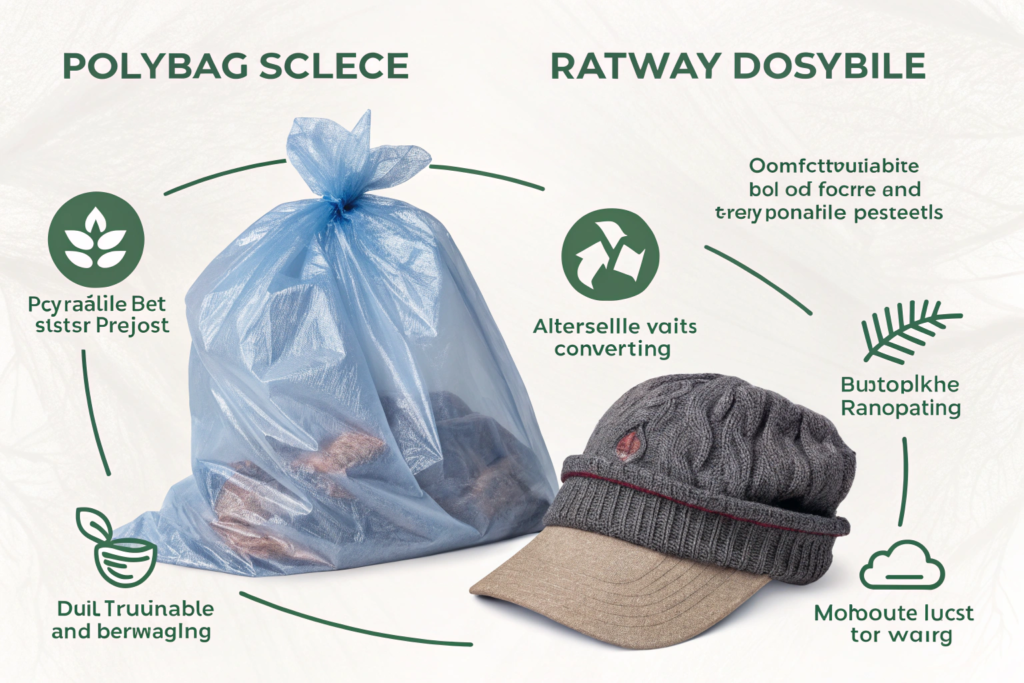
The polybag—that thin plastic sleeve around a hat, scarf, or pair of gloves—is the first plastic item a customer sees and discards. Replacing it is your most visible sustainability upgrade. The alternatives must protect the product from dust and moisture during storage and transit while being either fully recyclable or compostable.
Top alternatives include:
- Compostable Cellulose Bags: Made from wood pulp (often FSC-certified), these clear bags look and feel similar to plastic but will break down in an industrial composting facility in weeks. They are excellent for maintaining product visibility. Ensure they are certified to standards like ASTM D6400 or EN 13432.
- Recycled Paper Bags/Sleeves: Opaque bags made from 100% post-consumer recycled (PCR) paper. They offer a premium, tactile feel and are widely recyclable. Ideal for items that don’t need to be seen through the packaging.
- Reusable Fabric Pouches: A premium option. A simple cotton muslin or GOTS-certified organic cotton drawstring bag becomes part of the product—a keepsake for storage or travel. This adds significant perceived value and encourages reuse.
- Molded Pulp Trays: For more structured items like sunglasses or delicate hair accessories, trays made from molded paper pulp (from recycled paper or bamboo) offer custom-fit protection and are fully recyclable/compostable.
Are Compostable Plastics (PLA) a Good Alternative?
Polylactic Acid (PLA) is a bioplastic typically made from corn starch. It is industrially compostable only, requiring high-heat facilities that most consumers don’t have access to. If sent to a landfill or recycled stream, it can cause contamination. Therefore, PLA is a context-dependent solution:
- Use it if: You have a take-back program or know your end-consumer has access to industrial composting (rare). Clearly label it: "Industrial Compostable Only."
- Avoid it for: General e-commerce where you cannot control disposal. In this case, home-compostable cellulose bags or recycled paper are simpler and safer choices. Always prioritize materials with a clear and easy end-of-life path for the customer.
How to Use Branded Paperboards and Cards Effectively?
For smaller accessories like pins, hair clips, or jewelry, ditching the polybag entirely and using recycled paperboard cards is highly effective. The accessory can be securely attached with a simple tie (cotton thread, paper string) or a small, recyclable metal staple. This approach:
- Eliminates plastic completely.
- Provides a sturdy platform for hangtags and branding.
- Is fully curbside recyclable (just remove any non-paper elements like a plastic blister, if used).
- Reduces material volume compared to a box.
This method turns packaging into a minimalist, elegant brand statement. It’s a direct application of the "reduce" principle.
How to Replace Plastic Bubble Wrap and Air Pillows for Protection?
Protecting items during shipping often relies on plastic void fill. The eco-friendly alternatives are abundant, effective, and can enhance the unboxing experience by using materials that feel natural and thoughtful.
Key protective fillers include:
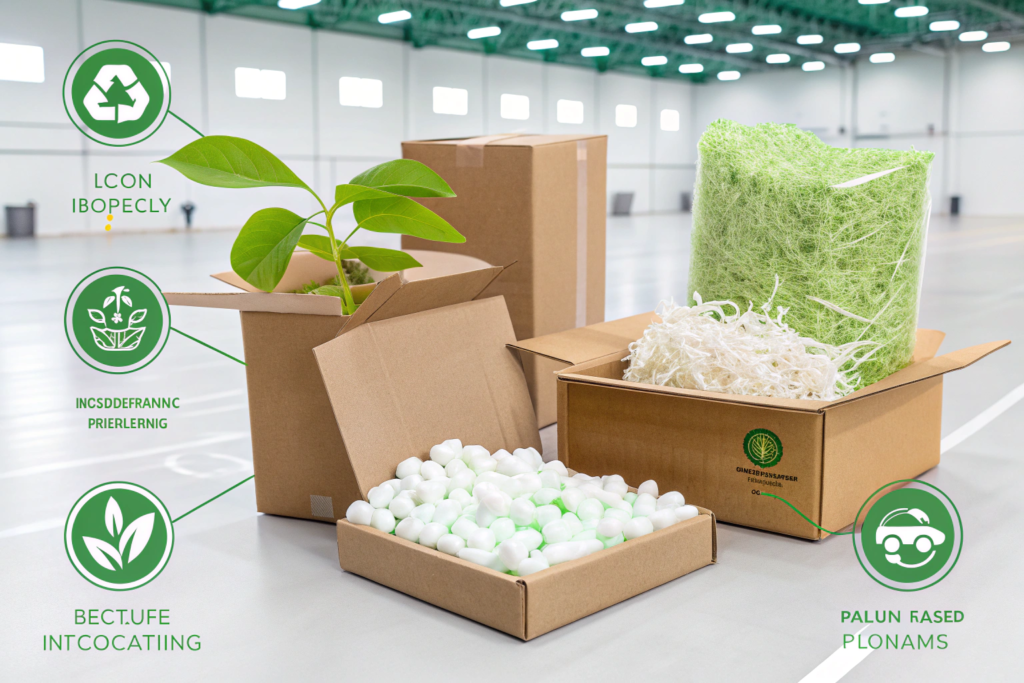
- Crinkled Recycled Paper: The most common and cost-effective alternative. Made from 100% PCR paper, it provides excellent cushioning. It can be dyed with non-toxic, soy-based inks in your brand colors.
- Biodegradable Packing Peanuts: Made from corn starch or wheat, these dissolve in water and are completely compostable. They are static-free and provide great shock absorption.
- Shredded Corrugated Cardboard: Using waste from your own box production or purchased as shreds, this is a fantastic closed-loop option. It’s highly protective and obviously recyclable.
- Mushroom Packaging (Mycelium): A premium, innovative option where mushroom roots are grown around agricultural waste to form custom-shaped protective cushions. It is home-compostable and biodegradable.
The rule is: if it grows, it can go (back to the earth).
What is the Most Cost-Effective and Scalable Cushioning Material?
For most small to medium accessory brands, crinkled recycled paper strikes the best balance. It is:
- Inexpensive: Comparable to or cheaper than plastic bubble wrap at scale.
- Widely Available: Sourced from numerous suppliers globally.
- Highly Effective: Provides ample cushioning for most accessories.
- Universally Recyclable/Compostable: Customers intuitively know to recycle it with paper.
To implement, simply source it in bulk rolls or sheets. It fits seamlessly into existing packing workflows. For brands using eco-friendly materials in their products, this completes the sustainable cycle.
Can You Use Product Packaging as Its Own Void Fill?
Yes—this is a clever "Reduce" strategy. Design your primary packaging to double as protective packaging.
- Sturdy Paperboard Boxes: A well-designed, form-fitting box made of FSC-certified recycled cardboard can protect a hat or pair of sunglasses without needing additional filler.
- Molded Pulp Inserts: Custom inserts that cradle the product securely inside a standard mailer, eliminating the need for loose fill.
- The "Snug Fit" Principle: Right-size your shipping box to minimize empty space. Use a software tool to calculate the optimal box size for each order, drastically reducing the need for any void fill.
This approach requires upfront design investment but reduces material use, cost, and waste in the long run.
What Are the Sustainable Options for Shipping Mailers and Boxes?
The outer shipping container is your brand’s ambassador during transit. Moving away from plastic-lined poly mailers and virgin cardboard is a major step. The options are robust and customer-friendly.
For Boxes:
- FSC-Certified Recycled Corrugated Cardboard: The gold standard. The Forest Stewardship Council (FSC) label ensures the paper comes from responsibly managed forests or recycled content. Aim for boxes with high post-consumer recycled (PCR) content (e.g., 90%+).
- Reused Boxes: For your own operations, reusing received boxes for outbound shipments is the most sustainable option. It requires a "Reused Box" sticker to cover old labels but has zero new material footprint.
For Padded Mailers:
- Recycled Paper Padded Mailers: These have a crumpled paper interior lining for cushioning and a kraft paper exterior. They are fully curbside recyclable.
- Compostable Mailers: Made from a combination of plant-based materials (e.g., cornstarch and PBAT), these are designed to break down in home compost. Ensure they are certified.
- Plastic-Free Poly Mailer Alternatives: New materials like water-soluble polymer mailers are emerging, but their disposal infrastructure is still developing.
Always print shipping labels and branding with soy-based or water-based inks.
How to Ensure Boxes and Mailers Are Truly Recyclable for the Customer?
The key is material simplicity. A package made of a single material type is easiest to recycle.
- Avoid Laminations: Steer clear of boxes with glossy plastic laminate coatings. Opt for a matte aqueous coating, which is water-based and recyclable.
- Simplify Components: Use paper tape instead of plastic packing tape. If you must use tape, choose a paper-based gummed tape that dissolves in the recycling pulper.
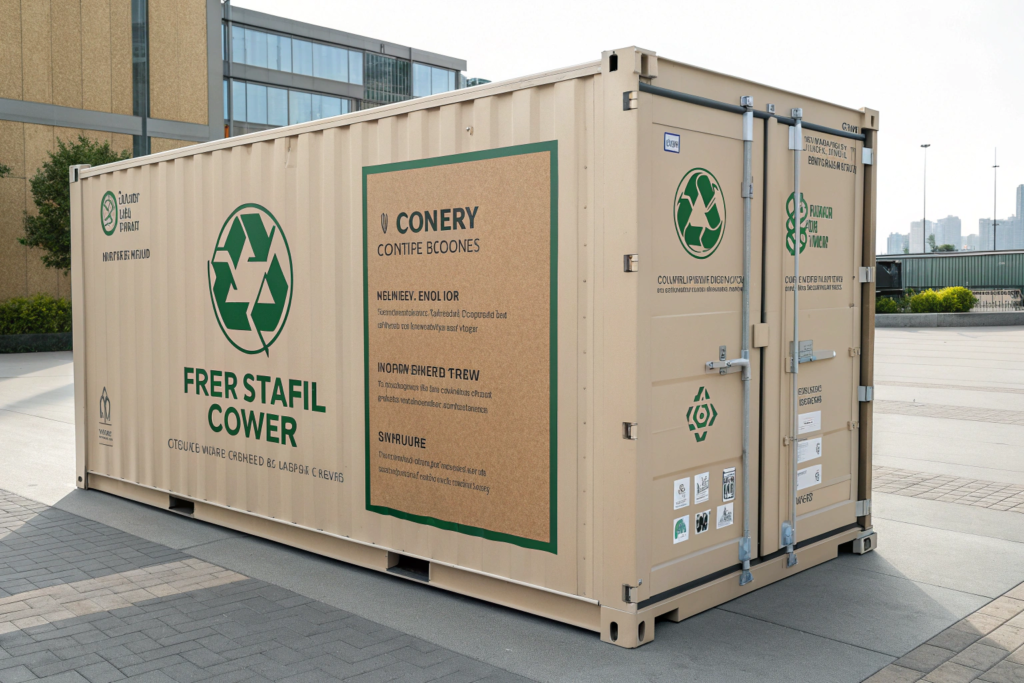
- Clear Labeling: Print a simple recycling icon and the words "Recycle Me" or "Compost Me" directly on the box/mailer in a prominent spot. For compostable mailers, add clear instructions: "Home Compostable – Cut into Strips & Add to Compost Bin."
This removes guesswork and increases the likelihood of proper disposal, closing the loop effectively.
What is the Environmental Trade-off Between Recycled vs. Compostable Mailers?
This is a nuanced decision:
- Recycled Paper Mailer: Has a lower upfront carbon footprint if made from local recycled content. It supports the circular economy and is easy for the customer to recycle. Its impact is in the energy/water used in recycling.
- Compostable Mailer: Made from annually renewable plants. If composted properly, it returns nutrients to soil with minimal processing energy. Risk: If thrown in the trash, it may release methane in a landfill; if put in recycling, it contaminates the paper stream.
For general e-commerce with diverse customers, recycled paper mailers often present the most foolproof, low-risk option. For a niche, eco-savvy audience, home-compostable mailers can be a powerful brand statement. The choice should align with your customer’s behavior and your overall sustainability communication strategy.
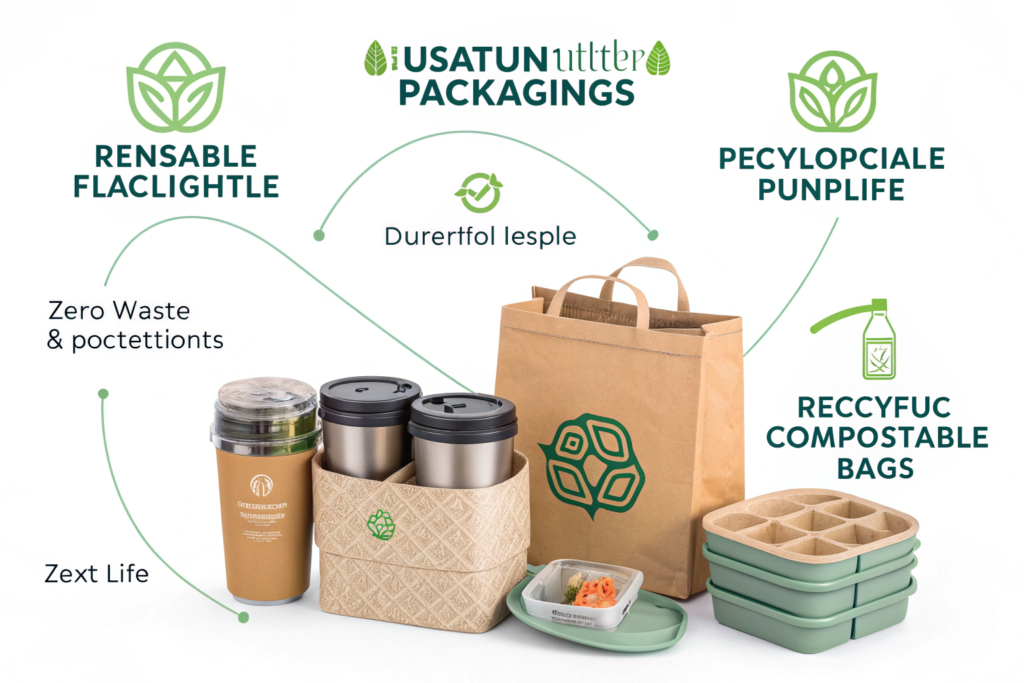
How to Create a Cohesive, Zero-Waste Unboxing Experience?
Sustainable packaging is more than swapping materials; it’s about designing an experience that delights the customer while aligning with a zero-waste philosophy. Every element should have a purpose and a clear next life.
Craft your unboxing journey:
- Outer Shipping Container: A right-sized, FSC-certified box or recycled paper mailer, sealed with paper tape.
- Protection: Crinkled recycled paper or shredded cardboard.
- Product Presentation: The accessory presented in a compostable cellulose bag or on a recycled paper card.
- Informational Elements: A thank you note/insert printed on seed paper (which can be planted) or recycled paper with soy ink. Include care instructions here to reduce separate leaflets.
- Brand Touch: A small, useful token like a cotton dust bag for the accessory, which is part of the product, not waste.
The experience should feel intentional, luxurious in its simplicity, and obviously considerate of the planet.
How to Integrate Brand Story and Care Instructions Without Waste?
Consolidate and innovate. Instead of separate hangtags, polybags, and care cards:
- Print Directly: Use a soy-based stamp to print your logo and care symbols directly onto the inside of a fabric care bag or onto the product’s own label.
- Multi-Functional Insert: Design a single, beautiful piece of recycled cardstock that serves as a thank you note, care guide, and brand story. It can be kept as a bookmark or recycled.
- Digital Integration: Include a QR code on a small recycled paper tag. When scanned, it leads to a webpage with detailed care instructions, your sustainability story, and even a tutorial video. This is the ultimate reduction of physical materials.
This minimalist approach not only reduces waste but also creates a sophisticated, modern brand aesthetic.
What are Simple Steps to Start the Transition Immediately?
You don’t need to overhaul everything at once. Start with the highest-impact, easiest swaps:
- Switch your void fill from plastic to crinkled recycled paper. This is fast and low-cost.
- Replace plastic polybags with compostable cellulose bags or recycled paper sleeves for your products.
- Source FSC-certified recycled boxes for your next packaging order.
- Swap to paper packing tape.
- Educate your customer with a friendly note in the next shipment: "We’re transitioning to plastic-free packaging! Please recycle/compost all components."
Document this journey and share it with your customers—they will appreciate the transparency and commitment to progress, not perfection.
Conclusion
Transitioning to eco-friendly packaging is a tangible and impactful way to align your accessory brand with planetary health. By systematically replacing plastic polybags with compostable or recycled alternatives, swapping plastic cushioning for paper-based fillers, choosing certified recycled or compostable mailers, and designing a thoughtful unboxing experience, you turn a logistical necessity into a powerful brand value proposition.
This journey reduces waste, resonates deeply with conscious consumers, and future-proofs your business against increasing regulations on single-use plastics. It demonstrates that every detail, down to the packaging, is considered with care.
Ready to make the switch and present your accessories in packaging that reflects their true value? At Shanghai Fumao Clothing, we help brands implement sustainable packaging solutions, from sourcing certified materials to designing efficient, beautiful systems. Contact our Business Director Elaine at elaine@fumaoclothing.com to package your products as responsibly as they are made.