Are you frustrated with customer complaints about belt buckles that chip, peel, or tarnish after just a few wears? Do returns and damaged brand reputation from this one faulty component eat into your profits? You’re facing one of the most common and costly quality failures in accessory manufacturing. Peeling plating is not just a cosmetic flaw; it’s a symptom of a breakdown in the manufacturing process, and it’s entirely preventable with the right knowledge and supplier partnership.
The root cause of peeling plating is almost always poor surface preparation or incorrect plating parameters, not the plating material itself. Solving this problem requires moving upstream in the supply chain—from accepting a flawed product to specifying and verifying the exact plating process and quality standards. A buckle that looks perfect in a sample can fail in months if the underlying process is unsound. The solution lies in technical specification, rigorous factory vetting, and ongoing quality surveillance.
This guide will provide a technical roadmap. We’ll diagnose the common root causes of plating failure, outline the correct plating process steps you must demand from suppliers, explain how to test and verify plating durability upfront, and detail the quality control protocols to enforce throughout production. Let’s build belts that stay beautiful for years, not weeks.
What Are the Root Causes of Peeling and Poor Plating Adhesion?
Peeling doesn’t happen randomly. It is a direct result of specific failures in the plating preparation and application stages. Understanding these causes empowers you to ask the right questions and reject substandard processes. The failure occurs at the microscopic level where the plating metal bonds to the base metal (typically zinc alloy, steel, or brass).
The primary culprits are:
- Inadequate Surface Cleaning & Preparation: The single biggest cause. Any oil, grease, oxidation (rust), or microscopic debris on the base metal acts as a barrier, preventing proper molecular bonding. Plating applied over contamination will flake off.
- Absence of a Proper Barrier Layer: Plating a thin decorative layer (like gold or gunmetal) directly onto a reactive base metal (like zinc) is a recipe for failure. A intermediate nickel plating layer is essential. It provides a stable, corrosion-resistant barrier that prevents the base metal from interacting with the top layer and causing blistering.
- Incorrect Plating Thickness: Electroplating thickness is measured in microns (µm). If the plating is too thin, it is porous and wears through quickly. Industry standards for a durable fashion accessory buckle call for a minimum thickness. For example, a quality gold plating should be at least 0.5µm over a 5-7µm nickel layer.
- Poor Base Metal Quality: Using low-grade, porous zinc alloy (zamak) with impurities will cause outgassing and bubbling under the plating over time.

How Does Poor Surface Preparation Lead to Immediate Failure?
The plating process is like painting: you must start with a perfectly clean, dry, and slightly roughened surface. The standard preparation sequence is: Degreasing → Acid Pickling → Electro-Cleaning → Rinsing. If any step is rushed or the chemical baths are not maintained, contamination remains. For instance, if an operator’s fingerprint oil isn’t removed, the plating will adhere to the oil, not the metal. When the oil eventually degrades, the plating lifts off. A professional plating facility will have controlled, multi-stage cleaning lines and regularly test bath concentrations. When auditing a supplier, ask to see their surface preparation process.
Why is a Nickel Barrier Layer Non-Negotiable for Zinc Alloy Buckles?
Zinc alloy (zamak) is cheap and easy to mold into intricate buckle shapes, but it is highly reactive to moisture and air. Plating gold, silver, or black nickel directly onto it creates a galvanic cell. Moisture penetrates microscopic pores in the thin top coating, reaches the zinc, and causes corrosion. The corrosion products (white zinc oxide) expand, creating pressure that blisters and lifts the plating from underneath. A thick, dense, and pore-free nickel layer seals the zinc completely, providing a chemically stable, smooth surface for the final decorative plating. Skipping this step to save cost is the most common reason for mid-term failure (3-6 months after purchase).
What is the Correct Plating Process for Durable Belt Buckles?
To guarantee durability, you must specify a complete, multi-step plating process in your technical documents. Simply requesting "gold plating" is vague and invites corner-cutting. The standard process for a zinc alloy buckle should be as follows:
- Base Metal: Specify a high-quality, low-porosity zinc alloy (e.g., Zamak 3 or 5).
- Polishing & Buffing: The buckle must be mechanically polished to a smooth finish to remove casting lines. Any surface defect will be magnified by plating.
- Ultrasonic Degreasing: Uses sound waves in a solvent to remove deep-seated oils.
- Electro-Cleaning: An electrical current in an alkaline solution removes final impurities.
- Acid Activation: A mild acid dip to remove oxides and micro-etch the surface for bonding.
- Copper Plating (Optional but recommended): A thin copper strike provides excellent adhesion and fills minor imperfections.
- Semi-Bright & Bright Nickel Plating: This is the critical barrier. A dual nickel layer (semi-bright for ductility, bright for smoothness) totaling 5-7 microns.
- Final Decorative Plating: The top color layer (e.g., Gold, Palladium Nickel for gunmetal, Black Ruthenium). Minimum thickness should be 0.3-0.5 microns.
- Post-Treatment: A clear, anti-tarnish lacquer (for certain finishes) or a passivation layer to enhance corrosion resistance.
What are the Minimum Micron Thickness Standards for Each Layer?
While exact specifications can vary, these are widely accepted minimum thresholds for a durable fashion accessory:
- Copper Layer (if used): 3-5 µm
- Nickel Barrier Layer (combined): 5-7 µm (This is crucial. Many cheap factories use only 1-2µm).
- Decorative Top Layer (Gold, Silver, etc.): 0.3-0.5 µm
A reputable supplier like Shanghai Fumao Clothing will be able to provide a plating thickness report from a digital X-ray fluorescence (XRF) gauge to prove conformance. This data should be part of your pre-production sample validation.
How Does the Choice of Base Metal (Zinc vs. Brass) Affect the Process?
The base metal dictates the required plating approach:
- Zinc Alloy (Zamak): As above, requires the full nickel barrier treatment. It is cost-effective for complex shapes but has higher plating process requirements.
- Brass: A more stable and premium base metal. It still requires cleaning and a nickel layer for some finishes, but it is less prone to outgassing. It can be plated with slightly thinner layers for the same durability. However, raw material cost is higher.
- Stainless Steel: Often used for a "bare metal" look or PVD coating. For plating, it requires a special nickel "strike" to initiate adhesion due to its passive oxide layer.
In your tech pack, specify the base metal and the exact plating stack-up. This removes ambiguity and holds the factory accountable to an engineering standard, not just an appearance.
How to Test Plating Durability Before Production Commits?
Never approve a plating sample based on looks alone. You must subject it to accelerated aging tests that simulate years of wear and environmental exposure. These tests are standard in the industry and any qualified factory should be able to perform them or allow you to conduct third-party testing.
Key pre-production tests include:
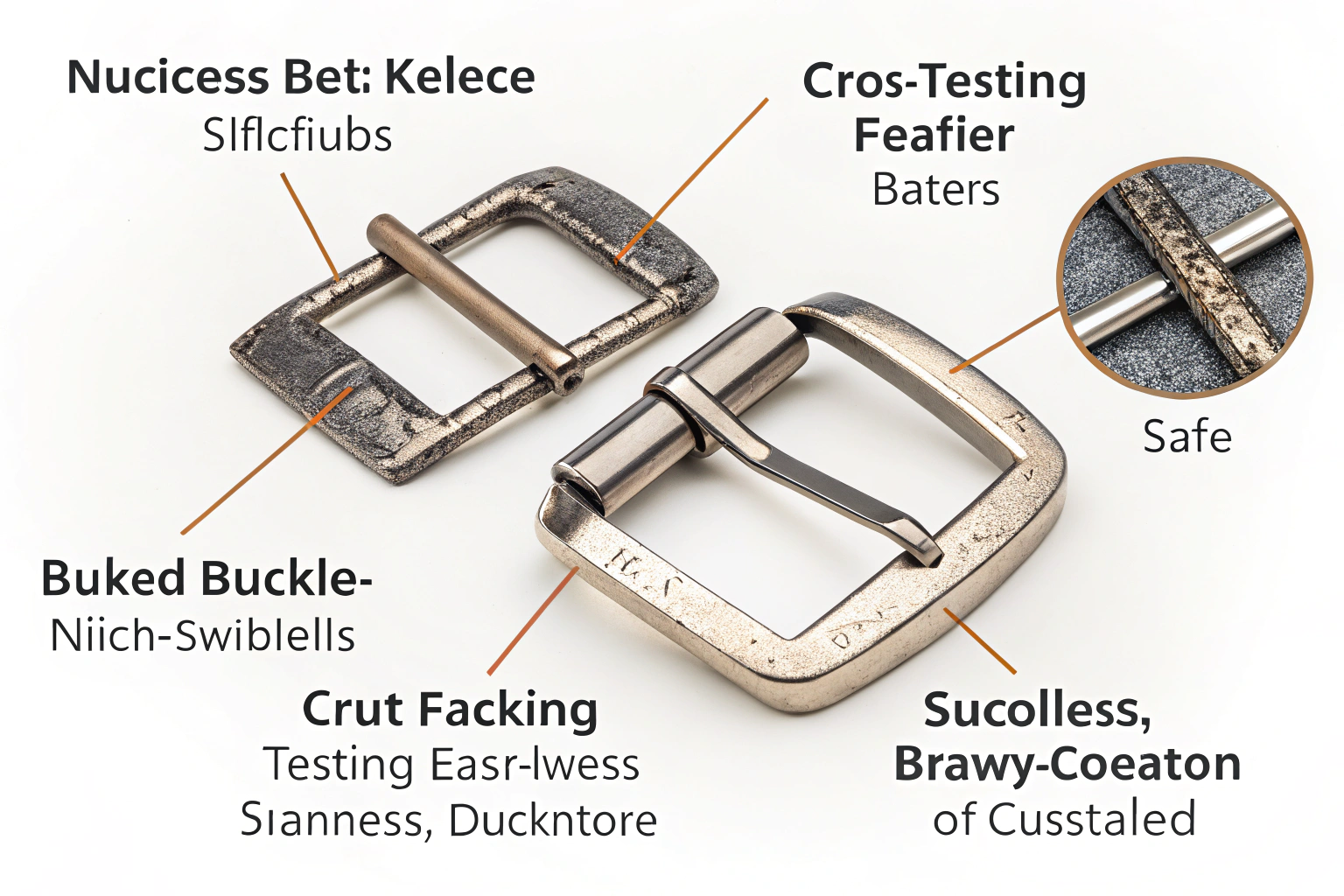
- Adhesion Test (Cross-Cut/Cellotape Test): Use a sharp blade to cut a grid pattern into the plating, apply strong adhesive tape, and rip it off. The plating should not detach. (Standard: ISO 2409)
- Corrosion Resistance (Salt Spray Test): Place the buckle in a salt spray chamber for 24-48 hours. Afterward, there should be no base metal corrosion (red rust for steel, white corrosion for zinc). Minor surface dulling on the top layer may be acceptable. (Standard: ASTM B117)
- Abrasion Resistance (RCA / Martindale Test): Rub the plated surface with a standard abrasive wheel for a set number of cycles. The test measures how many cycles before the plating wears through to the base layer.
- Thickness Measurement: Use an XRF Gauge to non-destructively measure the micron thickness of each layer on the sample.
Can You Perform Simple "In-House" Tests on Samples?
Yes, for quick due diligence:
- Visual Inspection under Bright Light: Look for micro-bubbles, pinholes, or uneven color—signs of poor plating.
- The "24-Hour Sweat Test": Wrap the buckle in a vinegar-moistened cloth (simulating acidic sweat) and seal it in a plastic bag for 24 hours. Rinse and inspect. Significant tarnishing or discoloration indicates poor corrosion resistance.
- The "Key Scratch Test": Gently scratch an inconspicuous area with a key. A good plating will show a thin, silvery line (the nickel layer) but won’t flake or peel back. A bad plating will chip or reveal the base metal immediately.
While not lab-accurate, these tests can quickly disqualify obviously substandard samples. For bulk order approval, however, insist on formal lab reports.
Should You Request a Plating Specification Sheet and Lab Reports?
Absolutely. This is your most powerful quality assurance tool. Before production, require the factory to provide:
- A Plating Specification Sheet: This details the exact process, chemicals used, and target thickness for each layer.
- Third-Party Lab Test Reports: For the pre-production sample, request reports for Salt Spray (e.g., 24hrs passed) and Coating Thickness (XRF). Reputable labs include SGS or Intertek.
These documents transform your quality requirements from subjective ("don’t peel") to objective, measurable, and legally enforceable standards. This level of verification is a hallmark of working with a technically capable partner.
What Quality Control Measures Prevent Peeling in Bulk Orders?
Approving a perfect sample is one thing; ensuring 5,000 buckles match that standard is another. This requires proactive quality control integrated into the production cycle, not just a final inspection.
Implement a Four-Eye Quality Control process:
- Incoming Material Check: Verify the base metal buckles from the casting supplier for major defects before plating.
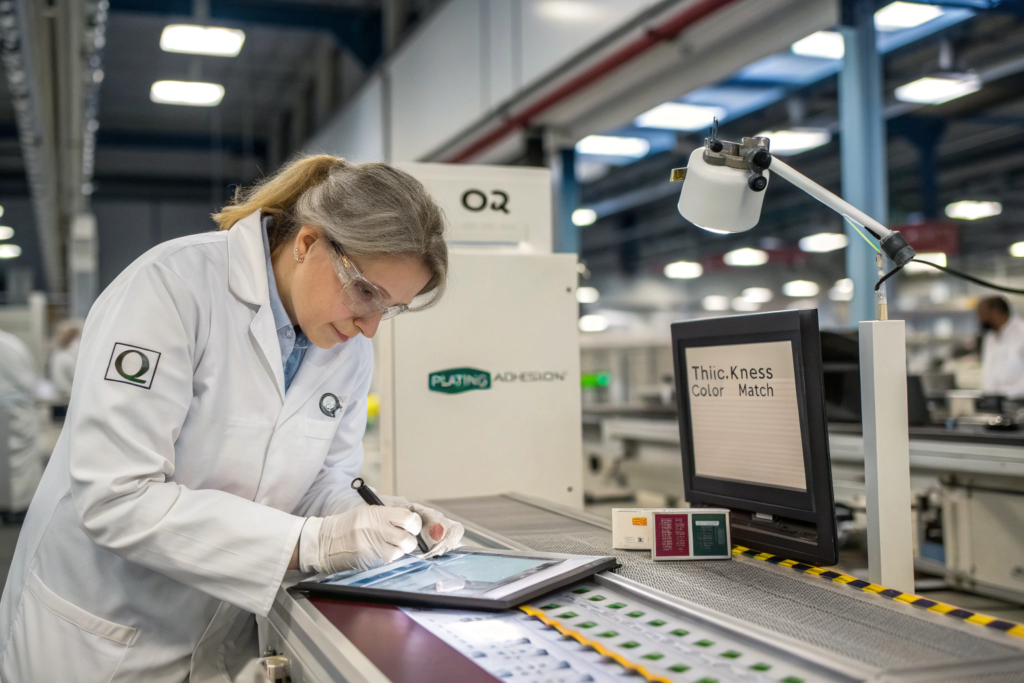
- In-Process Audit: Visit or have an agent audit the plating line during your batch run. Check bath temperatures, timing, and cleanliness.
- Post-Plating Batch Testing: Require the factory to perform adhesion and salt spray tests on random samples from each production batch and provide photos/videos as evidence.
- Final Pre-Shipment Inspection (AQL): The final inspection should include a specific check for plating defects—bubbling, peeling, discoloration, unevenness—using an agreed Acceptable Quality Level (AQL). For critical defects like peeling, the AQL should be very tight (e.g., AQL 0.65 or 0).
How to Enforce Plating Standards During Production Runs?
Build the standards into your Purchase Order (PO) and Quality Control Protocol.
- Reference Documents: Attach the approved sample photos and the plating specification sheet to the PO.
- Right to Audit: Include a clause that allows you or a third-party inspector to audit the plating process unannounced.
- Define Failure & Remedies: State clearly that peeling plating constitutes a critical defect, and the batch will be rejected or subject to 100% sorting at the factory’s cost.
- Withhold Final Payment: Tie the final payment balance to the successful passage of the pre-shipment inspection report.
This structured approach ensures the factory bears the cost of non-conformance, aligning their incentives with quality. It is a core principle of effective supplier partnership management.
What Role Does Protective Packaging Play in Preventing Damage?
Even perfect plating can be damaged post-production. Ensure the buckles are individually packed in anti-tarnish paper (acid-free) or separated in plastic compartments within the shipping carton to prevent scratching during transit. Specify this in your packaging instructions. Scratches that expose the base metal can become starting points for peeling during customer use.
Conclusion
Solving the problem of peeling plating is a proactive engineering and quality management challenge, not a passive hope. It requires specifying a technically sound plating process with a robust nickel barrier, verifying compliance through pre-production testing and lab reports, and enforcing standards through vigilant in-process and final quality control.
By taking this technical and systematic approach, you eliminate a major source of product failure, reduce returns, and build a brand reputation for durability and quality. Your belts will become known for lasting style, not fleeting finishes.
Tired of plating failures damaging your brand? Partner with a manufacturer that understands the science behind durable finishes. At Shanghai Fumao Clothing, we control our plating process, specify micron-level thicknesses, and provide test reports to guarantee buckle durability. Contact our Business Director Elaine at elaine@fumaoclothing.com to develop belts that stand the test of time and wear.