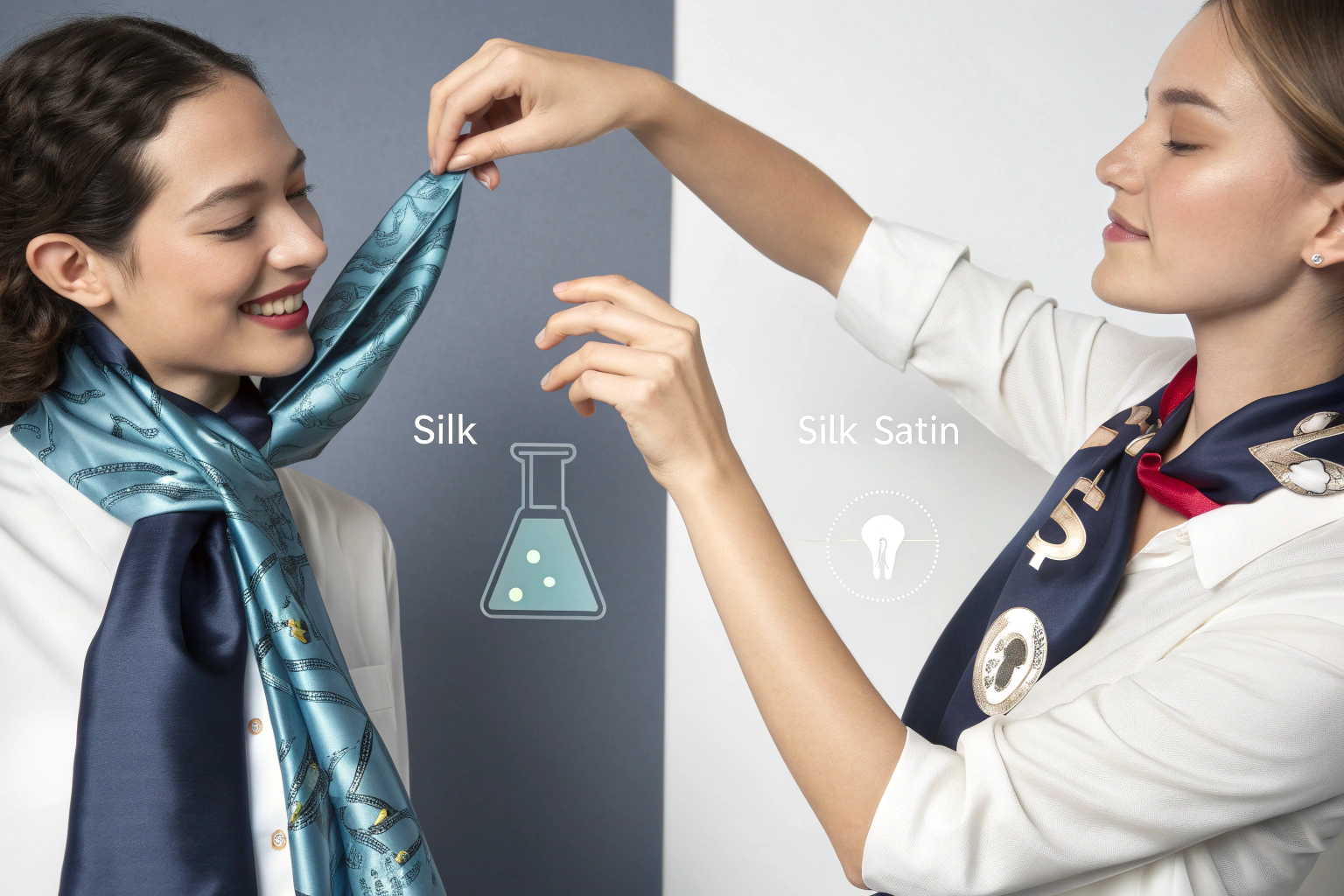
Are you feeling the pressure to predict which accessory styles will captivate consumers next year? Do you worry about investing in inventory that might feel outdated before it even hits the shelves? You’re navigating the core challenge of seasonal fashion buying. Success hinges on identifying trends that balance novelty with commercial viability, ensuring your collection feels fresh and relevant.
The 2026 Spring/Summer season is shaping up to be defined by a fascinating duality: a nostalgic embrace of handcrafted, organic textures alongside a bold, digital-age maximalism. It’s a season where sustainability meets self-expression, and comfort intertwines with statement-making pieces. For buyers and brands, this means curating a versatile mix—from earthy, natural fiber items to vibrant, engineered accents. The key is to understand the narrative behind each trend to source products that tell a compelling story.
This forecast, informed by early runway reports, textile fairs like Première Vision, and cultural shifts, will break down the dominant directions. We’ll explore the rise of organic sculptural forms, the bold new wave of digital maximalism, the innovation in tech-integrated wearables, and the enduring appeal of sustainable classics. Let’s decode the trends that will define the accessory landscape for S/S 2026.
Why is the "Organic Sculpture" Trend Dominating Hair and Bags?
Move over minimalism; texture and tactile form are taking center stage. The "Organic Sculpture" trend draws inspiration from art, architecture, and the natural world, resulting in accessories that feel like wearable art. This trend celebrates imperfection, raw materials, and forms that mimic natural growth—think curved, asymmetric shapes, irregular contours, and textured surfaces.
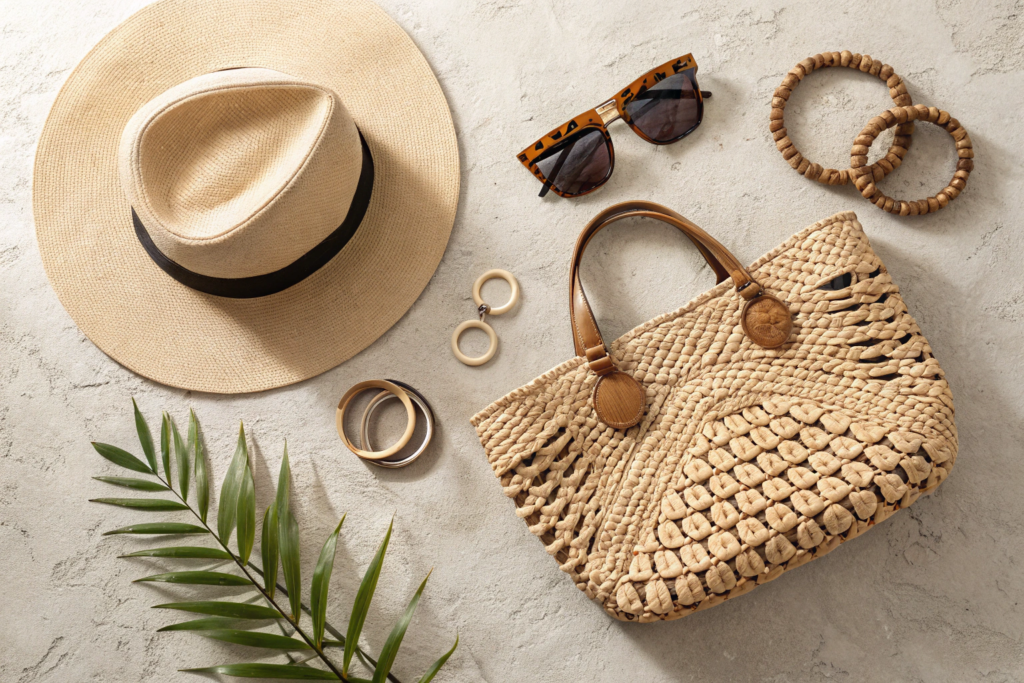
For hair accessories, this means clips, pins, and headbands that break from traditional symmetry. Look for pieces carved from lightweight wood, molded from bio-resins with organic inclusions (like dried flowers or seeds), or forged into fluid, abstract metal shapes. For bags, the trend manifests in unstructured, sculptural totes and clutches made from molded felt, knotted raffia, or woven techniques that create dimensional, basket-like textures. The color palette is grounded in naturals: clay beiges, mossy greens, stone grays, and sun-bleached whites. This trend answers a consumer desire for uniqueness, craftsmanship, and a connection to nature.
What Materials and Shapes Define the Organic Hair Accessory?
The focus is on nature-derived materials and artisanal processes. Key materials include:
- Sanded and Oiled Wood: Especially lighter woods like beech or bamboo, shaped into fluid barrettes or comb sets.
- Bio-Acetate: A plant-based alternative to traditional acetate, perfect for creating hair clips with marbled or translucent effects that mimic stone or amber.
- Hand-Sculpted Ceramic: Small, glazed clay clips or pins that have a unique, artisanal weight and feel.
- Forged and Hammered Metal: Silver or brass pieces with visible tool marks, organic bends, and non-uniform shapes.
Shapes are asymmetric, curved, or inspired by organic forms like shells, pebbles, or blossoming flowers. This trend moves away from plastic and towards materials with a story, aligning with the broader demand for natural and sustainable fibers.
How is Sculptural Form Transforming Bags and Totes?
Bags are shedding their rigid structures. The trend is towards forms that are soft, malleable, or oddly shaped. Think of a raffia tote that collapses in on itself when empty but expands organically, or a leather pouch with a gathered, ruched closure that creates a sculptural silhouette. Techniques like coiling, macramé, and 3D knitting are key. Materials such as cork leather, mushroom leather (Mylo), and stiffened organic cotton canvas are used to hold these innovative forms. The result is a bag that is as much a statement piece as it is functional, perfect for the consumer seeking to express individuality.
How is "Digital Maximalism" Influencing Prints and Statement Pieces?
In direct contrast to organic minimalism, "Digital Maximalism" is a vibrant, high-energy trend born from digital culture. It’s characterized by hyper-saturated colors, glitch art effects, bold graphic patterns, and a playful, "more-is-more" philosophy. This trend caters to a generation fluent in the visual language of social media and gaming, where standing out is the goal.
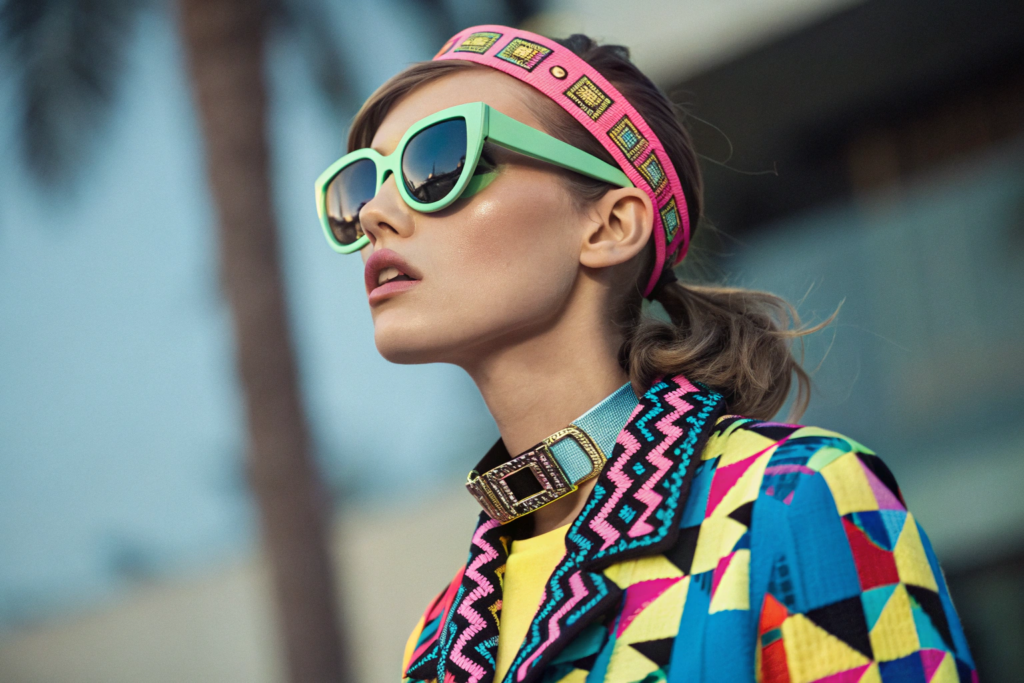
For accessories, this translates into statement sunglasses with frames in neon acrylics or decorated with tiny LED accents (for non-functional embellishment). Belts become wide and bold, featuring oversized, geometric buckles or printed with chaotic, pixelated patterns. Hair clips and chokers adopt holographic finishes, iridescent films, and chains mixed with colorful bioplastic elements. Prints are not shy: think distorted logos, AI-generated patterns, and high-contrast graphic checks or micro-dots. Sourcing for this trend requires a focus on innovative materials and bold, precise manufacturing.
What are the Key Colors and Patterns for Bold Sunglasses and Belts?
The color palette is unapologetically electric: cyber lime, digital blue, hot magenta, and vivid orange. Black and white are used as high-contrast bases. Patterns are graphic and often digitally native:
- Glitch & Distortion: Prints that mimic a digital error or corrupted file.
- Graphic Checks & Grids: Super-sized gingham or checkerboard, often in mismatched colorways.
- Micro-Prints: Densely packed, small-scale patterns that create a textured effect from afar.
For sunglasses, look for frames in these solid bold colors or with laminated pattern sheets. Belts will feature these prints on coated canvas or as part of the buckle design itself. A factory with strong capabilities in injection molding for acrylics and precision printing is essential for this trend. Partners like Shanghai Fumao Clothing invest in these technologies to meet such detailed design demands.
How Are Holographic and Iridescent Finishes Being Applied?
Holographic and iridescent effects are moving beyond all-over coatings to more sophisticated applications. Think ombré holographic finishes on a hair comb, or iridescent mother-of-pearl inlays on a belt buckle. The technology involves thin-film coatings that create a color-shift effect. For 2026, the application is more selective—used as an accent rather than covering the entire piece. This could be a strip on the arm of a sunglasses frame, the edge of a fabric hair scrunchie, or as a laminated layer on a small leather card holder. It adds a futuristic, magical touch without being overwhelming.
What Role Will "Tech-Integrated Wearables" Play in Everyday Accessories?
Fashion is becoming increasingly connected. The "Tech-Integrated Wearables" trend is not about clunky gadgets, but about seamlessly embedding technology into elegant, familiar accessory forms. The goal is to enhance functionality without sacrificing style, appealing to the tech-savvy consumer who values convenience and innovation.
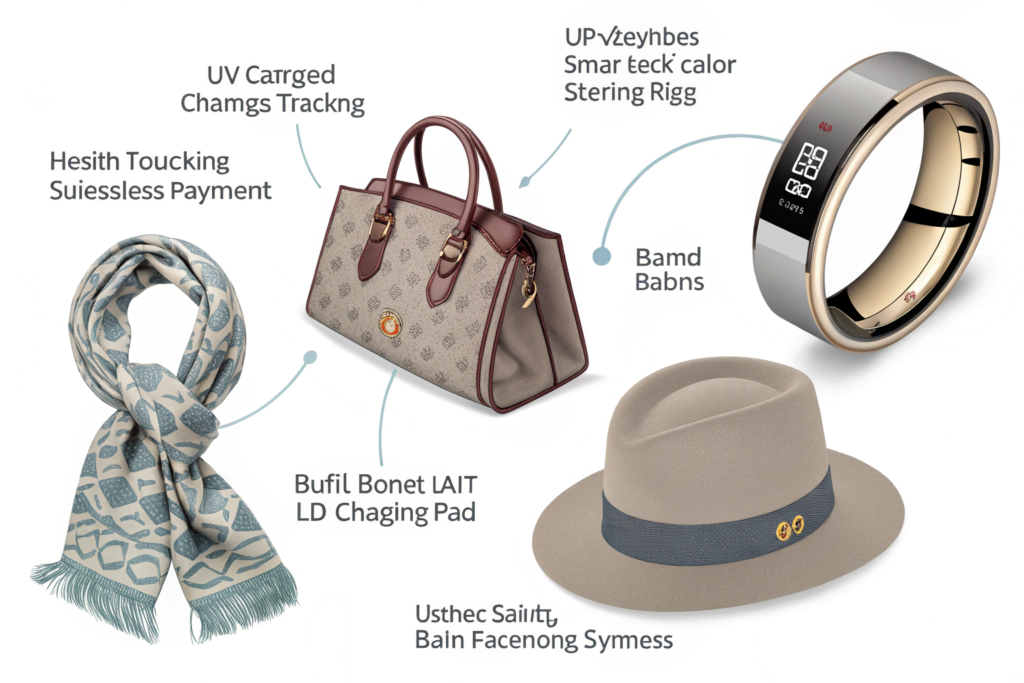
This includes subtle items like smart rings that track health metrics or allow for contactless payments, designed to look like elegant jewelry. Sun-protective accessories are getting smarter, with hats or scarves that integrate UPF 50+ fabrics and subtle UV sensors that change color to indicate sun intensity. Even traditional items are being rethought: bags with built-in, wireless charging pads, or hair bands with embedded, flexible LED lights for safety during evening runs. Sourcing these products requires collaboration with specialists in both soft goods and micro-electronics, ensuring safety, durability, and style.
Which Functional Tech Features Are Becoming Fashionable?
The most commercially viable features for S/S 2026 focus on health, safety, and convenience:
- UV Sensing: Fabrics or trims that change color when UV rays are strong, promoting sun safety.
- Modular Charging: Bags or belt bags with discreet, integrated battery packs and cable ports.
- Contactless Tech: Rings or bracelets with NFC or RFID chips for payments or access, styled as classic jewelry.
- Responsive Materials: Accessories using thermochromic pigments that change color with body heat, adding an interactive element.
These features must be integrated in a waterproof and durable way. The design imperative is "tech-invisible"—the technology should serve the function without dominating the aesthetic.
How to Source Accessories with Integrated Technology?
This is a complex category that demands a specialized supply chain. Key steps include:
- Partner with Hybrid Suppliers: Seek out manufacturers, often in tech hubs like Shenzhen, who have divisions for both accessory manufacturing and electronic component assembly.
- Prioritize Safety Certifications: Any electronic component (batteries, circuits) must have international safety certifications like CE, FCC, or RoHS.
- Focus on User Experience: The tech must be reliable and easy to use. Prototyping and rigorous sample testing are more critical than ever.
- Consider Modularity: Designing the tech component to be removable can simplify washing and repair, extending the product’s life—a key sustainability benefit.
Why Are "Sustainable Classics" a Perennial Safe Bet for S/S?
Amidst the excitement of new trends, the "Sustainable Classics" category remains the reliable backbone of any seasonal collection. These are timeless, high-quality pieces made from proven, eco-conscious materials. They cater to the growing segment of consumers who prioritize longevity, versatility, and ethical production over fast-fashion trends.
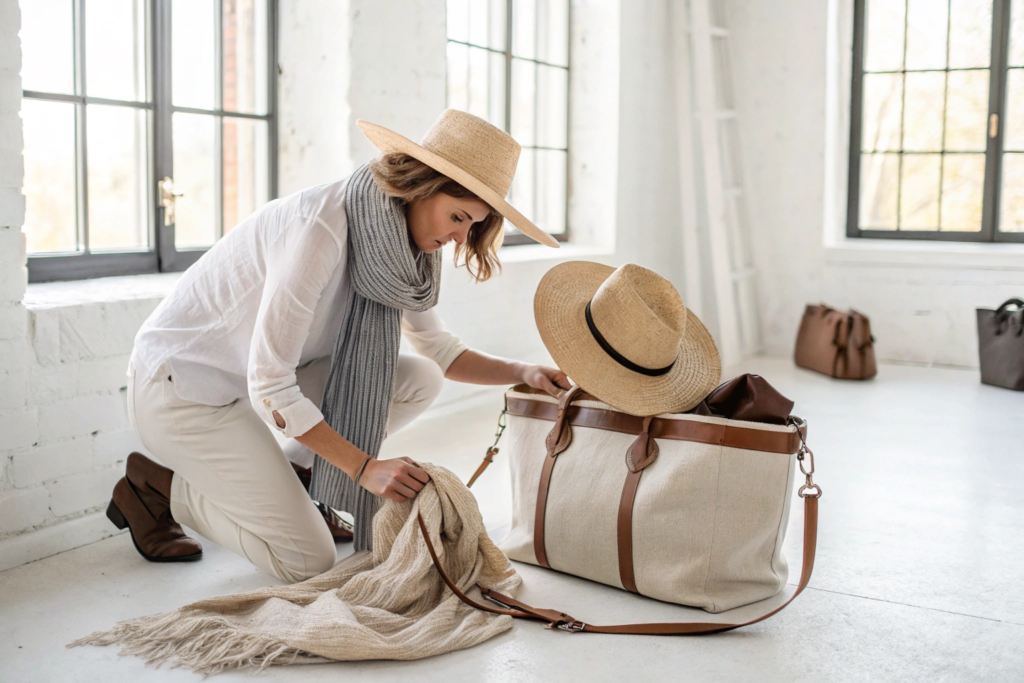
For S/S 2026, this translates to impeccably made wide-brimmed hats in organic cotton or ECONYL® regenerated nylon, oversized linen scarves in neutral tones, canvas tote bags with clever, functional details, and minimalist leather sandals or slides. The emphasis is on exceptional craftsmanship, durable construction, and material stories that resonate—such as traceable supply chains, natural dyes, or recycled content. These items have a long shelf life and appeal to a broad demographic, ensuring steady sales.
What Timeless Silhouettes and Materials Are Always in Demand?
Certain shapes and fabrics never go out of season for spring/summer:
- Hats: Wide-brimmed floppy hats, structured fedoras, and classic baseball caps.
- Scarves & Wraps: Large, square linen scarves and lightweight, oversized cotton shawls.
- Bags: Structured straw baskets, roomy canvas totes, and sleek belt bags.
- Footwear: Classic slides, espadrilles, and minimalist sandals.
The key materials are organic cotton, linen, repurposed straw, recycled polyester, and vegetable-tanned leather. The success of these items lies in their perfect execution—the weight of the linen, the stitching on the canvas, the finish on the leather. They are the workhorses of a seasonal collection.
How Does a "Capsule" Mentality Influence Classic Accessory Design?
The "capsule wardrobe" philosophy directly impacts accessory design. Consumers are buying fewer, better items that mix and match seamlessly. Therefore, classic accessories are designed for maximum versatility. A scarf should be wearable as a headwrap, necktie, or bag accent. A belt should work with dresses, pants, and even as a hat band. A tote should transition from beach to market to work. This multifunctional design increases the cost-per-wear value and is a strong selling point. When sourcing these classics, emphasize this versatility in your product development discussions with your manufacturer.
Conclusion
The 2026 Spring/Summer accessory landscape offers a dynamic blend of the organic and the digital, the innovative and the timeless. Success lies in curating a balanced assortment that captures the mood of the season—whether through sculptural, nature-inspired pieces, bold digital statements, smart functional wearables, or trusted sustainable classics.
By understanding the narratives behind these trends and partnering with manufacturers capable of executing on both quality and innovation, you can build a collection that is both commercially sound and creatively inspiring.
Ready to translate these 2026 trends into a best-selling accessory collection? At Shanghai Fumao Clothing, our design and production teams are already working with these materials and concepts. From organic sculptures in bio-materials to precision digital prints, we can help you develop the right products for the coming season. Contact our Business Director Elaine at elaine@fumaoclothing.com to start planning your S/S 2026 line with a trusted, forward-thinking partner.