Correct labeling is a fundamental pillar of legal compliance, brand protection, and consumer trust. An error in labeling—be it a missing safety warning, incorrect fiber content, or a non-compliant logo—can trigger costly product recalls, customs rejections, and irreparable damage to your brand’s reputation. For a manufacturer and exporter, a systematic approach to labeling is non-negotiable for seamless market entry and sustainable growth across diverse international markets.
Ensuring correct labeling for fashion accessories requires a four-pillar strategy: first, establishing a compliance framework based on the target market’s mandatory regulations; second, implementing robust internal processes for content creation, verification, and application; third, selecting the right labeling materials and attachment methods for product durability and comfort; and fourth, maintaining rigorous quality control and documentation for every production batch. This end-to-end system transforms labeling from a reactive task into a proactive, strategic business function that safeguards your company and delights your clients.
This guide breaks down the actionable steps within each pillar, providing a clear roadmap to build a labeling system that is accurate, durable, and globally compliant.
How Do You Build a Market-Specific Compliance Framework?
The foundation of correct labeling is a thorough understanding of the mandatory legal and regulatory requirements in your target destination markets. These rules are not uniform; they vary significantly by region, product category, and the materials used. Your first step must be to map these requirements before any design or production begins.
Core mandatory label elements for fashion accessories typically include: the product name, the importer or manufacturer’s name and registered address, the country of origin, fiber or material composition, care instructions, and any applicable safety warnings. For specialized items like children’s accessories or items containing regulated substances, regulations are far stricter. The new EU General Product Safety Regulation (GPSR), for instance, adds a critical requirement: the label must now include contact information for an EU-based Responsible Person.

What Are the Key Standards and Resources for Different Markets?
Navigating this complexity requires authoritative references. Resources like the TÜV SÜD Global Labelling Handbook for apparel, footwear, and accessories provide an overview of requirements across many countries. For the Chinese market, the group standard T/CAB 0430-2025 "Technical Requirements for Consumer Product Labeling and Marking" offers detailed guidance. Always consult the official regulations or work with a compliance expert to ensure your labels are current, as these rules frequently update.
Why is a "Digital Labeling" Strategy Becoming Essential?
Forward-thinking companies are exploring digital labeling solutions, such as QR codes on hangtags. This approach can provide vast additional information—like full supply chain transparency or detailed care guides—without cluttering the physical label. It also allows for easy updates to compliance information post-production. While not yet a wholesale replacement for physical mandatory information, integrating a digital component is a strategic way to meet increasing information demands and engage eco-conscious consumers.
How Do You Implement a Rigorous Internal Labeling Process?
Even with perfect guidelines, human error in execution is the leading cause of labeling failures. A robust, documented internal process with clear accountability is essential to ensure consistency and accuracy from design to dispatch.
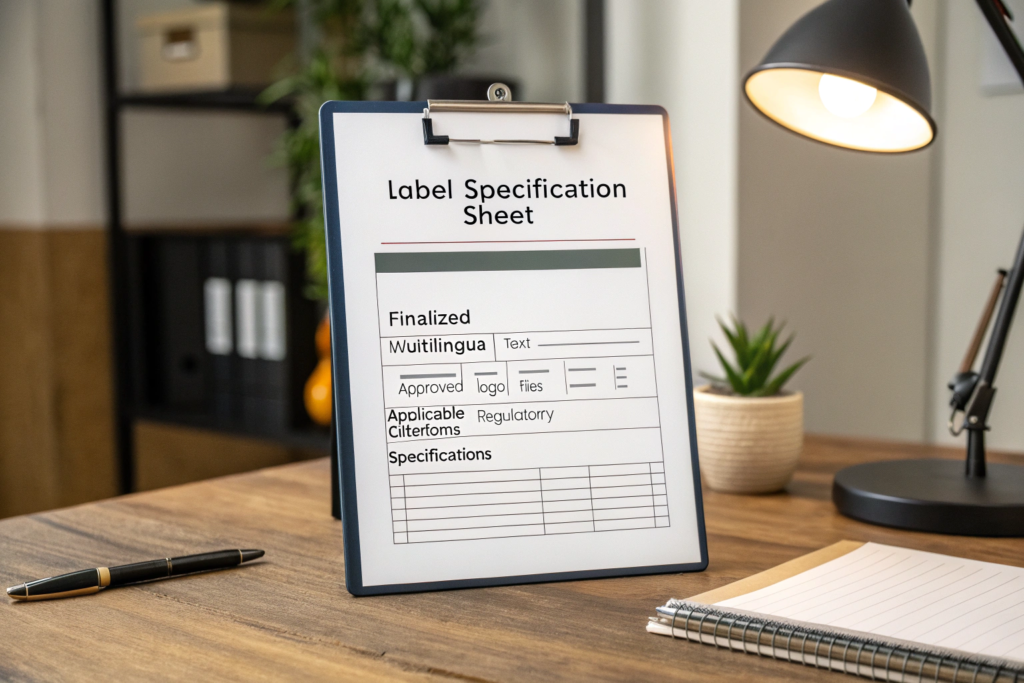
The process should begin with a Label Specification Sheet for every new product or market entry. This master document compiles all requirements: finalized multilingual text, approved logo files, applicable regulatory citations, and specifications for the physical label material. It serves as the single source of truth for designers, production managers, and QC staff.
What Does a Foolproof Verification and Approval Workflow Look Like?
Before any label goes to print or production, enforce a mandatory multi-stage approval workflow:
- Compliance Review: A designated officer checks the spec sheet against the latest market regulations.
- Brand Review: A brand manager verifies adherence to logo usage, fonts, and color standards.
- Linguistic Review: A native speaker proofreads all translations for accuracy and cultural nuance.
- Pre-Production Sample Approval: A physical proof of the label, on the actual material, must be signed off. This critical step catches errors in color, feel, and print quality invisible on screen.
- Final Production Audit: A sample from the mass-produced label batch should be checked against the approved pre-production sample.
How Do You Ensure Information Consistency Across All Touchpoints?
Consistency is key to consumer trust and platform compliance. You must guarantee that the information on the permanent label, the hangtag, the e-commerce product page, and the packaging are 100% identical. Any discrepancy can lead to customer complaints, high return rates, and platform penalties. Establishing a centralized product information database is the most effective way to manage this consistency.
How Do You Select the Right Label Type and Application Method?
The choice of label type and how it is attached directly impacts user experience, durability, and compliance. The decision should be based on the accessory’s material, intended use, and price point.
For most textile-based accessories, the two primary methods are:
- Sewn-In Labels: The traditional method, offering high durability. Best practice involves using pre-washed cotton tape and a running stitch that follows the fabric weave, with the knot left untied to prevent fabric tearing.
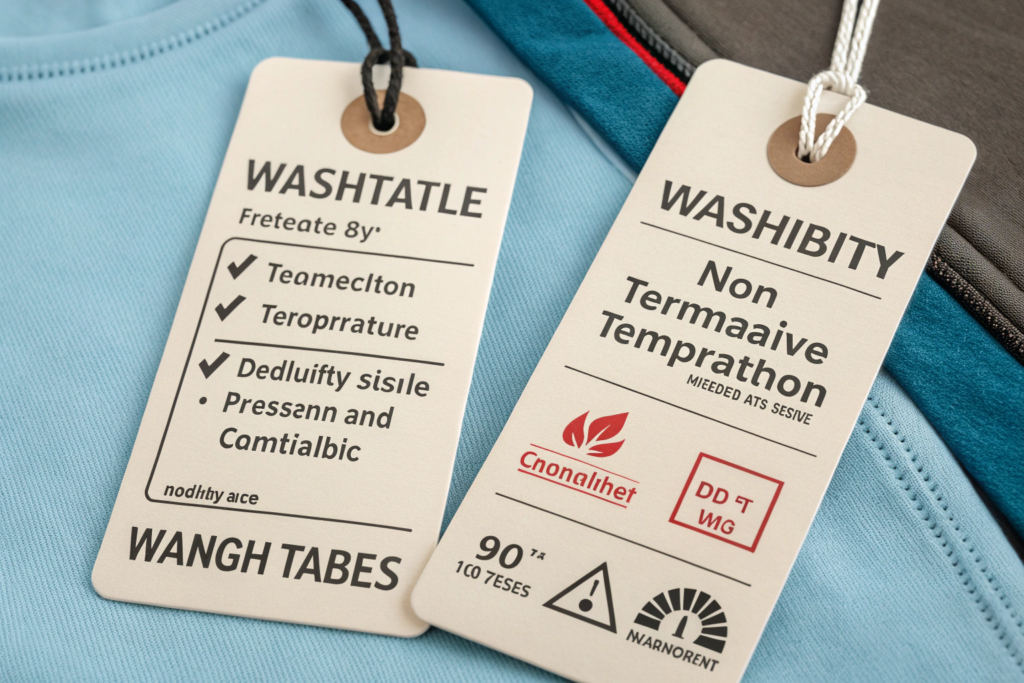
- Heat-Transfer Labels: These are printed and then heat-pressed onto the fabric, creating a smooth, flat label with no raised edges. This method is ideal for high-end garments, children’s accessories, and activewear where skin comfort is paramount, as it eliminates friction. They require precise temperature and pressure control during application and must pass washability tests.
For non-textile items, hangtags or adhesive labels are often the only option. In all cases, label legibility and durability are mandated by standards; information must remain clear and attached for the product’s normal lifespan.
What Are the Branding and Customization Opportunities?
Labels are also a key branding touchpoint. Beyond mandatory content, consider adding: a short brand story, sustainability credentials, or a QR code linking to more information. Customization methods like embroidery, woven labels, or leather patches can significantly elevate perceived value.
What Regulatory Requirements Must Fashion Accessory Labels Meet?
In the vibrant world of fashion, where accessories—from delicate necklaces that catch the light like scattered stardust to bold handbags that exude confidence—play a pivotal role in defining style, the labels adorning these items are far more than mere tags. They are gatekeepers of transparency, guardians of consumer trust, and silent storytellers of the product’s journey from creation to shelf.
Yet, these small pieces of fabric or paper are bound by a web of regulatory requirements, each designed to ensure safety, authenticity, and informed choice for the wearer.
At the forefront of these regulations lies the mandate for clear and accurate product identification. Labels must prominently display the brand name or trademark, a detail that not only identifies the creator but also holds them accountable for quality.
How Do You Integrate Label Checks into Quality Control and Manage Documentation?
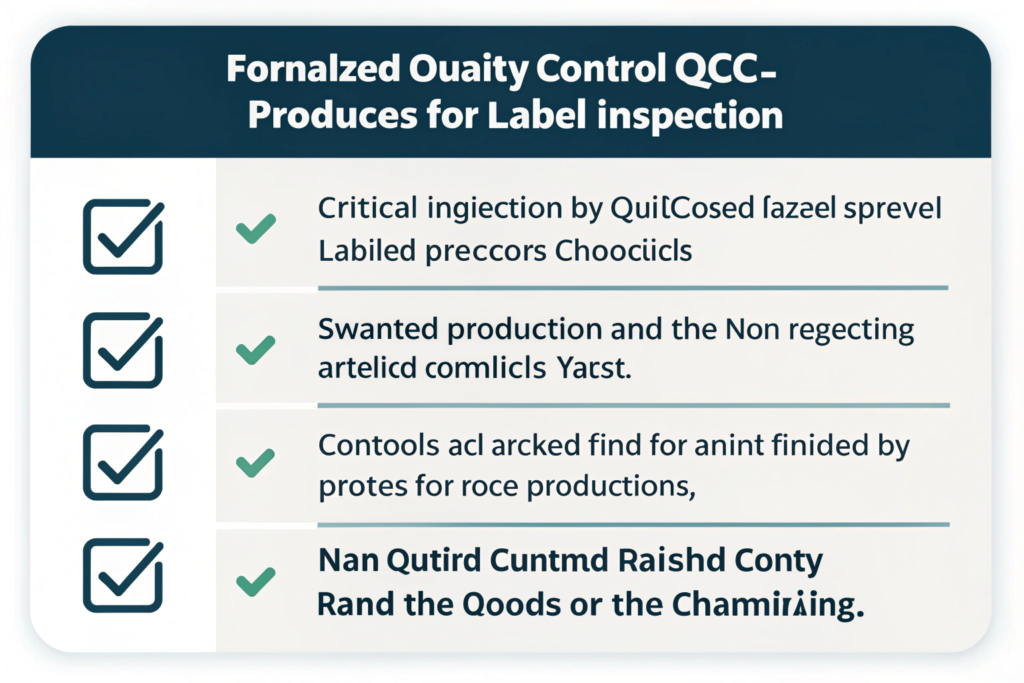
Label inspection must be a formalized, non-negotiable checkpoint within your final Quality Control (QC) procedure. It cannot be an afterthought.
For each production batch, QC staff should use a standardized checklist to verify a random sample of finished goods. Checks must include:
- Content Accuracy: Does the text match the approved spec sheet in all languages?
- Regulatory Compliance: Are all mandatory elements present and correct?
- Physical Application: Is the label securely attached, correctly positioned, and legible?
- Durability Test: Perform a spot check with a rub test or a simulated wash on samples to ensure information won’t wear off.
Failed label checks should hold the shipment, just like any other product quality failure.
Why is a Centralized Label Library a Strategic Asset?
Maintain a digital "Label Library"—a secure, version-controlled repository of all approved final label artwork, spec sheets, and compliance certificates for each product and market variant. This prevents the use of obsolete labels, speeds up development for similar new products, and provides immediate documentation for client or regulatory audits.
How Do You Proactively Manage Regulatory Updates and Supplier Compliance?
Regulations constantly evolve. Assign responsibility for monitoring regulatory updates in key markets through official channels, industry associations, or compliance partners. Furthermore, your supplier agreements must explicitly include labeling requirements. They should be contractually obligated to provide accurate material information and adhere to your approved label application processes.
Conclusion
Ensuring correct labeling for fashion accessories is a continuous strategic discipline that integrates legal compliance, operational excellence, and brand management. It begins with a deep, proactive understanding of destination-market regulations and builds outward through enforceable internal processes, smart selection of label types, and rigorous integration into quality control.
By adopting this systematic four-pillar approach, you can transform labeling from a potential source of risk into a demonstrable competitive advantage. Accurate, durable, and well-executed labels not only prevent costly penalties and delays but also actively build consumer trust, reinforce brand value, and ensure smooth entry into global markets.
To implement a robust labeling strategy for your accessory lines, from compliance mapping to final quality assurance, partner with Shanghai Fumao. Contact our Business Director Elaine at elaine@fumaoclothing.com to discuss building a labeling system that protects and promotes your brand worldwide.