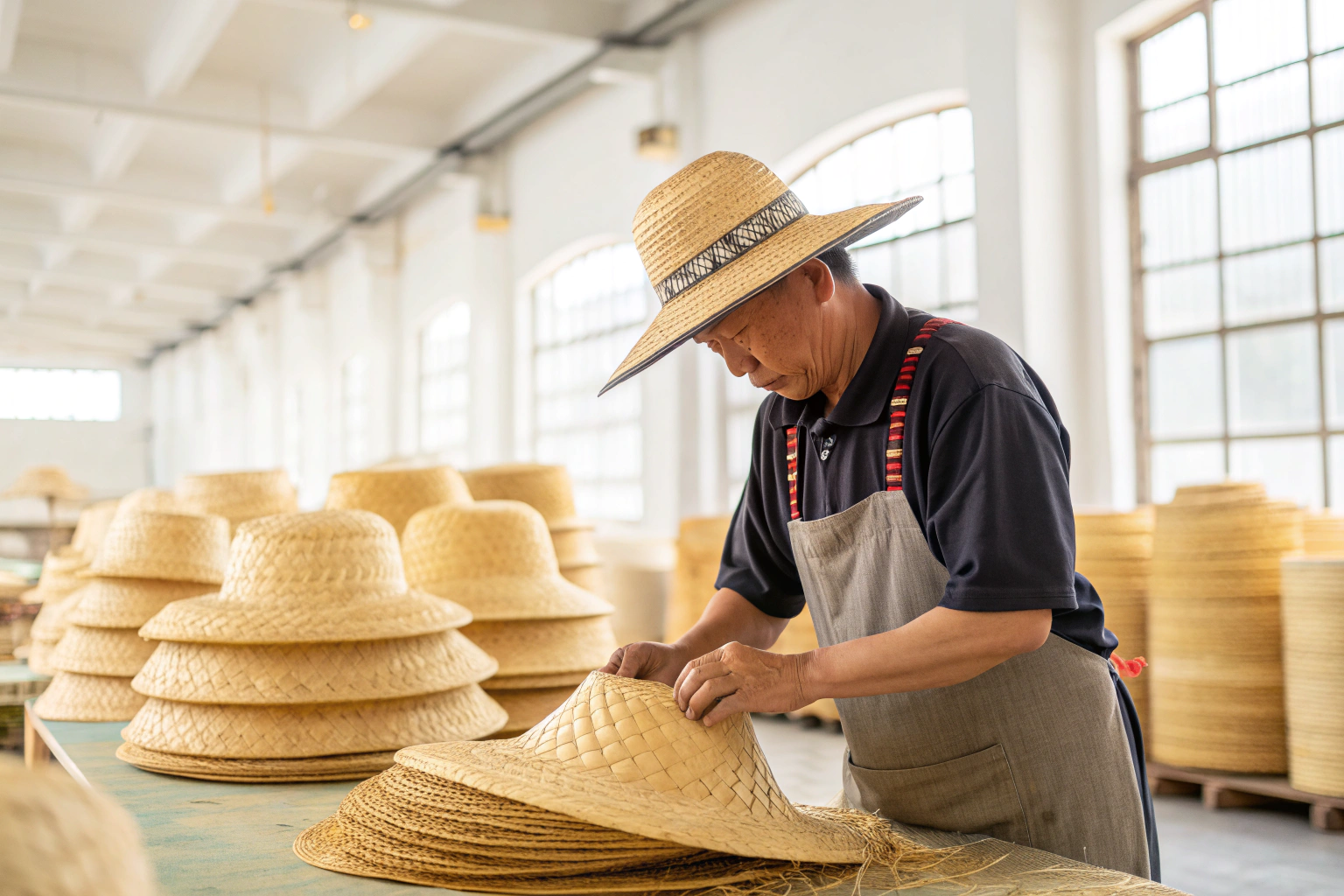
You have a keen eye for market trends. You see the powerful and growing demand for sustainable fashion. Your customers aren’t just buying a look; they’re buying into a story and a set of values. You’ve decided to launch a collection of eco-friendly straw hats, a perfect product that combines timeless summer style with a powerful sustainability message. But this presents a unique and complex sourcing challenge. How do you find a supplier who truly understands and can deliver a genuinely eco-friendly product? How do you verify their claims about "sustainable materials" and "ethical production" from halfway across the world? This isn’t just about finding a hat factory; it’s about finding a partner who shares your commitment to transparency and responsibility.
Finding a supplier for eco-friendly straw hats requires a targeted sourcing strategy that goes beyond price and focuses on material verification, craftsmanship, and ethical production. The process involves three key stages: 1) Identifying factories that specialize in natural fiber weaving, not just standard hat production; 2) Demanding specific, certified sustainable materials like raffia, seagrass, or organic cotton; and 3) Vetting the supplier’s ethical practices through social compliance audits and a deep inquiry into their artisan relationships. It’s a search for a partner in craftsmanship, not just a mass-production facility.
I’m the owner of shanghai Fumao, and this is a sourcing journey we deeply respect and support. The market for authentic, sustainable goods is not a niche; it’s the future of fashion. However, "eco-friendly" has also become a buzzword that many suppliers use without real substance—a practice known as "greenwashing." A true manufacturing partner must be able to provide you with a transparent supply chain, verifiable materials, and a product that is not only beautiful but also authentically tells the story of its sustainable origins. Let’s explore the professional approach to finding a supplier you can trust.
What Makes a Straw Hat "Eco-Friendly"? (Defining Your Terms)
Before you can find the right supplier, you must first have a crystal-clear definition of what "eco-friendly" means for your brand. This term can be vague. A professional sourcing strategy requires precise specifications. What are the actual, verifiable criteria that make a straw hat sustainable?
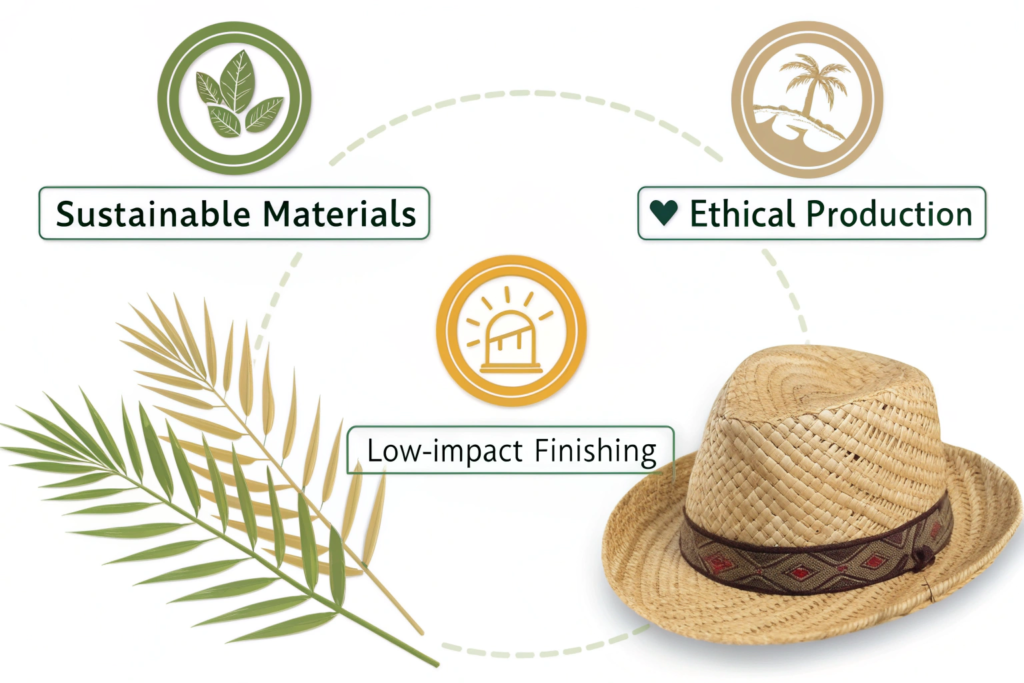
A straw hat is defined as "eco-friendly" based on a combination of three core attributes: 1) The use of sustainable, renewable, and biodegradable raw materials (like raffia, wheat straw, or seagrass) instead of synthetic plastics; 2) An ethical and socially responsible production process that supports artisan skills and ensures fair labor practices; and 3) The use of low-impact finishing processes, such as natural dyes and minimal chemical treatments. You must specify these criteria in your Tech Pack to avoid greenwashing.
Let’s break down these three pillars:
- Sustainable Materials: This is the foundation. The material must come from a plant source that is renewable and biodegrades at the end of its life.
- Top Tier: Raffia (from the raffia palm) is considered the gold standard for its durability, flexibility, and sustainable harvesting methods. Wheat Straw, Seagrass, and Toyo Straw (made from rice paper) are also excellent, classic choices.
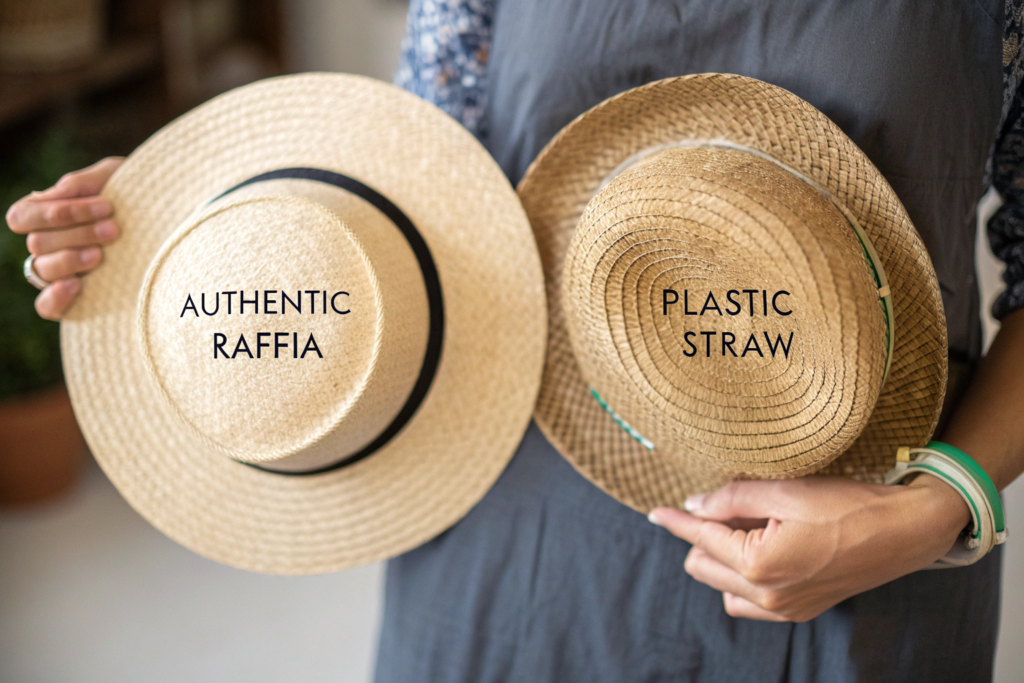
- What to Avoid: Be wary of "straw" hats that are actually made from plastic or paper coated in plastic. A common culprit is polypropylene, a plastic that is woven to look like straw but is not biodegradable. Also, be cautious with "paper straw" unless you can verify it is from a certified, sustainably managed forest (e.g., FSC certified) and is not coated with synthetic materials.
- Ethical Production: How the hat is made is as important as what it’s made from. Many high-quality straw hats are hand-woven, often by skilled artisans in rural communities. An eco-friendly ethos demands that these artisans are treated and paid fairly. This involves ensuring no forced or child labor and adhering to fair wage practices.
- Low-Impact Finishing: The process shouldn’t stop being eco-friendly after the weaving. This means using natural or low-impact, Azo-free dyes for any coloring, avoiding harsh chemical stiffening agents, and using trims (like an inner sweatband) made from sustainable materials like organic cotton or linen.
What is the difference between Raffia and regular Straw?
While often used interchangeably, they are different.
- Straw is a general term for the dry stalk of a cereal plant, like wheat, after the grain has been harvested. It can be somewhat brittle.
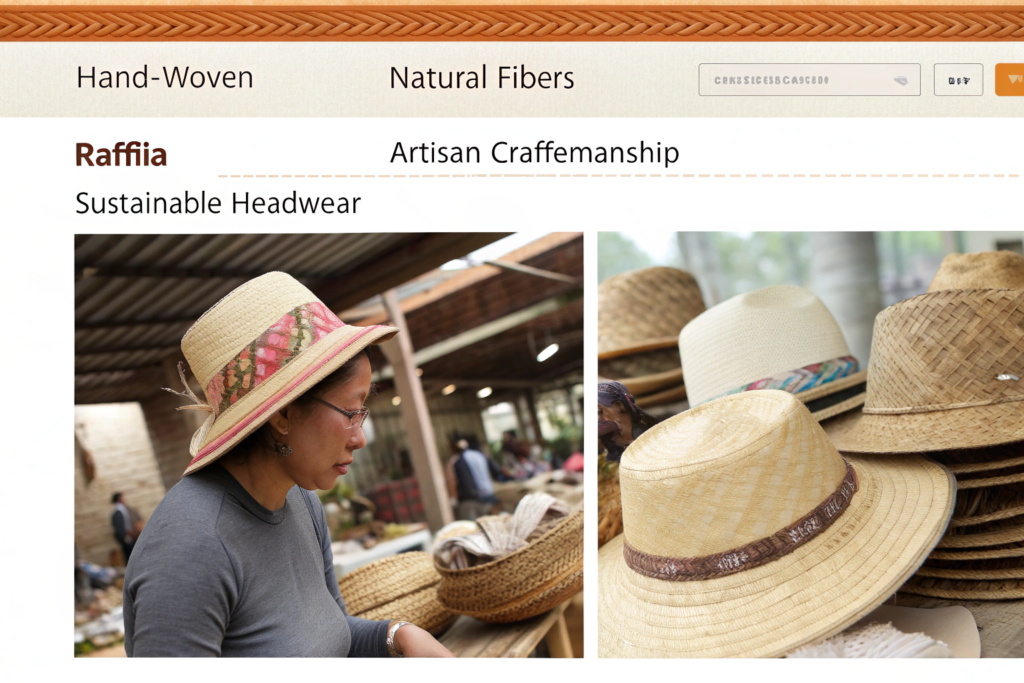
- Raffia is a specific fiber that comes from the leaves of the raffia palm tree. The leaves are harvested in a way that does not harm the tree, making it a highly renewable resource. Raffia fiber is soft, pliable, incredibly durable, and naturally water-resistant, making it a superior material for high-quality, long-lasting hats.
What is a social compliance audit?
A social compliance audit (like a SMETA or amfori BSCI audit) is a third-party inspection of a factory to assess its compliance with local labor laws and international ethical standards. It covers areas like wages, working hours, health and safety, and prohibitions on forced and child labor. Asking a potential supplier for a recent social compliance audit report is a key step in vetting their ethical production claims.
How Do You Find Factories That Specialize in Natural Fibers?
Your search for an eco-friendly straw hat supplier will lead you away from the giant, highly automated factories that produce typical baseball caps. You are looking for a specialist—a factory that has deep expertise in working with natural, hand-woven materials.
To find a natural fiber specialist, you must use targeted search keywords and carefully analyze a factory’s product catalog and company story. Search for terms like "raffia hat manufacturer," "artisan woven hats," or "sustainable headwear supplier." A true specialist’s website and product gallery will be dominated by natural fiber products and will often tell a story about their materials and their relationship with weaving communities, rather than focusing on machinery and production capacity.
Here’s how to distinguish a true specialist from a generalist:
- Targeted Search Terms: Use keywords that reflect the specific material and process:
- "Handmade straw hat factory"
- "Raffia hat supplier China"
- "Seagrass hats wholesale"
- "Ethical hat manufacturer"
- Scrutinize the "About Us" Page: A factory that is proud of its craftsmanship will talk about it. Look for language about their history, their connection to artisan communities, their expertise in specific materials like raffia, and their commitment to quality craftsmanship. A generic factory will only talk about their size, their machinery, and their low prices.
- Analyze the Product Mix: A specialist’s product catalog will be deep in straw hats and other woven natural fiber accessories (like bags). If you see a factory that has 500 styles of polyester caps and only two straw hats, they are almost certainly just a trading company or a non-specialist who is outsourcing the product. You want to find the factory that lives and breathes natural fibers.
- Ask About the Weaving Process: Engage them in a technical conversation. Ask direct questions:
- "Where do you source your raffia/wheat straw from?"
- "Are the hat bodies woven in-house, or do you source them from weaving cooperatives? If so, where are they located?"
- "Can you produce a hand-woven crown and brim, or only work with machine-sewn straw braid?"
A true specialist will be able to answer these questions with detail and confidence.
What is the difference between "hand-woven" and "sewn braid"?
This is a key construction difference.
- Hand-Woven: The entire hat body is woven by hand from individual strands of fiber into its final shape. This is a highly skilled, time-consuming artisan process that results in a seamless, beautiful, and often more expensive hat.
- Sewn Braid: Long braids of straw are first created (either by hand or machine), and then these braids are sewn together in a spiral, starting from the center of the crown, to form the shape of the hat. This is a more common and cost-effective method but is still highly skilled. A good factory can do this beautifully.
Are these factories typically large or small?
Factories that specialize in high-quality, hand-finished straw hats are often smaller to medium-sized enterprises. They are focused on skill and quality rather than massive volume. They often have a core facility for finishing, quality control, and packing, while maintaining relationships with a network of artisan weavers who may work from their homes or in small, local workshops.
How Do You Verify Material Claims and Avoid "Greenwashing"?
You’ve found a supplier who claims to use "100% natural, eco-friendly straw." This is the moment where a savvy brand owner must become a skeptical detective. "Greenwashing"—the practice of making misleading claims about a product’s environmental benefits—is rampant. You must verify these claims.
To avoid greenwashing, you must demand both physical samples and formal documentation. First, get a physical sample of the hat and the raw material itself; natural fibers have a distinct look, feel, and even smell that plastic cannot perfectly replicate. Second, for any claims of using certified materials like organic cotton, you must request and verify the supplier’s transaction certificates (TCs) from the certifying body (e.g., GOTS). Trust, but verify with paperwork.
Here is your verification toolkit:
- The Physical "Sniff Test":
- Get Samples: Order a sample of the finished hat and, importantly, ask for a small bundle of the raw, unworked straw material they use.
- Look, Feel, and Smell: Natural raffia is soft, pliable, and has a slightly sweet, grassy smell. It has natural, subtle variations in color and thickness. Plastic "straw" often feels stiff, has a slight chemical smell, and is perfectly uniform in color and texture. If it feels too perfect, be suspicious.
- The Burn Test (Use with Extreme Caution): This is an advanced but definitive test. A tiny strand of natural fiber, when burned, will smell like burning paper or leaves and leave a soft ash. A plastic fiber will melt, drip, form a hard bead, and have a harsh chemical smell. This should only be done in a safe, controlled environment.
- Documentation Deep Dive:
- Material Origin: Ask the supplier where the straw comes from. A good supplier will be able to tell you the region or country of origin.
- Certification Verification: This is non-negotiable for trims. If you specified an organic cotton sweatband, it’s not enough for the supplier to say "it’s organic." They must provide you with a copy of the Transaction Certificate for the specific batch of organic fabric they purchased to use in your order. You can then use the certificate number to verify its authenticity on the certifying body’s public database, such as the GOTS public database.
- Dye Compliance: If your hat is colored, ask for a declaration that they use Azo-free, low-impact dyes that are compliant with REACH or other international chemical standards.
What is a Transaction Certificate (TC)?
A TC is like a birth certificate for a batch of certified material. It is issued by the certifying body (like GOTS) and tracks the material from the original processor to the final factory. It proves that the specific fabric used in your order was genuinely certified. It is the single most important document for verifying a specific organic or recycled material claim.
Is it okay if the factory sources the woven hat bodies from another village?
Yes, this is a very common and often positive part of an ethical supply chain. Many brands work with factories that act as a central hub for finishing, QC, and export, while empowering artisan communities by sourcing hand-woven components from them. The key is transparency. Your supplier should be open about this relationship and be able to provide assurances about the fair treatment of the weavers in that community, often through a social compliance audit that covers these subcontractors.
How Do You Assess Craftsmanship and Production Quality?
An eco-friendly hat that is poorly made and falls apart after one season is not truly sustainable. Durability is a cornerstone of sustainability. Once you’ve verified the materials and ethical claims, you must assess the factory’s ability to produce a high-quality, long-lasting product.
You must assess craftsmanship through a meticulous physical inspection of a pre-production sample, focusing on the key indicators of quality in a straw hat. These include the consistency and tightness of the weave or stitching, the smoothness and symmetry of the hat’s shape, the quality of the finishing on the brim, and the neatness and durability of the inner sweatband attachment. These details separate a premium, artisan product from a cheap, mass-produced one.
When your sample arrives, put on your quality control hat and inspect these specific points:
- Weave/Stitching Consistency:
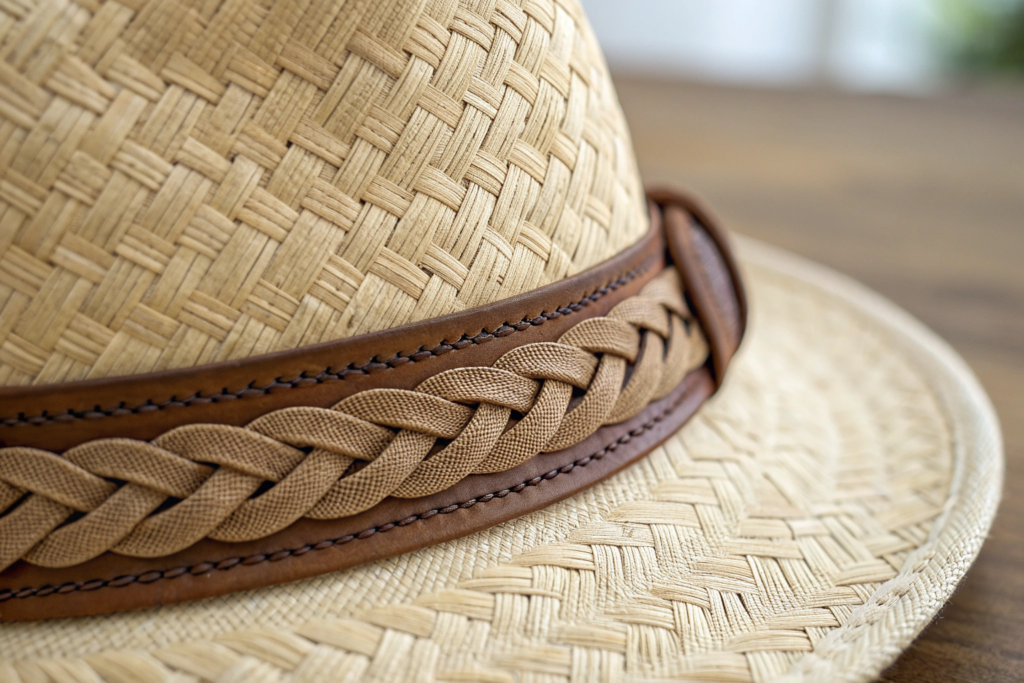
- Look closely at the straw. Is the weave tight and even? If it’s a sewn-braid hat, are the lines of stitching parallel and consistent? Loose, uneven stitching is a sign of poor craftsmanship and will lead to the hat unraveling.
- Shape and Symmetry:
- Place the hat on a flat surface. Is it symmetrical? Does the crown sit evenly? Is the brim flat and not warped? A well-made hat will have a beautiful, balanced shape.
- Brim Finishing:
- Examine the outer edge of the brim. This is a high-wear area. Is it neatly finished with a secure stitch, a fabric binding, or a wire to help it hold its shape? A raw, unfinished edge is likely to fray and fall apart.
- Sweatband Attachment:
- Turn the hat inside out. The inner sweatband is a critical component for comfort and fit. Is it sewn in neatly and securely? Is the stitching straight? A poorly attached sweatband will be uncomfortable and is a sign of rushed, low-quality production.
- Overall Feel:
- Does the hat feel sturdy but flexible, or does it feel brittle and fragile? A good quality raffia or straw hat should have a certain pliable strength.
What is a "packable" straw hat?
A "packable" or "crushable" hat is one that can be rolled or folded for travel and will spring back to its original shape. This is a highly desirable feature. It is achieved through a combination of a very high-quality, pliable material (like Grade A raffia) and a specific weaving technique. If you want to offer a packable hat, you must specify this to your supplier, as it requires a higher grade of material and skill.
How can I ensure consistency between the sample and the bulk order?
This is where the "golden sample" and a clear QC checklist are essential. Your approved pre-production sample becomes the standard. You should create a QC checklist, with photos, that details all the quality points you just inspected (e.g., "Stitching on brim must be neat and even as per sample"). You can then provide this to your own third-party inspector to use during the final inspection of the bulk order, ensuring every hat meets the standard you approved.
Conclusion
Finding a supplier for eco-friendly straw hats is a journey that rewards diligence and a commitment to your brand’s values. It requires you to act not just as a designer, but as a material scientist, a detective, and an advocate for ethical production. By clearly defining what "eco-friendly" means for your brand, actively seeking out specialist factories with a passion for natural fibers, rigorously verifying their material and ethical claims through documentation and physical inspection, and meticulously assessing their craftsmanship, you can forge a partnership built on trust and transparency. The result is more than just a hat; it’s a product with a story, a product that allows your customers to wear their values, and a product that proves that style and sustainability can go hand in hand.
At Shanghai Fumao, we have cultivated relationships with artisan communities and have developed a deep expertise in working with natural, sustainable materials like raffia. We understand the nuances of crafting a high-quality, eco-friendly product and can provide the transparency and documentation you need to build your brand with confidence. If you are looking for a partner to help you create a beautiful and authentic sustainable headwear collection, please reach out to our Business Director, Elaine, at elaine@fumaoclothing.com.