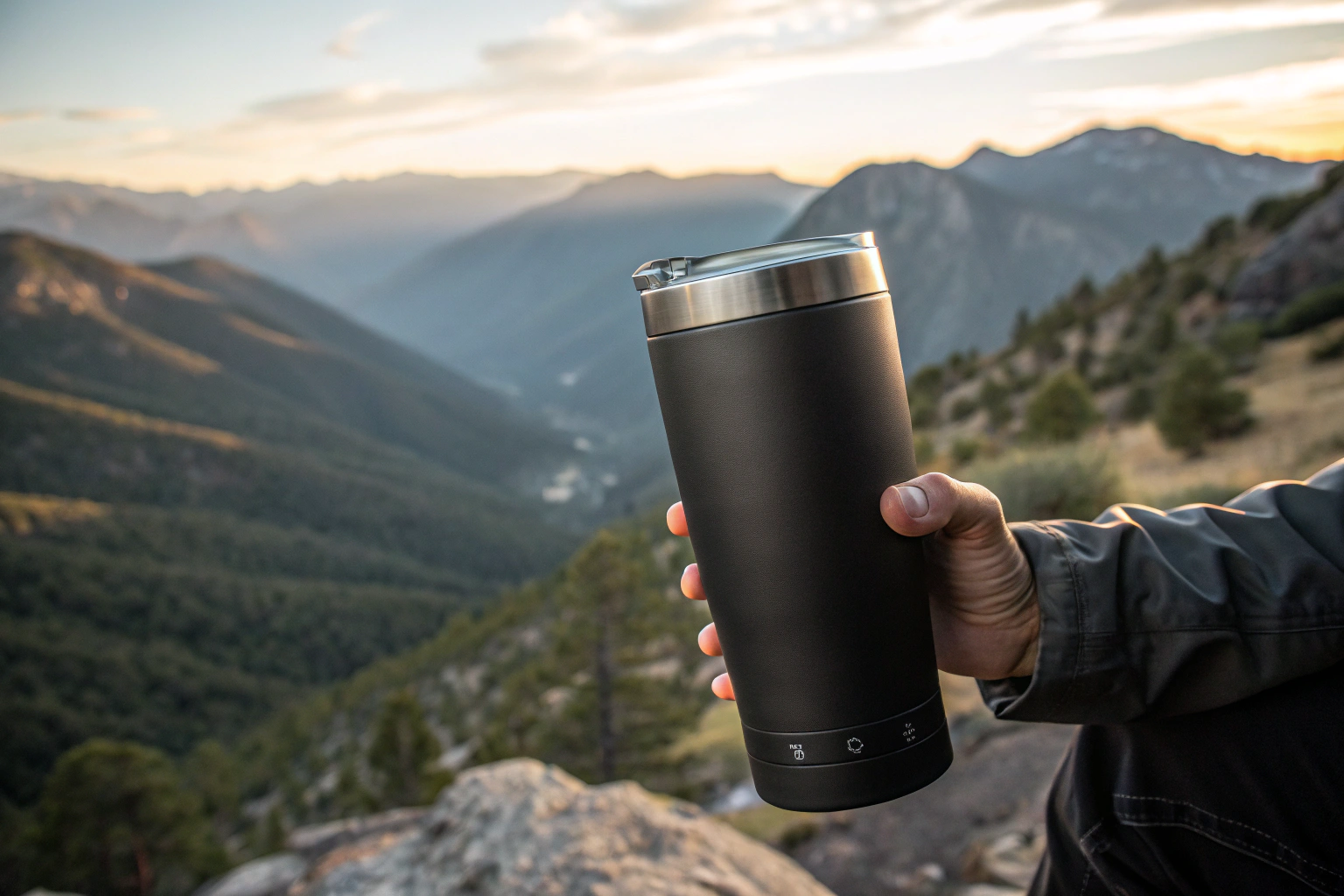
You’re looking to enter the booming market for reusable travel cups. You see them everywhere, from coffee shops to hiking trails, a testament to a growing consumer consciousness around sustainability. But you also see a graveyard of failed products: cups with cracked lids, bodies that dent if you look at them wrong, and vacuum seals that mysteriously fail, leaving a lukewarm coffee and a disappointed customer. You know that for a product designed for a life on the go, durability isn’t just a feature; it’s the entire promise. You’re rightly concerned about choosing a material that fails under the pressures of daily life, leading to a flood of customer complaints, scathing online reviews, and irreversible damage to your brand’s reputation for quality.
The most durable material for a travel cup, by a significant margin, is 18/8 food-grade stainless steel. Its superior resistance to dents, rust, and shattering, combined with its unique ability to be engineered into a double-walled, vacuum-insulated form, makes it the undisputed champion for longevity and thermal performance. For the equally critical lid and flexible components, high-quality, BPA-free plastics like Tritan™ copolyester and food-grade silicone offer the best combination of toughness, safety, and long-term reliability.
I’m the owner of Shanghai Fumao Clothing, and we’ve expanded our manufacturing capabilities into high-quality drinkware precisely because we saw the same problem you did. We saw an opportunity for a well-made, reliable product in a sea of mediocrity and broken promises. The material is the heart, soul, and skeleton of the product. Choosing a robust, proven material is the first and most important step in creating a travel cup that customers will trust, rely on, and use for years—transforming a simple purchase into a long-term brand relationship. Let’s take a deep dive into the pros and cons of the top material contenders, so you can make a decision based on engineering fact, not just marketing hype.
Why is Stainless Steel the Undisputed Gold Standard?
When you analyze the offerings from the most successful and respected brands in the global drinkware market, you’ll notice a powerful common denominator: stainless steel. From YETI’s rugged coolers to Hydro Flask’s colorful bottles and Stanley’s iconic thermoses, they have all built their empires on the back of this one material. But why? What makes it so uniquely suited for the demands of a travel cup, and how can you leverage this understanding in your product development and marketing?
18/8 food-grade stainless steel is the gold standard because it offers an unmatched trifecta of mechanical strength, chemical inertness, and thermal engineering potential. It is highly resistant to dents and drops, it will not rust or leach chemicals into the beverage, and its inherent strength allows for the construction of double-walled, vacuum-insulated vessels that provide the exceptional, long-lasting temperature retention that modern consumers demand as a baseline performance feature.
Let’s break down the three pillars of its superiority, which are also your key marketing points:
- Mechanical Strength & Physical Durability: This is its most obvious virtue. Unlike glass or ceramic, it won’t shatter into a thousand pieces if dropped. Unlike cheap plastic, it won’t develop stress cracks and fail. While it can certainly dent under an extreme impact (like falling from a significant height onto a hard surface), it rarely becomes unusable. This physical toughness is essential for a product that is designed to be carried, dropped, jostled in a bag, and placed in countless vehicle cup holders. It’s a product that can handle the unpredictability of life.
- Chemical Purity & Taste Neutrality: The "18/8" designation refers to its specific alloy composition: 18% chromium and 8% nickel. This specific blend is highly resistant to oxidation (rust) and corrosion, even when exposed to acidic beverages like coffee, tea, or citrus juices. Crucially, it is chemically inert, meaning it imparts no metallic taste and does not absorb flavors or odors from previous drinks. Yesterday’s coffee won’t taste like today’s herbal tea. This purity is a major selling point against lower-quality metal or plastic alternatives.
- Thermal Engineering & Performance: The material’s strength is what allows for the creation of a double-walled structure. By welding an inner and outer wall together and then using a vacuum pump to remove all the air from the gap between them, you create a vacuum—the most effective form of insulation possible. Heat (or cold) cannot easily transfer through a vacuum. This is what allows a cup to keep drinks hot for 8 hours or cold for 24 hours. A factory’s ability to properly form, weld, and most importantly, permanently seal a high-quality vacuum is a critical indicator of their manufacturing expertise.
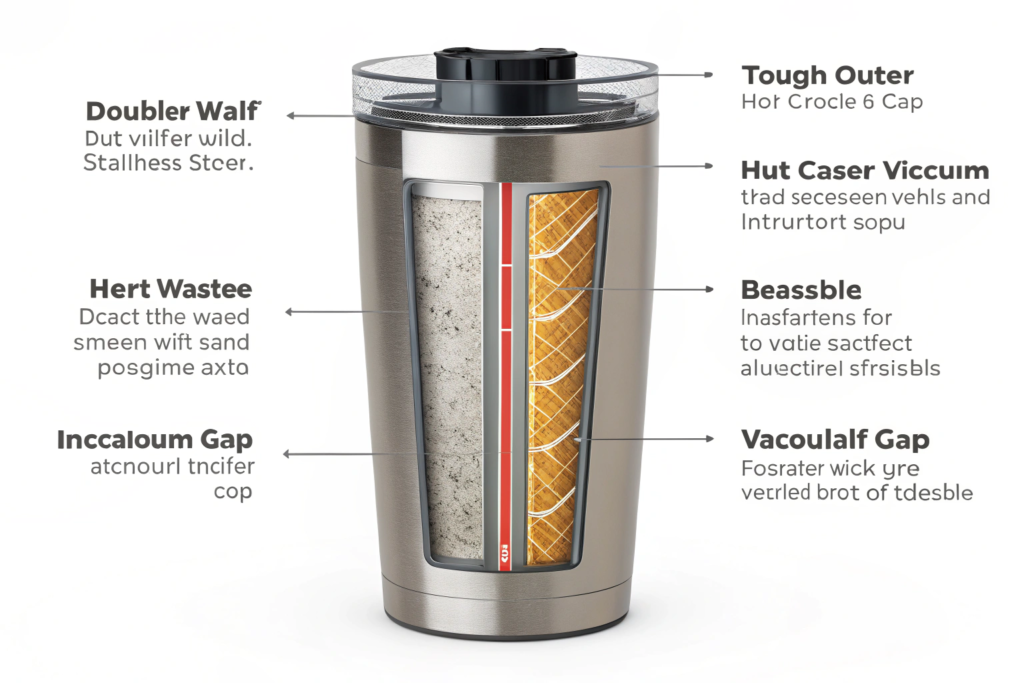
What does "18/8 food-grade" actually guarantee?
This is a specific classification for a type of stainless steel, also known as Type 304 in the SAE steel grading system. The "food-grade" designation is a regulatory assurance. It means the material has been tested and deemed safe for long-term contact with food and beverages by international bodies, including the U.S. Food and Drug Administration (FDA). It guarantees that the levels of chromium, nickel, and other trace elements that could potentially migrate into the food are well below safe limits. Insisting on certified 18/8 food-grade stainless steel from your manufacturer is a non-negotiable quality and safety requirement that protects both your customers and your brand from liability.
How does the finish affect durability?
The finish on the outside of the cup is a critical component of its durability and perceived quality. A simple layer of paint will quickly chip and scratch, making the product look old and worn. The industry standard for a durable, premium finish is powder coating. This process involves electrostatically applying a dry, pigmented powder to the steel surface and then curing it under high heat. This melts the powder into a continuous, thick, and incredibly hard finish that is far more resistant to chipping, scratching, and fading than conventional liquid paint. It also provides a pleasant, slightly textured grip. When creating your tech pack, specifying a "powder coat finish" is essential for a durable product.
What is the Best Material for a Durable and Safe Lid?
A travel cup is only as good as its lid. A perfectly insulated, indestructible body is rendered useless if the lid cracks, leaks, warps, or feels cheap. You’ve seen the flimsy, cloudy plastic lids on low-quality cups and know you need something substantially better. What material provides the necessary toughness, clarity, long-term stability, and, most importantly, safety for a premium lid that will be in direct contact with hot beverages?
The best material for a durable, high-performance lid is a high-quality, BPA-free copolyester, with Tritan™ being the most recognized and trusted brand name in this category. This advanced material offers glass-like clarity, exceptional shatter resistance, and is completely free of harmful chemicals like BPA. For the sealing gaskets and flexible parts, food-grade silicone is the ideal choice due to its extreme temperature resistance, flexibility, and long-lasting, reliable seal.
Choosing the right lid materials is just as important, if not more so, than choosing the body material, as the lid contains moving parts and is the primary point of interaction for the user.
- Tritan™ Copolyester: Developed by the chemical company Eastman, Tritan™ has become the go-to material for premium, clear plastic goods for a reason. It is virtually unbreakable under normal use, won’t stain or retain odors from coffee or tea, and is top-rack dishwasher safe without warping or becoming cloudy. Its crystal clarity also gives the product a high-end, clean look that signals quality to the consumer, unlike cheap, translucent polypropylene.
- Food-Grade Silicone: For the gaskets that create the leak-proof seal between the lid and the cup body, silicone is far superior to standard rubber. It remains soft and flexible across a huge temperature range (from ice-cold to boiling hot), whereas rubber can become brittle or deform. Silicone doesn’t degrade or crack over time, ensuring a long-lasting seal. It is also completely inert and food-safe.
When you specify your lid to a manufacturer like Shanghai Fumao Clothing, you should explicitly demand "BPA-free Tritan™" for all rigid, clear components and "100% food-grade silicone" for all gaskets and seals.
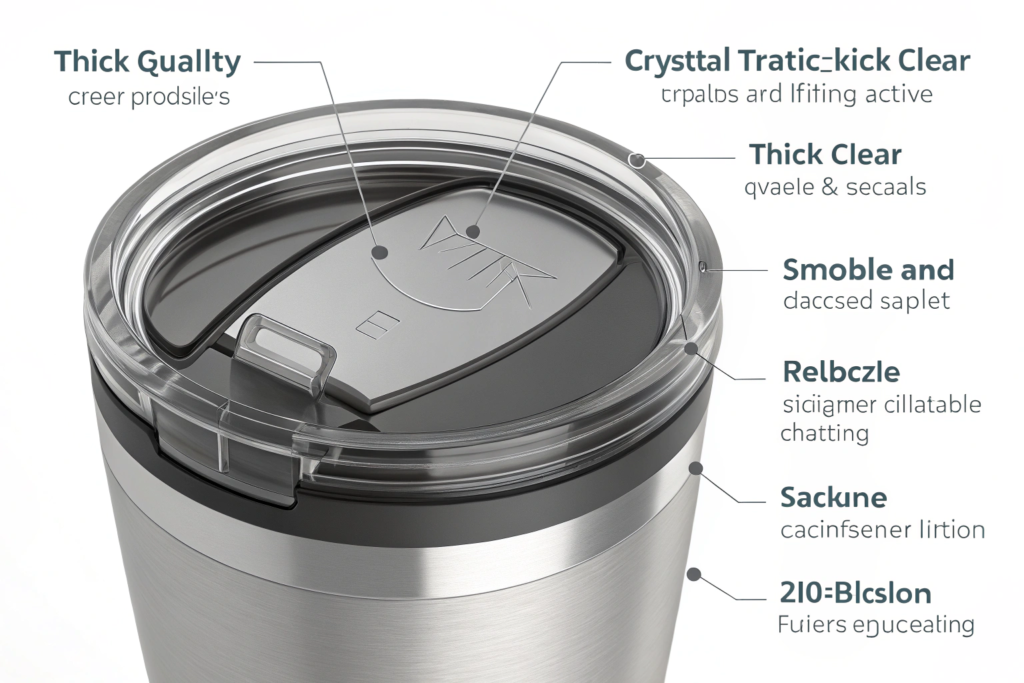
Why is "BPA-free" a critical marketing and safety claim?
BPA (Bisphenol A) is an industrial chemical that was once widely used in polycarbonate plastics and epoxy resins. It has since been linked by numerous studies to potential health problems, particularly when it leaches from containers into food and beverages. Consumer awareness of this issue is now extremely high, and "BPA-free" has become a baseline expectation for any food-contact product. Failing to meet this standard and communicate it clearly is a major commercial risk. All reputable drinkware manufacturers now use BPA-free materials exclusively, and you must ensure your supplier can provide certification to prove it.
Beyond material, what makes a lid durable?
Beyond the material itself, the mechanical design of the lid is crucial for its long-term durability. A simple, robust mechanism is always better than a complex one.
- Fewer Moving Parts: A simple sliding or flipping mechanism with large, sturdy components will generally outlast a complex push-button or multi-part twisting mechanism that has more potential points of failure.
- Ease of Cleaning: A durable lid is one that can be easily and thoroughly cleaned. A design that can be fully disassembled to clean all the gaskets and hidden areas will prevent mold growth and ensure a longer, safer product life. This is a key functional feature that customers appreciate.
When evaluating a sample, open and close the lid mechanism 50-100 times. Does it still feel smooth and secure? Can you take it apart for cleaning without feeling like you’re going to break it?
Are There Any Viable Alternatives to Stainless Steel?
While stainless steel is the undisputed king of all-around durability, you might be looking to offer a different aesthetic, a lighter weight, or a lower price point to segment your collection. Are there any other materials that can offer a good balance of durability and function for specific customer needs, or are they all significantly inferior?
While no material matches the all-around durability of stainless steel, high-quality borosilicate glass and thick, food-grade silicone are viable and popular alternatives for specific use cases. Borosilicate glass offers the purest possible taste experience and is highly resistant to thermal shock, making it ideal for the coffee or tea connoisseur. Meanwhile, silicone offers a lightweight, unbreakable, and often collapsible option for the space-conscious traveler or backpacker.
These materials serve different needs and target different customer profiles:
- Borosilicate Glass: This is not your standard window or bottle glass. It’s a type of "engineered" glass (famously used in laboratory equipment under the brand name Pyrex) that is fortified with boron trioxide. This gives it a very low coefficient of thermal expansion, meaning it is highly resistant to thermal shock and won’t crack when you pour a boiling hot beverage into it. Often made in a double-walled configuration for insulation, it offers the purest taste with zero flavor retention. Its main drawback is obvious: it can still shatter if dropped from a height. It’s best for the careful user, the office dweller, or the home connoisseur.
- Food-Grade Silicone: Silicone cups have the unique advantage of being completely unbreakable and very lightweight. Their flexibility allows for innovative designs, with many being designed to be collapsible, making them extremely popular for backpacking, camping, and travel where packing space is at a premium. Their main drawbacks are a lack of rigidity (they can be squeezed) and very poor insulation compared to a vacuum-sealed steel cup. They are a specialty product for a user who prioritizes portability and packability above all else.
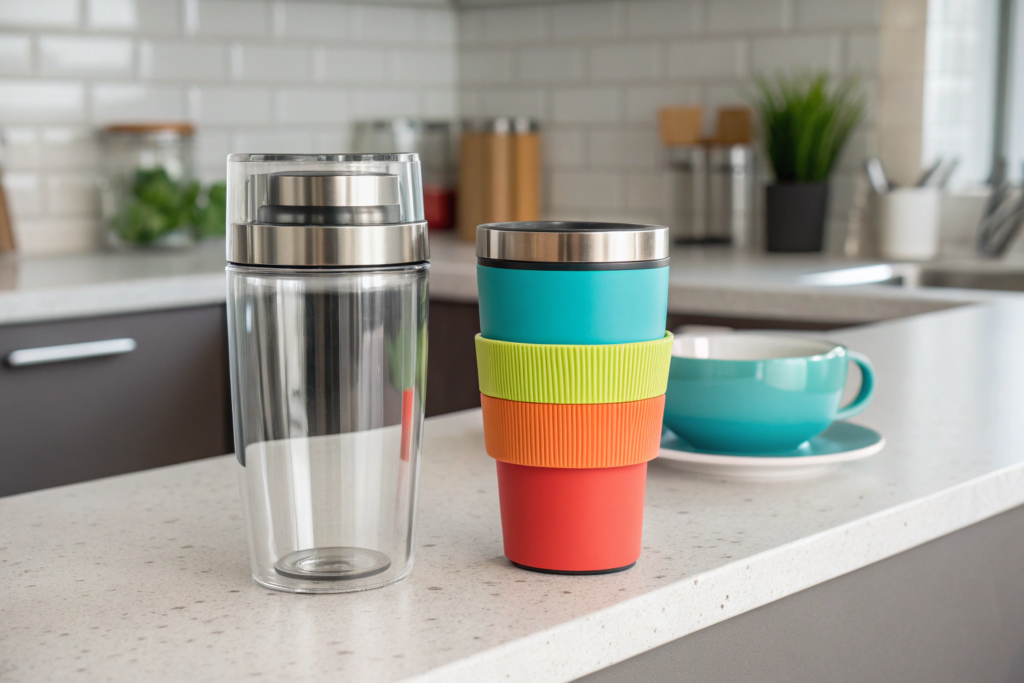
How effective is a silicone sleeve on a glass cup?
A thick silicone sleeve is a common and highly recommended feature for any glass travel cup. It serves two crucial functions: it provides a secure, non-slip grip, and more importantly, it acts as a vital shock absorber. While it won’t save the cup from a 5-foot drop onto concrete, it will significantly reduce the chance of the glass breaking if it is bumped against a counter, tipped over, or set down too hard. It transforms the cup from "extremely fragile" to "handle with reasonable care."
What about ceramic travel cups?
Ceramic offers a wonderful, traditional, and weighty feel, and it is excellent for taste neutrality. However, for a product marketed for "travel," it is generally the least durable option. It is heavy, prone to chipping from minor impacts, and will shatter when dropped. Double-walled ceramic versions exist for insulation, but their inherent fragility makes them a poor choice for a true "travel" cup intended for daily, on-the-go use. They are better positioned as a "desk mug" or "commuter mug" for use in a controlled car-to-office environment.
Which Materials Should Be Absolutely Avoided?
You’ll inevitably be presented with options to make your cup much cheaper by using lower-grade materials. A factory might suggest using a different, less expensive type of plastic for the body, a cheaper metal, or a generic, non-certified plastic for the lid. You need to know which materials are immediate red flags that will compromise the quality, safety, and integrity of your product.
For a durable, high-quality travel cup, you should absolutely avoid cheap, generic plastics like polypropylene (PP) or polystyrene (PS) for the main body, and any non-food-grade metals or uncertified plastics. These low-grade plastics can crack easily, warp in the dishwasher, and are notorious for retaining stains and odors. They feel cheap to the touch, lack the premium experience consumers expect from a reusable product, and present potential safety risks.
Using these materials is a classic example of a short-term saving that leads to long-term brand damage.
- Polypropylene (PP) or Polystyrene (PS): While perfectly fine for single-use disposable cups, these plastics are not suitable for a durable, reusable product. They lack the impact resistance of Tritan™ and the thermal performance of steel. They feel flimsy, can become brittle over time, and a hot beverage can sometimes cause them to impart a "plasticky" taste.
- Aluminum: While some single-walled water bottles are made from aluminum, it is generally not used for high-quality travel cups designed for hot beverages. It dents very easily and often requires a thin plastic liner on the inside to prevent a metallic taste, and this liner can degrade, flake, or scratch over time, creating potential safety and quality issues.
- Unknown or Uncertified Plastics: This is the biggest red flag of all. If a supplier cannot tell you the exact type of plastic used in the lid and provide documentation certifying that it is BPA-free and food-grade, you must walk away. The risk of selling an unsafe product is far too great.
Why not use 100% plastic for the body of a hot beverage cup?
While a high-quality plastic like Tritan™ can be used for a cup body (often seen in cold-beverage tumblers or smoothie cups), it cannot be vacuum insulated. Therefore, it will never match the thermal performance of a double-walled stainless steel cup for keeping drinks hot for extended periods. A hot drink will quickly cool, and the outside of the cup will become hot to the touch, making it less comfortable and functional for the user.
How can I verify the material a factory is using?
This is where you must rely on your supplier’s integrity, your detailed tech pack, and your contractual agreements. Your purchase order should explicitly state "Body: Certified 18/8 (Type 304) Stainless Steel" and "Lid: Certified BPA-Free Tritan™." You have the right to require your supplier to provide the raw material certifications from their suppliers. For ultimate peace of mind on a large order, you can have a third-party inspection agency (like QIMA, SGS, or Intertek) pull a random sample from the production line and send it to a lab for material analysis. This step ensures the factory is not engaging in a "bait and switch" with lower-grade materials.
Conclusion
In the highly competitive world of reusable drinkware, durability is the cornerstone of a premium brand and the foundation of customer trust. By choosing 18/8 food-grade stainless steel for the body, you are selecting a material with proven strength, unimpeachable safety, and unmatched potential for the thermal insulation that consumers crave. By pairing it with a tough, clear, and safe lid made from best-in-class materials like Tritan™ and silicone, you create a complete, engineered product that is designed to withstand the rigors of a life in motion. Resisting the siren song of cheaper, lower-grade materials is not just a technical decision; it’s a brand-defining one. It is a tangible commitment to quality, safety, and sustainability that your customers will see, feel, and appreciate every single day they use your product.
At Shanghai Fumao Clothing, we understand the science and precision engineering behind high-performance drinkware. We have the certified supply chain, the rigorous quality control systems, and the technical expertise to ensure that every cup we produce is made from the correct, high-quality materials our partners demand. If you are ready to build a line of travel cups based on a foundation of uncompromising durability and quality, please reach out to our Business Director, Elaine, at elaine@fumaoclothing.com.