

As a brand owner like Ron, you know that a customer’s trust is hard-won and easily lost. You’re planning a new collection of scarves, and you want to build a reputation for quality and longevity. Your biggest fear is the dreaded "pilling"—those ugly little balls of fiber that appear on a scarf after just a few wears, making a new product look old and cheap. You’re determined to source a truly anti-pilling product, but you’re faced with a daunting question: How do you find a factory that can actually deliver on this technical promise, and not just make an empty marketing claim?
To find a factory for anti-pilling scarves, you must look beyond simple sourcing platforms and identify manufacturers with deep technical expertise in fiber science and textile finishing. The process involves specifically searching for factories that specialize in high-quality knitwear, rigorously vetting their choice of raw materials (like long-staple fibers and high-twist yarns), and demanding objective, third-party lab reports (like Martindale abrasion tests) to prove their anti-pilling claims.
I’m the owner of Shanghai Fumao Clothing, and I can tell you that "anti-pilling" is one of the most frequently requested—and most frequently misunderstood—attributes in the textile industry. It’s not a simple feature; it’s the result of a series of deliberate, quality-focused decisions made at every stage of the manufacturing process, from raw fiber selection to the final chemical finish. Finding a factory that understands this science is the only way to guarantee a product that lasts. Let’s break down how to find and vet these expert manufacturers.
Why Does Pilling Happen in the First Place?
Before you can find a solution, you must understand the problem. You see pilling on sweaters and scarves, but you might not know the technical reason it occurs. You’re worried that without this foundational knowledge, you won’t be able to ask suppliers the right questions or effectively judge the quality of the materials they propose.
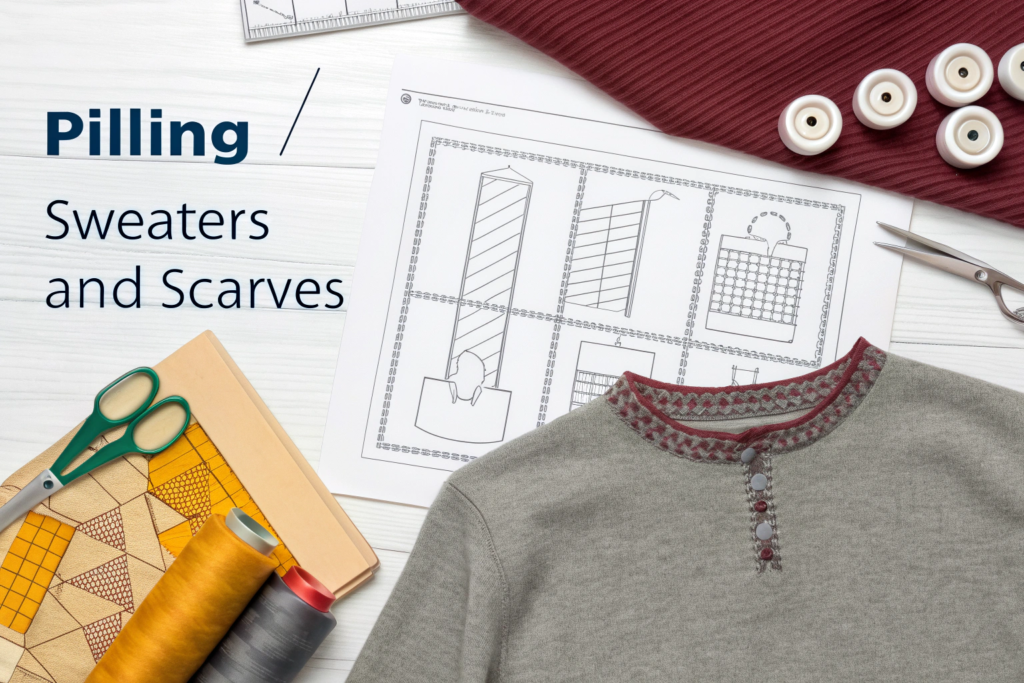
Pilling is the result of friction. When a fabric surface is rubbed, loose, short fibers on the surface get tangled together, forming small knots or balls known as "pills." This is primarily caused by the use of short-staple fibers and low-twist yarns, which have more loose ends available to get tangled.
Think of it like this: a rope made of many short, loosely twisted strings will fray easily. A rope made of a few long, tightly twisted strands will be smooth and strong. The same principle applies to yarn. The key takeaway is that pilling is a direct indicator of the quality of the raw materials and the yarn construction. A factory that defaults to cheap, short-fiber yarns will inevitably produce a product that pills. A quality-focused factory, like Shanghai Fumao Clothing, understands that preventing pilling starts with sourcing superior raw materials.
What are "staple length" and "yarn twist"?
Staple length refers to the length of the individual fibers used to make the yarn. Long-staple fibers (like those from high-quality cotton or merino wool) are more desirable because they require fewer ends to be twisted into a yarn, resulting in a smoother, stronger, and less pill-prone surface. Short-staple fibers are cheaper but have many more loose ends. Yarn twist refers to how tightly those fibers are twisted together. A high-twist yarn is tighter, firmer, and more resistant to friction, while a low-twist yarn is fluffier, softer, but much more susceptible to pilling.
Do all fabrics pill?
Virtually all fabrics can pill to some extent, but some are much more prone to it than others. Loosely knitted fabrics made from soft, short-staple yarns (like some cashmere or lambswool) are particularly susceptible. In contrast, tightly woven fabrics made from long-staple fibers are very resistant. The goal of an "anti-pilling" scarf is to use the right combination of fiber, yarn construction, and finishing to minimize pilling to a negligible level.
How Do I Find Factories with Anti-Pilling Expertise?
You search for "anti-pilling scarf factory" on a B2B platform and every single listing claims to offer it. You’re rightly skeptical. How do you separate the factories that truly have the technical know-how from those that are just using a popular keyword to attract buyers?
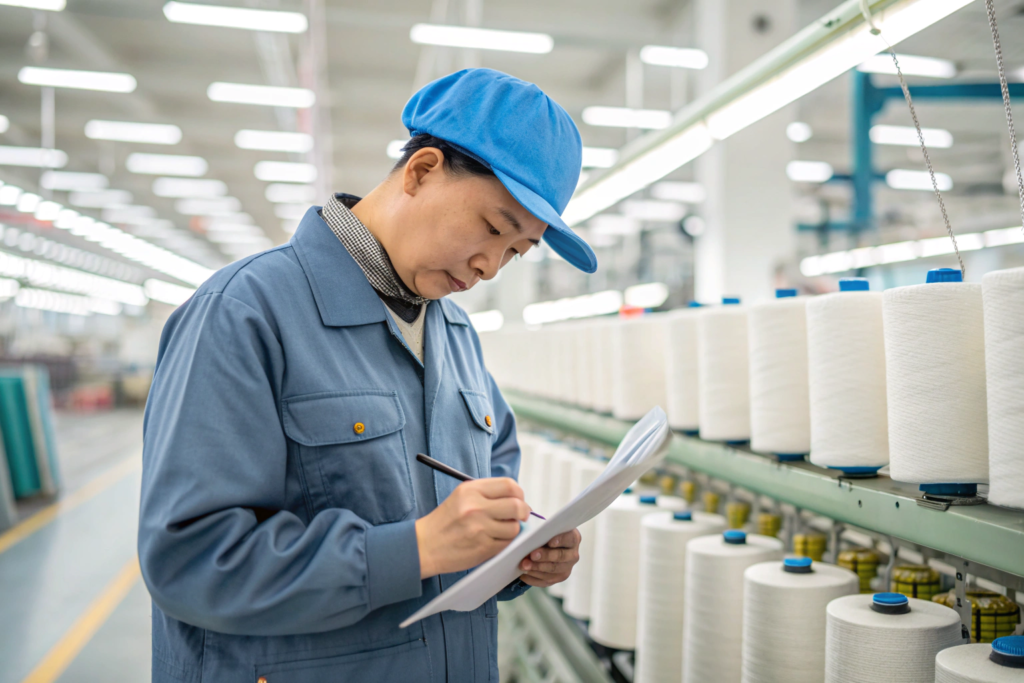
You must identify factories with proven expertise in high-quality knitwear and textile science by asking specific, technical questions that go beyond simple marketing claims. Look for suppliers who can intelligently discuss yarn specifications, finishing processes, and who proactively offer material options known for their anti-pilling properties.
A true specialist will welcome a technical conversation. When you contact a potential supplier, don’t just ask for an anti-pilling scarf. Ask them:
- "What specific fibers and yarn constructions do you recommend for achieving a high anti-pilling rating?"
- "Can you provide specifications for the yarn you propose, including staple length and twist level?"
- "What kind of anti-pilling finishes or treatments do you offer?"
- "Can you provide third-party test reports for the pilling resistance of your materials?"
A supplier who gives vague answers or doesn’t understand these questions is not a specialist. A true expert will be able to explain why their recommended material is resistant to pilling.
What materials should I ask for?
To start the conversation, ask about materials known for good pilling resistance. These include:
- High-Quality Merino Wool: Specifically ask for yarns made from long-staple merino fibers.
- Tightly Spun Acrylic: While acrylic can be prone to pilling, high-quality, high-twist "low-pill" acrylic yarns are specifically engineered to resist it.
- Blends with Stable Fibers: Blending a soft fiber like wool with a smooth, strong fiber like nylon or silk can increase the fabric’s strength and reduce pilling.
- TENCEL™ Lyocell: This modern fiber is known for its smooth surface and resistance to pilling, making it an excellent, sustainable choice.
Where are these specialist factories often located?
While you can find factories anywhere, regions with a long history in high-quality knitwear and wool production are often a good place to start. Areas in China like Zhejiang and Jiangsu have a high concentration of technically advanced textile mills. However, the specific factory’s expertise is more important than its location.
How Do I Verify Anti-Pilling Claims with Data?
A supplier has sent you a sample that feels soft and looks great. They assure you it’s "anti-pilling." But how can you be sure? You’re worried about approving a sample based on a subjective feeling, only to have the bulk production fail your customers after a few weeks of wear.
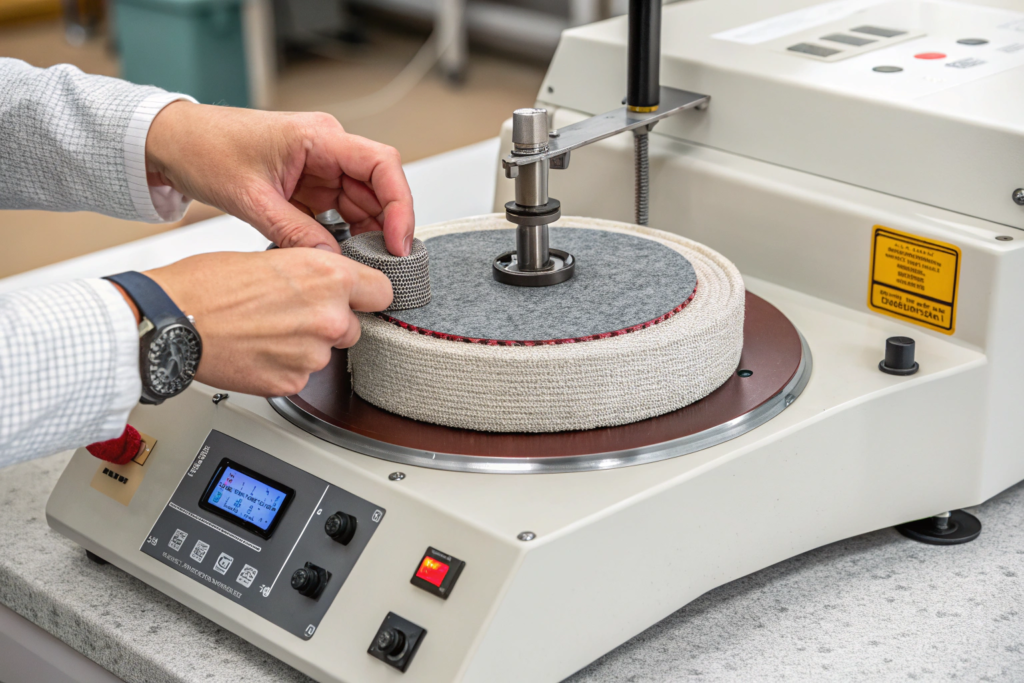
You must demand objective, scientific proof of a fabric’s pilling resistance by requesting a third-party laboratory test report. The industry standard for this is the Martindale Abrasion and Pilling Test (ISO 12945-2). This test provides a standardized, numerical grade for pilling that allows you to compare different materials accurately.
The Martindale test is non-negotiable for verifying anti-pilling claims. In the test, a sample of the fabric is rubbed against a standard abrasive surface for a set number of cycles (e.g., 2,000, 5,000, or 7,000 cycles). After the test, the fabric is visually compared to standard photographs and given a pilling grade from 1 (very severe pilling) to 5 (no pilling). This process is detailed by testing institutes like Intertek.
What is a "good" Martindale pilling grade?
For a quality fashion accessory like a scarf, you should be looking for a pilling grade of 4 or higher after a significant number of cycles (e.g., 5,000+).
- Grade 5: No change
- Grade 4: Slight surface fuzzing and/or isolated, partially formed pills
- Grade 3: Moderate surface fuzzing and/or moderate pilling. (Generally unacceptable for a quality product).
- Grades 1-2: Severe pilling.
By specifying "Martindale Pilling Grade 4-5 @ 5,000 cycles" in your tech pack, you are setting a clear, measurable, and enforceable quality standard.
What are anti-pilling finishes?
In addition to using quality yarns, factories can apply a chemical anti-pilling finish. This is a polymer coating that binds the fibers together, making them less likely to loosen and tangle. While this can be effective, it’s often used to improve the performance of lower-quality yarns. A truly premium product relies first and foremost on the quality of the fiber and yarn construction, potentially enhanced by a finish, rather than using a finish to mask a poor-quality base material.
How Should I Test the Samples Myself?
You’ve received a sample and its lab report looks good. But you still want to get a real-world feel for its performance. How can you simulate wear and tear yourself to gain confidence before placing a bulk order?
In addition to reviewing lab reports, you should always perform your own simple, aggressive wear-and-tear tests on the pre-production samples. This involves creating intense friction on a small area of the scarf to see how it responds and wearing it for several days to see how it holds up to real-world conditions.
This hands-on testing can give you a gut feeling for the product’s quality.
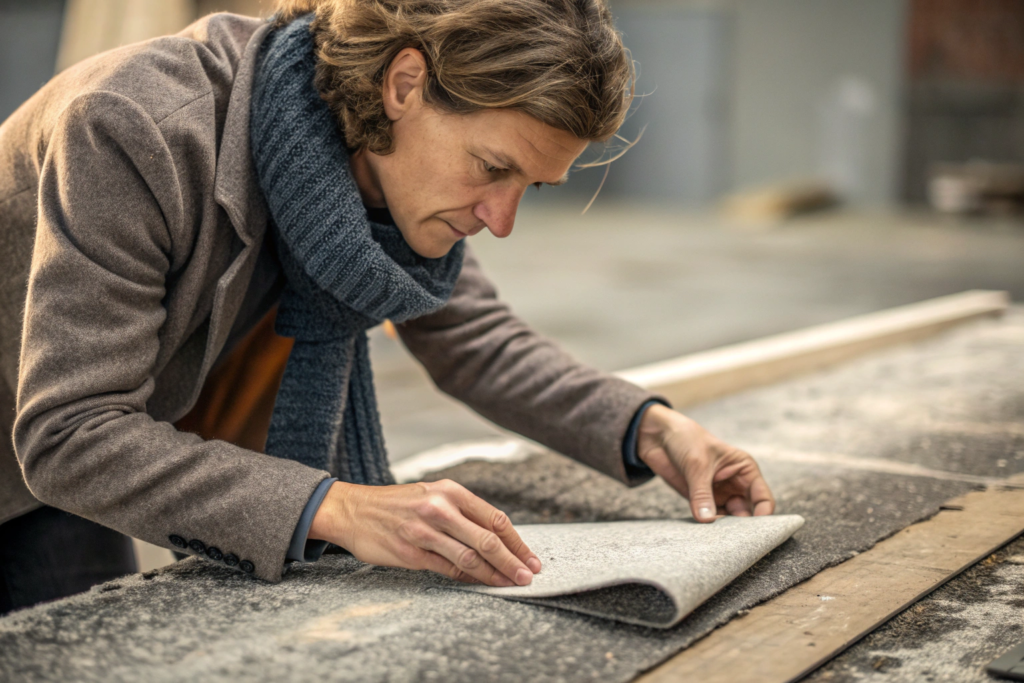
- The Friction Test: Vigorously rub a section of the scarf against a textured surface for 30-60 seconds. Good surfaces to use are a pair of denim jeans, the sleeve of a wool coat, or the rough side of a Velcro strap. This creates intense, localized friction that can quickly reveal a fabric’s tendency to pill.
- The Wear Test: Wear the sample scarf for 3-4 consecutive days. Wear it under a coat, on your commute, and during your daily activities. Pay close attention to the areas that experience the most friction, such as where it rubs against your coat collar or a backpack strap.
- The Wash Test: Follow the recommended care instructions and wash the scarf. Sometimes, the mechanical action of washing can cause pilling, especially if the yarn quality is poor.
What should I look for after the friction test?
After rubbing the fabric, look at it under a bright light. Do you see the beginnings of fuzzing? Are tiny fibers starting to lift from the surface? Can you see any small knots starting to form? A high-quality, anti-pilling fabric will show minimal change, while a poor-quality one will look noticeably fuzzy and worn in that spot.
Why is wearing it with a coat a good test?
The collar of a coat, especially a wool coat, is a source of constant, low-grade friction against a scarf. This is a perfect real-world simulation of how the product will be used. After a few days, check the back of the scarf’s neck area. This is often the first place pilling will appear on a low-quality product.
Conclusion
Sourcing a truly anti-pilling scarf is a technical challenge that requires you to act as a diligent quality inspector, not just a buyer. It’s a process of moving beyond marketing buzzwords and demanding scientific proof. By understanding the root causes of pilling, seeking out specialist factories with deep textile knowledge, insisting on objective data from standardized tests like the Martindale method, and performing your own rigorous wear tests, you can confidently source a product that will stand the test of time. This commitment to quality will protect your brand’s reputation and earn you the lasting loyalty of customers who appreciate a product that is built to last.
At Shanghai Fumao Clothing, we are obsessed with the science of textiles. We have the technical expertise, the quality-focused supply chain, and the rigorous testing protocols to produce scarves that deliver on the promise of being truly anti-pilling. If you are ready to build a collection based on proven quality and durability, please reach out to our Business Director, Elaine, at elaine@fumaoclothing.com.




