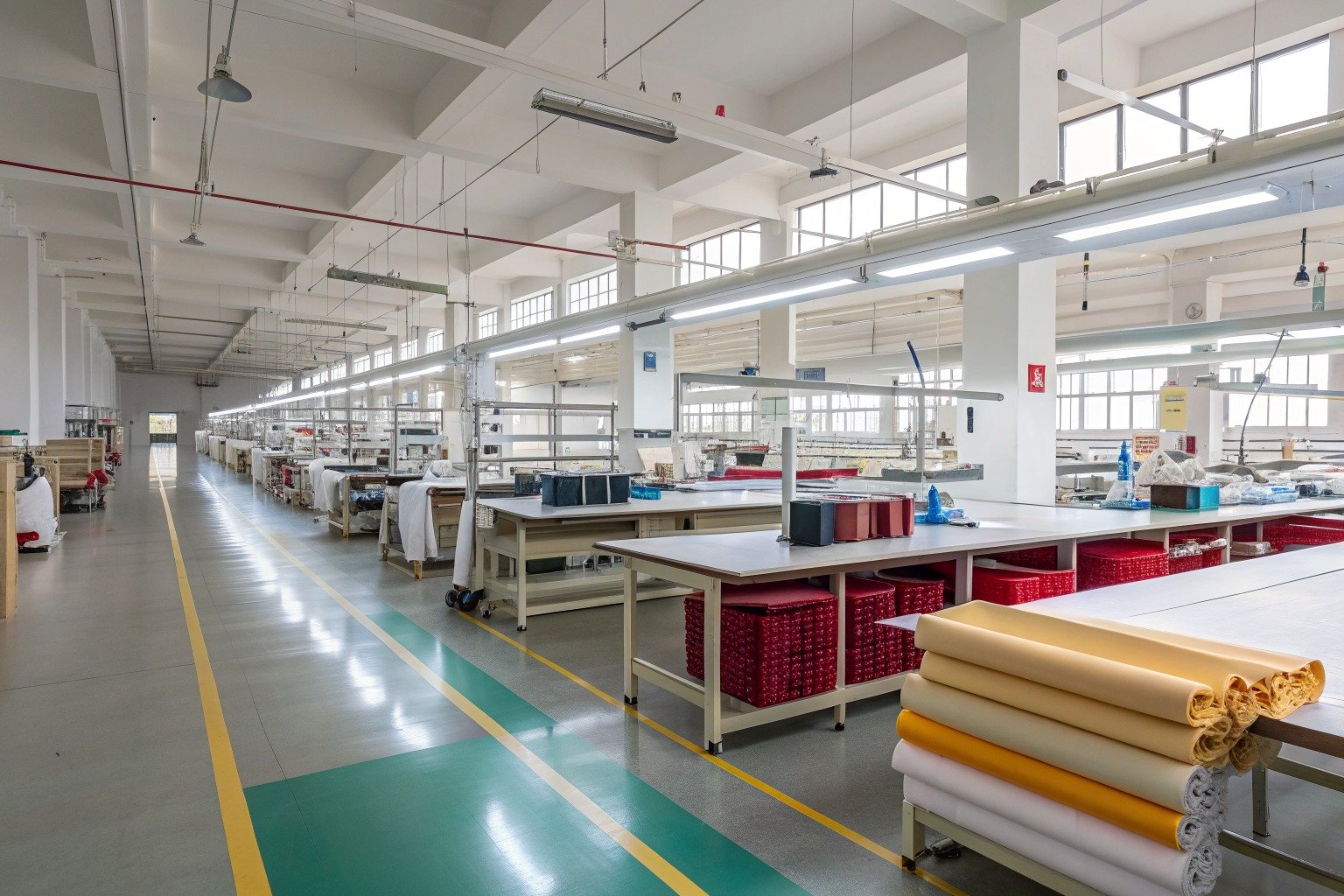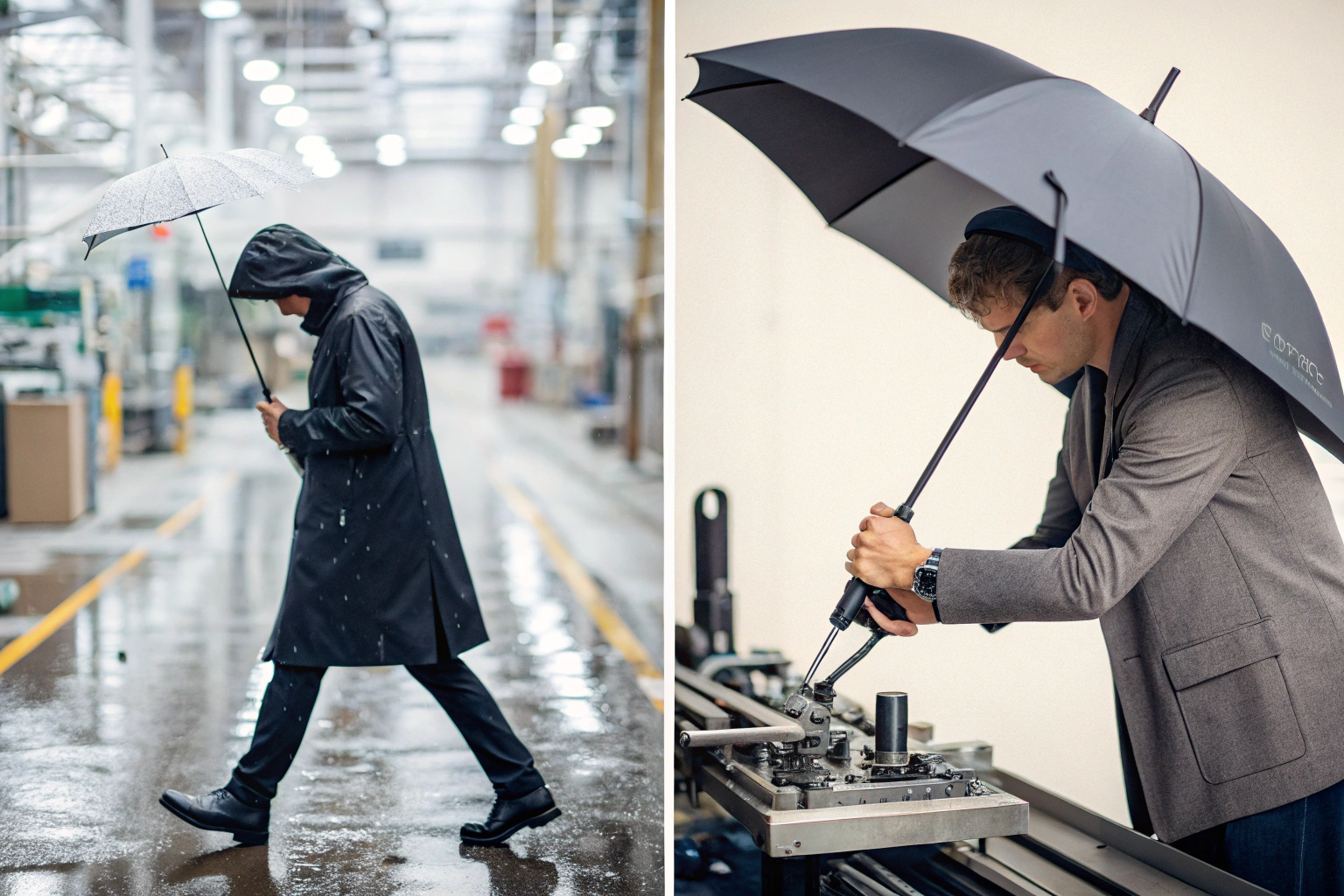
You have a great idea for a line of automatic umbrellas—durable, stylish, and reliable. You envision your brand’s logo on a product that customers will trust in a downpour. But then you confront the reality of manufacturing. An automatic umbrella isn’t a simple accessory; it’s a mechanical device with dozens of moving parts. You’re worried about finding a factory that has the true technical expertise to build a reliable mechanism, not just stitch fabric to a frame. A poorly made automatic umbrella that fails to open or breaks after a few uses is a guaranteed way to get angry customer reviews and destroy your brand’s credibility.
To find a reliable manufacturer for automatic umbrellas, you must focus your search on specialist factories with proven engineering expertise. This involves identifying them through industrial B2B platforms, rigorously vetting their quality control systems for mechanical components, and conducting thorough, real-world testing of samples to validate the durability and functionality of the automatic mechanism.
I’m the owner of Shanghai Fumao Clothing, and while we produce a wide range of accessories, we know that technical products like automatic umbrellas require a different level of scrutiny. It’s less about fashion and more about mechanical engineering. A supplier who makes great scarves might be completely unqualified to make a reliable automatic umbrella. The key is to find a true specialist. Let’s walk through the professional process for finding a manufacturing partner you can depend on.
Where Do I Find True Umbrella Specialists?
You type "umbrella manufacturer" into a search engine and get millions of hits. Many are trading companies showing pictures of every product imaginable. Others are fashion accessory factories that list umbrellas as one of fifty different items they produce. It’s incredibly difficult to distinguish a true, vertically integrated umbrella specialist from a generalist who just outsources the frames. This uncertainty is risky; you could end up with a supplier who has no real control over the quality of the most critical component—the mechanism.
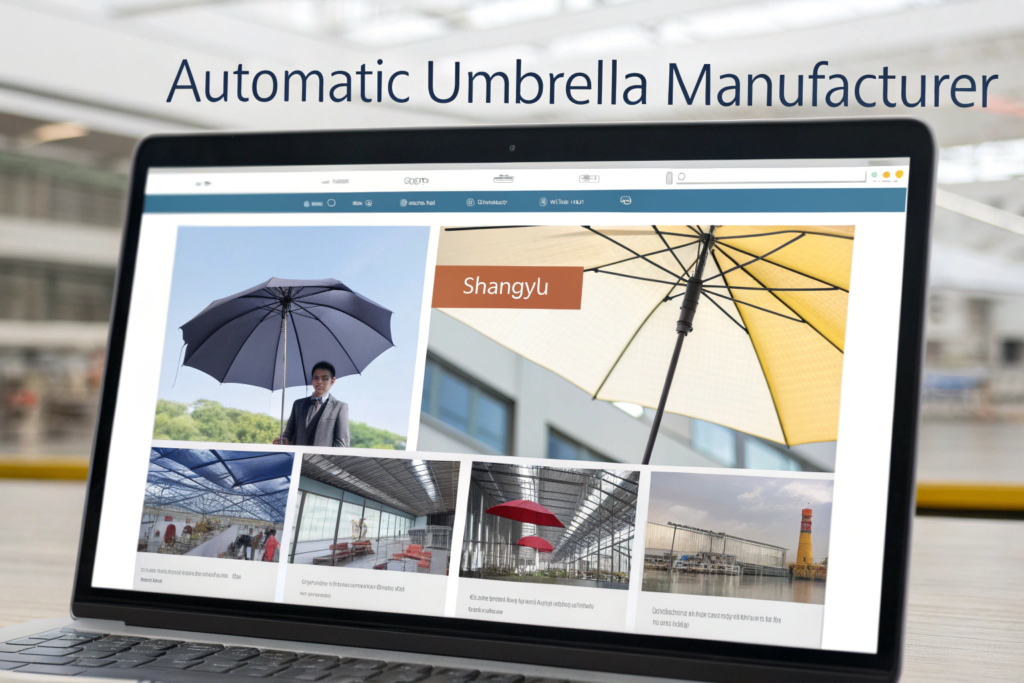
You must look for manufacturers located in established umbrella production hubs and who showcase their technical capabilities, not just their finished products. The global capital for umbrella manufacturing is the keqiao district in Zhejiang, China. Focusing your search on suppliers from this region dramatically increases your chances of finding a true specialist.
Why focus on a specific region? Because these industrial clusters create a deep ecosystem of expertise, skilled labor, and specialized component suppliers. Factories in Shangyu live and breathe umbrellas. When vetting potential suppliers on platforms like Alibaba, Global Sources, or Made-in-China.com, look for these signs of a true specialist:
- Location: Their factory address is in or near Shangyu, Zhejiang.
- Factory Photos: They show detailed pictures of their own production lines, including frame assembly, mechanism testing, and sewing.
- Product Focus: Their primary products are umbrellas, not a random assortment of bags, hats, and scarves.
- Technical Details: Their product descriptions talk about frame materials (fiberglass, aluminum), rib count, and mechanism types.
This targeted approach, a strategy recommended by sourcing experts at organizations like the Asia Quality Focus, helps you filter out the generalists and connect with factories that have the necessary engineering DNA.
What keywords should I use in my search?
Be specific. Instead of "umbrella manufacturer," use more technical terms:
- "Automatic open close umbrella OEM"
- "3-fold automatic umbrella factory"
- "Fiberglass windproof umbrella manufacturer"
- "Private label umbrella Shangyu"
These keywords will attract suppliers who understand the product’s technical aspects.
Should I avoid trading companies?
For a technical product like an automatic umbrella, it is generally better to work directly with the factory. A trading company adds another layer of communication and less direct control over quality. However, a good trading company with a long-standing, exclusive relationship with a top factory can sometimes offer better service and communication, but you must verify this relationship thoroughly. Direct-to-factory is usually the safer bet.
How Do I Vet the Manufacturer’s Technical Capabilities?
You’ve found a few potential suppliers in Shangyu. Their websites look professional, and they’ve sent you a catalog. But how do you verify their claims of "high quality" and "durable mechanisms"? You’re worried that their quality control is just a visual check of the fabric canopy, completely ignoring the complex mechanical parts hidden inside the shaft.
You must vet a supplier’s technical capabilities by asking for specific evidence of their mechanical quality control processes. This includes requesting videos of their cycle testing procedures, inquiring about the materials used in their frames and springs, and ordering samples specifically to dissect and inspect the internal mechanism.
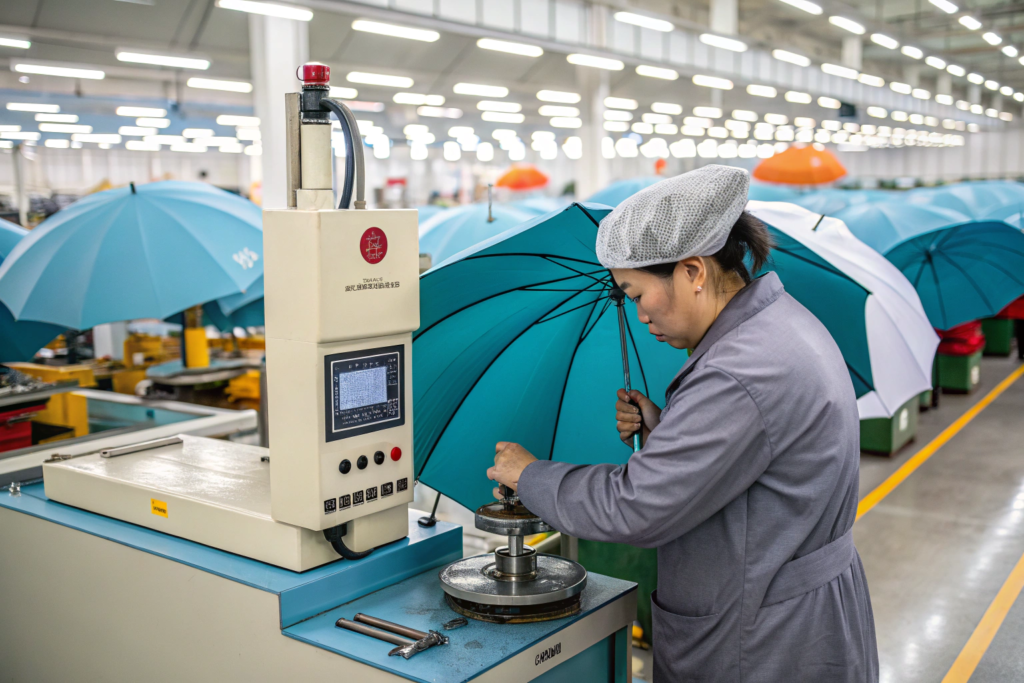
A professional umbrella factory will be proud to show off their technical prowess. Ask them direct questions:
- "What material do you use for your frames? Do you offer fiberglass ribs for wind resistance?"
- "Can you show me a video of your cycle testing machine for the automatic open/close mechanism?"
- "How many open/close cycles do you test your umbrellas for? (A good standard is 1,000-1,500 cycles)."
- "What quality checks do you perform on the springs and triggers during assembly?"
The answers—or lack thereof—will tell you everything you need to know. A factory that can’t provide this information is likely just an assembly workshop with no real engineering oversight. This vetting process is crucial and is a standard part of how we at Shanghai Fumao Clothing would evaluate a new technical supplier.
What makes a good umbrella frame?
A durable frame is the skeleton of the umbrella. Look for:
- Fiberglass Ribs: Fiberglass is strong and flexible, allowing the umbrella to bend in high winds without breaking, unlike cheaper metal ribs. This is a key feature for a "windproof" claim.
- Reinforced Joints: The points where the ribs connect should be reinforced, not flimsy plastic.
- High Rib Count: More ribs (8-10 instead of the traditional 6-8) generally create a stronger and more stable canopy.
What is "cycle testing"?
Cycle testing is a standard QC procedure where a machine automatically opens and closes an umbrella hundreds or thousands of times to simulate its lifespan and identify weak points in the mechanism. A factory that invests in this equipment is serious about mechanical durability. Ask for the test report or a video of the test being performed on the model you’re interested in.
How Do I Properly Test a Sample?
You’ve received a sample. It opens and closes smoothly in your office. But the real test is in a gusty, rainy street. You’re worried that this simple "in-hand" test isn’t enough to reveal potential flaws that will only appear after repeated use or in challenging weather. Approving a product based on a simple first impression is a huge risk.
You must subject the sample to a series of stress tests that mimic real-world (and worst-case) scenarios. This includes rapid, repeated opening and closing, testing in windy conditions, and a thorough inspection of all mechanical and structural components after the tests are complete.
Don’t be gentle with the sample; its purpose is to be tested to its limits.
- The 100-Cycle Test: Open and close the umbrella 100 times in a row. Does the mechanism become sticky? Do you hear any new, strange noises? Does it fail to lock open or closed?
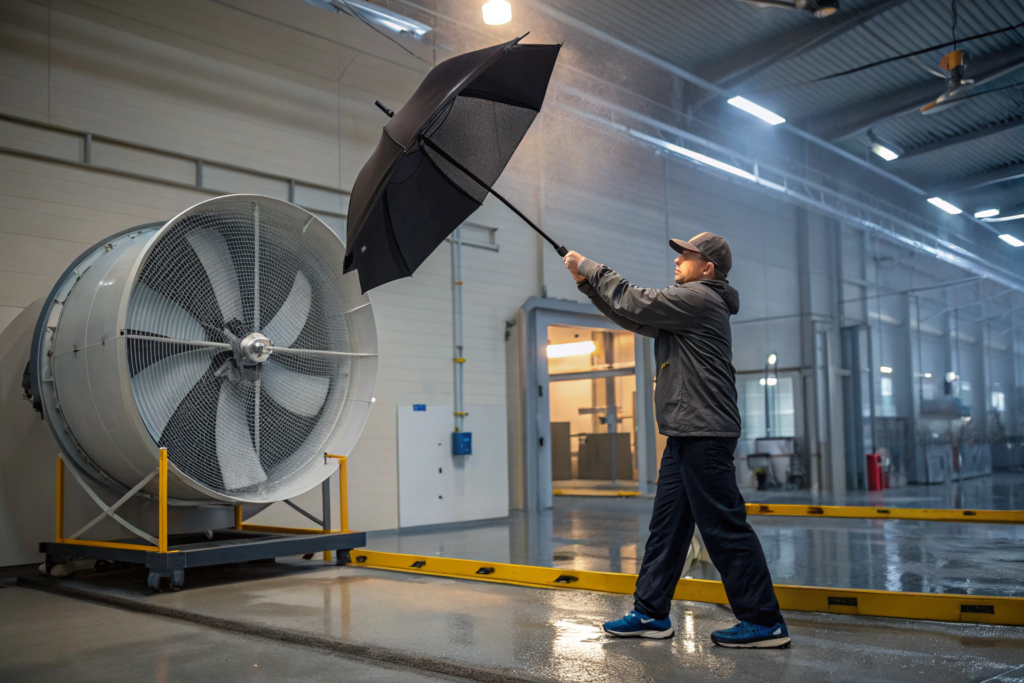
- The Wind Test: Open the umbrella and hold it against a strong fan or, if possible, on a windy day. Does it invert (turn inside out)? If it does, can it be easily flipped back without any ribs breaking? A good windproof design with fiberglass ribs should survive this.
- The "Shake and Rattle" Test: Open and close the umbrella, listening for any loose parts rattling inside the shaft or handle. This could indicate poor assembly.
- The Soak Test: Open the umbrella and douse it with water. Check for any leaks, especially around the top cap and seams. Also, check if the fabric’s water-repellent coating (like Teflon) is effective.
- The Post-Mortem: If you order two samples, sacrifice one. Carefully disassemble it to inspect the quality of the internal components. Are the springs robust? Are the plastic parts thick and durable or thin and brittle?
This rigorous testing, a practice common for high-performance gear reviewed by sites like OutdoorGearLab, is your best insurance against future product failures.
What are common failure points to look for?
- The small trigger button in the handle.
- The locking mechanism that holds the umbrella open.
- The joints where the ribs connect to the stretchers.
- The top cap where the fabric meets the shaft, which can be a source of leaks.
What Should My Tech Pack and Purchase Order Include?
You’ve approved the final, stress-tested sample. Now you need to create the official order. You’re worried that if your documentation isn’t precise enough, the factory might substitute cheaper materials in the bulk production to save costs. A verbal agreement or a simple email is not enough to protect your brand.
Your tech pack and purchase order (PO) must be extremely detailed, specifying not just the colors and logos, but the exact mechanical components and performance standards that were approved in the final sample. This creates a legally binding contract that holds the manufacturer accountable for the quality of the final production.
Your documentation is your only defense against quality fade. Be explicit.
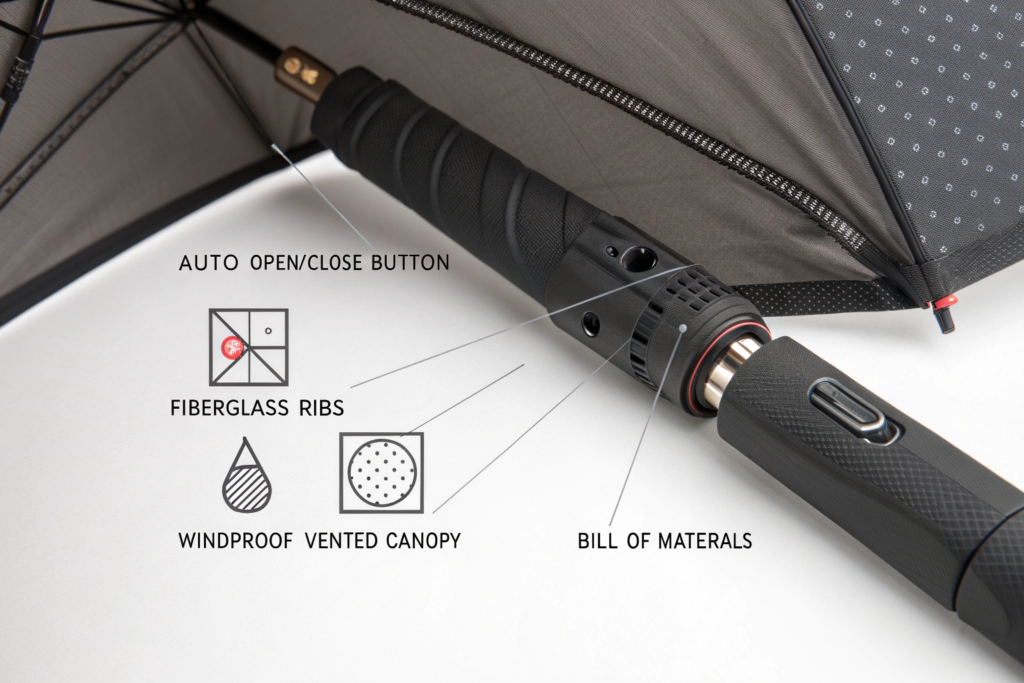
- Bill of Materials (BOM): Specify every part. Don’t just say "frame"; say "8-rib windproof frame with fiberglass ribs and reinforced steel shaft." Don’t just say "fabric"; say "190T Pongee fabric with Teflon water-repellent coating, Pantone 19-4052 TCX."
- Technical Drawings: Include callouts that specify the automatic mechanism, the handle design, the strap closure type (e.g., Velcro or snap button), and the custom logo placement.
- Performance Standards in the PO: Your PO should include clauses like: "All units must use the frame and mechanism from the approved final sample, Style #XYZ." and "All units must be capable of withstanding a 1,500-cycle open/close test."
This level of detail, as advocated by sourcing experts and platforms like Maker’s Row, leaves no room for interpretation or unwelcome surprises.
Should I mention packaging?
Yes, absolutely. Specify the details of the umbrella’s sleeve—its material, whether it’s a soft, water-resistant fabric in a crisp white or a vibrant hue that pops against the product, its thickness to ensure durability, and any stitching patterns that add a touch of elegance. Note if there are any hang-tags attached: their size, color, the font style of the brand name or product information, and whether they include care instructions or QR codes for additional details. Describe the inner polybag—its transparency, thickness to prevent scratches, and any printed logos or branding that align with your product line.
What about pre-shipment inspection?
For a mechanical product like an automatic umbrella, a pre-shipment inspection by a third-party service is highly recommended for your first order. Picture this: a team of meticulous inspectors, clad in crisp white coats, stepping into a warehouse bathed in the soft glow of overhead lights, where rows upon rows of sleek, silver umbrellas stand upright in neat racks, their ribs glinting like polished steel and their canopies shimmering with a subtle sheen. The air hums with the quiet energy of precision—each umbrella a tiny masterpiece of engineering, waiting to be tested.
Conclusion
Finding a manufacturer for automatic umbrellas is a search for a true engineering partner, not just a sewing factory. The success of your product hinges on the quality and reliability of a complex mechanical system. By focusing your search on specialist factories in established industrial hubs, rigorously vetting their technical and quality control capabilities, stress-testing your samples in real-world conditions, and locking in every specification in a detailed tech pack, you can mitigate the risks and build a product that your customers will trust to keep them dry, season after season.
At Shanghai Fumao Clothing, we have built our business on the principles of quality, communication, and technical expertise. We understand the difference between a fashion item and a functional mechanical device. If you are looking to develop a line of high-quality automatic umbrellas and need a partner with a deep understanding of the manufacturing process, we are ready to help guide you. Please reach out to our Business Director, Elaine, at elaine@fumaoclothing.com to start a conversation.