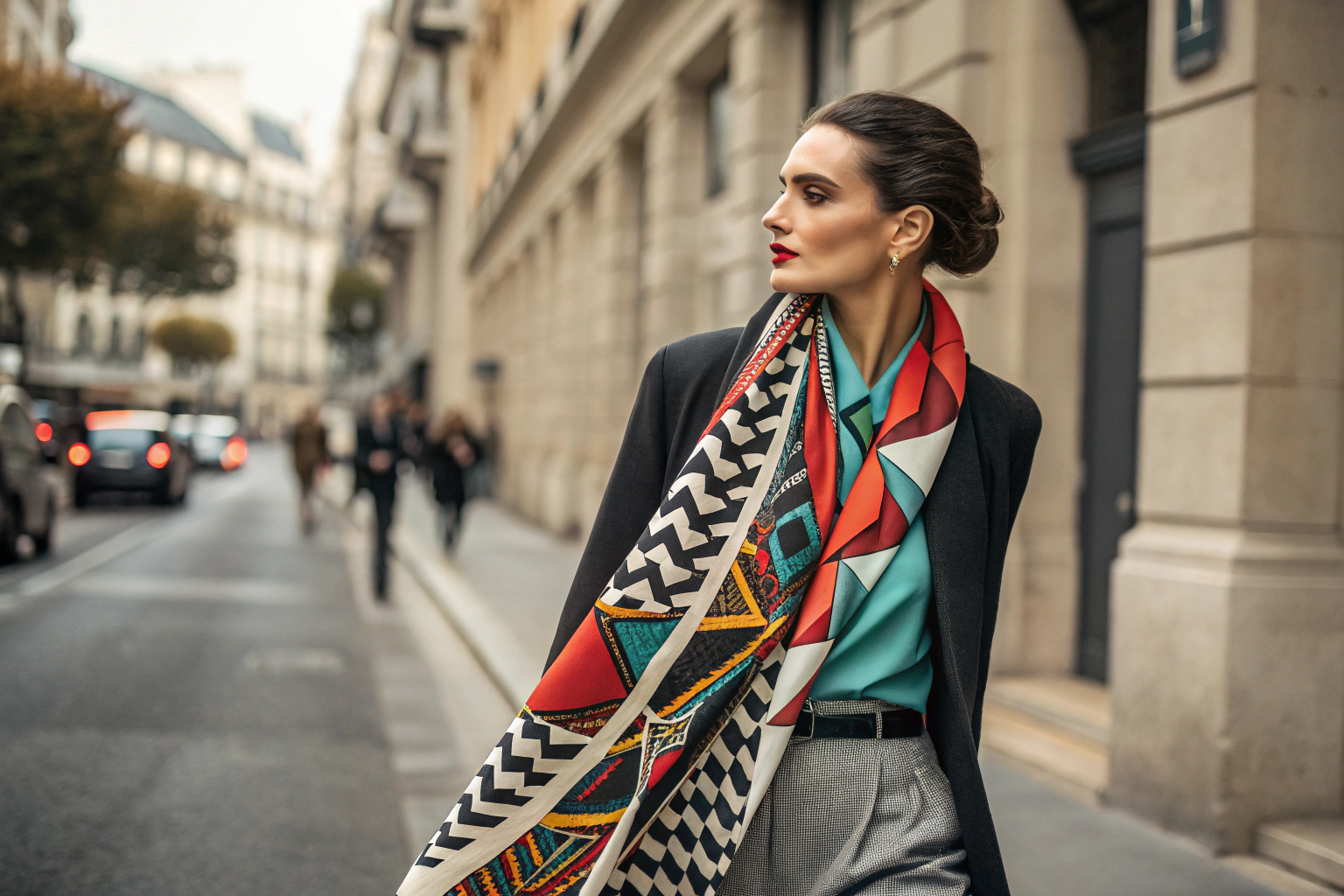
You’re constantly scanning the horizon for the next big trend. You’ve started noticing them everywhere: on runways, in high-end boutiques, and all over your social media feeds. Bold stripes, sharp chevrons, repeating circles, and abstract tessellations—geometric patterns are taking over scarf design. You’re intrigued, but also cautious. Is this just a fleeting fad, or is it a significant design movement worth investing in for your next collection?
Geometric patterns are trending in scarf design because they offer a perfect blend of timeless appeal and modern versatility. They provide a structured, sophisticated alternative to floral and abstract prints, acting as a powerful statement piece that can instantly elevate an outfit. Their clean lines and bold shapes resonate with a contemporary desire for order, confidence, and graphic impact.
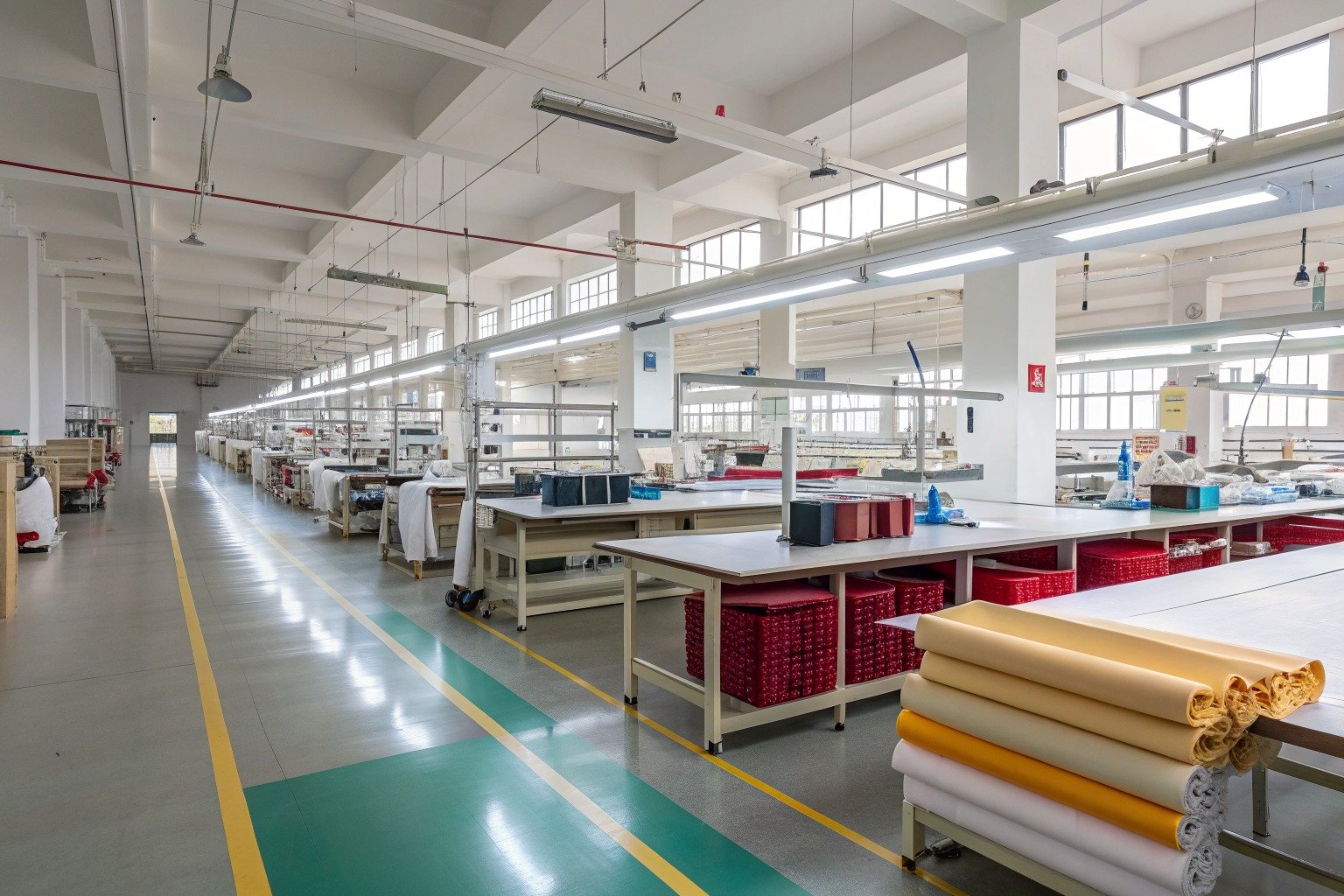
This trend is more than just a random aesthetic choice; it’s a reflection of a broader cultural mood. In a world that can feel chaotic, the order and predictability of geometric shapes offer a sense of visual calm and confidence. At my company, Shanghai Fumao Clothing, our design team has seen a massive surge in requests for geometric prints from our US and European brand partners. They recognize that these patterns are not just visually striking—they are also incredibly marketable. Let’s explore the key reasons behind this powerful trend.
How Do Geometrics Offer Unmatched Versatility?
You’re planning your next collection and need designs that can appeal to a wide range of customers and be worn in multiple ways. Floral prints can sometimes feel too feminine or seasonal. Abstract prints can be too niche. You’re looking for a "hero" pattern that can be a versatile bestseller, but you’re worried about choosing a design that feels too limiting.
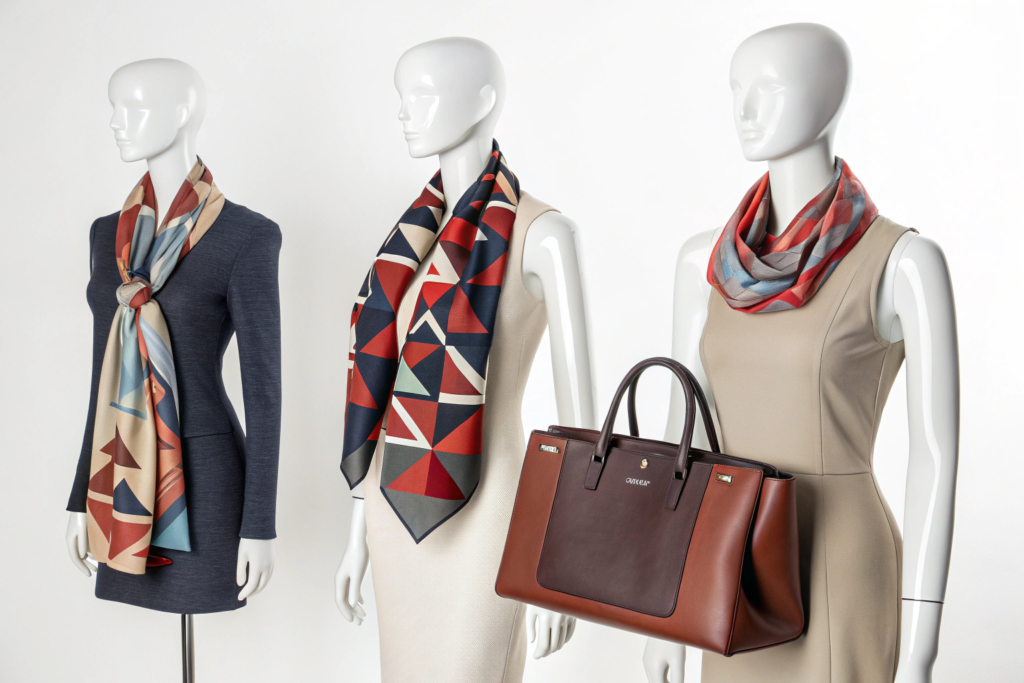
Geometric patterns offer unmatched versatility because their structured nature allows them to be dressed up or down effortlessly. A simple striped or checked scarf can complement a casual weekend outfit, while a complex Art Deco or houndstooth pattern can serve as a sophisticated focal point for professional or evening wear. They are stylistic chameleons.
Unlike some prints that dictate the entire mood of an outfit, geometrics work in harmony with what the customer is already wearing. They add interest without overwhelming. A bold geometric scarf can be the statement piece, or a more subtle one can act as a sophisticated, textured neutral. This adaptability extends to how they are worn. The clean lines of a geometric pattern look just as good tied neatly around the neck as they do draped loosely over the shoulders or even used as a bag accessory. This versatility, a topic frequently discussed in fashion styling guides like those from Who What Wear, makes them a smart investment for any brand’s collection.
Can geometric patterns be seasonless?
Absolutely. This is one of their biggest commercial advantages. While a floral print screams "spring" and a paisley can feel autumnal, a pattern like houndstooth, stripes, or polka dots is seasonless. By simply changing the color palette—bright pastels for spring, rich earth tones for autumn, classic monochrome for all year—the same geometric pattern can be adapted to any season. This allows you to maintain a core design in your collection year-round, creating a recognizable brand staple.
Do they appeal to all genders?
Yes, many geometric patterns are inherently gender-neutral. Classic patterns like stripes, checks, and herringbone have been staples in both menswear and womenswear for centuries. This broad appeal is a significant advantage for brands looking to maximize their customer base. A well-designed geometric scarf can be marketed as a unisex product, simplifying your inventory and broadening its marketability, a strategy often employed by minimalist brands like COS.
Why Do Geometric Patterns Feel So Modern?
Your brand aims to project a modern, confident, and slightly edgy image. You want your designs to feel current and aligned with contemporary aesthetics. While traditional patterns have their place, you’re looking for something that feels fresh, bold, and speaks to the "now."
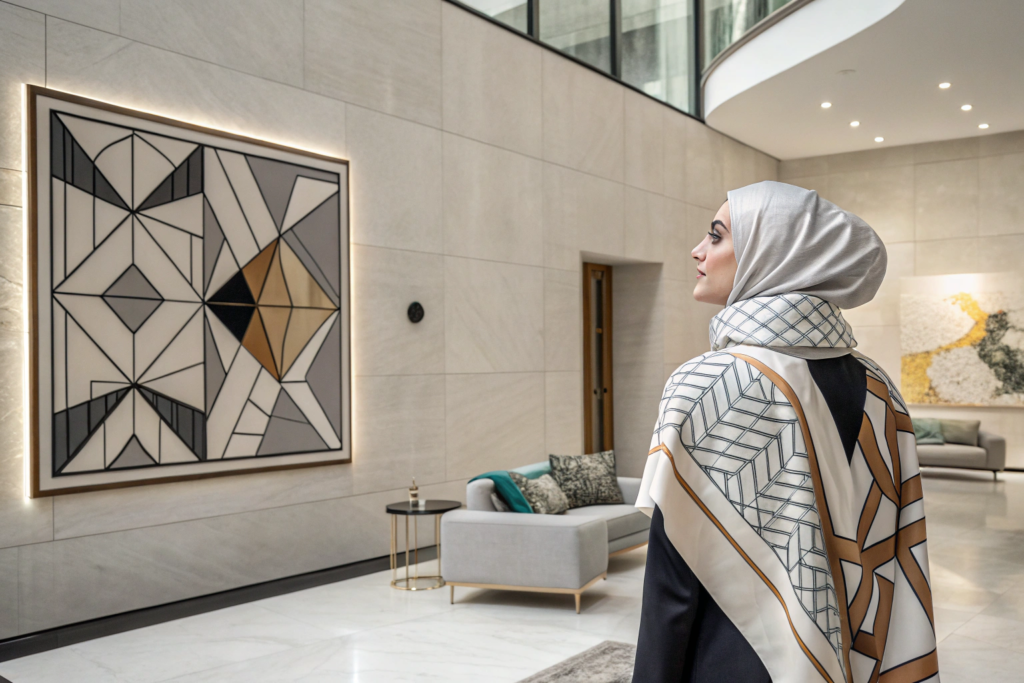
Geometric patterns feel distinctly modern because they align with the clean lines, graphic simplicity, and digital precision of our current design landscape. In a world saturated with visual information, the clarity and intentionality of a geometric print cut through the noise. It feels deliberate, intelligent, and confident.
Think about the aesthetics that surround us: the minimalist interfaces of our smartphones, the clean lines of modern architecture, and the bold typography of contemporary graphic design. Geometric patterns in fashion are a natural extension of this visual language. They tap into a collective appreciation for order, structure, and graphic impact. This connection to broader design trends is why they feel so relevant. As noted by design publications like Dezeen, there is a constant dialogue between fashion, art, and architecture, and the current focus on bold, graphic forms is a perfect example.
What is the psychological appeal?
There’s a psychological comfort in the order of geometric patterns. The repetition, symmetry, and predictability of shapes like squares and triangles can be visually soothing and satisfying. In a fast-paced and often chaotic world, these patterns offer a small moment of structure and control. This underlying psychological appeal makes them feel grounded and reassuring, even when they are visually bold.
Which historical art movements are influencing this trend?
Many current geometric trends are revivals of powerful 20th-century art movements.
- Art Deco: The bold, symmetrical, and lavish patterns of the 1920s are making a huge comeback, bringing a sense of glamour and sophistication.
- Bauhaus: The school’s focus on fundamental shapes (circle, square, triangle) and primary colors informs many of the minimalist and color-blocked geometric designs we see today.
- Op Art: The mind-bending, illusion-based patterns of the 1960s are influencing the more daring and high-impact geometric prints.
By referencing these iconic movements, you can add a layer of historical depth and artistic credibility to your designs.
How Do Geometrics Enhance Color and Texture?
You’re developing a new scarf and want the colors to be the star of the show. You’re also experimenting with interesting weaves and textures. You’re concerned that a complex, "busy" pattern might muddy your color story or hide the beautiful texture of the fabric you’ve chosen.
Geometric patterns are the perfect vehicle for showcasing color and texture. The clean, defined lines of a geometric design create distinct blocks of color, allowing each hue to stand on its own and "pop" with maximum impact. Furthermore, the structure of the pattern can be used to accentuate the texture of the weave itself.
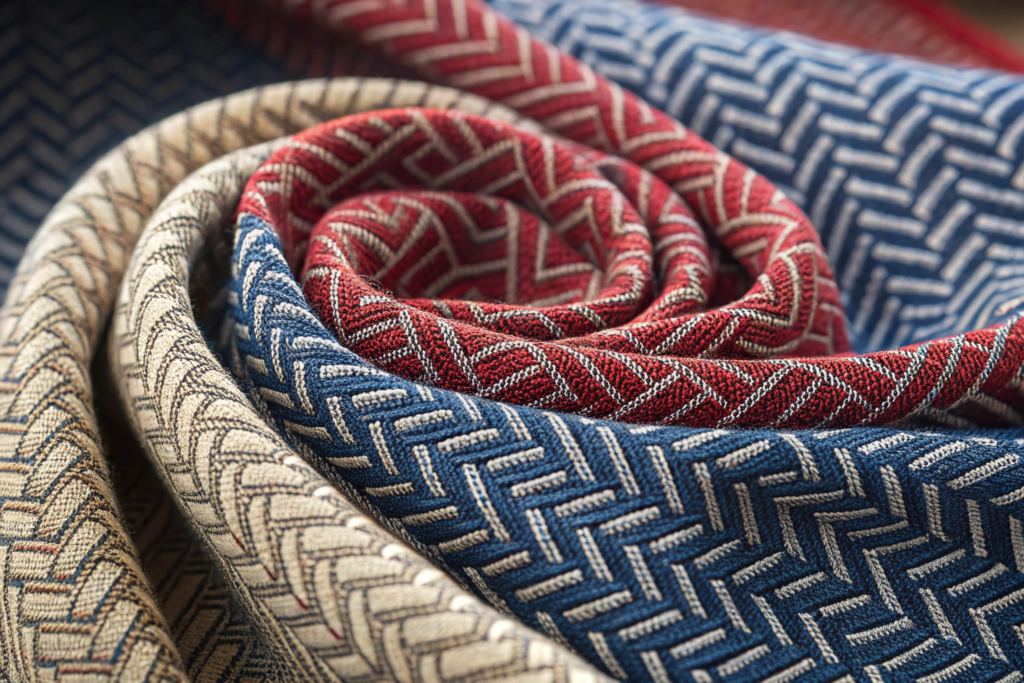
Unlike a painterly floral where colors blend and bleed into one another, a geometric pattern like a color-block or a stripe creates a sharp boundary between hues. This contrast makes each color appear more vibrant and saturated. It’s a technique that color theorists and artists have used for centuries. When it comes to texture, woven geometric patterns like herringbone or houndstooth are literally created by the structure of the weave. The pattern is the texture. This creates a rich, tactile experience that adds a layer of premium quality to the scarf. At Shanghai Fumao Clothing, we often advise clients to use geometric designs when they want to highlight a particularly beautiful yarn or an intricate weaving technique.
What is "color-blocking"?
Color-blocking is a specific type of geometric design that uses large, distinct ‘blocks’ of solid color—vibrant swaths of hue that stand apart from one another like puzzle pieces in a bold, intentional jigsaw. It’s a powerful, minimalist approach that has been a recurring trend in fashion for decades, famously championed by designers like Yves Saint Laurent, who wove its structured beauty into timeless collections that still echo through runways today. A color-blocked scarf, in particular, is a bold, modern statement piece that relies entirely on the impact of its color combinations: imagine a cascade of deep indigo meeting a crisp lemon yellow, or a rich emerald green blending seamlessly into a warm terracotta, each block a deliberate choice that commands attention. The fabric itself might be soft silk, its smooth texture amplifying the sharp contrast between hues, or a chunky knit, where the tactile bumps of the yarn add depth to the visual drama.
How do patterns like houndstooth or herringbone work?
These classic patterns are not printed on the fabric; they are created by the way different colored threads are woven together.
- Houndstooth is a two-tone pattern of broken checks.
- Herringbone is a V-shaped pattern resembling the skeleton of a herring fish.
Because the pattern is integral to the fabric’s structure, it has a depth and texture that printed patterns can’t replicate. This makes them a perennial favorite for high-quality wool and cashmere scarves.
Are Geometric Scarves Commercially Viable?
As a business owner, your primary concern is return on investment. Trends are exciting, but you need to know if they will actually sell. You’re worried about investing in a large production run of geometric scarves only to find that they don’t resonate with your target customer, leaving you with excess inventory.
Yes, geometric scarves are highly commercially viable. Their broad appeal, seasonless nature, and ability to function as both a statement piece and a versatile accessory make them a low-risk, high-reward investment for a fashion brand. They consistently perform well at retail because they meet the needs of a wide range of consumers.
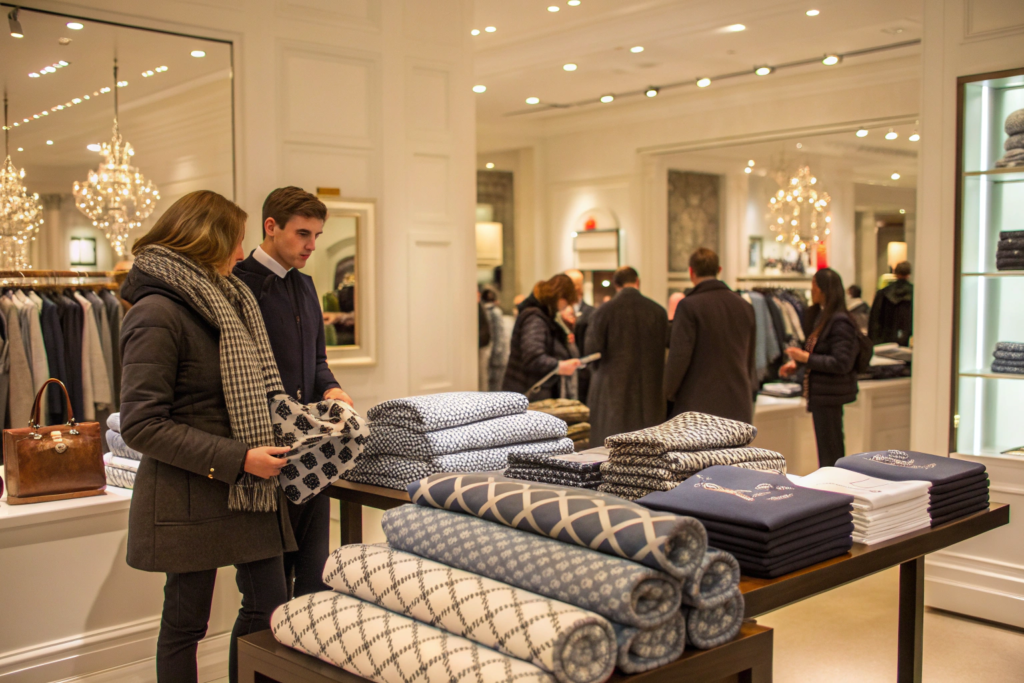
From a commercial perspective, geometric patterns check all the boxes. They appeal to multiple demographics and genders. They can be easily updated each season with new colors, keeping your collection fresh without requiring a complete design overhaul. They are also highly "Instagrammable," as their bold, graphic nature stands out in a crowded social media feed. This combination of timeless appeal and modern relevance is why major luxury brands like Hermès and Burberry continue to feature geometric designs in their scarf collections year after year—they are proven sellers.
How do I choose the right geometric pattern for my brand?
The key is to match the pattern to your brand’s identity.
- Minimalist/Modern Brand: Opt for simple stripes, color-blocking, or subtle grid patterns.
- Classic/Heritage Brand: Focus on timeless weaves like houndstooth, herringbone, or classic plaids.
- Bohemian/Artistic Brand: Explore more complex, globally-inspired geometric patterns like those found in kilim rugs or African mudcloth.
- Glamorous/Luxe Brand: Look to intricate Art Deco patterns or bold, high-contrast Op Art designs.
How can I test the trend before a large order?
If you’re still hesitant, start with a small test run. As a flexible manufacturing partner, we at AceAccessory can often accommodate smaller initial order quantities for new designs. Produce a limited collection of your top 2-3 geometric patterns and see how they perform with your audience. Use social media polls to gauge interest in different designs before you even produce them. This data-driven approach can help you invest with confidence.
Conclusion
The trend of geometric patterns in scarf design is not a fleeting whim; it’s a powerful design movement rooted in versatility, modern aesthetics, and deep psychological appeal. These patterns offer a unique ability to be both timeless and trendy, sophisticated and bold. They provide a structured canvas to showcase stunning color combinations and intricate textures, and their commercial viability is proven. For a US brand looking to create a collection that is both fashion-forward and has lasting appeal, investing in geometric designs is a strategic and intelligent choice.
We have helped countless brands translate their vision for geometric accessories into beautiful, high-quality, and bestselling products. Our expertise in both printing and weaving techniques allows us to bring any pattern to life with precision and vibrancy. If you are ready to explore the power of geometrics for your next collection, we invite you to partner with us. Please reach out to our Business Director, Elaine, at elaine@fumaoclothing.com to start designing your future success.