You’re ready to move beyond just finding a factory that can make your product. You’re looking for a true partner—a supplier that is professional, ethical, and can provide the documentation to prove it. You’ve heard about factory audits, social compliance reports, and material test certificates. But how do you actually find a factory that has these reports, and what should you even be asking for? This step separates the amateur buyers from the pros and is crucial for building a sustainable, reputable brand.
Finding a factory with the right reports requires a targeted search strategy and a direct, knowledgeable vetting process where you ask for specific compliance and quality documents upfront. As the owner of Shanghai Fumao Clothing, I can tell you that we welcome these questions. When a potential client asks for our BSCI audit report or our ISO 9001 certificate, it signals to us that they are a serious, professional brand that values quality and ethical sourcing as much as we do. A great factory is proud of its certifications; they are badges of honor we work hard to earn and maintain.
This guide will demystify the world of factory reports. I’ll explain what the key reports are, why they are critical for your business, where to find factories that have them, and how to ask for them. Let’s build a supply chain you can be proud of.
What Are the Key Reports and Why Do They Matter?
Before you can find a factory with reports, you need to know which reports to look for. They aren’t just pieces of paper; they are third-party verifications of a factory’s systems, ethics, and capabilities. They provide objective proof that a factory meets global standards, protecting your brand from risks related to quality, safety, and reputation.
Think of it this way: a factory telling you they have "good quality" is marketing. A factory showing you their ISO 9001 certificate is providing evidence. For any brand that plans to sell to major retailers, on platforms like Amazon, or in regulated markets like the EU and North America, these reports are non-negotiable. They are your insurance policy against product recalls, legal issues, and negative press. This level of due diligence is the bedrock of a successful brand, just as crucial as negotiating lead times.
What is a Social Compliance Audit Report (BSCI, Sedex)?
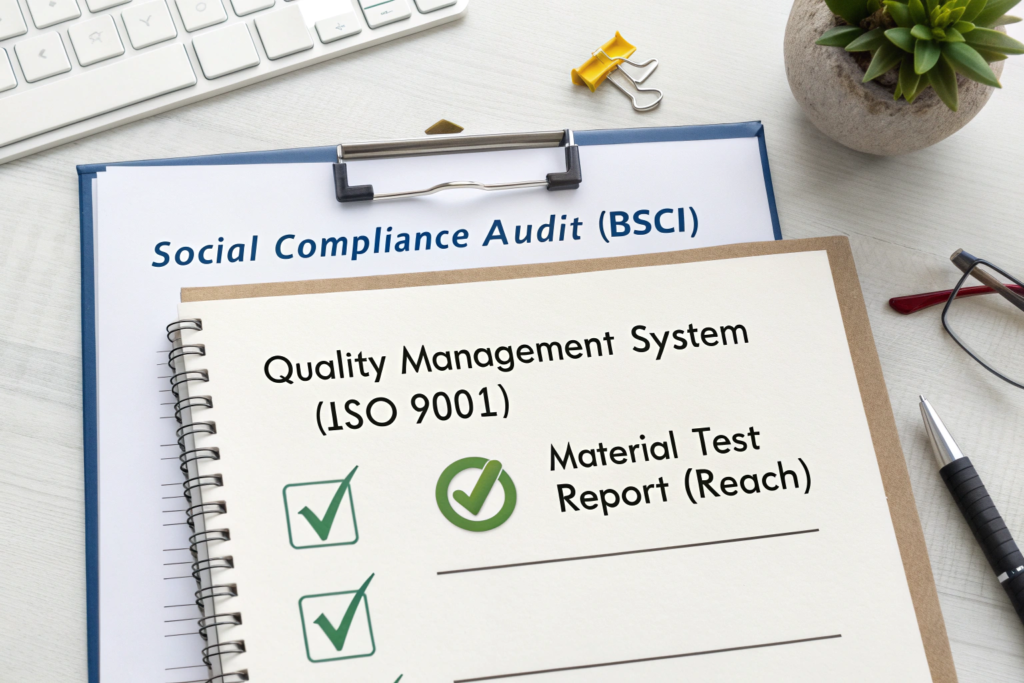
A Social Compliance Audit evaluates a factory’s working conditions based on international labor laws and ethical standards. It covers areas like working hours, wages, health and safety, and freedom of association. It ensures that your products are not being made by exploited workers. The two most common reports are BSCI (Business Social Compliance Initiative) and Sedex (Supplier Ethical Data Exchange). Having a valid, recent audit report from one of these bodies shows that the factory is committed to ethical manufacturing. For modern consumers who care deeply about where their products come from, this is essential for protecting your brand reputation.
What is a Quality Management System Certificate (ISO 9001)?
An ISO 9001 certificate is the global standard for a Quality Management System (QMS). It doesn’t relate to the final product itself, but rather to the factory’s processes. It verifies that the factory has robust systems in place for things like document control, continuous improvement, and—most importantly—ensuring consistent quality and traceability from raw materials to finished goods. A factory with ISO 9001 is less likely to have random quality fluctuations because their processes are standardized and audited. It’s a strong indicator of a professional, well-managed operation, which is a key factor when evaluating a supplier for premium goods.
Where Can You Find Factories That Have These Reports?
Now that you know what to look for, where do you find these top-tier factories? They are not always on the front page of every sourcing portal. You need to use more targeted search methods and look for specific signals that indicate a factory is invested in compliance.
The key is to filter your search from the very beginning. Instead of a broad search for "hat factory," you should be searching for "BSCI audited hat factory" or "ISO 9001 certified accessory supplier." Use platforms and channels where this kind of information is highlighted and verified. This approach saves you countless hours of vetting factories that will ultimately not meet your compliance standards.
Let’s explore the most effective channels for finding these pre-vetted, high-quality suppliers.
How to Use B2B Platforms Effectively?
Major B2B platforms like Alibaba have tiers of suppliers. Look for designations like "Verified Supplier" or "Gold Supplier." These factories have undergone a basic business verification by the platform. More importantly, dive into their company profile page. Serious factories will upload their BSCI, Sedex, or ISO certificates directly to their profile. Use the platform’s search filters to specifically look for suppliers who have these credentials. A factory that prominently displays its audit reports is actively trying to attract quality-conscious buyers like you. This is a much better starting point than a generic supplier profile.
Why Are Industry Trade Shows a Goldmine?
As I’ve mentioned before, professional trade shows are one of the best places to find high-quality partners. Factories that invest in exhibiting at international shows like Global Sources Fashion in Hong Kong or Première Vision in Paris are typically more established and export-oriented. They are accustomed to working with international brands and usually have their compliance reports ready to show potential clients. You can have a direct conversation with the sales manager or even the owner and ask about their certifications on the spot. This face-to-face interaction is invaluable for building trust. The Trade Show News Network (TSNN) is a great resource for finding relevant shows.
How Do You Ask for and Verify These Reports?
You’ve found a promising factory that claims to be certified. Now what? You need to ask for the reports and perform some basic verification. A professional factory will not hesitate to share these documents with a serious potential client. How you ask and what you do with the information is a key part of the vetting process.
Be direct, professional, and specific in your request. Instead of asking, "Are you a good factory?", ask, "Could you please provide a copy of your most recent BSCI or Sedex audit report, as well as your ISO 9001 certificate?" This shows you know exactly what you’re looking for. A factory’s response to this request is very telling. A prompt, transparent response is a great sign. Hesitation, excuses, or providing an obviously expired report are red flags.
What is the Right Way to Request the Documents?
In your initial email or message to a potential supplier, after introducing your brand and your product needs, include a clear and polite paragraph such as: "As part of our supplier qualification process, we require our partners to meet international standards for social and quality compliance. Could you please share a copy of your latest BSCI/Sedex audit report and your ISO 9001 certificate for our review? We look forward to learning more about your commitment to these standards." This sets a professional tone from the very beginning.
How Do You Perform a Basic Verification?
When you receive a report, you don’t need to be an expert auditor to do a basic check. Look for three key things:
- The Factory Name and Address: Does it match the company you are talking to? Sometimes trading companies will use a partner factory’s report. This isn’t necessarily bad, but you need to clarify the relationship.
- The Audit/Certificate Date: Is it still valid? BSCI audits are typically valid for one or two years. An ISO certificate has a validity period. An expired report is not useful.
- The Overall Result: For a BSCI audit, look for the overall rating. An "A" or "B" is excellent. A "C" ("Acceptable") is often fine, as it means the factory is compliant but has areas for improvement. A "D" or "E" indicates major issues that need to be addressed. For an ISO certificate, simply check that it is valid and issued by a reputable certification body. You can often verify the certificate number on the issuer’s online database.
What If a Good Factory Doesn’t Have Reports?
You might find a smaller, highly skilled workshop—perhaps a specialist in premium leather gloves—that does excellent work but has never undergone a formal audit because of the cost and administrative burden. Does this mean you should walk away? Not necessarily.
If a factory is transparent about their lack of formal reports but is willing to prove their quality and ethics in other ways, you may have found a hidden gem. This is especially true for smaller brands that are not required by large retailers to have these specific documents. However, the burden of proof now shifts to you and the factory.
In this scenario, you need to be prepared to invest more time and resources into your own due diligence. The factory’s willingness to cooperate with this process is the ultimate test of their character.

How Can a Factory Demonstrate Compliance Without a Report?
A good, uncertified factory should be willing to do the following:
- Allow a Factory Visit or a Detailed Video Audit: They should have nothing to hide and be proud to show you their clean workspace, happy workers, and quality control processes.
- Provide References: They should be able to connect you with other long-term clients (preferably from your region) who can vouch for their quality and reliability.
- Agree to Third-Party Product Testing: They should be willing to send samples of their raw materials or finished products to a lab like SGS or Intertek for safety testing at your expense.
- Consider Co-investing in an Audit: If you plan to build a long-term, high-volume relationship, you could propose sharing the cost of their first BSCI audit. This shows you are invested in their growth and helps them become compliant for future clients as well.
What is Your Responsibility in This Case?
If you choose to work with an uncertified factory, you are taking on more responsibility. You need to document your own due diligence process thoroughly. Keep records of your video tours, reference checks, and any product test reports you commission. This demonstrates that you have made a good-faith effort to ensure your supply chain is ethical and safe, which is a core principle of responsible supply chain management.
Conclusion
Finding a factory with the right reports is a hallmark of a mature and professional sourcing strategy. It’s about moving beyond "Can you make this?" to "Can you prove you make this well and ethically?" By understanding the key types of reports, using targeted search strategies, and knowing how to ask for and verify these documents, you elevate yourself as a buyer and protect your brand from significant risk.
Remember, a factory that readily provides these reports is a factory that is proud of its operations and is actively seeking high-quality, long-term partners. They are investing in their own systems, which is a direct investment in the quality and safety of your products.
At our company, transparency is a core value. We are proud of our certifications and are always ready to share them. If you are looking for a fully-vetted, compliant, and quality-focused partner for your fashion accessory line, we would be delighted to start a conversation. Please contact our Business Director, Elaine, at her email: elaine@fumaoclothing.com.