You’ve designed a fantastic line of umbrellas—stylish, durable, and with a beautiful print. Production is complete, and they look perfect. Now, how do you get them to your customers overseas without them arriving broken or costing you a fortune in shipping? Shipping a simple t-shirt is one thing; shipping an umbrella is a completely different logistical challenge. Their length, shape, and relative fragility create a unique set of problems that can catch inexperienced importers by surprise.
The primary challenges of shipping umbrellas internationally stem from their awkward dimensions which lead to high volumetric weight costs, their susceptibility to damage during transit, and the complexities of creating protective yet cost-effective packaging. As the owner of Shanghai Fumao Clothing, a company that manufactures and exports a wide range of accessories including umbrellas, I’ve seen clients struggle with these issues time and again. A poorly planned umbrella shipment can quickly erode your profit margins and lead to a high rate of customer complaints.
Understanding these challenges is the first step to overcoming them. It’s not just about putting them in a box; it’s about smart packaging, strategic shipping choices, and working with a partner who knows how to handle these awkward items. In this article, I’ll break down the three main hurdles of shipping umbrellas and share our expert solutions for each.
Why Are Umbrellas So Expensive to Ship?
You have a box of 50 umbrellas. The box itself isn’t very heavy, so the shipping cost should be low, right? Unfortunately, this is a common and costly misconception. For items like umbrellas, carriers are less concerned with the actual weight and more concerned with the space the box occupies.
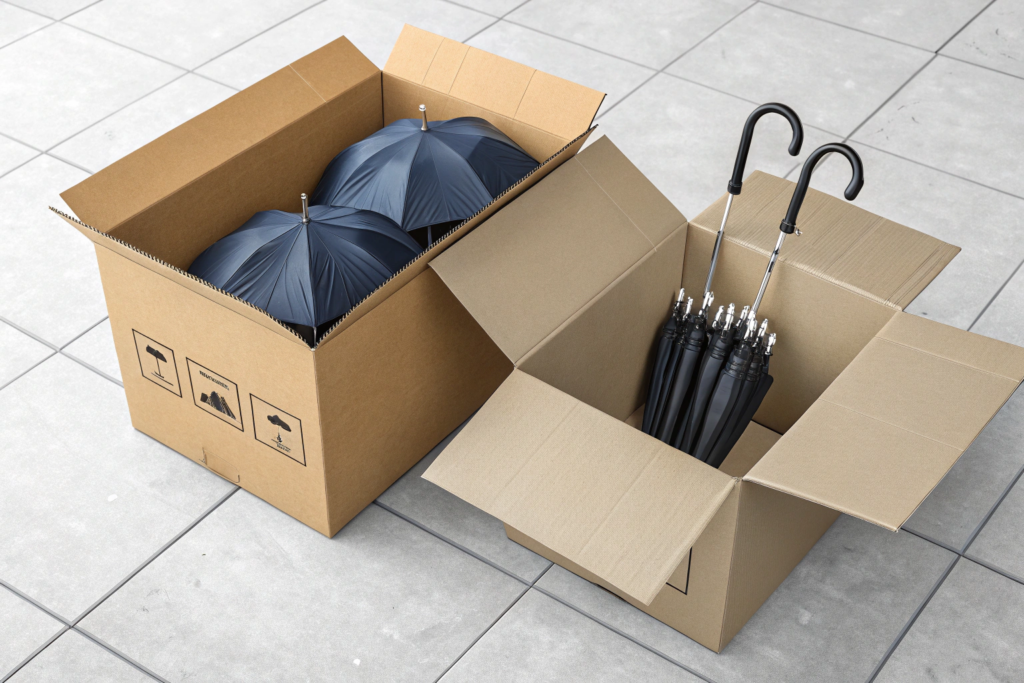
Umbrellas are subject to dimensional (or volumetric) weight pricing because their long, thin shape creates a large, lightweight package, meaning you pay for the space they take up, not their actual weight. Freight carriers, from express couriers like DHL to ocean freight lines, have a finite amount of space in their planes and containers. A large box of lightweight umbrellas takes up the same space as a small box of heavy hardware. To account for this, they calculate a "volumetric weight" based on the box’s dimensions (L x W x H) and charge you for whichever is greater: the actual weight or the volumetric weight. For umbrellas, the volumetric weight is always greater.
This is the single biggest factor driving up umbrella shipping costs. Let’s break down how this is calculated and how smart packaging can help mitigate this issue. This pricing model is a fundamental concept in logistics, just as crucial as understanding the benefits of centralized transportation.
How is Volumetric Weight Calculated?
Each carrier has its own formula, but a common one for international air freight is: (Length x Width x Height in cm) / 5000 = Volumetric Weight in kg. Let’s take an example. A standard golf umbrella is about 100 cm long. A carton for 24 of them might measure 102 cm x 25 cm x 18 cm. The actual weight might be 14 kg. But the volumetric weight is (102 25 18) / 5000 = 9.18 kg. In this specific case, the actual weight is higher. But what if you use a bigger, less efficient box, say 105 x 30 x 25? The volumetric weight jumps to 15.75 kg, and you’re now paying for that higher weight. The key is to minimize the box dimensions as much as possible. You can check the specific calculators on carrier websites like FedEx or UPS.
How Can Custom Packaging Help?
The solution is to design packaging that is as space-efficient as possible. This means creating custom-sized cartons that fit your umbrellas snugly with minimal wasted space. Instead of using a standard stock box that’s too wide or too tall, we design cartons specifically for the quantity and type of umbrella being shipped. Arranging the umbrellas in a honeycomb or alternating-handle pattern inside the box can also help to create a denser, more compact package. Reducing the box dimensions by even a few centimeters can lead to significant savings across a large shipment. This is a core principle of packaging engineering.
How Do You Prevent Damage During Transit?
An umbrella’s strength is in its design when it’s open, but when closed, it’s a surprisingly fragile item. The long, thin shaft can be bent or snapped, the delicate ribs can be broken, and the handle can be cracked if the package is dropped or crushed.
Preventing damage requires a multi-layered packaging strategy that includes internal reinforcement, robust external cartons, and clear handling instructions. You cannot simply place umbrellas in a box and hope for the best. The journey through an international logistics network is rough. Your package will be stacked, dropped, and moved by conveyor belts and forklifts. A beautiful umbrella that arrives broken is worse than no umbrella at all—it costs you money and damages your brand’s reputation.
At Shanghai Fumao Clothing, our packaging protocol for umbrellas is as detailed as the product’s tech pack. It’s a science we’ve perfected over thousands of shipments. Let’s look at the specific elements of a damage-proof packaging solution. This attention to protection is just as vital as the initial vetting of a supplier’s capabilities.
What Internal Protection is Necessary?
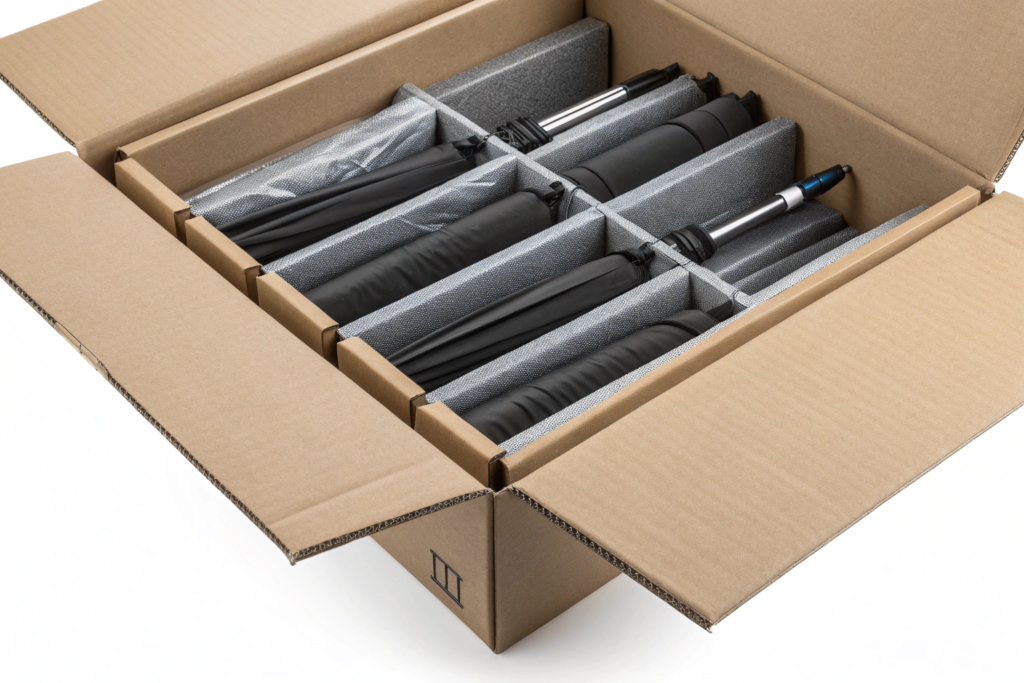
Each umbrella should first be in its own sleeve (a simple polybag or a fabric sheath) to prevent scratches. Then, the umbrellas should be bundled tightly together within the master carton to prevent them from shifting and hitting against each other. For higher-end umbrellas, we often add cardboard dividers or foam inserts to separate them. Most importantly, the ends of the box—where the fragile tips and handles are—must be reinforced. We use extra layers of cardboard or foam pads at both ends of the carton to create a "crush zone" that absorbs impacts from drops. This is a key principle of protective packaging.
Why Are Strong Cartons and Clear Labeling Essential?
Don’t skimp on the quality of your shipping carton. We use high-strength, double-walled corrugated cardboard with a high ECT (Edge Crush Test) rating. A flimsy box will collapse the moment a heavier carton is stacked on top of it. The carton should be sealed securely with high-quality packing tape. Finally, the box must be clearly labeled. In addition to the standard shipping label, we apply large, bright "FRAGILE," "HANDLE WITH CARE," and "DO NOT STACK" labels to all sides. While you can’t guarantee every handler will obey them, it significantly increases the chances of your package being treated with the respect it needs. This is a best practice recommended by all major shipping carriers.
How Do You Handle Different Umbrella Types in One Shipment?
Your product line is diverse. You have small, compact folding umbrellas and large, elegant golf umbrellas. Shipping them together presents another layer of complexity. Mixing different sizes and weights in one shipment can be an logistical nightmare if not planned correctly.
Shipping a mix of umbrella types requires careful sub-carton planning and a clear consolidation strategy to maintain packaging integrity and cost-efficiency. You cannot simply toss folding umbrellas and golf umbrellas into the same large box. The heavier, larger items will inevitably crush the smaller ones. The key is to create standardized "inner" cartons for each umbrella type and then consolidate these into a larger "master" pallet or container.
This "box-in-a-box" strategy allows you to maintain the structural integrity of each product type while still gaining the benefits of a larger, consolidated shipment. It requires careful planning and a partner who can manage this complexity at the factory level. This is a practical application of the same principles used to assess a sample’s construction—it’s all about structure and integrity.
What is the "Inner Carton" Strategy?
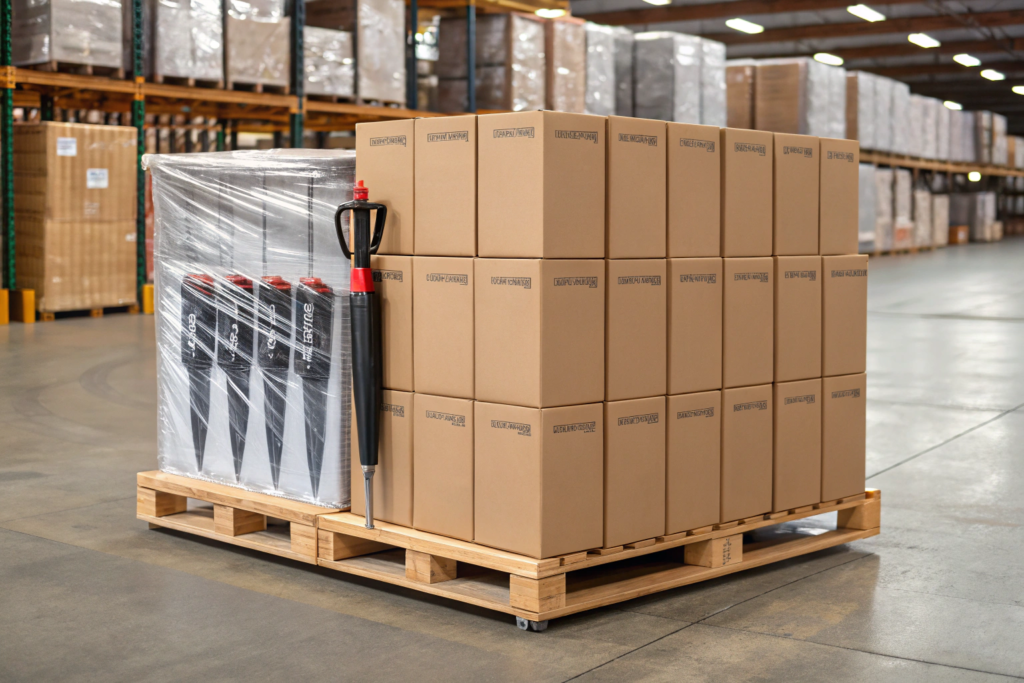
First, we pack each type of umbrella into its own optimized, uniform inner carton. For example, 24 folding umbrellas might go into one small, sturdy cube-shaped box. 12 golf umbrellas would go into their own long, reinforced box. These inner cartons are designed to be strong enough to be handled on their own and are clearly labeled with the product type and quantity. This keeps your inventory organized and protected. This modular approach is a cornerstone of efficient warehouse management.
How Do You Consolidate Inner Cartons?
Once you have your standardized inner cartons, you can then safely consolidate them for shipping. The best method is to stack these cartons onto a pallet. We place the heavier, sturdier cartons (like the golf umbrellas) at the bottom and the lighter cartons (folding umbrellas) on top. The entire pallet is then securely shrink-wrapped to create a single, stable, and easily movable unit (a process known as palletization). This unit can then be loaded into a shipping container. This method prevents the different box sizes from shifting and crushing each other and makes loading and unloading much faster and safer.
Conclusion
Shipping umbrellas internationally is a challenge, but it is far from insurmountable. By understanding and proactively addressing the core issues, you can create a reliable and cost-effective logistics chain. The key is to focus on three things: combating volumetric weight with efficient, custom-fit packaging; preventing damage with a robust, multi-layered protection strategy; and managing product diversity with a smart inner-carton and palletization plan. Don’t let logistics be an afterthought; build it into your product development process from the beginning.
Working with an experienced manufacturing partner who understands these nuances is your greatest asset. We don’t just make your products; we think about how to get them to you safely and affordably. Our expertise in packaging and logistics is part of the value we provide to all our clients.
If you are looking to develop a line of umbrellas and want a partner who can manage the entire process from design to final delivery, we are here to help. Please contact our Business Director, Elaine, at her email: elaine@fumaoclothing.com to start the conversation.