You’re looking to add premium leather gloves to your collection—a timeless, high-margin product that speaks of quality and sophistication. But this isn’t like sourcing a simple baseball cap. The world of premium leather is complex. The difference between an exquisite, buttery-soft glove that lasts a lifetime and a stiff, poorly made one that falls apart in a season lies entirely in the supplier you choose. Finding the right partner is not just a step; it’s the most critical decision you will make.
To find a reliable supplier for premium leather gloves, you must look beyond price and focus on specialized expertise, verifiable material sourcing, transparent craftsmanship, and a proven track record in luxury goods. As the owner of Shanghai Fumao Clothing, a company that collaborates with various specialized workshops for high-end accessories, I know that true premium manufacturing is a niche skill. It’s not about finding a factory that can make gloves; it’s about finding one that lives and breathes the art of glove-making.
This is a search for a true artisan partner, not just a production line. The stakes are high, but the rewards of finding the right supplier are immense. In this guide, I’ll walk you through the exact steps to identify, vet, and build a relationship with a world-class leather glove manufacturer. Let’s find you a partner worthy of your brand.
Where Do You Begin the Search for Specialists?
Finding a general accessory factory is easy. But premium leather glove makers? They don’t advertise on every corner. They are specialists, often with a long heritage, and you need to know where to look. Starting your search in the right place is half the battle.
Your search should begin not on broad sourcing platforms, but in specialized industry directories, niche trade shows, and by analyzing the supply chains of non-competing luxury brands. Mass-market platforms like Alibaba are excellent for many things, but they are flooded with generalists. For a premium product like leather gloves, you need to go where the specialists congregate. These are suppliers who often work through referrals and have established reputations, rather than competing on high-volume, low-cost production.
Think of it as fishing in a well-stocked, private lake instead of the open ocean. The quality of your catch will be exponentially better. Let’s break down these targeted search channels and how to leverage them effectively. This initial research phase is as foundational as a detailed tech pack in the production process.
Why Are Niche Trade Shows Superior?
While large trade shows like the Canton Fair are impressive, they can be overwhelming. Instead, focus on specialized leather and accessory fairs in Europe (like Lineapelle or Première Vision Paris) or industry-specific events. Suppliers who invest in exhibiting at these high-end shows are serious about their craft and are actively seeking quality-focused partners. It gives you the invaluable opportunity to meet the owners, feel the quality of their products firsthand, and have in-depth conversations about their capabilities. Websites like The Trade Show News Network (TSNN) can help you find relevant events. These shows are a hub for the entire luxury goods market.
How Can You "Reverse-Engineer" Supply Chains?
Look at established, high-quality brands in different product categories (e.g., a luxury shoe brand or a high-end handbag company) that are known for their leatherwork. Often, the same specialized tanneries and manufacturing clusters that serve them also produce other leather goods. Research their country of origin and the manufacturing regions they use. This can give you clues about where to focus your search. For example, regions in Italy, Portugal, or even specific clusters in Asia are known for their heritage in fine leatherworking. This kind of market research can uncover hidden gems.
What Questions Uncover True Expertise?
You’ve identified a few potential suppliers. Now, you need to separate the true artisans from the pretenders. The questions you ask during your initial conversations are critical. Their answers will reveal the depth of their knowledge and passion for their craft.
Go beyond "What is your price?" and ask deep, technical questions about leather types, tanning processes, and construction techniques to gauge their genuine expertise. A true specialist will be eager to discuss the nuances of their craft. They’ll be able to explain why they use full-grain lambskin instead of top-grain, or the benefits of a hand-sewn "inseam" stitch versus a machine stitch. A supplier who gives vague answers or constantly steers the conversation back to price is likely not the premium partner you’re looking for.
This is your interview process. You are hiring them for a critical role. At Shanghai Fumao Clothing, when we vet specialized partners, we treat it with the seriousness it deserves. Let’s get into the specific questions that will reveal everything you need to know. The depth of this inquiry is similar to how you would assess workmanship on a sample, but you’re doing it verbally first.

What to Ask About Leather Sourcing?
This is non-negotiable. Ask them: "Where do you source your leather? Which tanneries do you work with?" A premium supplier will have established relationships with reputable tanneries and will be proud to name them. Ask them to explain the difference between full-grain, top-grain, and genuine leather. Inquire about the specific animals—lambskin, deerskin, peccary—and why they recommend one over the other for your specific design. Their ability to articulate the qualities of different leathers is a huge indicator of their expertise. A supplier with a transparent and ethical supply chain is also a major plus.
What to Ask About Construction Techniques?
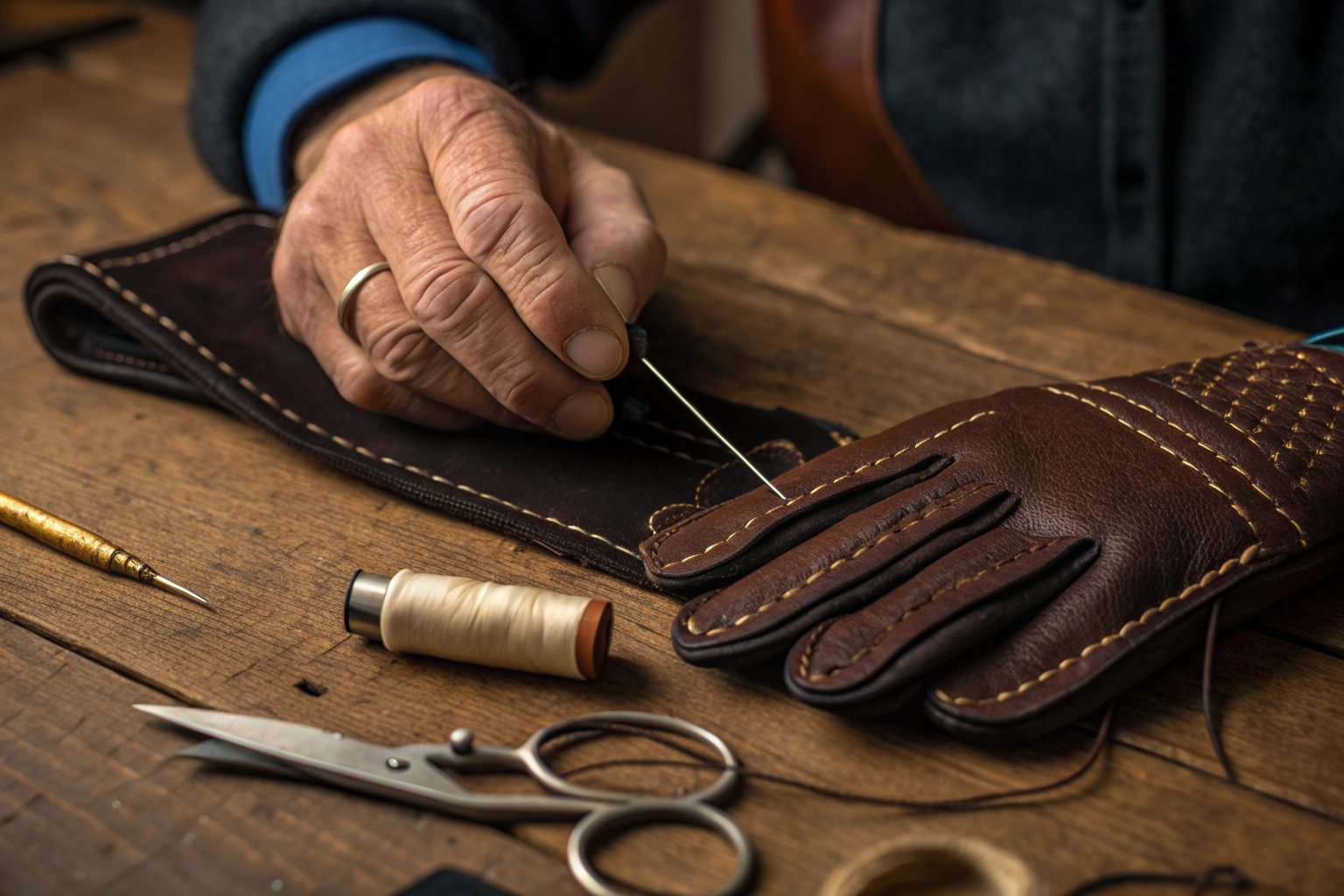
Ask about their stitching methods. "Do you offer hand-stitching? What are ‘points’ and ‘quirks’?" (Points are the decorative stitched lines on the back of the glove; quirks are small diamond-shaped pieces at the base of the fingers for a better fit). A master glove maker will know these terms instantly. Ask about their cutting process—do they use hydraulic presses with dies, or do they still practice hand-cutting for certain styles? Inquire about the linings they offer (silk, cashmere, wool) and how the lining affects the fit and sizing. Their answers will demonstrate whether they are mass-producers or true artisans.
Why is the Sample Evaluation So Critical?
After all the research and conversations, the moment of truth arrives with the sample. For a premium product like leather gloves, the sample is not just a confirmation—it’s the entire resume of the supplier in physical form. It tells you everything their words could not.
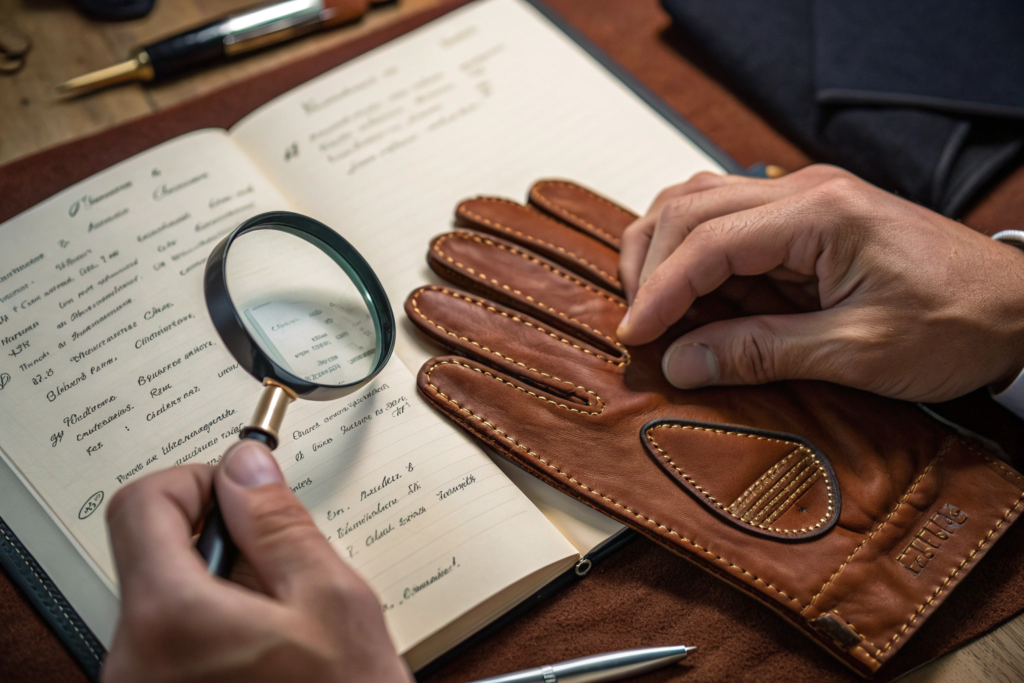
Evaluating a premium leather glove sample is a multi-sensory experience; you must assess the leather’s feel and smell, the precision of the fit, and the flawlessness of the craftsmanship under intense scrutiny. This is where you confirm their claims. Does the leather feel as soft and supple as they described? Is the stitching as perfect as you’d expect? Most importantly, how does it fit? Glove making is almost like tailoring; a perfect fit is the ultimate sign of a master craftsman.
This is the most important sample you will ever review. Its quality will directly predict the quality of your bulk production. Let’s break down the key areas to inspect to ensure you’re getting the luxury product you’re paying for. This process is a more advanced version of our general guide on evaluating samples before mass production.

How Do You Judge the Leather Quality?
Engage your senses. Smell: High-quality, properly tanned leather has a rich, earthy scent. A harsh chemical smell is a red flag for a poor tanning process. Touch: It should feel soft, supple, and "buttery." It shouldn’t feel stiff, plasticky, or dry. Sight: Look for the natural grain of the leather. Full-grain leather, the highest quality, will have small, natural imperfections that give it character. An overly uniform, perfect surface might indicate a lower-quality corrected grain. Check out resources from organizations like the Leather and Hide Council of America to deepen your understanding.
What Defines a Perfect Fit and Finish?
Try the glove on. It should feel snug at first, but not tight. Like a good pair of leather shoes, it should mold to your hand. Check the fingers—there shouldn’t be excess material at the tips. The thumb should move freely without pulling. Inspect every stitch line, especially the delicate "inseam" stitches between the fingers. They should be invisible from the outside, tight, and perfectly even. Look at the lining. Is it smoothly inserted with no bunching? Check the cuff and any hardware like snaps or buttons. Every single detail must be flawless. This level of quality control is what defines a luxury product.
How Do You Build a Long-Term Partnership?
You’ve found them. The supplier is a true artisan, and the sample is a work of art. The journey isn’t over. Now, you need to transition from a client into a partner. For high-end goods, a transactional relationship is not enough.
Building a long-term partnership with a premium supplier requires mutual respect, clear communication, and a commitment to growing together, rather than just focusing on short-term cost reductions. These specialized workshops are not large, faceless corporations. They are often family-run businesses with a deep sense of pride. Show them that you value their craft, pay your invoices on time, and provide clear, constructive feedback. In return, you will get their best work, priority access to production slots, and a partner who is invested in your brand’s success.
A strong partnership is your ultimate competitive advantage. It ensures consistent quality and gives you access to innovation and craftsmanship that your competitors can’t easily replicate. Let’s discuss the final steps to solidify this crucial relationship. This is the foundation for a smooth and efficient centralized transportation process later on.

Why is a Factory Audit or Visit Still Important?
If possible, visit the workshop. Seeing their operation with your own eyes is invaluable. It shows respect and allows you to understand their process on a deeper level. If a visit isn’t feasible, a detailed video audit can suffice. Ask for a virtual tour. You want to see a clean, organized workspace, skilled workers who are treated well, and a clear passion for the product. This isn’t about looking for flaws; it’s about confirming that their values and operational standards align with your brand’s. This aligns with principles of ethical sourcing and corporate social responsibility.
How Do You Structure Your First Order?
Start with a reasonable, but not insignificant, first order. This shows you are a serious business. Ensure your contract and purchase order are crystal clear on all specifications, quality standards, payment terms, and delivery timelines. Don’t try to squeeze their margins on the first order. Instead, focus on establishing a smooth workflow and proving that you are a reliable, professional partner. Once you have built a foundation of trust over several orders, you can then have conversations about optimizing costs or securing volume discounts. A good business relationship is built on mutual benefit.
Conclusion
Finding a supplier for premium leather gloves is a journey that rewards patience and diligence. It requires you to think like a detective, an artisan, and a business strategist. By starting your search in specialized channels, asking deeply technical questions, meticulously evaluating every detail of the sample, and focusing on building a true, long-term partnership, you can secure a supplier that will become one of your brand’s greatest assets. The quality of their work will shine through in every pair of gloves, creating loyal customers who appreciate true craftsmanship.
This is not a process that can be rushed. But by investing the time and effort upfront, you are laying the foundation for a successful, profitable, and respected product line.
At our company, we deeply respect this level of specialization. While we may not be master glove makers ourselves, we often collaborate with such workshops to provide our clients with a complete accessory solution. If you need guidance or wish to explore a broader range of fashion accessories, please contact our Business Director, Elaine, at her email: elaine@fumaoclothing.com.