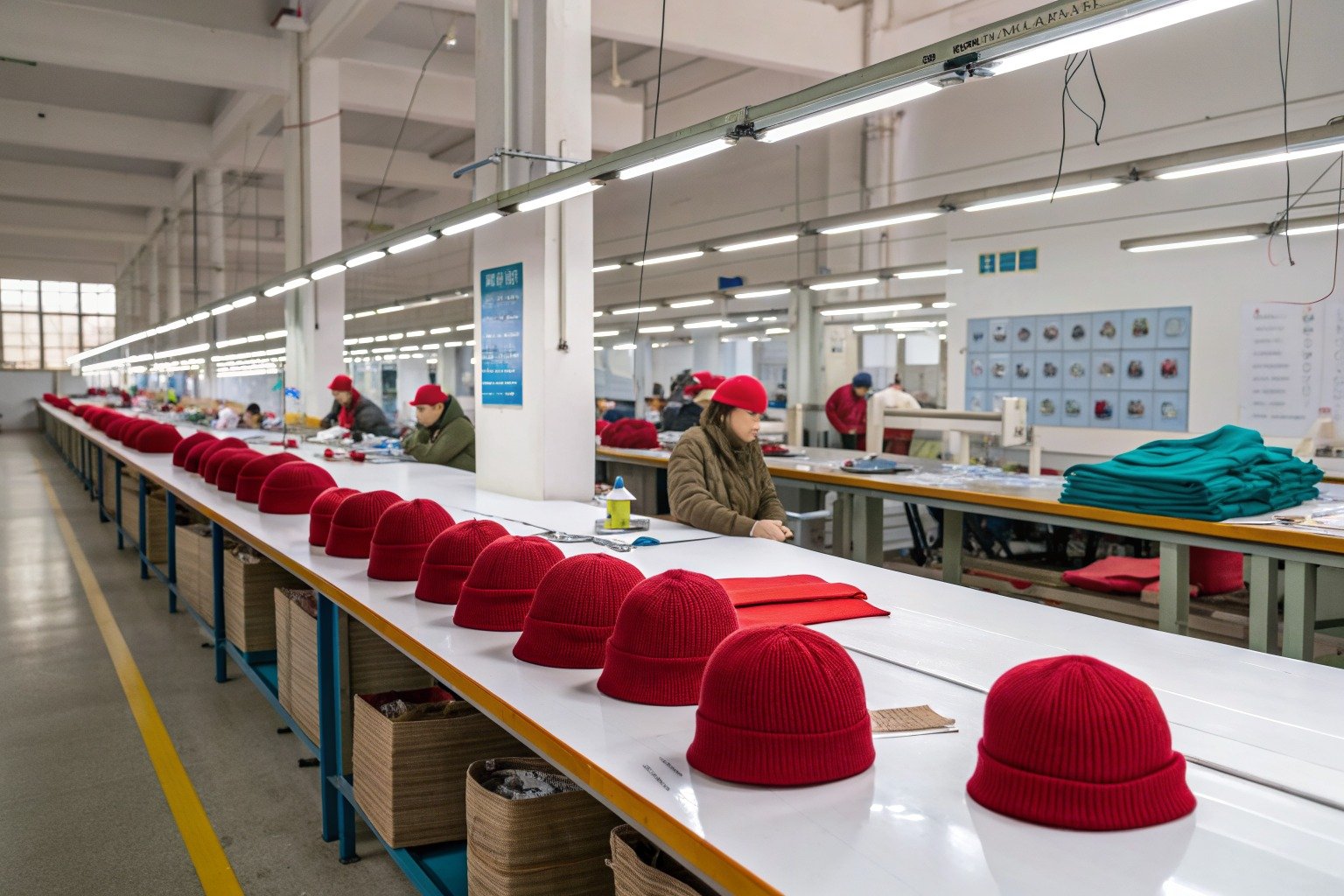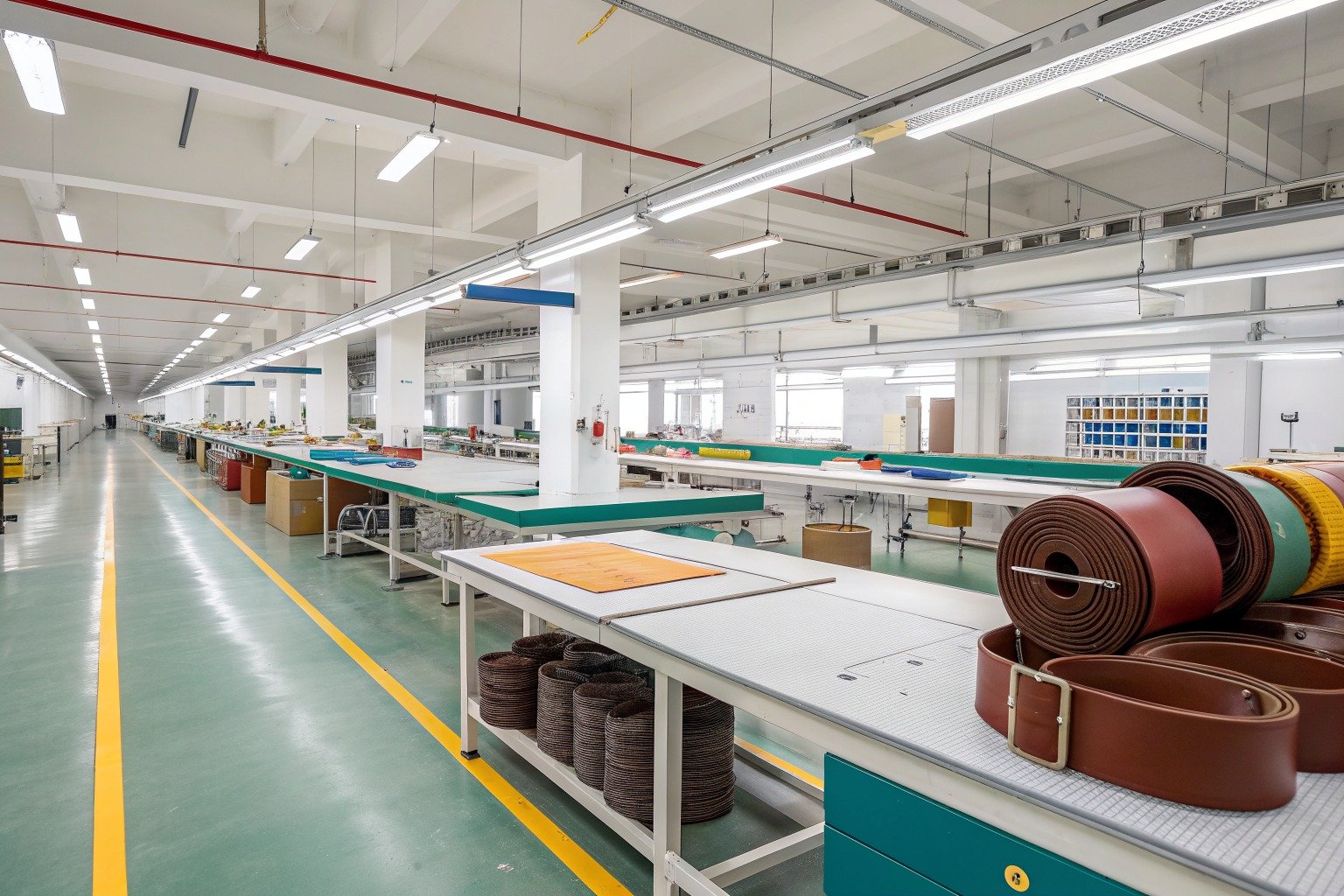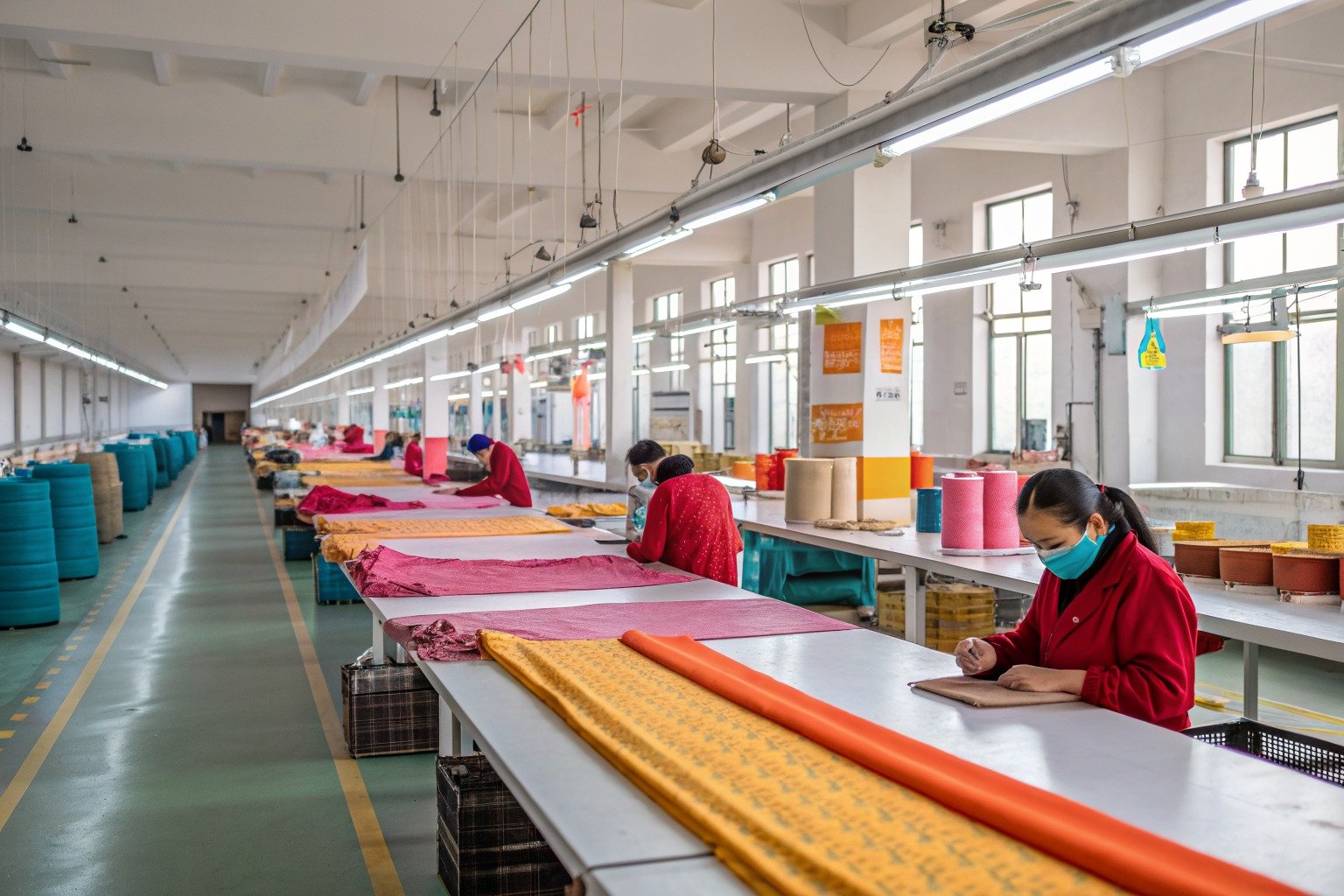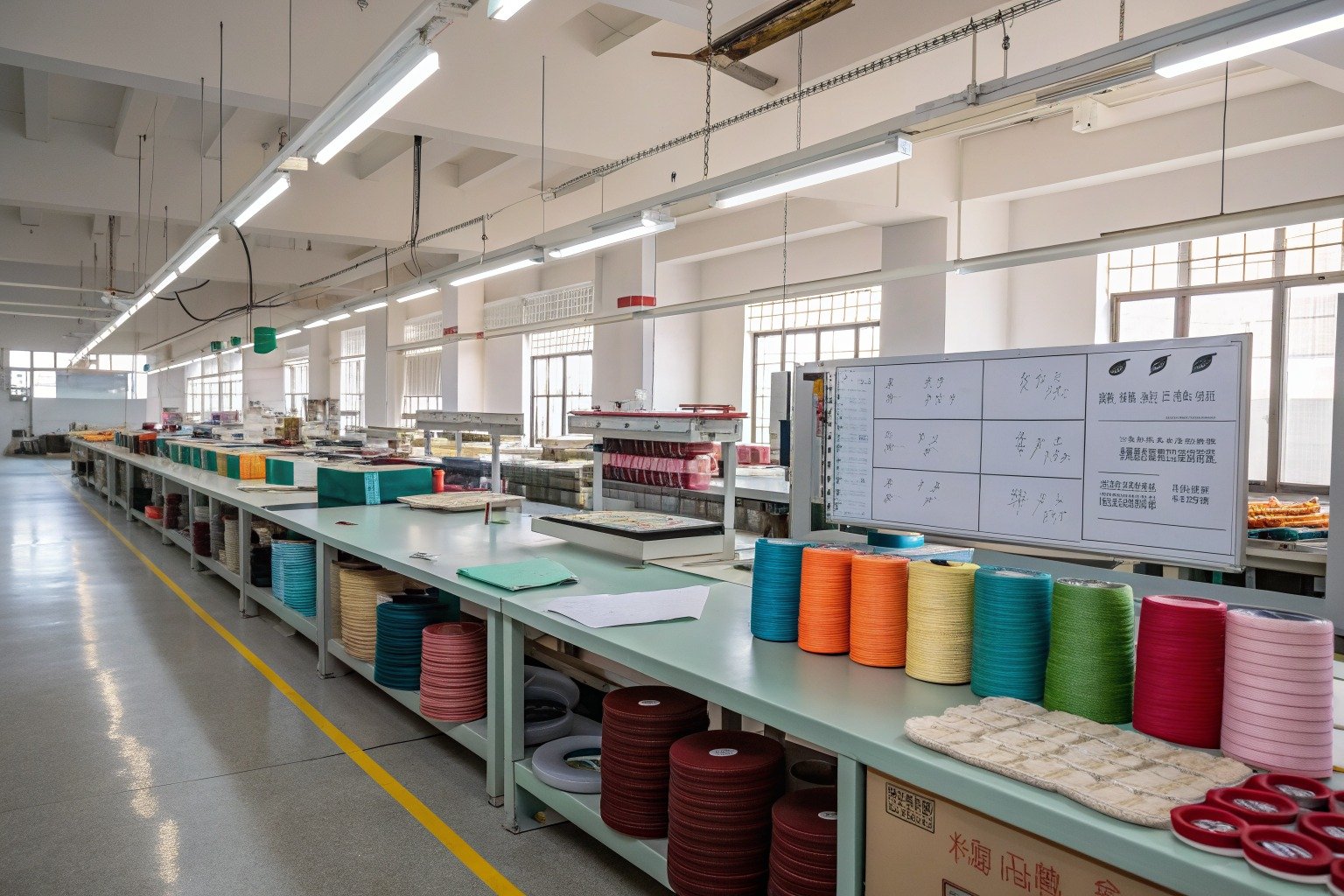
You’ve spent weeks, maybe even months, perfecting your design. You’ve found a manufacturing partner you trust, and the moment has finally arrived: the pre-production sample is in your hands. This is one of the most critical and exciting moments in the entire production journey. But what happens next? How do you turn this single sample into a successful run of thousands of perfect products? The evaluation process is everything.
A systematic and thorough evaluation of pre-production samples is the final and most crucial checkpoint to prevent costly errors, ensure brand consistency, and guarantee the quality of your final product before committing to mass production. As the owner of Shanghai Fumao Clothing, I’ve guided countless clients through this exact process. A mistake caught at this stage is a simple fix; a mistake discovered after mass production can be a disaster for your timeline, budget, and brand reputation. This sample is your last chance to get everything right.
This article is your step-by-step guide to professionally evaluating fashion accessory samples. I’ll share the exact checklist we use with our clients, covering everything from materials and construction to color and packaging. Think of this as your final pre-flight check before your product line takes off. Let’s ensure it’s a smooth flight.
What is the First Thing to Check: The Tech Pack
Before you even get lost in the beauty of the sample, what’s the very first, most fundamental step? It’s easy to get distracted by the overall look and feel, but a disciplined approach starts with the blueprint. You need to verify that the manufacturer has correctly interpreted your vision.
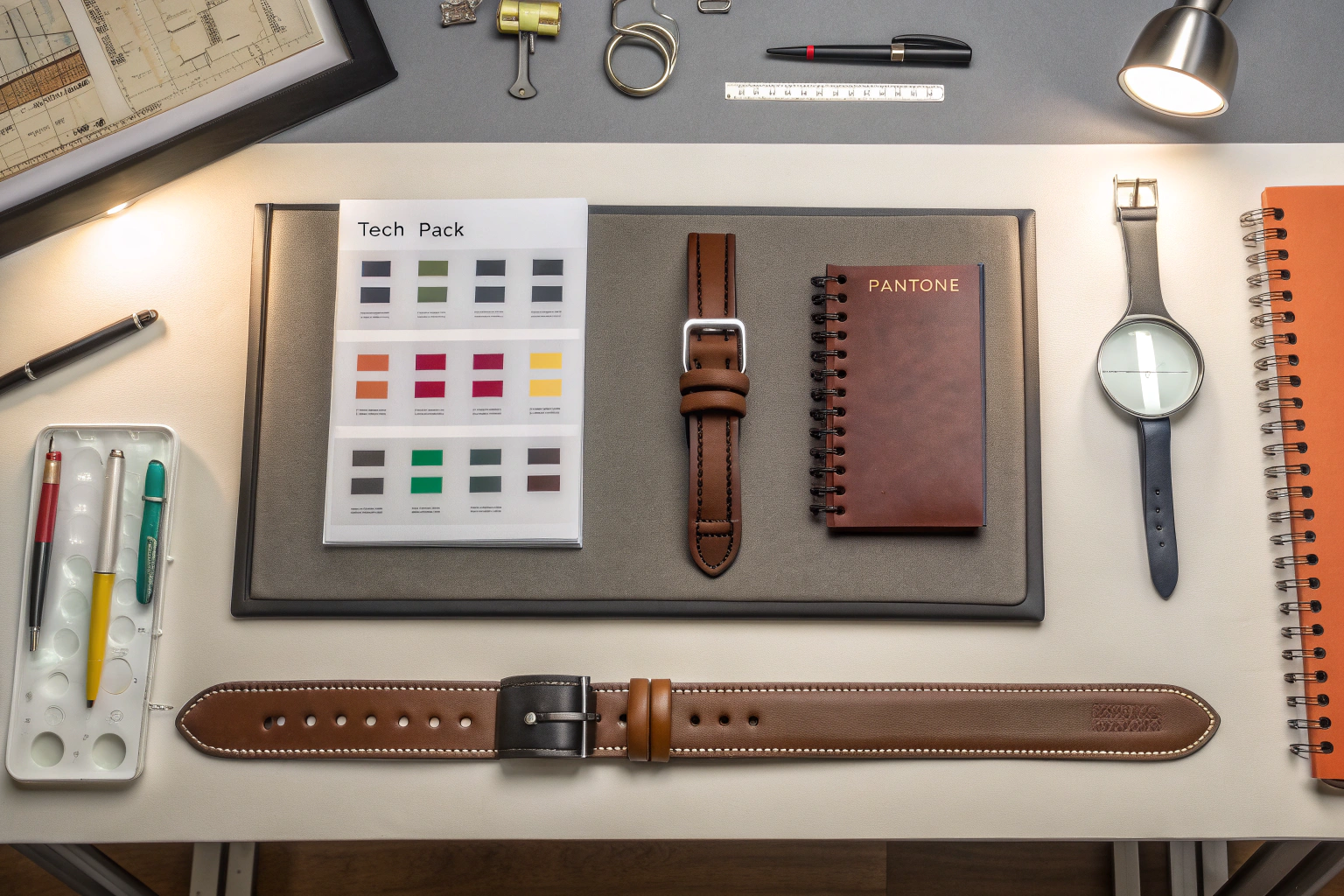
The first and most important step is to compare the sample directly against your technical pack (tech pack) and approved specifications, item by item. Your tech pack is the master document, the contract that outlines every single detail of your product. Is the length of the belt exactly as specified? Is the zipper type the one you chose? Are the dimensions of the hat’s brim correct to the millimeter? Any deviation, no matter how small, must be identified now. This is the foundation of quality control.
This methodical comparison ensures that the evaluation is objective, not just subjective. It transforms your opinion ("it looks good") into a factual assessment ("it matches the specs"). Let’s break down the key components of the tech pack you need to scrutinize and why this document is your most powerful tool. This process is even more critical than just identifying high-quality printing on a finished product; it’s about ensuring the entire product is built correctly from the ground up.
Why Are Measurements and Dimensions Critical?
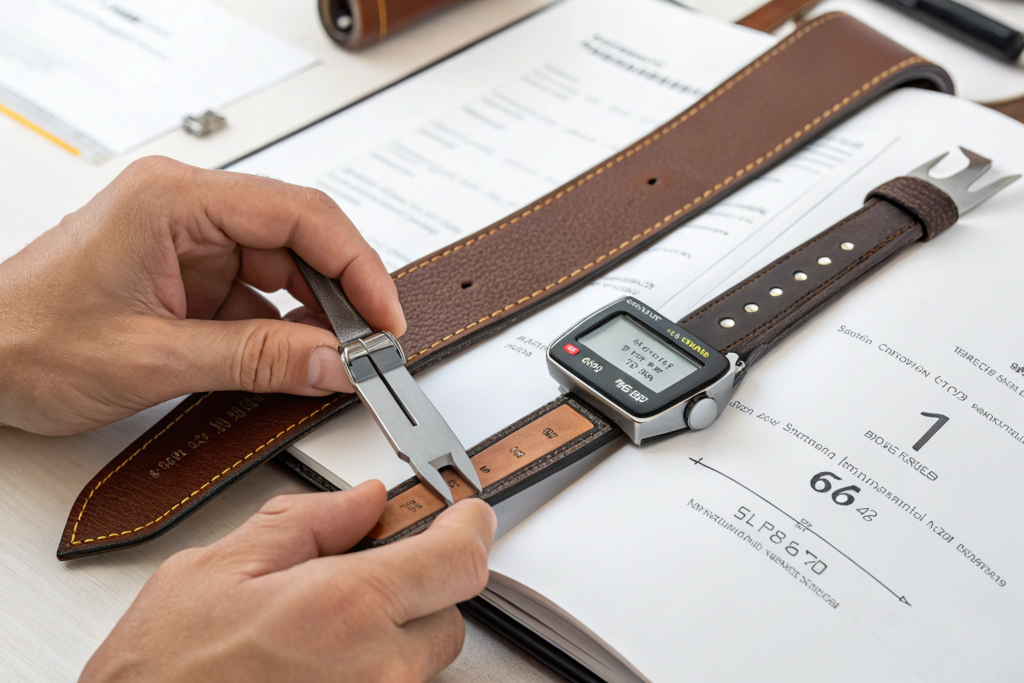
Precise measurements are the backbone of a good product. Use a measuring tape or digital calipers to check every dimension specified in your tech pack. For a scarf, this means length and width. For a hat, check the circumference, brim width, and crown height. For a bag, verify the height, width, depth, and strap length. Even a 1cm deviation can affect the fit, function, and overall aesthetic of the product. This is particularly important for items that need to fit the body, like belts or gloves. Inaccurate sizing is one of the leading causes of customer returns in the fashion industry.
How Do You Verify Materials and Components?
Your tech pack specifies every material, from the main fabric to the smallest piece of hardware. Check them all. Is the scarf made from 100% silk as requested, or is it a blend? Is the buckle on the belt solid brass with an antique finish, exactly as specified? Are the threads the correct color and thickness? Feel the fabric, check the weight, and inspect the hardware closely. If you have any doubts, you can request documentation or even conduct your own burn test for fabrics (with extreme caution). Confirming these raw materials is essential for both quality and legal compliance with labeling laws.
How to Assess Construction and Workmanship?
The sample matches the tech pack’s specifications. Great. But is it well-made? A product can be technically correct but poorly constructed. This is where you transition from a scientist to a detective, looking for clues about the skill and care of the factory’s workforce.
To assess workmanship, you must meticulously inspect the stitching, seams, edges, and overall assembly of the sample, looking for signs of durability and attention to detail. This is what separates a premium product from a cheap one. Are the stitches straight, even, and tight? Are the seams finished properly to prevent fraying? Are the edges of a leather belt burnished and smooth? A well-constructed product not only looks better but will also last longer, leading to happier customers and a stronger brand reputation. At Shanghai Fumao Clothing, we pride ourselves on our clean and professional workmanship.
This part of the evaluation requires a keen eye and a tactile approach. You need to handle the sample, bend it, stretch it (gently!), and look at it from every angle. Let’s dive into the specific areas to focus on to ensure your product is built to last. This hands-on inspection is a practical application of understanding what makes a product durable, much like knowing the best practices for post-print care.

What Defines Quality Stitching?
Look closely at all the stitch lines. The stitches should be consistent in length and tension. There should be no loose threads, skipped stitches, or messy backstitching. The stitch density (stitches per inch, or SPI) should be appropriate for the material—higher SPI generally means a stronger seam. For accessories like bags or belts that handle stress, check for reinforced stitching (like bar tacks) at key points like handle attachments or corners. Poor stitching is often the first point of failure on a product. This is a core principle of garment construction that applies to all sewn goods. Reputable organizations like the American Apparel & Footwear Association (AAFA) often set standards for such quality markers.
How Should Seams and Edges Be Finished?
Turn the sample inside out. How are the raw edges of the fabric finished? On a quality product, they will be professionally finished with a serger (overlock stitch), binding, or a French seam to prevent unraveling. Unfinished, fraying edges are a major red flag. For leather goods, inspect the edges. Are they raw and fuzzy, or have they been properly sanded, beveled, and burnished to a smooth, sealed finish? For a printed scarf, check the hem. Is it a neat machine roll hem or a delicate hand-rolled hem as requested? These finishing details are a hallmark of high-quality manufacturing.
Are the Colors and Prints Correct?
You’ve confirmed the sample is built correctly and built well. Now, let’s talk about the most visually impactful element: color. Getting the color right is absolutely non-negotiable for any fashion brand. A slight shade difference can throw off an entire collection.
Colors and prints must be evaluated against your original Pantone color standards or approved artwork under controlled lighting conditions to ensure perfect accuracy. Don’t just eyeball it in your office. The color of an object can look dramatically different under fluorescent office lights, natural daylight, or warm incandescent bulbs. This phenomenon is called metamerism. To avoid this, you should use a light box that can simulate different lighting environments, or at the very least, check the colors next to a window in natural daylight. For prints, check for clarity, alignment, and color matching for every single color in the design.
Color accuracy is a science. It requires standardized tools and a disciplined process. Let’s discuss the industry-standard tools for color matching and the key things to look for when evaluating a printed sample. This directly relates to our discussion on what printing methods offer the best durability, as the method can affect the final color output.
Why is a Pantone Swatch Essential?
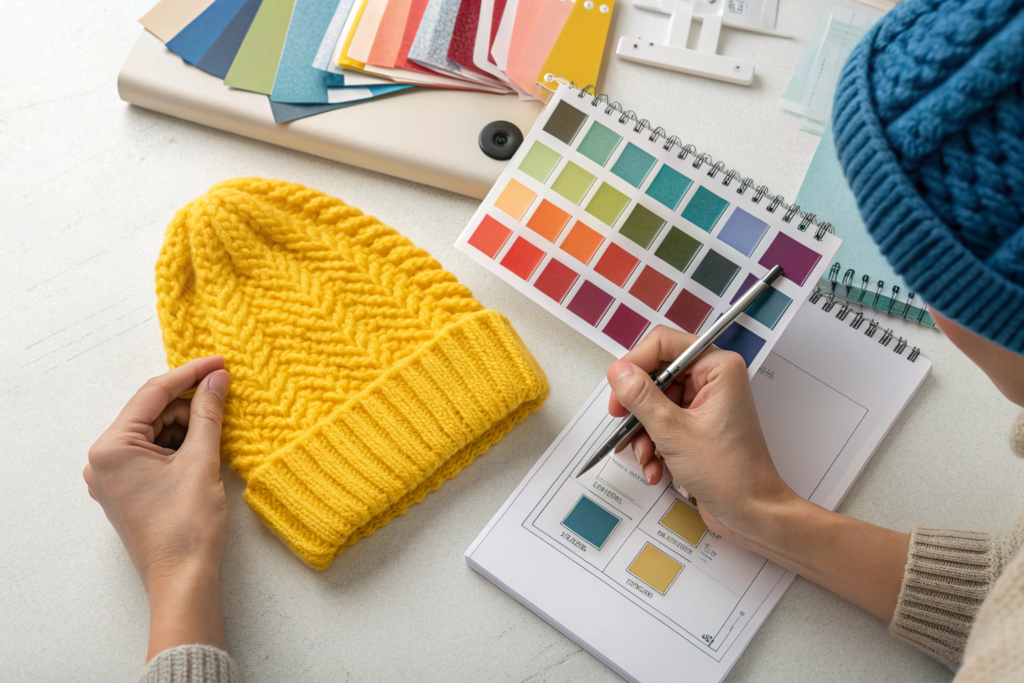
The Pantone Matching System (PMS) is the universal language of color for designers and manufacturers. When you specify "Pantone 18-1664 Fiery Red," you and the factory are looking at the exact same color standard. When your sample arrives, hold your physical Pantone swatch directly next to the product. They should be an exact match. Relying on screen colors is a recipe for disaster, as every monitor is calibrated differently. Your physical Pantone book is your single source of truth for color. This is a fundamental tool in graphic design and product development.
What Should You Look for in a Printed Sample?
For printed accessories like scarves or hats, lay the sample flat and compare it to your original digital artwork file. Check for print clarity: are the lines sharp and the details crisp? Check for color registration: are all the different colors aligned perfectly, with no gaps or overlaps? Check for color accuracy for every single color in the print using your Pantone swatches. Finally, inspect the entire surface for any defects like smudges, color bleeding, or banding (faint lines in solid color areas). This level of detail ensures the final product is a faithful reproduction of your creative vision. The print quality can make or break the perceived value of an accessory.
What About the Final Touches: Packaging and Labeling?
The product itself is perfect. But the customer’s experience doesn’t start with the product; it starts with the packaging. The labels, tags, and packaging are part of the product and must be evaluated with the same level of scrutiny.
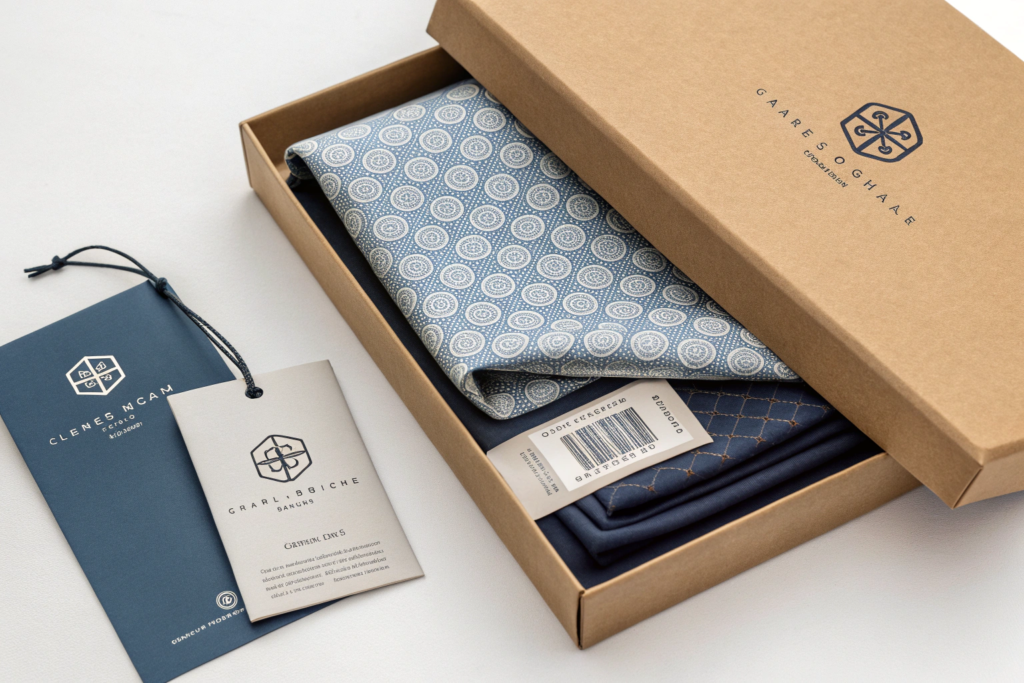
You must verify that all labels, hangtags, and packaging components match your artwork, are correctly placed, and comply with all legal requirements for your target market. Is the brand label sewn in straight? Does the hangtag have the correct barcode, price, and product information? Is the polybag the right size and thickness, and does it have the required suffocation warning? These details communicate your brand’s quality and professionalism and are often legally mandated. Forgetting a required label can result in your entire shipment being held up at customs.
These final touches are your product’s introduction to the world. They need to be perfect. Let’s cover the essential labels you need to check and the importance of a final "fit and function" test. This final check is the culmination of the entire development process, ensuring the product is ready for your customer.
What Labels are Legally Required?
Labeling requirements vary by country, but for the US and EU markets, you typically need to check for a few key things. The Care Label is crucial; it must have instructions for washing and care that are appropriate for the materials used, as we discussed in our article on lightweight summer scarf fabrics. The Fiber Content Label must accurately state the percentage of each fiber in the product (e.g., 80% Cotton, 20% Polyester). The Country of Origin ("Made in China") is also mandatory. Ensure all this information is present and accurate. The U.S. Federal Trade Commission (FTC) provides detailed guides on these requirements.
Why is a Final Function Test Important?
Finally, use the sample as a customer would. Put the hat on your head—is it comfortable? Buckle and unbuckle the belt—does the hardware work smoothly? Fill the bag with everyday items—do the zippers stick? Does the strap feel secure? Open and close the umbrella—does the mechanism function correctly? This practical test can reveal subtle issues with usability or comfort that aren’t apparent from a simple visual inspection. This is your final chance to catch a design flaw that could lead to customer complaints. This user-centric approach is a key part of modern product design.
Conclusion
Evaluating a pre-production sample isn’t just a quick look-over; it’s a systematic, detailed investigation that is the most critical investment you can make in your product’s success. By meticulously comparing the sample to your tech pack, assessing the construction and workmanship, verifying color and print accuracy, and checking the final labels and packaging, you are building a firewall against costly mistakes. This process is your final handshake with the factory, confirming that you both share the exact same vision for the final product.
Clear, concise, and timely feedback is crucial. Document every issue with clear photos and written notes, referencing your tech pack. A good manufacturing partner will welcome this detailed feedback as it helps them deliver exactly what you want.
At our company, we see this evaluation as a collaborative partnership. We are committed to getting every detail right before the machines start running for mass production. If you’re looking for a partner who understands the importance of this critical stage and is dedicated to quality, we would love to work with you. Please reach out to our Business Director, Elaine, at her email: elaine@fumaoclothing.com to discuss your next project.