A shawl is all about the fabric. It’s a product defined by its feel, its drape, and its color. As a manufacturer, I’ve seen firsthand how a beautiful shawl can elevate a brand. But I’ve also heard the horror stories from new clients, importers like Ron from the US, who sourced a bulk order based on a perfect sample, only to receive thousands of pieces where the fabric felt stiff, the color was off, and the material started pilling after a single touch. It’s a nightmare that can ruin a season’s inventory and a brand’s reputation for quality.
To properly check the fabric quality of bulk shawls, you must go beyond a simple visual inspection and perform a series of physical tests focusing on four key areas: material composition (the "burn test"), handfeel and drape, colorfastness and consistency, and the fabric’s propensity for pilling and snagging. These checks ensure that the shawl not only looks good but also feels luxurious and performs well over time, which is what the end customer truly values. At my company, Shanghai Fumao Clothing, these tests are a non-negotiable part of our quality control process for every batch we produce.
I understand the challenge. You’re miles away, and you have to trust that the bulk production will match the sample you approved. But trust needs to be verified. You don’t need a high-tech lab to perform the most critical quality checks. Let me walk you through the simple, effective tests we use right here on the factory floor to guarantee the quality of our shawls. This is the knowledge you need to protect your investment and deliver a product you can be proud of.
How to Verify the Material Composition?
The supplier’s invoice says "100% Cashmere" or "Silk Blend," and the price seems too good to be true. It probably is. Mislabeling fabric composition is one of the most common ways for low-quality factories to cut costs. You need a reliable way to verify if you’re getting the natural, luxurious fibers you paid for or a cheap synthetic substitute.
The single most effective way to verify a fabric’s composition without a lab is the "burn test." Different fibers react to flame in unique and predictable ways—some melt, some burn to ash, and they all produce a distinct smell. This simple test can instantly tell you if you’re dealing with a natural fiber like wool, a cellulosic fiber like viscose, or a synthetic like polyester.
This is a classic textile industry test that we use every day. It’s fast, it’s accurate, and it’s definitive. A factory that is confident in its materials will have no problem providing you with a few swatches from the actual production run for you to test yourself. This fundamental test of the material itself is the most important check, influencing everything from handfeel and drape to performance.
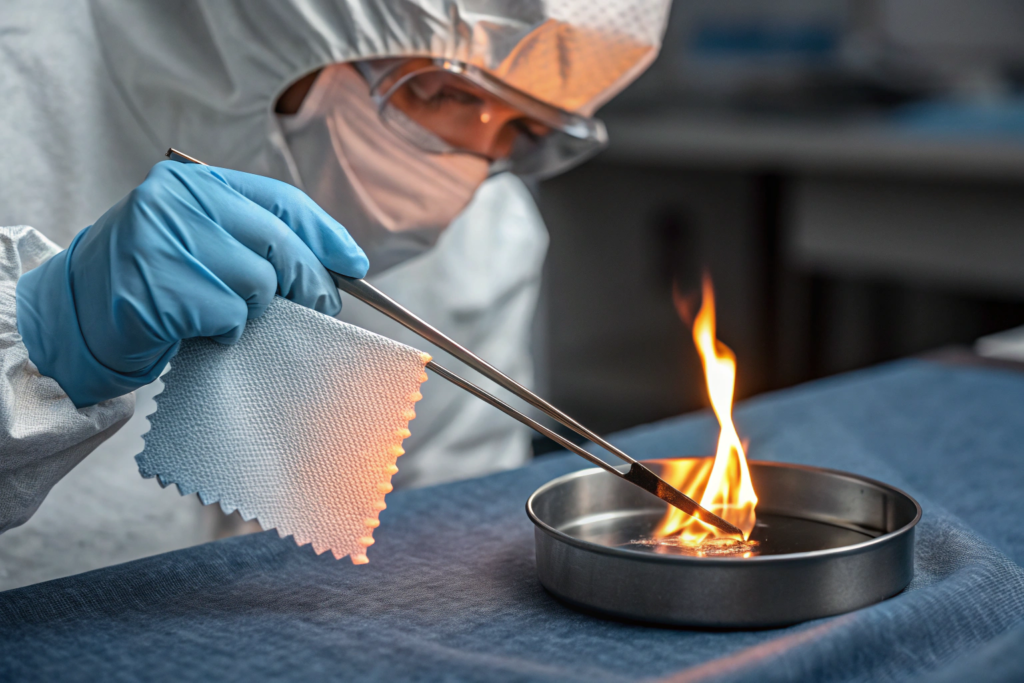
How to Perform the Burn Test (Safely):
Safety first: Perform this test in a well-ventilated area, away from flammable materials. Use a pair of tongs to hold a small fabric swatch (1×1 inch is fine) over a fire-proof dish or sink. Use a lighter or candle.
- Wool/Cashmere (Protein Fiber):
- Reaction: It singes and smolders, often self-extinguishing when the flame is removed. It does not melt.
- Ash: It leaves a brittle, black, hollow ash that crushes easily to a powder.
- Smell: It smells distinctly like burning hair.
- Silk (Protein Fiber):
- Reaction & Ash: Similar to wool, it burns to a brittle, black ash and self-extinguishes.
- Smell: Also smells like burning hair, but can be slightly less pungent than wool.
- Cotton/Viscose (Cellulosic Fiber):
- Reaction: It ignites and burns quickly with a yellow flame. It does not melt. It will continue to glow after the flame is removed (an afterglow).
- Ash: It leaves a fine, feathery grey or white ash.
- Smell: It smells like burning paper or leaves.
- Polyester/Nylon (Synthetic Fiber):
- Reaction: This is the key differentiator. It melts and drips, curling away from the flame. It often self-extinguishes.
- Ash: It forms a hard, black, uncrushable bead.
- Smell: It has a chemical or plastic smell. Polyester is slightly sweet; nylon can smell like celery.
How to test the fabric of a cashmere shawl?
If you are sold a "cashmere" shawl and it melts into a hard bead, you have a synthetic and a serious problem with your supplier. For a visual guide, you can find many burn test charts and videos from textile schools and universities online, like this resource from the University of Nebraska-Lincoln.
How to Assess Handfeel and Drape?
The fabric composition is correct, but the shawl just feels… wrong. It’s stiff, scratchy, or it hangs like a piece of cardboard. The "handfeel" (how it feels to the touch) and "drape" (how it hangs under its own weight) are the essence of a shawl’s luxury.
Handfeel and drape are assessed through simple, tactile comparison. Rub the production fabric against your cheek or the inside of your wrist to check for softness and scratchiness. Then, hold the shawl up by one corner and observe how it falls. A quality shawl should have a fluid, graceful drape with soft, rolling folds, not sharp, stiff angles.
This is a subjective but critical test. At our factory, we keep an approved "master sample" for every client. During and after production, we constantly compare the new shawls to this master sample to ensure the handfeel and drape are identical. A change in feel can indicate that the factory used a different finishing process or a lower-grade yarn, even if the base material is the same. This tactile quality is a direct result of the material composition and the finishing processes.
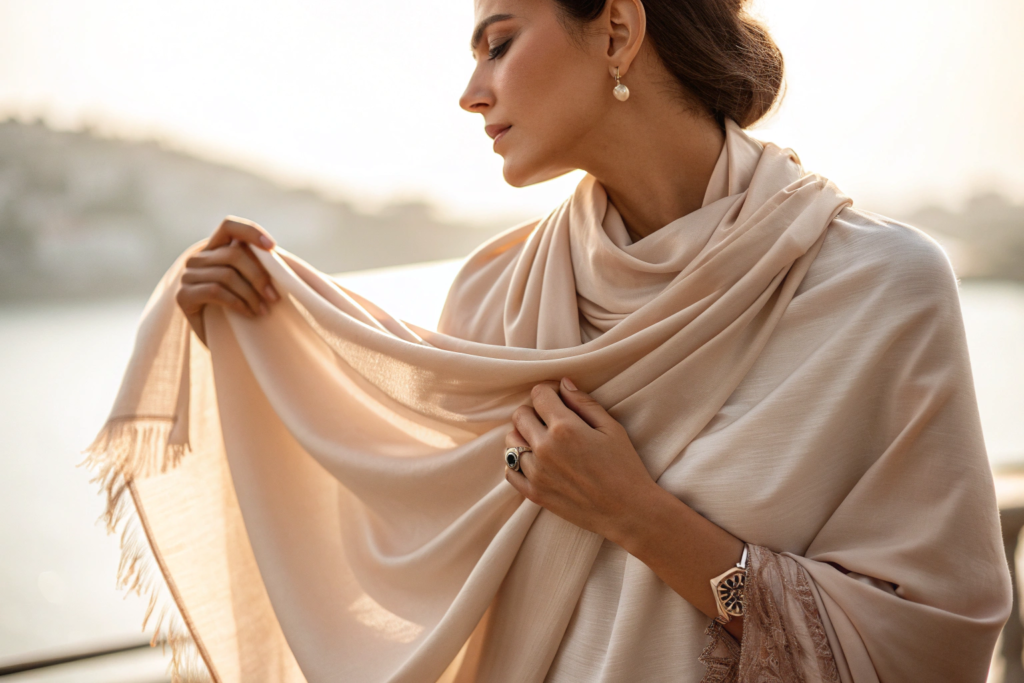
The "Cheek Test" for Softness:
The skin on your face and inner wrist is more sensitive than your fingertips.
- Pass: The fabric feels smooth, soft, and comfortable against your skin. For wool or cashmere, it should feel warm and not overly prickly.
- Fail: It feels rough, scratchy, or has a synthetic, "plasticky" feel. This is an immediate red flag for a product meant to be worn against the skin.
Assessing the Drape:
Hold a full-size shawl from the production run. Let it hang freely.
- Good Drape: The fabric flows easily and creates soft, supple folds. It moves with you. Lightweight silks and viscoses should be almost liquid-like. Wools and cashmeres should have a heavier but still fluid drape.
- Bad Drape: The fabric is stiff and creates sharp, angular creases. It looks rigid and doesn’t flow. This can be a sign of a low-quality base yarn or the overuse of cheap finishing chemicals like starch to give the fabric artificial body.
How to Check for Colorfastness and Consistency?
You approved a beautiful, deep navy blue sample. The bulk order arrives, and you have three different shades of navy, and even worse, the color bleeds onto a customer’s white blouse. Color issues can lead to massive returns and damage your brand’s credibility.
Color quality must be checked for both consistency across the batch and for colorfastness (resistance to bleeding). Consistency is checked by comparing shawls from different boxes to each other and to the master sample under a neutral, bright light. Colorfastness is checked with a simple "wet and dry rub test."
This is a huge point of emphasis for us at Shanghai Fumao Clothing. We use computerized color matching (spectrophotometers) in our dye house to ensure every batch of dye is identical. But simple visual checks are still essential. A reliable factory should be able to guarantee a color consistency of 95% or higher compared to the approved lab dip.
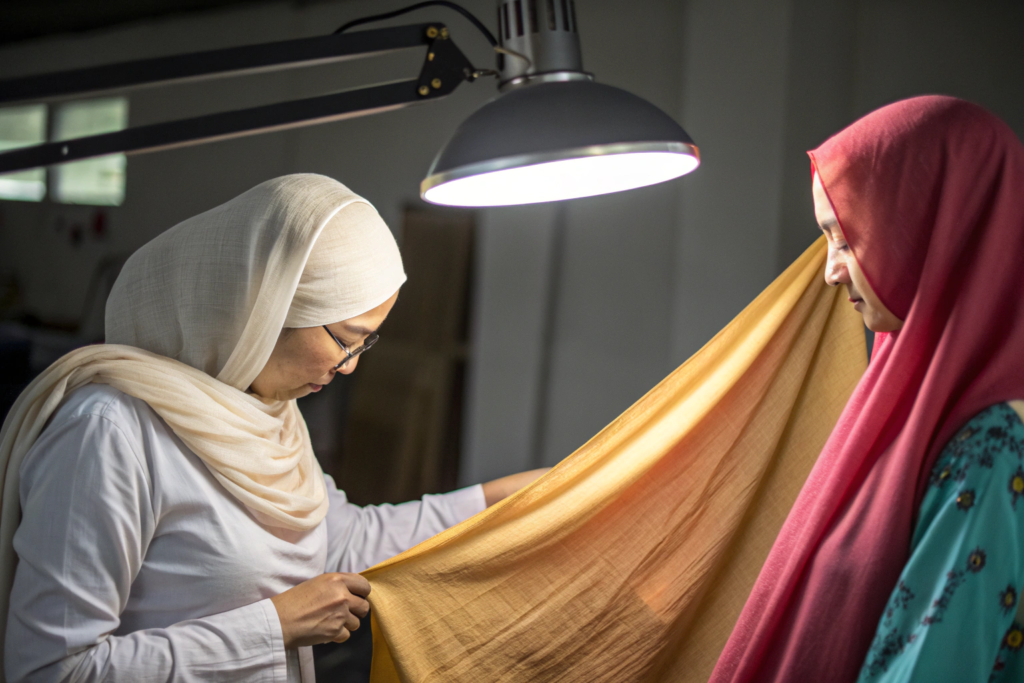
Checking for Color Consistency?
Take at least 5-10 shawls from different cartons in the shipment. Lay them out next to each other and next to your original approved sample. View them under good, natural daylight if possible (or a daylight lamp). Do not use warm, yellow indoor lighting, as it can distort colors. The colors should all look identical. Any visible difference is a sign of a problem in the dyeing process.
The "Rub Test" for Colorfastness:
This test checks if the dye is properly fixed to the fabric.
- Dry Rub: Take a small piece of clean, white cotton fabric and rub it vigorously against a colored section of the shawl 10-15 times. A tiny bit of surface color transfer can be acceptable for very dark colors, but it should be minimal.
- Wet Rub: Dampen the white cloth and repeat the process. This is the critical test.
- Pass: Very little or no color transfers to the wet cloth.
- Fail: The white cloth becomes heavily stained with color. This is a major defect. The shawl will bleed when washed, or worse, if the wearer gets caught in the rain. This is a basic test outlined in international standards like those from the ISO (International Organization for Standardization) for textiles.
How to Test for Pilling and Snagging?
Your beautiful new shawl looks old and worn after just one wear because it’s covered in tiny, ugly balls of fiber (pills). Or, it catches on a piece of jewelry and creates a huge, irreparable pull in the fabric. A shawl’s beauty needs to be more than skin deep; it needs to be durable.
A fabric’s resistance to pilling and snagging is a key indicator of its long-term durability. Pilling can be tested by vigorously rubbing a section of the fabric against itself. Snagging is best assessed by examining the tightness of the weave and gently running a fingernail or a piece of Velcro across the surface to see how easily it catches.
This is a test of the quality of the yarn and the construction of the fabric. Low-quality shawls are often made from short, weak fibers that easily break and tangle together to form pills. Loosely woven or knitted fabrics are much more prone to snagging.
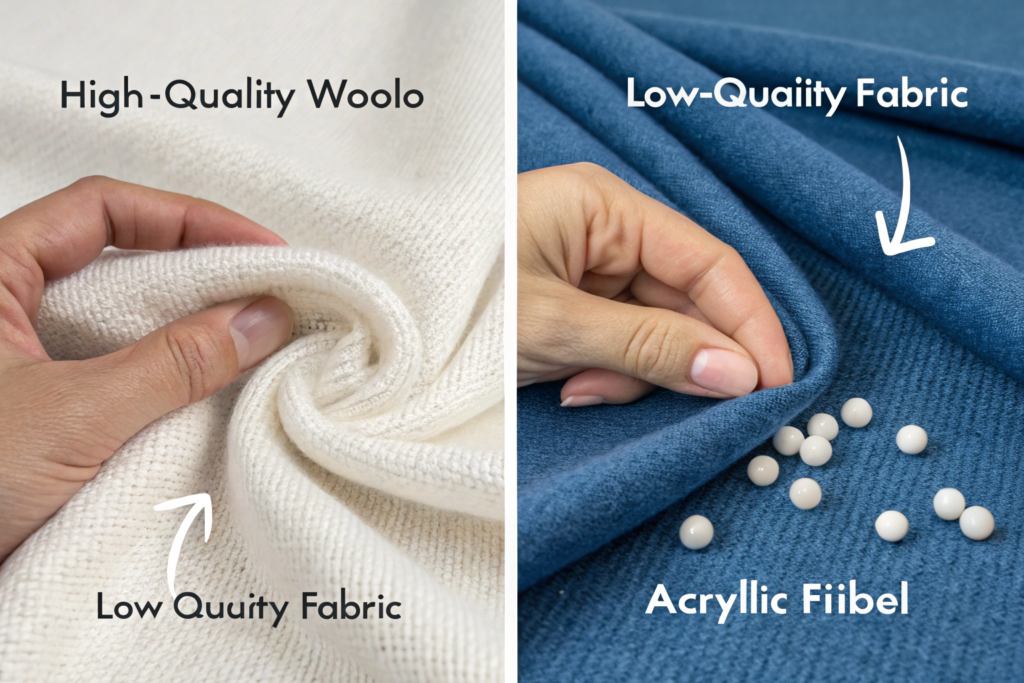
The "Abrasion Test" for Pilling?
You don’t need a machine for a basic test. Simply take two parts of the shawl and rub them together firmly for about 20-30 seconds.
- Pass: The fabric surface remains smooth, with little to no fuzzing or formation of pills. This indicates the fabric is made from long, strong fibers.
- Fail: The surface quickly becomes fuzzy, and you can see small balls of fiber starting to form. This shawl will look old very quickly. Fabrics like low-grade acrylic and certain wool blends are notoriously prone to pilling.
Assessing Snag Risk:
Look closely at the fabric’s construction.
- Low Risk: The weave or knit is tight and dense. The surface feels smooth and solid. When you gently drag a fingernail across it, it doesn’t catch.
- High Risk: The weave is loose and open, with large gaps between the yarns. You can easily snag it with a fingernail. These "delicate" fabrics may be beautiful, but you need to be aware of their fragility and market them accordingly. For a product intended for everyday use, a tighter weave is always better.
Conclusion
Checking the fabric quality of bulk shawls is a crucial step in protecting your brand and ensuring customer satisfaction. It’s a process that goes far beyond a simple glance. By performing these four key checks—verifying the material with a burn test, assessing the handfeel and drape, testing for colorfastness and consistency, and checking for pilling and snagging—you can confidently evaluate the true quality of the product you are receiving. Don’t be afraid to ask your supplier for production swatches to perform these tests yourself. A good partner will be transparent and proud to prove their quality.
At our company, quality is not an afterthought; it’s the core of our manufacturing process. We welcome scrutiny because we are confident in our materials, our processes, and our people. If you are looking for a reliable, quality-focused partner to produce your next collection of shawls, we are here to help. Please contact our Business Director, Elaine, at her email: elaine@fumaoclothing.com. Let’s create something beautiful and lasting together.