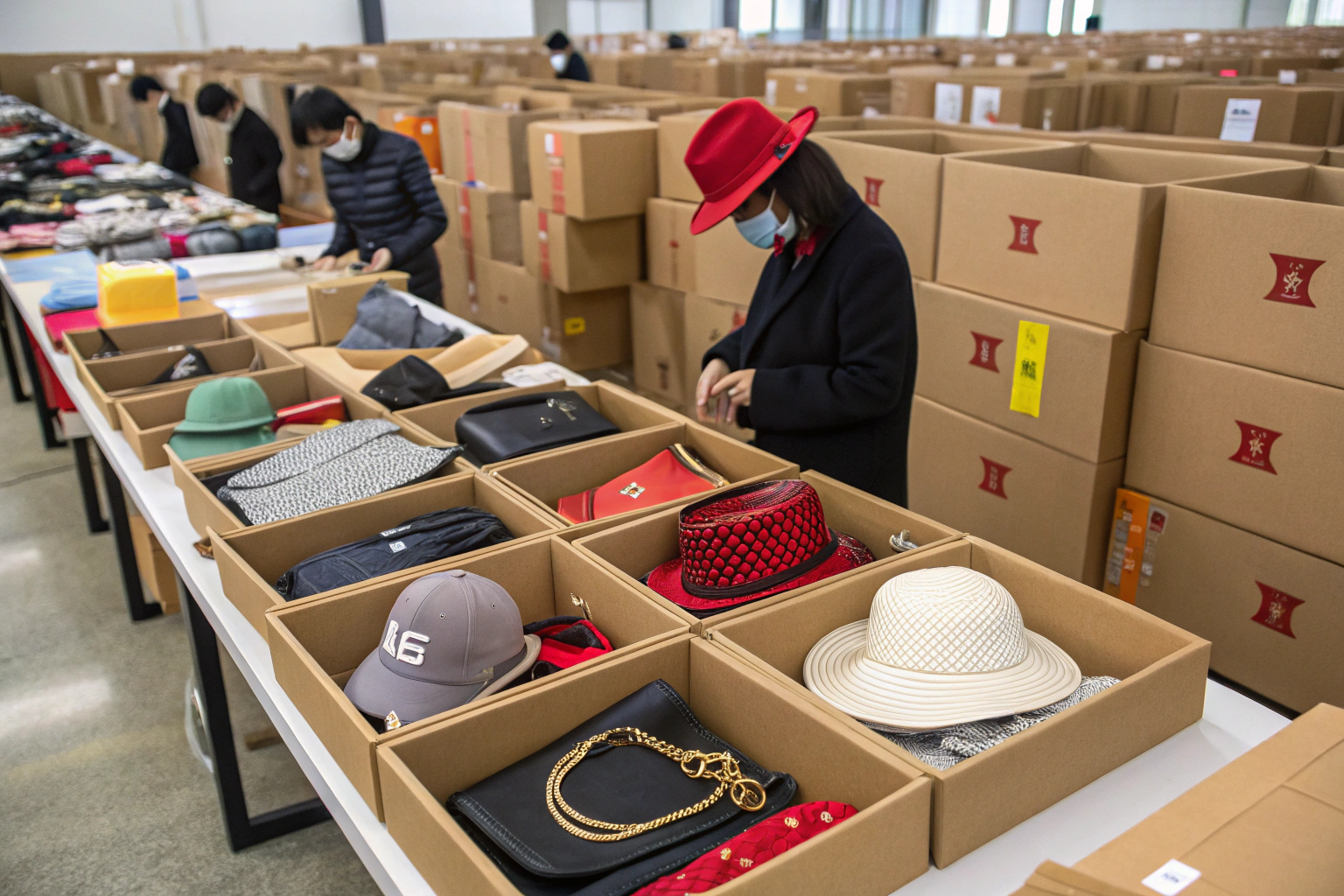
This is a conversation I have almost every week. A client, often a sharp brand owner like Ron from the US, will finalize a bulk order of beautiful hair clips or winter hats with me and then ask the big question: "Okay, this is great. Now, can you ship this entire order directly to Amazon’s FBA warehouses in the US, Germany, and Japan for me?" They’re excited about their product but daunted by the logistical maze of international shipping, customs, and Amazon’s strict requirements.
Shipping fashion accessories directly from a Chinese factory to Amazon FBA warehouses globally requires a meticulous, multi-step process that includes compliant product prep, Amazon-specific carton labeling, choosing the right shipping method (Incoterms), and preparing flawless customs documentation. Getting any single step wrong can lead to costly delays, Amazon penalties, or even the rejection of your entire shipment at the warehouse door. At my company, Shanghai Fumao Clothing, we’ve become experts in this process, acting as a full-service partner to ensure our clients’ products get from our factory floor to being "Prime-eligible" as smoothly as possible.
I completely understand the anxiety. You’ve invested in inventory, and the final hurdle of logistics feels complex and full of risks. You’re worried about your products getting lost, stuck in customs, or rejected by Amazon for a rule you didn’t even know existed. But here’s the good news: it’s a solvable problem. It’s a system. Let me walk you through the exact four-stage process we use to manage these shipments successfully, time and time again.
Amazon-Compliant Product & Carton Prep?
You think your products are ready to go because they look great. But Amazon doesn’t care how great they look; they care if they can be scanned and processed by their robotic systems. You’re at risk of having your entire shipment rejected because you used the wrong barcode or packed your boxes incorrectly. This is the first and most common failure point.
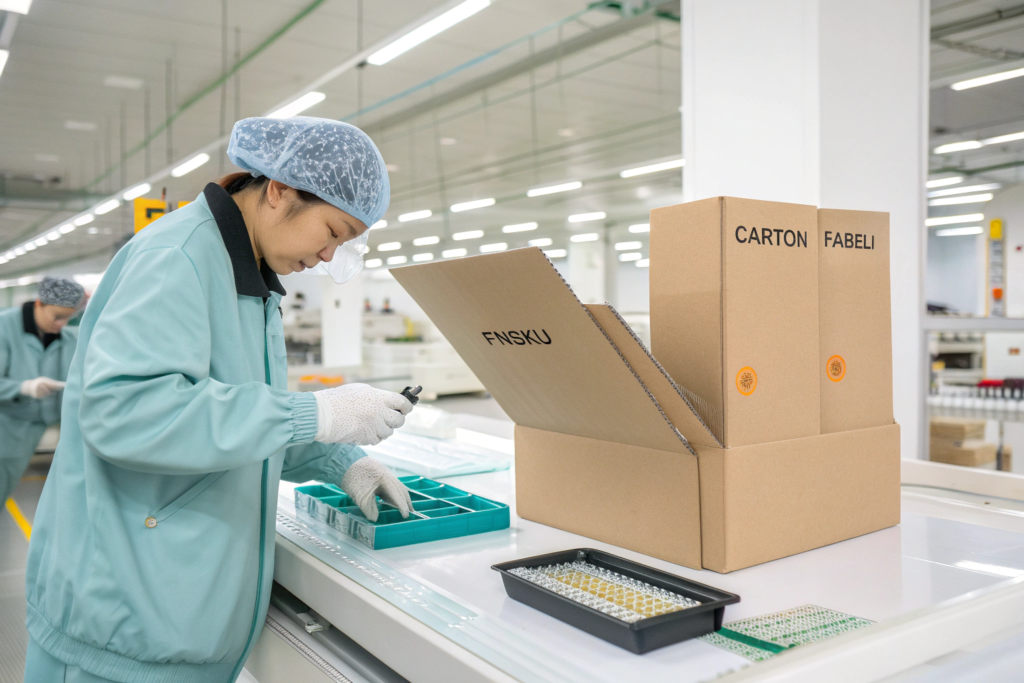
Before a single item leaves the factory, it must be prepped and packed exactly to Amazon’s specifications. This involves two non-negotiable elements: applying the correct FNSKU (Amazon’s unique product identifier) to each individual unit and labeling each master carton with the specific FBA Box Label generated from your Amazon Seller Central account.
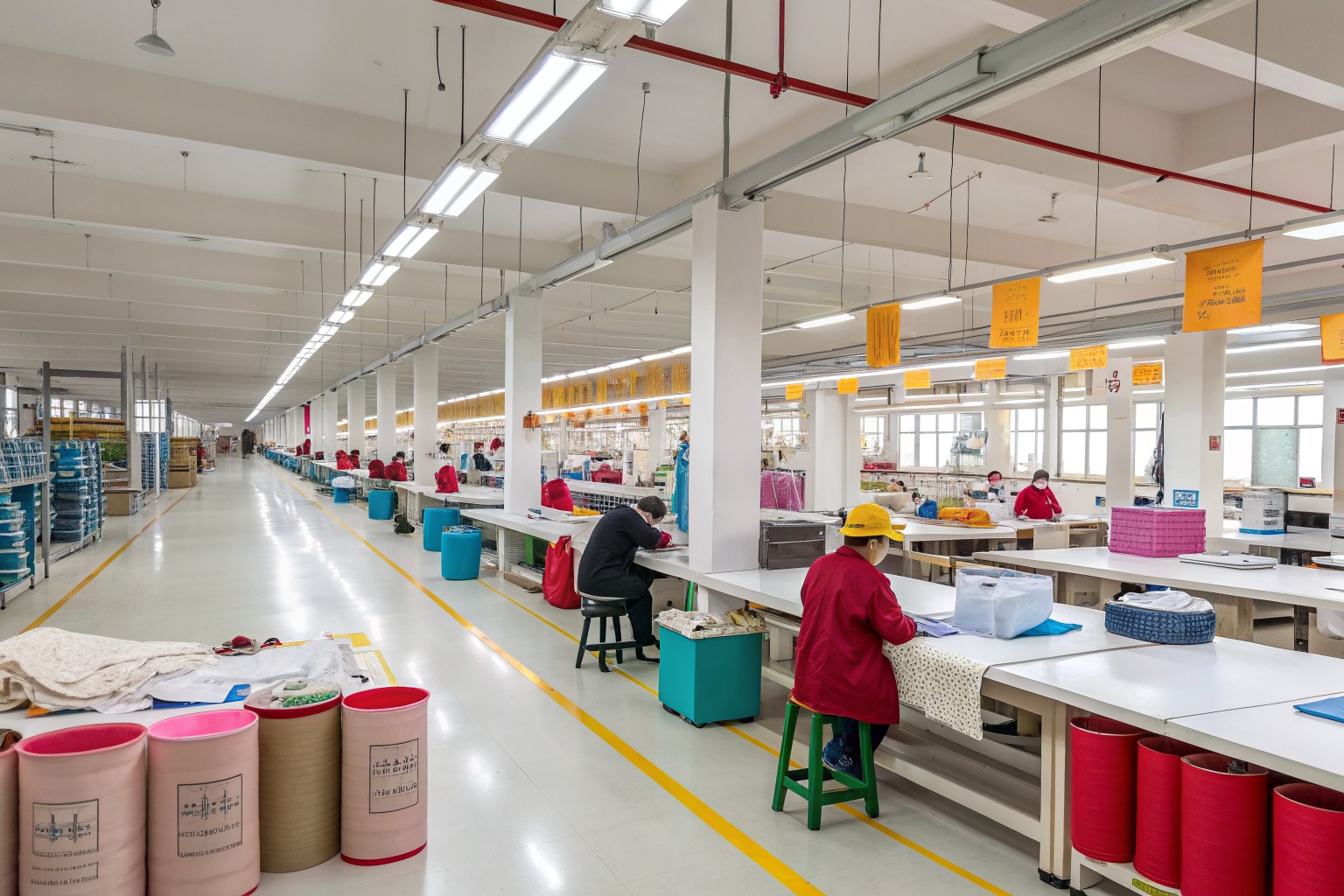
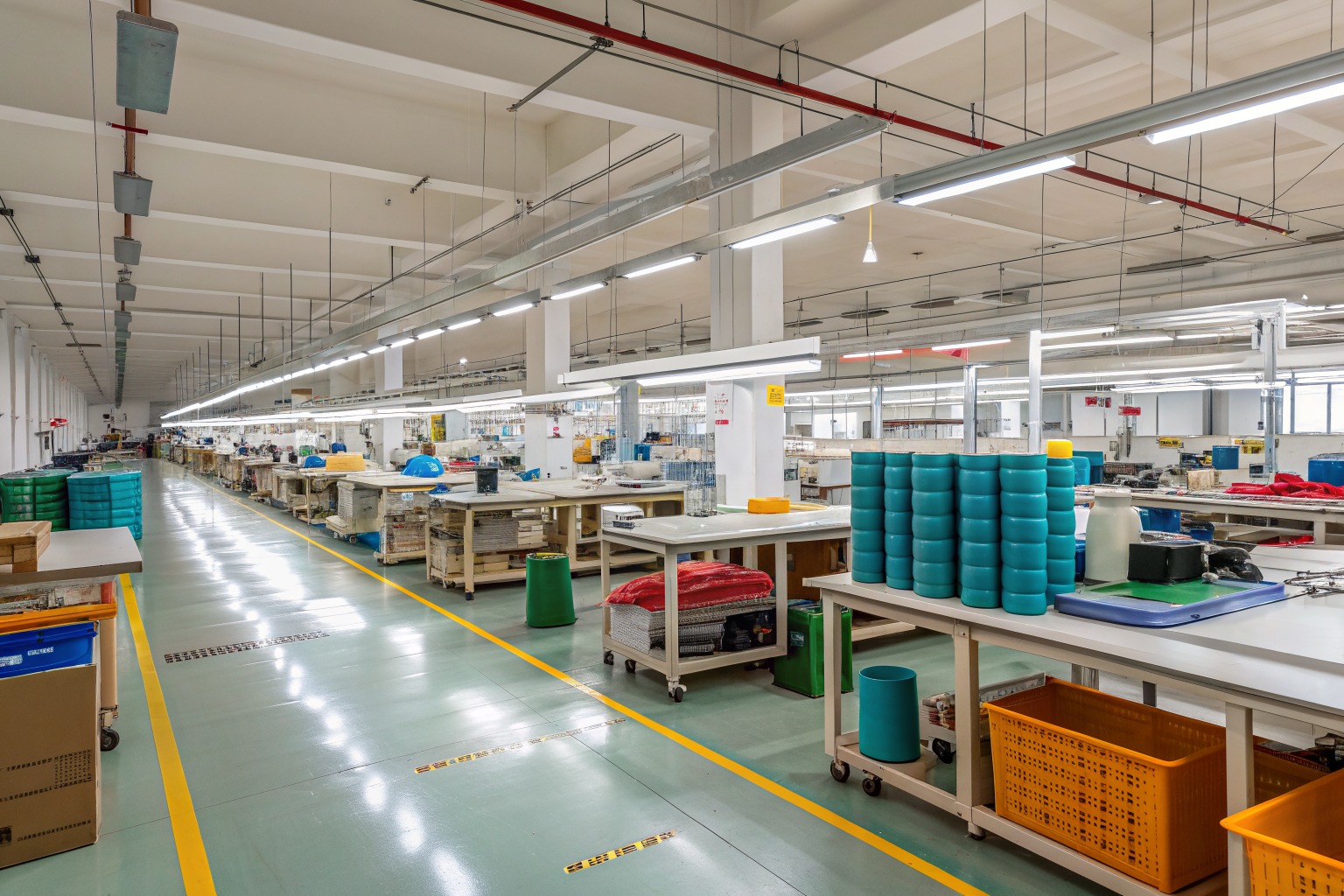
This stage is all about detail and precision. There is no room for error. At our factory, we have a dedicated FBA prep team. We don’t just slap on labels; we ensure they are scannable, placed correctly, and match the shipping plan perfectly. Getting this right is the foundation of a smooth FBA shipment. It’s even more critical than choosing your shipping method and freight forwarder, because if the prep is wrong, no shipping company can save you.
What is an FNSKU and why is it critical?
FNSKU stands for Fulfillment Network Stock Keeping Unit. It’s a unique barcode that Amazon generates for your specific product. When you create a product listing in your Seller Central account, you’ll be able to print these barcodes.
- Why it’s needed: It ties each physical unit to you, the seller. If you and another person are both selling an identical-looking hair tie, the FNSKU ensures that when a customer buys from you, they receive an item from your inventory.
- Our Process: You, the brand owner, must download the FNSKU labels (as a PDF) from your shipping plan and send them to us. We then print them on thermal labels and apply one to every single poly bag or product tag, often covering any existing UPC barcode to avoid confusion at the Amazon warehouse.
What are the rules for FBA Box Labels?
Once all the units are packed into master cartons, each carton needs its own unique FBA Box Label.
- How to get it: You generate these labels from the same shipping plan in Seller Central where you got the FNSKUs. You’ll need to provide us with the exact number of boxes, their dimensions, and their weight.
- Placement is Key: The label must be placed on the side of the box, away from any seam, and must be flat and scannable. We never put them on the top or bottom. If a box has two labels (one for FBA, one for the carrier), they must not be on the same face of the box. Following these rules, detailed in Amazon’s Seller Central help pages, is essential for the shipment to be received.
Choosing Your Shipping Method and Freight Forwarder?
Your boxes are labeled and ready. Now, how do you get them from a factory in Zhejiang, China, to a warehouse in Dallas, Texas? Do you choose air or sea? And who do you trust to handle the journey? Choosing the wrong shipping option can mean missing a key selling season, while choosing the wrong partner can mean your goods get stuck in customs for weeks.
You must choose a shipping method based on your timeline and budget (air vs. sea) and, most importantly, select an experienced freight forwarder who specializes in Amazon FBA shipments. You will typically ship under DDP (Delivered Duty Paid) Incoterms, where the forwarder handles everything from factory pickup to customs clearance and final delivery to the Amazon warehouse.
This is the most important partnership you will form in this process. A good freight forwarder is worth their weight in gold. While we at Shanghai Fumao Clothing can recommend reliable forwarders we’ve worked with, the shipping contract is ultimately between you and them. They are your agent, responsible for navigating the complexities of international logistics. This choice directly impacts the customs clearance process.

Air Freight vs. Sea Freight: Which to choose?
- Air Freight:
- Speed: Fast. Typically 7-15 days from our factory to the Amazon warehouse.
- Cost: Expensive. Priced by volumetric weight, making it costly for bulky but light items like hats.
- Best for: Small, high-value items, launching a new product quickly, or restocking during a peak season.
- Sea Freight:
- Speed: Slow. Typically 30-50 days, depending on the destination port and inland transit.
- Cost: Much cheaper. Ideal for heavy or bulky goods.
- Best for: Large, planned inventory replenishments where you have plenty of time.
Why is a DDP specialist forwarder so important?
DDP (Delivered Duty Paid) means the seller (in this case, your forwarder on your behalf) is responsible for all costs and tasks to get the goods to the destination. This includes Chinese export customs, international shipping, US/EU/etc. import customs, paying all duties and taxes, and the final delivery.
- Amazon is NOT the Importer: Amazon will refuse to act as the Importer of Record. A DDP forwarder takes on this legal responsibility.
- Expertise: FBA-specialist forwarders, like Flexport or many others found on platforms like Freightos, know Amazon’s specific delivery appointment systems and warehouse requirements. A general forwarder may not.
Navigating Customs Clearance?
Your shipment has crossed the ocean and arrived at the port of Los Angeles. But now it’s stuck. Customs has put a hold on it because the paperwork is wrong. The product description is vague, the value is questionable, or the country of origin is missing. Every day it sits in port, you’re losing money and sales.
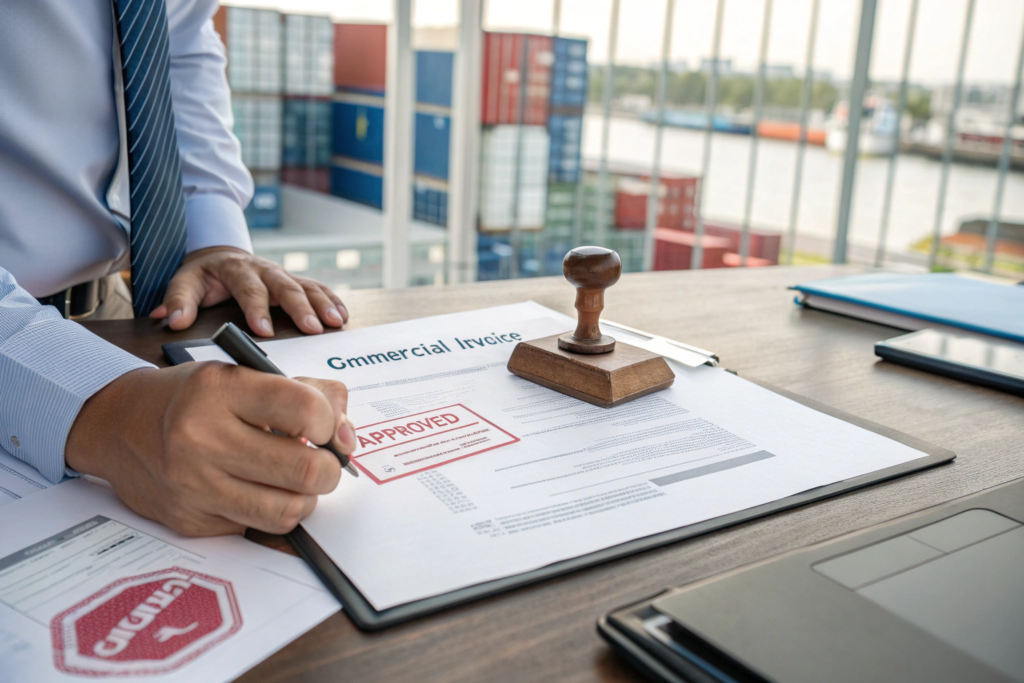
Successful customs clearance depends on providing your freight forwarder with a flawless set of documents, primarily the Commercial Invoice and the Packing List. These documents must be incredibly detailed and accurate, with a clear product description, the correct HS code, and a value that reflects the true transaction price. Any discrepancy can trigger a customs inspection and costly delays.
As the manufacturer, we provide the initial details for these documents, but you, the brand owner and importer, are ultimately responsible for their accuracy. We work closely with our clients and their forwarders to ensure every detail is correct before the ship even sails. This proactive approach is the secret to sailing through customs. The accuracy of these documents is the final piece of the puzzle before the final delivery to Amazon.
What are the key documents?
- Commercial Invoice: This is the most important document. It’s the bill for the goods from the seller (us) to the buyer (you). It must include: contact info for both parties, a detailed description of the goods (e.g., "100% polyester knitted beanies," not just "hats"), the quantity, the price per unit, the total value, and the HS code.
- Packing List: This document details the contents of each carton, including the number of units per carton, and the weight and dimensions of each carton. It must match the FBA Box Labels perfectly.
What is an HS Code and why does it matter?
The Harmonized System (HS) code is an internationally standardized number used to classify traded products. Customs officials use this code to determine the correct import duties and taxes.
- Example: A knitted beanie might have a different HS code than a woven baseball cap.
- Responsibility: We can suggest the correct HS code based on our experience, but it is your responsibility as the importer to verify it. You can use government resources like the US International Trade Commission’s HTS Search Tool to find the right code. Using the wrong code can lead to paying the wrong duty amount and significant penalties.
The Final Mile Delivery to Amazon?
Your goods have cleared customs! You’re almost there. But the final step—getting the goods from the port or the forwarder’s local warehouse to Amazon’s fulfillment center—has its own set of rules. You can’t just show up in a rental truck and drop off your boxes.
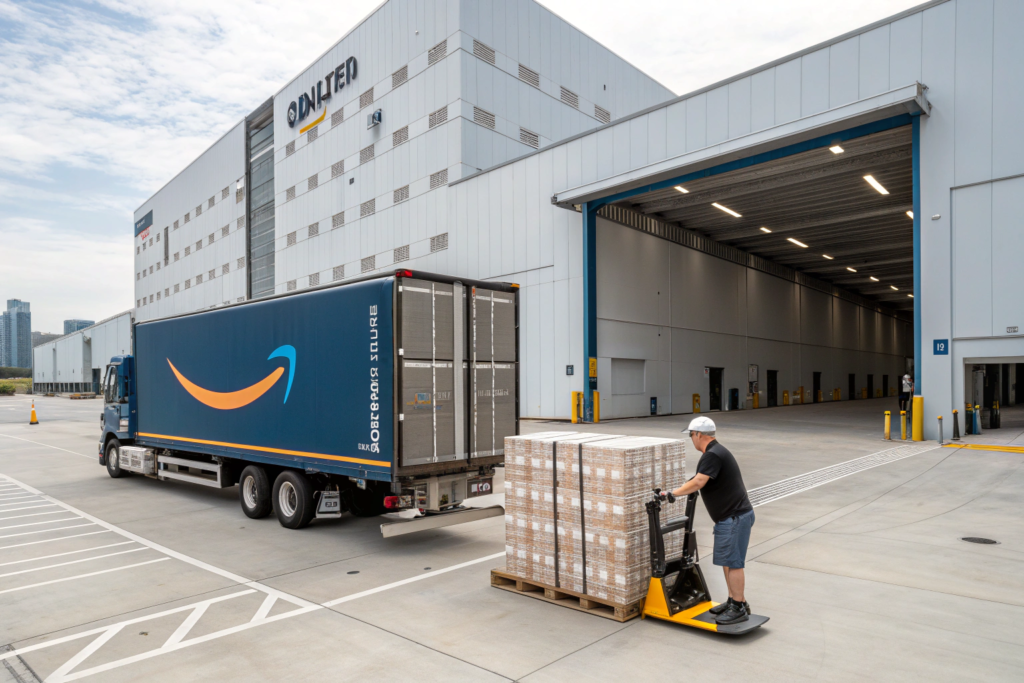
The "final mile" delivery must be handled by an Amazon-approved carrier and scheduled through Amazon’s Carrier Central portal. Your freight forwarder will manage this process, booking a specific delivery appointment and ensuring the driver follows Amazon’s strict check-in procedures.
This is where an FBA-specialist forwarder truly earns their fee. They have existing relationships with approved carriers and are experts at navigating Amazon’s scheduling system. An unapproved carrier will be turned away at the gate. This final, precise step is the culmination of all the careful product and carton prep you did at the very beginning.
What is Carrier Central?
Carrier Central is Amazon’s online portal for freight carriers to schedule delivery appointments at their fulfillment centers. It’s a rigid system designed to manage the thousands of deliveries they receive every day. Your forwarder will use the FBA Shipment ID from your shipping plan to book an appointment slot, which could be days or even weeks out, depending on how busy the warehouse is.
What happens at the delivery appointment?
The carrier arrives at the scheduled time. The driver checks in, and Amazon’s staff unloads the shipment. They will scan a few of the FBA Box Labels to confirm it’s the right shipment. Once unloaded, the status in your Seller Central account will change from "In Transit" to "Delivered." From there, it can take anywhere from a few days to a few weeks (during peak season) for the status to change to "Receiving" as they scan in your individual units. Once they are fully received, your products become available for sale.
Conclusion
Shipping your fashion accessories from our factory in China directly to Amazon’s global warehouses is a powerful strategy to streamline your supply chain and accelerate your speed to market. While it may seem complex, it’s a manageable process when broken down into four clear stages: meticulous product and carton prep, smart selection of a DDP freight forwarder, preparation of flawless customs documents, and a professionally managed final-mile delivery. By partnering with a manufacturer who understands this process and a freight forwarder who specializes in it, you can avoid the common pitfalls and get your products into the hands of customers worldwide.
My team and I are proud to be more than just a manufacturer; we are a logistical partner. We’ve successfully guided hundreds of clients through this exact process. If you’re looking for a partner who can not only produce high-quality fashion accessories but also help you navigate the journey to Amazon’s warehouses, then we are ready to help. Please contact our Business Director, Elaine, at her email: elaine@fumaoclothing.com. Let’s get your