You’re ready to import your new collection of fashion accessories. Your supplier is asking for the customs codes, or you’re preparing your import documentation. You’re looking at a long list of numbers and technical descriptions, and it’s overwhelming. You’re worried that if you choose the wrong code, your shipment could get stuck in customs for weeks, you could face unexpected fines, or you might end up paying a much higher duty rate than you budgeted for. This fear of making a costly mistake in a complex system is a major source of stress for any importer.
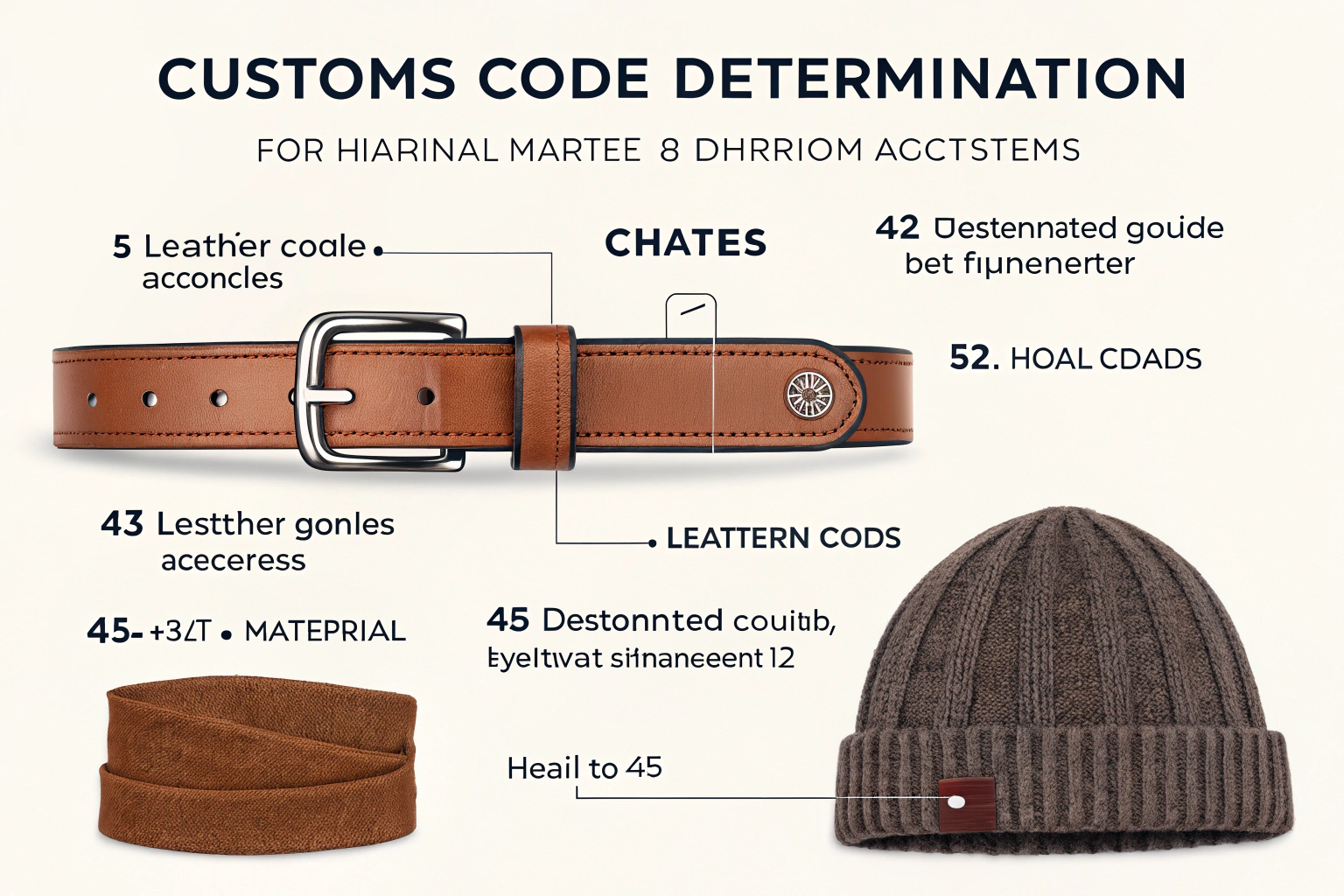
The customs code for a fashion accessory is determined by its primary material composition and its specific type, as defined by the Harmonized System (HS). For example, a leather belt falls under Chapter 42 (Leather Goods), while a wool knit hat falls under Chapter 65 (Headgear). Correctly identifying the material is the most critical step in finding the right code and ensuring a smooth import process.
Think of the HS Code as a universal language for international trade. It’s a standardized numerical method of classifying traded products used by customs authorities around the world. Getting it right is non-negotiable. At Shanghai Fumao Clothing, we work hand-in-hand with our clients and their customs brokers to ensure every product is classified with precision. Let’s demystify this system and look at the specific codes for your key products.
How Are Customs Codes Structured and Why Do They Matter?
You’re looking at codes that are 6, 8, or even 10 digits long, and you’re confused about what they all mean. You need a simple framework to understand the structure and the stakes involved.
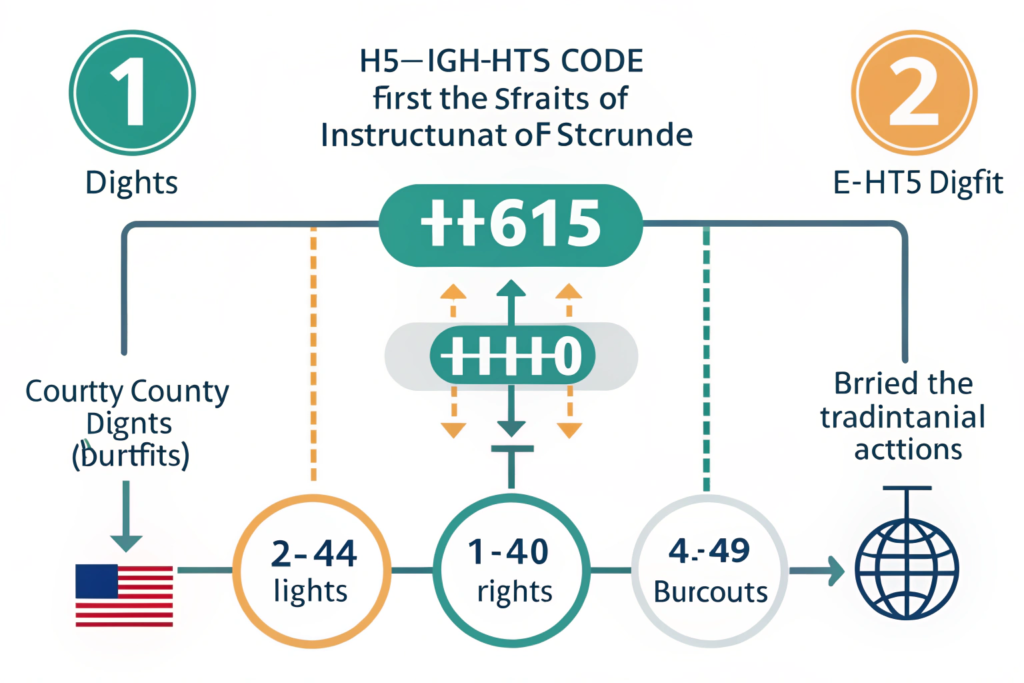
The Harmonized System (HS) is an international standard administered by the World Customs Organization (WCO). It’s a hierarchical structure organized into Chapters, Headings, and Subheadings.
- Chapter (First 2 digits): Broad category of goods (e.g., Chapter 65: Headgear).
- Heading (First 4 digits): More specific product group (e.g., 65.05: Knitted or crocheted hats).
- Subheading (First 6 digits): The universal standard recognized by over 200 countries.
Countries then add their own digits for more detail. For example, the United States uses the Harmonized Tariff Schedule (HTSUS), a 10-digit code. The first 6 digits are the international HS Code, and the last 4 are specific to the U.S. for duty rates and statistical purposes. The most important rule is that classification is based on the essential character of the item, which for accessories is usually the primary material.
Legally, the importer of record is ultimately responsible for the correct classification. Using the wrong code can lead to shipment delays, fines, increased scrutiny on future shipments, and incorrect duty payments. This is why it’s highly recommended to work with a licensed customs broker who is an expert in this field.
Where can I look up these codes?
The official Harmonized Tariff Schedule of the United States is published by the U.S. International Trade Commission (USITC). Their official website has a searchable database: HTS Search. This is the ultimate source of truth for U.S. importers. Other countries have similar government websites for their specific tariff schedules.
What if an item is made of multiple materials?
The classification is based on the "essential character" of the item. For a baseball cap with a cotton crown and a plastic adjuster strap, the essential character is derived from the cotton crown, which makes up the vast majority of the hat. The classification would be based on the cotton fabric.
What Are the HS Codes for Headwear (Hats, Caps, & Beanies)?
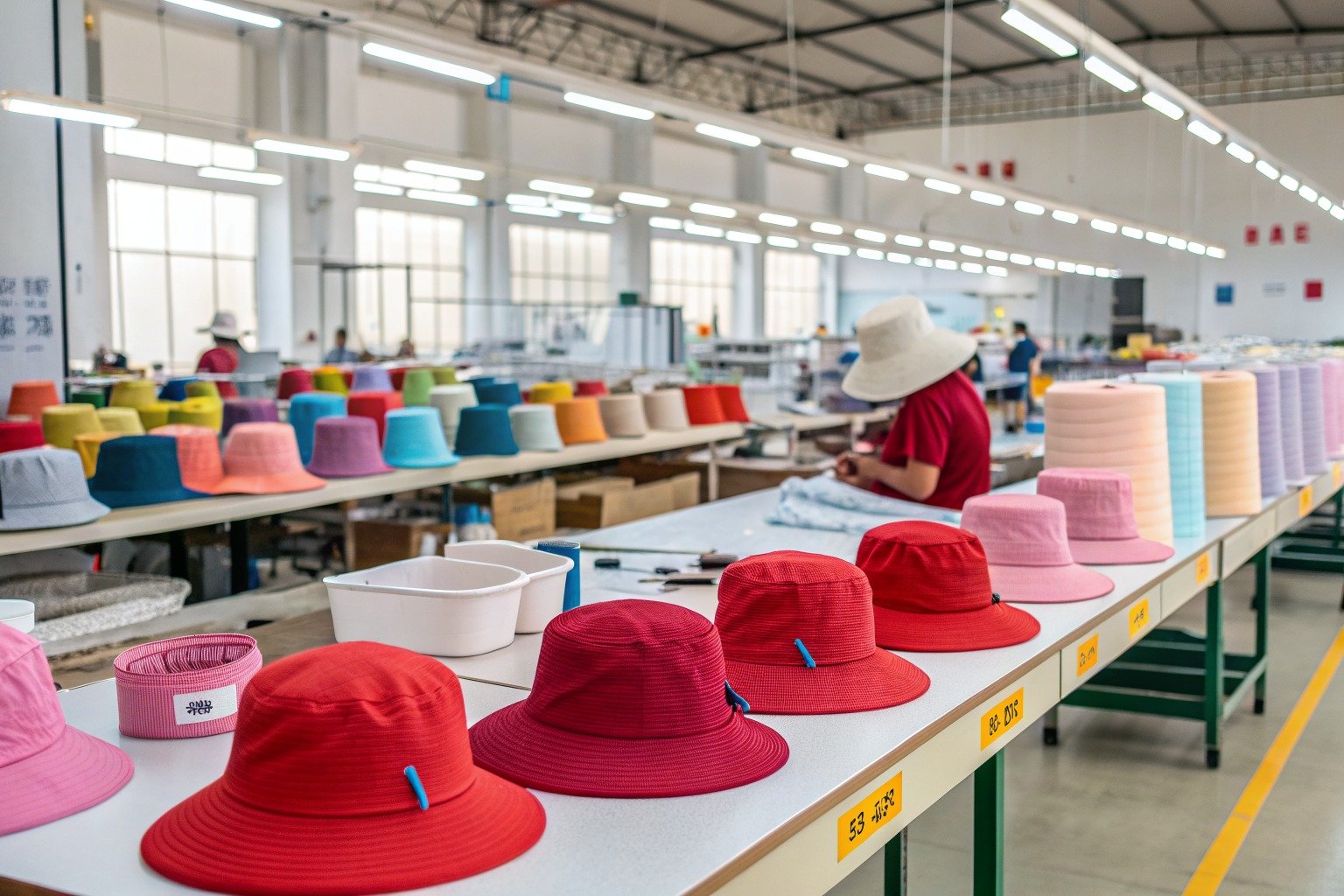
Hats are a great example of how classification works. All headwear falls under Chapter 65, but the specific heading depends entirely on the material and construction.
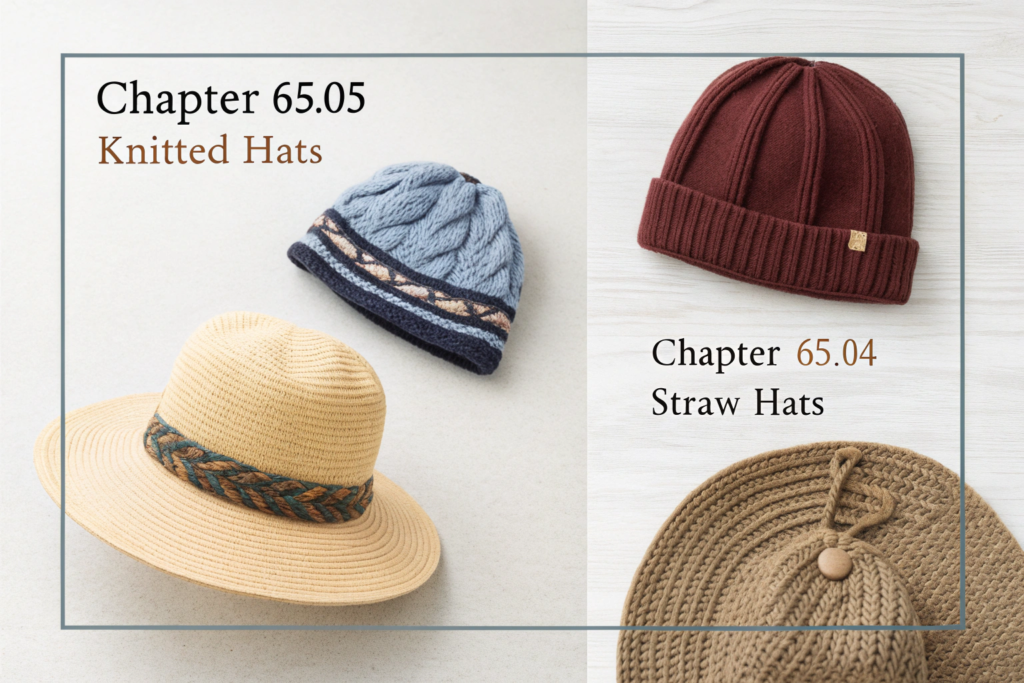
- Knit Hats (Beanies): These fall under HS Heading 65.05, which covers "Hats and other headgear, knitted or crocheted…".
- Example (HTSUS): 6505.00.60 for knitted hats of man-made fibers (like acrylic).
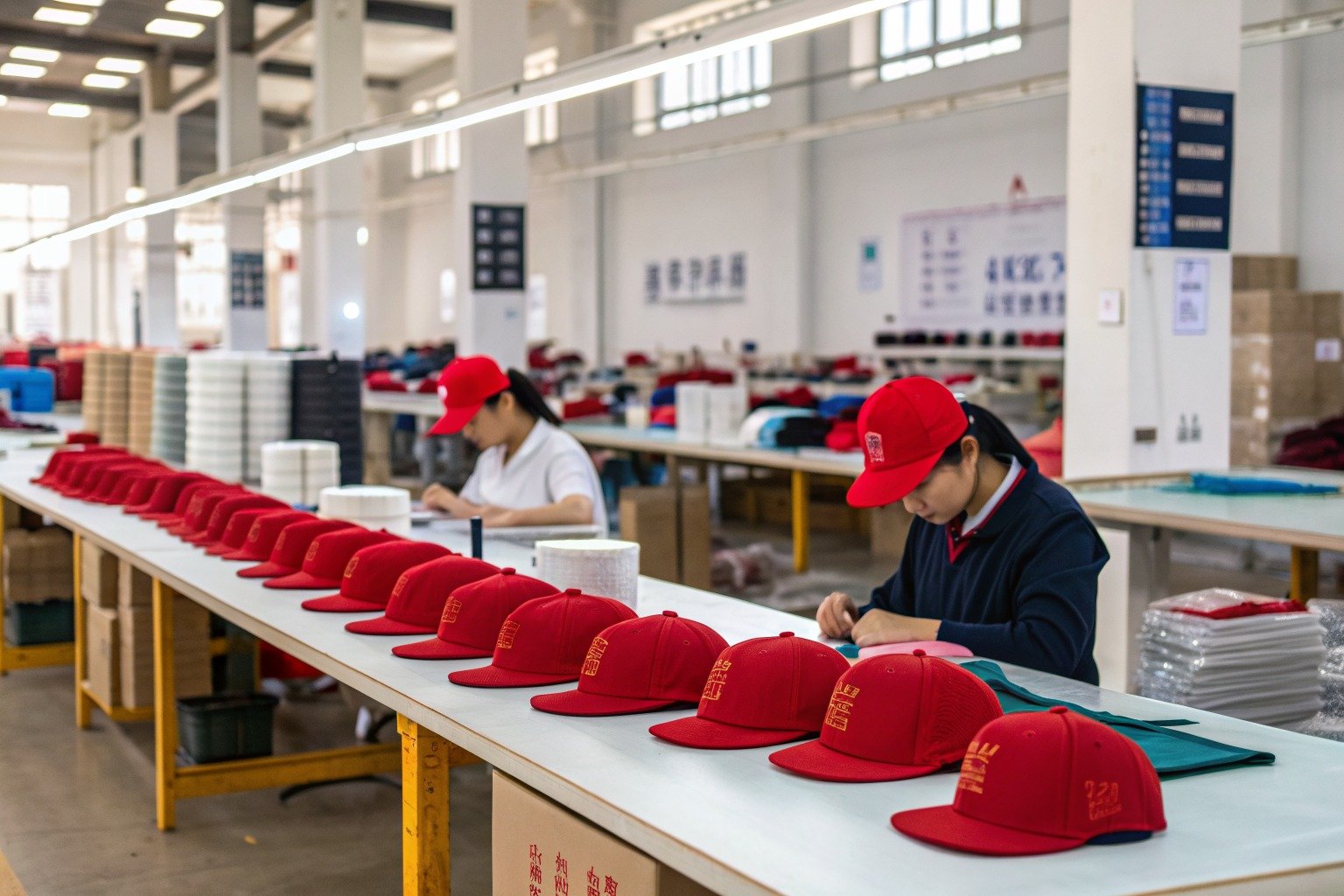
- Fabric Hats (Baseball Caps, Bucket Hats): If the hat is made from woven fabric (like a cotton baseball cap), it also falls under HS Heading 65.05.
- Example (HTSUS): 6505.00.20 for headgear of cotton.
- Straw Hats: Hats made by plaiting or assembling strips of any material (like straw, paper yarn, or raffia) fall under HS Heading 65.04.
- Example (HTSUS): 6504.00.90 for hats made from plaited vegetable fibers (other than straw or bamboo).
As you can see, even within the same product category (hats), the material (knitted acrylic vs. woven cotton vs. plaited straw) sends the product to a completely different classification. This is why accurate product specifications are non-negotiable.
What about hair accessories like headbands and hair clips?
This is a tricky category. A simple textile headband would likely fall under 61.17 (if knitted) or 62.17 (if woven). However, a plastic hair clip with a small metal spring falls under Chapter 39 (Plastics), specifically 3926.90 as "Other articles of plastics." The dominant material rules the classification.
How do I handle umbrellas and bags?
- Umbrellas: These have their own dedicated heading. They fall under Chapter 66, Heading 66.01.
- Bags: This is a very complex area. Handbags and similar items are generally in Chapter 42.
- 4202.21 for handbags with an outer surface of leather.
- 4202.22 for handbags with an outer surface of plastic sheeting or textile materials.
What Are the HS Codes for Neckwear and Handwear (Scarves & Gloves)?
This category is a bit more complex because the codes are split across several different chapters, again, based entirely on material and construction (knitted vs. woven).
- Scarves and Shawls: The classification depends on whether the fabric is knitted or woven.
- Knitted/Crocheted (e.g., a knit winter scarf): These fall under Chapter 61. The specific heading is 61.17.
- Example (HTSUS): 6117.10.20 for scarves of man-made fibers (like acrylic or polyester).
- Woven (e.g., a silk or polyester satin scarf): These fall under Chapter 62. The specific heading is 62.14.
- Example (HTSUS): 6214.30.00 for scarves of synthetic fibers (polyester).
- Example (HTSUS): 6214.10.10 for scarves of silk.
- Knitted/Crocheted (e.g., a knit winter scarf): These fall under Chapter 61. The specific heading is 61.17.
- Gloves: The classification for gloves is also split by material.
- Knitted/Crocheted Gloves: These fall under Chapter 61, Heading 61.16.
- Leather Gloves: These are not considered textiles and fall under Chapter 42 (Articles of leather), Heading 42.03.
- Plastic/Rubber Gloves: These fall under Chapter 39 (Plastics) or Chapter 40 (Rubber).
This is a perfect illustration of why you can’t just have a single code for "scarves." A woven polyester scarf and a knitted acrylic scarf, while serving the same function, exist in completely different customs chapters.

How do I find the duty rates?
The duty rate for each specific HTSUS code is listed directly in the Harmonized Tariff Schedule. The rate can vary based on the Country of Origin due to various international trade agreements. For products from China, you would look at the "Column 1, General" rate and also consider any additional tariffs (like Section 301 tariffs) that may apply.
What does "made up" mean in customs terms?
"Made up" is a customs term that generally means the product has been manufactured beyond the simple fabric stage. For example, a piece of fabric cut into a rectangular shape and hemmed to be a scarf is considered a "made up" accessory.
What Are the HS Codes for Belts and Other Accessories?
Belts and other miscellaneous accessories are also classified based on their primary material, often falling into either the leather or textile chapters.
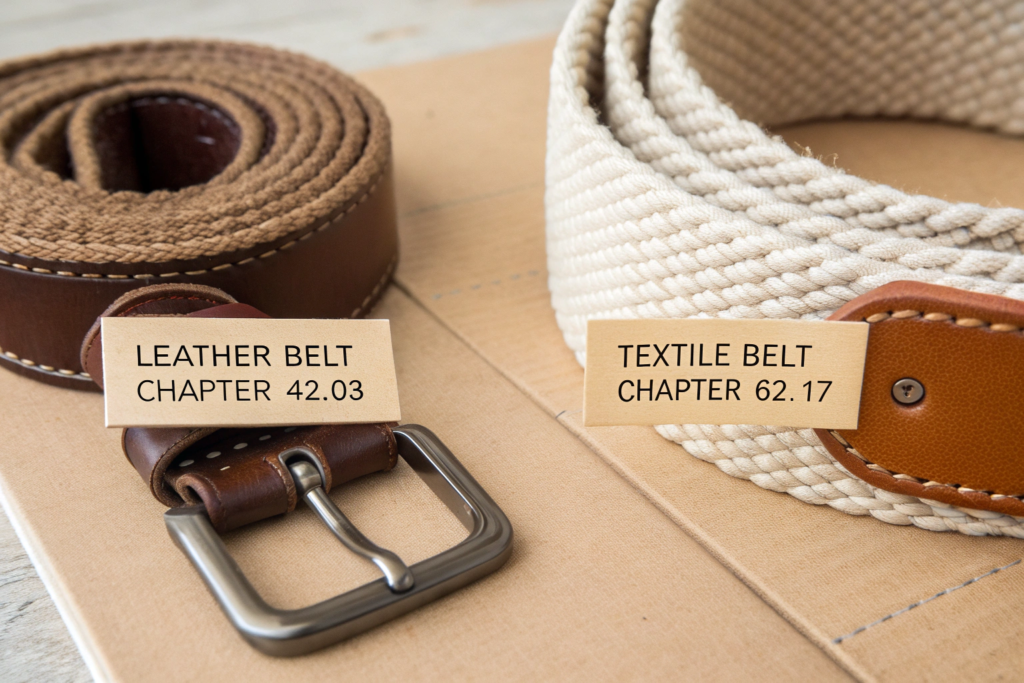
- Leather Belts: Belts where the essential character is derived from leather or composition leather fall under Chapter 42. The heading is 42.03, which covers "Articles of apparel and clothing accessories, of leather or of composition leather."
- Example (HTSUS): 4203.30.00 covers "Belts and bandoliers."
- Textile Belts: Belts made primarily of woven or knitted fabric (like a canvas web belt) fall under the textile chapters.
- If woven, they fall under Chapter 62, Heading 62.17 ("Other made up clothing accessories").
- If knitted, they fall under Chapter 61, Heading 61.17.
- Plastic Belts: A belt made entirely of plastic would fall under Chapter 39 (Plastics).
The belt buckle is generally considered an accessory to the belt strap. Unless the buckle is exceptionally valuable (e.g., made of solid silver) and imparts the essential character, the classification is determined by the strap material.
What about a reversible leather belt?
A reversible leather belt is still fundamentally a leather belt. It would be classified under Chapter 42.03 just like a single-sided leather belt. The reversible feature is a product characteristic but does not change its essential material nature for customs purposes.
What about items like cups?
Your product list also includes cups. These are classified far away from textiles and leather goods.
- Plastic Cups: These fall under Chapter 39 (Plastics), likely 3924.10.
- Ceramic Cups: These fall under Chapter 69 (Ceramic Products), likely 6912.00.
- Metal Cups (e.g., stainless steel): These fall under Chapter 73 (Articles of Iron or Steel), likely 7323.93.
Conclusion
Navigating the world of customs codes can seem daunting, but it’s a manageable and essential part of the import/export business. The golden rule is to always start with the primary material of your accessory. By correctly identifying the material, you can narrow down the HS Chapter and then drill down to the specific Heading and Subheading. While online tools and supplier suggestions are helpful, the ultimate responsibility is yours. For this reason, I strongly recommend that any serious importer establish a relationship with a licensed customs broker. They are your professional guide and your best defense against costly errors.
At Shanghai Fumao Clothing, we understand that our job doesn’t end when the goods leave the factory floor. We provide our partners with all the necessary documentation, including detailed product specifications and our recommended HS codes, to facilitate a smooth and predictable customs process.
If you have more questions about the logistics of importing fashion accessories or want to partner with a manufacturer who understands the entire process from design to delivery, please feel free to reach out to our Business Director, Elaine, at her email: elaine@fumaoclothing.com.