You’re planning your winter collection, and the knit hat is a cornerstone. But you’re facing a fundamental material choice: wool or acrylic? You hear that wool is premium, but acrylic is popular and affordable. You’re worried about making the wrong call. Will customers reject wool because it’s "itchy" or expensive? Will they perceive acrylic as "cheap" and low-quality? This decision impacts your cost, your brand perception, and your customer’s comfort, making it a critical choice to get right.
The choice between wool and acrylic for knit hats depends entirely on your target customer and price point. Choose wool for a premium, performance-oriented customer who values natural fibers, breathability, and warmth even when damp. Choose acrylic for a budget-conscious, fashion-focused customer who prioritizes vibrant colors, hypoallergenic properties, and easy care.
As someone who has manufactured millions of knit hats at Shanghai Fumao Clothing, I can tell you there is no single "best" material. They are two different tools for two different jobs. The most successful brands don’t just pick one; they understand the unique benefits of each and align their choice with their brand’s promise. It’s a strategic decision, not just a material one. Let’s break down the pros and cons of each so you can choose with confidence.
What Are the Inherent Qualities of Wool?
You know wool has a reputation for being a superior natural fiber. But what does that actually mean for a knit hat? You’re concerned about the common complaints—that it’s itchy, difficult to wash, and expensive. You’re afraid that if you invest in wool, you’ll be stuck with a product that customers admire but hesitate to buy.
The key is to understand that wool is a high-performance natural fiber. Its benefits are rooted in its complex structure. Wool fibers are naturally crimped, which creates tiny air pockets that trap body heat, providing exceptional warmth. It’s also incredibly breathable and can absorb up to 30% of its weight in moisture (like sweat) without feeling wet, pulling it away from your skin to keep you comfortable. This makes it the undisputed champion for outdoor enthusiasts and anyone who prioritizes functional warmth.
When we work with brands that target an outdoor or premium market, we always guide them toward wool or wool blends. We explain that the higher cost is justified by tangible performance benefits that you can market directly to the customer. The story of wool is one of natural, breathable, and sustainable warmth. It’s a story that resonates deeply with a certain type of consumer. And the "itch" factor? That’s a problem that modern wool processing has largely solved, a crucial point when considering the different types of wool.

What are the main pros and cons of wool?
| Pros of Wool | Cons of Wool |
|---|---|
| Superior Warmth: Excellent insulation due to natural crimp. | Higher Cost: Raw material is significantly more expensive. |
| Breathable: Allows moisture vapor to escape, preventing clamminess. | Care & Maintenance: Often requires hand-washing or special care. |
| Moisture-Wicking: Absorbs moisture without feeling wet. | Potential for Itchiness: Lower-grade wool fibers can be itchy. |
| Odor-Resistant: Naturally antimicrobial. | Can Be Slower to Dry: Holds more water than synthetics. |
| Eco-Friendly: A natural, renewable, and biodegradable fiber. | Allergies: Some people have a sensitivity to lanolin in wool. |
What about the "itch factor" and different types of wool?
The "itchiness" of wool is determined by the diameter of its fibers, measured in microns. Coarse, lower-grade wools have thick fibers that don’t bend easily and can poke at the skin, causing irritation. However, high-quality wools like Merino wool have incredibly fine fibers that are much softer and more flexible, making them virtually itch-free. Merino wool is the gold standard for next-to-skin products like base layers and, of course, knit hats. When you’re sourcing wool hats, specifying "Merino wool" is how you overcome the itch objection. You can learn more about wool grades from resources like the International Wool Textile Organisation (IWTO).
What Are the Strengths of Acrylic?
You see acrylic hats everywhere. They’re affordable, they come in every color imaginable, and they’re a staple of fast-fashion brands. But you carry a lingering suspicion that acrylic is just "cheap plastic." You’re worried that by choosing acrylic, you’ll be signaling to your customers that your brand is low-quality, potentially damaging your reputation.
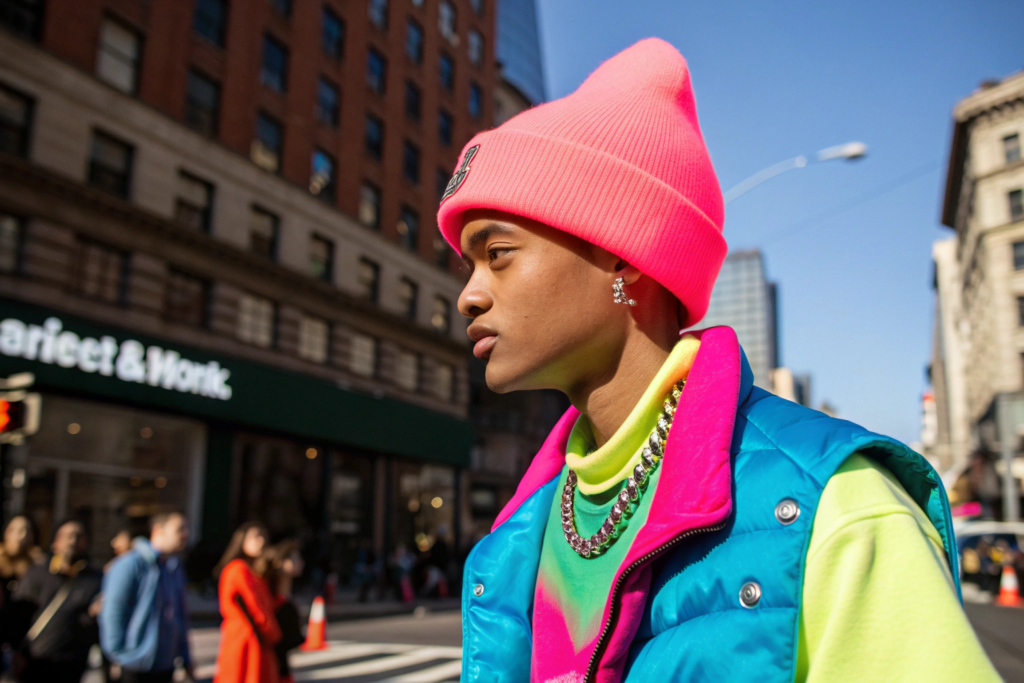
You need to reframe your thinking: acrylic’s strength lies in its versatility and accessibility. As a synthetic fiber, it can be engineered to be incredibly soft, lightweight, and easy to care for. Its single greatest advantage is its ability to take and hold dye. Acrylic can be produced in exceptionally bright, vibrant, and neon colors that are difficult to achieve with natural fibers. It’s also hypoallergenic, making it a safe choice for customers with wool sensitivities or for children’s products.
At our factory, AceAccessory, we produce huge volumes of acrylic hats for a wide range of clients, from major department stores to trendy online boutiques. They choose acrylic because it allows them to offer a wide variety of colors and styles at an attractive, accessible price point. It’s the perfect fiber for trend-driven items where a customer might want to buy multiple colors. The story of acrylic is one of vibrant, easy-care, and affordable fashion. It’s a different promise than wool, but it’s a very powerful one. Understanding this helps you decide which fiber is right for your brand.
What are the main pros and cons of acrylic?
| Pros of Acrylic | Cons of Acrylic |
|---|---|
| Lower Cost: Very affordable raw material. | Less Breathable: Can lead to sweating and a "clammy" feeling. |
| Vibrant Colors: Excellent dye uptake for bright, lasting color. | Not as Warm When Wet: Loses most of its insulating properties. |
| Easy Care: Machine washable and durable. | Environmental Concerns: A synthetic, plastic-based fiber. |
| Hypoallergenic: A great alternative for those with wool allergies. | Can "Pill" Over Time: Tends to form small balls of fiber on the surface. |
| Soft & Lightweight: Can be engineered to have a very soft hand-feel. | Static Prone: Can build up static electricity in dry conditions. |
Is all acrylic the same?
No. Just like with wool, there are different grades of acrylic. Lower-grade acrylic can feel plasticky and coarse. However, modern, high-quality acrylics can be incredibly soft and are often engineered to mimic the feel of natural fibers. Terms like "soft-spun acrylic" or "cashmere-like acrylic" indicate a higher-grade, softer product. When sourcing, always ask for a sample to feel the "hand" of the material yourself. You can find more on the science of synthetic fibers at educational resources like the American Chemical Society.
Which Fiber is Right for My Brand?
You’ve weighed the pros and cons. Now comes the final decision. You’re standing at a crossroads, and you’re still not sure which path to take. You’re worried that if you choose wool, you’ll alienate your price-sensitive customers, and if you choose acrylic, you’ll disappoint your quality-focused ones.
The answer isn’t in the fiber; it’s in your customer. You must ask yourself: Who am I selling to, and what do they value most?
- If your brand is built on performance, heritage, sustainability, and natural quality, and your customer is willing to pay a premium for those attributes, wool is your answer.
- If your brand is built on fashion, trends, vibrant color, and accessibility, and your customer prioritizes style and value, acrylic is your answer.
Many of the most successful brands we work with don’t choose one or the other. They use both, but for different product lines. They might have a core collection of classic, high-quality Merino wool beanies and a separate, seasonal collection of trendy acrylic hats in bold fashion colors. This allows them to capture both markets. Another popular option is a wool/acrylic blend, which can offer a "best of both worlds" compromise: the softness and affordability of acrylic with some of the warmth and natural feel of wool.

How do I market wool vs. acrylic?
Your marketing story should lean into the fiber’s strengths.
- For Wool: Use words like "Natural Warmth," "Breathable Comfort," "Sustainably Sourced," "Premium Merino." Your imagery should be natural, perhaps outdoorsy or cozy and luxurious.
- For Acrylic: Use words like "Vibrant Color," "Easy-Care," "Hypoallergenic," "Soft Touch," "On-Trend Style." Your imagery should be bright, fun, and fashion-forward, perhaps in an urban or social setting.
What about blends?
Blends are an excellent strategic choice. A 50/50 wool/acrylic blend is a very common and effective combination. The wool provides warmth and a natural feel, while the acrylic adds softness, durability, and lowers the overall cost. Blends can be a great way to offer a higher perceived value than 100% acrylic without the full cost of 100% wool. When talking to your manufacturer, ask about their most popular blend ratios.
Conclusion
The choice between wool and acrylic is not a question of which is "better" in a vacuum, but which is "right" for your brand and your customer. Wool is the high-performance, natural choice for a premium, quality-focused market. Acrylic is the versatile, vibrant, and affordable choice for a fashion-driven, value-conscious market. By clearly identifying your target customer and what they value, you can select the perfect material with confidence, craft a compelling marketing story around its strengths, and build a knit hat collection that truly resonates.
At Shanghai Fumao Clothing, we have deep expertise in working with both natural and synthetic fibers. We can help you navigate the nuances of material selection, from sourcing high-quality Merino wool to developing custom colors in soft-spun acrylic. Our goal is to be your partner in making the strategic decisions that will lead to a successful and profitable collection.
If you’re ready to start developing your next knit hat program, I invite you to reach out to our Business Director, Elaine, at her email: elaine@fumaoclothing.com. Let’s choose the perfect fiber for your brand together.