For global buyers looking to source hair hoops and hair accessories from China, finding suppliers with strong design capabilities—not just manufacturing—is key to creating unique, competitive products. While China is the world’s manufacturing hub, navigating the landscape to find a partner that can actively contribute to product development requires a strategic approach.
The most effective strategy involves a targeted search on specialized B2B platforms, focusing on specific manufacturing clusters, and thoroughly evaluating potential suppliers based on clear criteria for design. For hair accessories, primary clusters include Zhejiang (Yiwu), Guangdong (Guangzhou), and Henan (Xuchang). Each region has its specialties, from mass-market everyday items to high-end hair pieces and wigs. Your search must be tailored to the type of "hair hoop" product you envision and the level of design partnership you require.
This guide provides a structured method to identify, assess, and connect with Chinese suppliers who offer strong OEM (Original Equipment Manufacturing) and ODM (Original Design Manufacturing) services.
Which Online B2B Platforms Are Best for Finding Creative Suppliers?
Your search should start on major B2B platforms that allow you to filter for suppliers with specific capabilities like "OEM/ODM," "design services," or "customization." These platforms host thousands of verified factory profiles where you can directly assess their offerings and portfolios.
The most prominent platforms are Alibaba.com, 1688.com (Alibaba’s domestic Chinese platform), and Made-in-China.com. Global Sources and industry-specific portals like ExportHub are also valuable. On ExportHub, for instance, you can find manufacturers like Yiwu Hera Import & Export Co., Ltd., which lists products including "Hair Accessory" and "Headband" and has an export history to Western countries. Always use specific search terms: combine "hair hoop" with keywords like "ODM factory," "design service," "custom design," "innovative hair accessory," and "new product development."
How to Effectively Filter and Screen Supplier Listings Online?
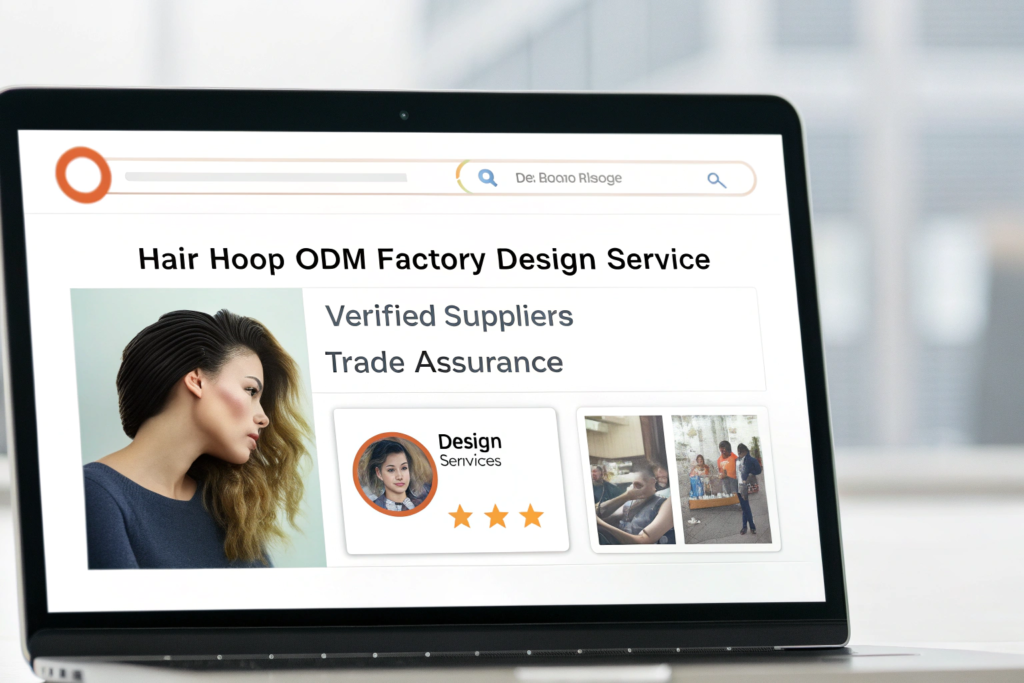
Beyond basic searches, use platform filters to narrow down to suppliers that fit your business model. Look for the "Verified Supplier" or "Gold Supplier" badges, which indicate a higher level of vetting by the platform. Crucially, check if they list "OEM/ODM" as a service. Review their product galleries carefully; a supplier with a wide variety of styles, colors, and materials often has stronger in-house design and development capabilities than one with only a few basic products. Finally, prioritize suppliers who showcase an "R&D Team" or "Design Department" in their company introduction.
What Are the Critical Steps for Initial Contact and Inquiry?
When you reach out, your inquiry should go beyond asking for a price list. Be specific and professional to attract serious suppliers. Start by introducing your company and target market. Then, clearly state your needs: for example, "We are looking for an ODM partner to develop a new line of padded fabric hair hoops for the European market. We have mood boards and can you provide design sketches based on our concepts?" Ask direct questions like, "Can you share case studies of previous ODM projects for hair accessories?" and "What is your process for sample development, and are there design fees?" This approach helps you quickly gauge their design process and willingness to collaborate.
What Are the Key Manufacturing Hubs for Hair Accessories in China?
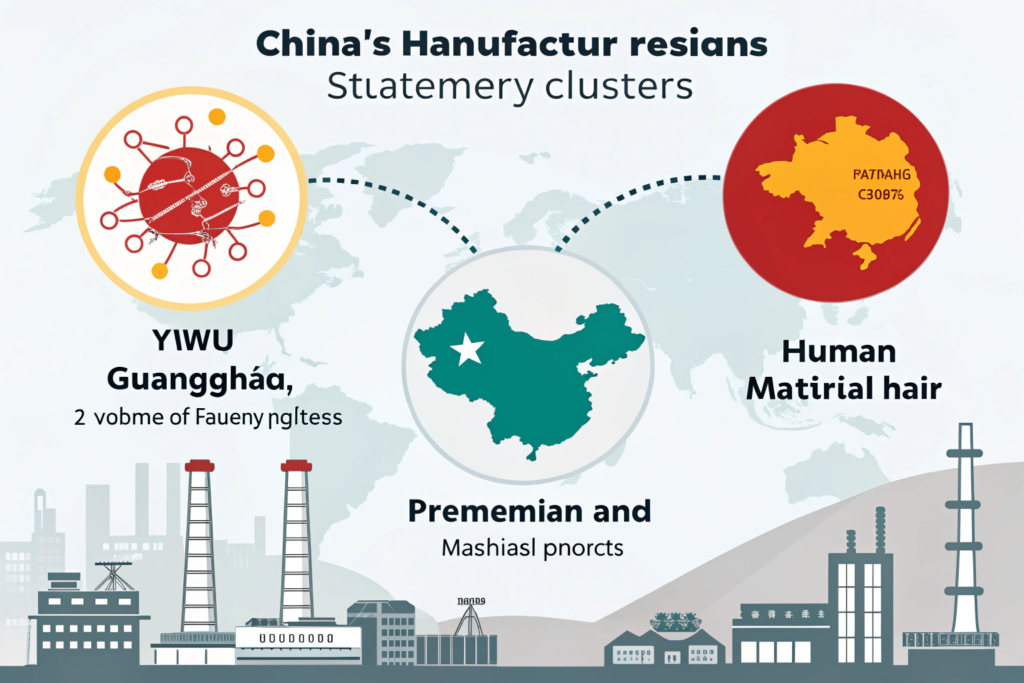
China’s manufacturing is organized into powerful industrial clusters. Knowing which regions specialize in your product type dramatically increases your sourcing efficiency and your chances of finding suppliers with deep expertise. For hair accessories, three primary clusters stand out: Yiwu for volume and variety, Guangzhou for fashion and synthetic materials, and the Henan region for premium human hair products.
Your choice of region will depend heavily on your product focus. A brand focusing on trendy, affordable, everyday hair hoops made from metal, plastic, or fabric should prioritize Yiwu, Zhejiang. This city is the world’s largest wholesale market for small commodities and hosts countless accessory factories. Yiwu is home to many specialized manufacturers, such as Yiwu Qianliu Accessories Co., Ltd., which focuses on producing and customizing various hair bands and knitted headbands. For more fashion-forward, detailed designs or items involving fabrics and embellishments, Guangzhou, Guangdong offers a vast supply chain integrated with the broader garment and fashion industry.
Why is Yiwu the Global Center for General Hair Accessories?
Yiwu’s strength lies in its unparalleled ecosystem. The Yiwu International Trade City is a massive physical marketplace where you can see thousands of hair accessory suppliers in person. The city’s factories are masters of efficient, large-scale production and rapid iteration on popular designs. Suppliers here are typically very responsive to providing customization (like logo printing or color changes) based on existing models. For developing entirely new product concepts, you need to seek out factories within Yiwu that explicitly market ODM and have a visible design team.
When Should You Consider Suppliers in Henan or Guangzhou?
If your product involves high-quality human hair or premium synthetic fibers for more upscale hair hoops or accessory-integrated pieces, the Henan province (specifically Xuchang and Zhengzhou) is known as the "hair capital of the world." Suppliers here, like Xuchang Kaduo Yi Industrial Co., Ltd., specialize in the research, production, and export of various hair products and have extensive experience with international markets. Their design expertise often focuses on hair texture, color blending, and construction techniques rather than external hardware design. Conversely, Guangzhou suppliers excel in combining accessories with fabrics, ribbons, and complex decorative elements, often serving fast-fashion brands.
How to Evaluate a Supplier’s True Design Capability?
Finding a supplier that lists "ODM" is common; verifying their actual design strength is the critical next step. You must look beyond marketing claims to assess their tangible output, processes, and team. A robust evaluation protects you from partnering with a factory that merely replicates others’ designs without genuine creative input.
A systematic assessment involves reviewing their portfolio, understanding their development workflow, and, if possible, visiting their facilities. The goal is to determine if they can be a true creative partner who understands trends, materials, and your brand’s aesthetic, or if they are simply a production workshop.

What Evidence of Design Innovation Should You Look For?
Ask for their product catalog or lookbook—does it show a coherent style, or is it a random collection of items? Look for signs of trend awareness: Are their recent releases aligned with current colors, materials (like sustainable fabrics), or cultural trends? Inquire about their sample development lead time and cost. A supplier with a capable in-house team can typically produce a first prototype (based on your ideas or sketches) within 2-4 weeks. Ask about their material sourcing network; a good design partner will have suggestions for new, better, or more cost-effective materials. For example, a supplier like Guangdong Fuying Artificial Flower Craft Co., Ltd., which specializes in decorative fabric flowers and hair bands, emphasizes its in-house mold development and design capabilities.
What Questions Reveal Their Design Process and Team Structure?
During discussions, ask specific questions about their internal operations:
- "Can you describe your product development team? How many designers do you have, and what are their backgrounds?"
- "Walk me through your process from our initial concept to a finished sample. What tools do you use (e.g., 3D modeling, hand sketches)?"
- "How do you stay updated on global hair accessory trends? Do you attend international trade shows?"
- "For an ODM project, who would be our main point of contact—a salesperson or a designer/project manager?"
The depth and clarity of their answers will be very telling. A supplier that connects you directly with a project manager or designer is often more invested in a collaborative partnership.
How to Navigate the Sampling and Collaboration Phase?
Once you’ve identified a promising supplier, the sampling phase is where the theoretical design capability becomes reality. This stage is a two-way evaluation: you assess the quality of their output, and they assess the clarity of your requirements and your seriousness as a buyer. A well-managed sampling process sets the foundation for a successful bulk order.
To ensure success, you must provide clear, actionable inputs and establish a professional framework for feedback and revision. Treating the sample as a collaborative project, rather than a simple test, yields the best results and builds a stronger relationship with your supplier.
What Inputs Should You Provide to Kickstart the Design?
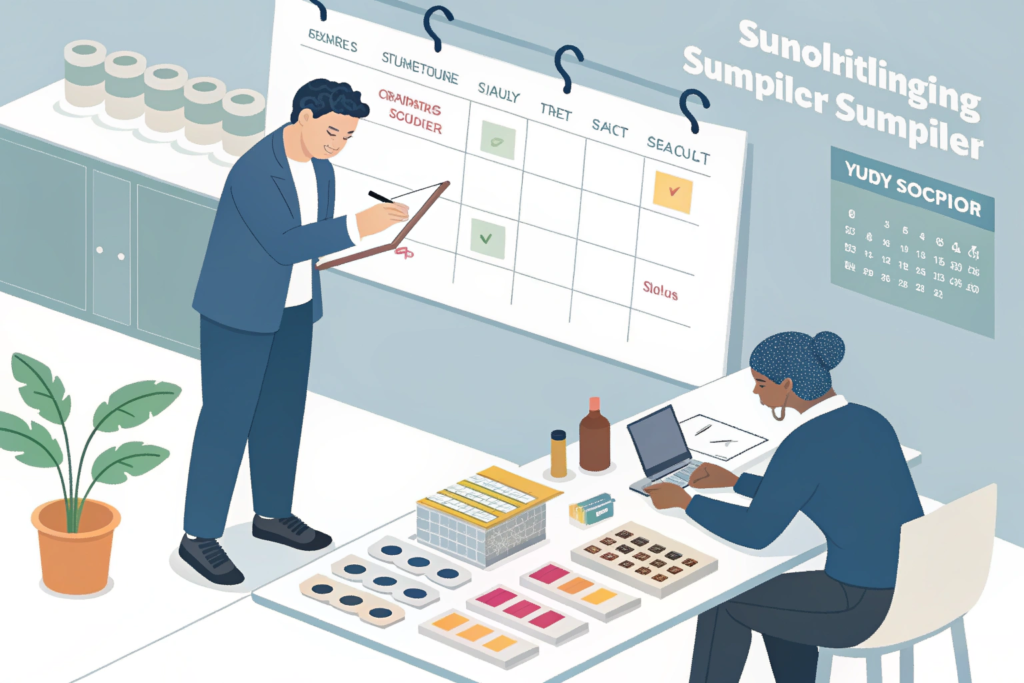
The more visual and specific your input, the better. Do not rely solely on verbal descriptions. Provide a mood board with images capturing the desired style, color palette, and feeling. Include technical sketches or reference photos of the shape, size, and any specific mechanisms (e.g., hinge type, closure). Specify target materials (e.g., "velvet-wrapped metal," "acrylic with matte finish") and key measurements. Clearly state your target price point (FOB) so the supplier can select appropriate materials and processes from the start. This comprehensive brief helps align expectations and minimizes costly misunderstandings.
How to Manage Feedback and Finalize the Design?
When you receive the first sample, evaluate it meticulously against your brief. Provide structured, actionable feedback. Instead of "I don’t like it," say "The metal feels too light; please use a thicker gauge. The color should match Pantone 19-4052 TCX. Can we reduce the width by 2mm?" Be prepared for 1-3 sample revision rounds. Document all agreed-upon changes in writing (e.g., via email) after each round. Before approving the final sample for production, ensure you have a signed "Golden Sample" that both parties keep as the definitive quality standard. Also, finalize all packaging design during this phase if it’s part of the order.
Conclusion
Finding a Chinese hair hoop supplier with genuine design capabilities is a process of targeted search, regional clustering, and rigorous evaluation. By leveraging specialized B2B platforms and focusing your efforts on key industrial hubs like Yiwu, Guangzhou, and Henan, you increase your chances of finding the right partner. The critical differentiator lies in moving beyond a supplier’s basic manufacturing credentials to thoroughly assess their design portfolio, team structure, and development process through detailed inquiries and a collaborative sampling phase.
A successful partnership hinges on clear communication, providing concrete visual and technical inputs, and treating the supplier as a creative collaborator. This strategic approach transforms your supply chain from a simple source of goods into a powerful engine for product innovation and brand differentiation.
If you are looking for expert guidance to navigate the Chinese manufacturing landscape and connect with reliable, design-oriented partners for your hair accessory line, we can help. At Shanghai Fumao Clothing, we leverage our extensive network within China’s key accessory hubs to source and develop products that align with your vision. For a consultation on your next project, please contact our Business Director, Elaine, at elaine@fumaoclothing.com.