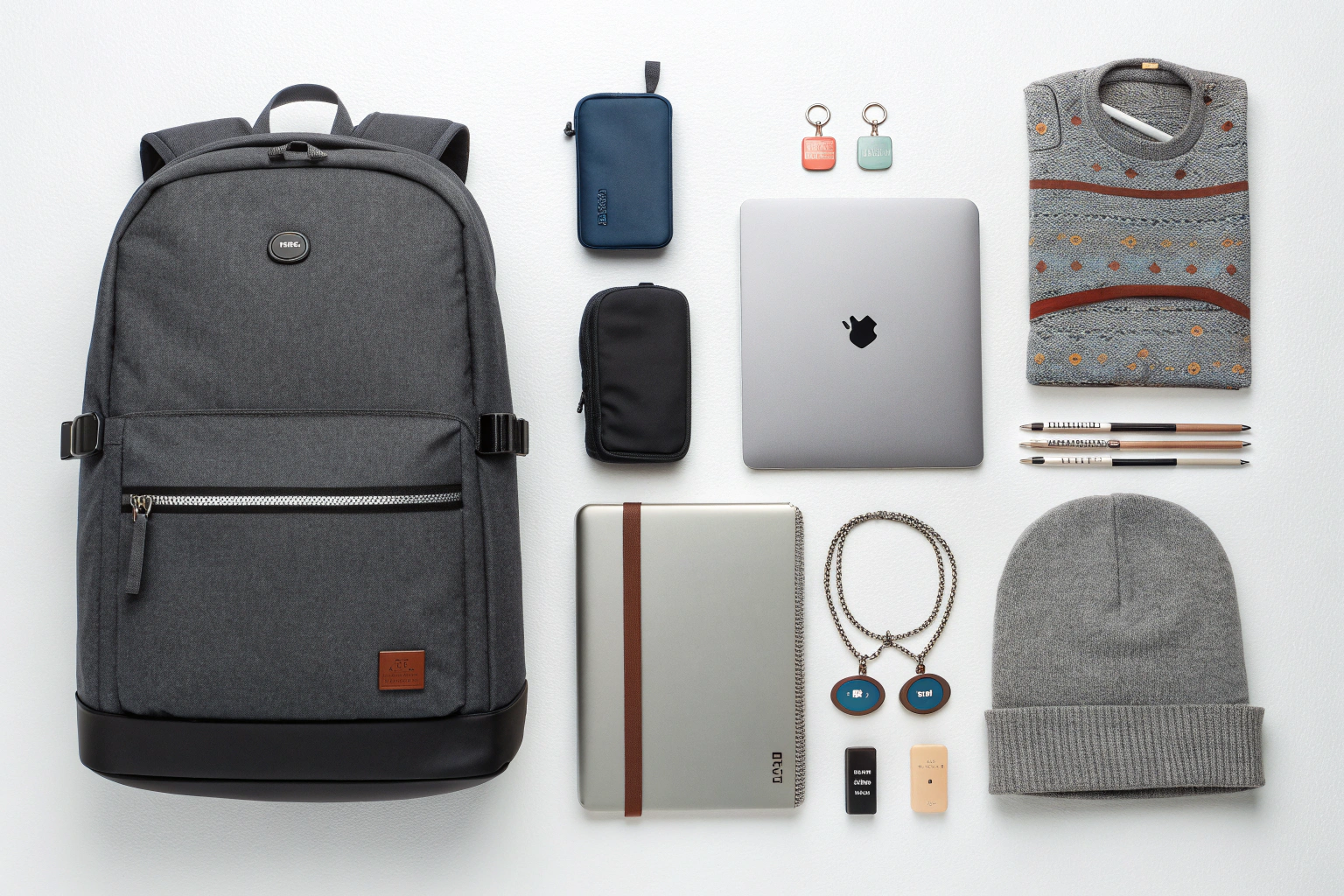
As a strategic buyer like Ron, you’re already planning for the 2026 Back-to-School season, one of the most important retail periods of the year. You know that success in this market requires a deep understanding of the youth consumer. They are looking for more than just supplies; they are looking for tools of self-expression. They want accessories that are functional for their daily lives, aligned with their values (like sustainability), and, most importantly, on-trend. So, what are the key accessory items you should be betting on to win the 2026 school year?
The must-have fashion accessories for the 2026 school year are driven by a blend of digital-age practicality and personal expression. The key items are the "Tech-Integrated Backpack" with built-in charging capabilities, the "Modular Pouch System" for organization, the "Upcycled Material Beanie" for a sustainable statement, and the "Customizable Charm-Based Jewelry" for personalization.
From my manufacturing perspective, these trends are a direct reflection of how the Gen Z and Gen Alpha lifestyles are evolving. It’s about the fusion of technology, sustainability, and identity. At Shanghai Fumao Clothing, we’re not just seeing orders for "backpacks"; we’re co-developing smart-packing systems and sourcing certified recycled materials to bring these specific product concepts to life. Let’s break down these key items and the opportunities they represent.
Why Is the Tech-Integrated Backpack the New Standard?
In 2026, a student’s most important school supplies are their laptop, tablet, and phone. The classic backpack has evolved to serve these digital-first needs.
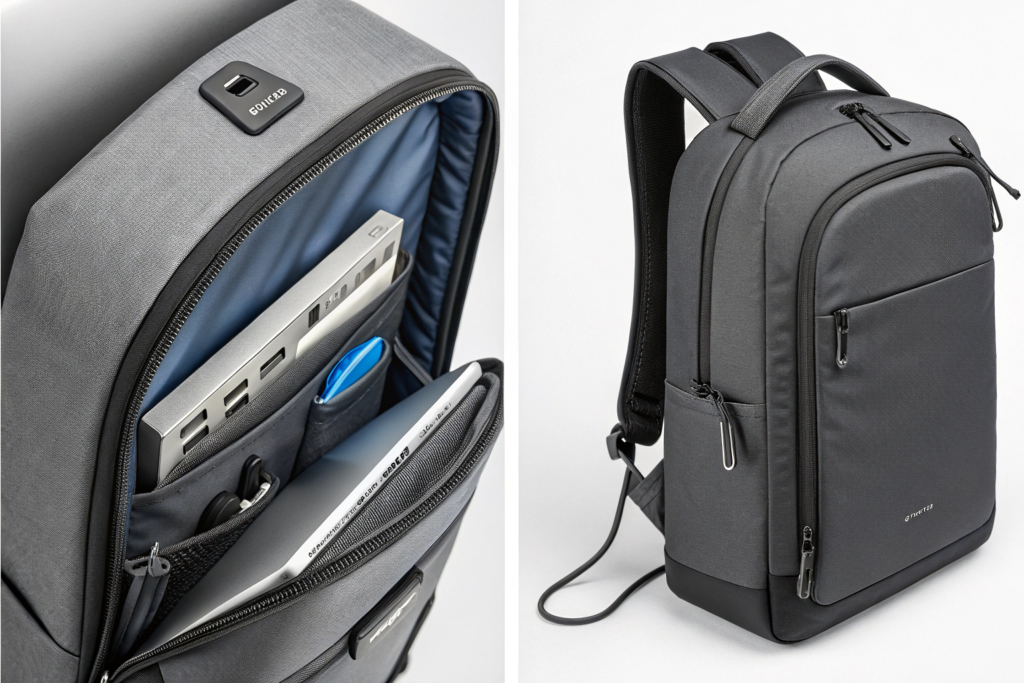
The Tech-Integrated Backpack is the new standard because it directly addresses the modern student’s primary pain point: keeping their devices charged and protected throughout the day. The key feature is an external USB port connected to an internal sleeve for a power bank, allowing for easy, on-the-go charging without having to unpack the bag.
This is no longer a niche gadget; it’s a core feature that students expect. When we develop backpacks for our clients now, the conversation always includes the placement of the USB port, the size of the padded laptop sleeve, and the inclusion of cable-organizing pockets. The backpack has transformed from a simple book carrier into a personal mobile charging station. This focus on practical tech integration is a key trend that separates modern bags from outdated ones and is a critical feature before even considering internal organization.
How does the USB port work?
It’s a simple but brilliant system. It’s a "pass-through" port. Inside the bag, there is a cable that connects to the student’s own power bank (which is not included). This cable leads to the port on the outside of the bag. The student can then plug their phone’s charging cable directly into the outside of their backpack.
What other tech features are important?
- Padded Laptop Compartment: This is non-negotiable. It should be sized to fit a standard 15-inch laptop and have ample foam padding.
- Water-Resistant Fabric: To protect the expensive electronics inside from rain.
- RFID-Blocking Pocket: A small, specialized pocket that blocks RFID signals, protecting credit cards and student IDs from digital theft. This is a feature you can learn more about from cybersecurity resources like Norton.
Why Are Modular Pouch Systems Replacing the Single Pencil Case?
The modern student carries more than just pens and pencils. They have charging cables, earbuds, adapters, lip balm, and countless other small items. The single-compartment pencil case is no longer sufficient.
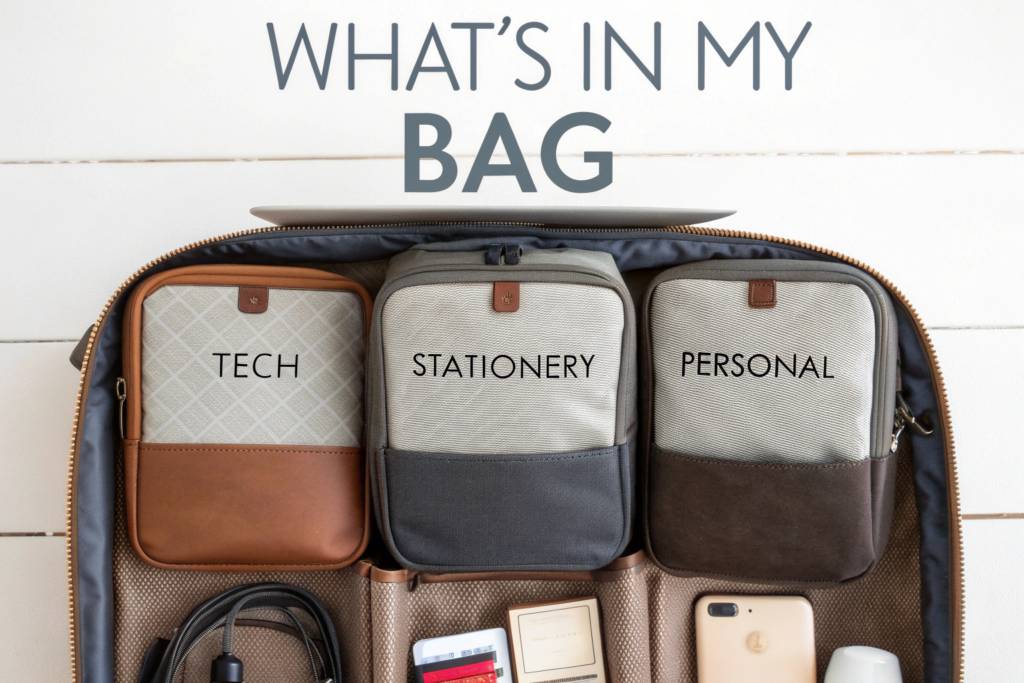
Modular Pouch Systems are replacing the traditional pencil case because they offer a flexible, customizable solution to organizing the wide variety of small items a student carries. Instead of one large pouch, students prefer a set of 2-3 smaller pouches in different sizes, allowing them to categorize their belongings: one for tech, one for stationery, one for personal items.
This trend is all about organization and "un-boxing" culture, influenced by social media. We design these pouches as a coordinated set, often with a carabiner clip so they can be attached to the inside or outside of a backpack. We can produce them in a variety of materials, from durable canvas to clear PVC (which allows for easy visibility of the contents). This move towards compartmentalization is a major shift in how students think about organization and is a key trend to pair with the sustainability movement.
What are the key features of a good pouch system?
- Multiple Sizes: A set should include at least a small, medium, and large pouch.
- Durable Zippers: The zipper is the most common point of failure, so a high-quality zipper is essential.
- Attachment Point: A loop or tab that allows the pouch to be clipped somewhere is a highly valued feature.
- Clear Panels: A pouch with a clear window allows the user to see what’s inside without opening it.
How can these be sold?
They are most effective when sold as a set of three, each component meticulously crafted to complement the others and address the customer’s needs in a holistic manner. This curated trio offers a complete solution for the customer, ensuring that no aspect of their requirement is overlooked—whether it’s functionality, convenience, or enhanced performance.
By bundling these three items together, the retailer not only provides added value that encourages the purchase but also results in a significantly higher average transaction value compared to selling individual units.
Why Is the Upcycled Beanie a Statement Piece?
For the socially-conscious student of 2026, what they wear is a reflection of their values. Sustainability is not a bonus feature; it’s a core requirement.
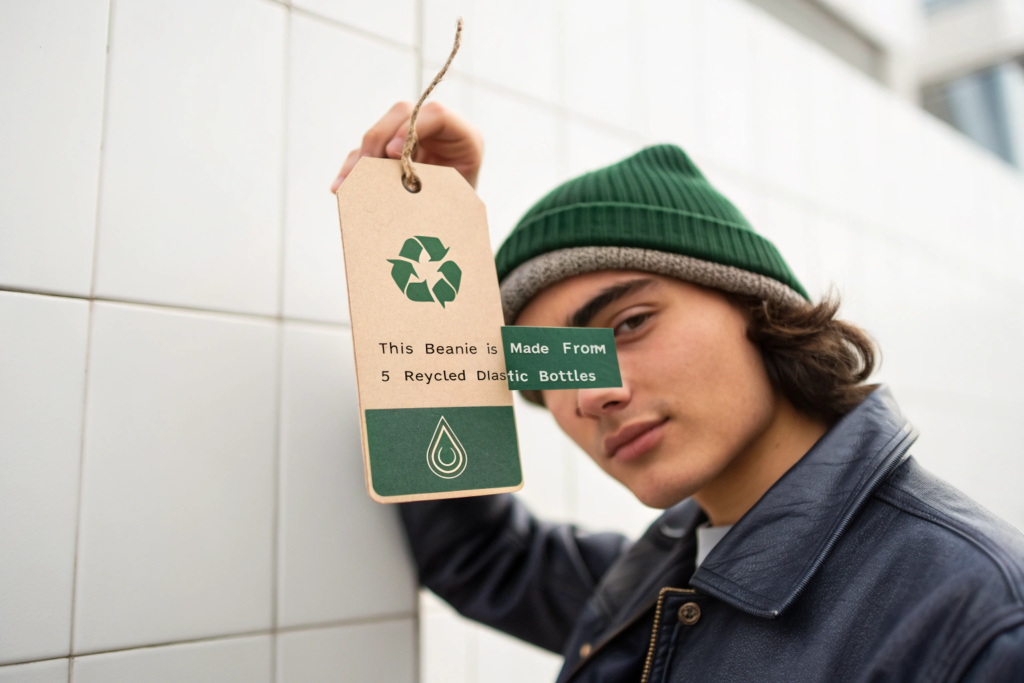
The Upcycled Beanie is a must-have statement piece because it allows students to express their personal style while making a tangible, positive statement about their commitment to sustainability. A beanie made from recycled materials (like rPET from plastic bottles) or upcycled factory off-cuts tells a story that resonates deeply with this generation.
This is a trend that is both stylish and meaningful. At Shanghai Fumao Clothing, we are producing more and more accessories from certified recycled materials. For a beanie, we can use GRS-certified recycled polyester or recycled cotton yarns. We provide all the certification and documentation so that our clients can tell this powerful story on their product’s hangtag. This allows the student to wear their values, a concept that is just as important as personal customization.
What is "rPET"?
rPET stands for Recycled Polyethylene Terephthalate. It’s the plastic used to make water bottles, those clear, lightweight containers that hold our daily hydration, often found in grocery stores and convenience shops worldwide. These bottles, once they’ve served their purpose and are discarded, can be collected from recycling bins, sorted by material type, thoroughly cleaned to remove any residual liquids or contaminants, and then subjected to a rigorous melting process. In this process, the plastic is heated until it becomes a molten liquid, which is then filtered to ensure purity.
This high-quality polyester fiber, derived from the recycled plastic, is then spun into fine, durable yarn through a spinning process that twists the fibers together, creating a thread suitable for knitting. This yarn, with its smooth texture and consistent strength, is then used to create a variety of textiles, from soft t-shirts and cozy sweaters to sturdy backpacks and athletic wear.
How do you prove it’s really recycled?
Through third-party certification. The Global Recycled Standard (GRS) is the leading international standard. It verifies the recycled content and ensures that the production is done in a socially and environmentally responsible way. As a manufacturer, we provide our clients with the GRS transaction certificates to validate their claims.
Why Is Customizable Jewelry the Ultimate Form of Self-Expression?
In an age of social media and personal branding, students are looking for ways to create a unique identity. "Off-the-shelf" is out; "personalized" is in.
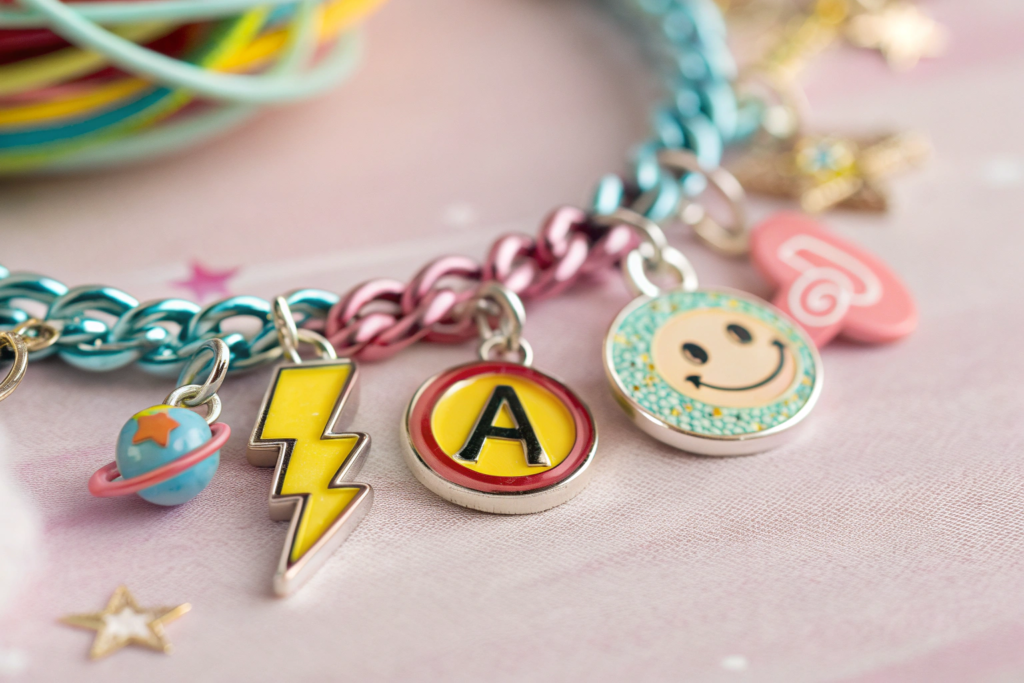
Customizable, charm-based jewelry—like necklaces and bracelets—is the ultimate form of self-expression because it allows students to curate and build a piece of jewelry that tells their personal story. They can choose charms that represent their hobbies, their friendships, their initials, or their favorite things, creating a one-of-a-kind accessory.
This trend taps into the powerful desire for personalization and collection. The business model is brilliant: you sell the base necklace or bracelet, and then you sell the individual charms as add-ons. This encourages repeat purchases as students grow and change their collection. We can produce a wide variety of charms using enamel, metal casting, and other techniques, allowing for endless creativity.
What are the most popular charm themes?
- Astrology & Mysticism: Zodiac signs, stars, moons, crystals.
- Hobbies & Interests: Paint palettes, music notes, game controllers, soccer balls.
- Initials & Letters: A timeless classic.
- Pop Culture & Memes: Smiley faces, lightning bolts, and other simple, graphic icons.
What materials are used?
For this market, the key is affordability and safety. We typically use a base metal like zinc alloy or brass, which is then plated with a thin layer of nickel, chrome, or gold to enhance its appearance and durability, ensuring it looks as polished and attractive as more expensive materials without the premium cost.
All of our products are rigorously tested to be lead-safe, nickel-safe, and compliant with all relevant safety standards for children’s and adult jewelry, including strict limits on harmful substances like cadmium and lead, so you can wear them with confidence knowing they meet the highest safety benchmarks for everyday use.
Conclusion
The 2026 back-to-school season will be won by brands that understand the modern student’s multi-faceted life. It’s a world where a backpack is a charging station, a pencil case is a modular system, a beanie is an environmental statement, and a necklace is a personal story. By focusing your collection on these four key pillars—the Tech-Integrated Backpack, the Modular Pouch System, the Upcycled Beanie, and Customizable Jewelry—you will be offering a product assortment that is not just on-trend, but deeply in-tune with the needs and values of the next generation.
At Shanghai Fumao Clothing, we are set up to be your strategic partner in capturing this market. We have the technical capabilities, the sustainable sourcing channels, and the product development expertise to help you build a winning back-to-school collection.
If you are ready to start planning your 2026 accessory program, let’s talk. Please contact our Business Director, Elaine, at her email: elaine@fumaoclothing.com, to get started.