For designers and manufacturers of knitwear accessories, choosing the correct yarn is a critical decision that determines the product’s aesthetics, performance, and commercial viability. The wrong choice can lead to poor fit, subpar quality, and customer dissatisfaction, impacting your brand’s reputation. Unlike garment production, accessories demand specialized considerations for texture, drape, and durability.
The right yarn is selected through a systematic analysis of fiber properties, yarn structure, and the intended end-use of the accessory. This involves balancing material performance with manufacturing practicalities, such as the knitting machine’s gauge. It is a technical process that moves beyond intuition to combine science, market trends, and practical experience to achieve predictable, high-quality results every time.
Based on both foundational textile science and our extensive manufacturing experience at Shanghai Fumao Clothing, this guide provides a structured framework for making informed yarn selections that will enhance your accessory line’s quality and appeal.
How Do Fiber Properties Determine an Accessory’s Core Character?
The fiber is the essential building block of any yarn, dictating the fundamental feel, function, and care of the final accessory. The choice between natural, synthetic, or blended fibers is the first and most impactful decision in the design process. Each fiber type brings a distinct set of physical and mechanical properties that directly align with specific accessory needs.
For knitwear accessories, which are often worn close to the skin and subjected to frequent use, fiber selection must prioritize comfort, durability, and aesthetic effect. A luxury cashmere scarf, a durable acrylic beanie for a uniform program, and a quick-drying polyester sports headband all start with a strategic fiber choice that matches the product’s intended market and use case.
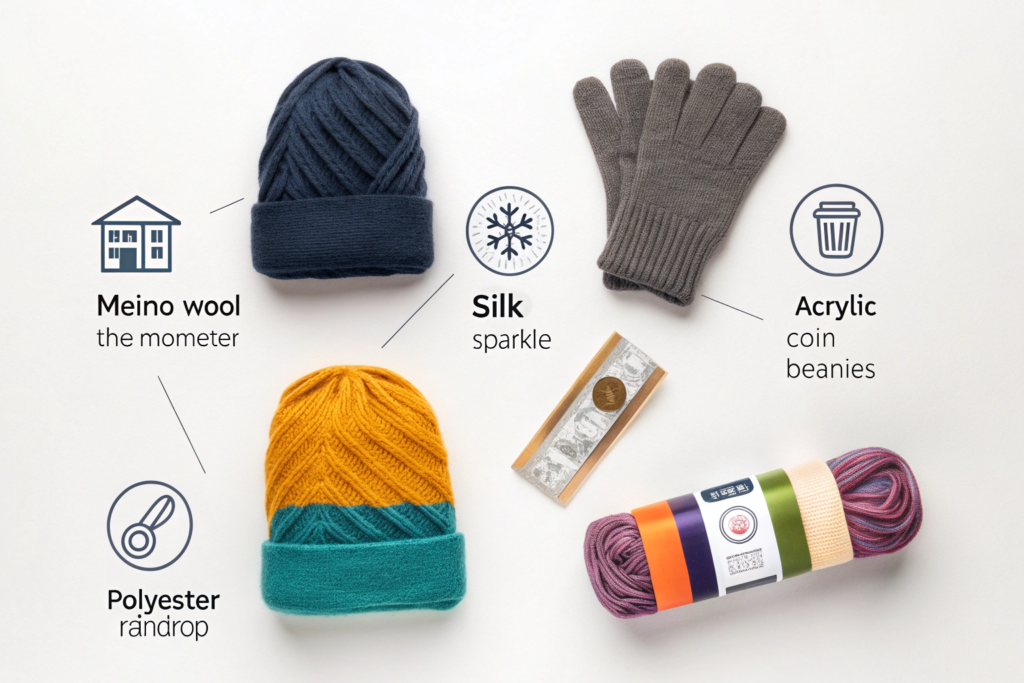
Which Natural Fibers Are Best for Premium and Seasonal Accessories?
Natural fibers are prized for their comfort, breathability, and premium perception. Their selection is often driven by seasonality and desired hand-feel.
- Wool & Specialty Animal Fibers: Wool is the cornerstone of warm accessories. Worsted-spun wool yields smooth, strong, and durable yarns ideal for structured items like fitted gloves or cables on a hat. In contrast, woolen-spun wool creates airy, lightweight, and exceptionally warm yarns perfect for lofty scarves and soft beanies. For luxury, fibers like cashmere and merino offer unparalleled softness against the skin, essential for high-end neckwear.
- Cotton & Plant Fibers: Cotton provides coolness, absorbency, and year-round versatility. For accessories like summer shawls or breathable headbands, mercerized cotton offers a beautiful sheen and enhanced strength. Linen, though less elastic, brings a unique crisp drape and coolness to warm-weather wraps, developing a softer texture over time.
When Should You Opt for Synthetic or Blended Yarns?
Synthetic and blended yarns address specific functional and economic needs that pure natural fibers sometimes cannot meet.
- Acrylic: A dominant fiber in the bulk accessory market due to its low cost, easy care, and excellent color retention. It can mimic the bulk and warmth of wool at a fraction of the price, making it ideal for high-volume fashion items like fast-fashion scarves and promotional beanies. Modern acrylics are often engineered to be much softer than their earlier counterparts.
- Polyester & Nylon: These fibers excel in durability, moisture-wicking, and shape retention. They are the go-to choice for performance accessories like sports headbands, grip-enhancing glove liners, or items requiring frequent washing. Polyester is also widely used in faux fur and velvet yarns for decorative trims and statement pieces.
- The Power of Blends: Blending fibers combines their best properties. A wool-acrylic blend improves the durability and affordability of wool while retaining warmth. A cotton-polyester blend reduces wrinkling and shrinkage in cotton accessories while adding strength. For the bulk market, these blends offer an optimal balance of performance, cost, and consumer appeal.
How Does Yarn Structure and Construction Impact the Final Product?
Once the fiber is chosen, the way it is spun and constructed into yarn—its structure—dictates the accessory’s texture, strength, and suitability for specific knitting machines. Yarn structure is a critical but often overlooked technical factor that bridges fiber properties with manufacturing reality.
The construction influences everything from the stitch definition in a cabled hat to the drape of a lace shawl. For bulk manufacturing, understanding these structural nuances is key to ensuring production efficiency and achieving consistent, high-quality results across thousands of units.
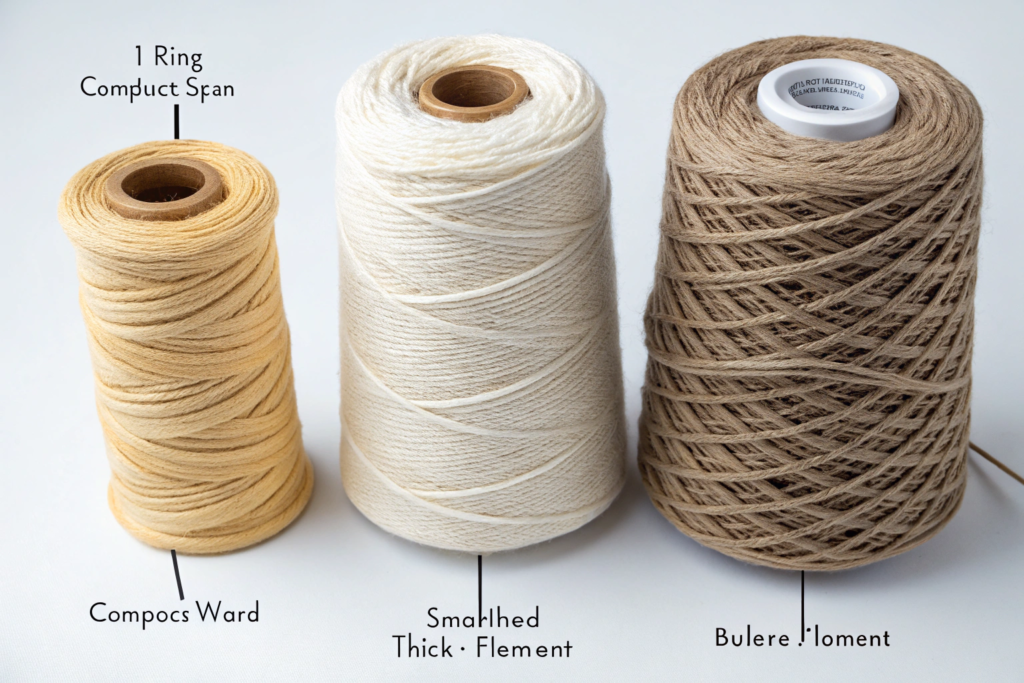
What Are the Key Yarn Types and Their Best Uses for Accessories?
Yarns are broadly categorized by their spinning method and filament structure, each serving different purposes.
- Staple (Spun) Yarns: These are made from short fibers twisted together. Ring-spun yarns are known for their strength and softness but are more expensive. Open-end (rotor) spun yarns are more cost-effective and uniform but can be slightly harsher, suitable for inner layers or mid-market items. Spun yarns are versatile and provide the classic, slightly fuzzy texture associated with most knitwear.
- Filament Yarns: These consist of continuous fibers. Flat filament yarns (like untwisted polyester) produce very smooth, shiny, and sometimes slippery fabrics, ideal for lightweight, drapey summer wraps. Textured or bulked filament yarns have been processed to introduce loops and crimp, giving them warmth, stretch, and a spun-yarn-like feel, excellent for plush, warm accessories without the weight.
- Fancy/Novelty Yarns: These include slub, bouclé, chenille, and ribbon yarns. They are primarily chosen for their dramatic visual and textural effects rather than performance. A bouclé yarn can transform a simple neck cowl into a statement piece, while a chenille yarn creates an ultra-soft, velvety surface for luxury gloves. Their irregular structure often requires slower, more careful knitting.
Why Are Yarn Count and Ply Critical Technical Specifications?
These measurable specifications directly affect the accessory’s weight, thickness, and the tools needed to make it.
- Yarn Count: This number indicates the yarn’s fineness or thickness. A lower count number (e.g., 2/8 NM) means a thicker, heavier yarn suitable for a quick-knit chunky blanket scarf. A higher count number (e.g., 2/28 NM) indicates a finer yarn for delicate lace gloves or lightweight socks. Matching the yarn count to the knitting machine gauge is non-negotiable for bulk production to avoid broken needles or poor fabric quality.
- Ply: This refers to how many single strands are twisted together. While often correlated with thickness, ply more importantly affects durability, roundness, and stitch definition. A multi-ply yarn (e.g., 4-ply) is generally stronger, more resistant to pilling, and produces crisper stitch patterns than a single-ply yarn of the same thickness, which can be softer but more prone to pilling and distortion.
How to Align Yarn Choice with Specific Accessory Types and Markets?
The final step is applying your knowledge of fibers and structure to the practical design and commercial context of each accessory. A yarn perfect for a delicate lace shawl would be a disaster for hard-wearing mittens. This phase connects material science to consumer desire and production scale.
This involves creating a detailed product specification that defines the required yarn attributes for each item in your line. It turns creative vision into a reproducible technical formula, ensuring consistency whether you’re producing 500 or 50,000 units.
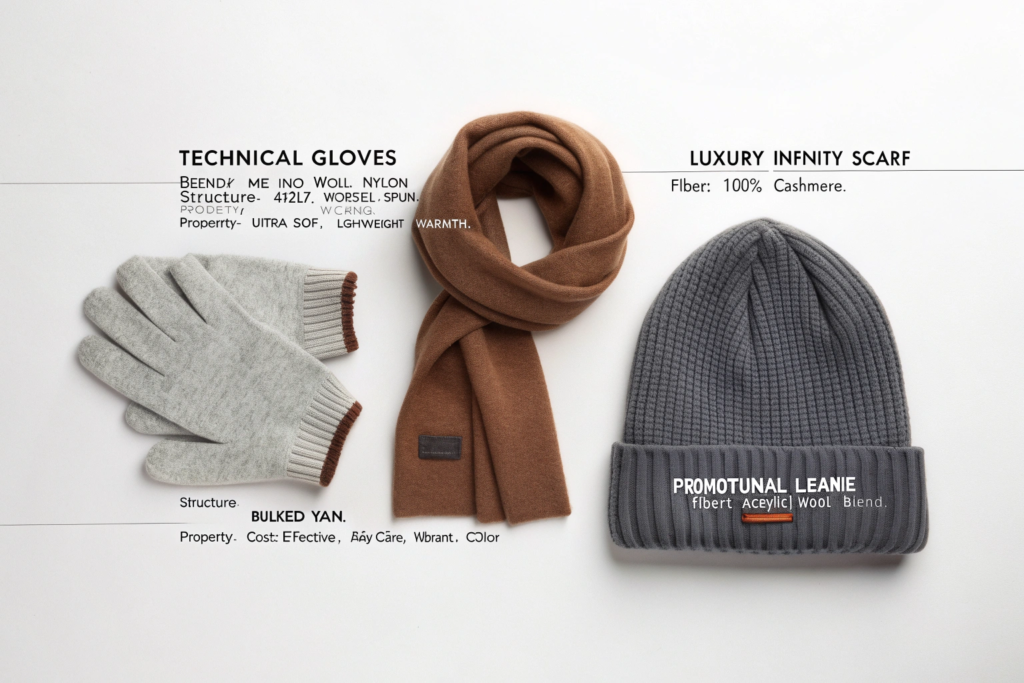
What Are the Optimal Yarn Specifications for Common Accessories?
Here is a practical framework to guide selection for key accessory categories:
| Accessory Type | Key Requirements | Recommended Fiber Direction | Recommended Yarn Structure | Bulk Market Considerations |
|---|---|---|---|---|
| Beanies & Winter Hats | Warmth, softness, elasticity, shape retention. | Wool, acrylic, or wool/acrylic blends. Cashmere for luxury. | Worsted-spun for structure; Woolen-spun for loft. Bulked acrylic for warmth/price. | Acrylic and blends dominate for volume due to cost, washability, and color range. |
| Scarves, Shawls & Wraps | Drape, hand-feel, aesthetic (sheen, texture). Seasonality. | Winter: Wool, alpaca. Summer: Cotton, linen, silk. Year-round: Blends. | Lightweight singles or 2-ply for drape. Fancy yarns for texture. | Consider easy-care blends (e.g., acrylic/wool) for mainstream fashion lines to minimize ironing and special care. |
| Gloves & Mittens | Durability, dexterity, warmth, sometimes moisture control. | Durable wool (like Corriedale), blends with nylon for strength, acrylic. | Tightly plied, smooth yarns (worsted) for abrasion resistance. | For work or utility gloves, high-performance synthetics or blends with high nylon content are essential for longevity. |
| Decorative Trims & Accents | Visual impact, texture, novelty. | Can vary widely; often acrylic or polyester for effect and cost. | Fancy yarns: Chenille, bouclé, metallic, eyelash. | Source these as specialty add-ons. Ensure they are compatible with the base fabric’s care instructions to avoid disappointment. |
How Do You Source and Test Yarns for Bulk Production?
Translating specifications into a reliable supply chain is the final, crucial step.
- Sourcing: For bulk orders, engage directly with spinning mills or large yarn distributors via B2B platforms like Alibaba. Be precise in your requests: specify fiber blend percentages, yarn count (Nm or Tex), ply, and twist direction. For consistency, secure a commitment to a minimum batch quantity from a single dye lot to avoid color variations.
- Testing: Never skip physical sampling and testing. Knit a full swatch using the intended production machine gauge. Subject it to relevant tests: check for pilling resistance, colorfastness to washing and light, and dimensional stability (shrinkage). For items like gloves, test for abrasion. This due diligence prevents costly failures in mass production.
- Costing: Calculate the yarn cost per accessory unit. Factor in waste percentage (often 3-5%) and the efficiency of the yarn on your machines. A slightly more expensive yarn that runs flawlessly and produces a superior product can offer a better total value than a problematic cheaper alternative.
How Do You Work with Your Manufacturer to Choose the Right Yarn?
You have a basic understanding of fiber, weight, and ply. How do you leverage your manufacturing partner’s expertise to make the final, perfect choice?
You must treat your manufacturer as a yarn consultant. Provide them with your target retail price, your desired hand-feel, a description of the end-use, and inspiration images. A good partner can then use this information to propose a curated selection of 2-3 specific yarn options, complete with pricing and knitted swatches for you to feel.
This collaborative approach is the most efficient path to success. Instead of you having to become a world-class yarn expert, you can leverage our experience. A client might say, "I need to hit a $10 landed cost for this beanie. It needs to be super soft, and it’s for the fashion market, not for performance. I like this chunky look." With that information, I can immediately rule out expensive wools and propose three different soft-spun acrylics at different price points, and I can have knitted swatches of each on their way to you in days.
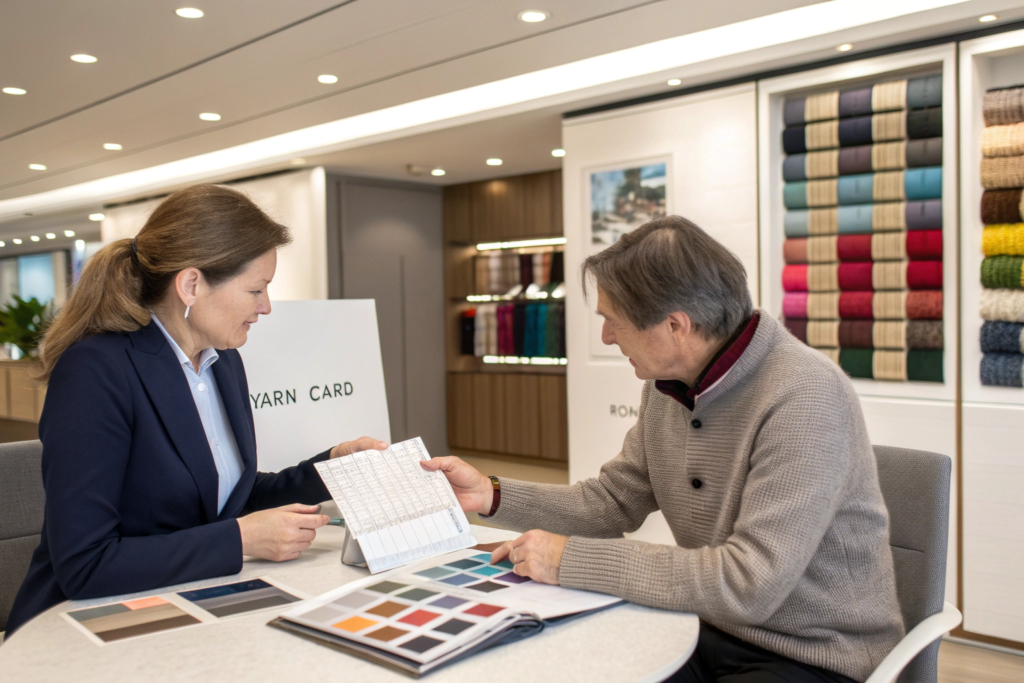
What is a "Yarn Card"?
A yarn card is a book or binder provided by a yarn mill or manufacturer that contains small samples of all the different yarns they offer, organized by fiber content and weight. It’s an essential tool for our development process.
Why is a knitted swatch so important?
A yarn can look and feel very different as a single strand versus how it feels as a knitted fabric. The only way to truly judge a yarn’s softness, drape, and stitch definition is to knit a small sample square, or "swatch." We never let a client commit to a yarn without first feeling a physical swatch.
Conclusion
Choosing the right yarn for knitwear accessories is a multifaceted decision that blends material science with design intent and commercial strategy. It begins with understanding the inherent properties of fibers, from the luxurious warmth of wool to the practical durability of synthetics. This knowledge is then refined through the lens of yarn structure—how spinning and plying affect strength, texture, and manufacturability. Finally, it is applied with precision to the specific demands of each accessory type, from the hard-wearing needs of gloves to the decorative flourish of a fancy trim.
By adopting this structured, three-tiered approach—Fiber → Structure → Application—you move beyond guesswork to make informed, repeatable, and successful sourcing decisions. This methodology ensures that every accessory you produce not only looks and feels right but also performs reliably for the end-user, building trust in your brand.
If you are looking for a manufacturing partner with deep expertise in material sourcing and production optimization for bulk accessory orders, we can guide you through this entire process. At Shanghai Fumao Clothing, we help clients translate their concepts into commercially viable, high-quality products. For a consultation on developing your next knitwear accessory line, please contact our Business Director, Elaine, at elaine@fumaoclothing.com.