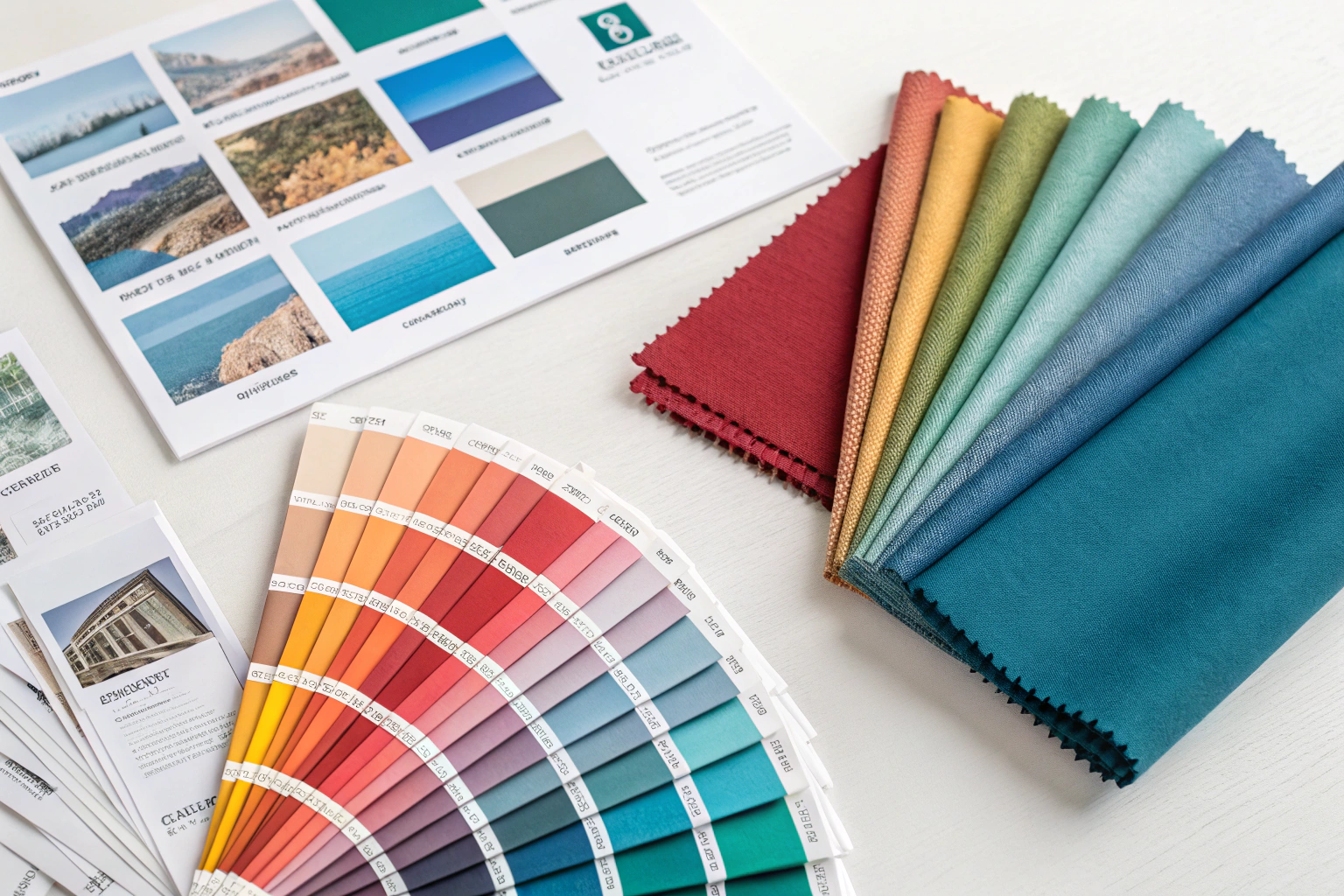
As a strategic buyer like Ron, you understand that color is the single most powerful tool in seasonal fashion. It’s the first thing a customer notices, and it’s what makes a product feel "new" and "now." For a statement piece like a cape, shawl, or poncho, getting the color story right is paramount. You can’t just pick a few random shades. You need a deliberate, strategic approach to color customization that aligns with global trends, resonates with your specific customer, and can be executed flawlessly by your manufacturing partner. So, how do you move from a vague color idea to a perfectly dyed, retail-ready collection?
To customize cape colors successfully for a seasonal collection, you must adopt a professional, three-stage process: first, identify your core color palette using trend forecasting data; second, communicate those exact shades to your manufacturer using a universal standard like the Pantone Matching System (PMS); and third, approve a physical "lab dip" sample before committing to bulk production. This disciplined process removes all subjectivity and ensures the color you envision is the exact color you receive.
This is a process we live and breathe every single day. At Shanghai Fumao Clothing, color is a science, not an opinion. The difference between a best-selling "Burgundy" and a clearance-rack "Maroon" can be a subtle shift in tone, and we have built our systems to manage that nuance with absolute precision. Let me guide you through the professional’s method for perfect seasonal color development.
How Do You Choose the Right Colors for the Season?
Before you can specify a color, you have to choose the right color. For a seasonal collection, this can’t be based on personal preference. It must be a strategic, data-informed decision.
You choose the right colors by consulting professional trend forecasting services (like WGSN) 9-12 months in advance to identify the key color palettes for the target season, and then curating a selection that aligns with your brand’s specific aesthetic and customer profile. This involves selecting a mix of trend-driven "fashion" colors and reliable "core" neutral colors.
This is the foundational step. Our most successful clients come to us with a clear color strategy. For a Fall/Winter collection, they might say, "The key fashion colors are ‘Apricot Crush’ and ‘Digital Lavender.’ We want to do our main hero cape in Apricot Crush. For our core, high-volume capes, we’ll stick with our best-selling neutrals: Camel, Heather Grey, and Black." This balanced approach ensures the collection is both exciting and commercially safe. This strategic selection is the essential first step before you can communicate those colors to your factory.

What are "Fashion" vs. "Core" Colors?
- Fashion Colors: These are the trendy, directional colors of the season (e.g., a bright lime green, a hot pink). They create excitement and drive impulse purchases but can have a shorter shelf life.
- Core Colors: These are the timeless, neutral colors that sell consistently year after year (e.g., black, navy, camel, ivory, grey). They are the low-risk, high-volume foundation of your business. A successful collection needs both.
Where do these color trends come from?
Professional forecasting services like WGSN and Pantone’s Color Institute employ global teams of trendspotters who analyze shifts in culture, art, technology, and society to predict the colors that will resonate with consumers 1-2 years in the future. Their reports are the industry bible for seasonal color planning.
How Do You Communicate Color Accurately to Your Factory?
You’ve chosen your perfect shade of "deep sea blue." How do you ensure the factory in China sees the exact same color you’re seeing on your screen or on a paint chip in your office?
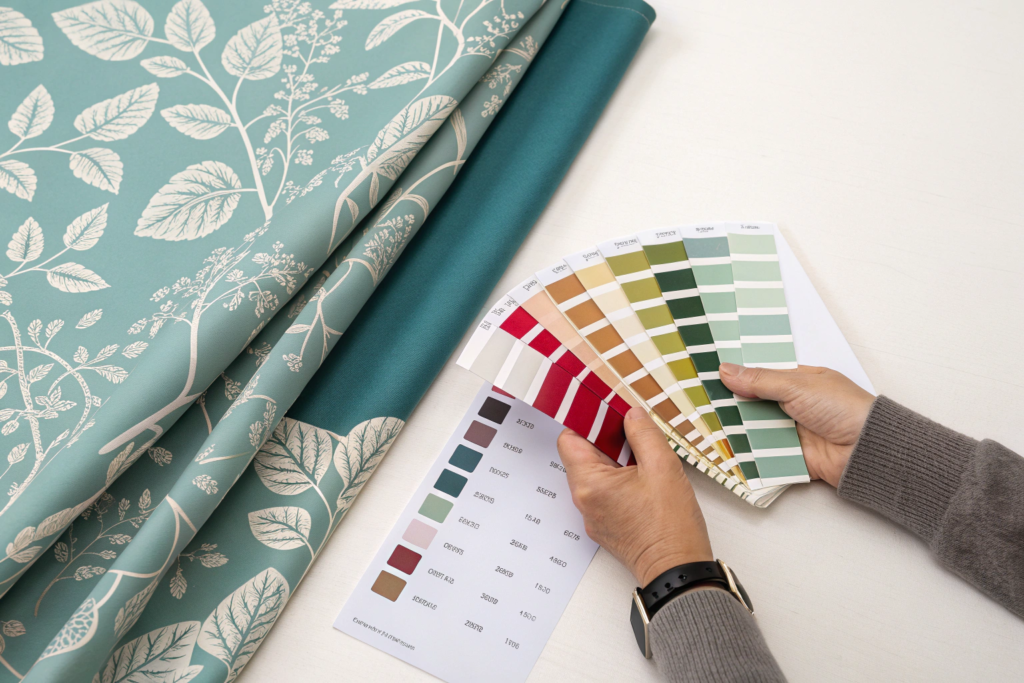
You must communicate color using a universal, standardized language. The industry standard for this is the Pantone Matching System (PMS), specifically the Fashion, Home + Interiors (FHI) system, which uses TPX or TCX codes. Providing a Pantone code removes all ambiguity and subjectivity, ensuring that your factory’s dye house is targeting the exact same shade you are.
This is the most critical, non-negotiable step in the entire process. A request for "light blue" is meaningless. A request for "Pantone 14-4318 TPX (Serenity)" is a precise, actionable instruction. When we receive a tech pack with Pantone codes, our team can immediately begin the dyeing process with a clear, objective target. Without it, we are just guessing. This precise communication is the only way to get an accurate lab dip for approval.
What are TPX and TCX codes?
The Pantone FHI system comes in two formats:
- TPX (Textile Paper eXtended): The color is printed on paper. This is a great, cost-effective reference.
- TCX (Textile Cotton eXtended): The color is a dyed piece of cotton fabric. This is the superior standard for textiles, as it shows how the color will actually look on fabric.
While we can work with either, a TCX code is the gold standard.
What if my color doesn’t have a Pantone code?
If you have a physical swatch of fabric or a piece of yarn that you want to match, you can send it to us. This is called "matching to sample." Our dye house will then use a spectrophotometer (a color measurement device) and their expert eyes to create a custom dye formula that matches your sample. We will then assign it a temporary internal code for the lab dip process.
What Is a "Lab Dip" and Why Is It Essential?
You’ve given your factory the Pantone code. How do you know they can actually achieve that color on your specific cape fabric before you commit to dyeing 10,000 units?
A "lab dip" is a small swatch of your actual production fabric that the factory’s dye house dyes to match your target color. It is the essential final approval gate. You must approve a physical lab dip before authorizing bulk production to begin. This step confirms that the factory can accurately reproduce your chosen color on your chosen material.
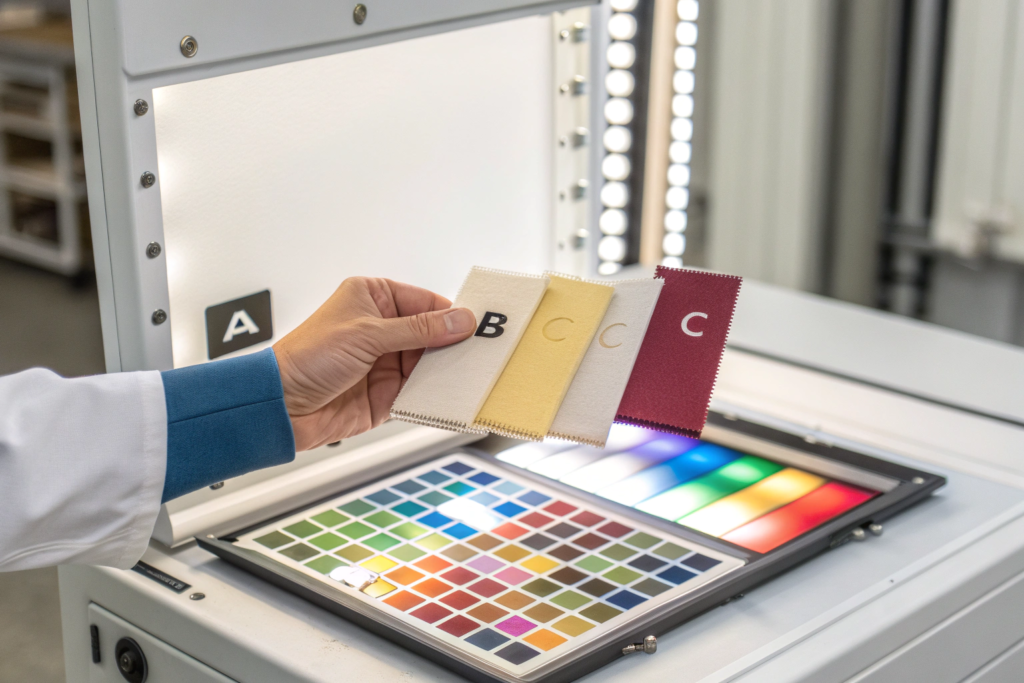
This is the moment of truth. Dyes can react differently to different materials (e.g., wool vs. acrylic vs. polyester). A Pantone code that is easy to match on wool might be difficult on polyester. The lab dip process shows us exactly how the color will render. We will typically send you several options (A, B, C) that are slightly different variations around your target color, allowing you to choose the one that is the most accurate. This approval is the final step before we begin bulk dyeing.
What is a "light box"?
A light box is a viewing booth that provides a standardized, neutral light source (usually simulating natural daylight, D65). Colors can look dramatically different under fluorescent office lights versus natural daylight. All professional color approvals must be done under a controlled light source to ensure consistency.
What if the lab dips are not correct?
If the first round of lab dips is not acceptable, you provide feedback (e.g., "Option B is close, but it needs to be slightly redder and less yellow"), and the dye house will produce a second round. This process continues until you are 100% satisfied. You should never approve a lab dip that you do not love.
How Does the Bulk Dyeing Process Work?
You’ve approved the perfect lab dip. How does the factory scale that up from a tiny swatch to thousands of capes?
Once the lab dip is approved, the factory uses the exact dye formula from that dip to dye the raw materials in large, industrial vats. For capes, this is typically done through "yarn dyeing" (dyeing the yarn before it’s knitted or woven) or "piece dyeing" (dyeing the full roll of fabric after it’s made). The approved lab dip becomes the "golden sample" for color that the bulk production must match.
At Shanghai Fumao Clothing, this transition is managed by our color quality team. The approved lab dip is scanned by a spectrophotometer to create a digital color profile. This data is then used to control the industrial dyeing machines. After the bulk material is dyed, we take cuttings from different parts of the dye lot and compare them against the original approved lab dip in the light box to ensure there is no variation. This ensures the first cape produced is the same color as the last.

What is "Yarn Dyeing" vs. "Piece Dyeing"?
- Yarn Dyeing: The yarn is dyed first, and then the colored yarns are used to knit or weave the fabric. This method is great for creating patterns like stripes or plaids and generally results in better color penetration.
- Piece Dyeing: The fabric is created first in a neutral, undyed state (known as "greige" goods), and then the entire roll of fabric is dyed at once. This is often more cost-effective and faster for solid colors.
What is a "Dye Lot"?
A dye lot is a batch of material that has been dyed in a single vat at the same time, under identical conditions—maintaining consistent temperature, dye concentration, and processing duration to achieve uniform color absorption. There can be very slight color variations between different dye lots, often imperceptible to the untrained eye but detectable under close scrutiny, such as subtle differences in shade depth, undertones, or light reflection.
Conclusion
Customizing cape colors for a seasonal collection is a precise science, not a guessing game. By following a professional, structured process, you can eliminate risk and ensure a perfect result every time. It begins with strategic color forecasting, followed by clear and accurate communication using the Pantone Matching System. The most critical step is the approval of a physical lab dip on your actual fabric. Only then, with an approved standard in hand, can you authorize bulk production with confidence. This disciplined approach is the secret to creating a collection that is not only beautiful and on-trend but also perfectly executed.
At Shanghai Fumao Clothing, we are experts in the science of color. We have the systems, the technology, and the expertise to manage this entire process for you, delivering your exact color vision with precision and reliability.
If you are ready to develop a seasonal collection with a stunning and accurate color story, let’s talk. Please contact our Business Director, Elaine, at her email: elaine@fumaoclothing.com, to get started.