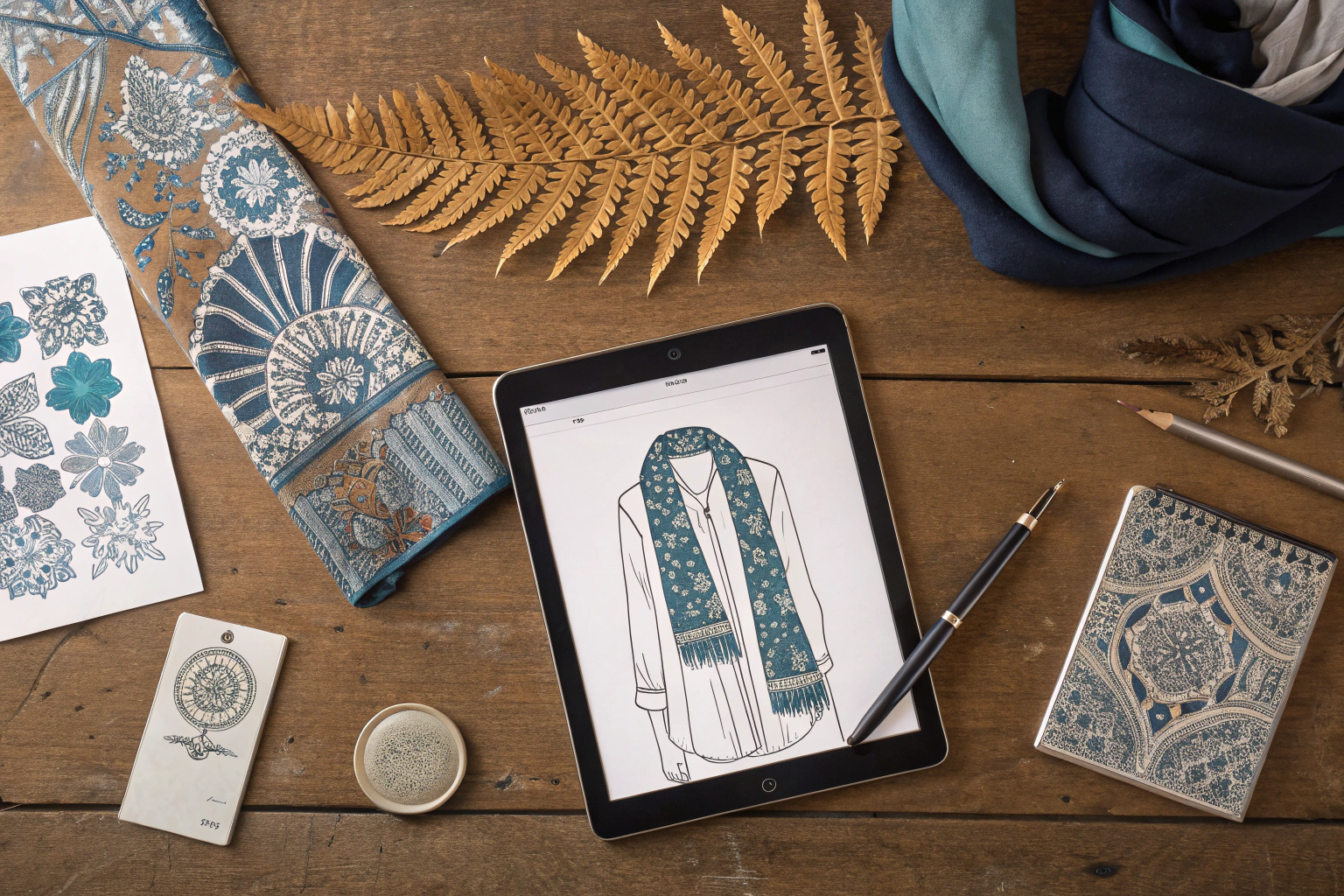
As a creative and strategic buyer like Ron, you face a constant, recurring challenge: how do you create a scarf collection that feels fresh, new, and desirable, season after season? You know that a great scarf isn’t just a piece of fabric; it’s a wearable piece of art. The print, the pattern, and the color story are what make a customer fall in love with it from across a retail floor. But inspiration can be elusive. Where do the best ideas come from? How do you move beyond simply reacting to last year’s trends and start creating a collection with a unique, compelling point of view?
To find inspiration for your next scarf design, you must look beyond the fashion industry and draw from a diverse range of sources, including historical art movements, the natural world, architectural details, and cultural textiles. The secret is to become a "design detective," training your eye to see patterns, color palettes, and textures in the world around you and then translating those ideas into a commercially viable product.
This is the most exciting part of my job. While my factory is focused on production, my passion is in design and development. I’ve seen that the most successful scarf collections are born from a unique spark of inspiration. At Shanghai Fumao Clothing, we don’t just print what we’re given; we partner with our clients to brainstorm, develop, and refine their initial creative concepts. Let me share some of the most fruitful territories for finding that next best-selling idea.
How Can You Draw Inspiration from Art and History?
Fashion is cyclical, but art is timeless. The world’s museums and art history books are a bottomless well of inspiration for print and pattern.
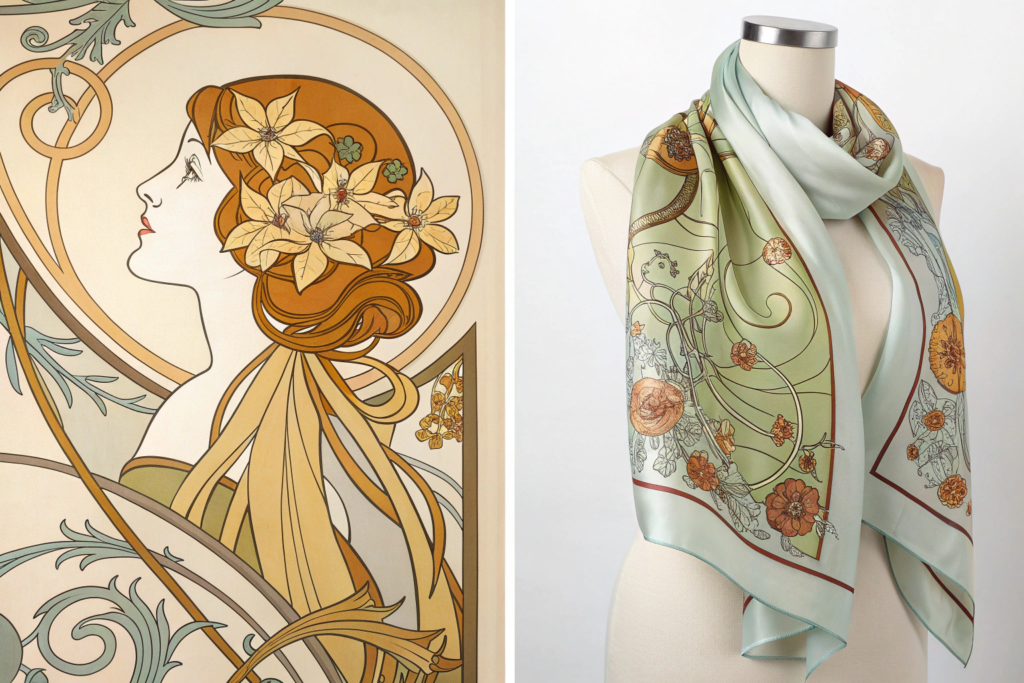
You can draw inspiration from art history by studying the distinct color palettes, motifs, and compositional styles of different art movements and translating them into modern scarf prints. Think of the bold, geometric shapes of Art Deco, the swirling, organic lines of Art Nouveau, or the vibrant, expressive colors of Fauvism.
This is a classic approach that consistently yields sophisticated and commercially successful designs. We often work with clients who build an entire collection around a specific movement. For example, a collection inspired by the Vienna Secession might feature intricate, gold-foil-printed patterns reminiscent of Gustav Klimt. A collection inspired by mid-century modernism might use abstract, boomerang shapes and a palette of mustard yellow and teal. This approach gives your collection a built-in story and a cohesive, elevated feel, which is a great starting point before considering inspiration from the natural world.
Which art movements are great for scarf design?
- Art Nouveau (late 19th/early 20th C.): Known for its organic, flowing lines, floral and insect motifs, and elegant, feminine feel.
- Art Deco (1920s-30s): Characterized by bold, symmetrical geometric shapes, luxurious materials, and a feeling of glamour and modernity.
- Abstract Expressionism (1940s-50s): Think bold, painterly brushstrokes and splatters, perfect for creating energetic, abstract prints.
- Pop Art (1960s): Uses bright, bold colors and repeated, graphic imagery.
You can explore these movements in depth through online museum collections like those of The Metropolitan Museum of Art or the Victoria and Albert Museum.
How do you make it modern, not a costume?
The key is "translation," not "transcription." Don’t just copy a painting onto a scarf. Isolate a specific element you love—the color palette, a particular brushstroke technique, a single motif—and then simplify, modernize, and repeat it to create a new, contemporary pattern.
How Can the Natural World Inspire a Scarf Collection?
Nature is the original designer. Its patterns, textures, and colors are infinitely varied and universally appealing.
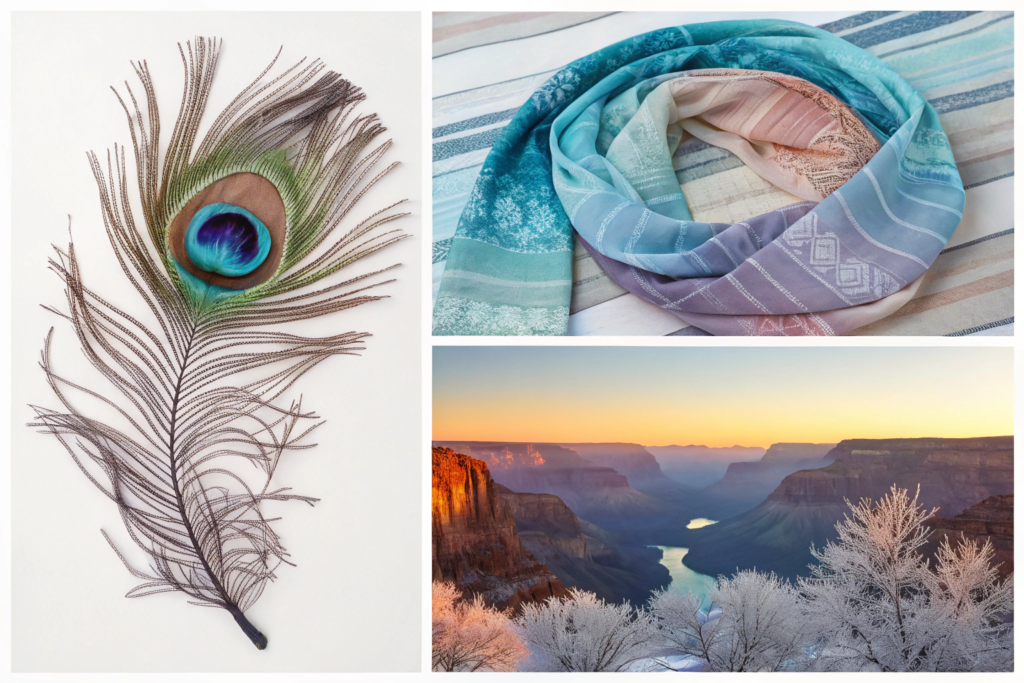
The natural world can inspire a collection through both literal and abstract interpretations. You can use direct inspiration, like a photorealistic floral print, or abstract inspiration, like creating a pattern based on the texture of tree bark, the veining of a leaf, or the colors of a sunset.
This is perhaps the most popular and commercially successful category of scarf design. Floral and animal prints are perennial best-sellers. But the opportunity is much bigger than that. We’ve worked with clients to develop beautiful, abstract designs based on microscopic images of butterfly wings, satellite photos of river deltas, and the mineral patterns inside a geode. The key is to look at nature with a designer’s eye, searching for repeating patterns and unique color combinations. This approach can be beautifully combined with ideas from architecture and objects.
How do you move beyond a simple floral print?
- Go Macro: Take a close-up, almost abstract view of a flower petal or a leaf’s structure.
- Look at Textures: Think about the patterns of sand dunes, wood grain, water ripples, or animal skins (leopard, zebra, snakeskin).
- Use Natural Palettes: Build a color story based on a specific natural environment, like a misty forest (greens, greys, browns) or a tropical reef (coral, turquoise, yellow).
Are animal prints still in style?
Classic animal prints like leopard and zebra are essentially timeless neutrals in the fashion world. They are always relevant. The key to making them feel modern is to play with scale (e.g., an oversized leopard print) or color (e.g., a pink and red zebra print).
Can Architecture and Man-Made Objects Be a Source of Inspiration?
Inspiration isn’t just found in museums and forests. It’s all around you, in the geometric patterns of a city street and the intricate details of a vintage object.
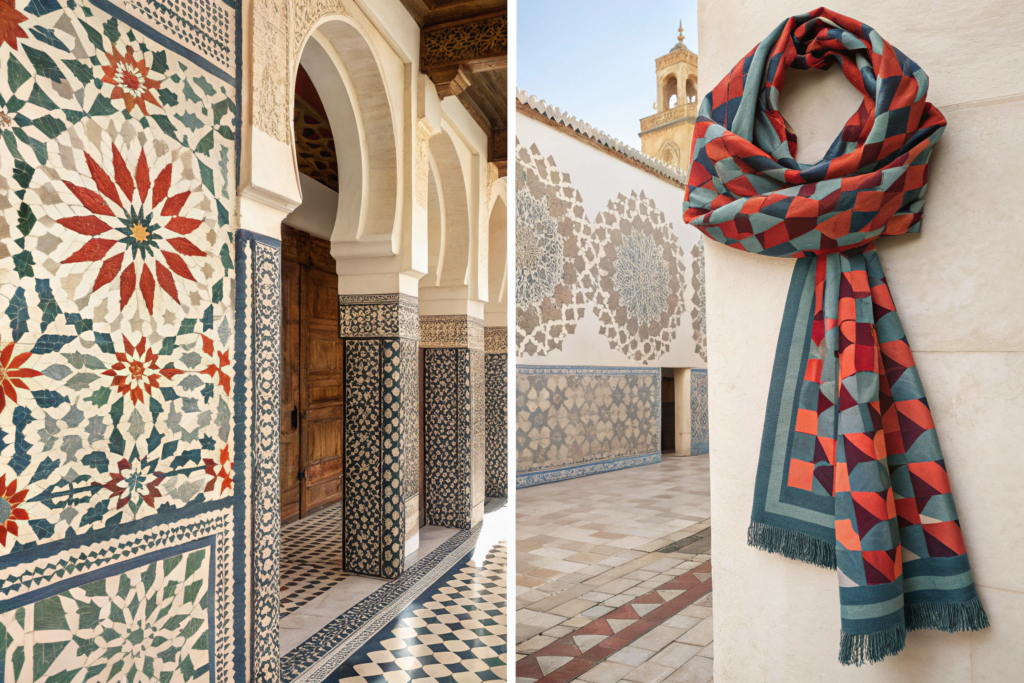
Yes, architecture and man-made objects are a fantastic source of inspiration for geometric and abstract patterns. Look for the repeating patterns in tilework, the linear quality of a city map, the intricate details of ironwork gates, or the texture of a woven basket.
This is a great way to create designs that feel modern, graphic, and unique. We once helped a client develop a best-selling scarf based on the design of a vintage Moroccan tile. We took the complex pattern, simplified it, and created a two-color print that was both exotic and highly wearable. The world is full of these hidden patterns. The key is to start actively looking for them. This approach is a great way to generate ideas to discuss with your manufacturing partner.
Where can you look for this type of inspiration?
- Tilework: From Portuguese Azulejos to Islamic geometric tiles.
- Maps: The lines of city streets or topographical maps can create beautiful, abstract linear patterns.
- Architectural Details: The design of a stained-glass window, a wrought-iron fence, or a brick-laying pattern.
- Vintage Objects: The pattern on a vintage teacup, the cover of an old book, or the texture of a woven chair can all spark an idea.
Travel and photography are great ways to collect these ideas. You can create your own digital mood boards on platforms like Pinterest to save and organize your visual inspiration.
How do you turn a photo into a pattern?
You can use software like Adobe Illustrator or Photoshop to trace the key lines and shapes from your photo. Then, you can experiment with repeating the shape, changing its scale, and applying different color palettes to create a unique pattern, often called a "repeat."
How Do You Collaborate with Your Manufacturer for Inspiration?
You’ve gathered your ideas. But you’re not an expert in textile printing or weaving. How can your manufacturing partner help you turn a spark of inspiration into a real product?
You should view your manufacturer as a collaborative partner in the creative process. A good partner has a deep technical knowledge of what is possible and can offer proactive suggestions. Share your raw inspiration with them and ask for their input on the best way to achieve a certain look.
This is a step that many brands miss. They try to perfect a design in a vacuum. At Shanghai Fumao Clothing, we love it when clients come to us with a mood board and a general idea. They might say, "I’m inspired by the texture of this vintage Japanese Shibori fabric." We can then respond with concrete suggestions: "We can achieve a similar look using a digital print on a slub-cotton base fabric, or for a more authentic feel, we could explore a true tie-dye technique. Here are the costs and minimums for both." This collaborative dialogue is where real innovation happens.

What kind of technical suggestions can a manufacturer make?
- Print vs. Weave: We can tell you if a design is better suited for a digital print, a screen print, or if it could be created as a jacquard weave.
- Fabric Choice: We can suggest the best base fabric to achieve your desired drape and feel (e.g., "This airy, watercolor design would look beautiful on a silk-modal blend").
- Finishing Techniques: We can suggest special finishes like adding a lurex thread for a bit of sparkle, creating a fringed or eyelash edge, or using foil printing for metallic accents.
What should you bring to your manufacturer?
Don’t feel like you need a finished design. A strong mood board is often more useful. Bring a collection of images, color palettes, and even physical objects that capture the feeling and direction of your collection. A good partner can help you connect the dots and build the product from there.
Conclusion
Inspiration for your next best-selling scarf is everywhere. The key is to train yourself to look for it in unconventional places. By exploring the rich history of art, the endless beauty of the natural world, and the hidden patterns in architecture and objects, you can build a library of unique ideas. But don’t stop there. The final, crucial step is to bring your raw inspiration to a collaborative manufacturing partner. By combining your creative vision with their technical expertise, you can transform a simple spark of an idea into a beautiful, commercially successful, and truly original scarf collection.
At Shanghai Fumao Clothing, we are passionate about this creative process. We are more than just a factory; we are your design and development partners, ready to help you explore, innovate, and create.
If you’re feeling inspired and want to discuss how to turn your vision into a reality, let’s talk. Please contact our Business Director, Elaine, at her email: elaine@fumaoclothing.com, to get started.