As a professional buyer like Ron, you understand that the "feel" of a product is just as important as its look. For a winter glove, the lining is the first and last thing the customer experiences. It’s the layer that touches their skin. A glove can have the best insulation and a beautiful leather shell, but if the lining is scratchy, sweaty, or uncomfortable, the customer will hate it. Choosing the right lining is a critical decision that directly impacts comfort, performance, and perceived value. So, how do you make the right choice?
To select the right lining for winter gloves, you must strategically match the material’s properties—such as softness, moisture management, and thermal value—to the glove’s intended end-use and price point. It’s not about finding a single "best" lining; it’s about building a curated assortment of linings for a "good, better, best" product strategy that serves different customer needs, from high-performance athletics to everyday luxury.
This is a nuanced conversation we have with every client developing a glove program. The lining is an area where a small change in specification can make a huge difference in the final product. At Shanghai Fumao Clothing, we don’t just offer a list of options; we guide you to the right choice based on your brand, your customer, and your performance goals. Let’s explore the materials and the strategy behind making the perfect selection.
What Is the Best Lining for Everyday Warmth and Value?
For the core of your collection—the everyday, go-to winter glove—you need a lining that is comfortable, warm, and cost-effective. This is your volume driver.
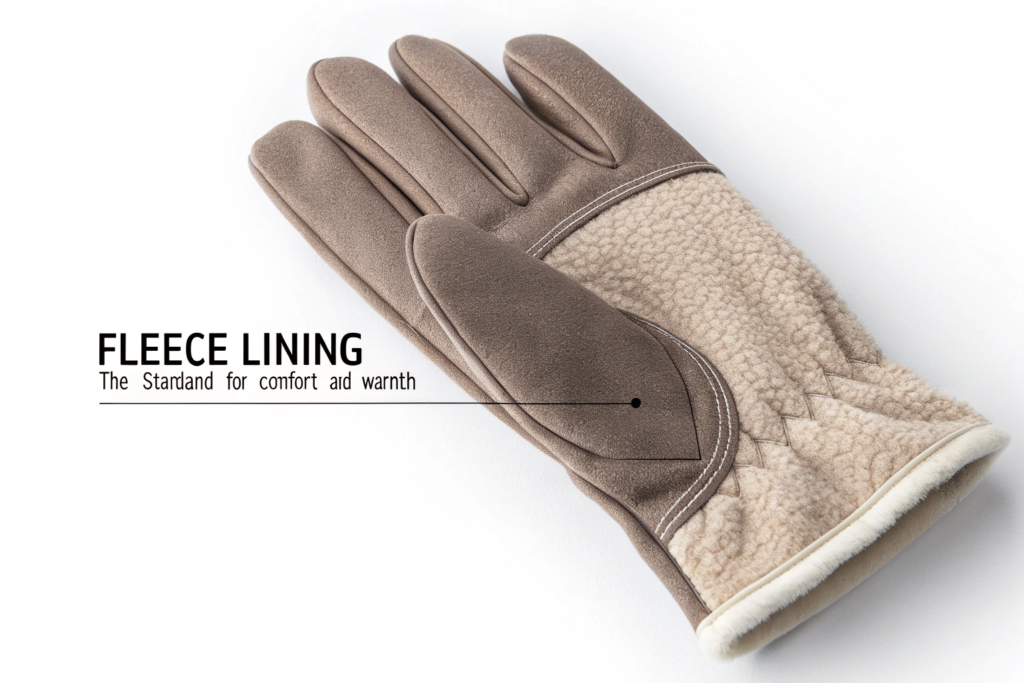
The best lining for everyday warmth and value is a classic fleece or microfleece. Fleece is a synthetic material that is incredibly soft, lightweight, and provides excellent warmth for its weight. It’s also highly durable and very cost-effective in bulk production, making it the ideal choice for the "good" and "better" tiers of your glove collection.
This is the workhorse of the glove lining world, and for good reason. When a client wants to build a solid, profitable, mainstream winter glove, we almost always start with a fleece lining. It comes in various weights (e.g., 100g, 200g), allowing us to easily adjust the warmth level. Its reliability and positive customer perception make it a safe and smart choice. This functional base is the perfect starting point before considering more specialized performance linings.
What is the difference between fleece and microfleece?
Microfleece is simply a finer, higher-quality version of fleece. The fibers are thinner and more densely packed, which makes the fabric feel softer and plusher. It’s a great way to add a touch of luxury and perceived value for a very small increase in cost.
Is fleece good at moisture management?
Fleece is hydrophobic, meaning it does not absorb water. It wicks moisture away from the skin and dries very quickly. This is a significant advantage over a material like cotton, which absorbs sweat and then becomes cold and clammy. This property is discussed in detail by outdoor gear specialists like REI in their guides to technical fabrics.
What Lining Is Best for High-Performance and Sports?
For an athletic glove—designed for running, skiing, or hiking—the priorities shift. Warmth is still important, but moisture management and dexterity become paramount.
The best lining for high-performance gloves is a technical synthetic fabric or a natural merino wool. These materials are superior at wicking sweat away from the skin to keep the hand dry and warm during intense activity. They are typically thinner than fleece, which also improves dexterity and grip.
When a client is developing a sports-focused glove, we move away from bulky, cozy linings. We recommend a thin, smooth-faced technical polyester with moisture-wicking properties or, for a more premium product, a merino wool lining. Merino wool is nature’s performance fabric; it’s incredibly soft, temperature-regulating, and naturally odor-resistant. This focus on performance is what separates a true athletic glove from a simple winter glove and is a key consideration when thinking about luxury options.

Why is merino wool so special?
Merino wool fibers are much finer than traditional wool, which makes them soft and itch-free. They have a unique ability to absorb a large amount of water vapor while still feeling dry to the touch, and they provide excellent insulation even when damp. Brands like Smartwool have built their entire business on the benefits of this natural fiber.
What is a "technical synthetic"?
This refers to polyester or nylon fabrics that have been specifically engineered for performance. They might have a chemical finish that helps pull moisture away from the skin or a brushed surface for a bit of extra warmth. They are designed to manage sweat and dry quickly.
What Lining Should You Use for a Premium or Luxury Glove?
For your top-tier products—perhaps a fine leather dress glove—the lining’s job is to communicate pure luxury and exceptional comfort. Cost is a secondary concern to the tactile experience.
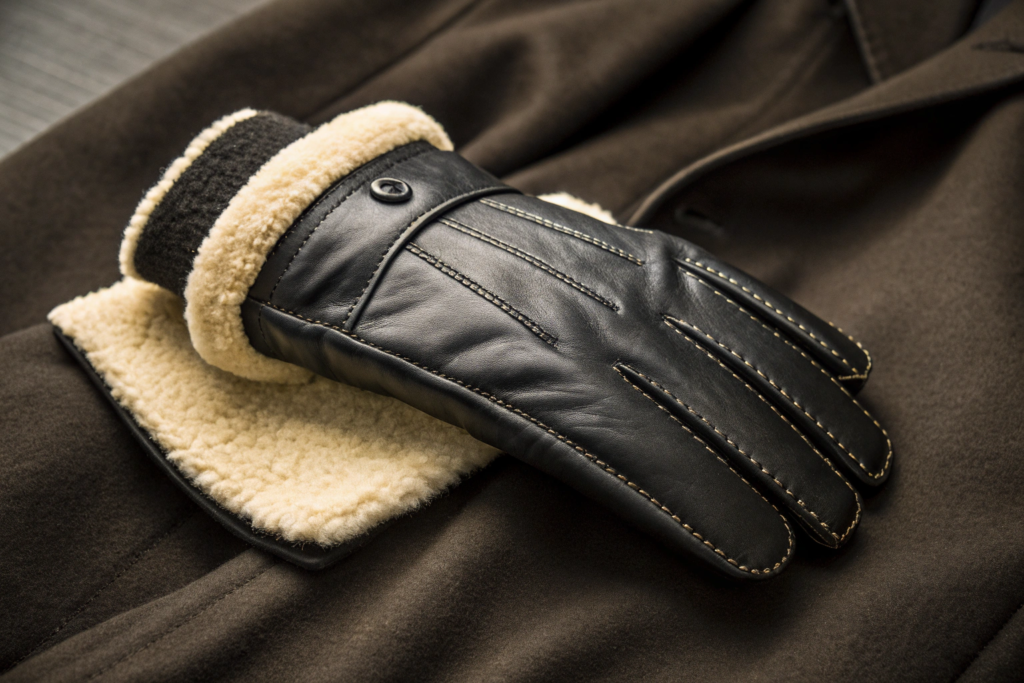
For a premium or luxury glove, the preferred linings are cashmere, silk, or a high-pile sherpa. These materials offer an unmatched feeling of softness and indulgence. A cashmere-lined leather glove is a classic luxury item, providing exceptional warmth and a feeling of pure quality the moment the customer puts it on.
This is the "best" tier of your "good, better, best" strategy. When a client wants to create a true halo product, we recommend these premium materials. A silk lining is incredibly smooth and surprisingly warm, perfect for a slim dress glove. A thick, plush sherpa lining (a type of faux shearling) creates a very cozy, rustic-luxury feel, perfect for a suede or rugged leather glove. Using these materials instantly elevates the product and justifies a higher retail price, which is a key part of a balanced assortment.
Is cashmere durable enough for a glove lining?
Pure cashmere can be delicate. For glove linings, we often use a cashmere-wool blend (e.g., 10% cashmere, 90% wool). This provides the legendary softness of cashmere with the added durability and cost-effectiveness of wool. It’s a smart compromise that delivers a luxury feel with real-world performance.
What is Sherpa?
Sherpa is a type of fleece fabric designed to mimic the look and feel of sheep’s wool (shearling). It has a soft, bumpy texture on one side and a smooth knit on the other. It’s very warm and has a strong visual appeal, making it a popular choice for cuffs and full linings in casual, cozy glove styles.
How Do You Build a Collection with Different Linings?
You understand the options. Now, how do you apply this knowledge to build a commercially successful glove collection?
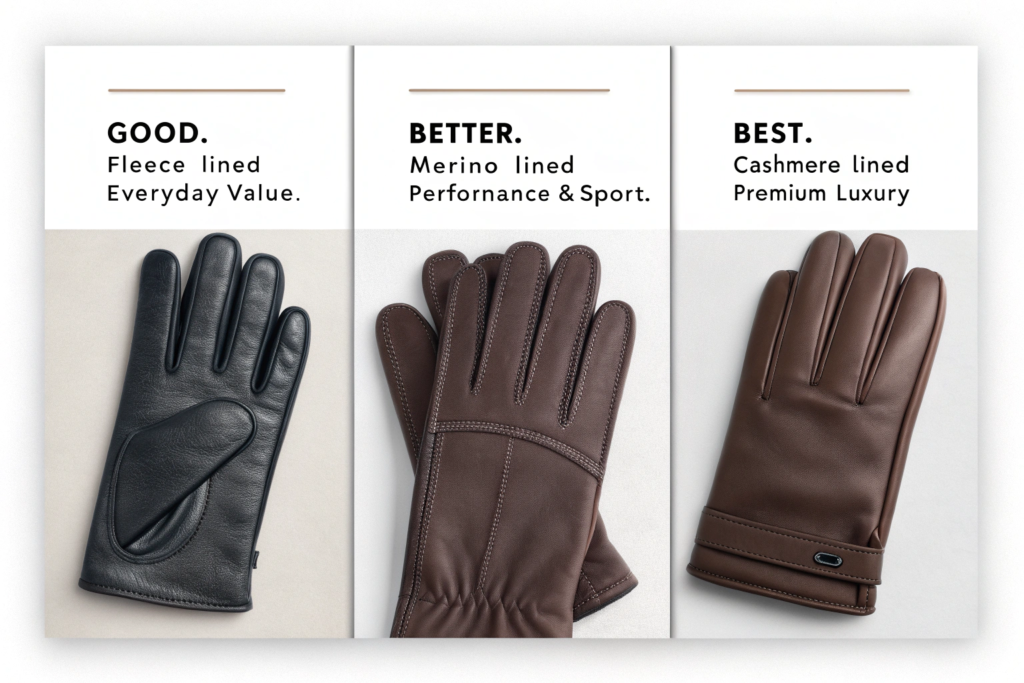
You build a successful collection by creating a tiered offering that provides a clear value proposition at each level. Use a cost-effective fleece for your high-volume core styles, a technical fabric or merino for your performance-oriented styles, and a luxury material like cashmere for your premium, high-margin styles.
This strategic approach allows you to capture different segments of the market with a single product category. At Shanghai Fumao Clothing, we can easily manage this complexity. We can produce the same outer glove shell with three different linings, creating three distinct SKUs with three different price points. This allows you to test the market, cater to different retailers (e.g., mass-market vs. boutique), and maximize your overall sales potential.
How does this affect the tech pack?
Your tech pack should have a specific line item for the lining material. For a tiered collection, you would create one master tech pack for the outer glove and then specify the different lining options, either on the same page or as separate variations. This tells your manufacturer that the construction is the same, but the interior material will change.
How does this impact your sourcing?
By partnering with a versatile manufacturer who already has all these lining materials in their sourcing library, you can develop this entire collection from a single point of contact. This is far more efficient than trying to source your fleece gloves from one factory and your cashmere gloves from another.
Conclusion
The lining is the soul of a winter glove. By moving beyond a one-size-fits-all approach and strategically selecting your linings, you can build a much more sophisticated and profitable glove collection. Start with fleece for your core, everyday styles, introduce technical fabrics or merino wool for your performance-driven customers, and leverage the power of cashmere or sherpa for your premium, luxury offerings. This "good, better, best" strategy, executed with a knowledgeable manufacturing partner, allows you to meet the needs of every customer and maximize the potential of your winter accessories program.
At Shanghai Fumao Clothing, we are lining specialists. We have the material library and the product development expertise to help you engineer the perfect glove, from the inside out.
If you are ready to build a smarter, more comfortable, and more profitable glove collection, let’s talk about the details. Please contact our Business Director, Elaine, at her email: elaine@fumaoclothing.com, to get started.