As a strategic buyer like Ron, you’re at the sharp end of a major industry shift. Your customers, your retail partners, and even corporate ESG (Environmental, Social, and Governance) policies are all demanding more sustainable products. The term "eco-friendly" is everywhere. But you’re a professional. You know that "eco-friendly" is a vague marketing term. You need to source real, certified, and commercially viable eco-friendly accessories in bulk, and you need to know where to find a reliable partner who can navigate this complex landscape with you.
To find genuine eco-friendly fashion accessories in bulk, you must partner with a specialized, vertically-integrated manufacturer in China who can provide verifiable certifications for specific sustainable materials like recycled polyester (rPET), organic cotton (GOTS), and traceable natural fibers. The "where" is not a marketplace; it’s a type of partner—one who has proactively built a transparent supply chain for these next-generation materials.
I’ve seen this trend evolve from a niche request to a core business requirement. The old way was to find a factory and ask them to source a material. The new, better way is to find a factory that has already built the expertise and supply chain for these materials. At Shanghai Fumao Clothing, we made a strategic decision years ago to become experts in this area. We’ve done the hard work of vetting the mills and suppliers so you don’t have to. Let me show you what a real eco-friendly supply chain looks like and what you should be asking for.
Why Is Material Certification the Only Thing That Matters?
You will be bombarded with terms like "eco," "green," "conscious," and "earth-friendly." These words mean nothing without proof. In the world of bulk sourcing, the only proof that matters is a third-party certification.
Material certification is paramount because it is the only way to verify that a material is genuinely what it claims to be, providing an auditable, third-party paper trail from the raw material to the finished product. A factory can claim a beanie is made from recycled bottles, but only a GRS (Global Recycled Standard) certificate can prove it. This is your insurance against "greenwashing."
When a client orders 10,000 rPET beanies from us, the process is all about documentation. We purchase the GRS-certified yarn from a GRS-certified mill. That mill provides a "Transaction Certificate" (TC) that is specific to our purchase order. This TC is the golden ticket. It proves the yarn we used to make your hats is legitimate. We provide this document to you. This focus on certification is the foundation of any credible eco-friendly program and is the key to understanding which materials to choose.
What is "Greenwashing"?
Greenwashing is the act of making false or misleading claims about the environmental benefits of a product or company. It’s a major risk for brands. Using certified materials is the best way to protect your brand from these accusations. News outlets like The Guardian and regulatory bodies are increasingly cracking down on unsubstantiated green claims.
What is a Transaction Certificate (TC)?
A TC is a document issued by a certification body (like the Control Union for GRS) that verifies a specific shipment of goods from one certified company to another conforms to the standard. It’s the most important document in the certified supply chain, as it links the raw material directly to your specific production run. You can learn more about the process from the organization that manages the standard, Textile Exchange.
What Are the Key Eco-Friendly Materials to Focus On?
The world of sustainable materials is vast and confusing. For bulk fashion accessories, you need to focus on the materials that are scalable, commercially viable, and have established, certifiable supply chains.
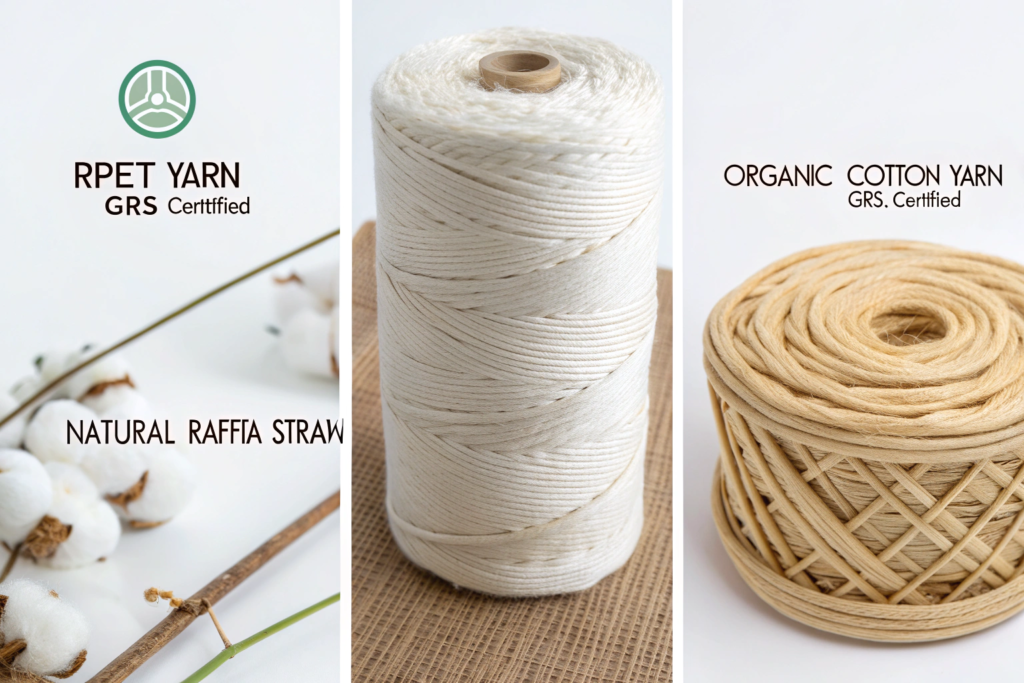
For Fall/Winter, the key material is GRS-certified Recycled Polyester (rPET). For Spring/Summer and year-round basics, it’s GOTS-certified Organic Cotton and traceable natural fibers like Raffia and Paper Straw. These materials offer a compelling sustainability story, excellent performance, and, most importantly, a reliable and verifiable supply chain in China.
At our factory, these are the materials we have built our eco-friendly program around. We have established relationships with the best mills producing these specific yarns and fabrics. We know their capabilities, their pricing, and their certification status. This pre-vetted network means we can move quickly from development to production, a critical advantage when evaluating a manufacturing partner.
Why should you focus on GRS-Certified Recycled Polyester (rPET)?
- The Story: It’s made from post-consumer plastic bottles, which is a powerful and easy-to-understand environmental story.
- Performance: It’s durable, colorfast, and perfect for products like beanies, bags, and caps.
- Scalability: The supply chain is now very mature, making it available at scale for bulk orders.
Why is GOTS-Certified Organic Cotton a core material?
- The Story: It’s grown without toxic pesticides and synthetic fertilizers, making it safer for farmers, the environment, and the end consumer’s skin.
- Performance: It’s soft, breathable, and ideal for products that touch the skin, like hair ties, headbands, and baby accessories.
- Certification: GOTS is the world’s leading and most trusted standard for organic textiles.
How Do You Evaluate an "Eco-Friendly" Manufacturer?
Many factories will say "yes, we can do that" when you ask for eco-friendly materials. But how do you separate the true specialists from the opportunists?
You evaluate an eco-friendly manufacturer by scrutinizing their documentation, questioning their supply chain knowledge, and assessing their commitment to transparency. A true specialist will be proactive in discussing certifications and will be able to show you their own factory’s scope certificates, as well as transaction certificates from previous, non-confidential projects.
When a potential client vets us, I welcome the tough questions. I want them to ask me about our GRS-certified yarn suppliers. I want them to demand a copy of our factory’s GOTS scope certificate. This is our opportunity to demonstrate our expertise. A factory that is vague, can’t produce documents, or doesn’t know what a Transaction Certificate is, is a major red flag. This rigorous vetting process is the only way to ensure you’re building a truly sustainable product line.
What specific questions should you ask a potential supplier?
- "Can you please send me a copy of your factory’s current GRS or GOTS scope certificate?"
- "Who are your main certified yarn/fabric mills? How long have you worked with them?"
- "Can you walk me through your process for securing and providing a Transaction Certificate for my order?"
- "Can you show me a sample of a finished GRS-certified product you have made?"
- "What is the price difference and minimum order quantity (MOQ) for the GRS-certified material versus the conventional version?"
What is a "Scope Certificate"?
A scope certificate (SC) is a document that proves a specific factory is certified to process materials under a certain standard (like GRS or GOTS). It’s the factory’s license to operate within that certified system. It’s different from a Transaction Certificate, which applies to a specific batch of material.
Is Sourcing Eco-Friendly Accessories from China Reliable?
There’s a lingering perception that "Made in China" and "eco-friendly" are at odds. As a buyer, you need to know if you can build a reliable, long-term sustainable program from this region.
Yes, sourcing certified eco-friendly accessories from China is not only reliable but is often the most efficient and scalable option, provided you partner with the right specialist manufacturer. China is the world’s leader in textile innovation and production. The most advanced recycling technologies and the largest GOTS-certified mills are located here. A top-tier Chinese partner can offer a level of certification, quality, and scale that is difficult to find anywhere else in the world.
The key is avoiding the low-end, non-specialist factories and connecting with modern, professional manufacturers who have invested in building these transparent supply chains. At Shanghai Fumao Clothing, we are part of this new generation of Chinese manufacturing. We see sustainability not as a burden, but as a massive opportunity to provide more value to our clients.
Why is China a leader in sustainable textiles?
- Technology & Investment: Chinese companies have invested heavily in state-of-the-art recycling facilities and textile machinery.
- Scale: The sheer scale of the textile industry means that when a material like rPET becomes popular, the supply chain can scale up to meet global demand quickly.
- Integrated Ecosystem: The mills, dye houses, and finishing facilities are all part of a deeply connected ecosystem, which increases efficiency and reduces the carbon footprint associated with transportation between stages.
Organizations like the Ellen MacArthur Foundation, which focus on the circular economy, work with many large Chinese manufacturers, highlighting their critical role in the global shift towards sustainability.
How does this strategy benefit your business?
Partnering with a specialized Chinese manufacturer gives you direct access to this innovative and scalable supply chain. It allows you to source certified sustainable products cost-effectively, enabling you to meet your ESG goals and customer demands without sacrificing your profit margins. It’s a win-win for the planet and your business.
Conclusion
Finding eco-friendly bulk fashion accessories is no longer a treasure hunt for a mythical "green" factory. It is a strategic sourcing process centered on verifiable material certifications. Your mission is to find a manufacturing partner who is an expert in the specific, certified materials that matter—like GRS-certified rPET and GOTS-certified organic cotton. By focusing your search on these specialists, vetting them through their documentation, and asking the tough questions about their supply chain, you can build a truly sustainable and commercially successful accessory program. The future of fashion is responsible, and the right partners are ready to build it with you.
At Shanghai Fumao Clothing, we have dedicated ourselves to being leaders in this space. We provide the certified materials, the transparent supply chain, and the manufacturing expertise to help you meet the demands of the conscious consumer with confidence and integrity.
If you are ready to build a genuine and successful eco-friendly accessory line, let’s talk. Please contact our Business Director, Elaine, at her email: elaine@fumaoclothing.com, to get started.