For hairstylists, accessory buyers, and fashion-conscious consumers, the right hair pin is more than just a tool—it’s the invisible hero that creates and secures beautiful hairstyles. When you’re sourcing for boutiques, developing a new line, or simply looking for the most versatile styling aids, understanding which pins excel in both intricate updos and casual half-up styles is key. The best multi-purpose pins combine strong functionality with subtlety or decorative flair, allowing for a seamless transition from day to night looks.
Three primary types of hair pins serve as exceptional multi-purpose tools for both updos and half-up styles: Spin Pins for their revolutionary, ultra-secure hold; classic Bobby Pins for their foundational versatility in pinning, sectioning, and decorating; and Hair Sticks that blend steadfast functionality with elevated aesthetic appeal. Each type addresses a specific need—from maximum security and invisibility to decorative statement-making—making them indispensable in a complete hairstyling toolkit for creating everything from sleek chignons to textured half-up looks.
Mastering the use of these tools is what separates a good hairstyle from a great one. For manufacturers and retailers, offering a curated range that covers these core functionalities meets the needs of both professional stylists and everyday users. Let’s delve into the specific mechanics and applications of each pin type.
How Do Spin Pins Revolutionize Updo and Half-Up Security?
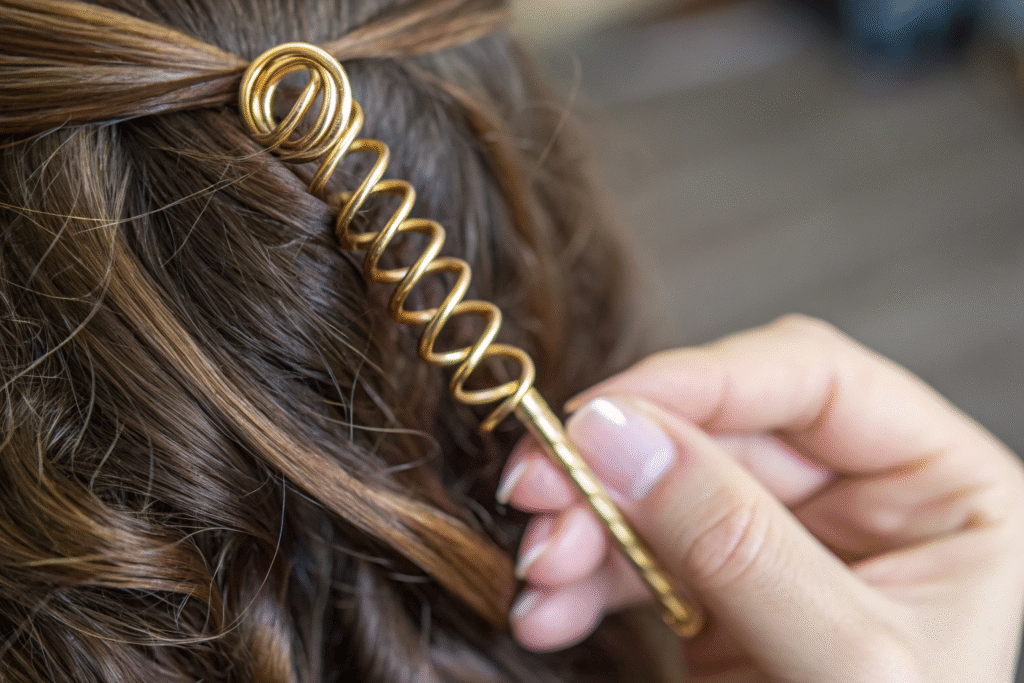
Spin Pins, often called "twisty pins" or "corkscrew pins," represent a functional innovation in hair accessory design. Their unique spiral shape allows them to mechanically lock into the hair, distributing weight and grip in a way that mimics the hold of dozens of traditional bobby pins without the bulk or discomfort. They are the go-to solution for anyone seeking a rock-solid, yet comfortable, foundation for their style.
Spin Pins revolutionize updo and half-up security by using a corkscrew design that threads into the hair, creating a wide, distributed hold. A single pin is often marketed as being as effective as 20 traditional bobby pins. For updos, like buns and chignons, one or two Spin Pins inserted in a cross formation can secure the entire style. For half-up styles, they are perfect for anchoring the gathered section at the crown or nape with unparalleled strength, preventing the style from sagging throughout the day. Their design prioritizes a seamless, almost invisible finish, making them a favorite for sleek, professional looks.
What makes the corkscrew design so effective for heavy styles?
The genius of the Spin Pin lies in its mechanical advantage. Unlike a bobby pin that clamps, the spiral threads through the hair layers, much like a screw into wood. This creates friction along the entire length of the pin, rather than at just two pressure points. This distributed grip can support significantly more weight without pulling or creating painful "hot spots" on the scalp. For manufacturers, producing these requires precision engineering to ensure the spiral is smooth (to prevent snagging) and made from a sturdy yet flexible metal alloy that won’t bend under tension.
Are Spin Pins suitable for all hair types and lengths?
Spin Pins are remarkably versatile but work best on medium to thick hair that is at least shoulder-length. Very fine or slippery hair may require the additional grip of a texturizing spray for the pins to catch effectively. For shorter hair or finer textures, smaller or "mini" versions of Spin Pins are available. As a manufacturer, offering a size range (e.g., standard for thick/long hair, mini for fine/medium hair) can significantly broaden your product’s market appeal and meet diverse styling needs, a key consideration in our product development process.
Why Are Bobby Pins the Ultimate Foundational Tool?
The humble bobby pin is the unsung hero and the most universally versatile tool in hairstyling. Its simple U-shaped design with rippled on one side provides the essential functions of pinning, clamping, and sectioning. No professional stylist’s kit or consumer’s drawer is complete without them, as they form the literal building blocks for nearly every structured hairstyle.
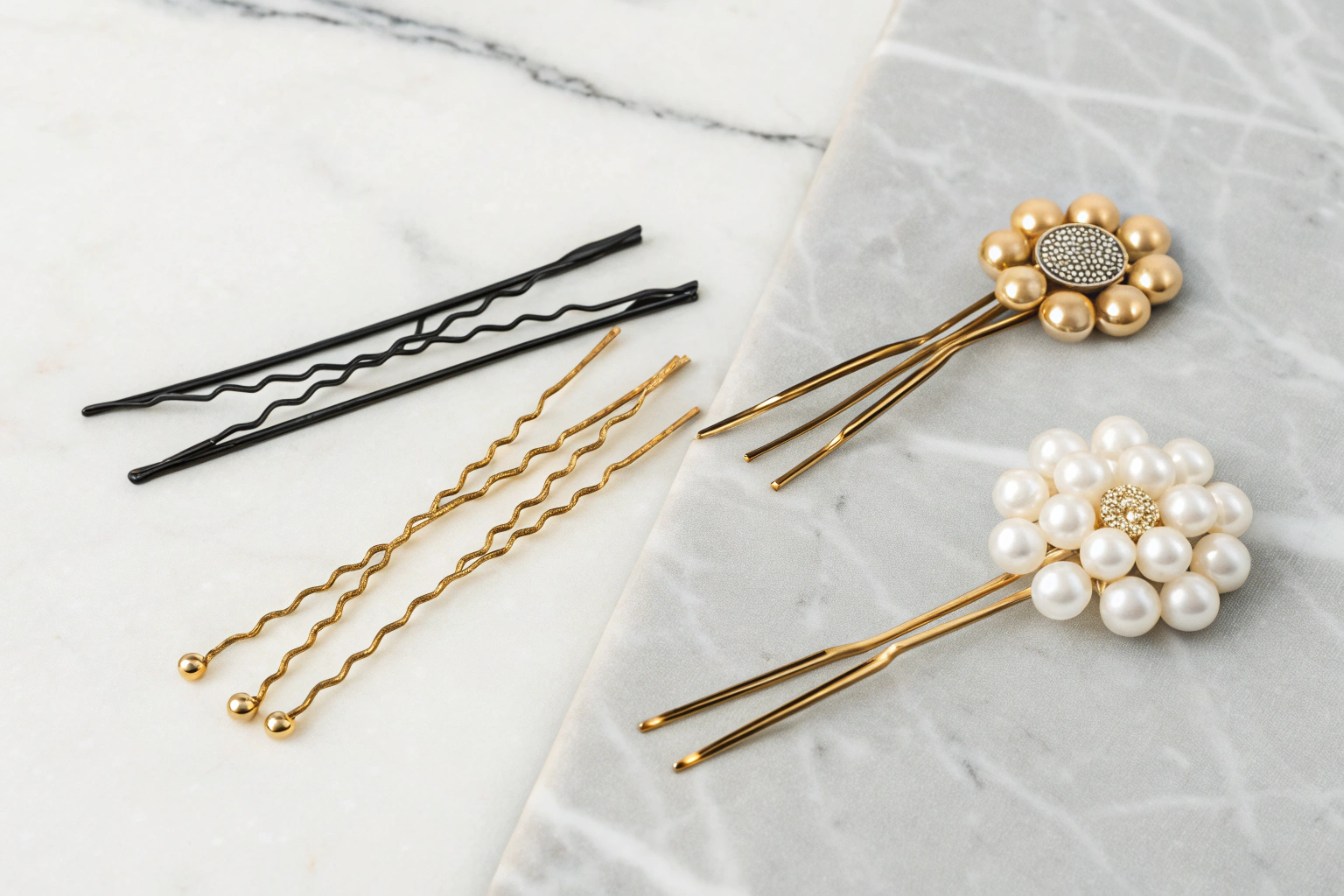
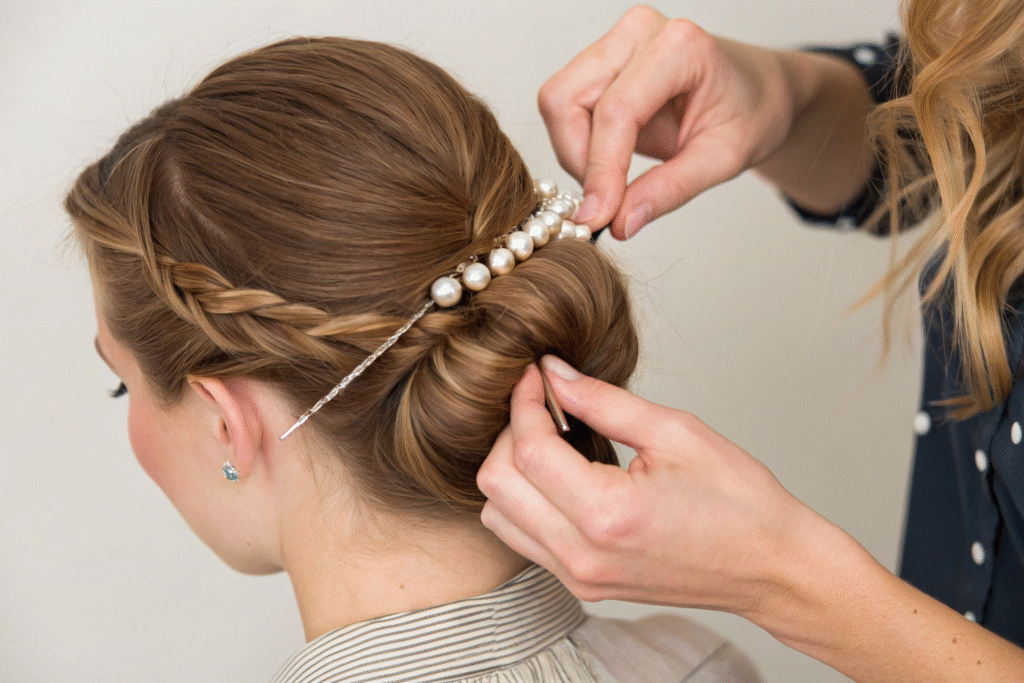
Bobby pins are the ultimate foundational tool because they are micro-adjustable and perfect for detailed work. For elaborate updos (like braided crowns or Gibson tucks), they are used to invisibly secure small sections, anchor wefts, and tame flyaways. In half-up styles, they are used to create the initial hold, create texture by criss-crossing, and add subtle decorative accents when using jeweled or colored varieties. The standard rule—placing the pin with the rippled (wavy) side down against the scalp for maximum grip—is the first lesson in effective use. Their low profile makes them ideal for creating a "no-pin" visible finish.
What are the professional techniques for using bobby pins in updos?
Professional technique elevates the bobby pin from a basic clip to a sculpting tool. The key is to insert the pin horizontally into the base of a hairstyle, following the direction of the hair growth and "swimming" it through to catch the underpinning. For maximum hold, bobby pins are often used in pairs, inserted in a criss-cross ("X") formation, which mechanically locks the hair in place. To achieve an invisible look, the pin can be opened slightly, slid into place, and then closed, ensuring it grabs both the style and the base hair. Offering matte-finished pins in colors that match common hair shades (black, brown, blonde, auburn) is a value-add for professionals and discerning consumers.
How can decorative bobby pins enhance half-up styles?
Decorative bobby pins transform a functional tool into a style accent. In a simple half-up style, strategically placing a few pearl-ended, rhinestone-studded, or enamel-coated bobby pins can instantly elevate the look from casual to chic. They can be used to pin back the sides in a bridal or event style, or simply scattered along the part line of a half-up ponytail for a touch of sparkle. For retailers and brands, stocking a mix of classic and decorative bobby pins caters to both the practical user and the fashion-focused customer, driving larger basket sizes. This blend of utility and aesthetics is central to a complete accessory strategy at shanghaifumaoclothing.
How Do Decorative U-Pins and Hair Sticks Add Function and Flair?
Decorative U-Pins (also called hair forks or pins) and Hair Sticks bridge the gap between essential tool and jewelry. They are designed to be seen and are often the centerpiece of a hairstyle. Their primary function is to spear through and anchor a twist, bun, or roll, but their decorative ends—from minimalist geometric shapes to ornate crystal clusters—make them a statement accessory.
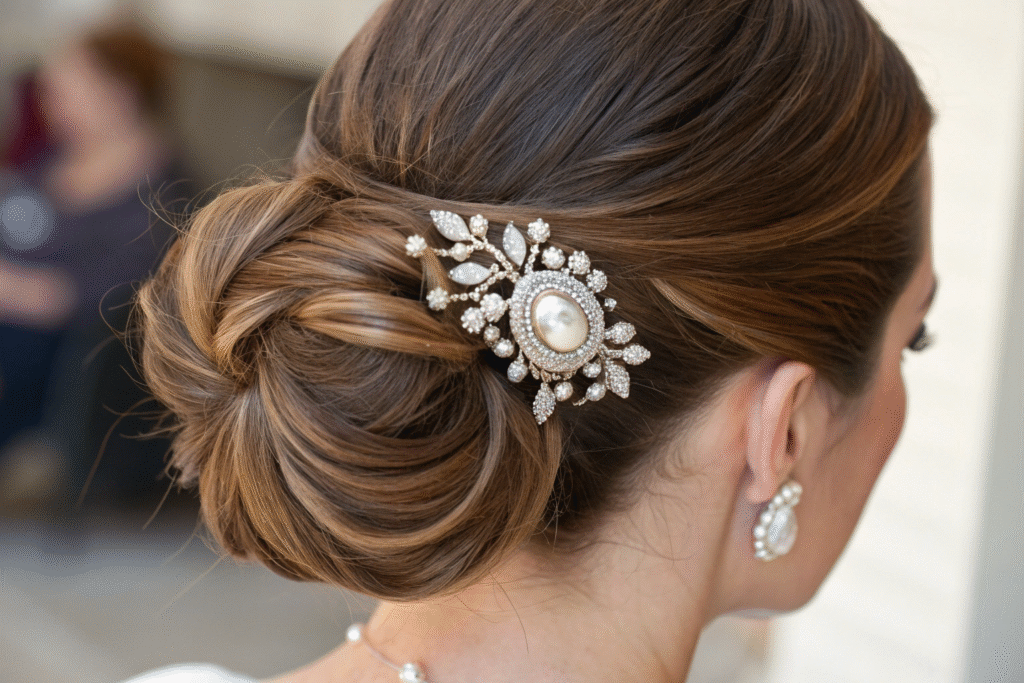
Decorative U-Pins and Hair Sticks add both function and flair by serving as the central anchoring point and visual focal point of a style. A single, well-placed U-pin can secure a messy bun or a French twist with elegant efficiency. In half-up styles, a pair of smaller, matching decorative pins can be used to secure a twisted or braided section at the back of the head, with the decorative ends peeking out beautifully. They are particularly popular for special occasions, weddings, and bridal styles, where the accessory is meant to complement the outfit and overall aesthetic, providing a secure hold that lasts all day or night.
What design variations exist in decorative pins for different styles?
The design spectrum is vast, allowing them to suit diverse aesthetics:
- Minimalist & Modern: Simple lines, geometric shapes (bars, triangles), and matte metals (gunmetal, rose gold) for everyday wear.
- Romantic & Feminine: Floral motifs, pearl accents, and delicate filigree work for a soft, classic look.
- Bohemian & Natural: Wood, bone, or resin pins with carved details or natural stone inlays.
- Glamorous & Bridal: Crystalline elements, intricate metalwork, and diamante clusters for maximum sparkle. Offering this range of design families allows a brand to cater to different customer personas and occasions.
How should decorative pins be chosen and used for optimal hold?
Choosing the right pin is crucial for both aesthetics and function. The pin should be long enough to pass through the entire hair mass at least twice for a secure anchor. For thick or heavy hair, a sturdier gauge (thickness) of metal is necessary. The technique involves gathering the hair, twisting it into the desired shape (a bun, twist, or roll), and then inserting the pin through the center of the style, catching hair against the scalp on the opposite side. For half-up styles, smaller decorative pins can be used like enhanced bobby pins. Manufacturers must ensure that decorative elements are securely attached to withstand repeated use, a critical aspect of our quality control process.
Conclusion
Building a versatile and sellable collection of hair pins means covering the three pillars of functionality: revolutionary hold (Spin Pins), foundational versatility (Bobby Pins), and decorative statement (U-Pins/Hair Sticks). Each type addresses a unique styling challenge and customer desire, from the practical need for all-day security to the aesthetic desire for beautiful adornment. For stylists, having access to all three ensures no hairstyle is out of reach. For retailers and brands, offering a curated mix drives sales by meeting the complete spectrum of customer needs.
As a professional manufacturer with deep expertise in accessory design and production, we understand the nuanced requirements of each pin type—from the precise metallurgy of a Spin Pin to the secure setting of a gemstone on a decorative piece. If you are looking to develop a comprehensive, high-quality line of multi-purpose hair pins for the global market, we can provide the design insight, material expertise, and reliable production to make it a success. For a professional discussion on creating a best-selling hair pin collection, please contact our Business Director Elaine at elaine@fumaoclothing.com. We are here to provide the timely, professional, and reliable service your next accessory line deserves.